-
CJ750 Gearbox gets a new 3rd and 4th gear - Align 3rd and 4th gear
The position at the input shaft for the 3rd gear is usually not oversized so the 3rd gear could be easily pushed through and rotated to fit the 4th gear.
But I do not like any not-fixed part on the input shaft. It will just loosen over time and start wearing out. So thats why the input shaft is at a constant 3/100 oversize.
But twisting the 3rd gear was actually more difficult than I thought. Once the 3rd gear was pushed a bit on the shaft, I tried to make a small angular adjustment. I used a larger wrench made out of a high quality plastic to not scratch the gears. The wrench broke, and I had to come up with a different approach.
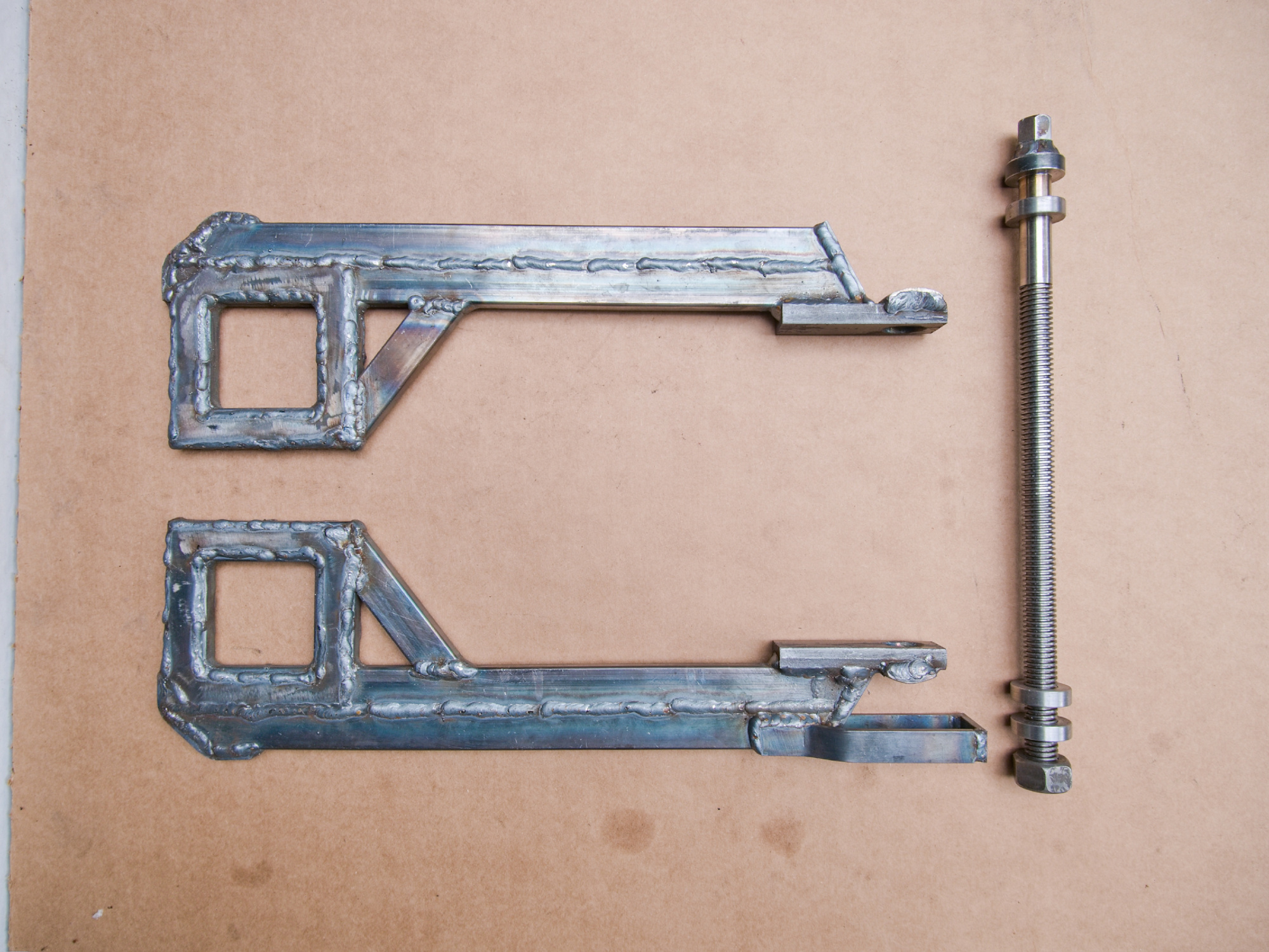
I fabricated two square holders that are connected with a 3/4" acme threaded rod to twist the gears. I made sure there would no breaking this time, and as it turned out, the aligning of the gears using the screw was easy.The parts:
The square frames were cut out from a saw blade for additional strength using a plasma cutter.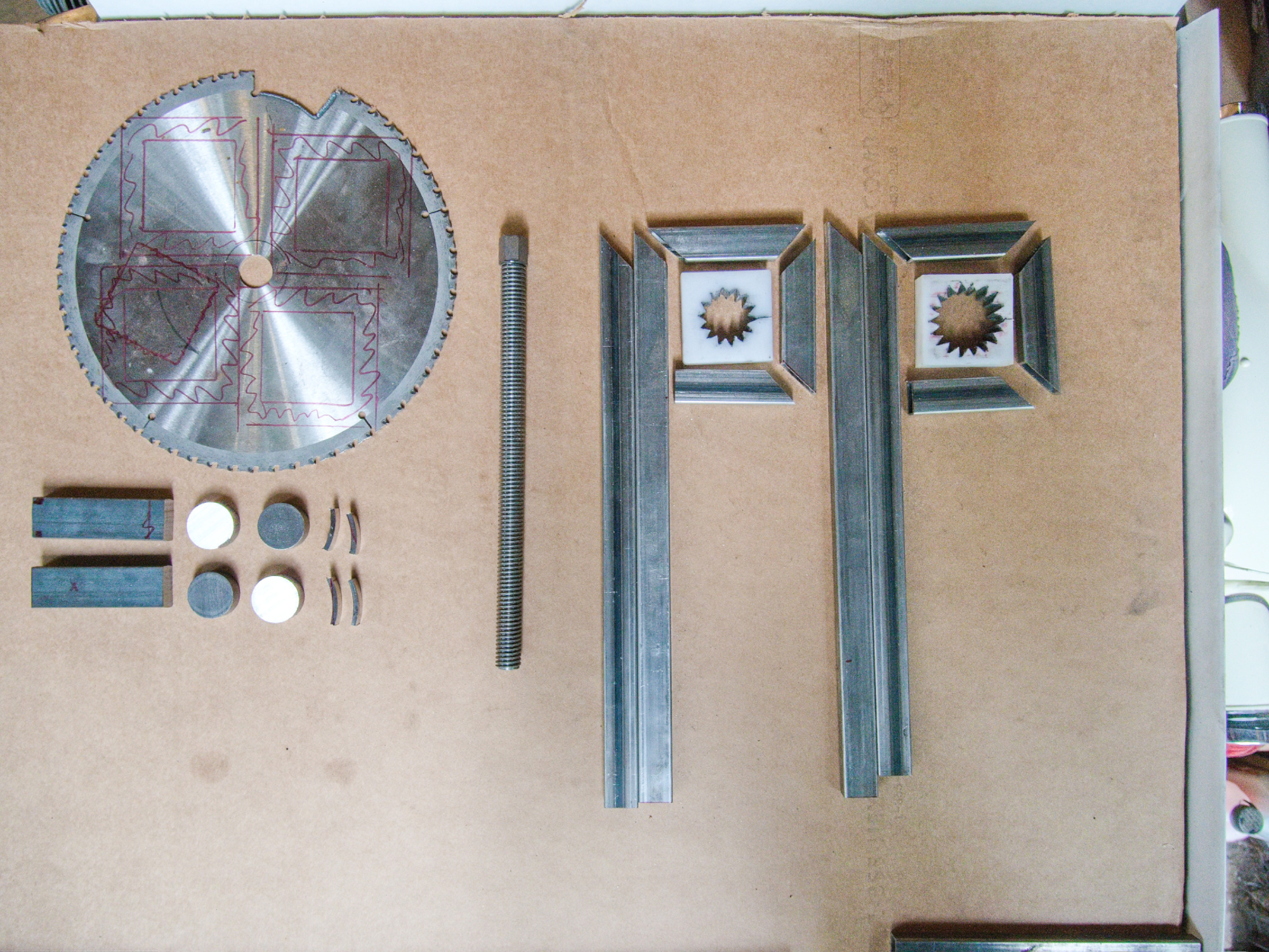
The inside of the square holder were cut on the saw to match the gear pattern, and then filled with JB-Weld, and then pressed on the gear while still wet for a perfect fit.
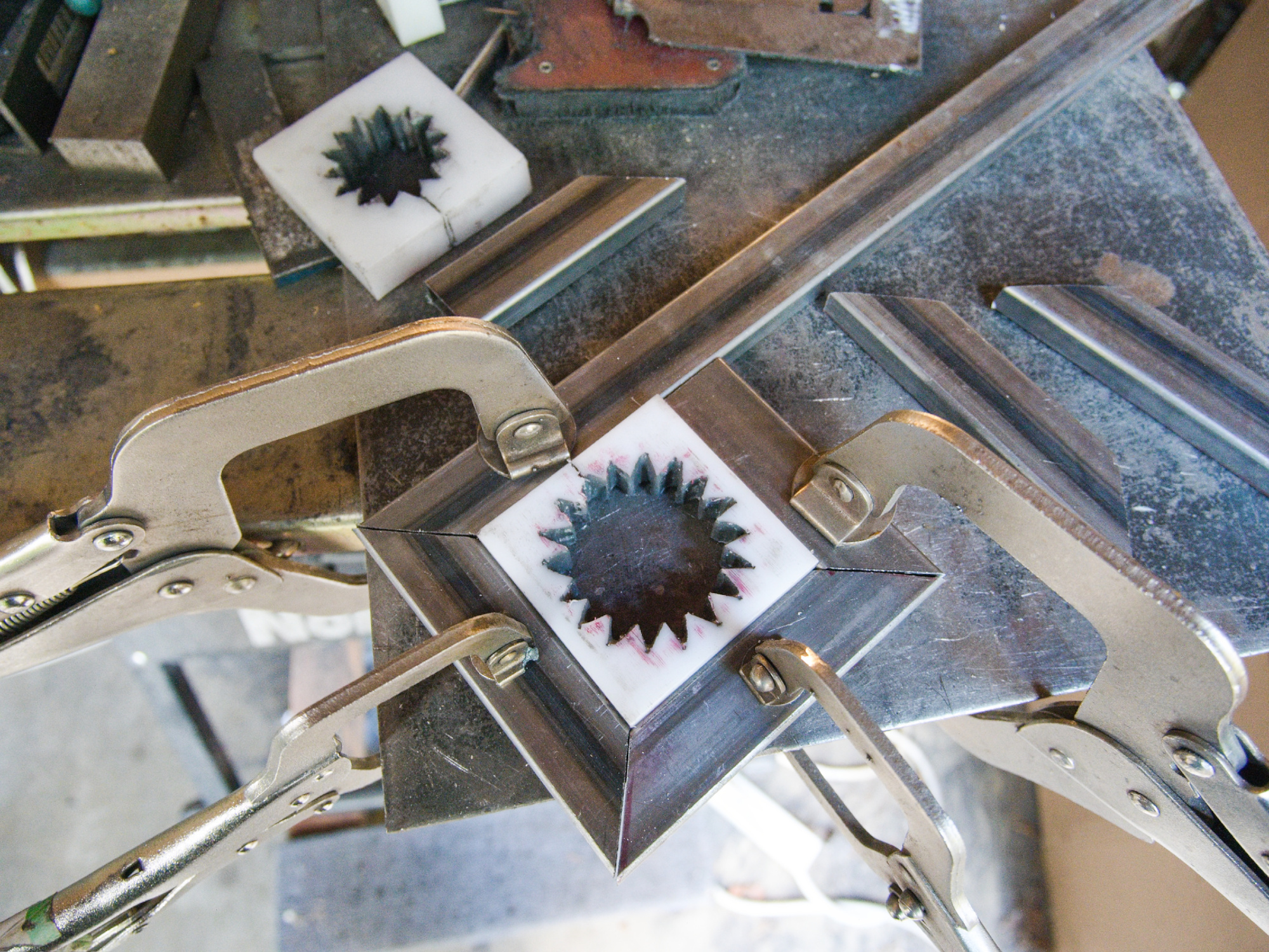
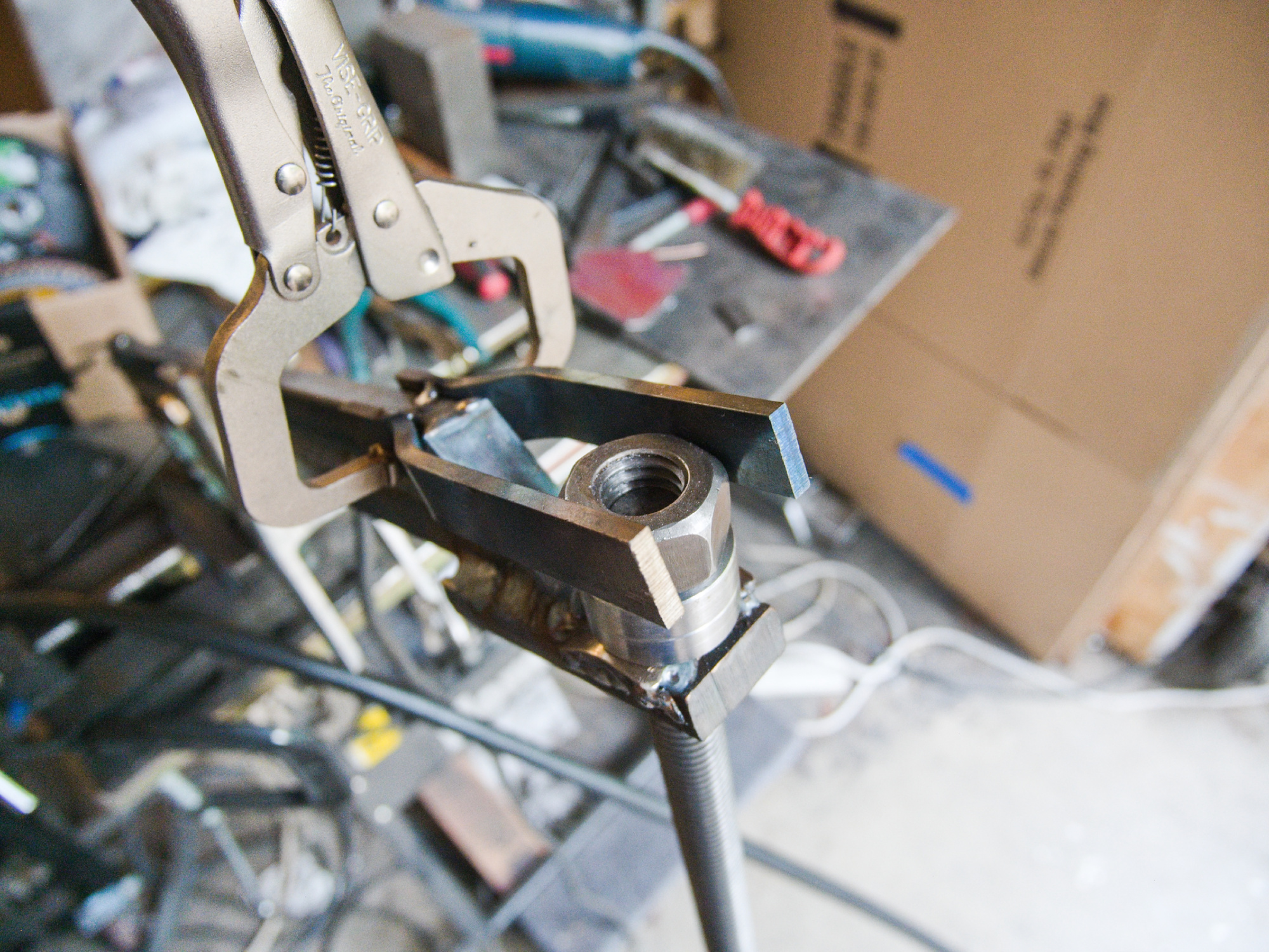
The Mega-Twister is ready.
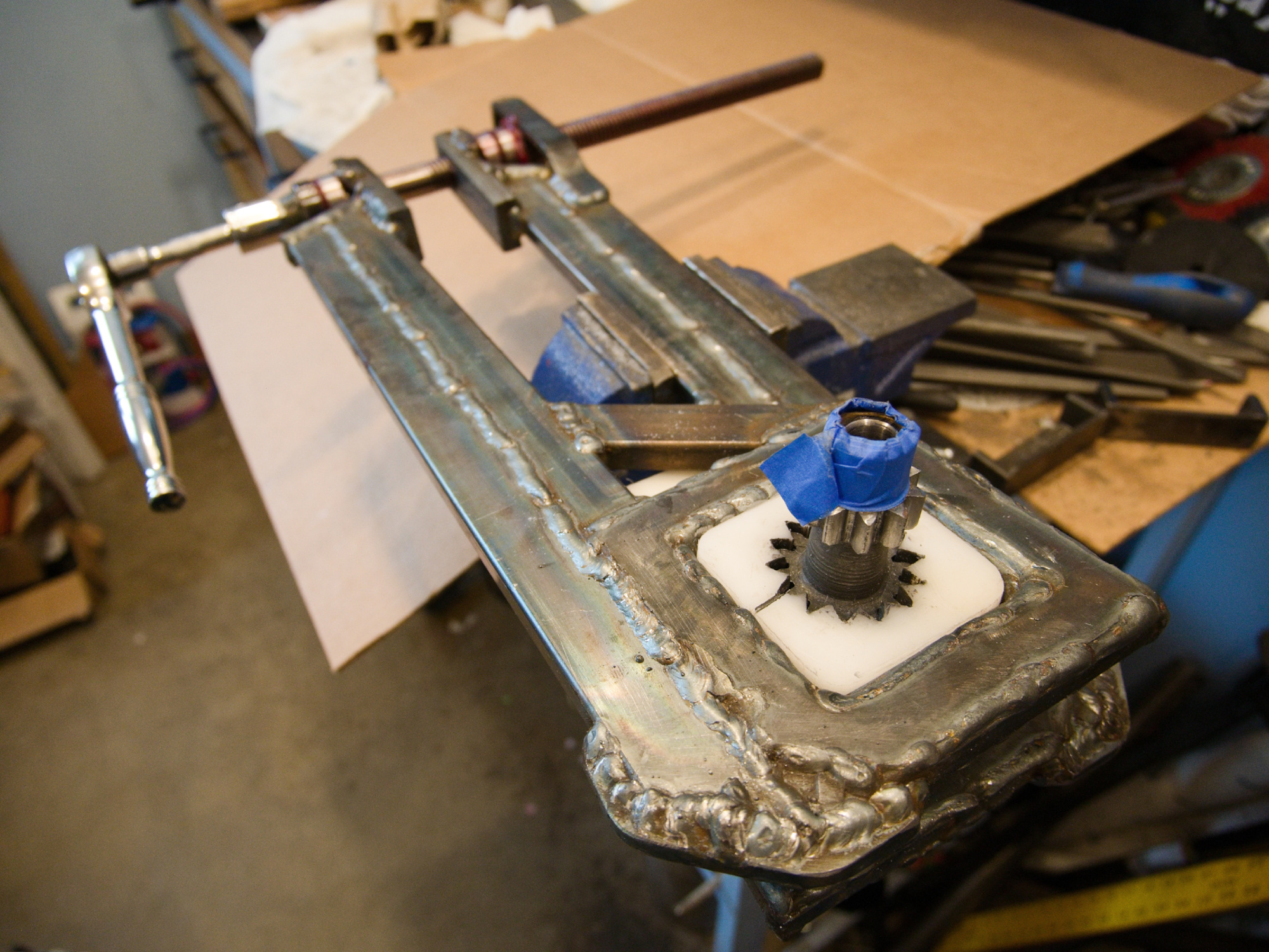
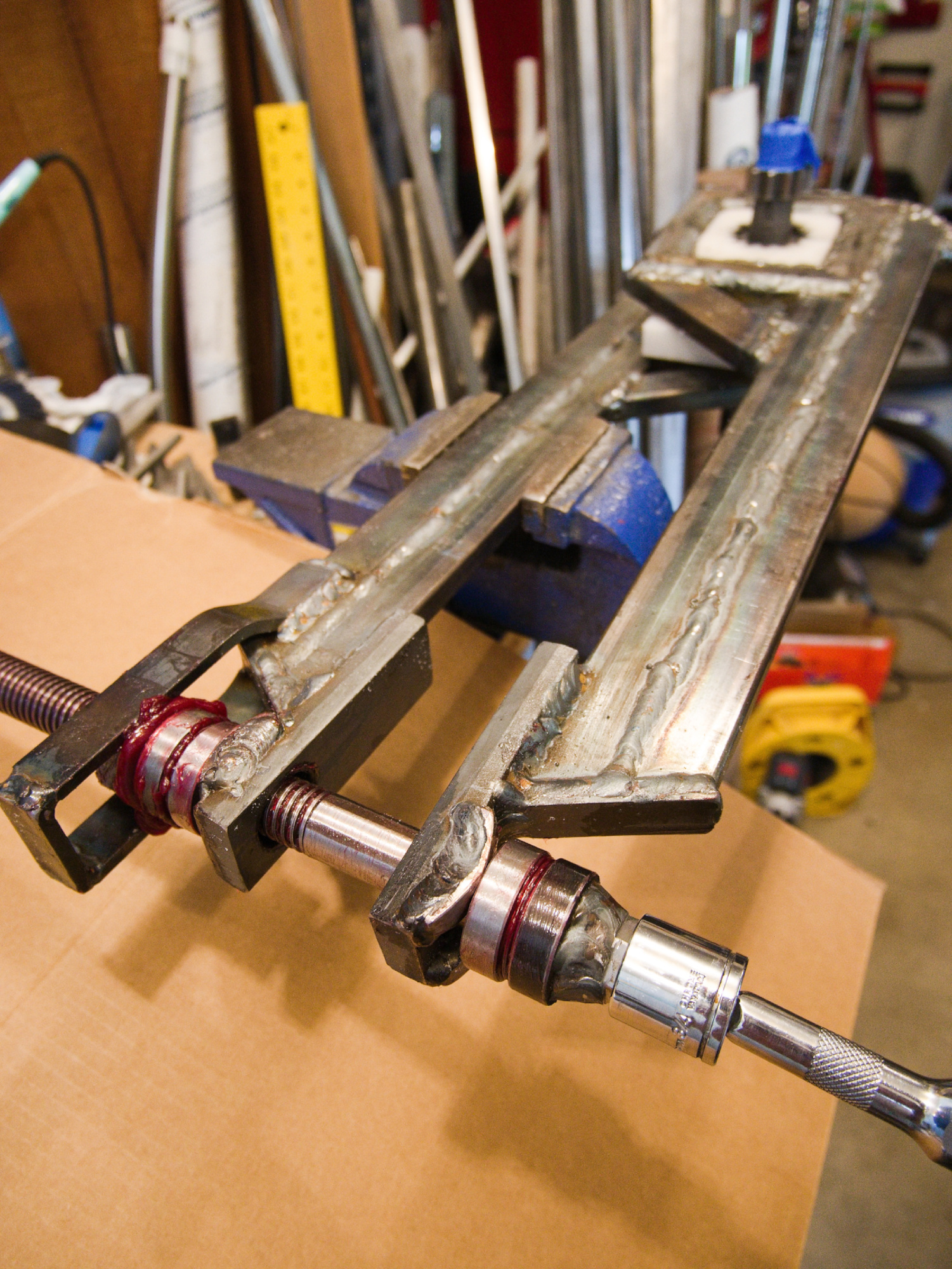
I used axial bearings to take the load sitting on small curved stainless steel rails. Slightly over-engineered, but it worked so smoothly.
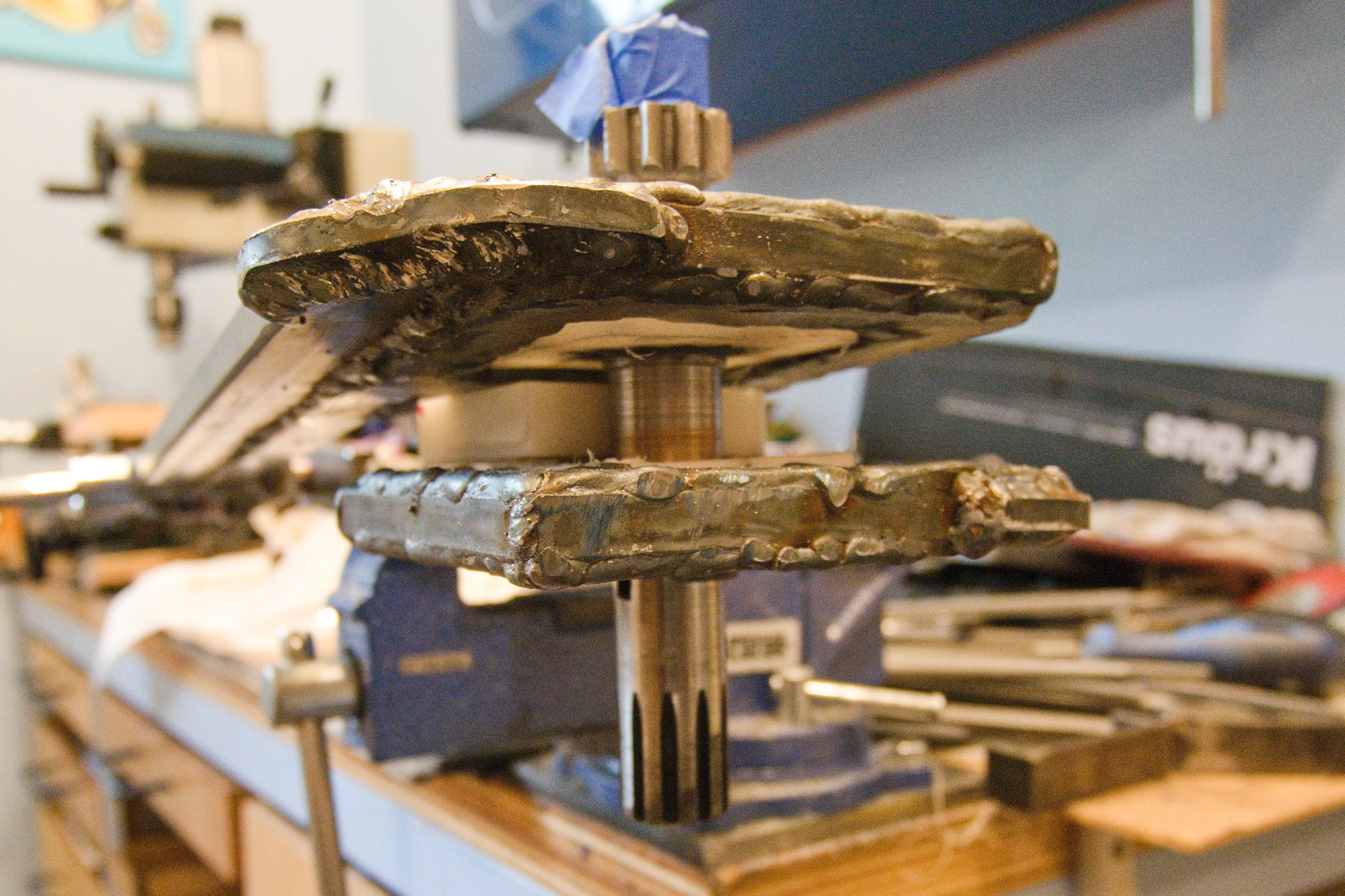
Used a piece of plastic to keep the distance between 3rd and 4th during the angular adjustment.
-
CJ750 Gearbox gets a new 3rd and 4th gear - Adjust the input shaft
The input shaft should have a 0.2mm clearance.
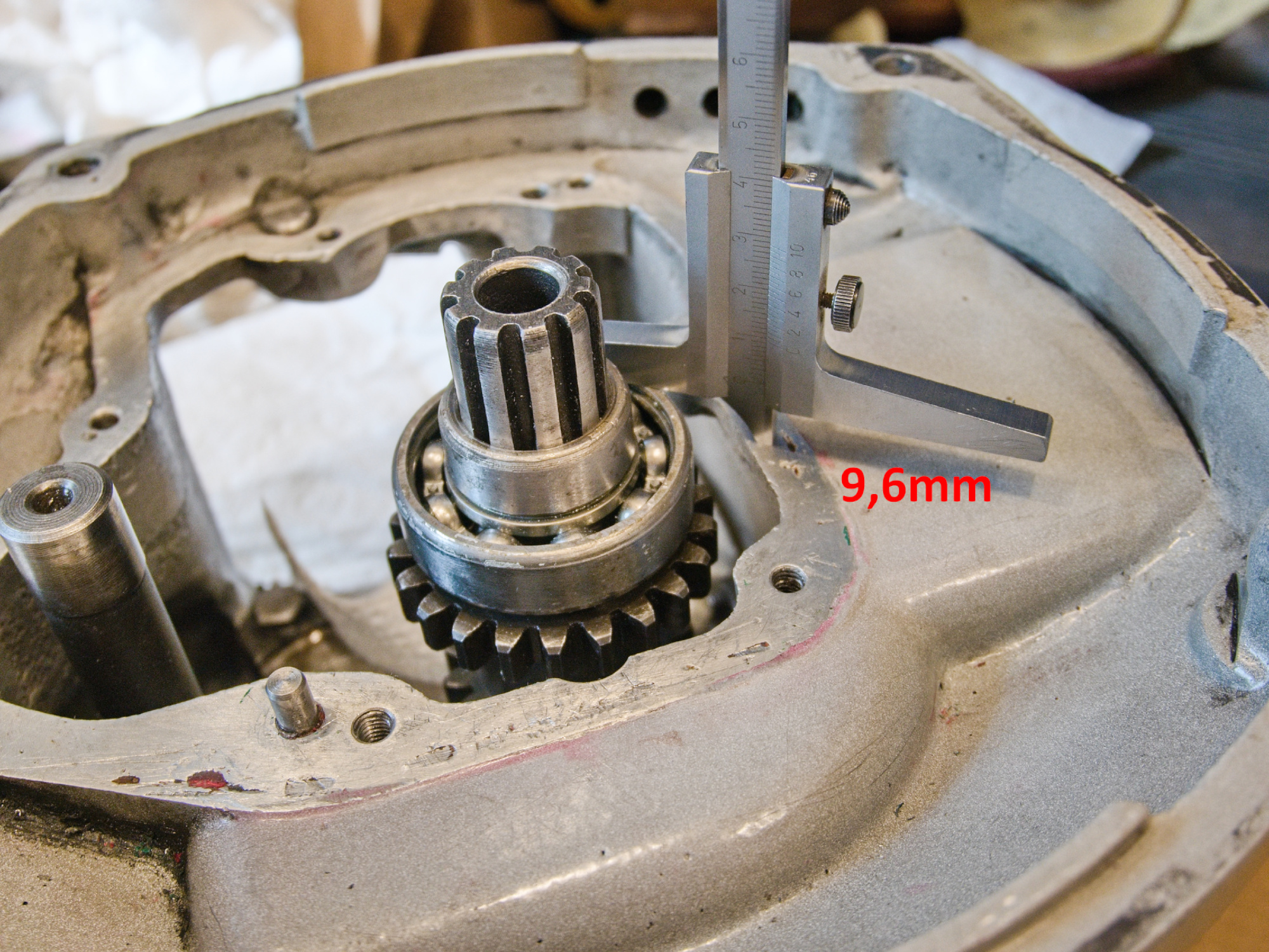
First start with the measurement from the bearing to the housing.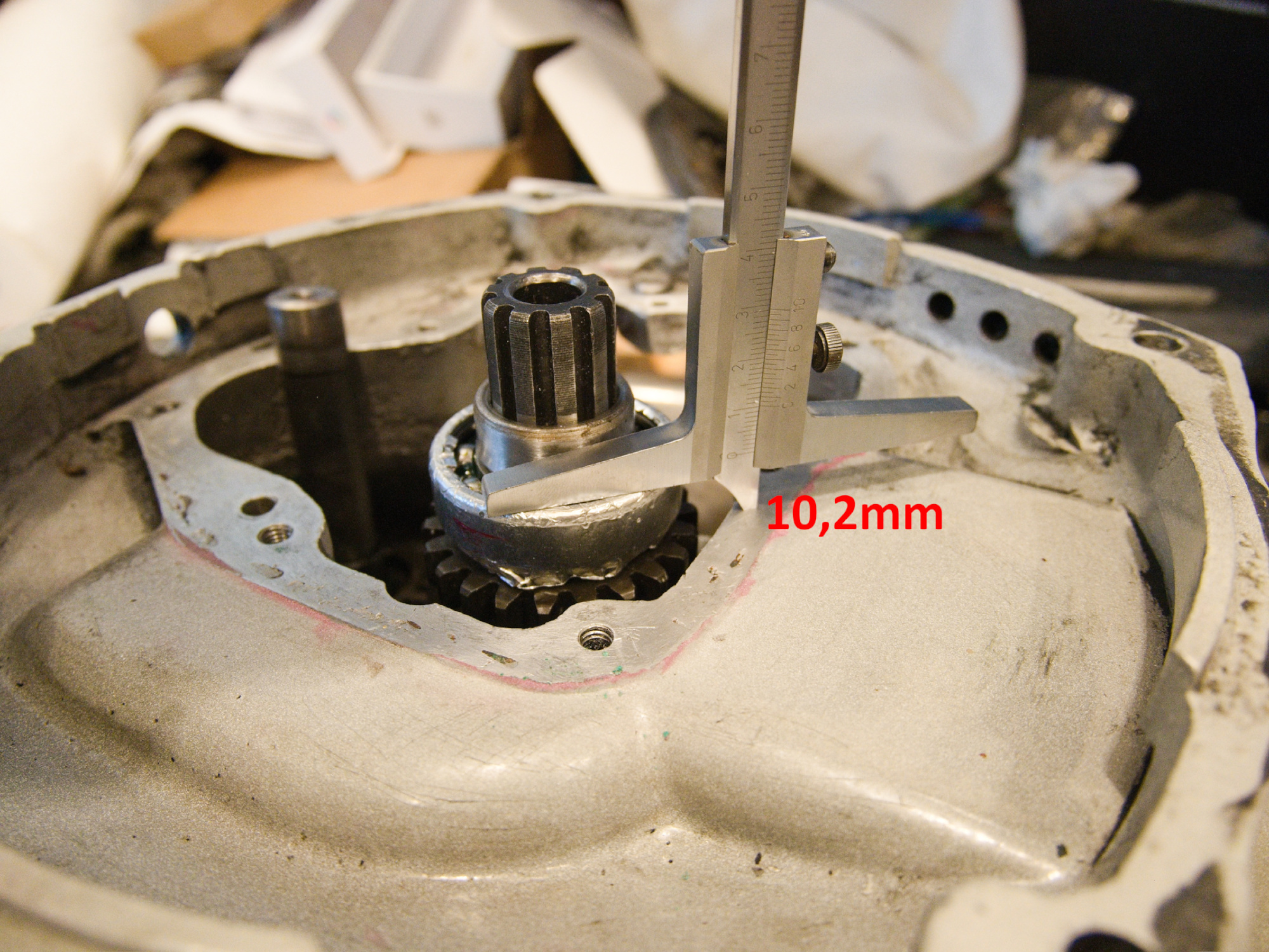
Take the measurement of the depth of the bearing reception.
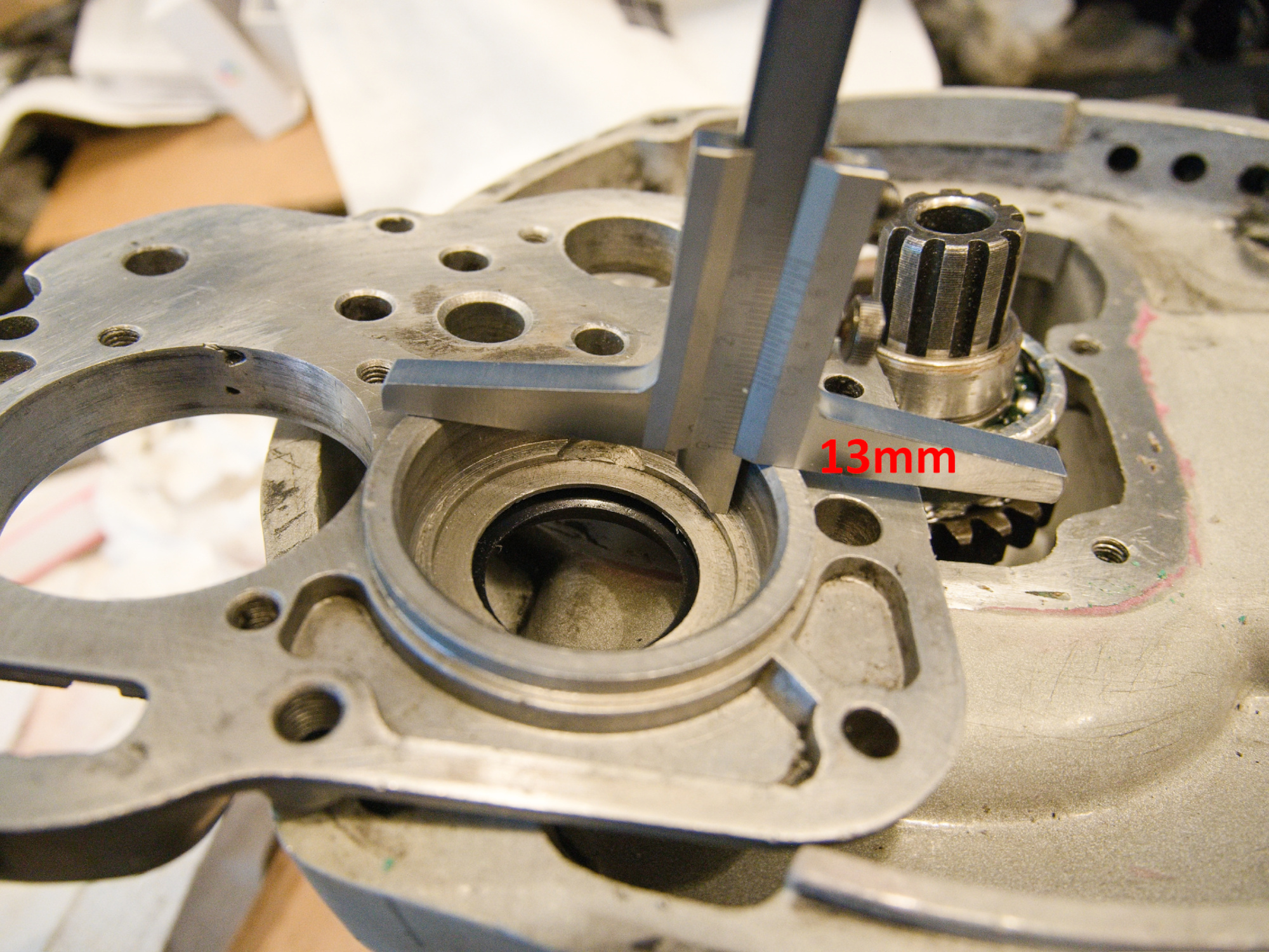
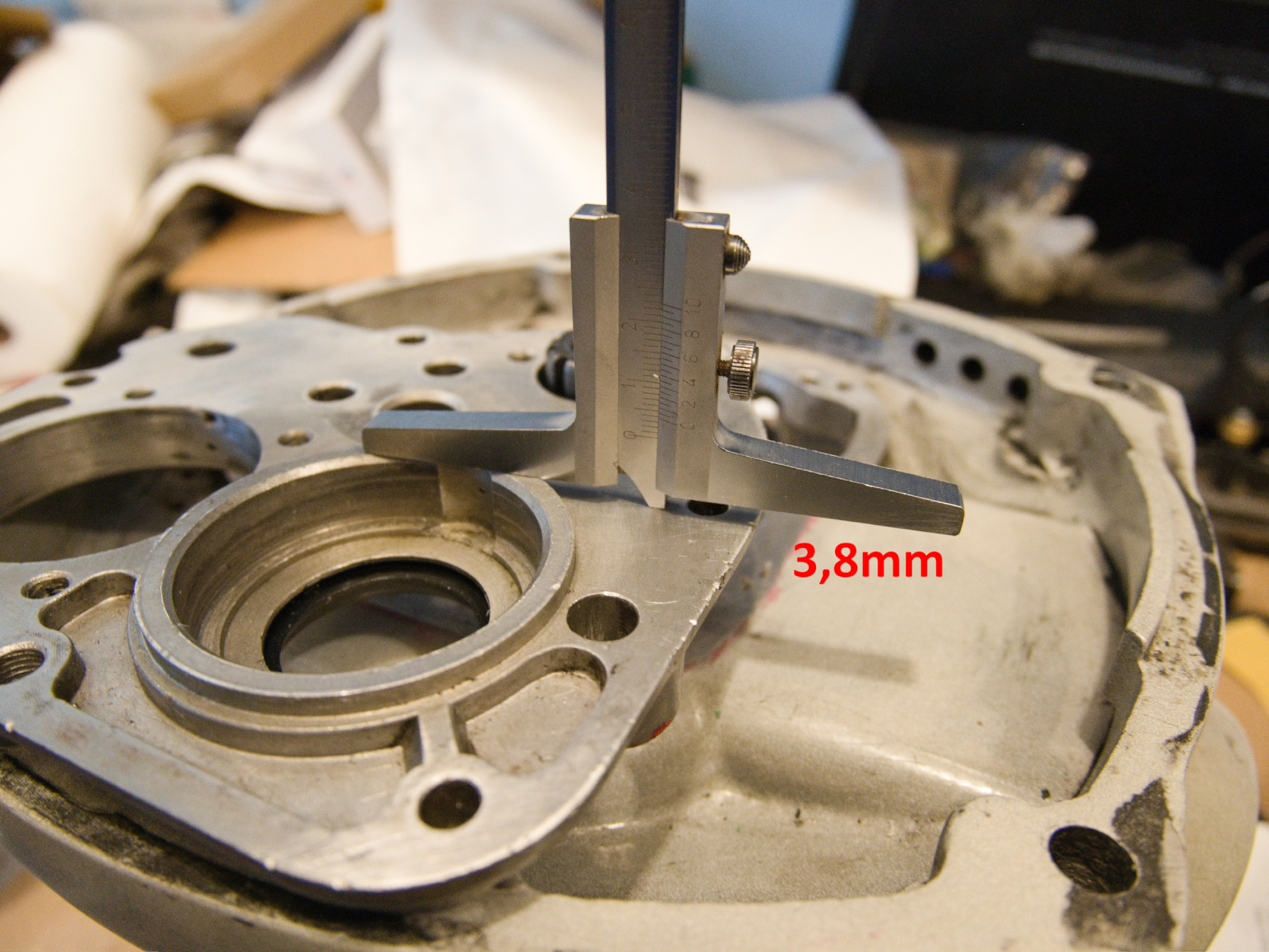
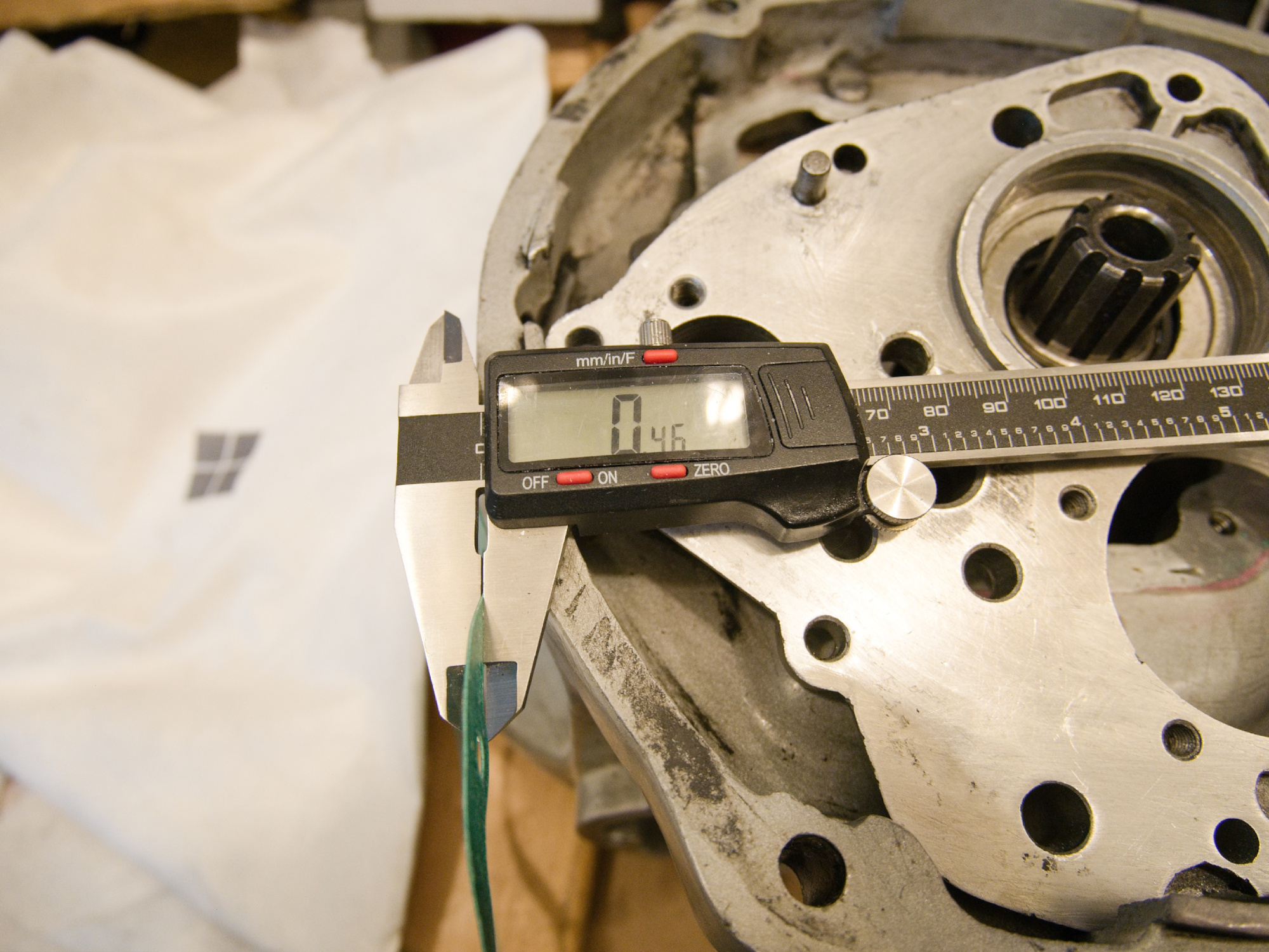
The gasket is available in two different thicknesses, so make sure to measure it.
Now adjust the position of the bearing. Moving the bearing to the measured length can be challenging as the bearing does not slide but rather jump in steps. To solve this, place a gauge block with a feeler gauge of matching thickness between the bearing and the gear as a stop block. Adjust the gauge size for each measurement cycle to achieve precise positioning.
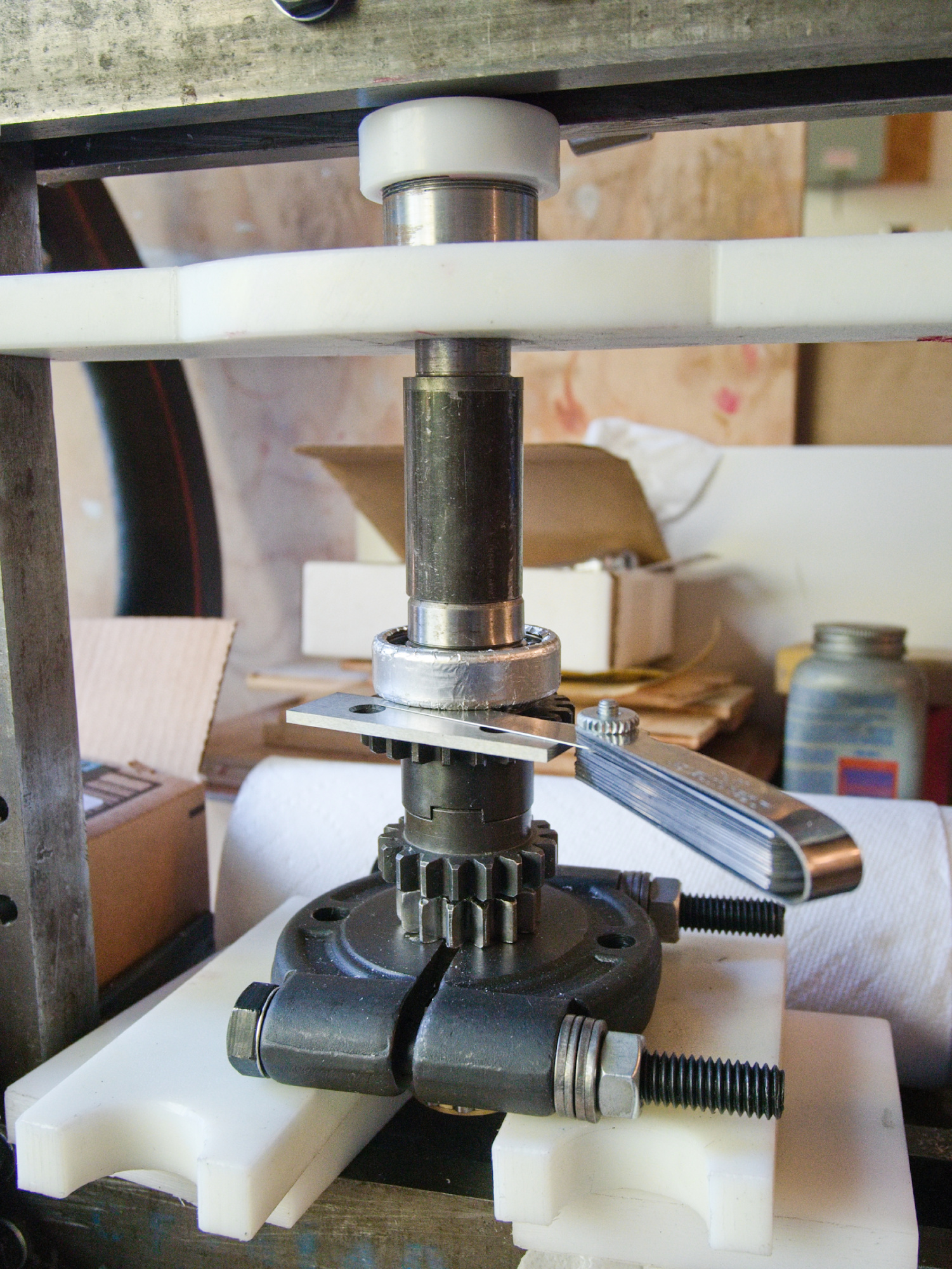
Check the measurement again and verify the play with the cover and gasket (dry) on.
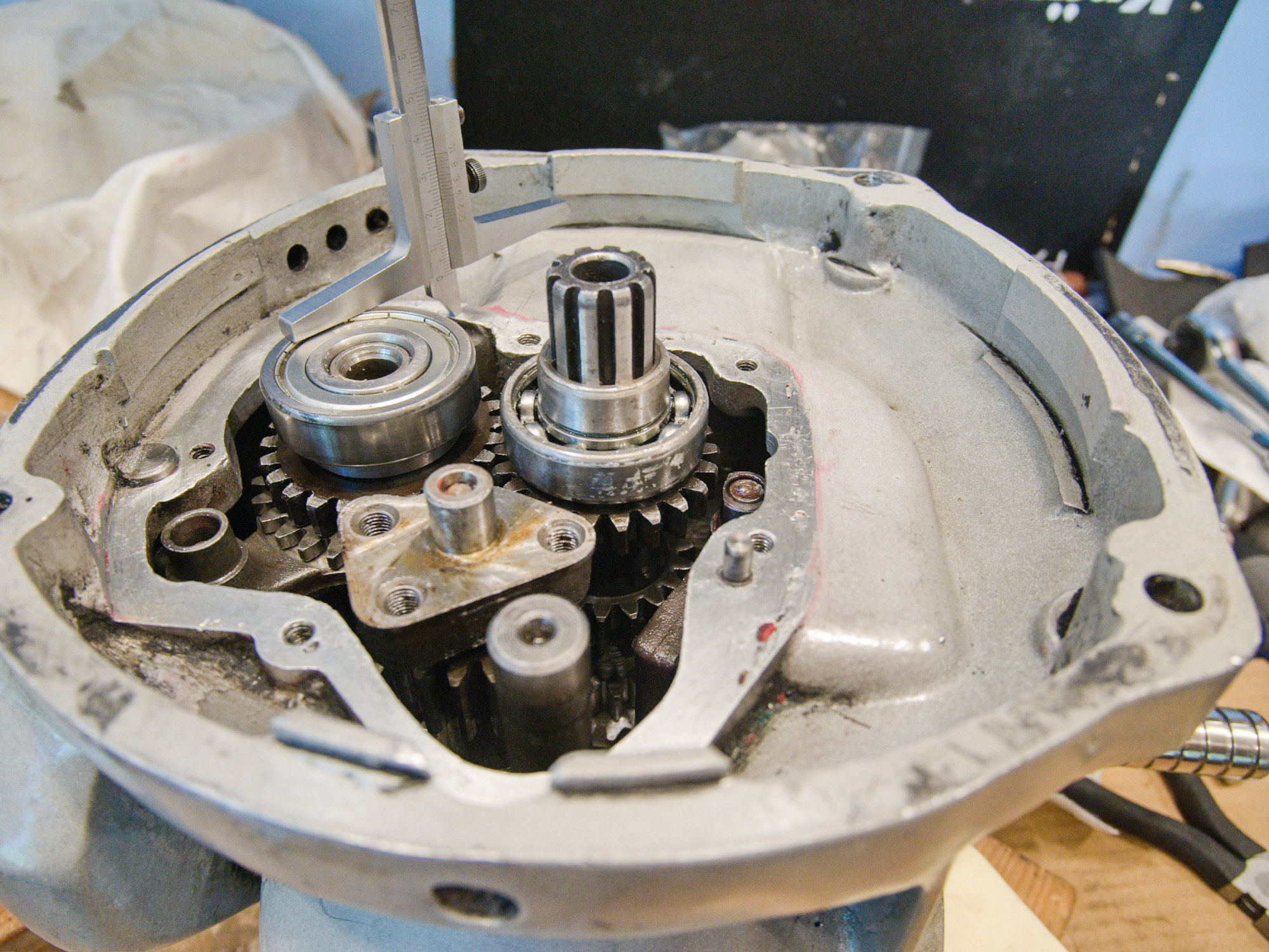
The same for the output shaft to make sure the smaller back cover does not push against the bearing and also has a 0.2mm clearance.
-
CJ750 Gearbox gets a new 3rd and 4th gear - Oil catch disc
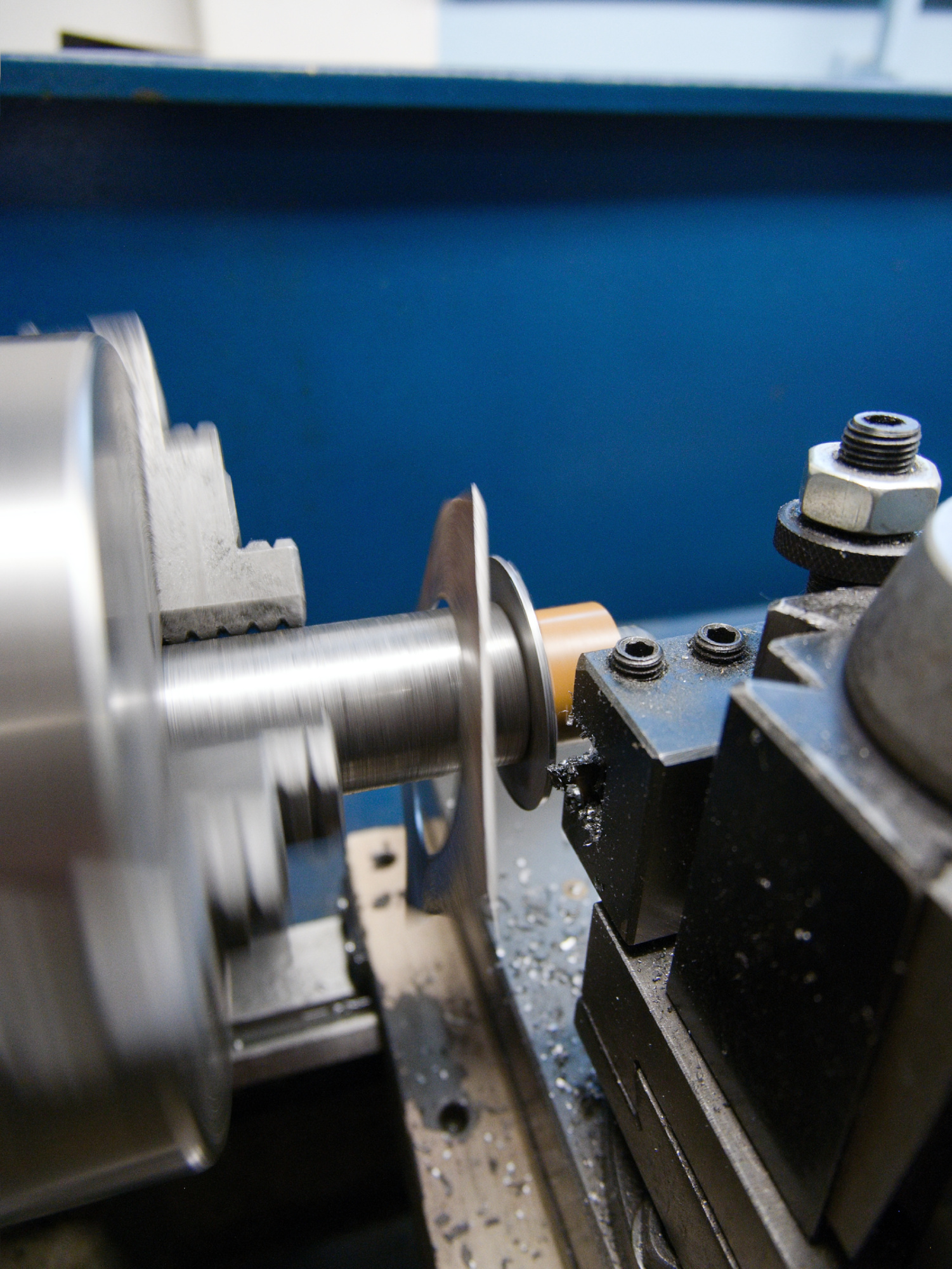
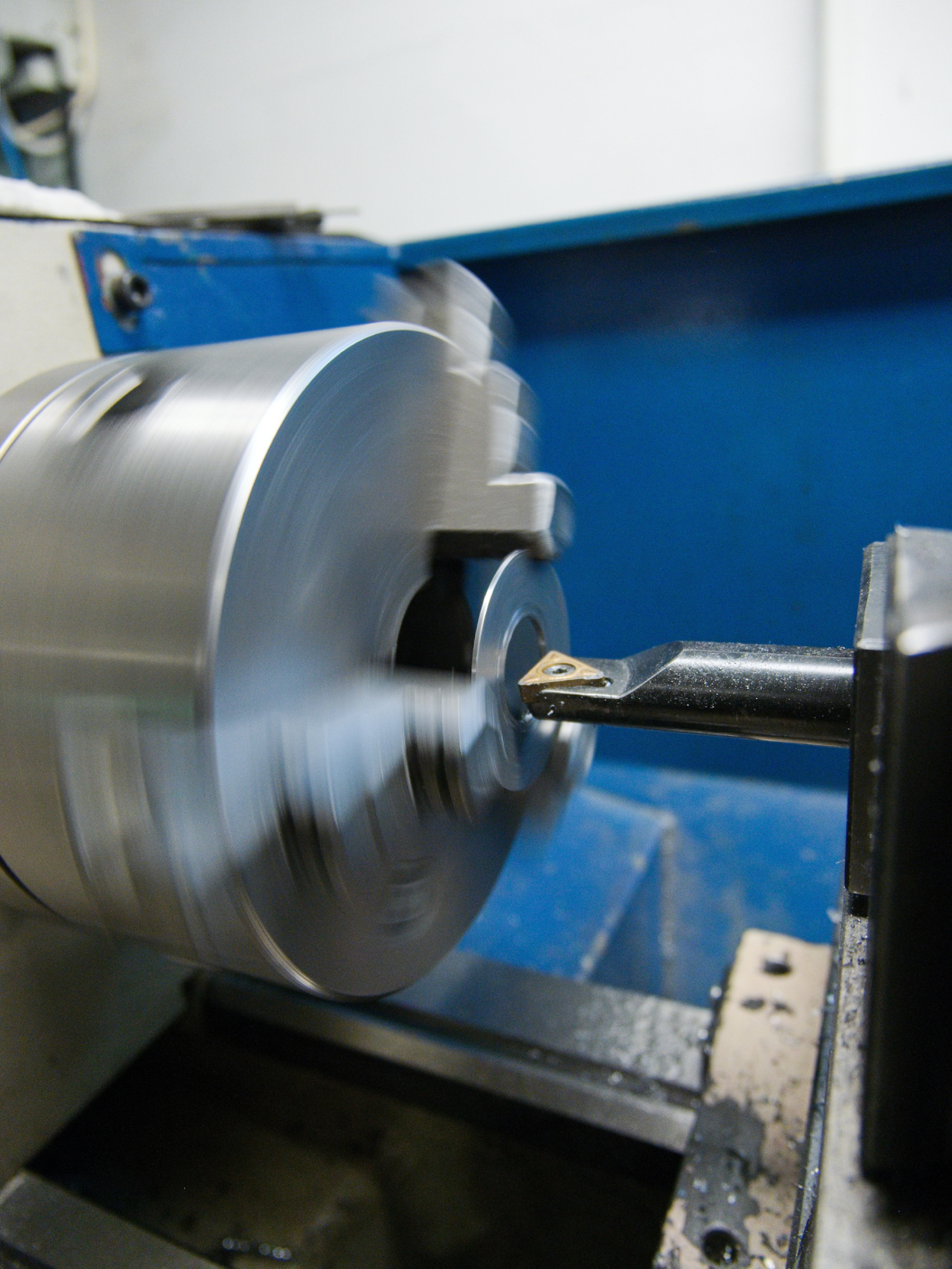
The oil catch disc is located between the 1st gear and the bearing on the input shaft.
Needs to be fabricated because there would be too much damage to the old one when pulling off.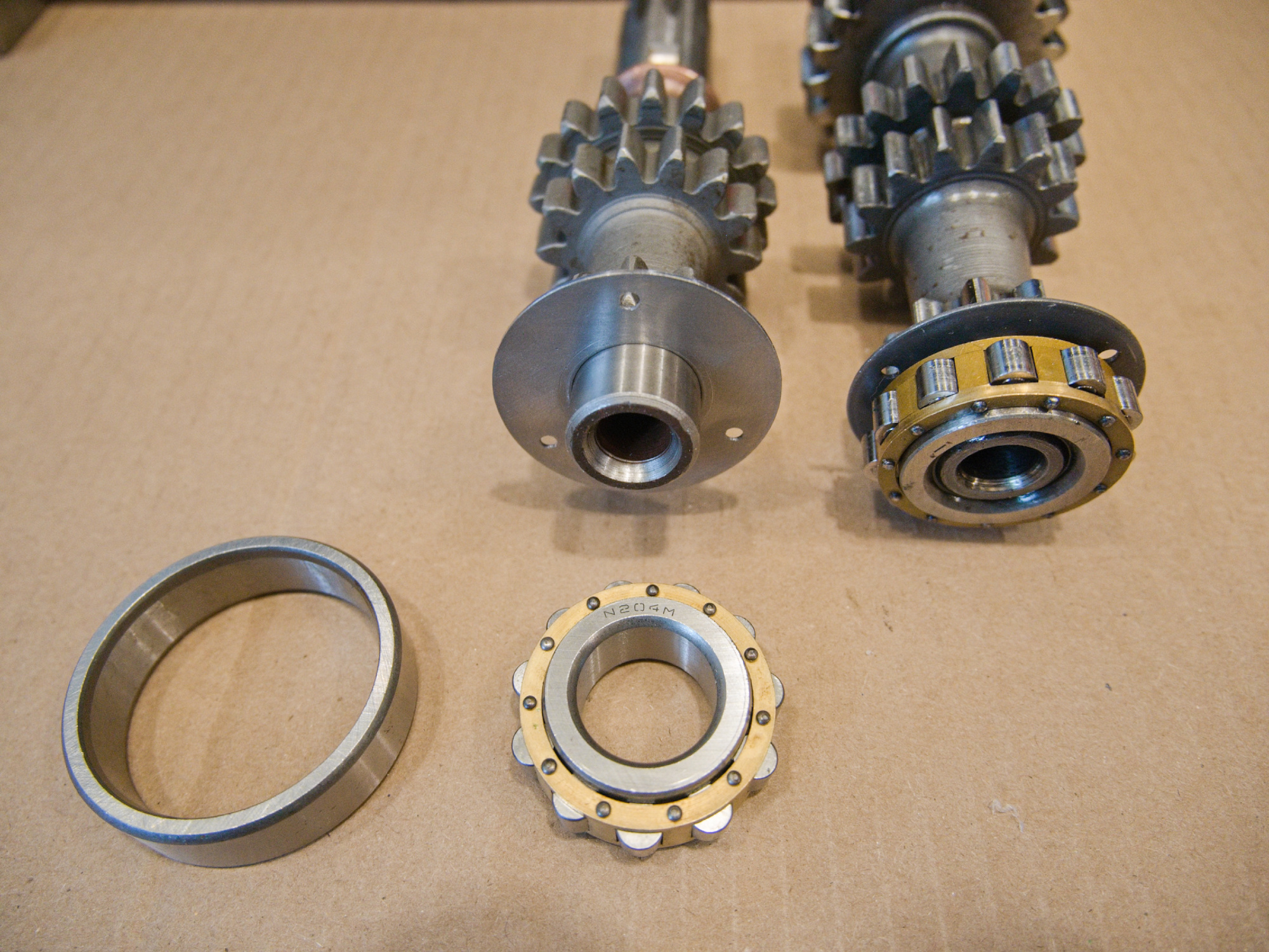
The disc gets fabricated from a piece of sheet metal on the lathe:
-
CJ750 Gearbox gets a new 3rd and 4th gear - Install 3rd and 4th gear
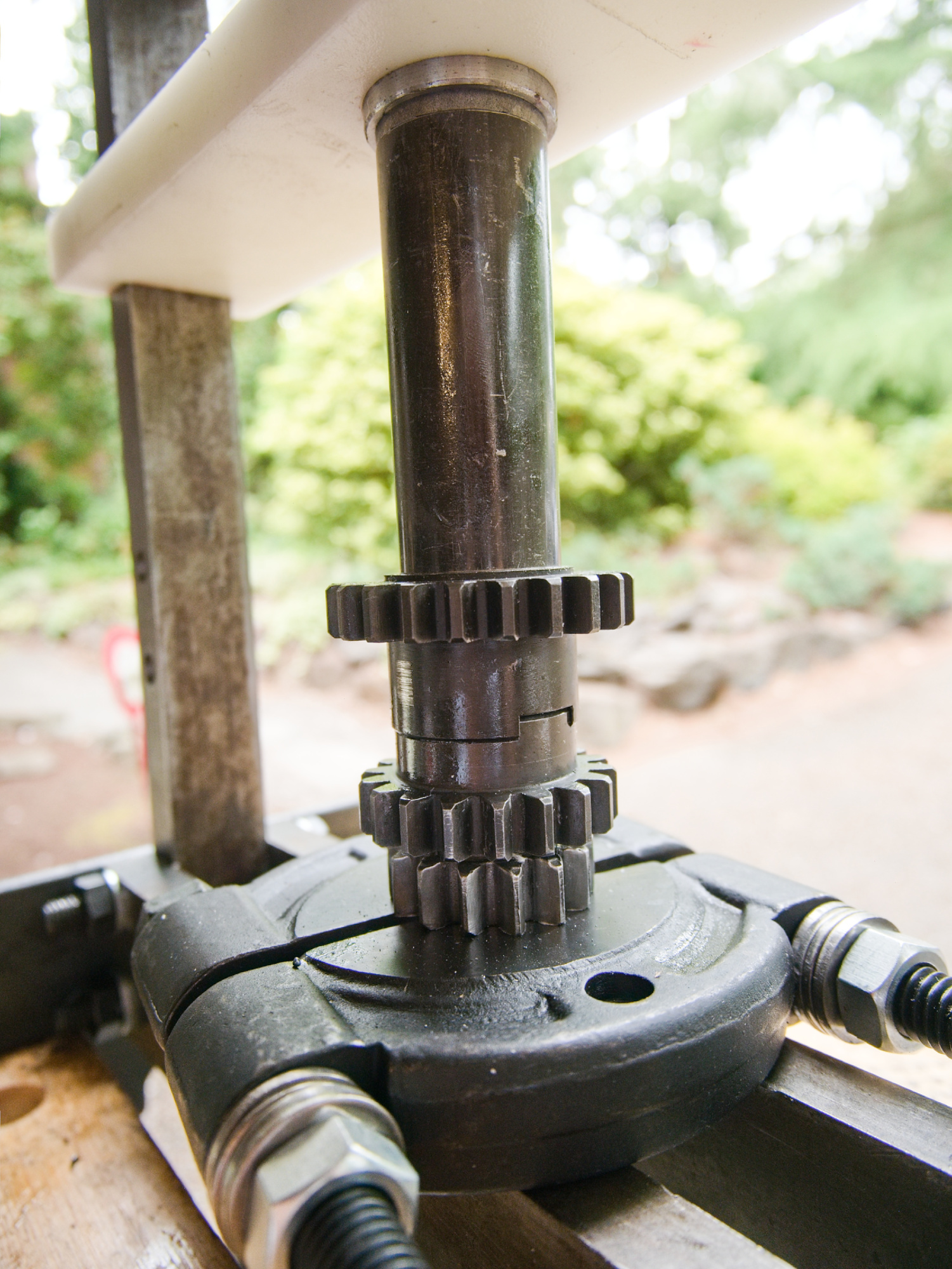
The 3rd gear gets pressed on first. Note the angular position of the gear as it locks into the later 4th gear.
I built this press just for this. I could have bought myself a 20t press, but it takes two much space, and I rarely need it. It was also a lot of fun building it!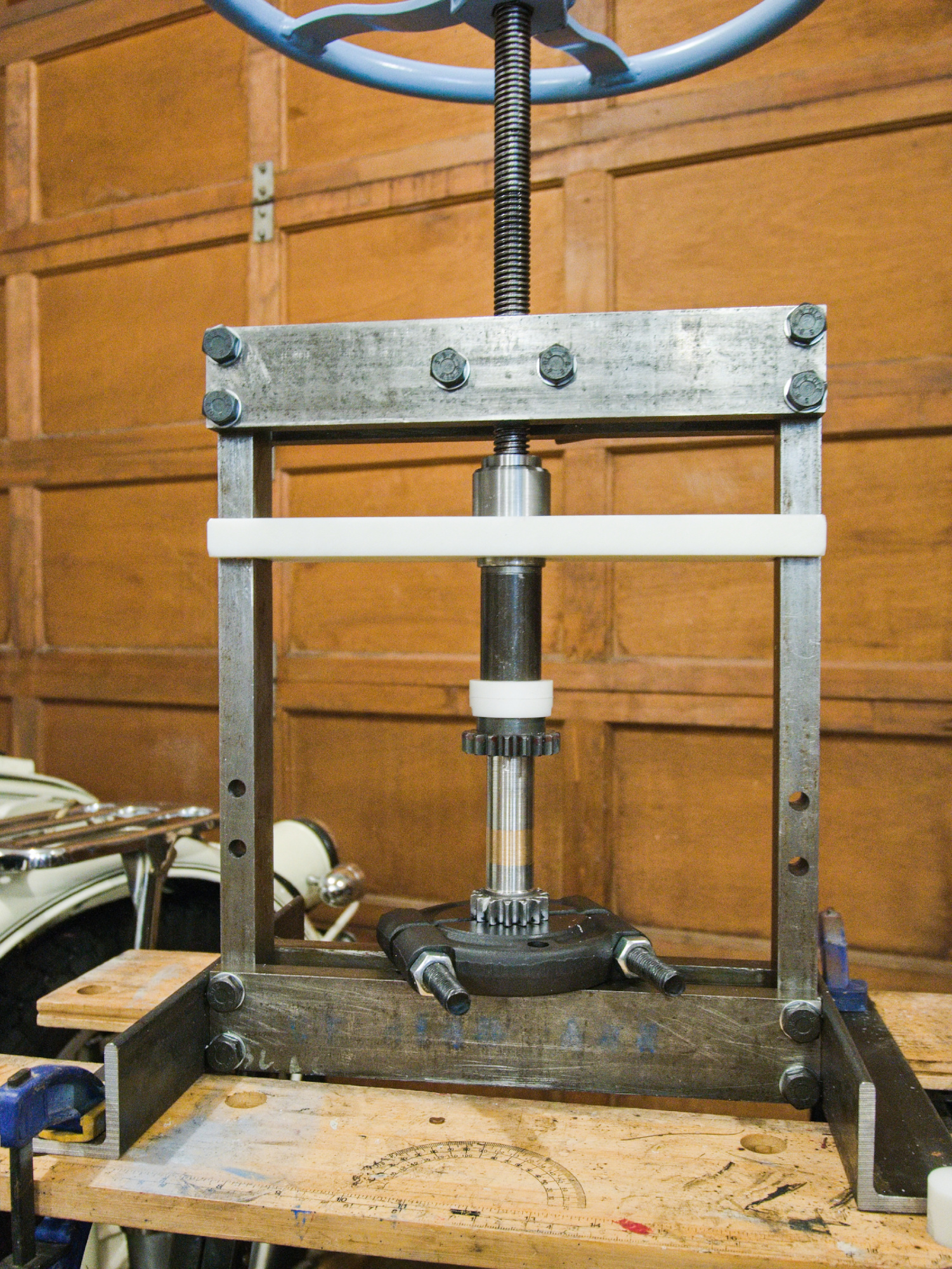
The two round holders at the top of the press are designed to accommodate a round bar for increased leverage.
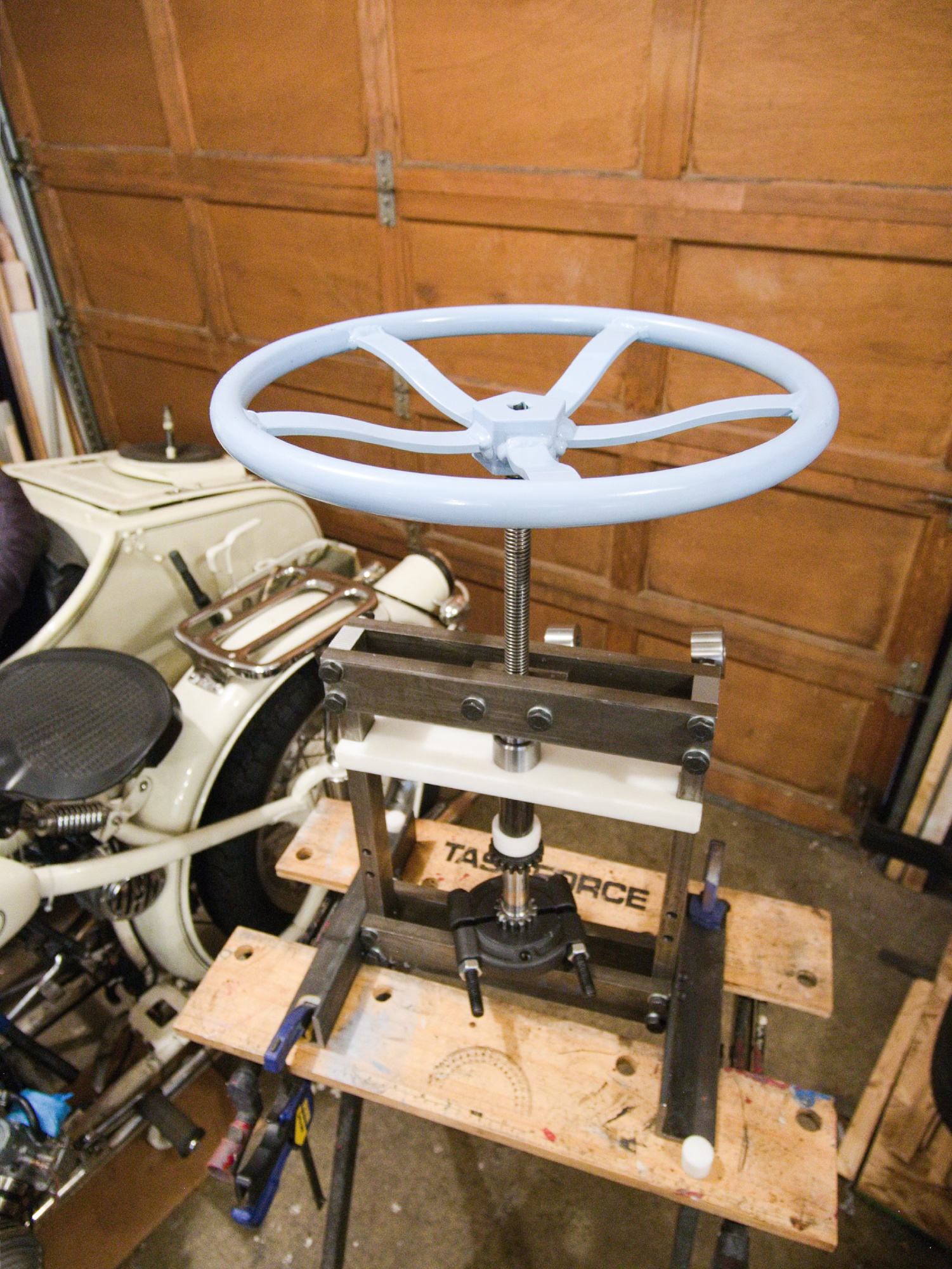
With an oversize of 3/100mm there is still a lot of force required for this. The gears are secured with Loctite 638.
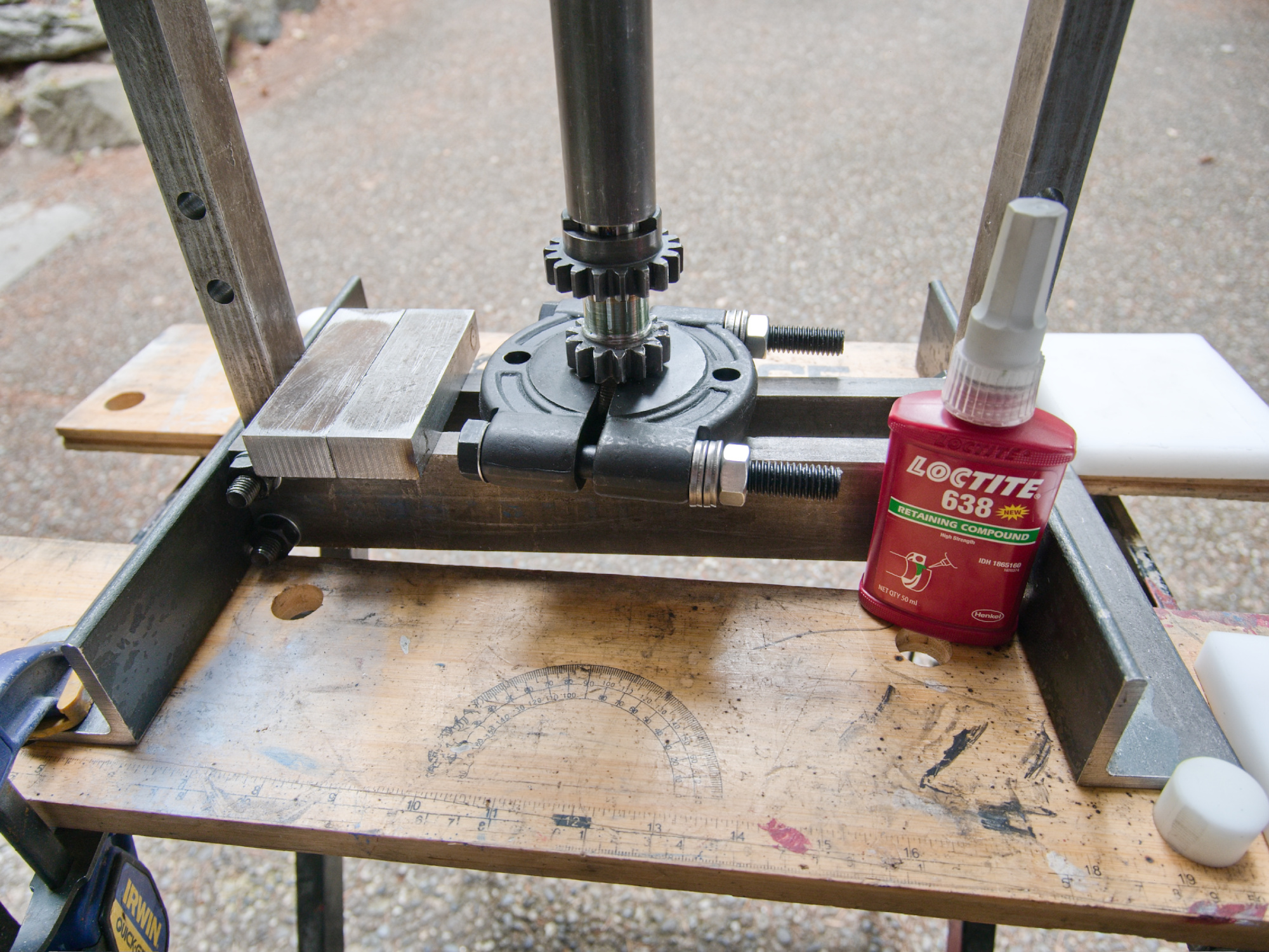
Note the angular position of the 3rd gear to the position of the key.
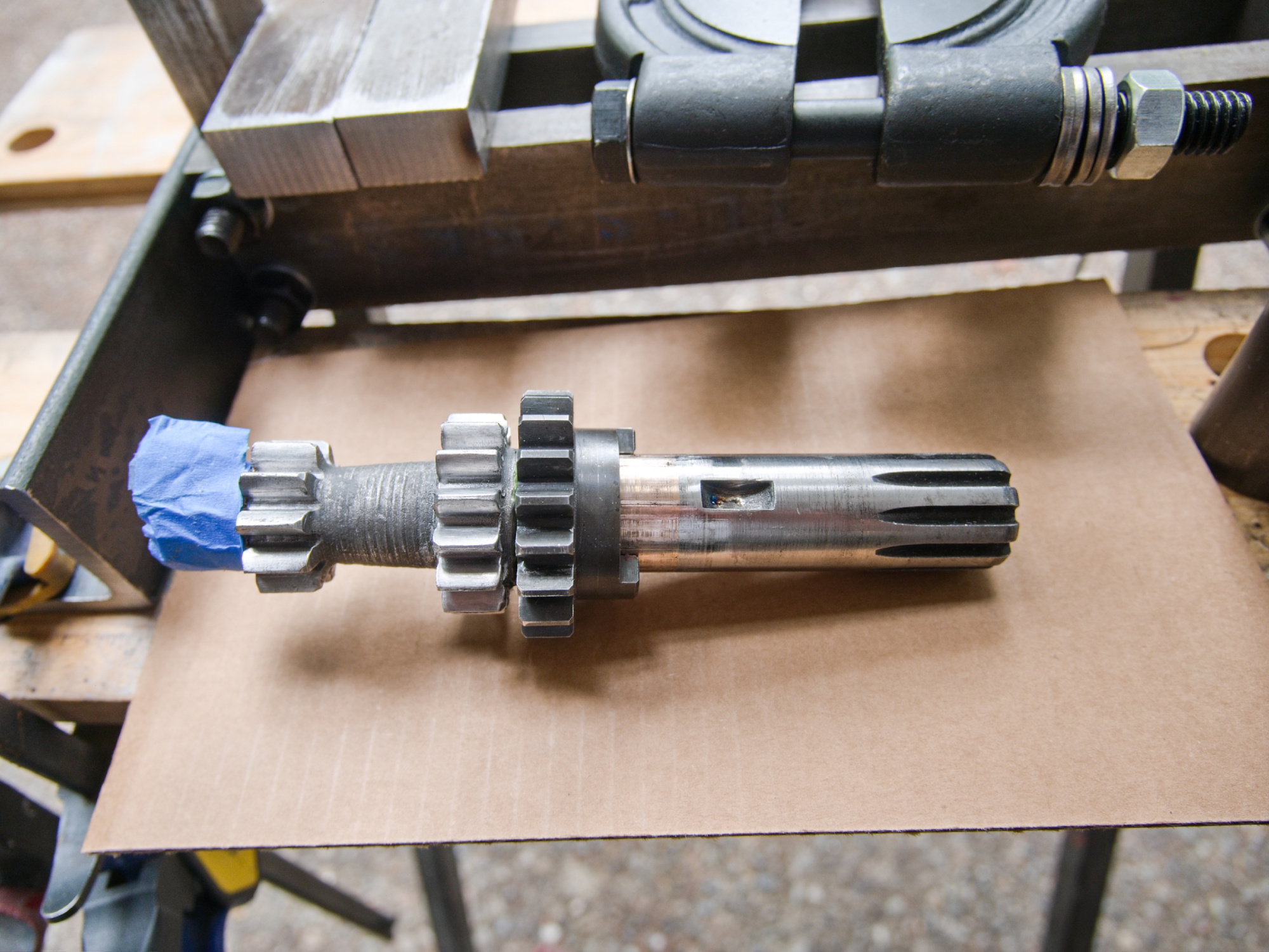
Once the 3rd gear is aligned (described in Align 3rd and 4th gear), the 4th gear along with the key is pressed on.
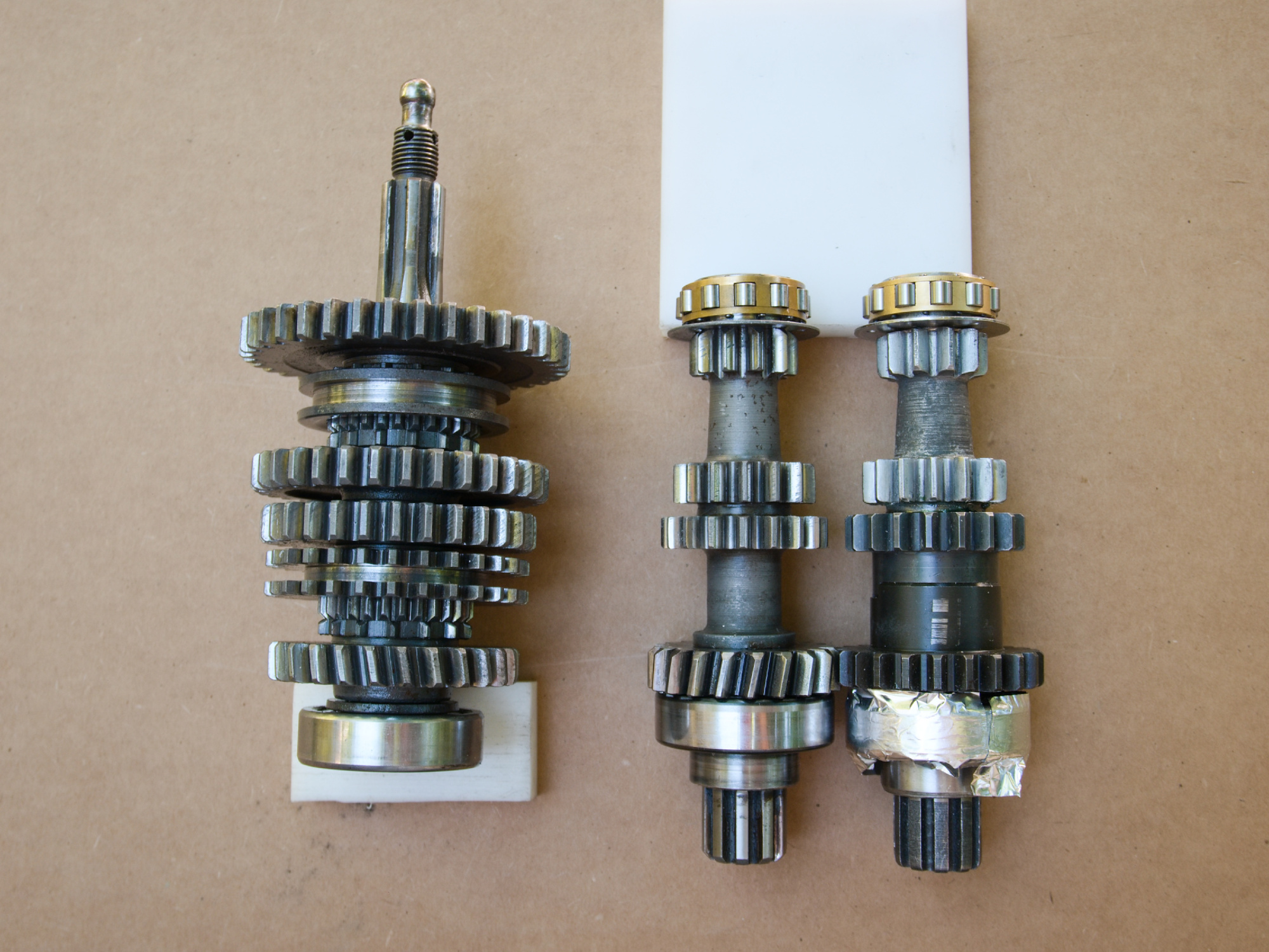
Old and new input shaft side by side.
-
CJ750 Gearbox gets a new 3rd and 4th gear - The Plan
My CJ750 motorcycle has a BMW R100 engine, and driving with 100km/h (60mph) on the freeway requires almost 5000rpm. This has to be changed.
The gearbox for the CJ750 (and the M72) has the following ratios:
gear# gear tooth ratio gear ratio 1st 36 / 10 3.6 2nd 32 / 14 2.29 3rd 29 / 17 1.71 4th 26 / 20 1.3 Reverse 4.2 With a tire circumference of 26 inch and a final drive ratio of 37/8, the rpms require to drive 100km/h (60mph) in 4th gear for all available gear ratios 26/20 (1.30), 25/21 (1.19), 24/22 (1.09) and 23/23 (1.00) are:
rpm for 100km/h 4th gear ratio 4830 1.3 4421 1.19 4050 1.09 3715 1.0 4050rpm is good for 100km/h with a sidecar, so the 24/22 for the 4th gear is selected.
The change from 1.3 to 1.09 is actually the same as using a high speed final drive with a 35/9 ratio instead (1.09 37 / 8 9 / 35 = 1.3). I'm using an EU quality final drive with a 37/8 ratio to avoid the russian and chinese junk, so thats why I need the adjustment in the gearbox.
To only change the 4th gear to 24/22, the ratio changes would be 1.57 - 1.34 - 1.421st: 36/10 (3.60) 1.57 2nd: 32/14 (2.29) 1.34 1.48 1.48 1.48 3rd: 29/17 (1.71) 28/18 (1.55) 28/18 (1.55) 28/18 (1.55) 1.32 1.30 1.42 1.55 4th: 26/20 (1.30) 25/21 (1.19) 24/22 (1.09) 23/23 (1.00) The change ratio decreases with increasing gear number for all gearboxes I checked.
For example, one BMW gearbox had 1.51 - 1.37 - 1.25:
1st: 3.90 - 1.51 - 2nd: 2.58 - 1.37 - 3rd: 1.88 - 1.25 - 4th: 1.5But 1.57 - 1.34 - 1.42 (with only the 4th gear changed) is not monoton decreasing.
The only possible replacement for the 3rd is a 28/18 from the DNEPR MT804. Fortunately, this gets a ratio change of 1.48, and the sequence is now monoton decreasing. And it almost matches the ratio if a high speed drive would be used (1.71 35 / 9 8 / 37 = 1.437).So the new 3rd gear is a 28/18.
But the CJ750 input gear shaft is designed have only the 4th gear changed. This requires that the 3rd gear needs to be removed and the input shaft modified so that the new 3rd/4th gear can be pressed on.
The inner diameter of all output shaft gears are 26mm with a 10.5mm tooth width and only need a new spacing. Leszek from oldtimergarage.eu has verified the measurements for this unique project, and now it is all set to launch! 🚀
First, the gearbox needs to be disassembled.
Exploded CJ750 Gearbox, Type 52:
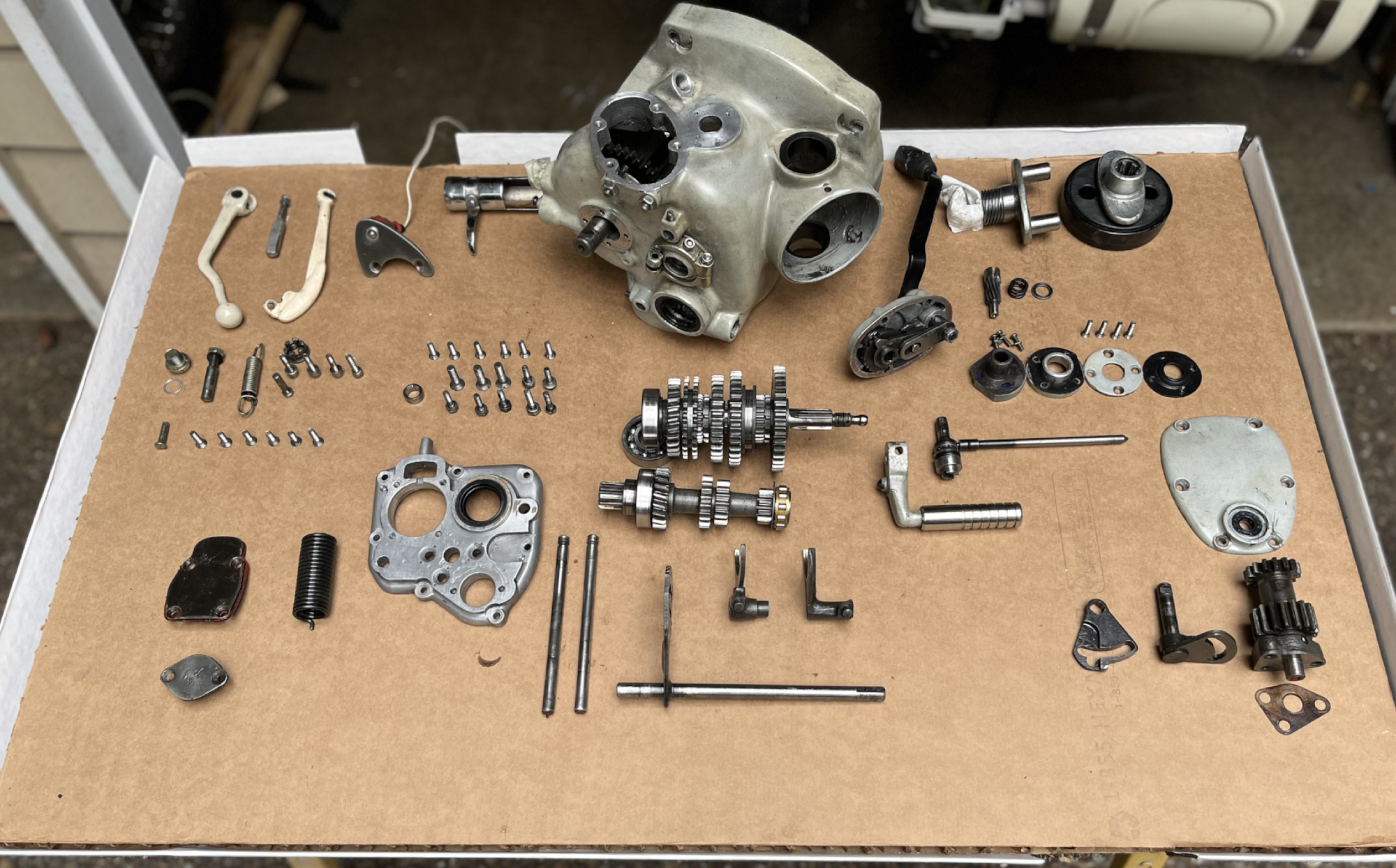
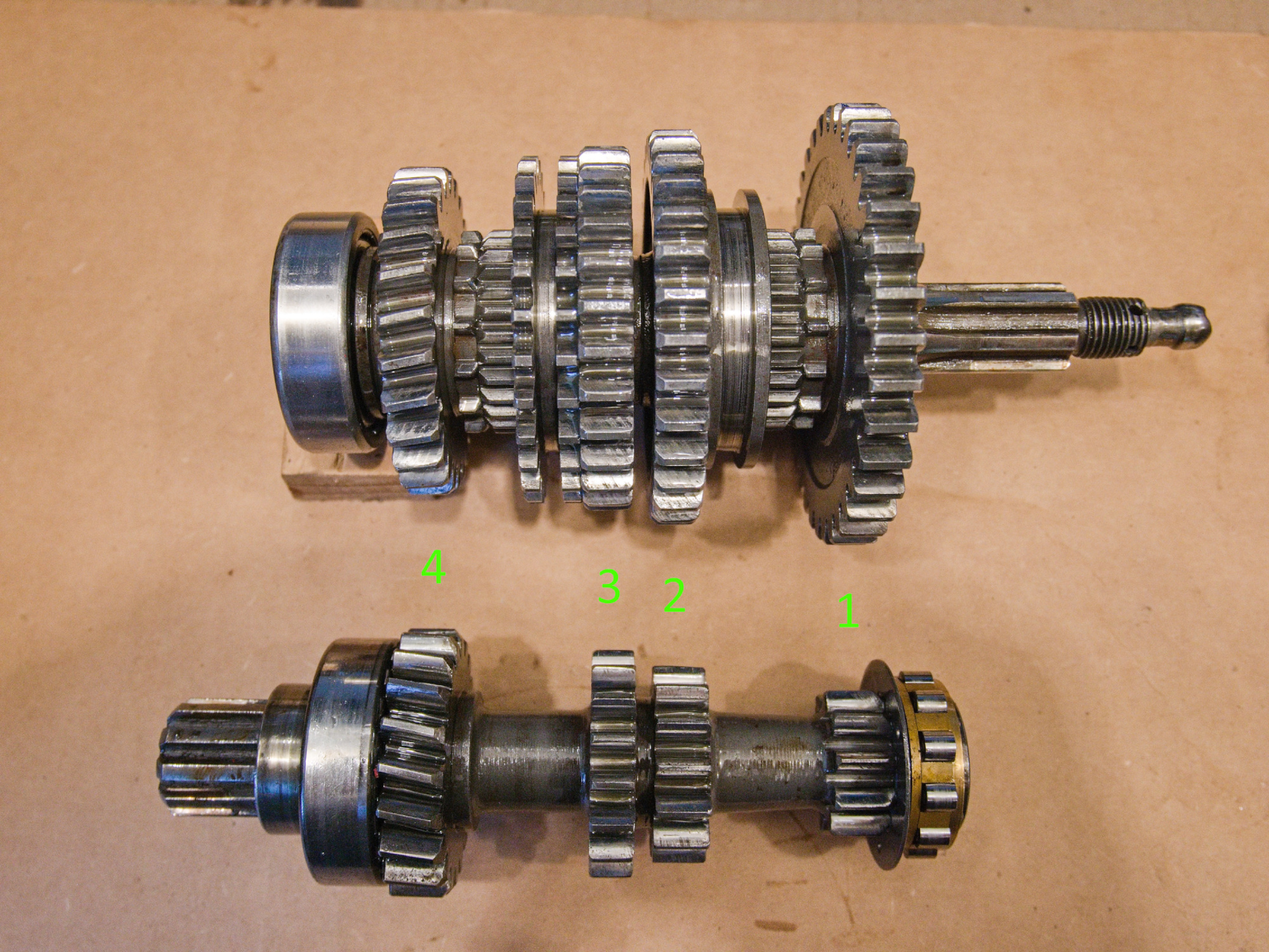
Gears on the upper output shaft are all free spinning and can be replaced easily, while the lower input shaft has only the 4th gear pressed on. The 1st, 2nd and 3rd are fixed and part of the input shaft structure.
Project plan
For the upper shaft, new spacers will be created to align the new (free spinning) gears, and for the lower input shaft, the 4th gear is pulled, the 3rd gear removed and the shaft machined for the new gear set to be pressed on.