-
DIY Solar Filter
Bei der Sonnenfinsternis 2023 war die Belichtung mit 1/4000s f/32 ISO 100 selbst mit einem ND7-Filter noch zu viel.
Spezielle Solarfilter sind notwendig, um die Sonne richtig belichtet zu fotografieren. Für ein paar Bilder lohnt es sich kaum solche Spezialfilter zu kaufen, denn die kann man ganz einfach selber in jeder Größe machen.
Dazu braucht man nur Filterfolie, die dem ISO 12312-2 Standard entspricht, und mit zwei Filterringen gehalten wird.- 10cm x 10cm Filterfolie (die hat eine Übertragung von 1:100000, enspricht 16.6 Blendenstufen, 2^16.6 ≈ 100000)
- 52-67mm Filterring
- 67-77mm Filterring
- Zwischenring aus Plastik oder ein Stück dünner Karton.
Die Filterringe müssen entsprechend dem zu verwendeten Objektiv ausgesucht werden. Für das verwendete Nikon 55-200mm ist das ein Filterring mit 52mm.
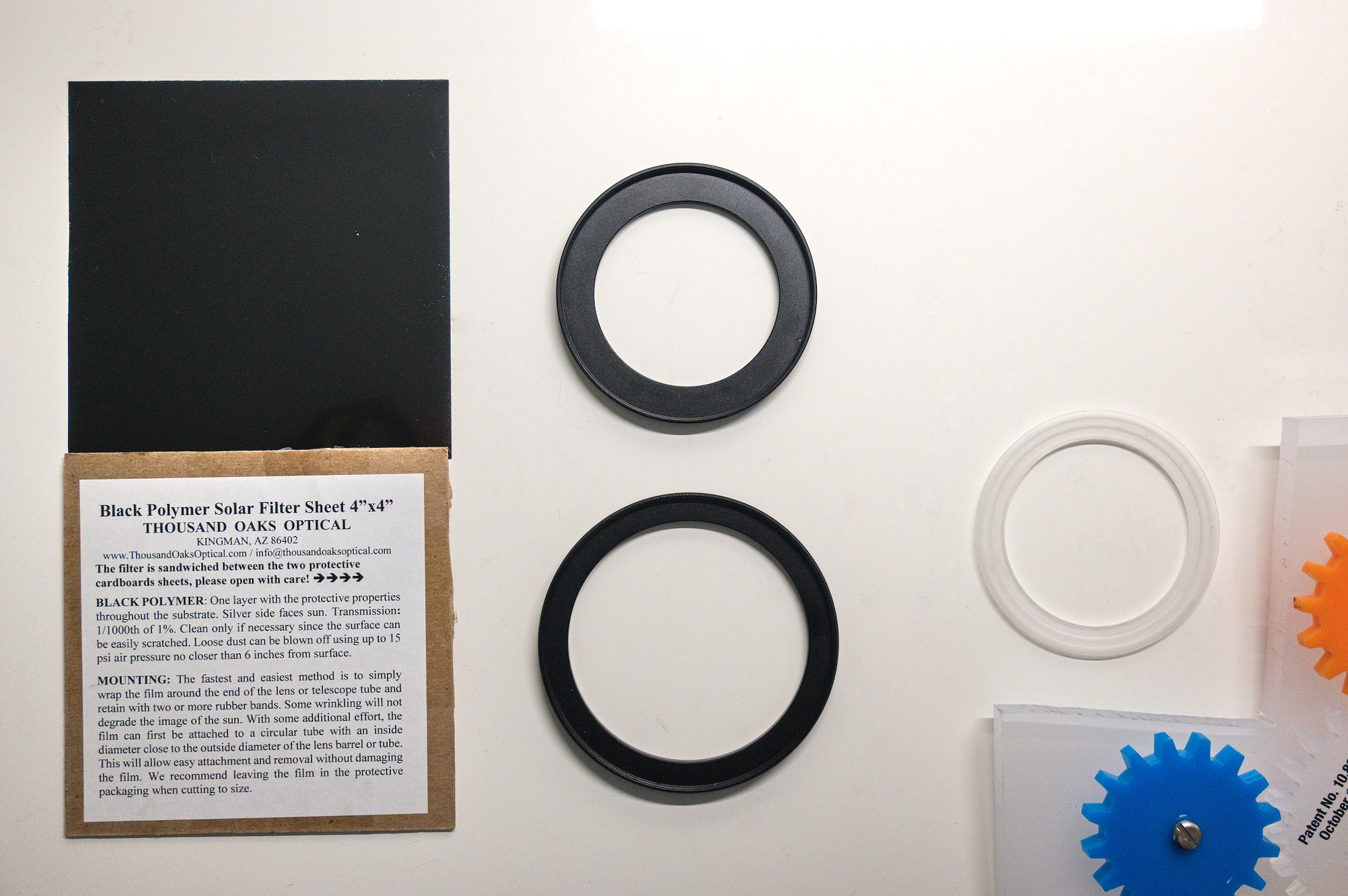
Mit einem Marker wird dann die Filterfolie zum Ausschneiden markiert. Am besten zieht man Einweghandschuhe an um Fingerabdrücke wie oben rechts in der Ecke demonstriert zu vermeiden. Interessanterweise aber haftet ein Permanentmarker nicht auf dieser Filterfolie.
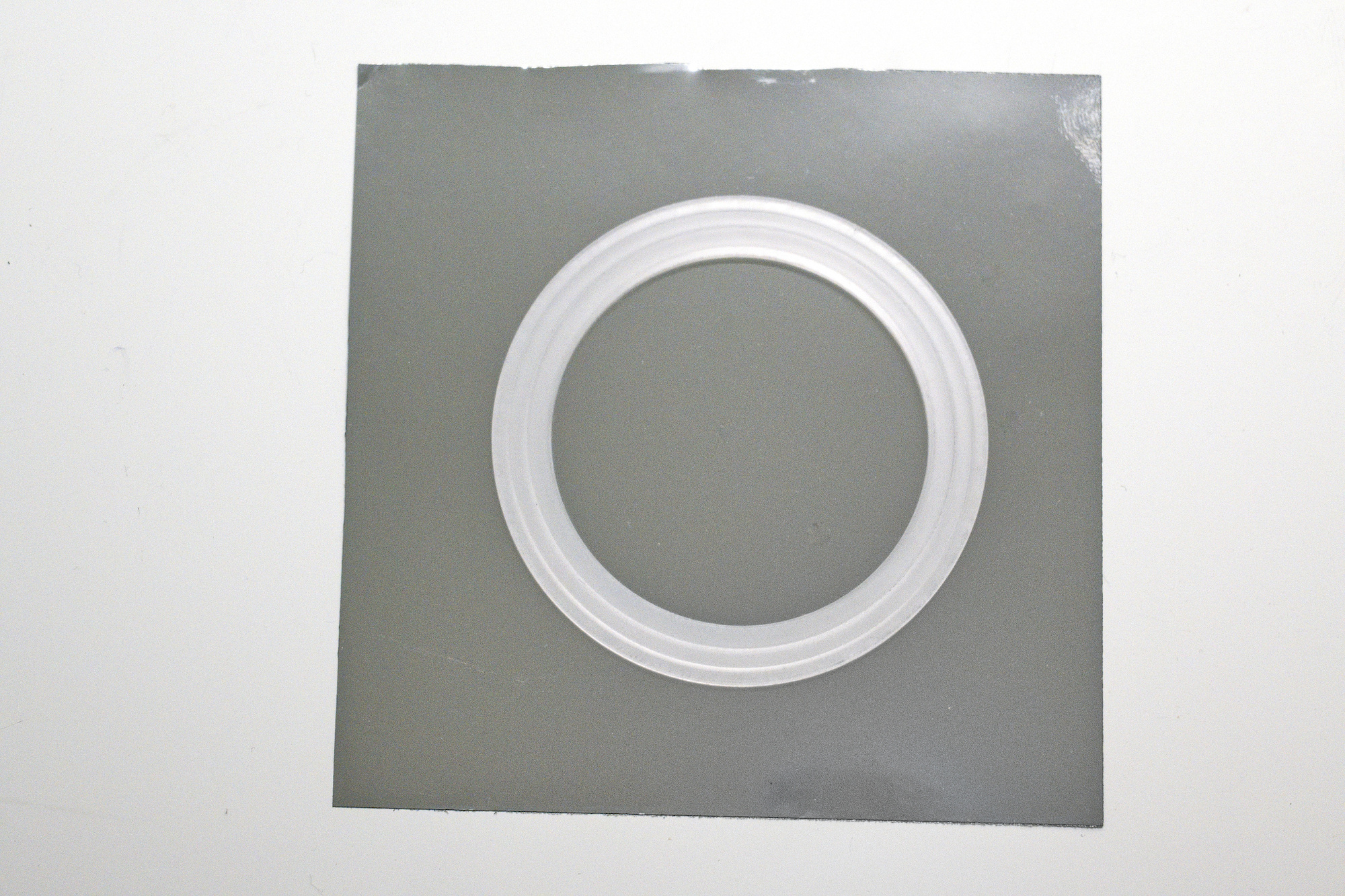
Die Filterfolie lässt sich ganz einfach mit der Schere schneiden.
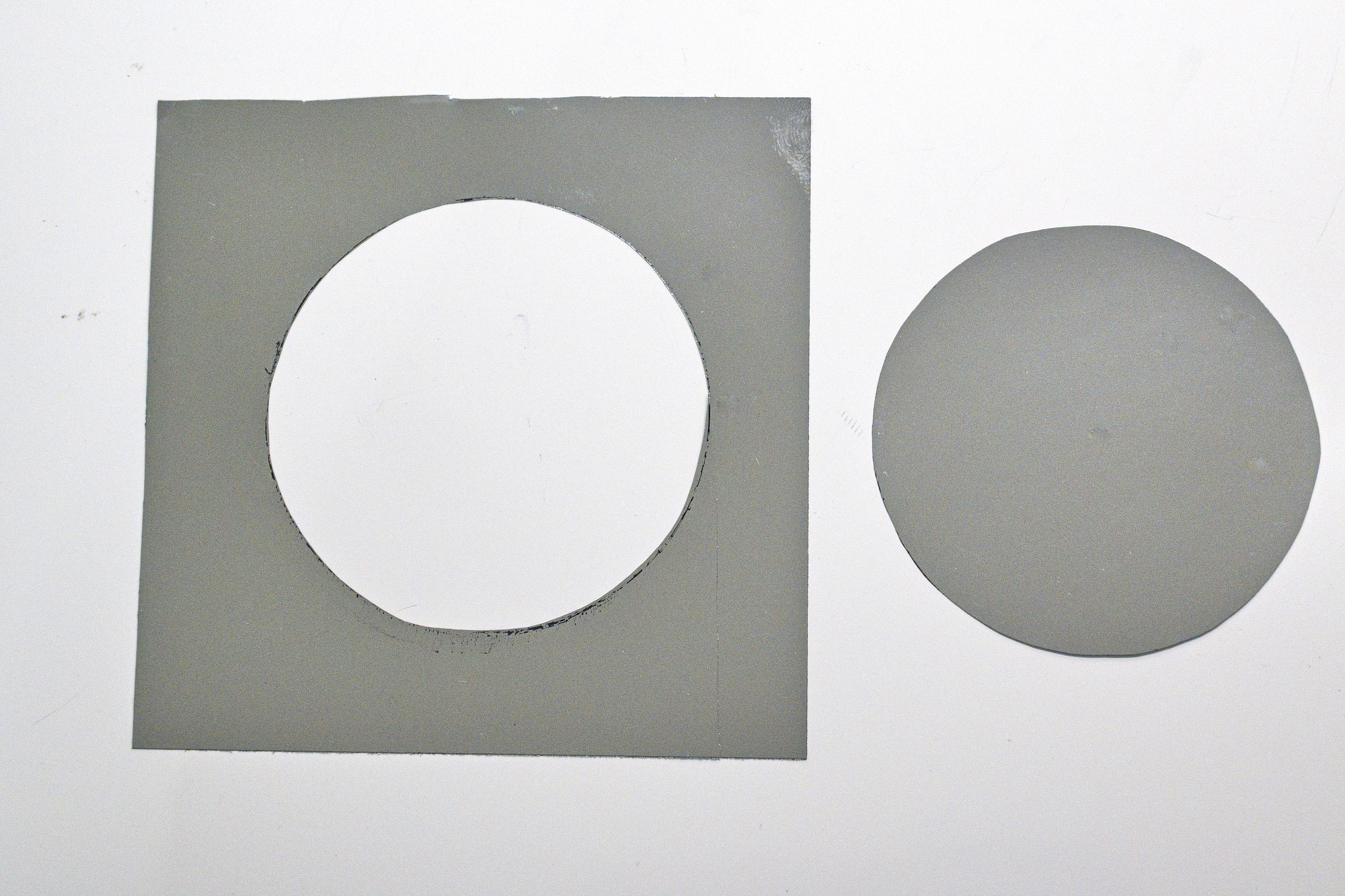
Die Filterfolie wird in den Filterring eingesetzt, der später auf das Objektiv geschraubt wird (52-67mm Filterring).
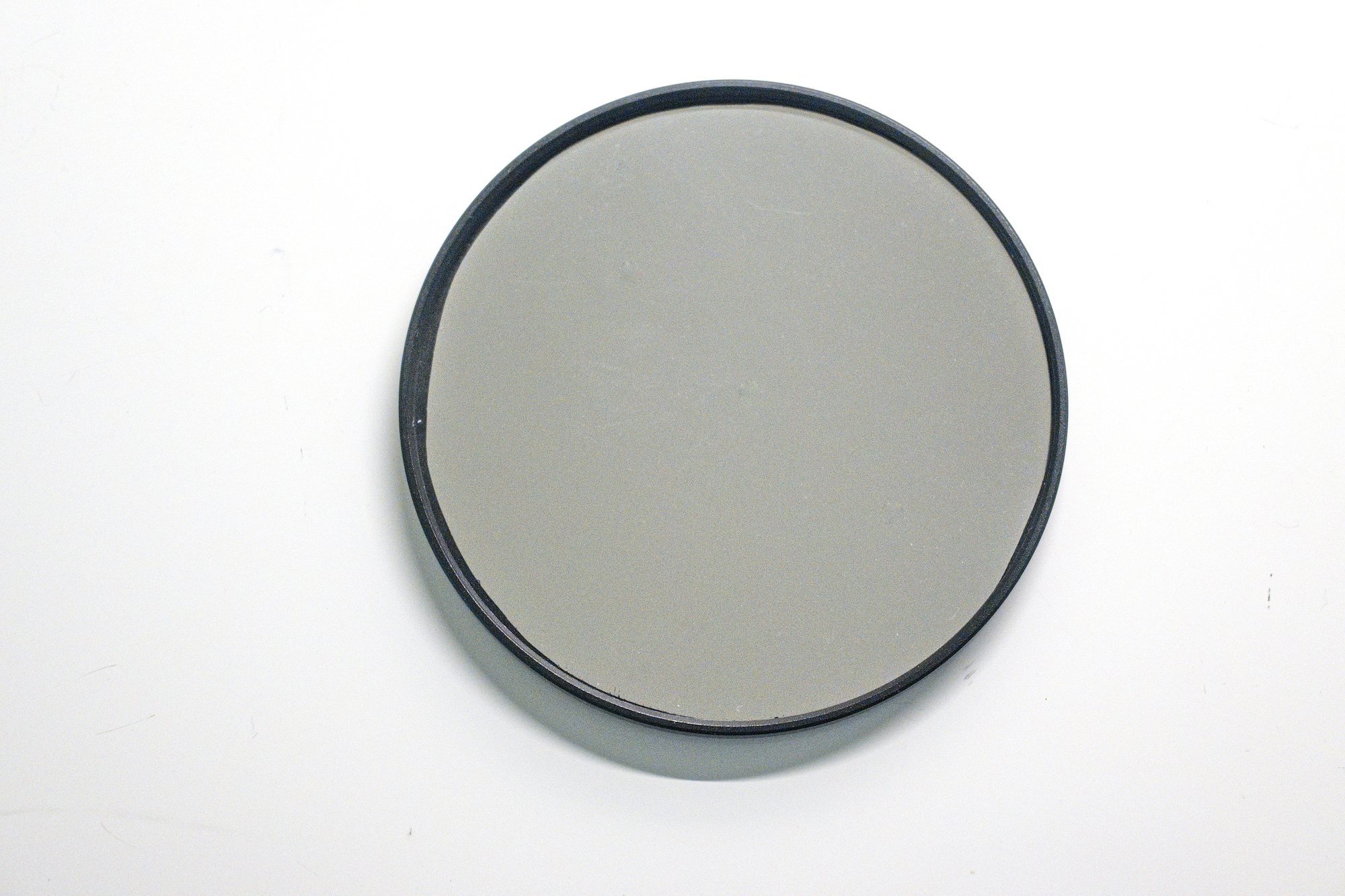
Dann wird der Zwischenring eingesetzt, der die Filterfolie festklemmt. Das dunkle auf der rechten Seite ist der gequetschte Permanentmarker, der nicht auf der Filterfolie haftete. Passiert mir auch nicht nochmal.
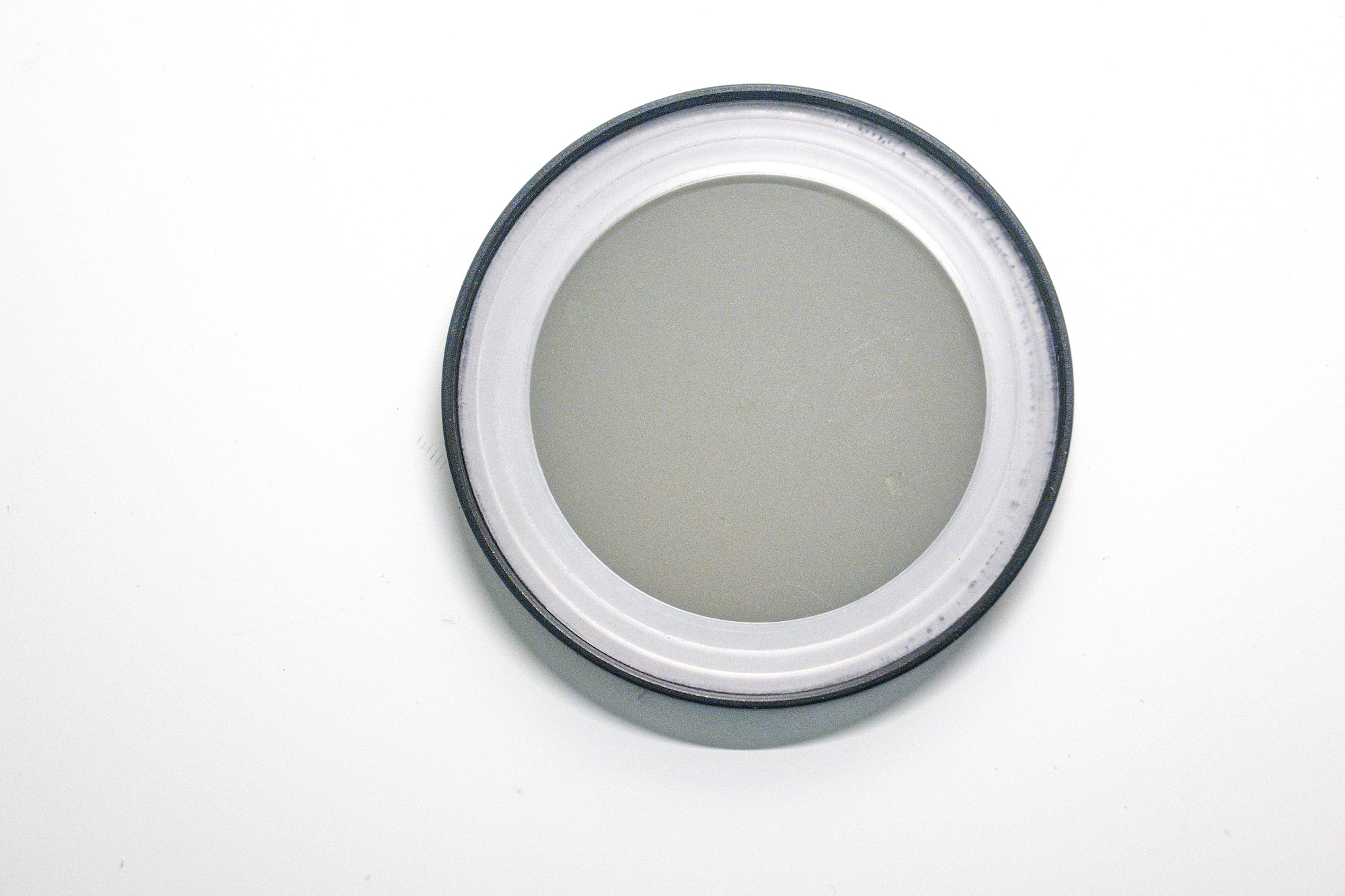
Und mit dem passenden zweiten Filterring festgeschraubt.
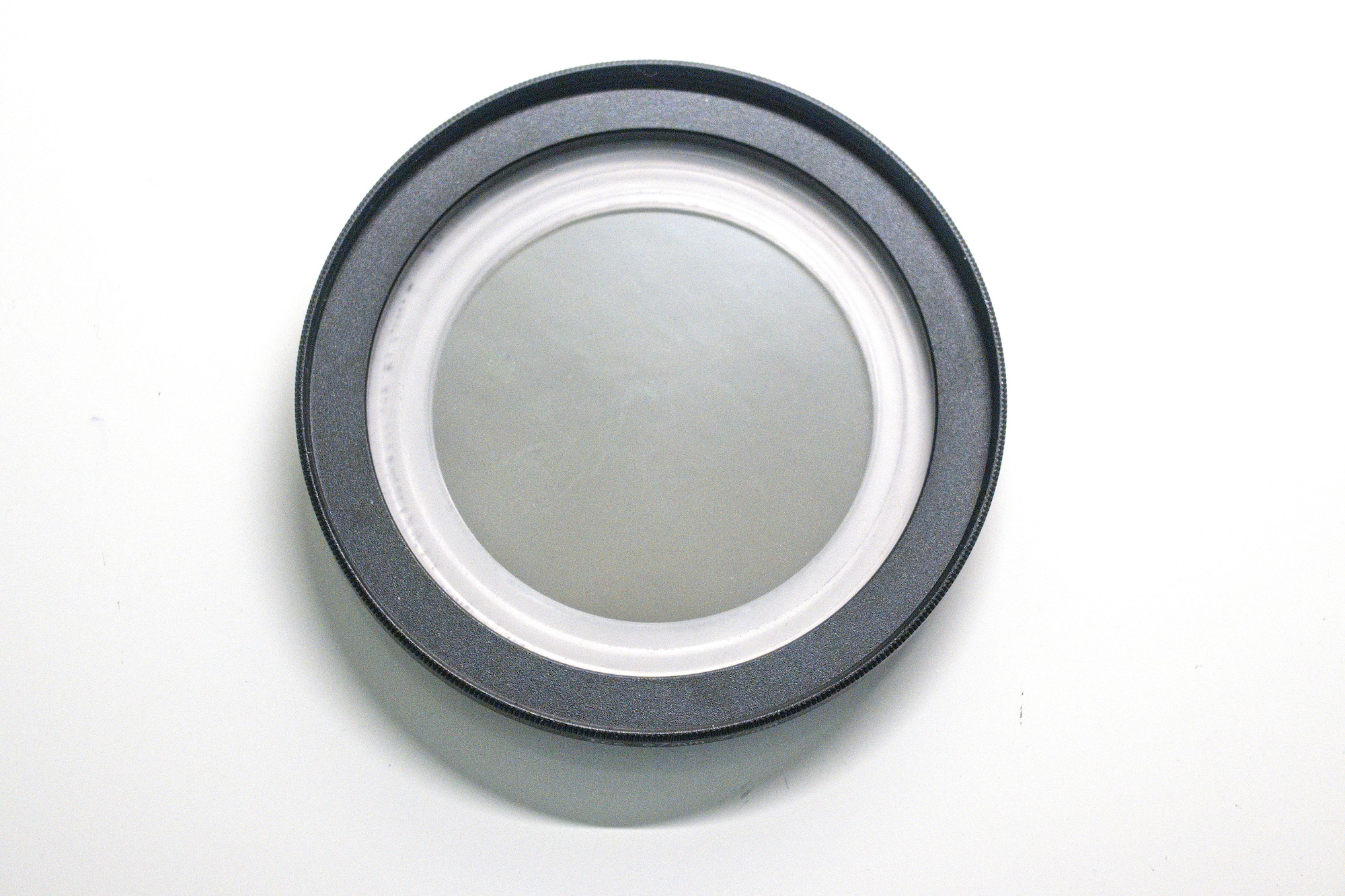
Die silberne Seite der Filterfolie zeigt zur Sonne.
Die dunkle Seite der Filterfolie ist auf der Objektivseite.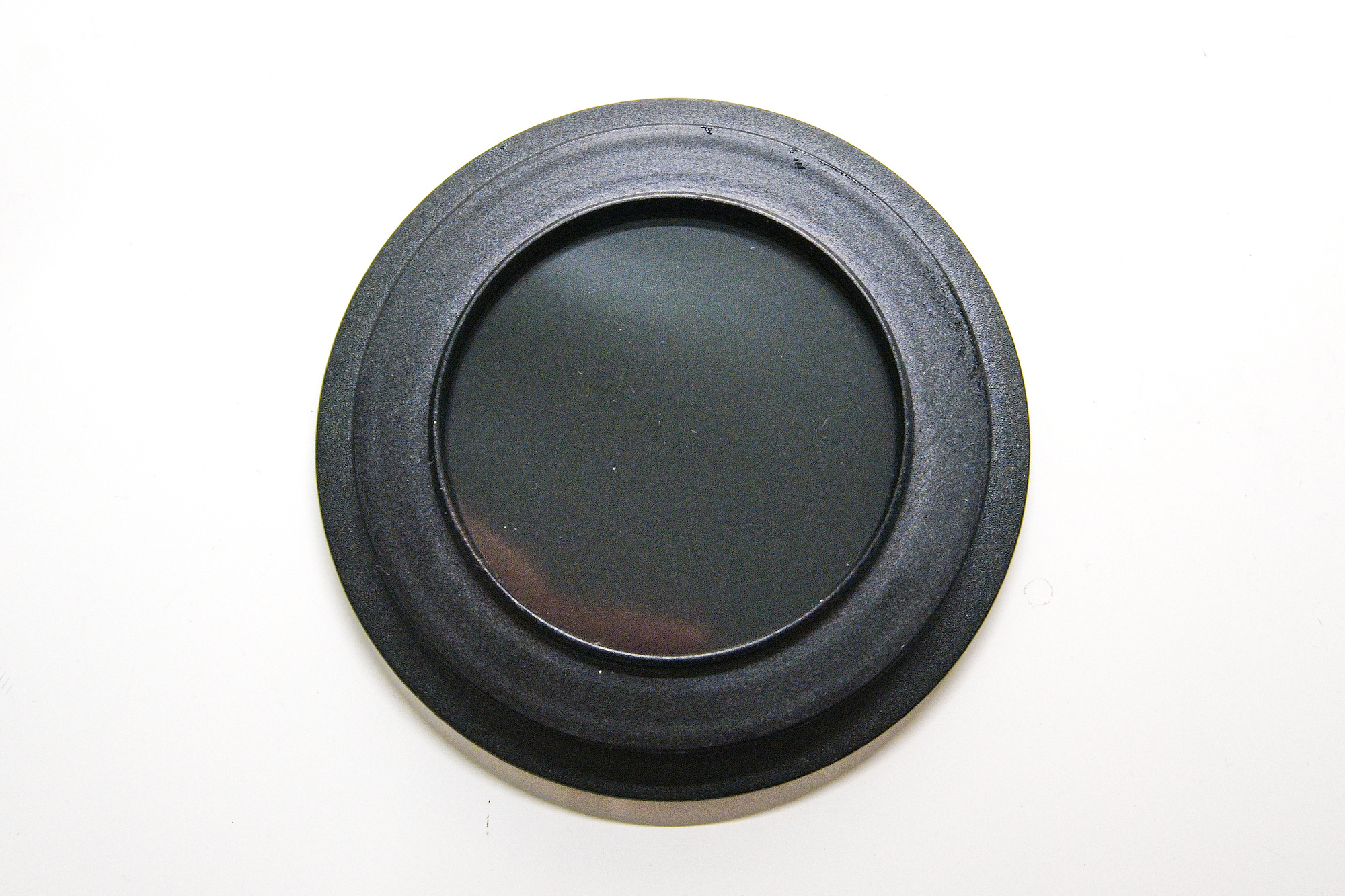
Das ganze wird auf das Objektiv aufgeschraubt.
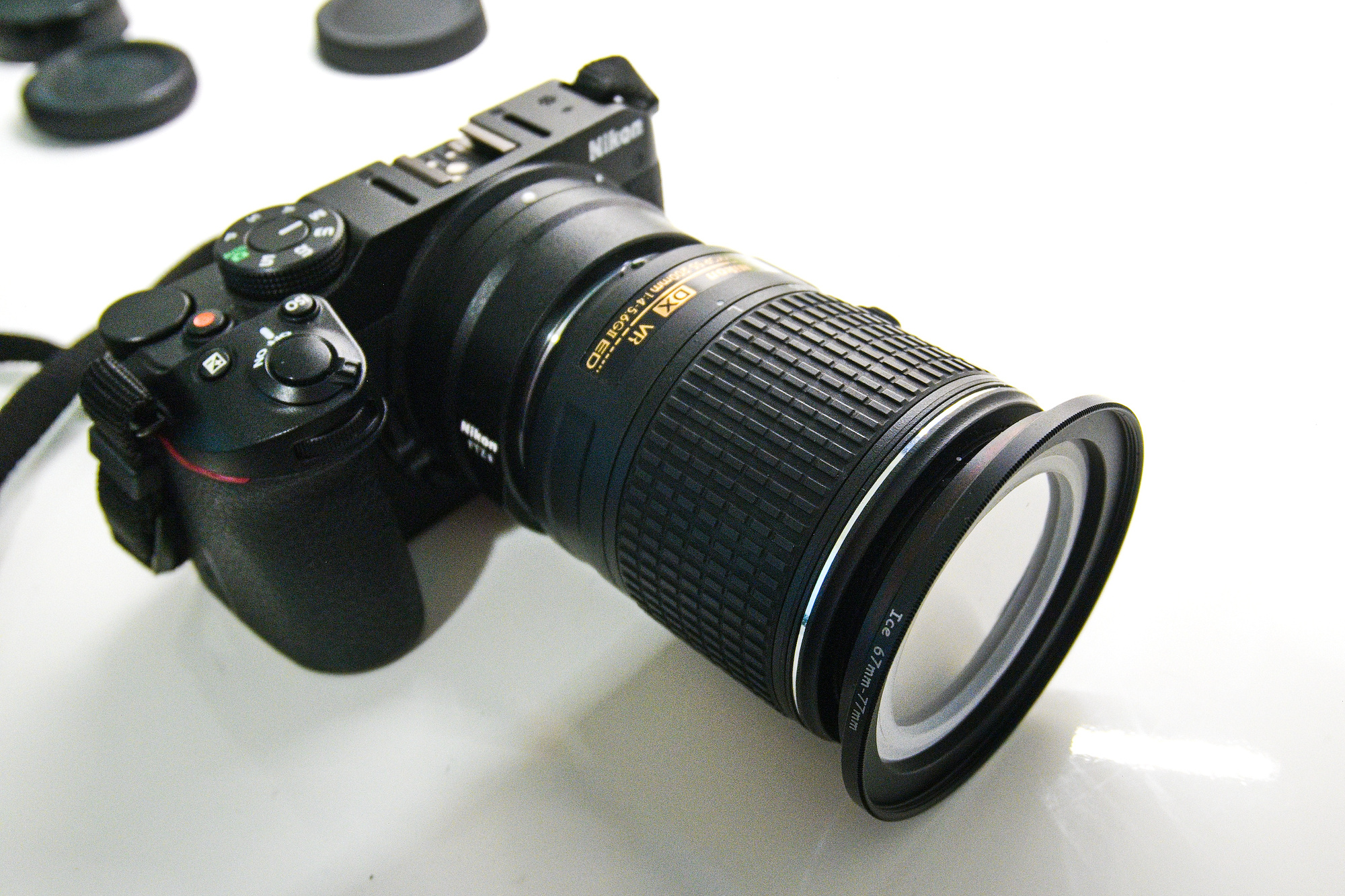
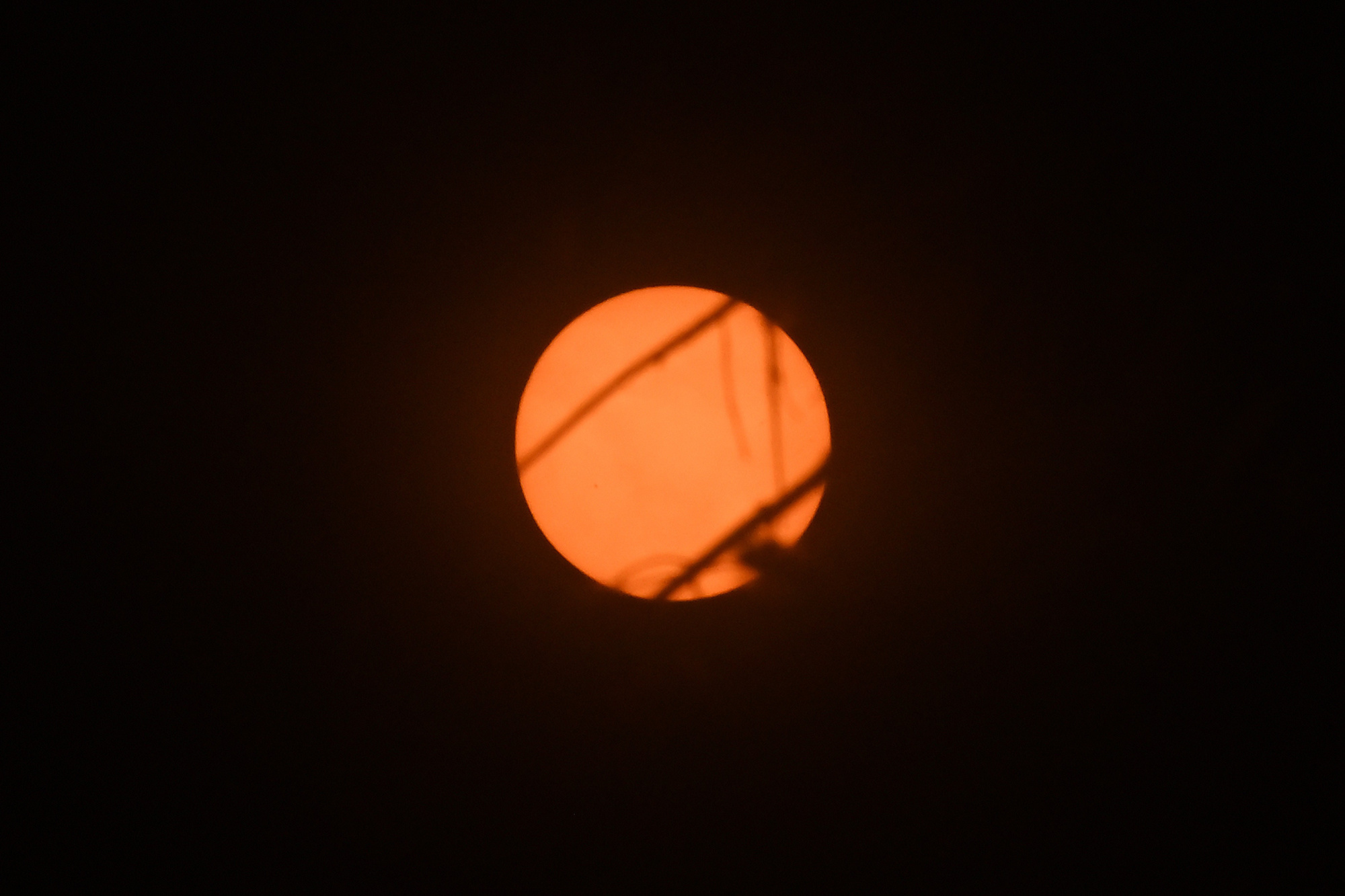
Mit 1/40s f/8 ISO 100 wird dann ganz normal für die Mittagssonne hinter Bäumen belichtet.
-
Sonnenfinsternis 2023 ☉🌛
14. Oktober, eine ringförmige Sonnenfinsternis ist morgens bei uns mit 80% Abdeckung zu sehen. Der Mond ist weiter von der Erde entfernt und verdeckt die Sonne nicht komplett. Es bleibt ein Ring oder Feuerkranz sichtbar.
Alle Bilder sind mit einem Neutraldichtefilter (7 Blendenstufen, ND128) aufgenommen (Nikon Z30, 18-140mm VR) und ausgeschnitten, aber nicht nachbearbeitet. Leider sind die ersten beiden Bilder noch mit ISO 800.
1/4000s f/22 ISO 800
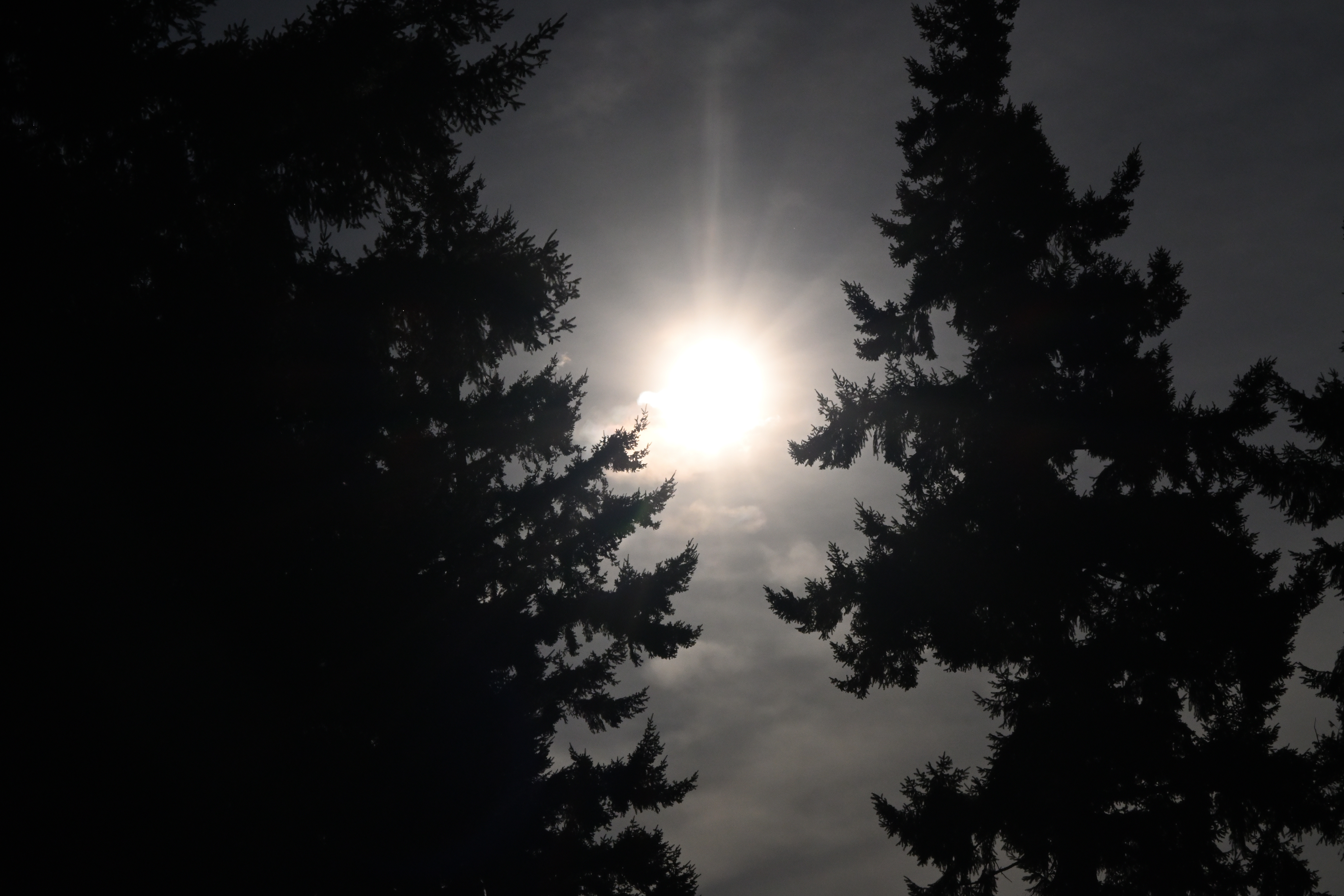
Maximale Verdunklung der Sonne (80%).
1/4000s f/32 ISO 800
ISO auf min Wert, bessere Belichtung für die aktuelle Helligkeit. ND-Filter müsste noch stärker sein.
1/4000s f/32 ISO 100
ND-Filter zurück auf 3 Blendenstufen, aber der Sonnenkranz überstrahlt sofort das ganze Bild.
1/4000s f/32 ISO 100
12 Minuten später, die maximale Verdunklung ist vorbei, ☉ und ☾ driften wieder auseinander.
1/4000s f/29 ISO 100
24 Minuten später.
1/4000s f/20 ISO 100
43 Minuten später, die ringförmige Sonnenfinsternis geht jetzt zu Ende.
1/4000s f/40 ISO 100
-
Sonntags 🍰🥧☕
Ein Apfelkuchen frisch aus dem Ofen von der besten 👩🏻🍳




Nikon Z30, DX Z 18-140mm f/3.5-6.3, SB-700
-
Nikon AI conversion for the NIKKOR-H 300mm f/4.5
In 1977, Nikon started using the automatic indexing of the lenses. This replaces the manual indexing done before by alining the metal fork on the lens with the camera pin.
See this great article about the Nikon evolution.This is a original non-AI lens mount of a NIKKOR-H 300mm f/4.5:
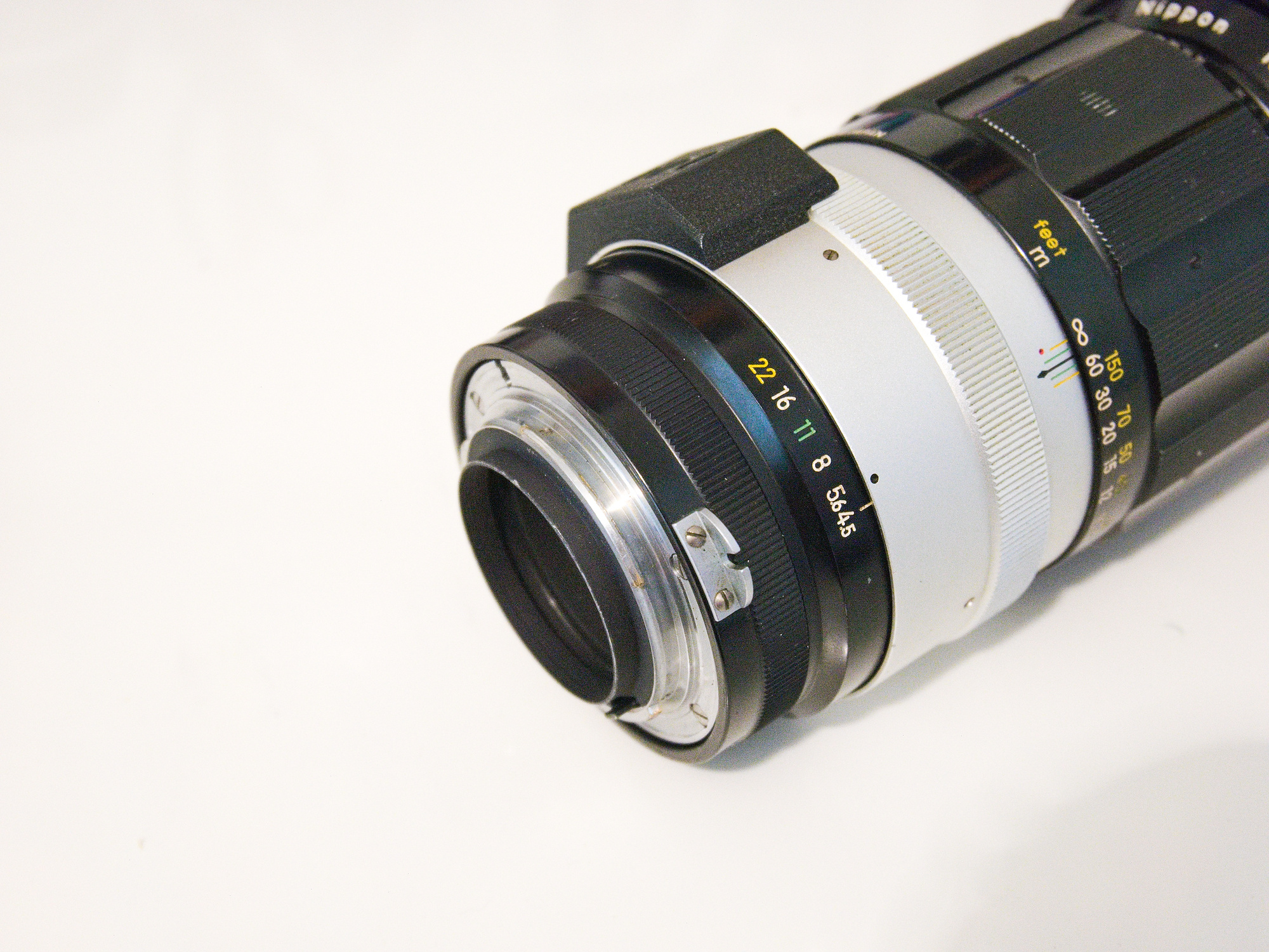
Nikon provided conversion kits to convert lenses before 1977. According to the Nikon Lens List, this lens is from 1970 and requires the conversion kit #53.
I only found #52 in a camera store in Finland, which is for a newer model of this lens.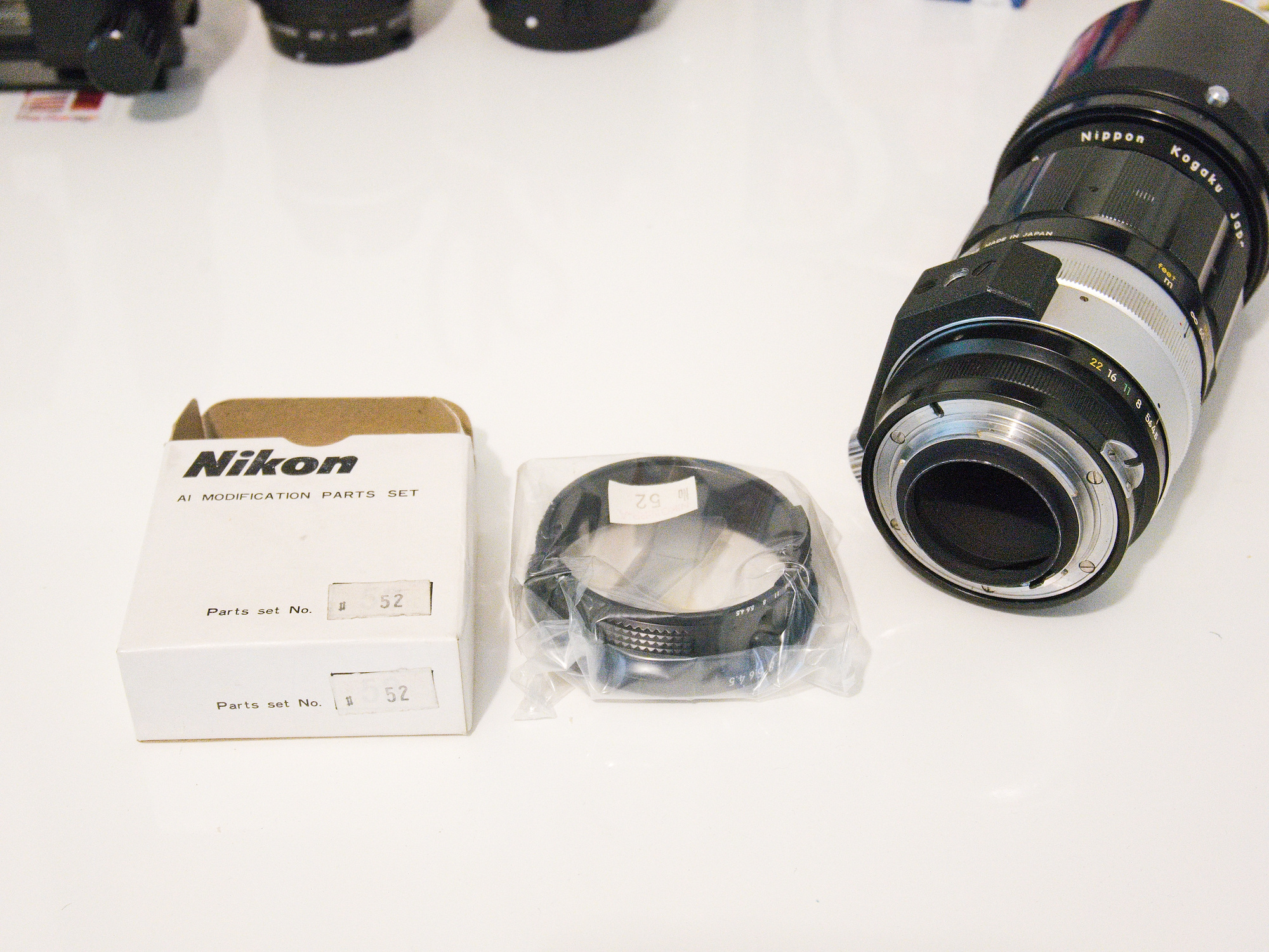
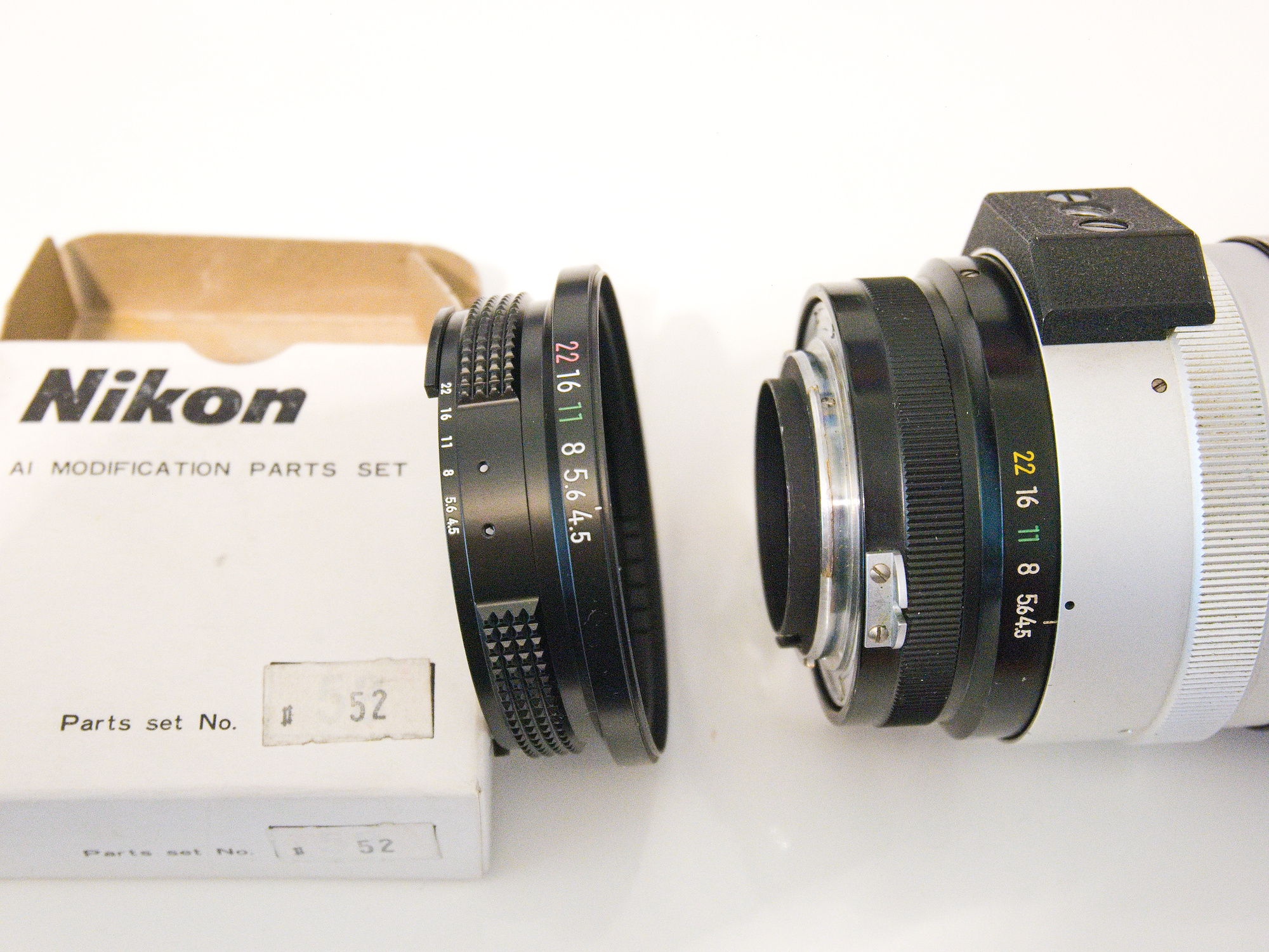
The kit #52 differs from #53 that the screw to connect to the aperture lever is not used anymore and replaced by a notch in the aperture ring at the same position. To make #52 work with this lens, a small hole is drilled and tapped to use the original screw:
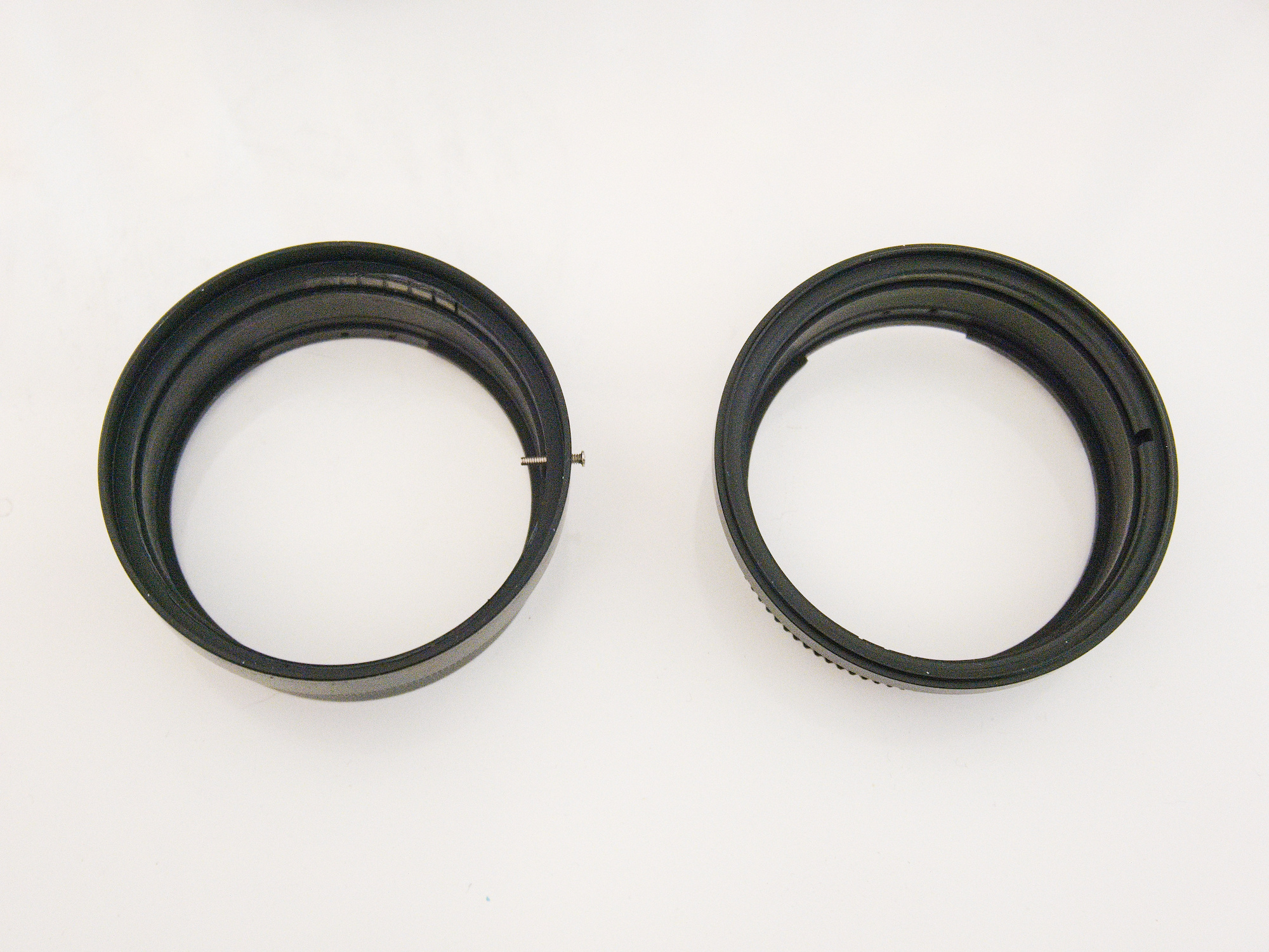
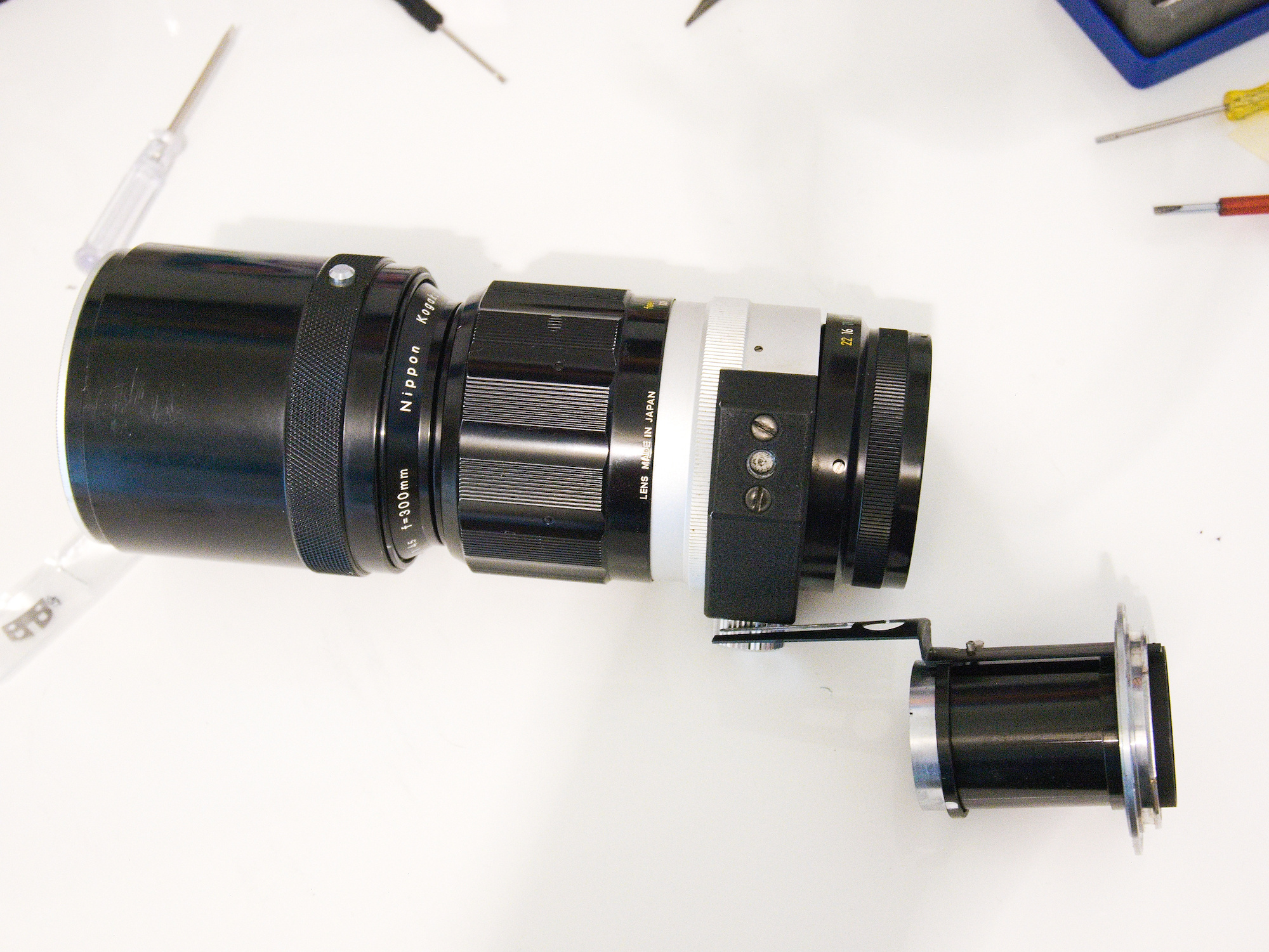
The lens mount is unscrewed and carefully pulled out:
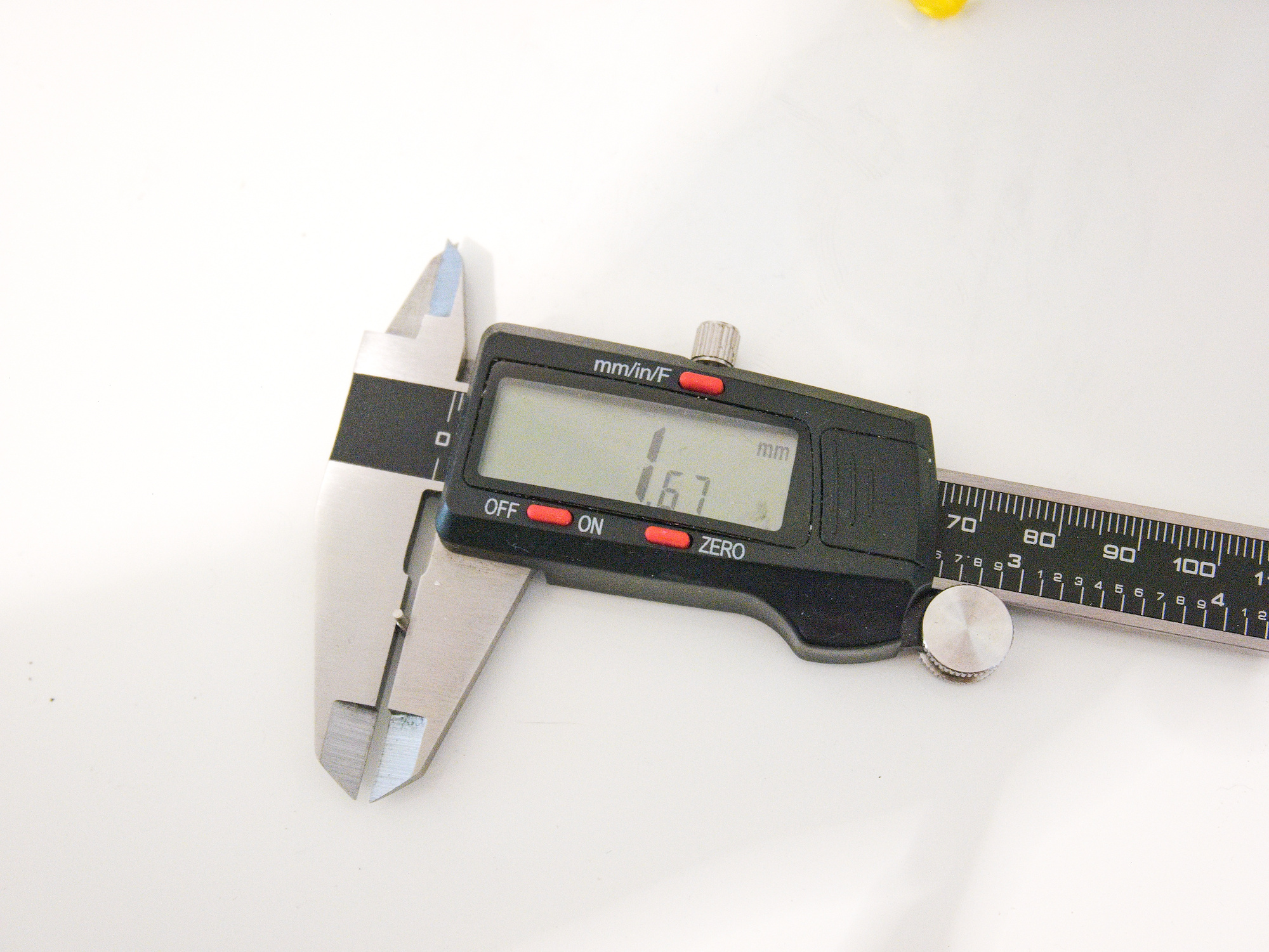
The screw for the aperture link is M1.7x0.35:
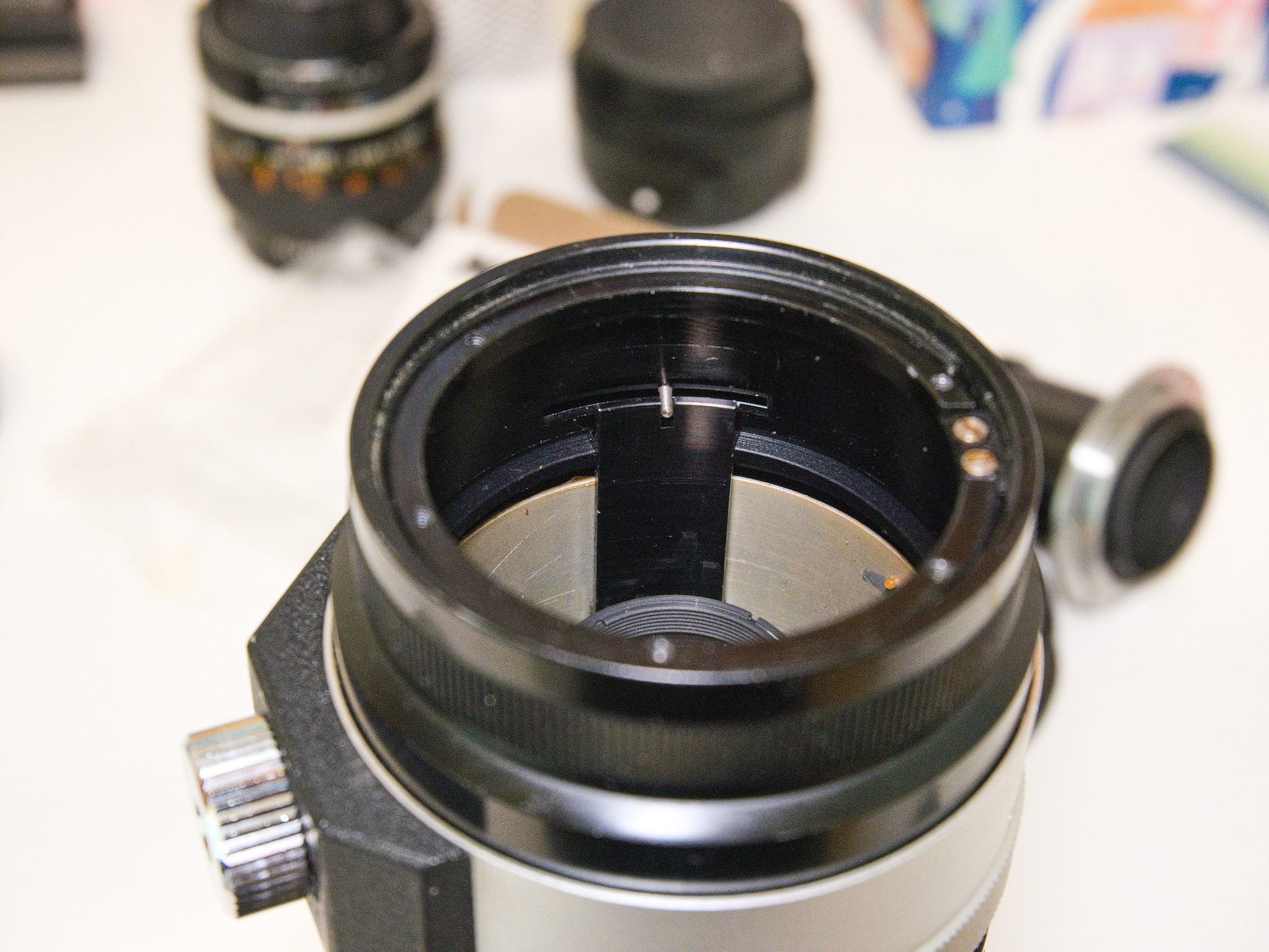
And connects to the lever on the inside:
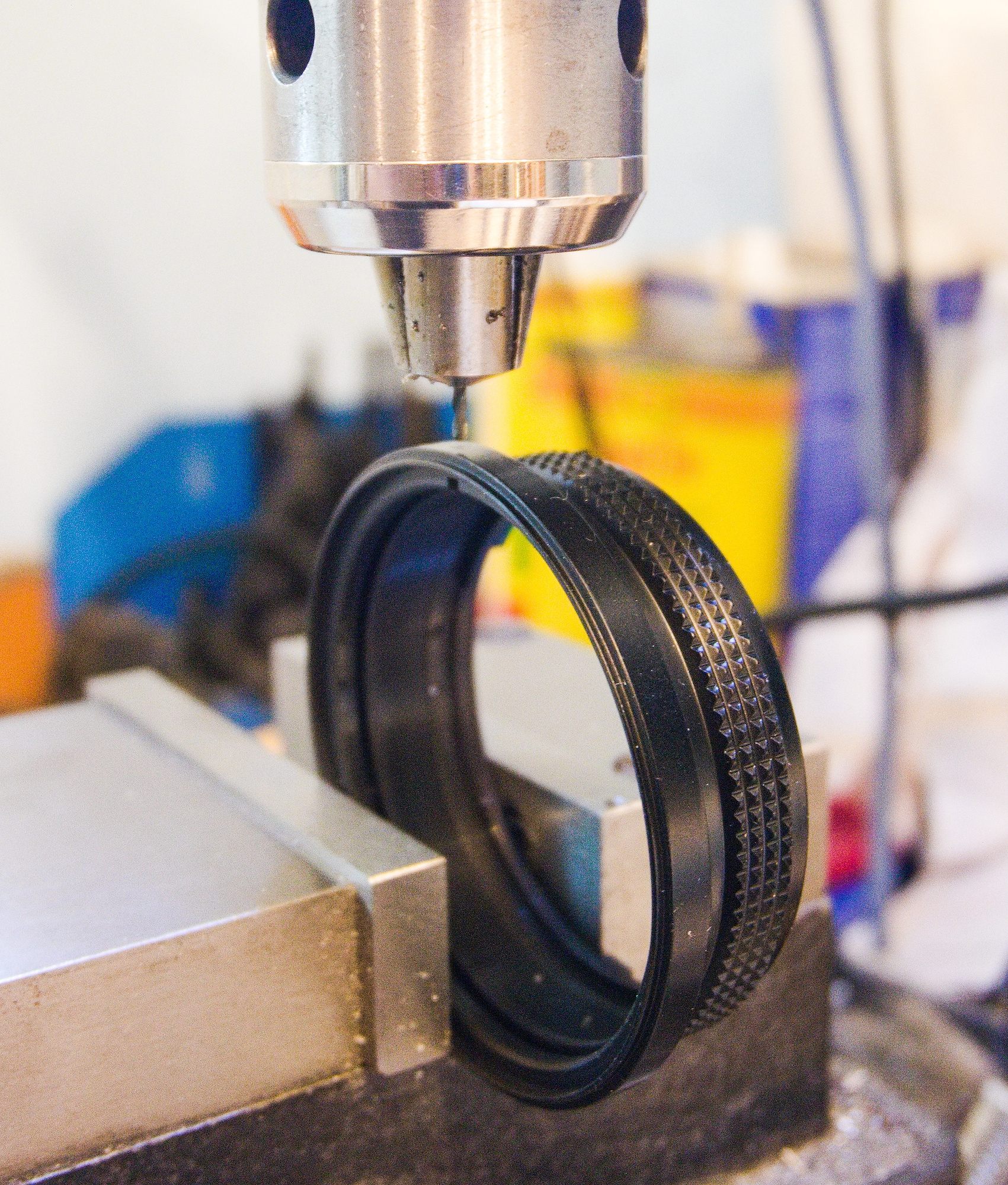
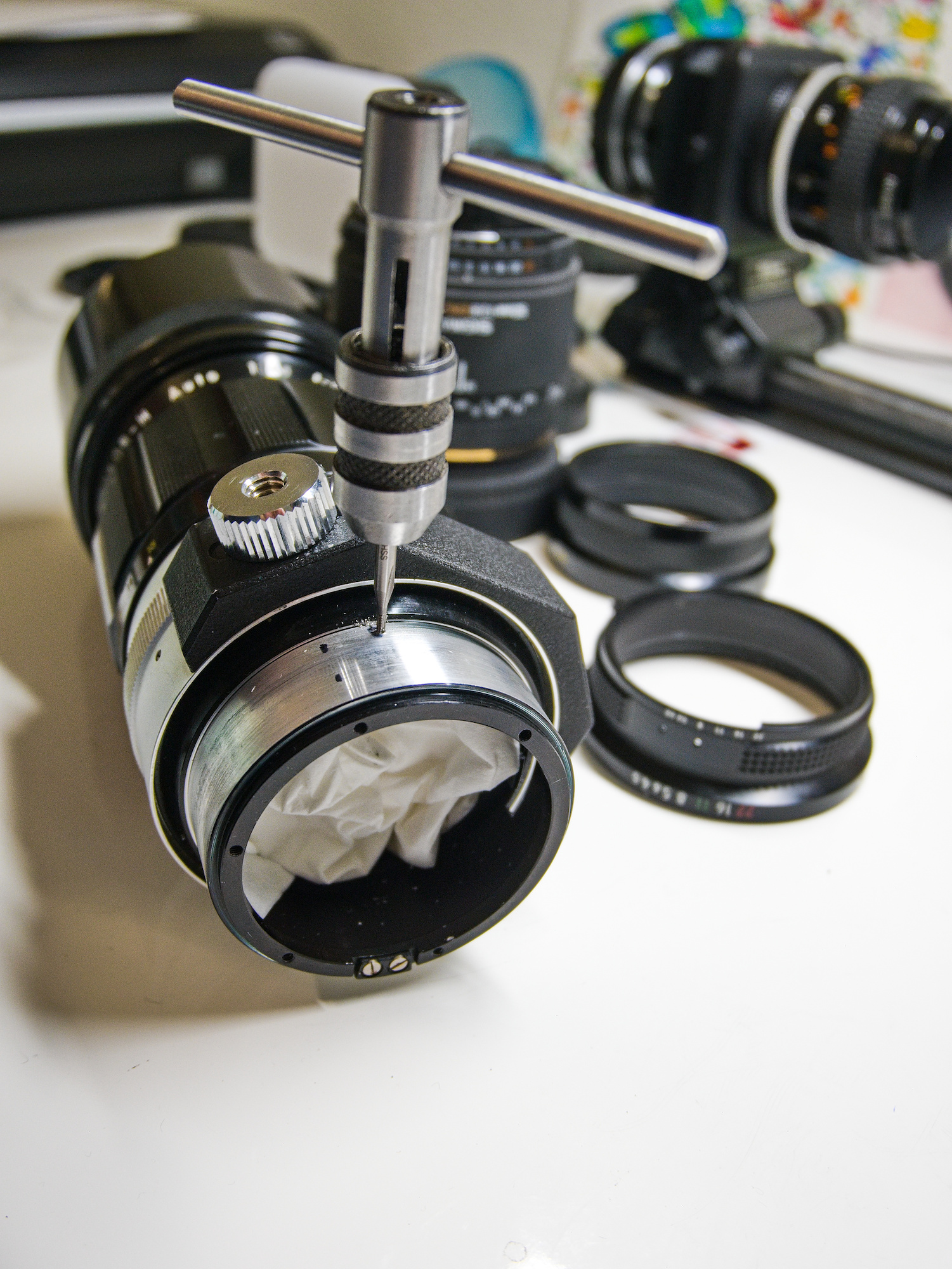
The 1.5mm hole is drilled at the notched position in the new aperture ring from conversion kit #52. Ideally the hole should be 1.35mm for a M1.7 thread but the 1.5mm drill was the closest I had and for this purpose good enough:
The hole must match the position of the original lens ring:
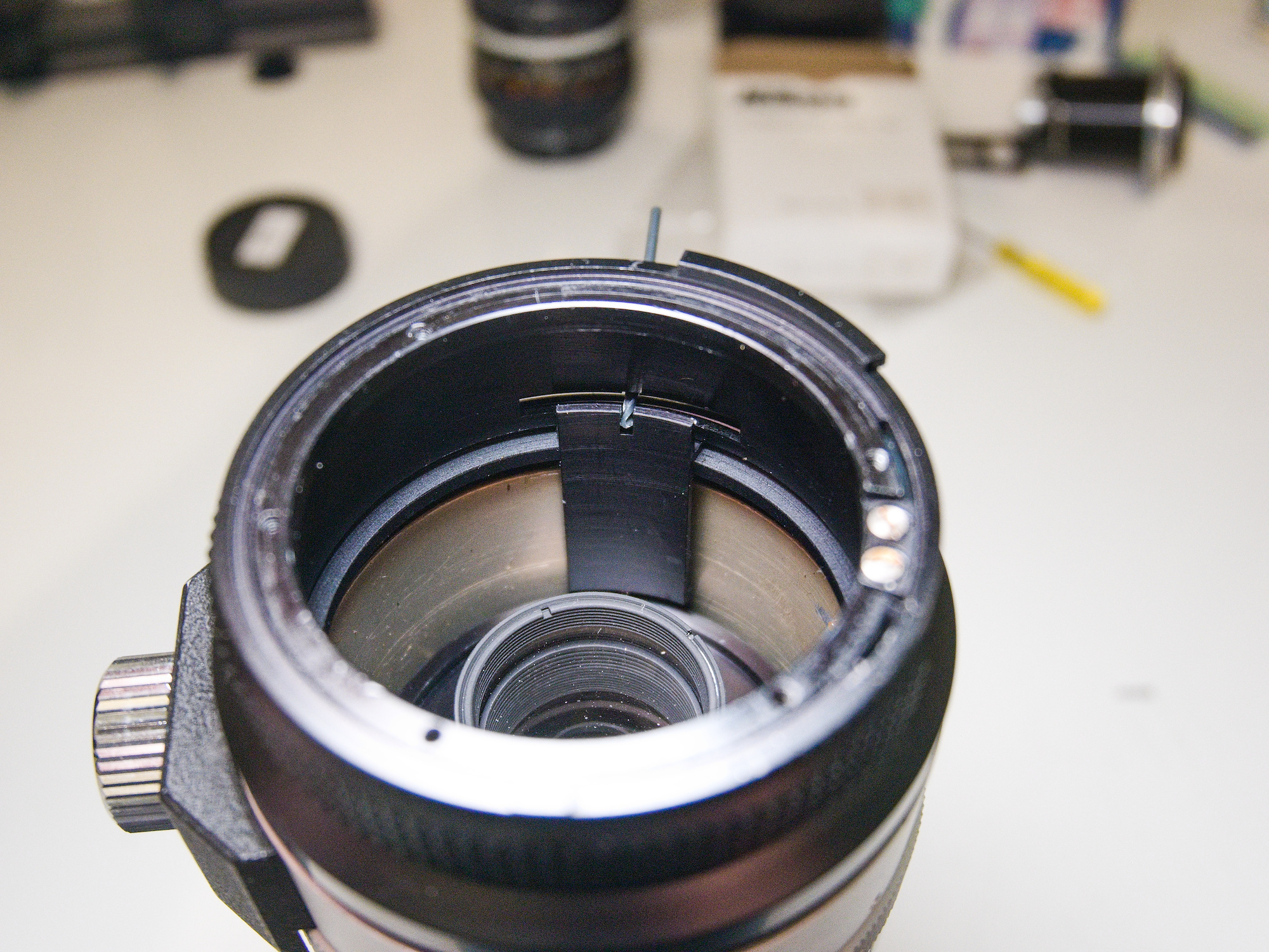
The other difference between kit #52 and #53 is that the aperture click notches are on the opposite side:
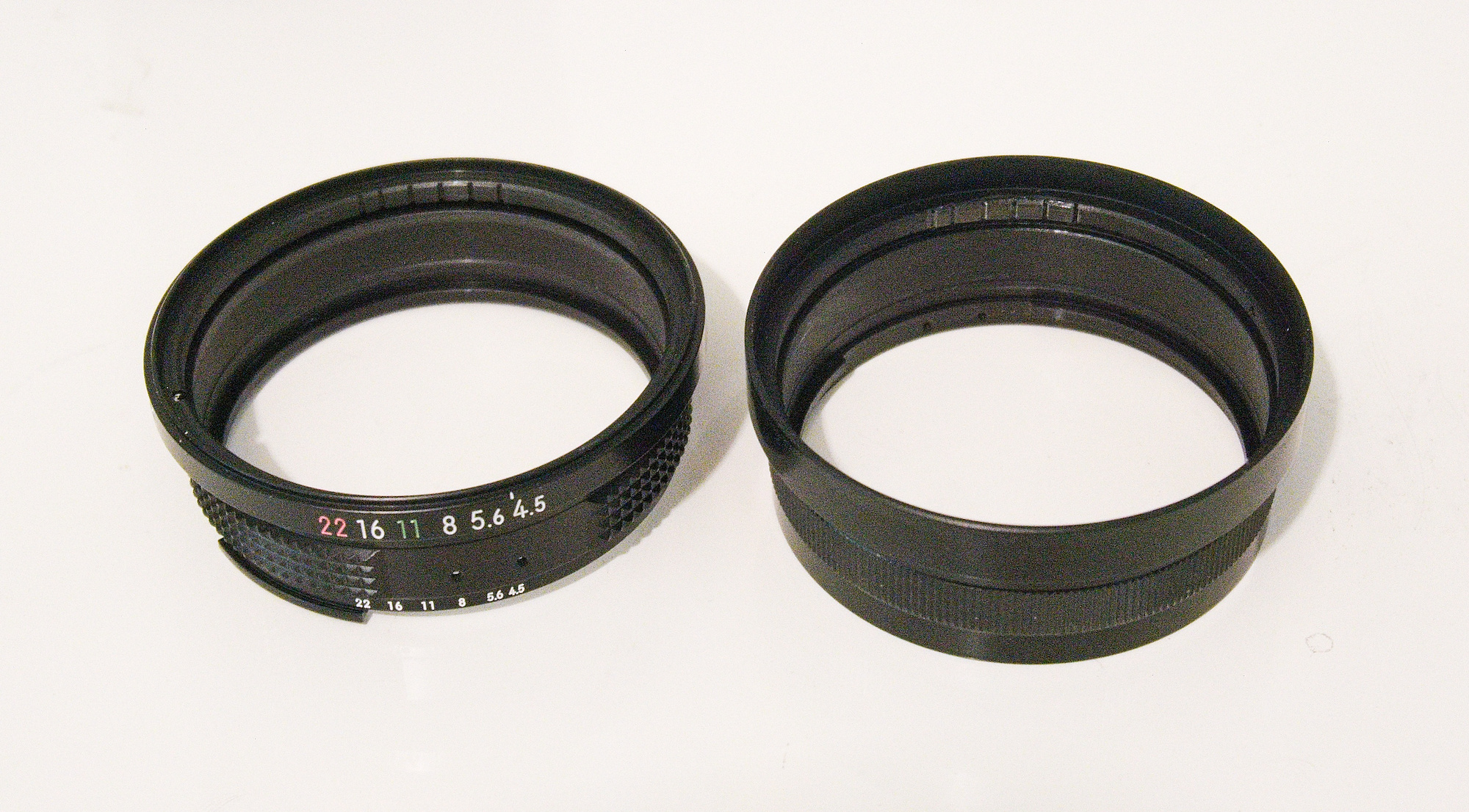
The aperture click spring needs to be moved. To get the correct distance, a non stretchy tape like 🦆 tape, is used to mark the position:
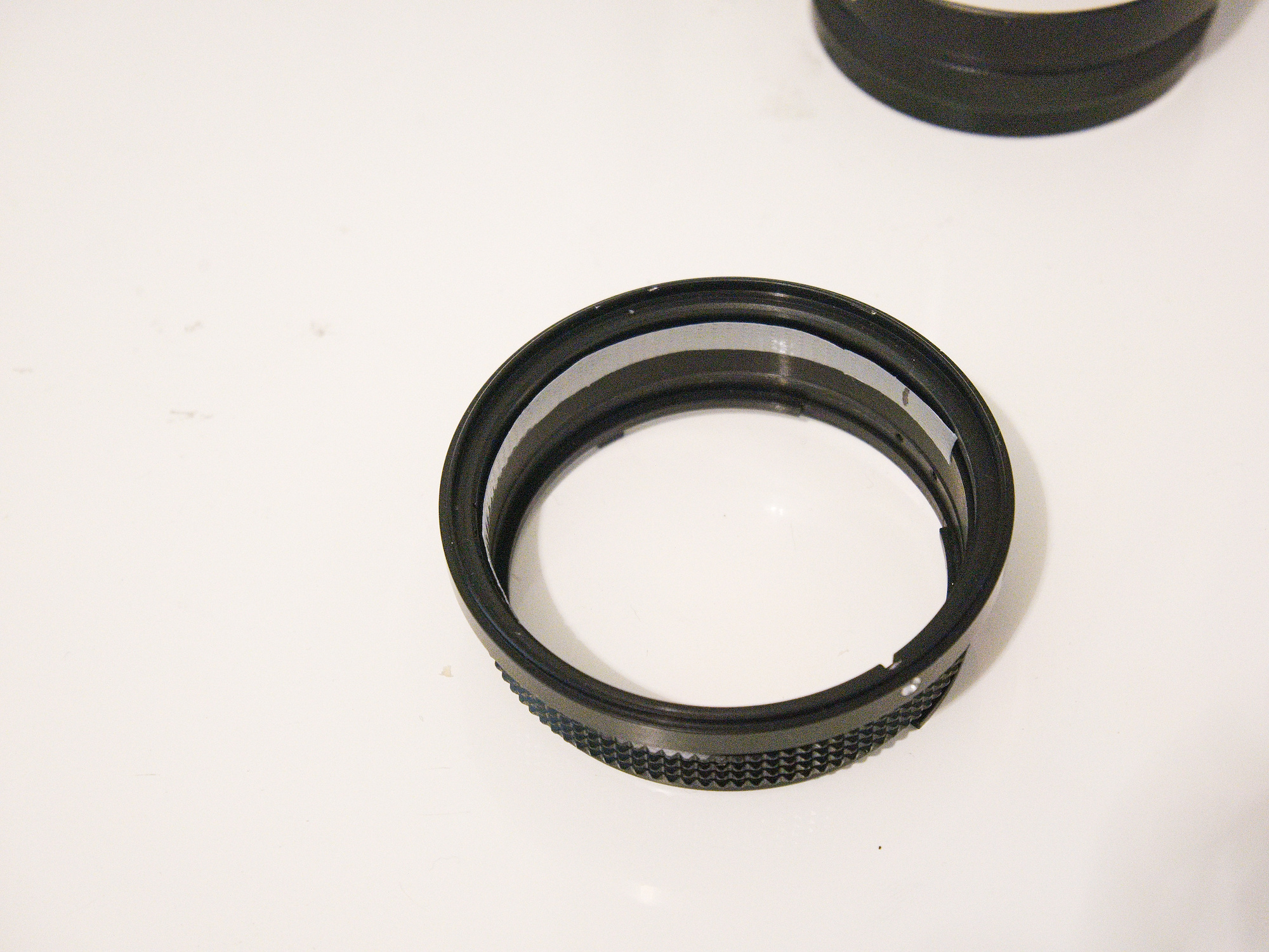
From the start of the first screw to the correct position:
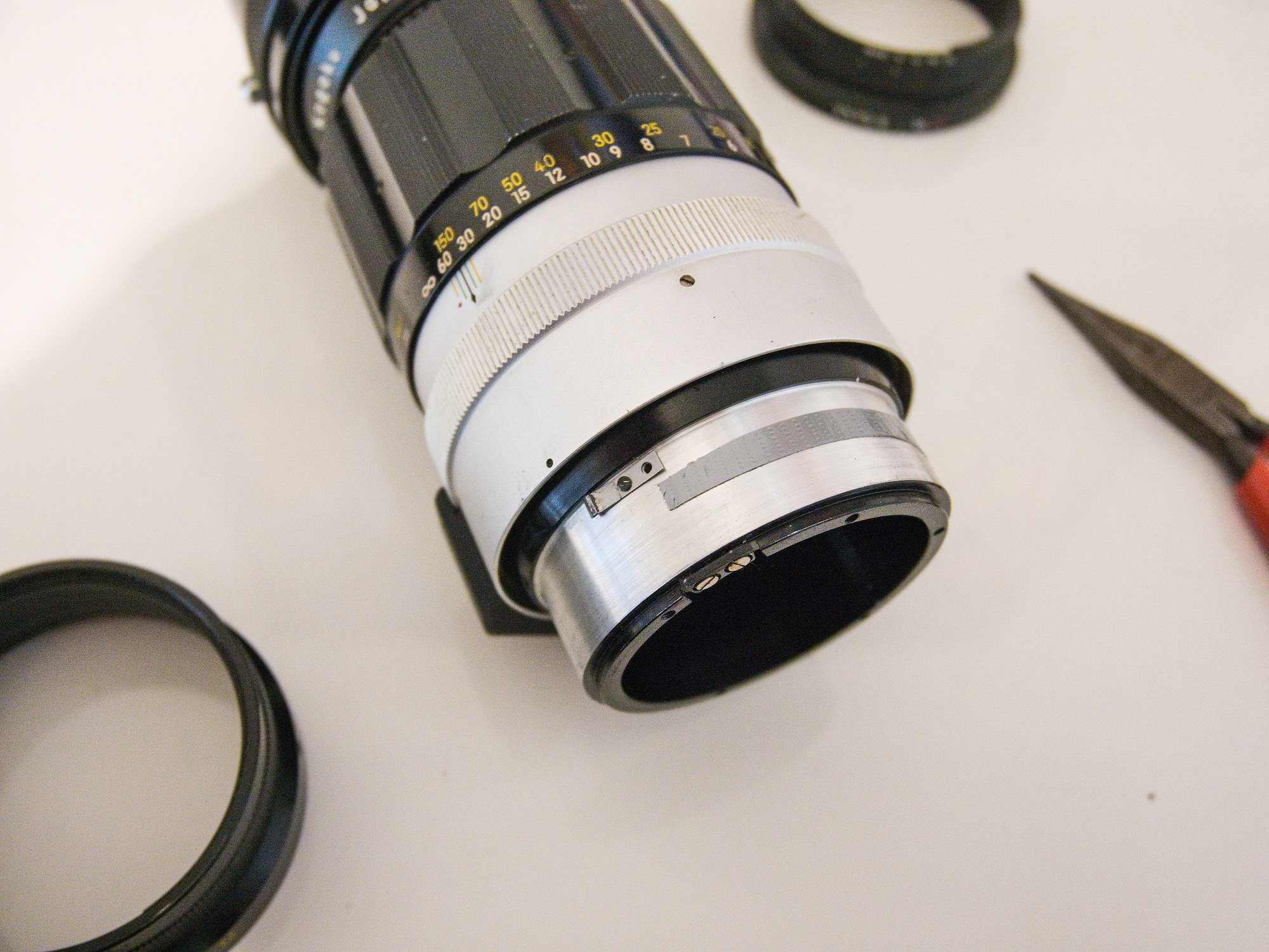
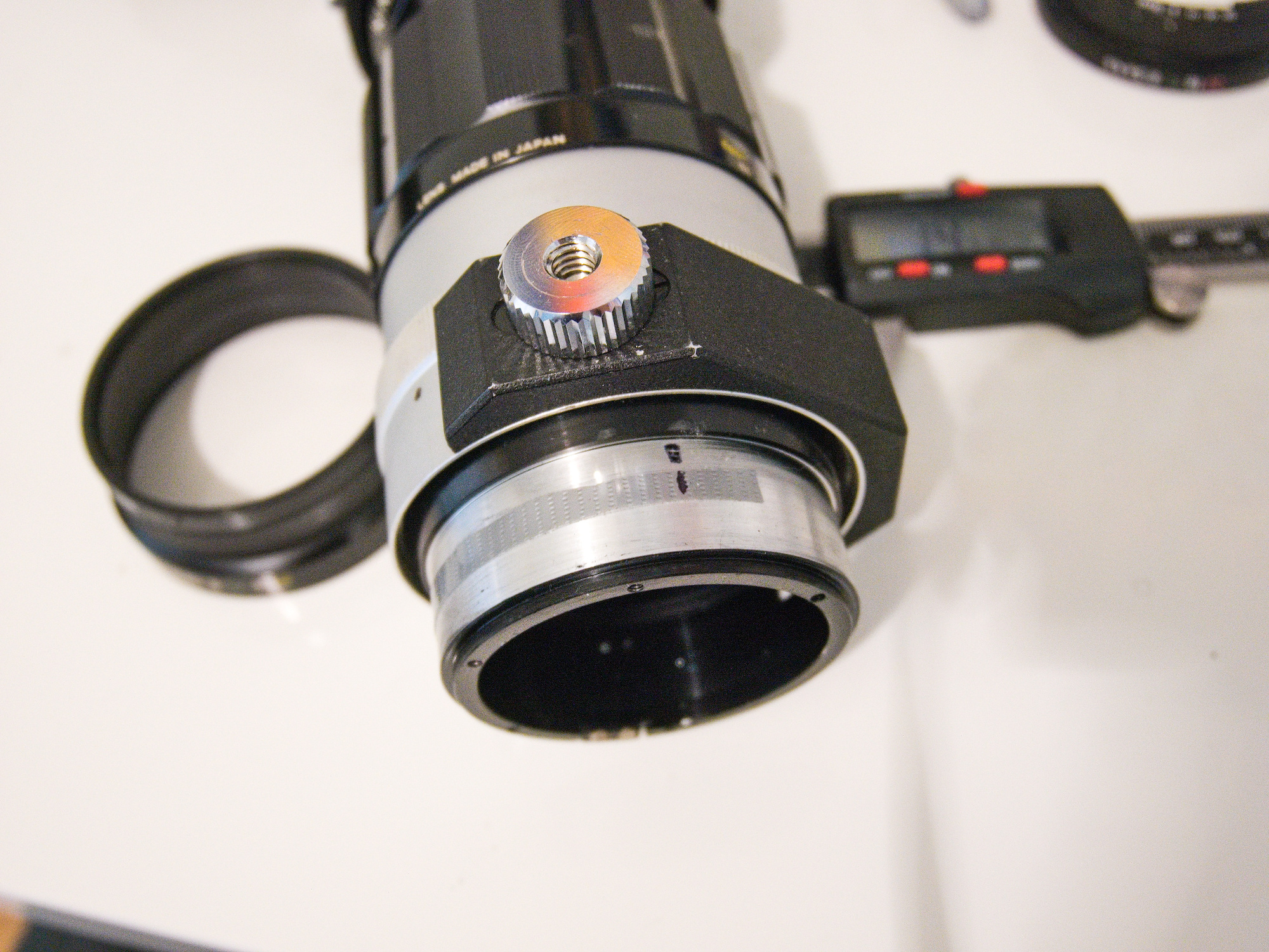
This is the position for the screw hole:
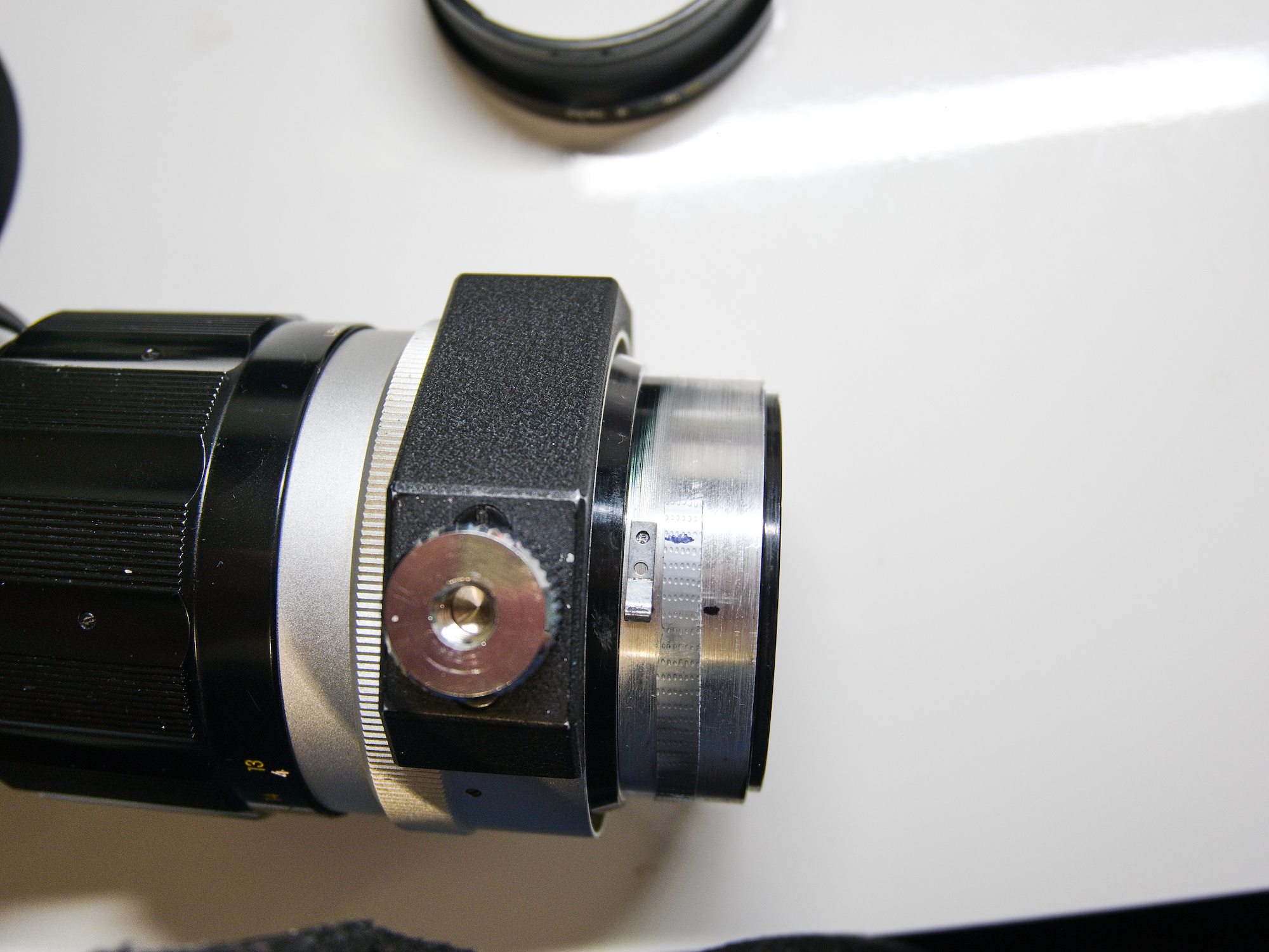
The screw size is M1.4. For this thread size, a 1.1mm for the thread hole should be used, but I do not have those drill sizes, so I used the 1mm as it will work too since it is soft Aluminium.
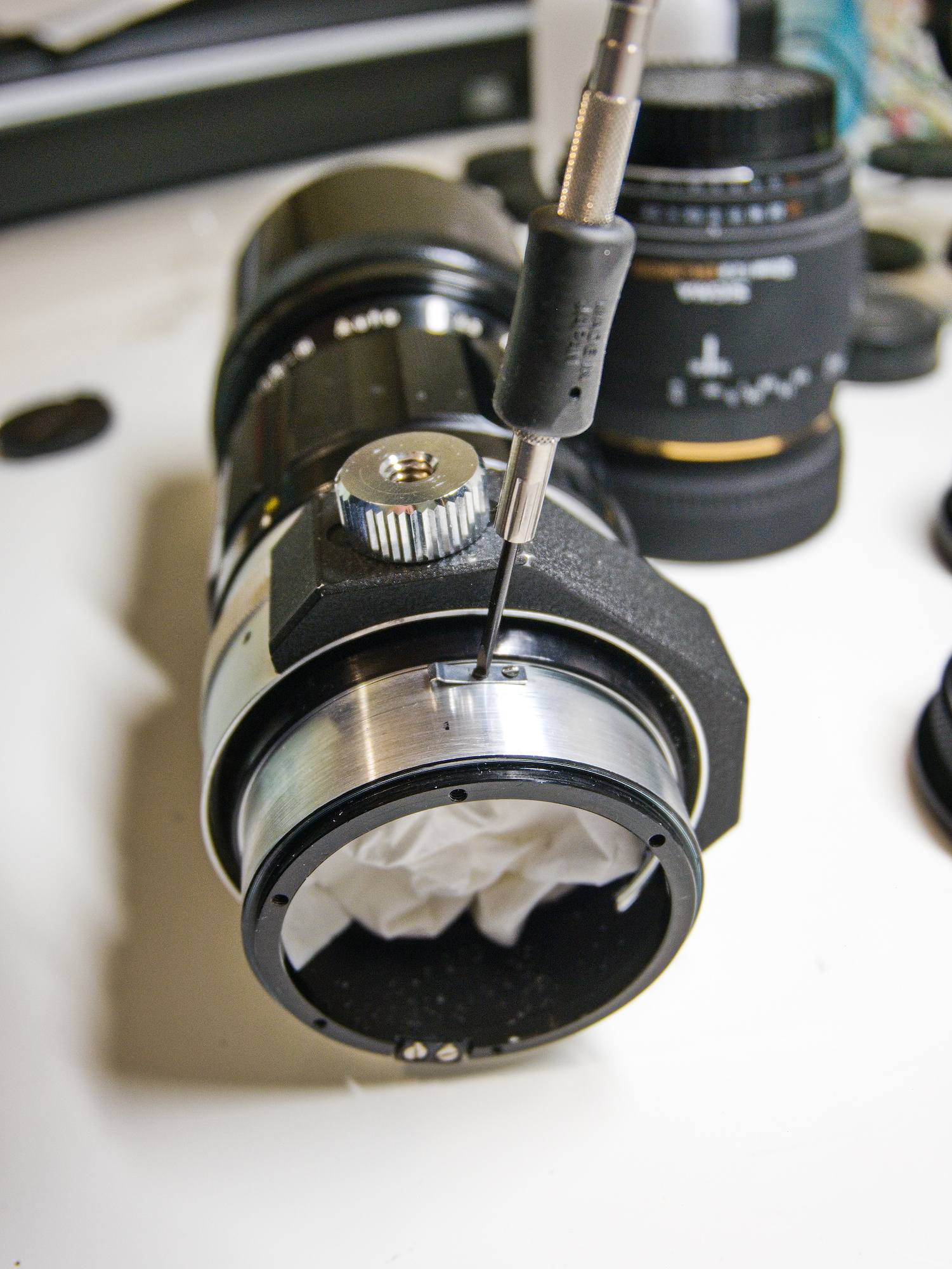
Attach the aperture click spring at the new position:
Add a little bit of grease to the inside the Aperture ring and put it on:
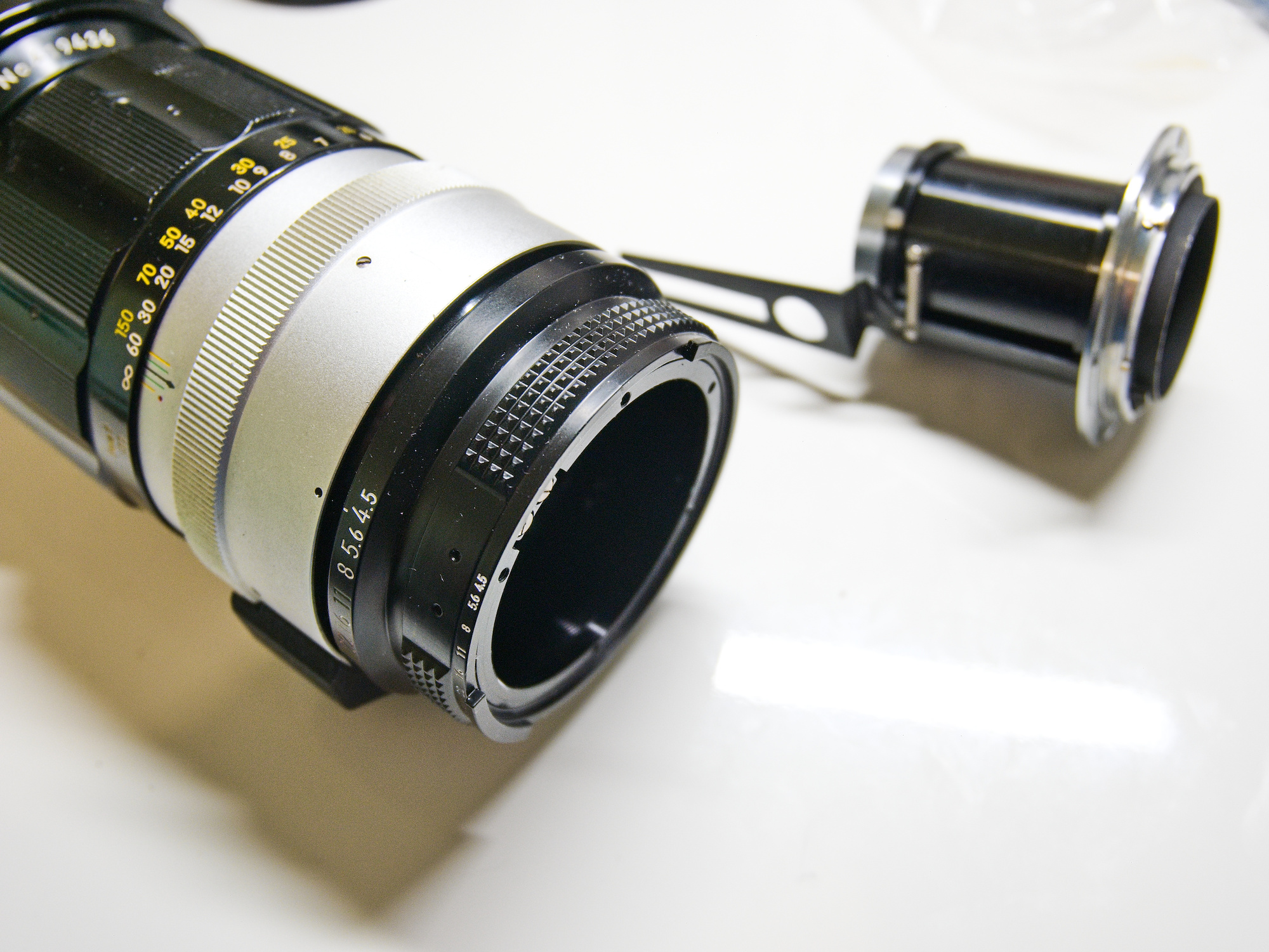
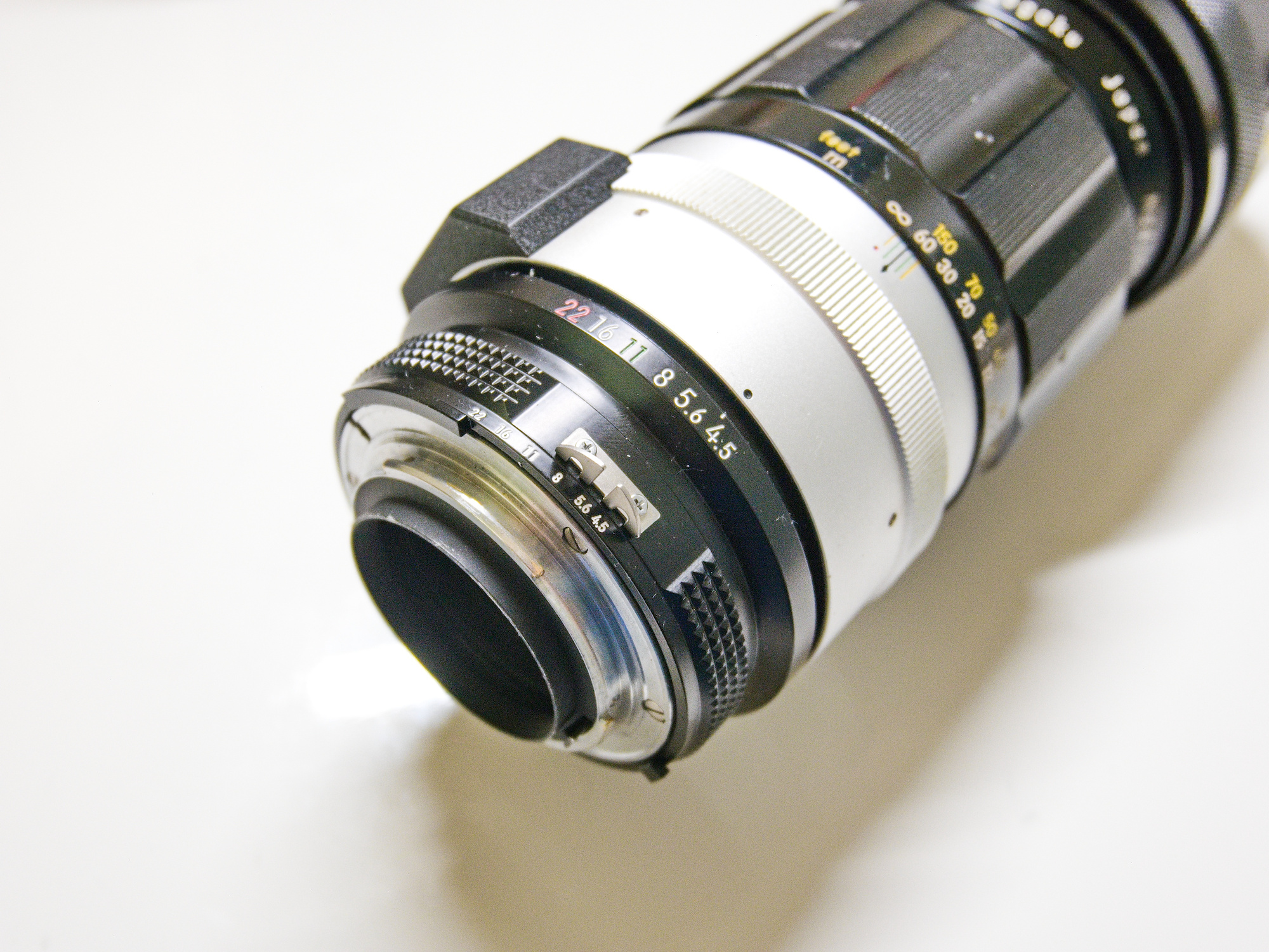
The new AI converted lens mount for the NIKKOR-H 300mm f/4.5:
-
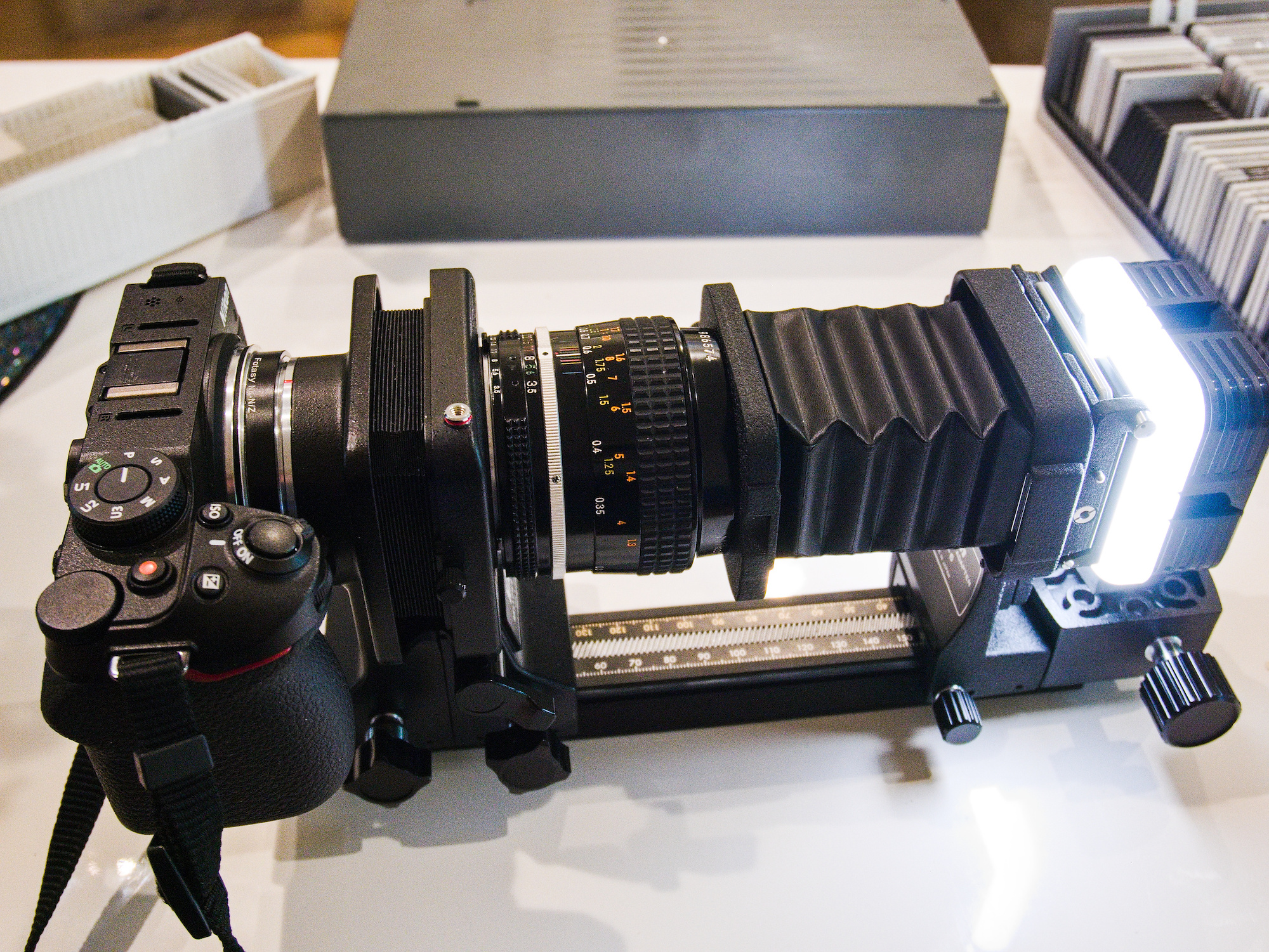
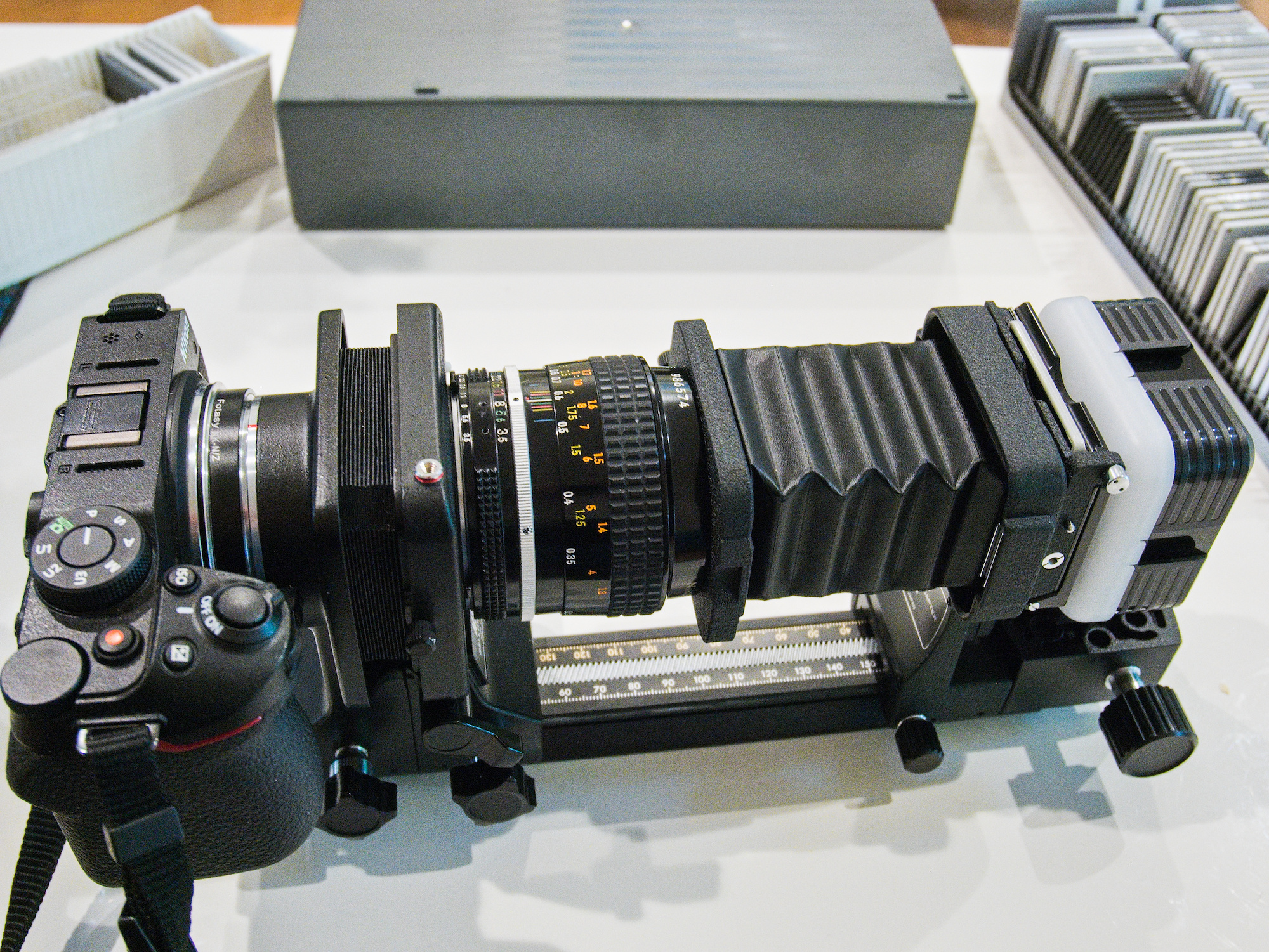
Using the Nikon Slide Copying Adapter with a Nikon DX Z Camera, Part 2
To use a 50mm macro along with the PB-6 instead of the 18-70mm lens @70mm from Part 1 requires a smaller distance between the camera and the bellows mount.
For this, I made an even shorter F to Z mount adapter:
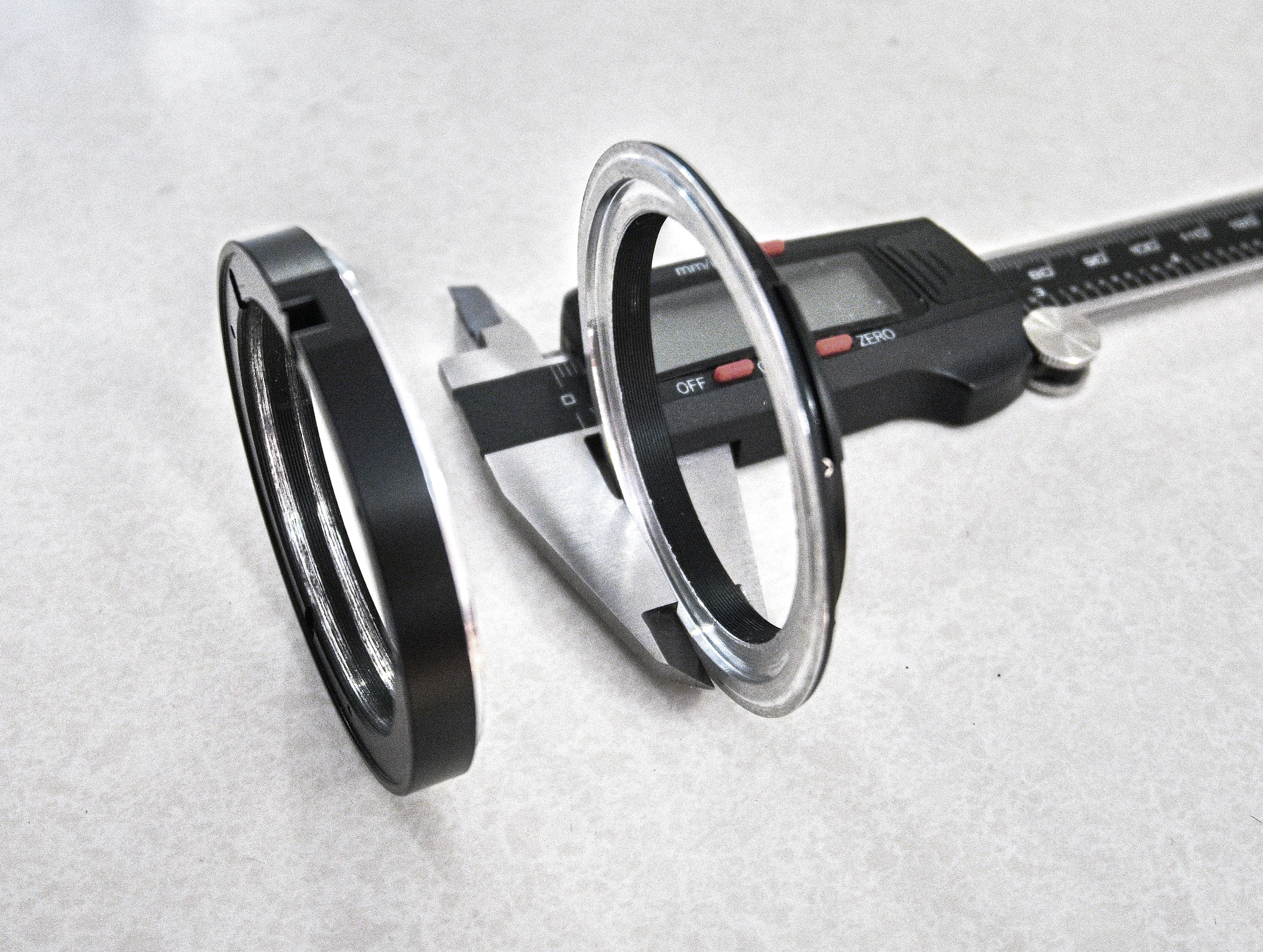
The left side with the F mount is 8.40mm in width, the depth of the recess with 58mm diameter is 1.5mm.
The right with the Z mount is 7mm in width and has the 58mm x 1.5mm indentation to connect to the F mount side.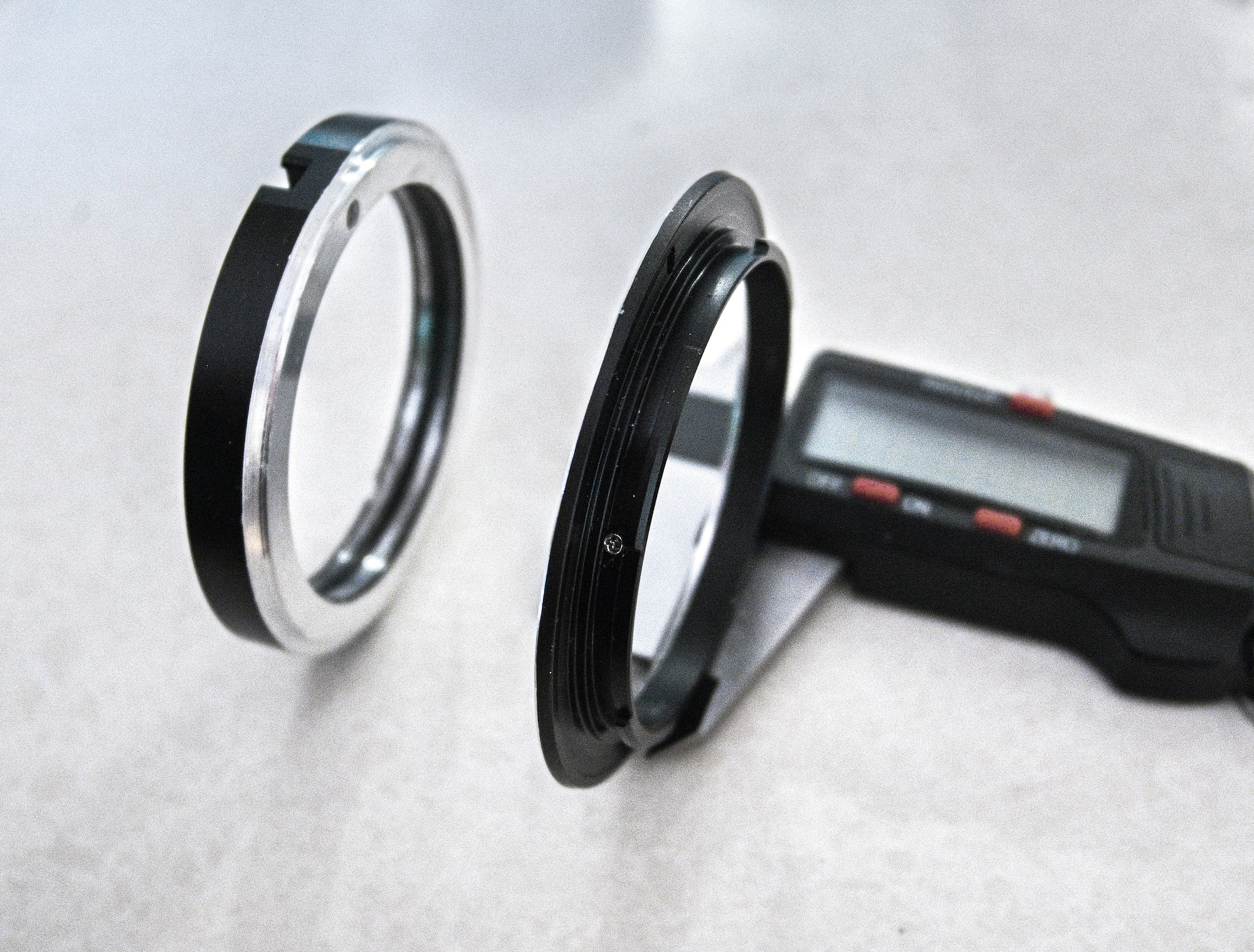
This results in a flange distance of only 10.70mm, compared to the 16.40mm flange distance of the first version of the reduced mounting adapter. The unmodified original flange distance is 30.50mm.
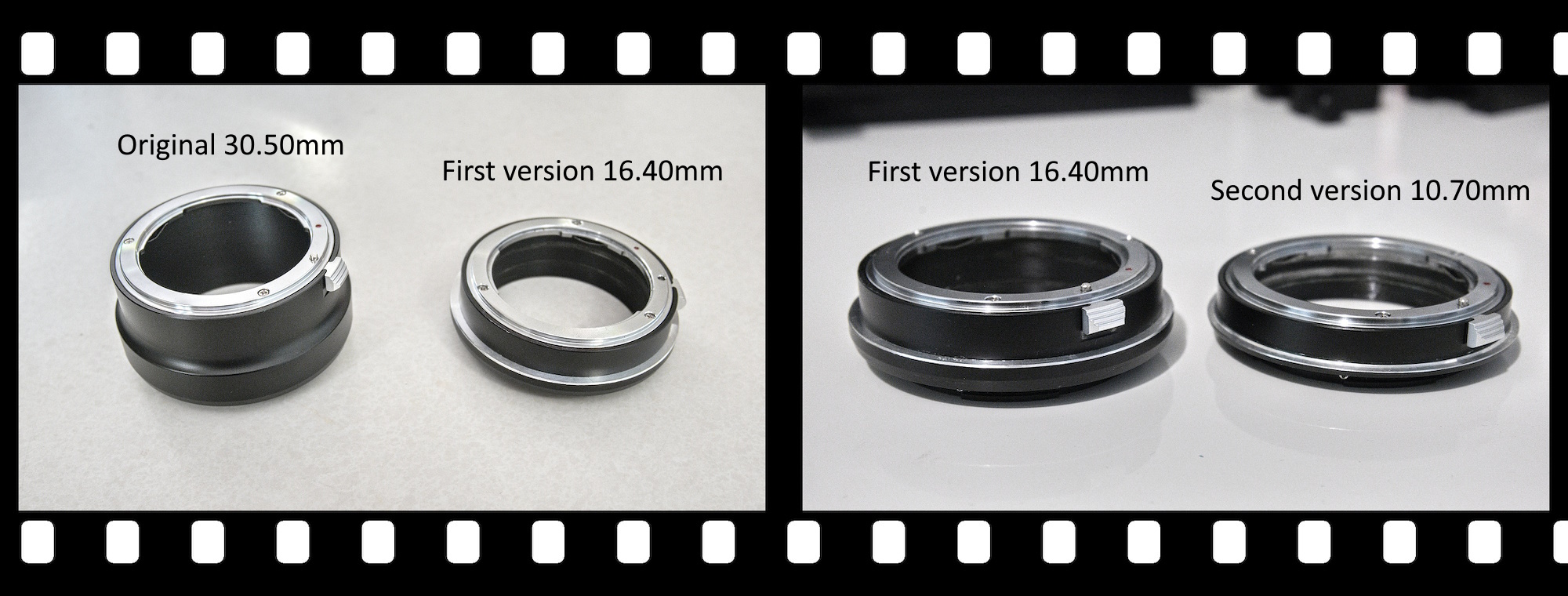
With this shortened flange distance, the Sigma 50mm f/2.8 FX DG Macro works perfectly:

And so does the Nikon 50mm f/1.4, but it is not that sharp in the corners as the macro:
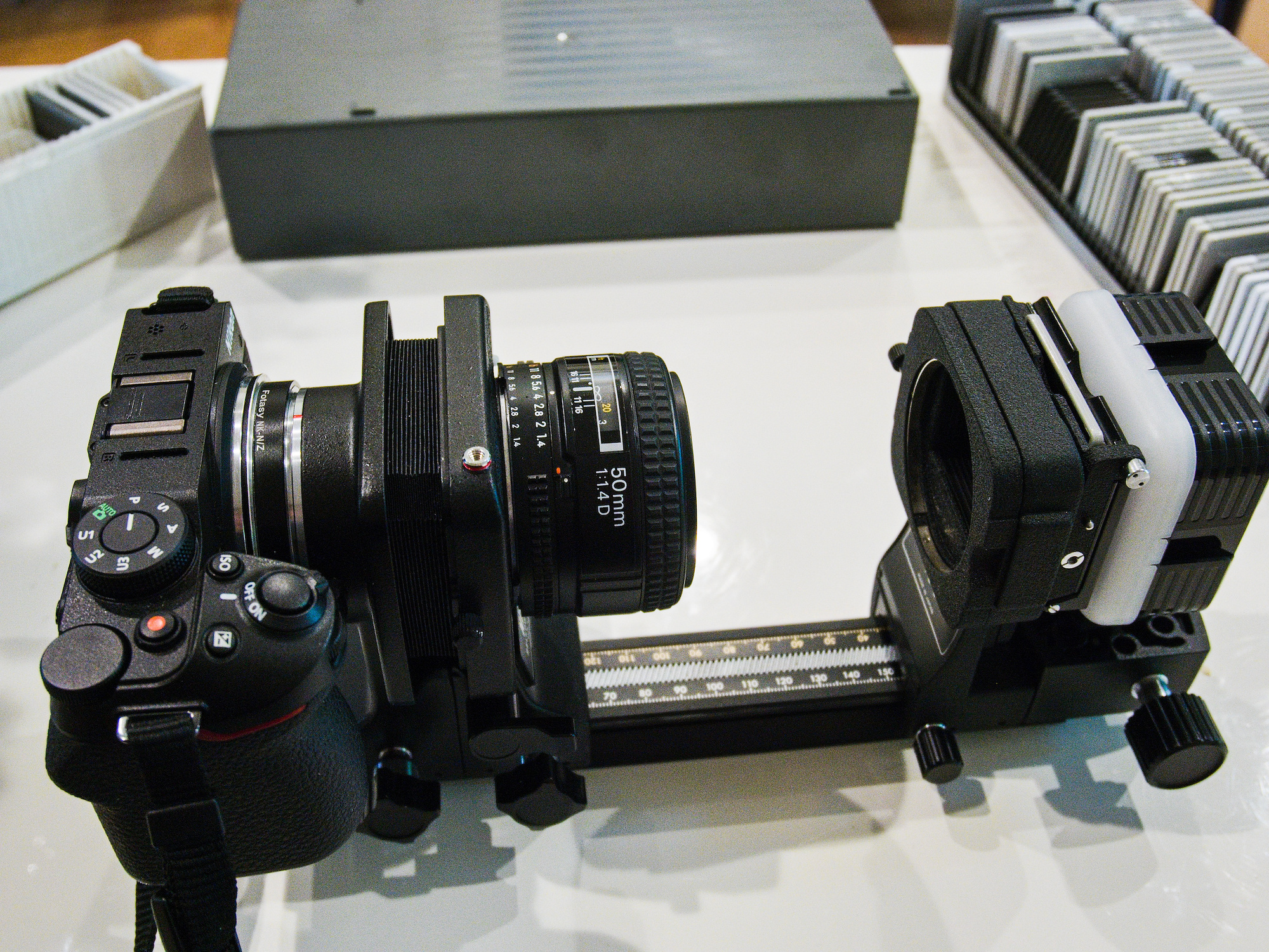
The Micro-Nikkor 55mm f/3.5 is in the same class as the Sigma macro in sharpness:

The Slide Copying Adapter bellows can be directly attached to the Micro-Nikkor. The Sigma requires either a 52mm extension tube or a step down ring 55-52mm with a BR-2 and BR-3 adapter: