-
Seattle Overlook Walk
Last year, the waterfront project was still under construction (see Seattle Waterfront Park Project).
Now, it has been completed and is open to the public as the Seattle Overlook Walk, connecting the iconic Public Market with the Aquarium.View from the Pike Place Market:
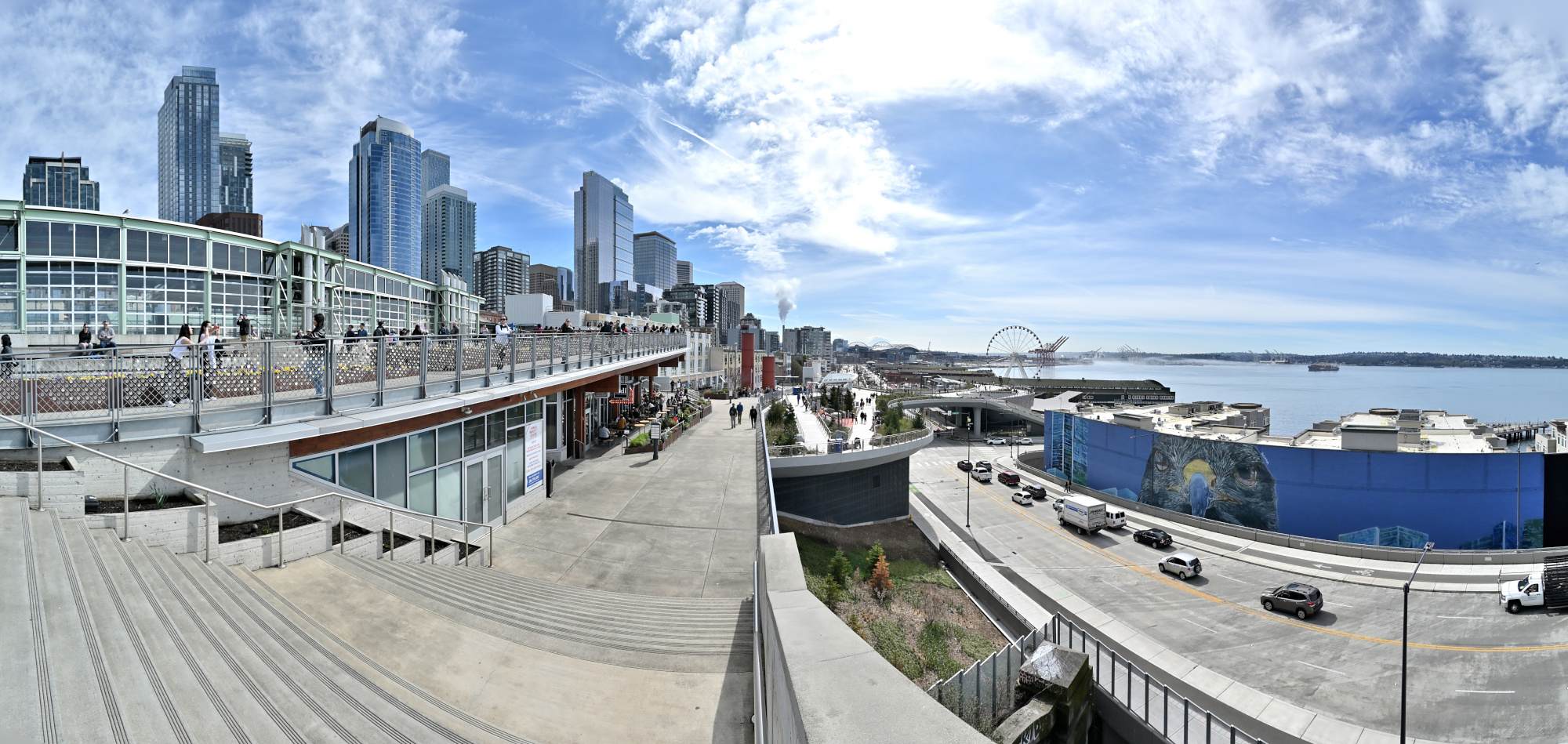
1/1250s f/5,6 ISO 100/21° f=7,5mm
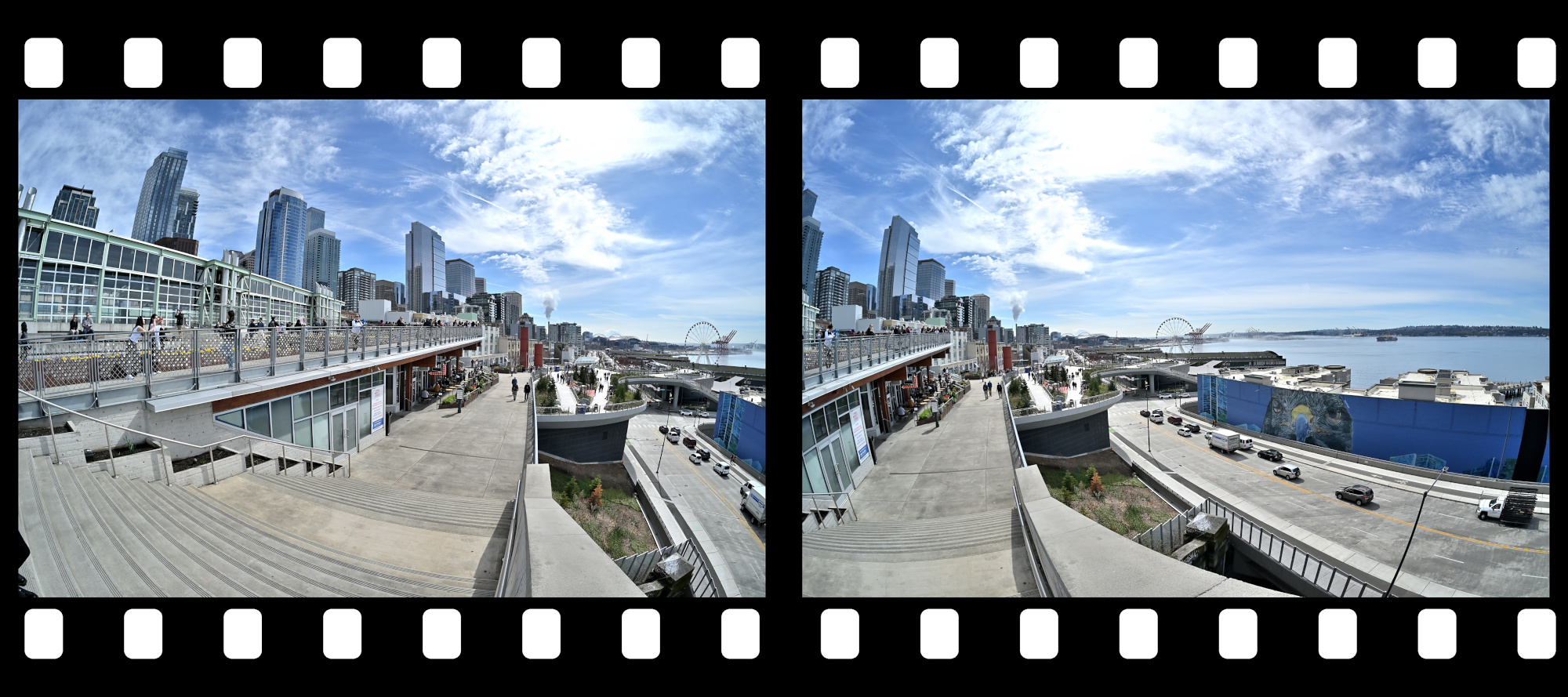
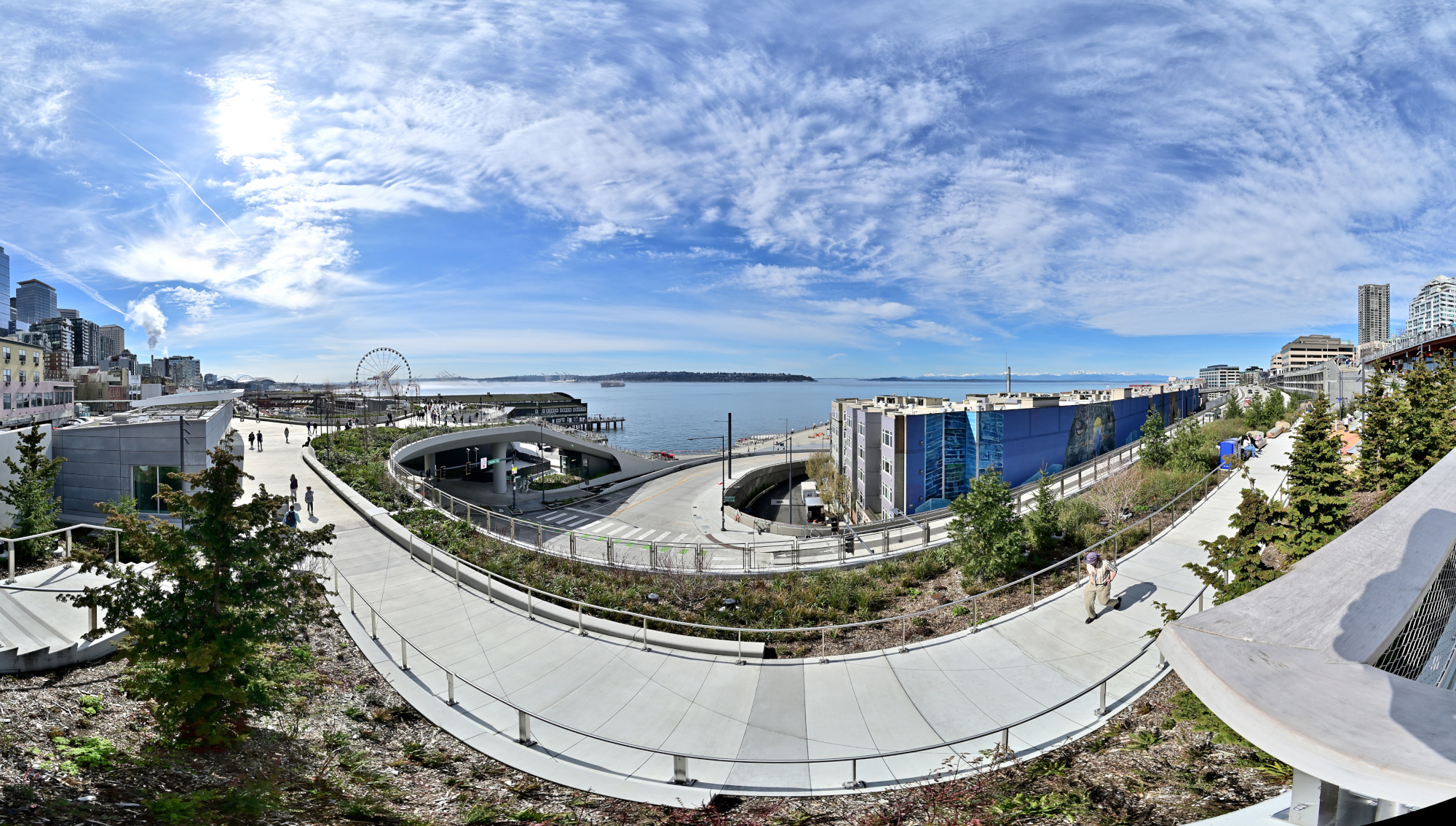
1/1250s f/5,6 ISO 100/21° f=7,5mm
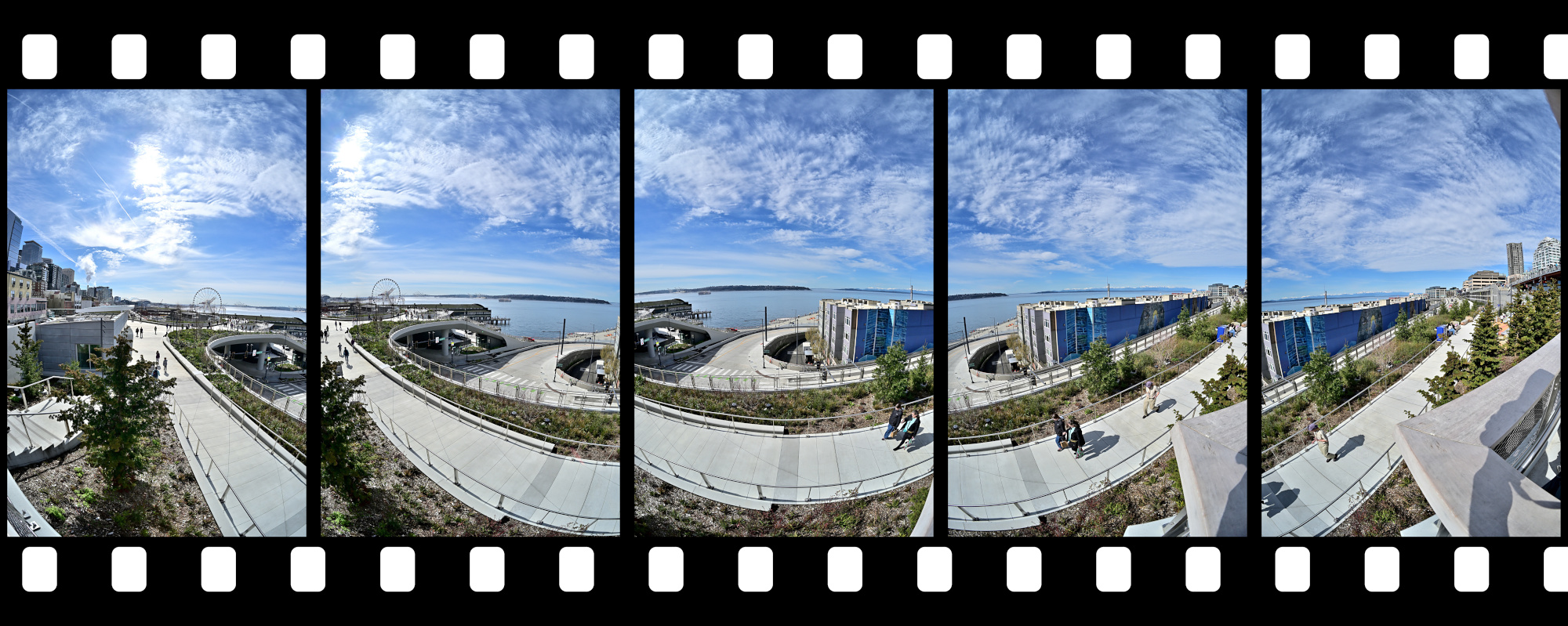
Seattle Overlook Walk 1
In the early morning, the fog drifts over the Puget Sound, creating a serene and mystical atmosphere.
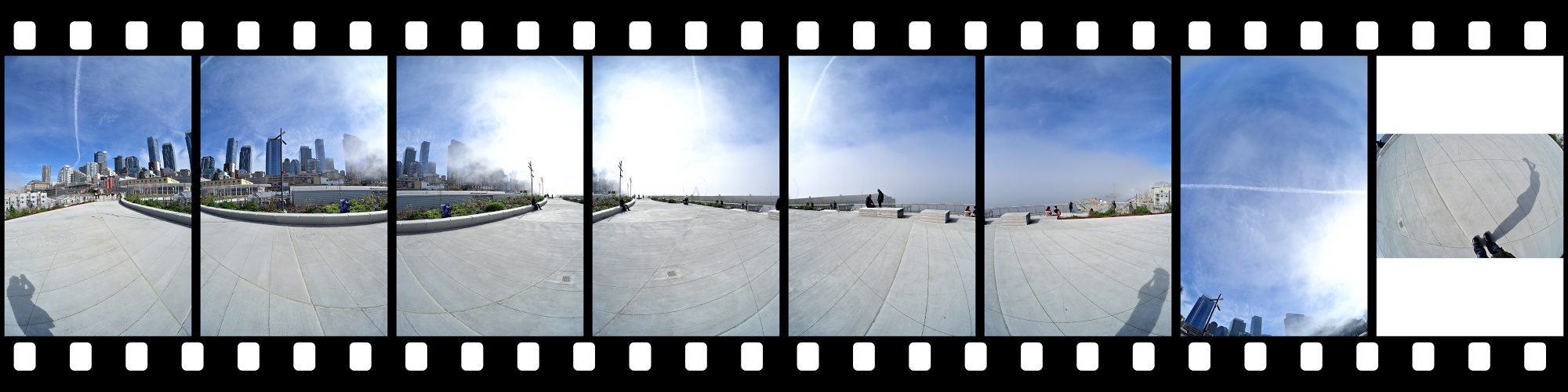
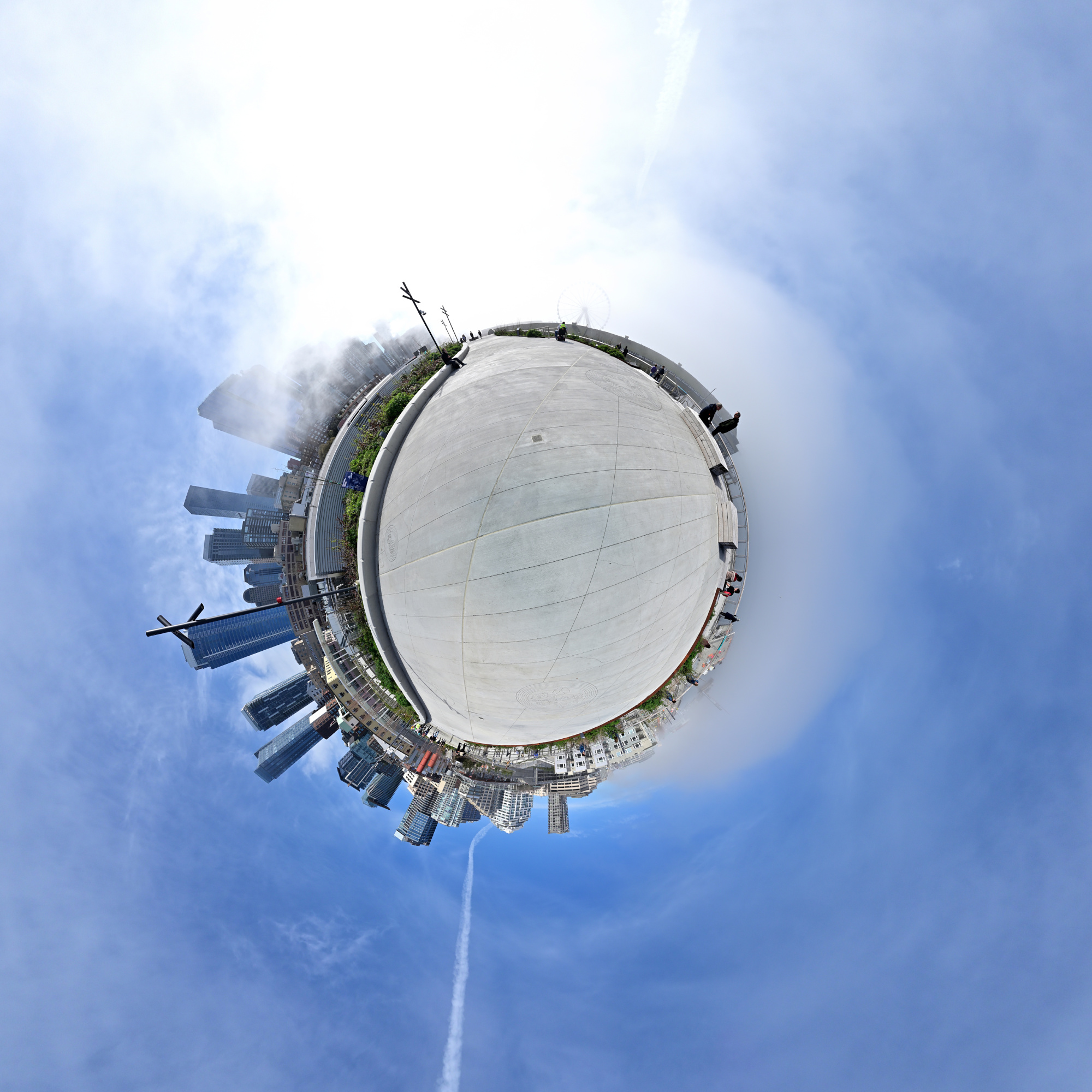
Interactive Panorama Seattle Overlook Walk 1
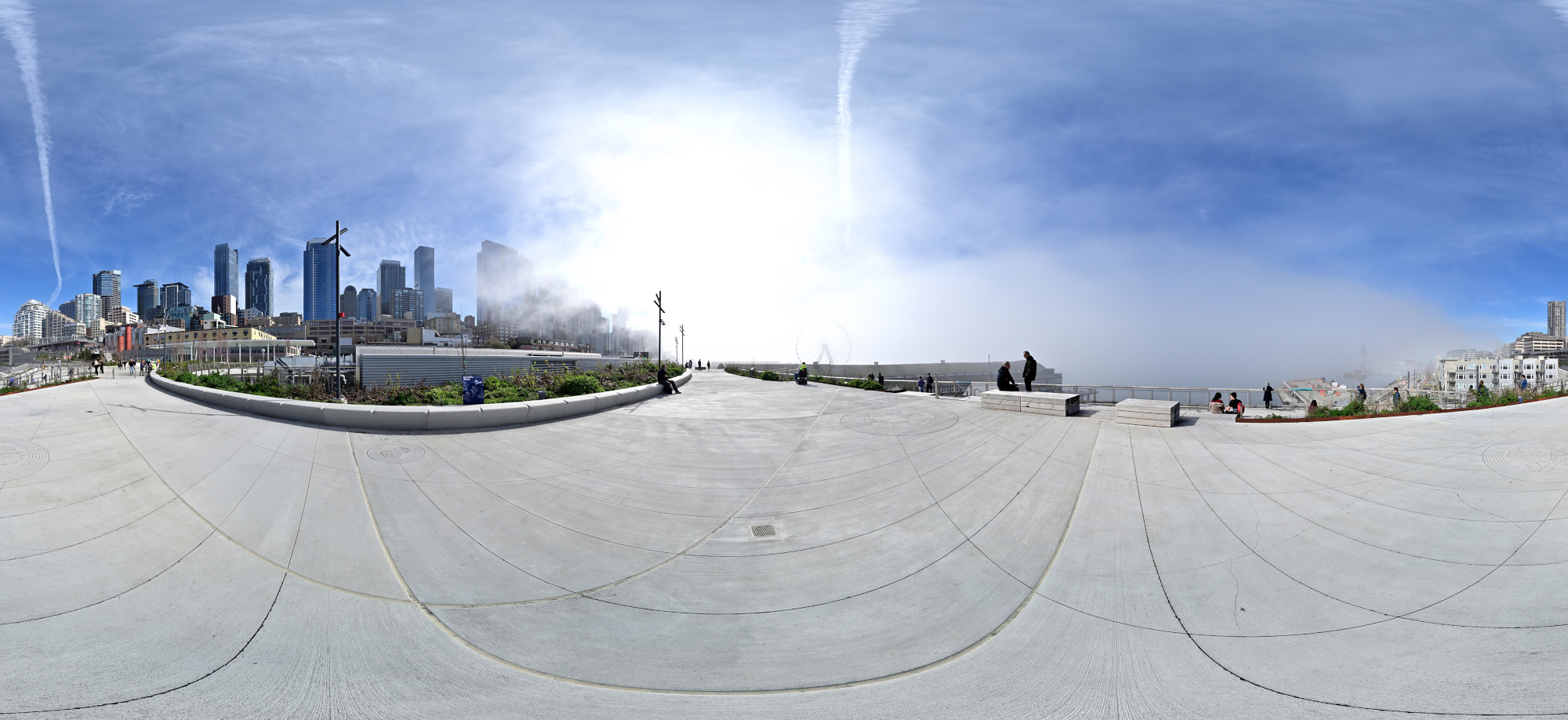
1/1000s f/5,6 ISO 100/21° f=7,5mm
Seattle Overlook Walk 2
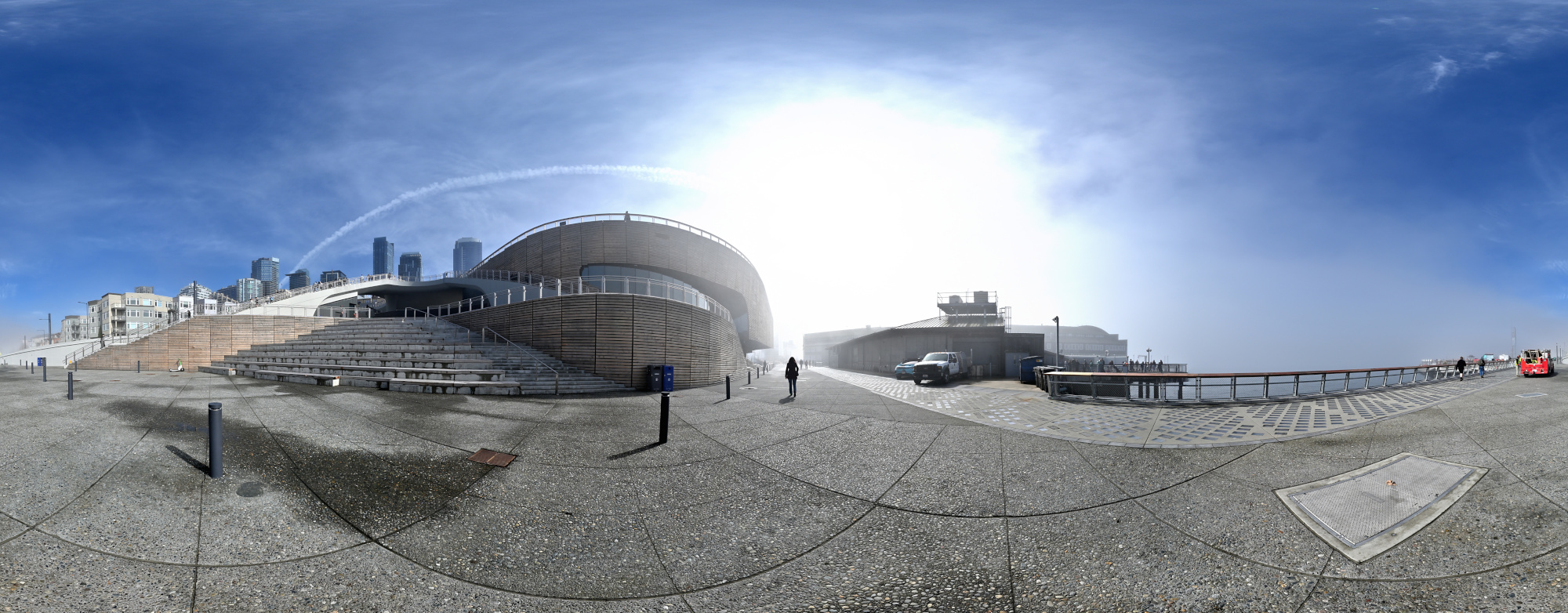
Early mist at the backside of the Ocean Pavilion.
It looks stunning at night with the illuminated steps (check out the gallery at waterfrontseattle.org). In this panorama, however, it feels more like a foggy London crime scene from an Edgar Wallace movie.Interactive Panorama Seattle Overlook Walk 2
1/1250s f/5,6 ISO 100/21° f=7,5mm
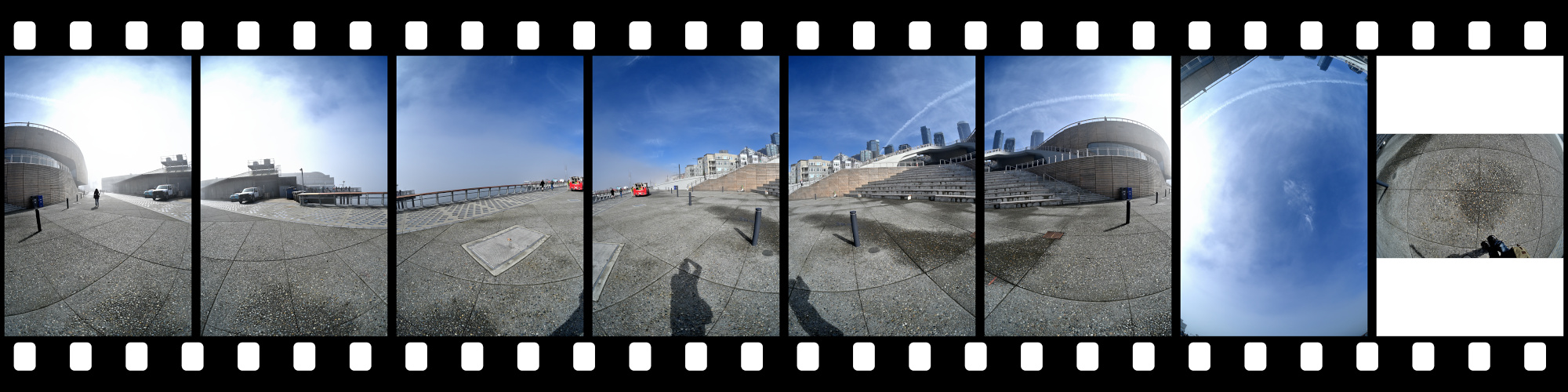
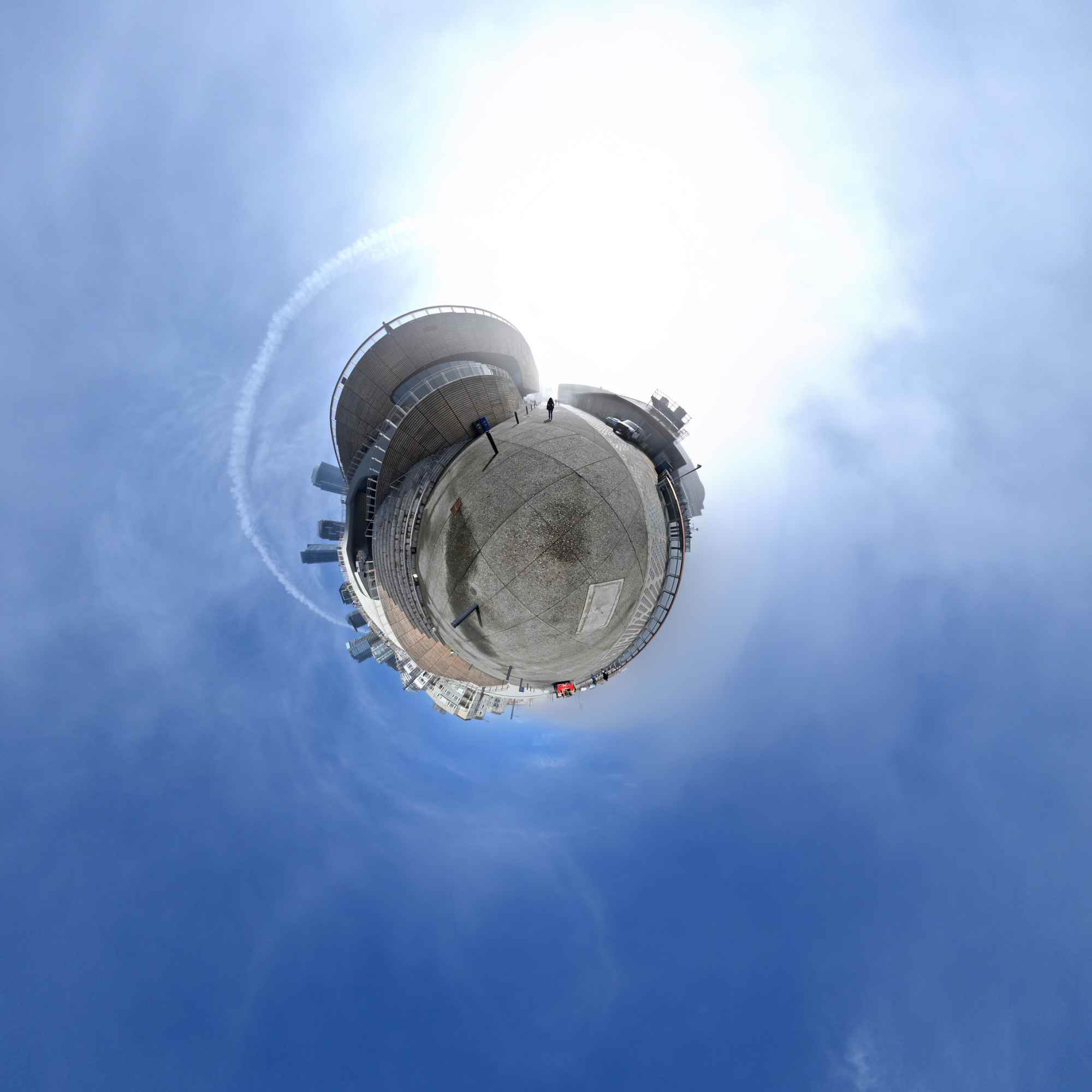
Seattle Overlook Walk 3
The sun reflects in the Ocean Pavilion.
Interactive Panorama Seattle Overlook Walk 3
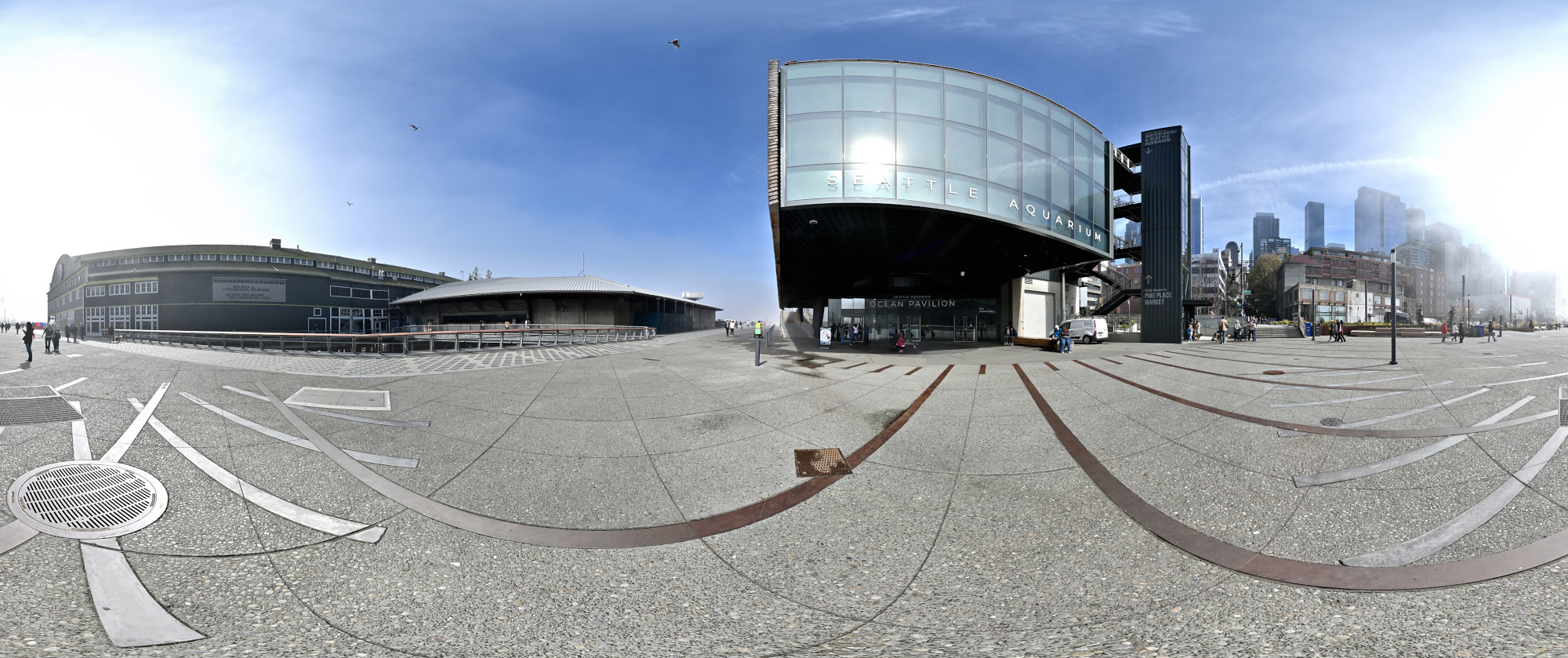
1/1000s f/5,6 ISO 100/21° f=7,5mm
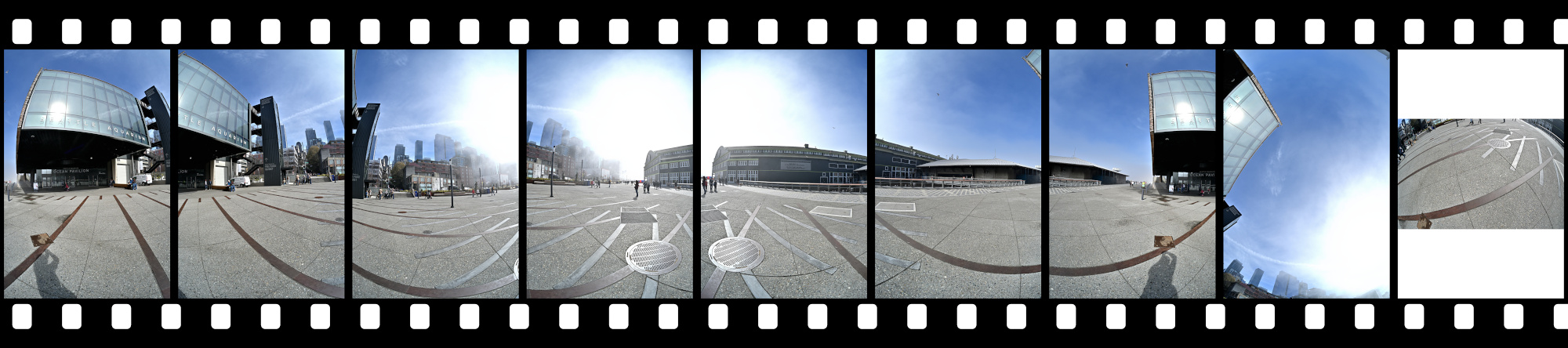
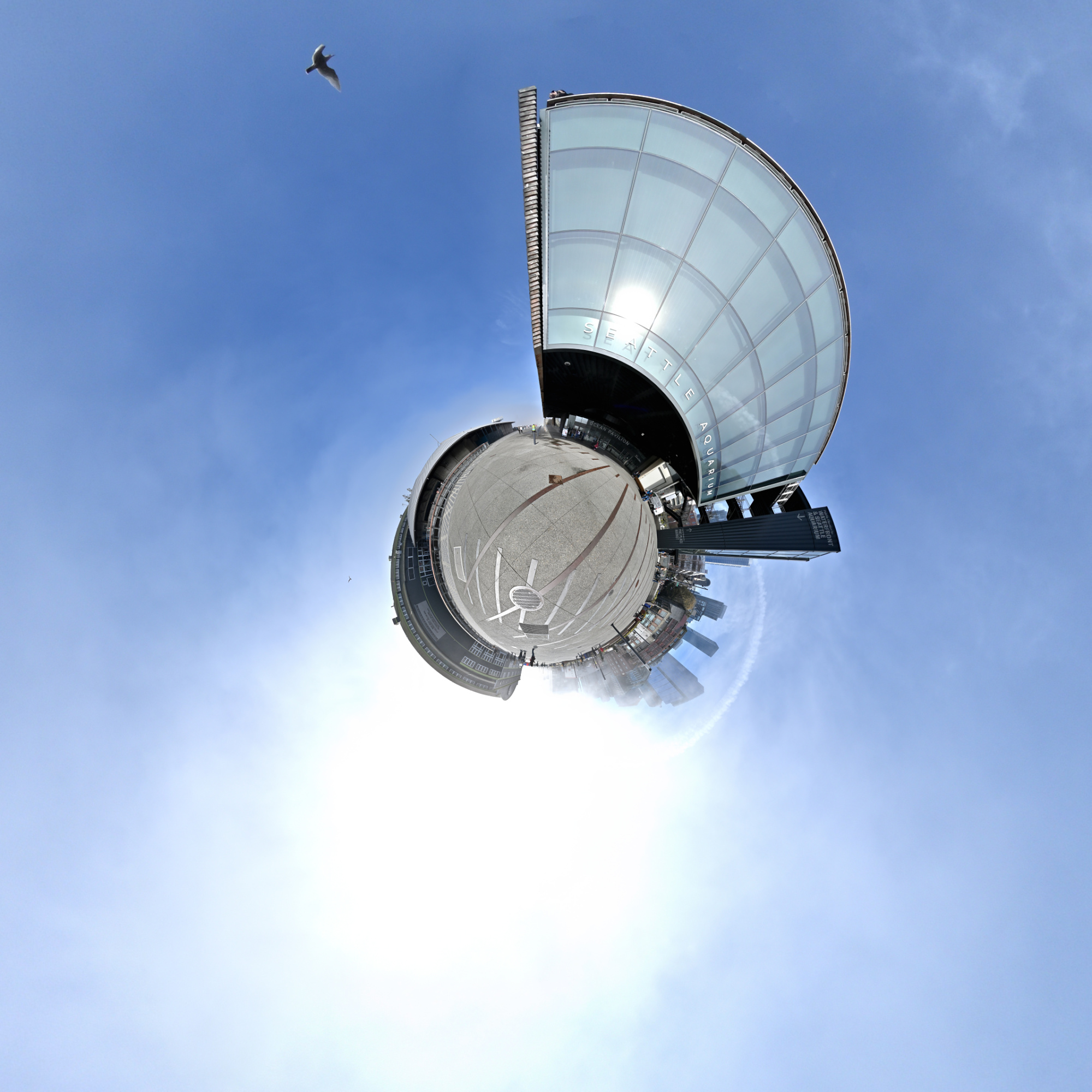
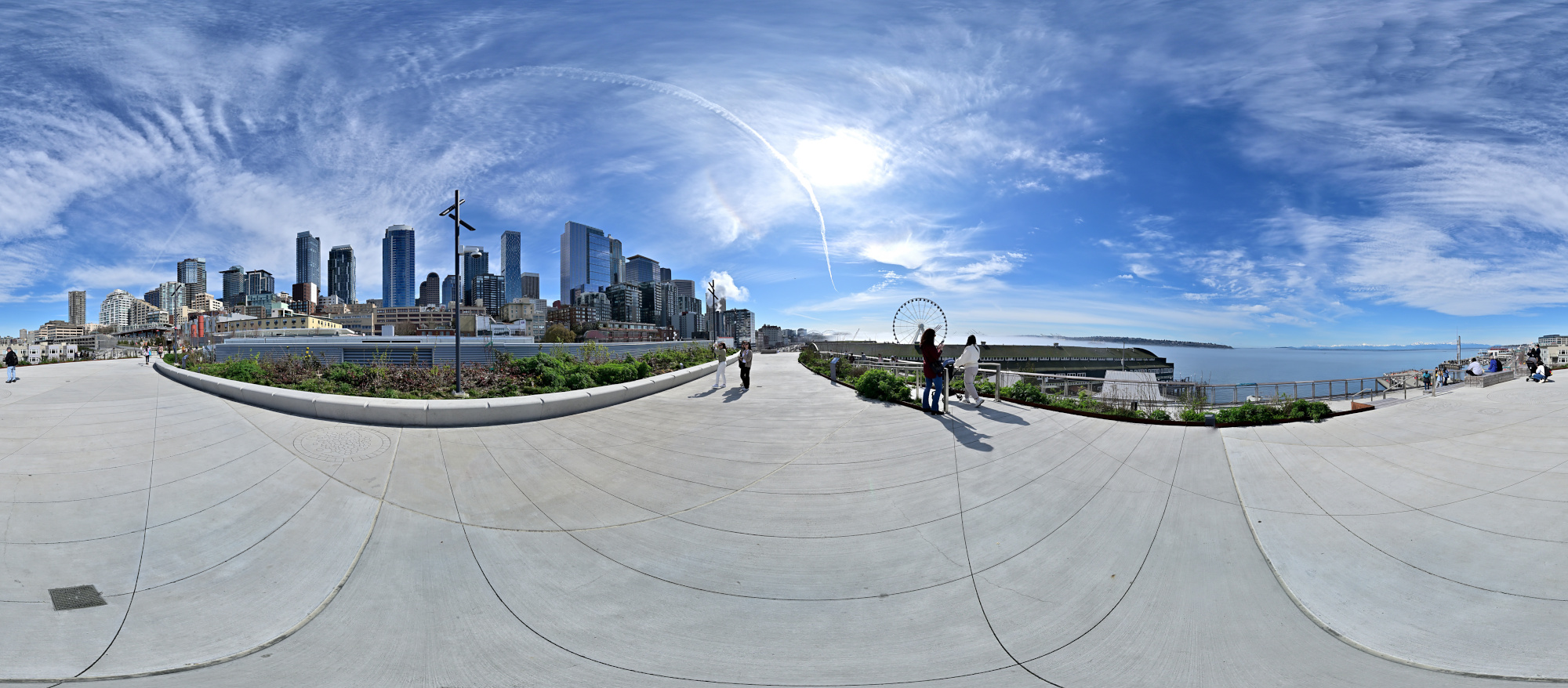
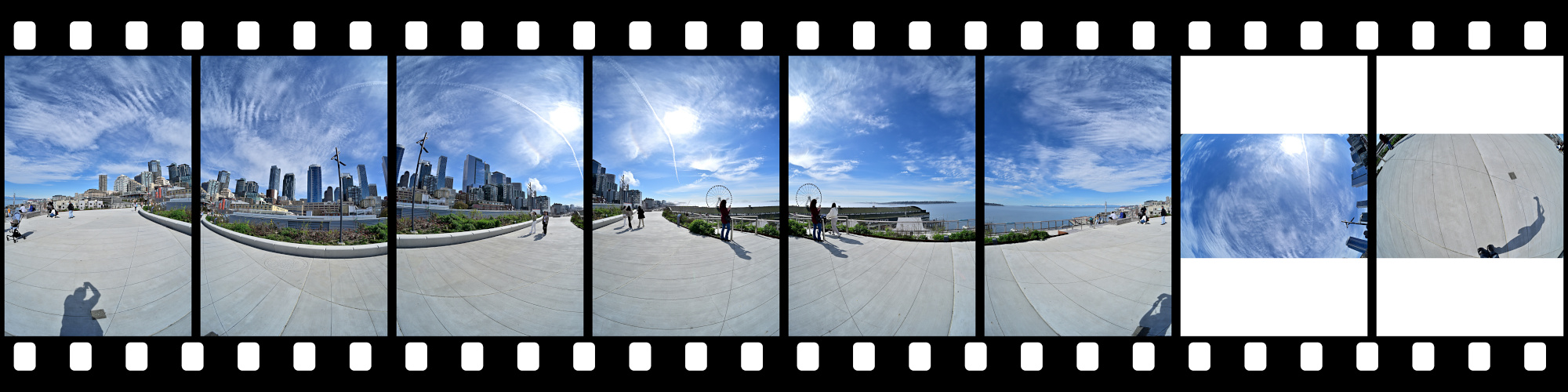
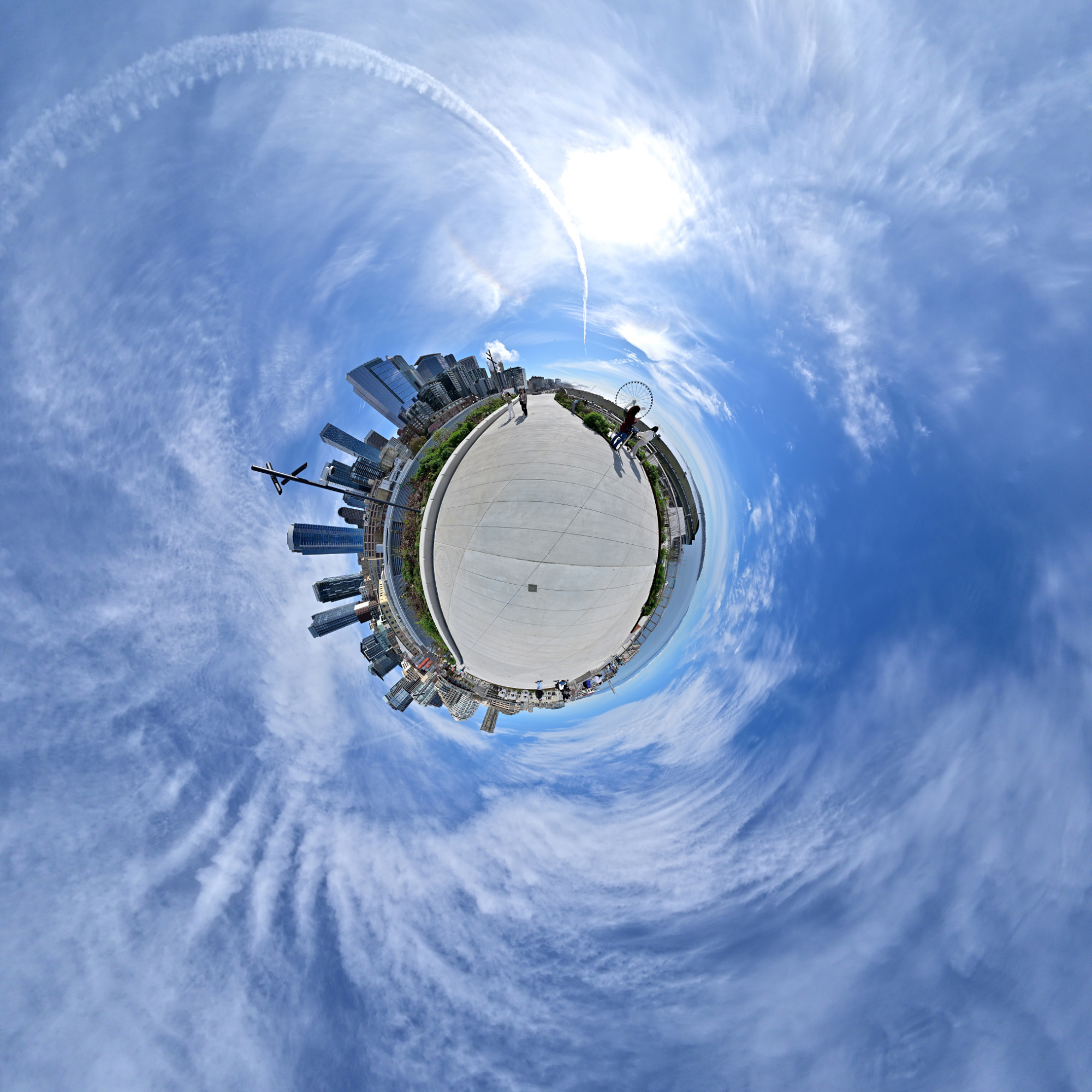
Seattle Overlook Walk 4
As the morning progresses, the fog lifts, revealing the Puget Sound in warm sunlight.
Interactive Panorama Seattle Overlook Walk 4
1/1250s f/5,6 ISO 100/21° f=7,5mm
Seattle Pier 1
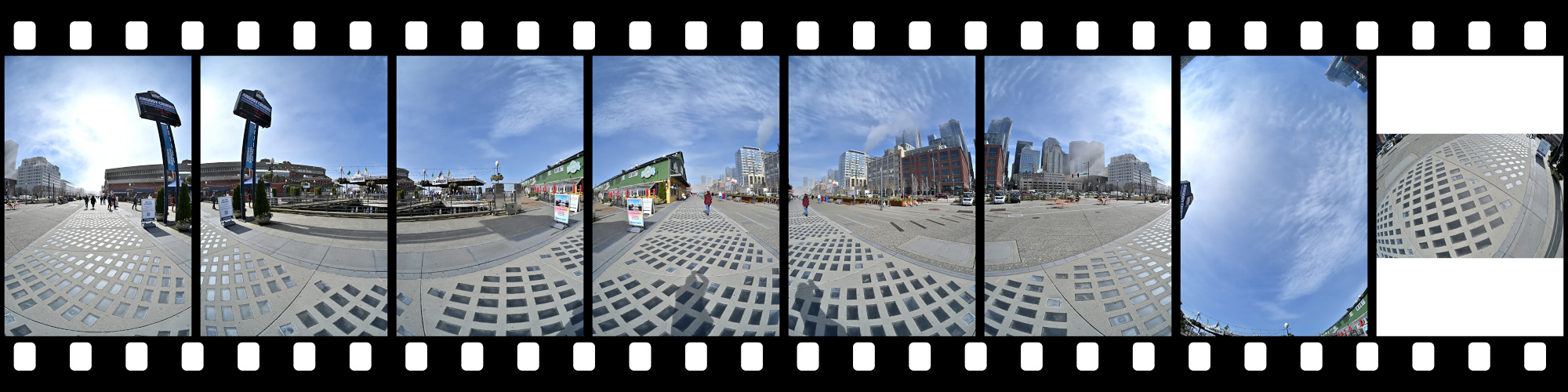
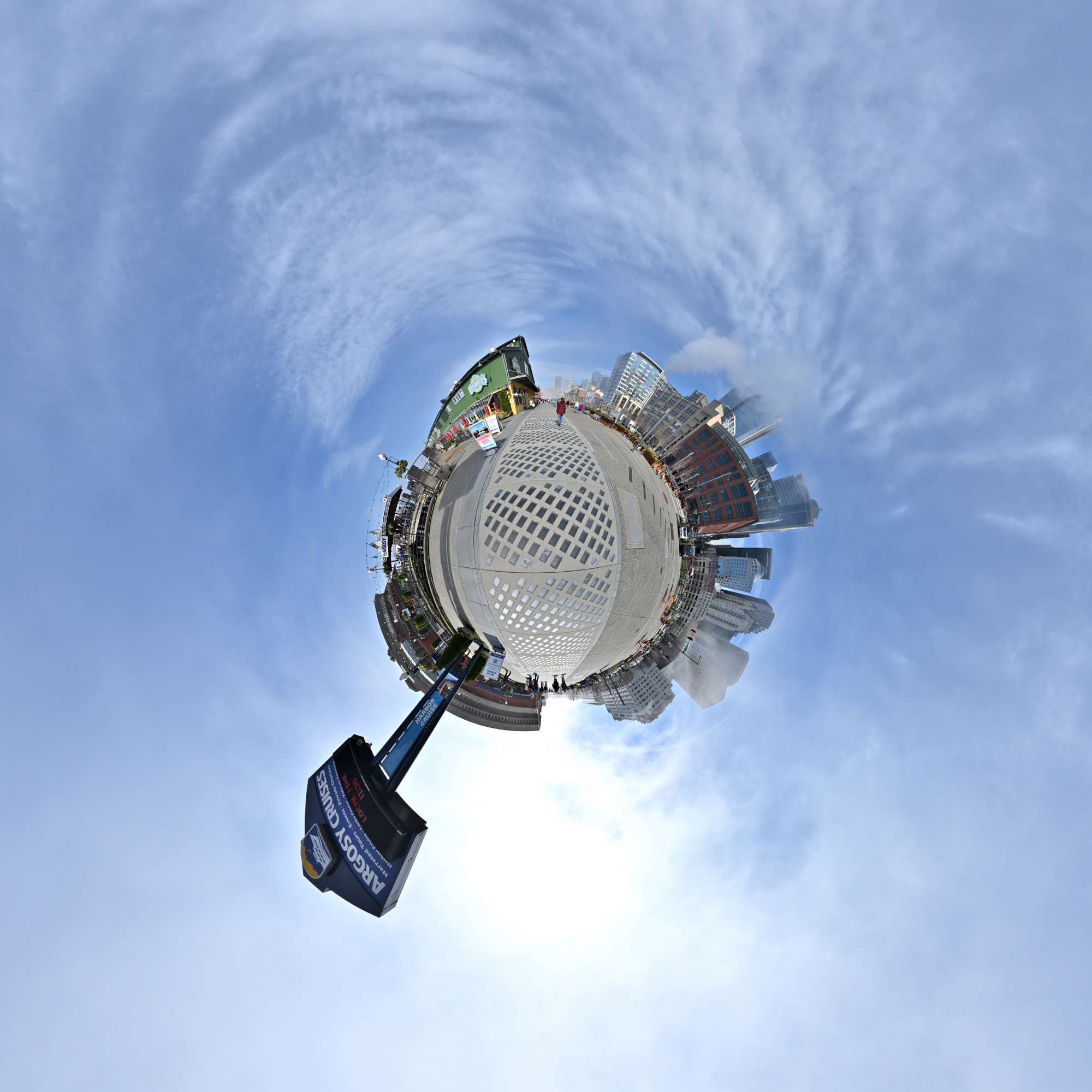
The Argosy Cruises at Pier 55.
Interactive Panorama Seattle Pier 1
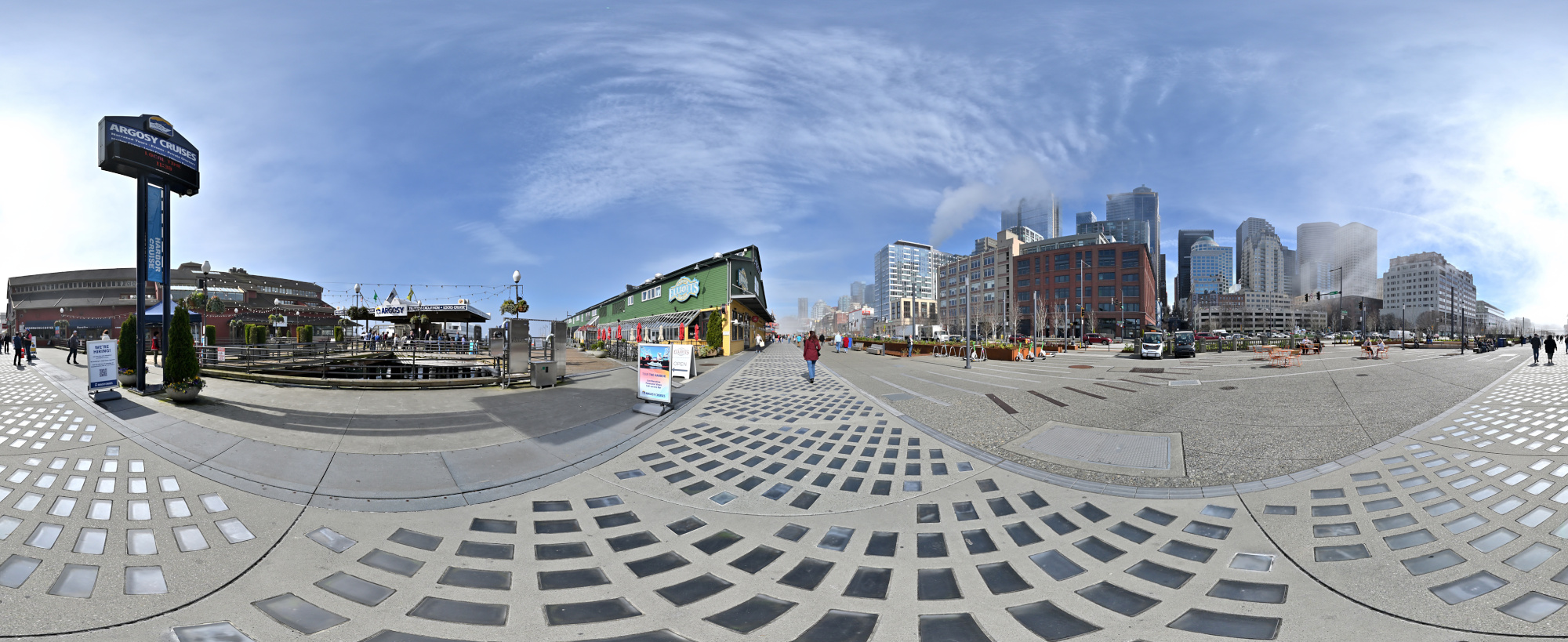
1/1250s f/5,6 ISO 100/21° f=7,5mm
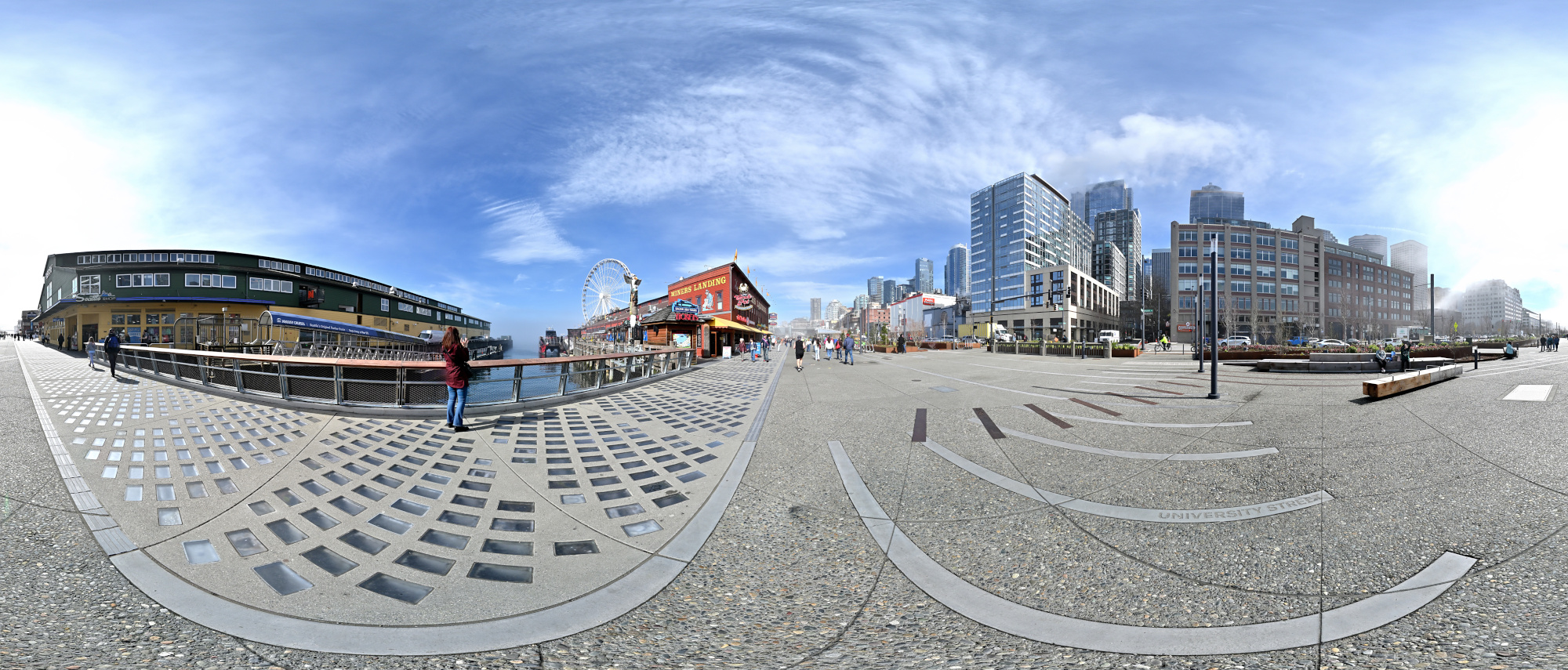
Seattle Pier 2
Miner's Landing at Pier 57 with 'The Seattle Great Wheel' in the back.
Interactive Panorama Seattle Pier 2
1/1250s f/5,6 ISO 100/21° f=7,5mm
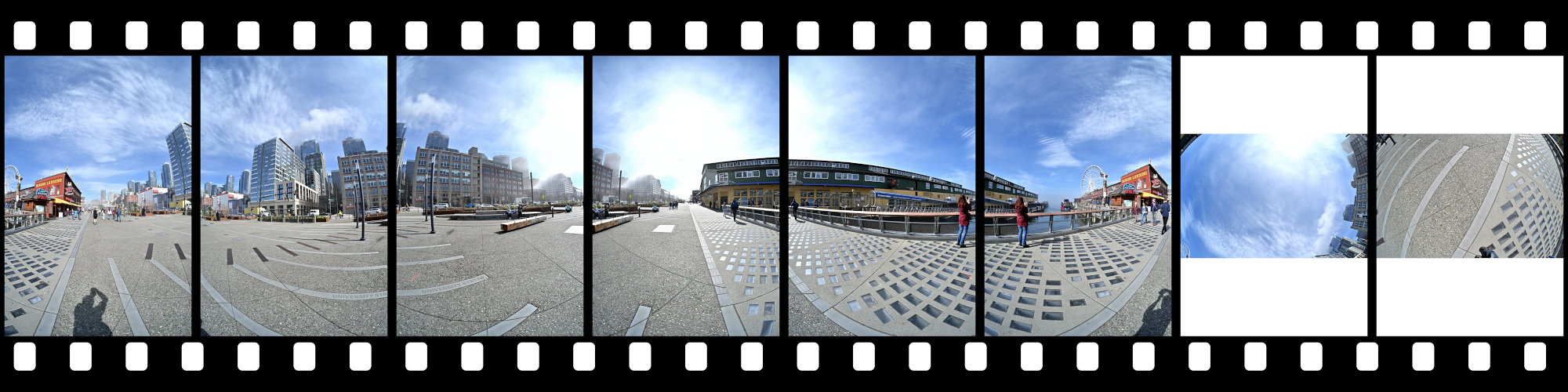
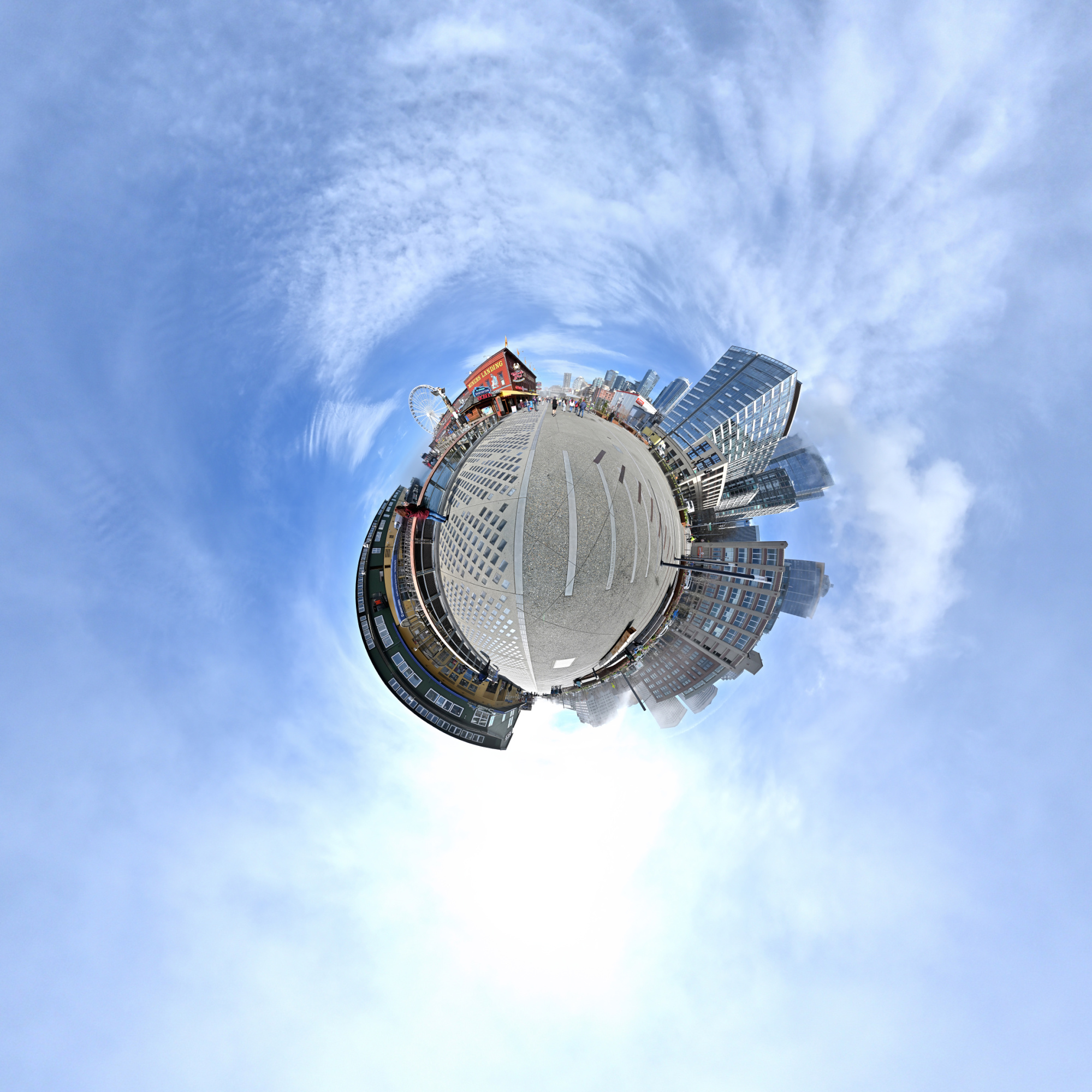
1/2092s f/1,9 ISO 47 f=5mm/25mm 📱
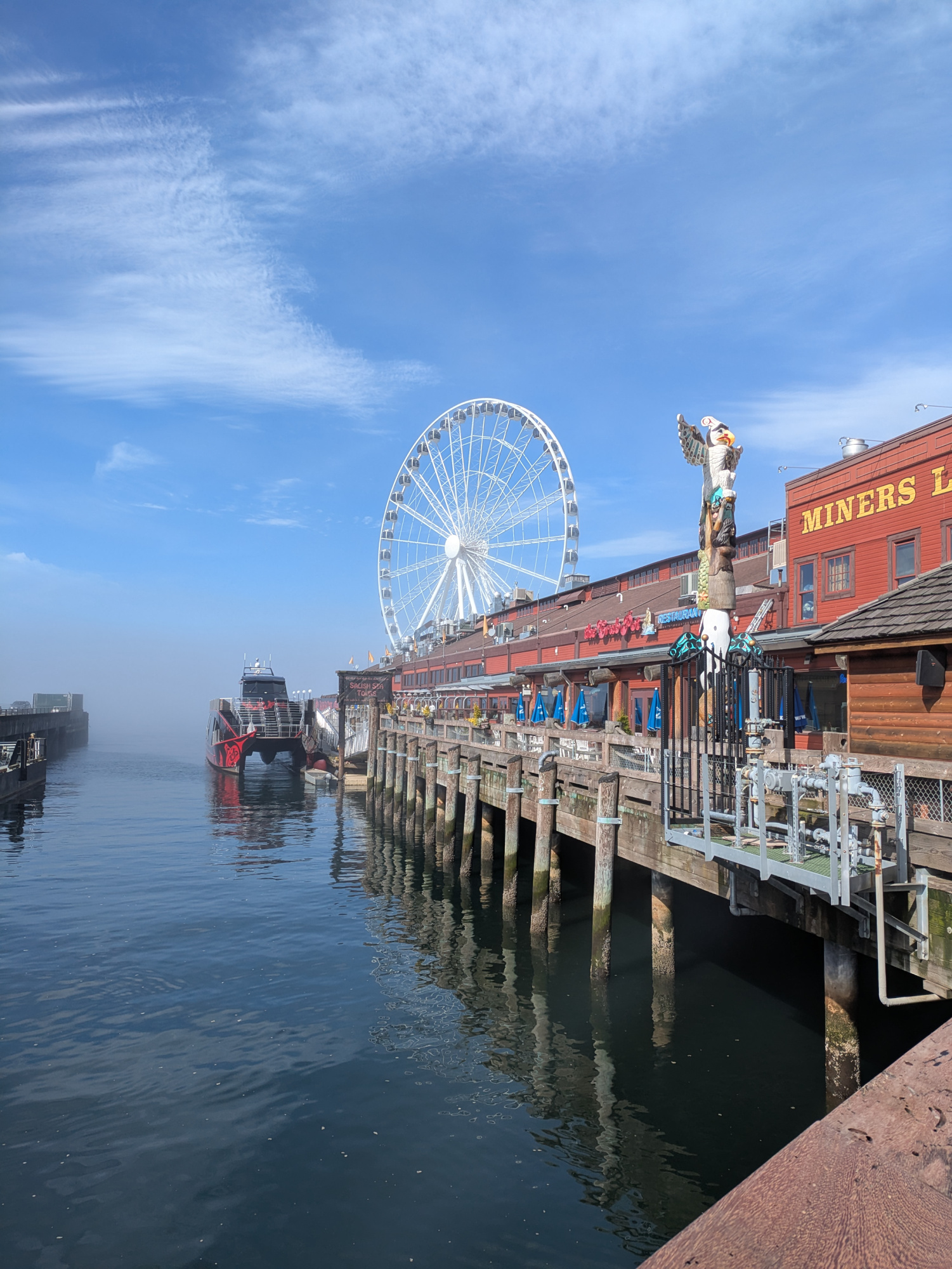
Taken a few minutes later from main Overlook Walk, with the fog still lingering.
1/1250s f/5,6 ISO 100/21° f=7,5mm
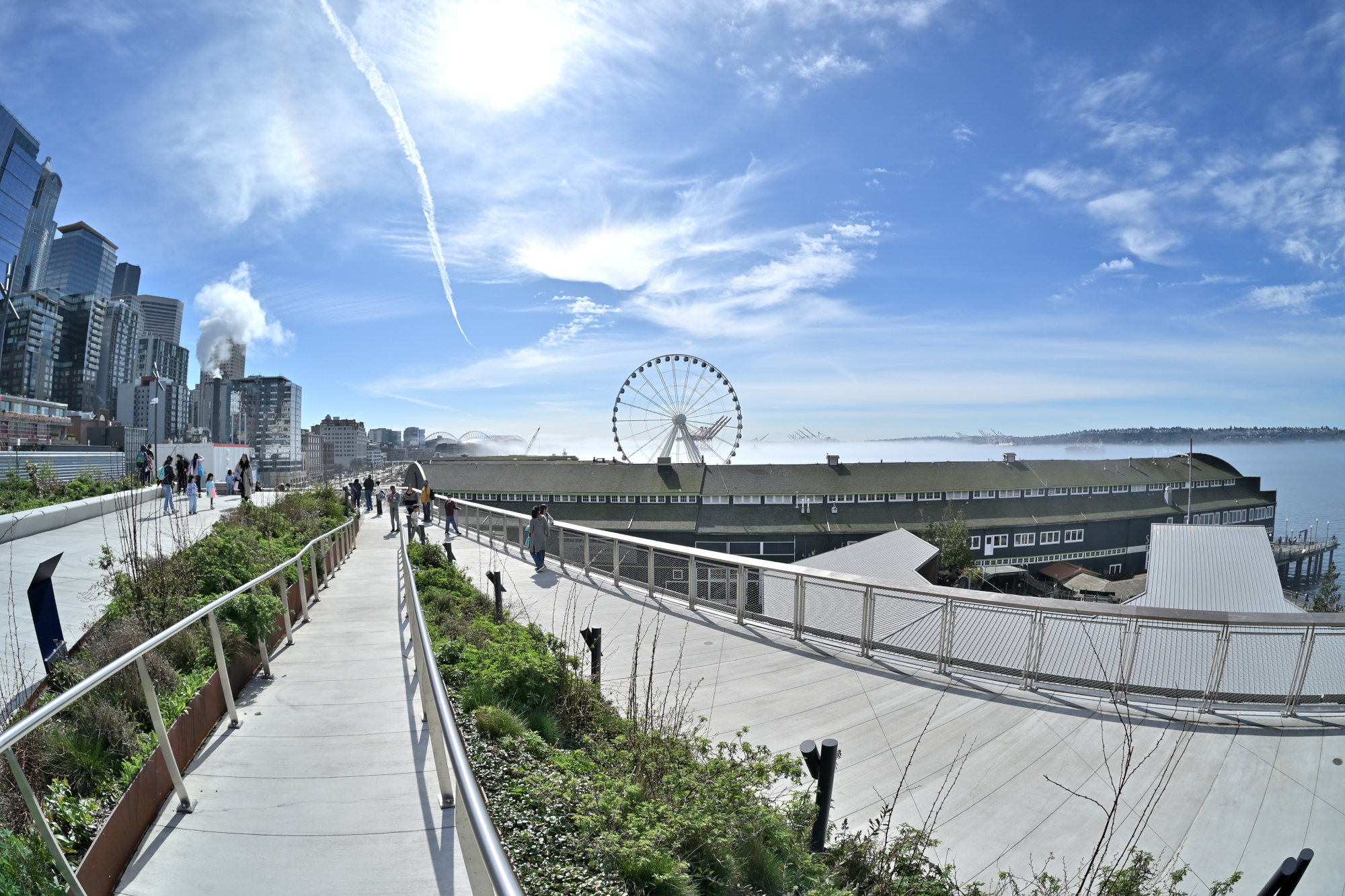
Seattle Public Market
The Pike Place Market has been alive for over a century (since 1907) and has remained unchanged. Its resilience is evident in its ability to withstand the test of time, adapting to various economic and social changes while preserving its unique character and charm. Despite challenges such as modernization, economic fluctuations, and urban development, the market has continued to thrive, serving as a vibrant hub for local vendors and visitors alike.
Interactive Panorama Seattle Public Market
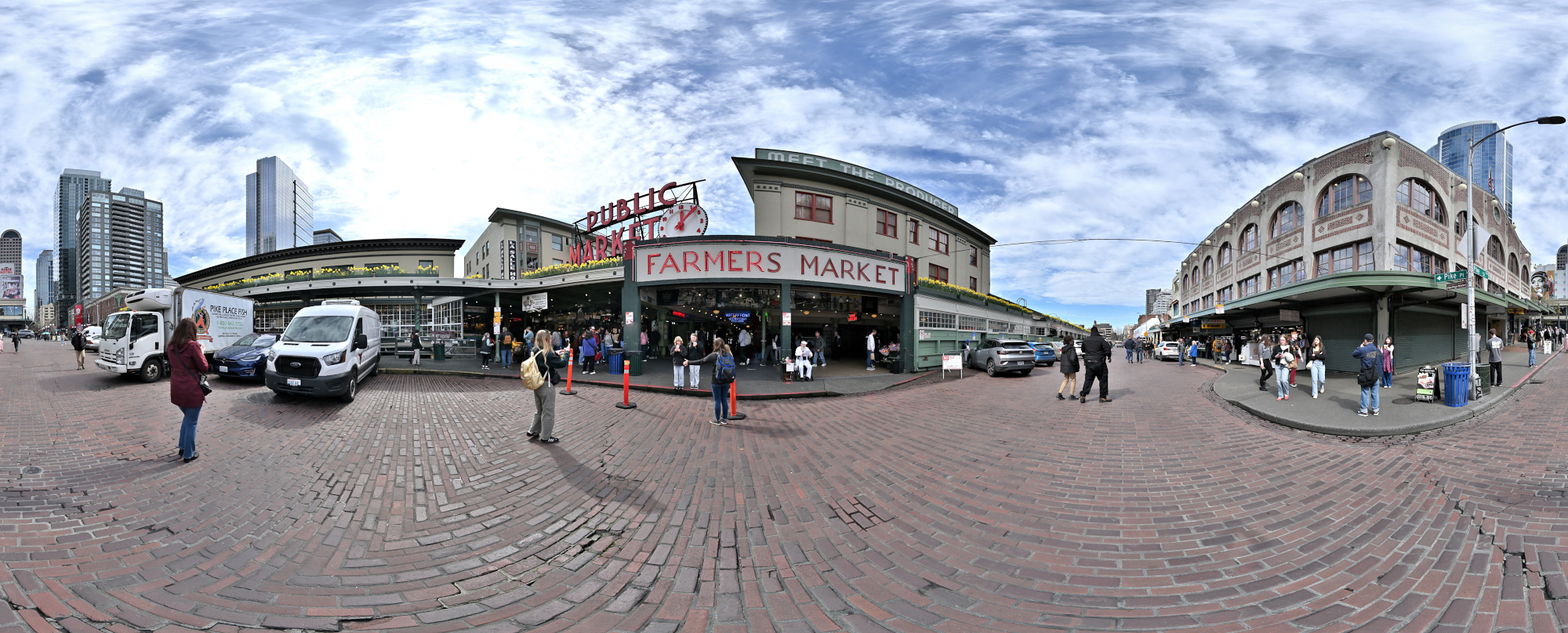
1/800s f/5,6 ISO 100/21° f=7,5mm
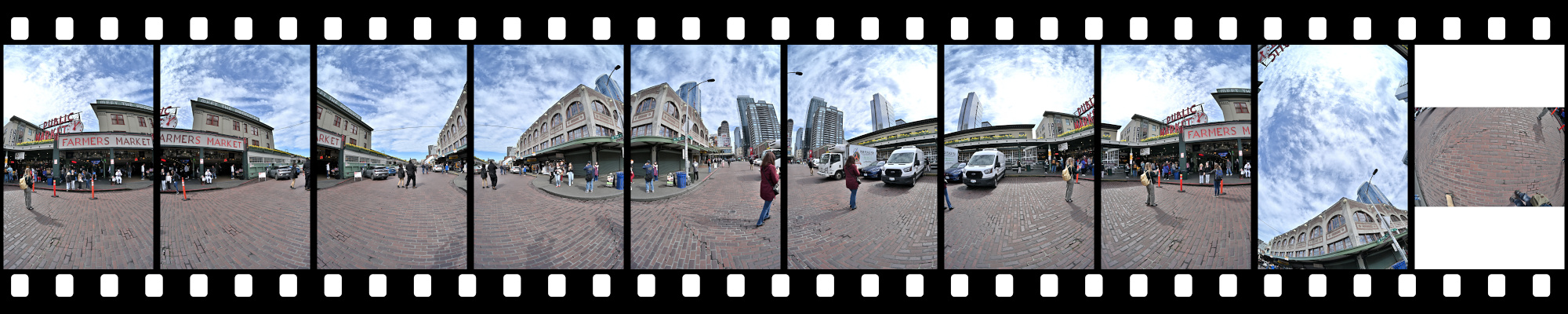
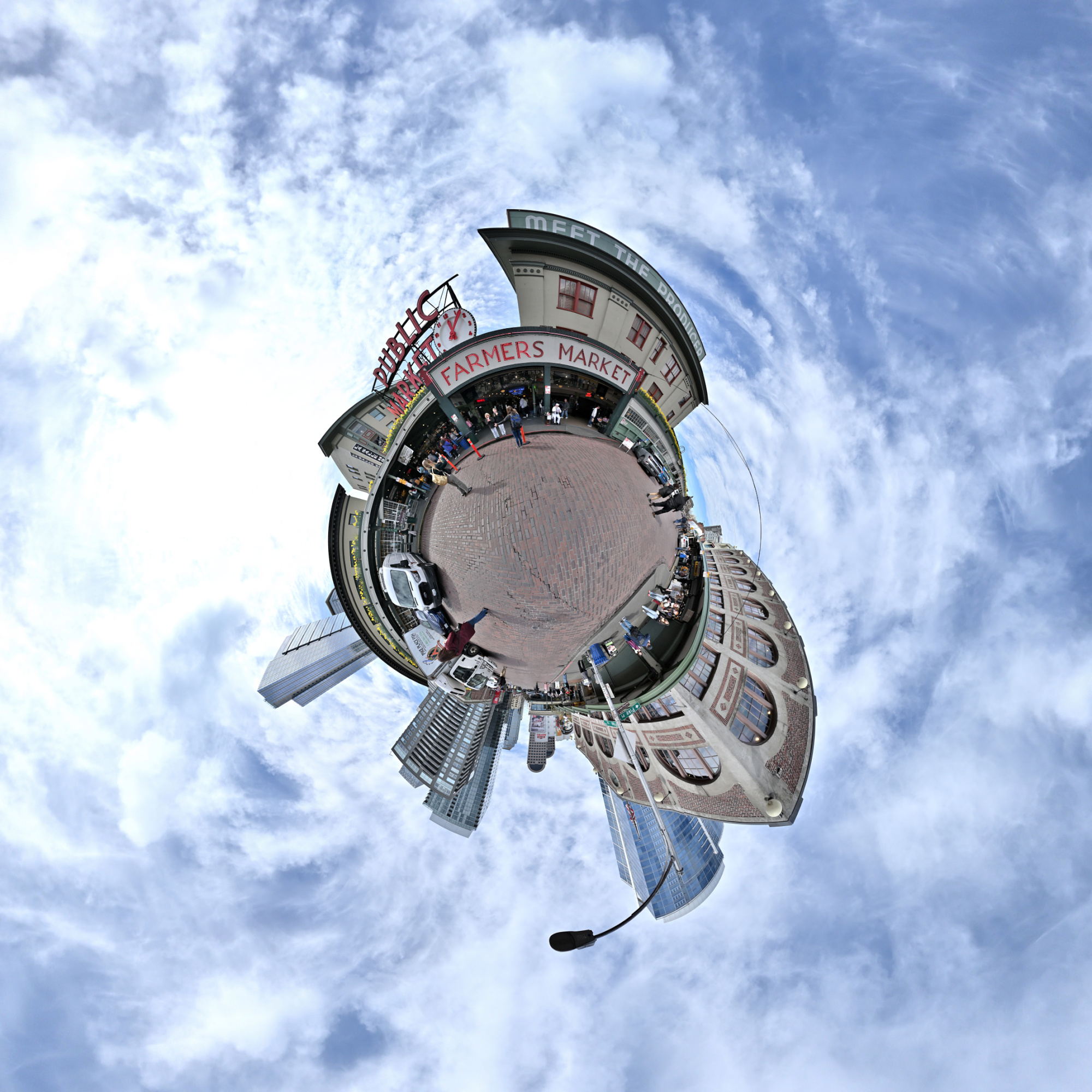
See also Panorama Pike Place Market, Seattle
-
Microsoft 50 Years
In 1998, I had the incredible opportunity to meet Bill Gates, the co-founder of Microsoft.
Years later, I attended Bill Gates' 50th birthday party. The event was a celebration of his achievements and contributions to technology and philanthropy.
I've seen Steve Ballmer, former CEO of Microsoft, multiple times in Seattle. His energetic approach to leadership was always evident.
More recently, I've had the chance to see Satya Nadella, the current CEO of Microsoft, during Hackathon presentations. His commitment to fostering innovation within the company is truly inspiring.Today in Redmond, I attended the Microsoft's 50th anniversary celebration. The event was quite spectacular!
The rest of the time is writing code, that is still evident while you are on your PC tasks and navigating to this page 👾🛸

-
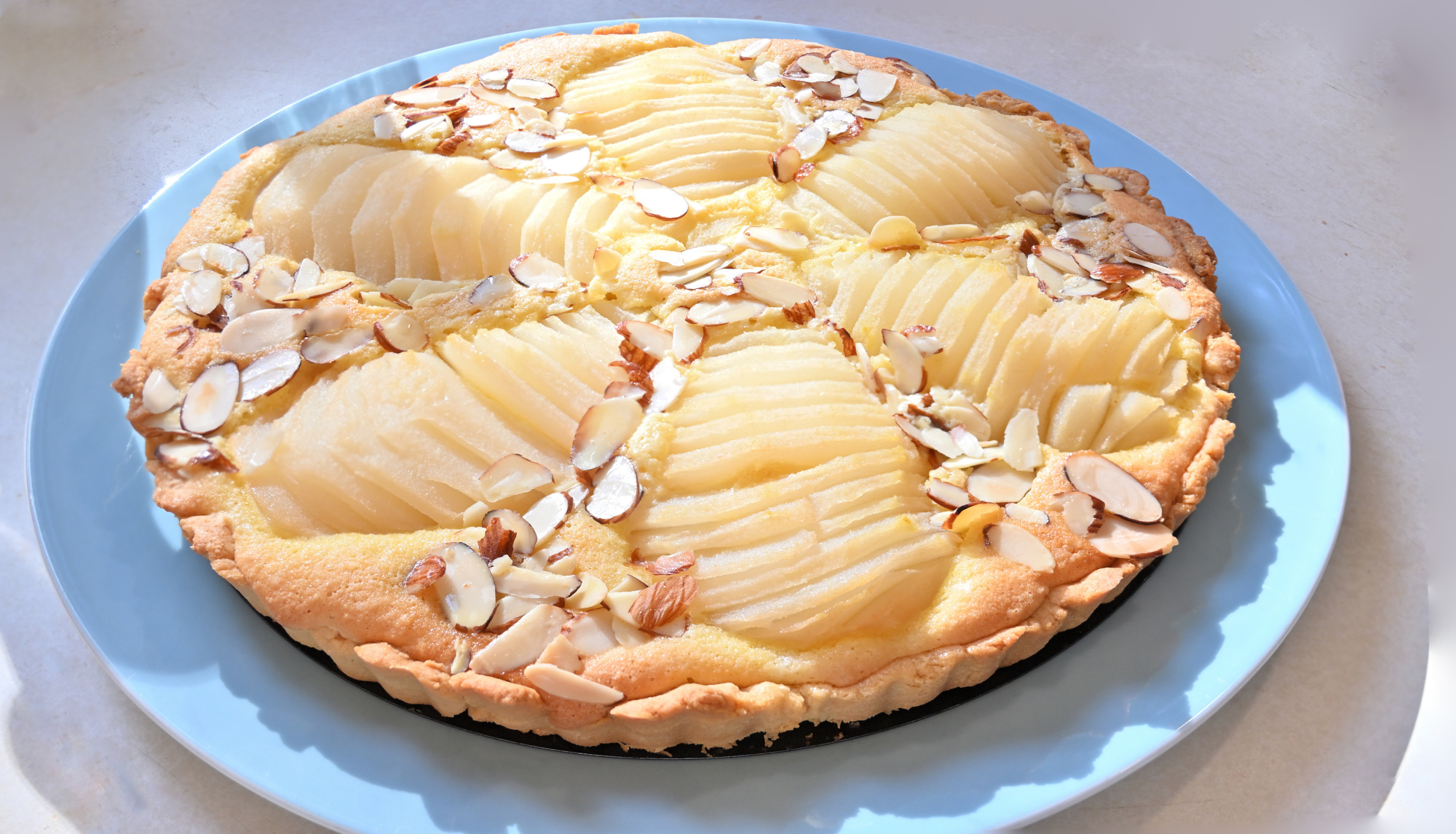
Birnen-Tart 🥧
Frisch aus dem Ofen
1/60s f/7,1 ISO 200/24° 16-50mm f/3,5-6,3 VR f=21mm/32mm
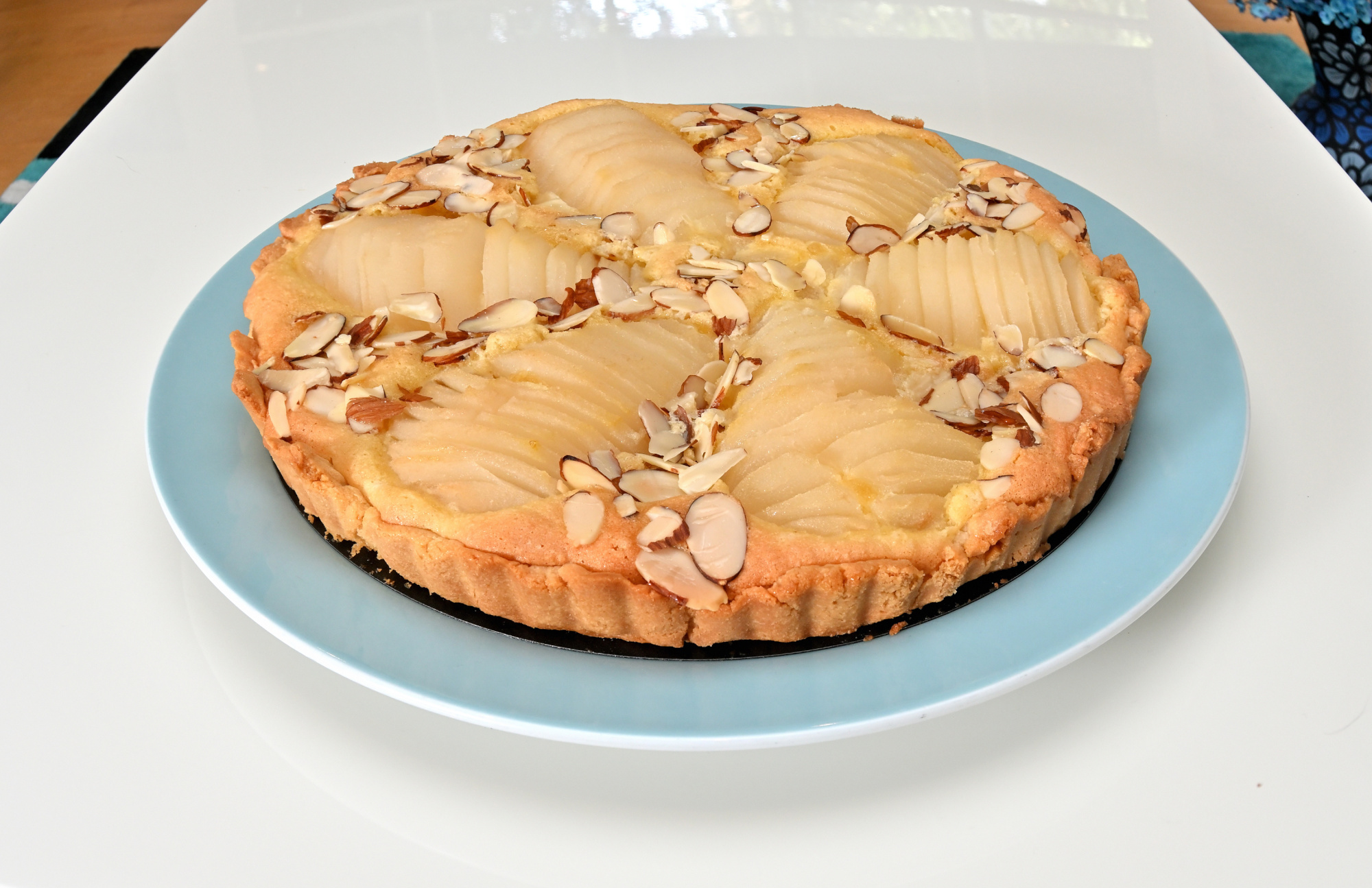
Fokus-Stacking, 1/125s f/5 ISO 200/24° 16-50mm f/3,5-6,3 VR f=30mm/45mm

In Bearbeitung
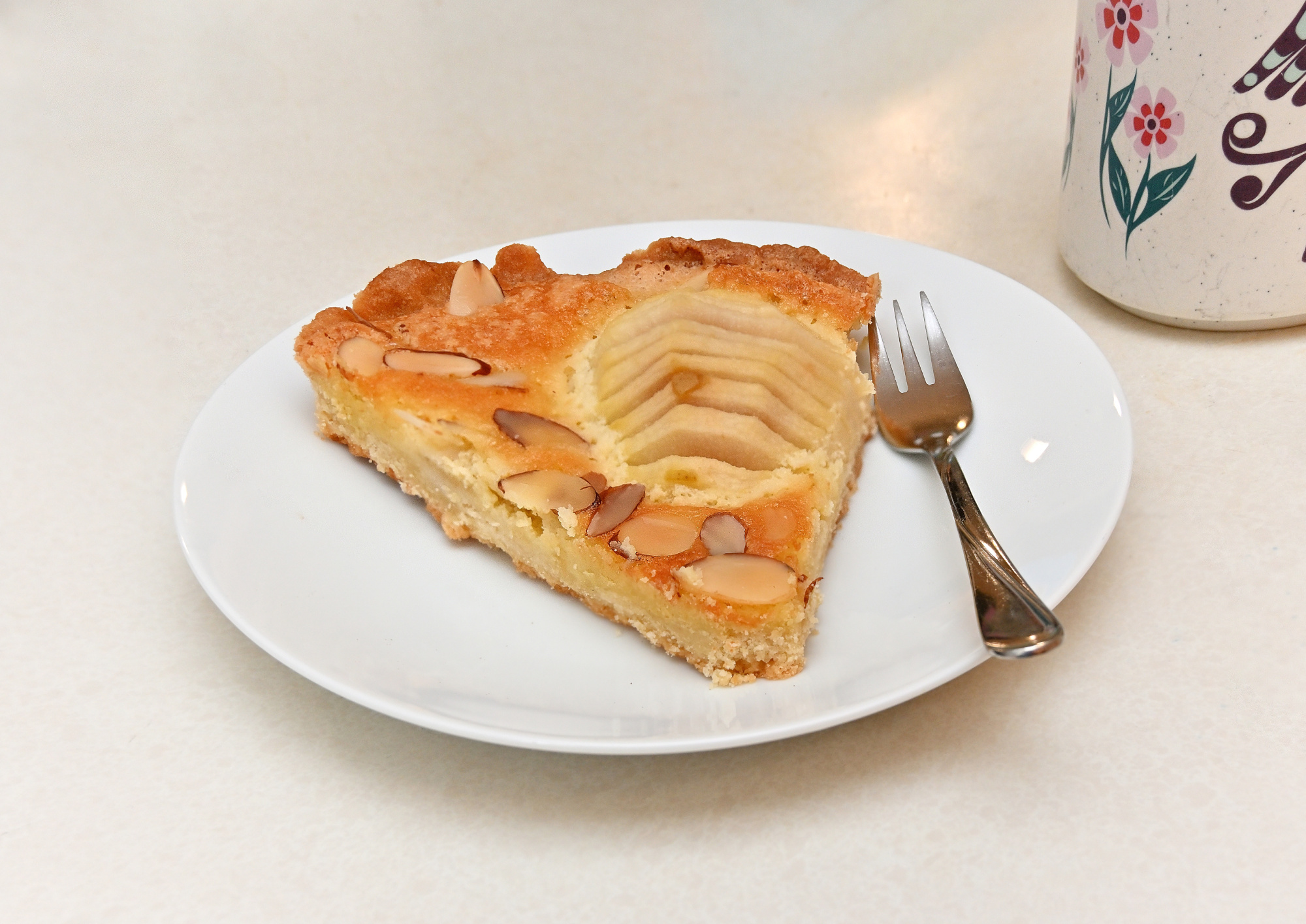
Fokus-Stacking, 1/125s f/5 ISO 200/24° 16-50mm f/3,5-6,3 VR f=30mm/45mm
Kaffeezeit
Ohne Fokus-Stacking
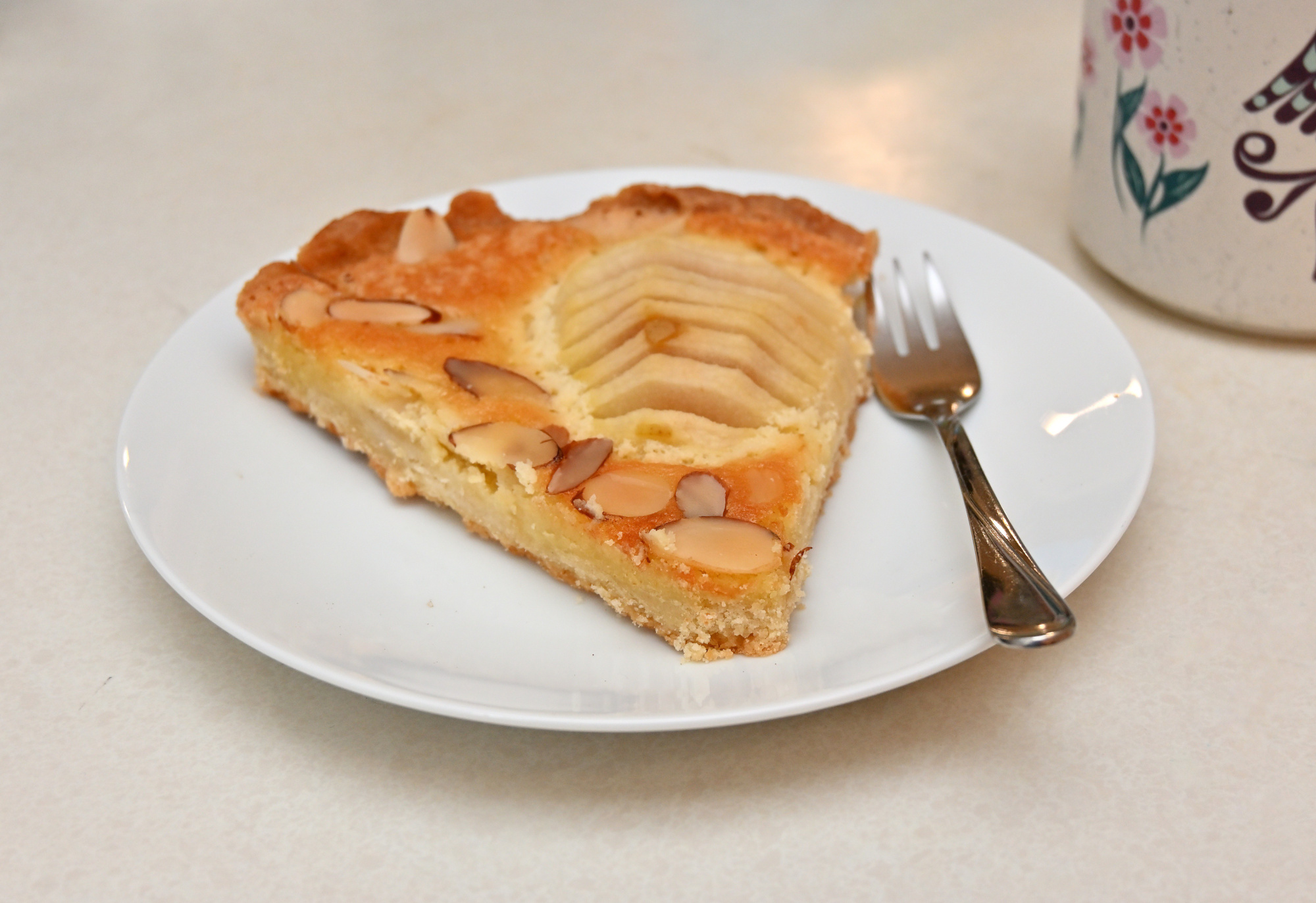
Fokus-Stacking, 1/60s f/5 ISO 250 16-50mm f/3,5-6,3 VR f=30mm/45mm
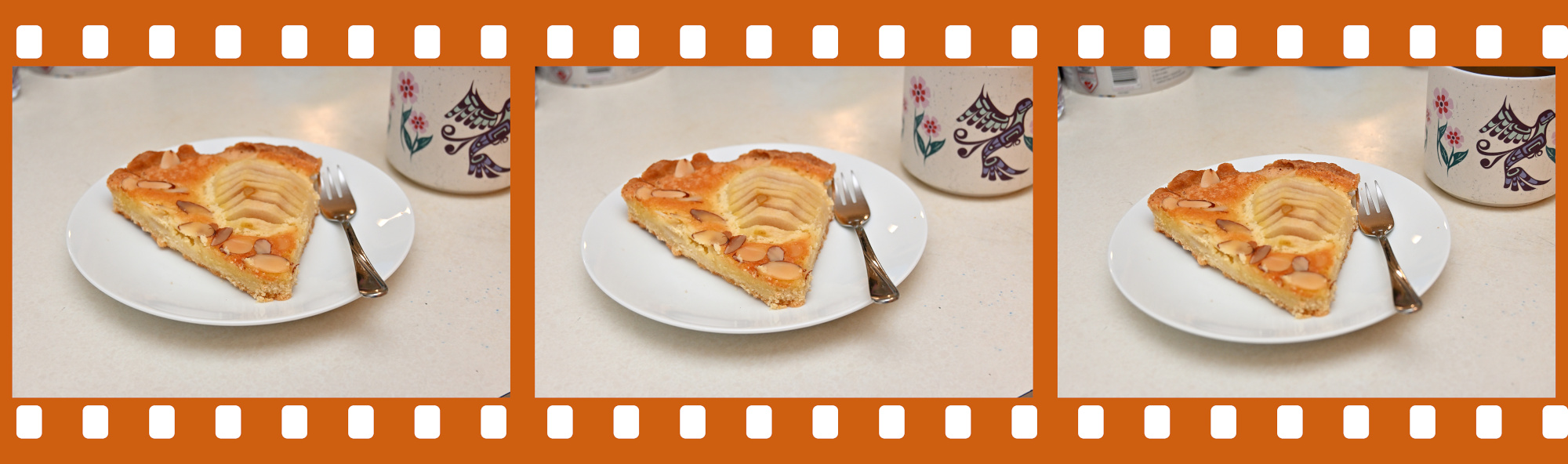
Siehe auch Combine pictures with PTGui, Focus stacking.
-
Minestrone 🍲
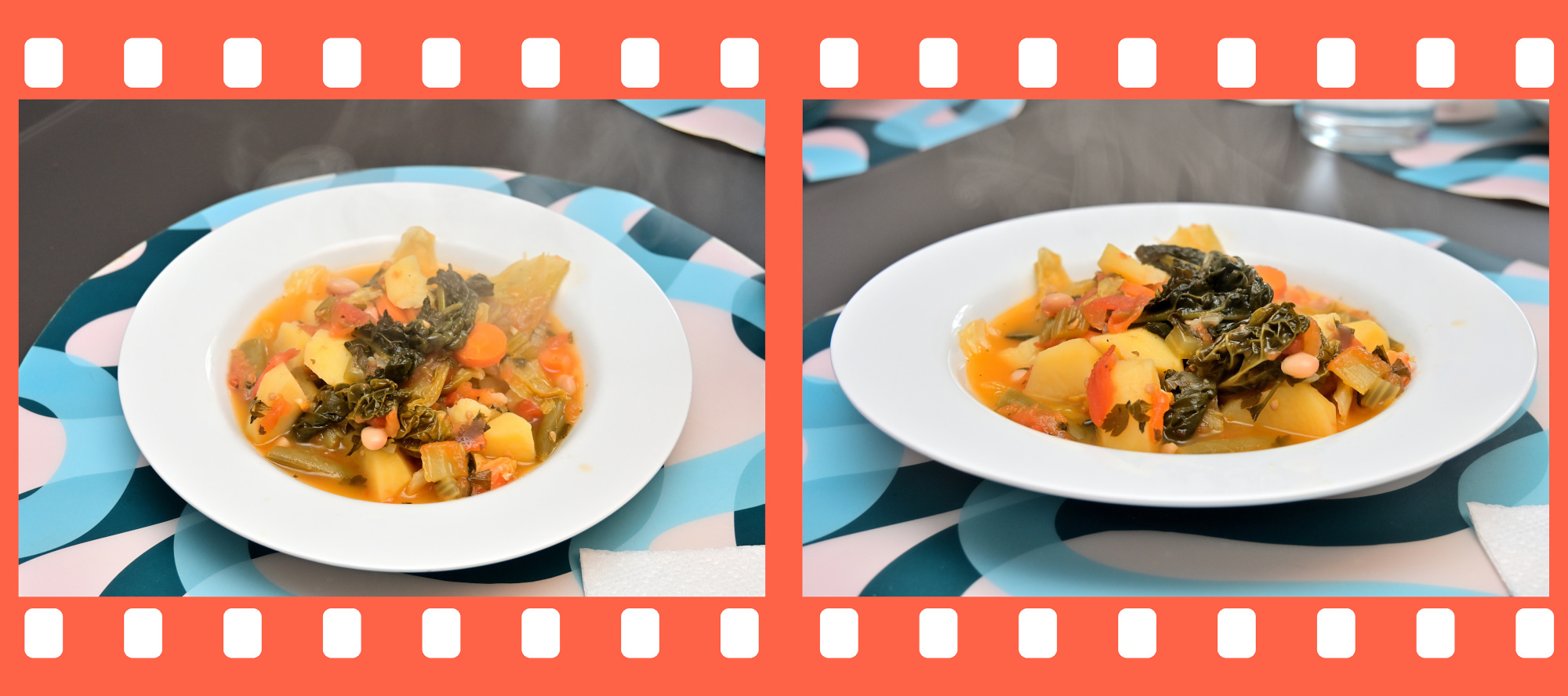
Besser geht's nicht. Auch mit dem Fokus-Stacking.
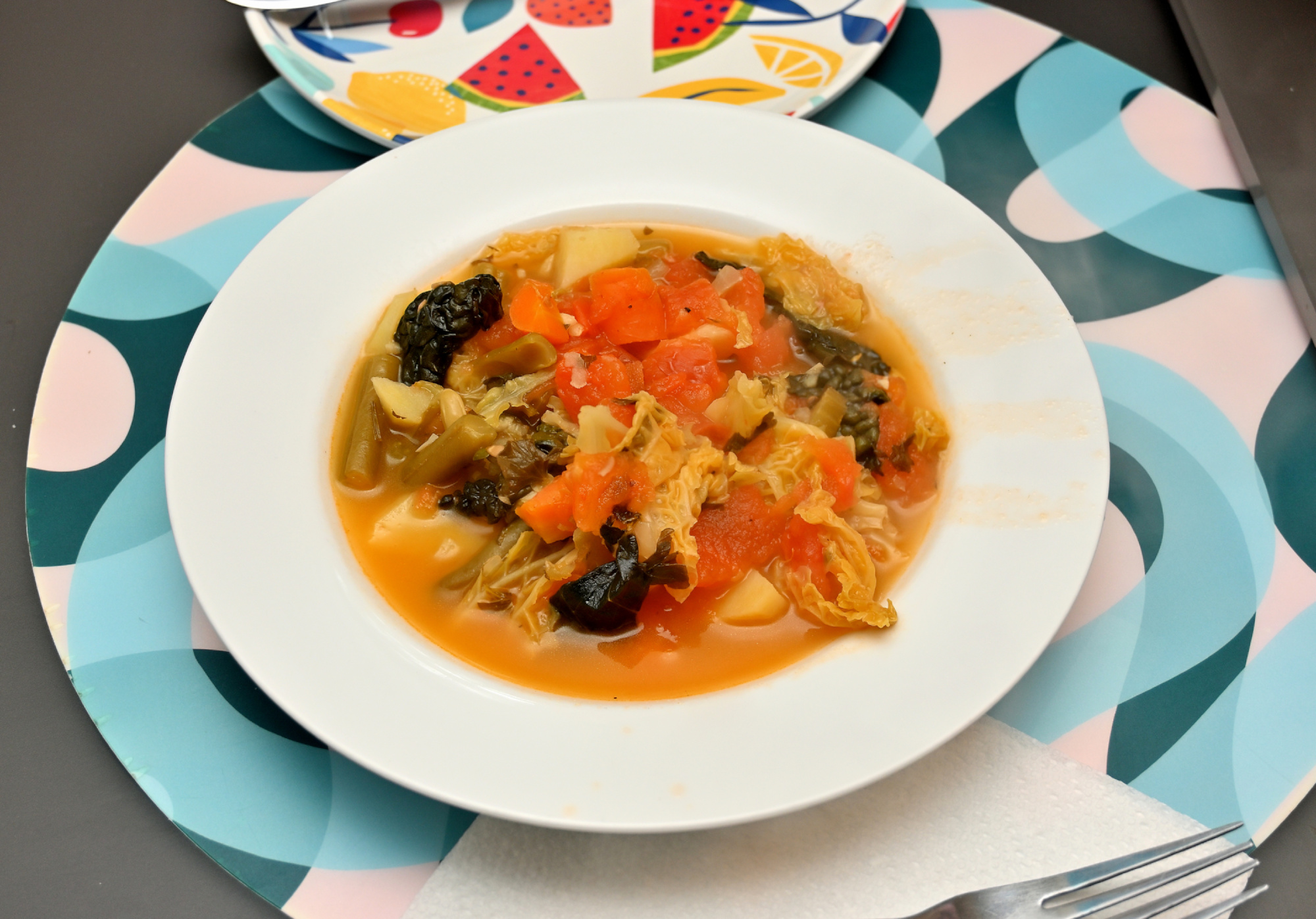
Dieses Bild wurde aus zwei Aufnahmen erstellt, die aus unterschiedlichen Blickwinkeln, Brennweiten und Entfernungen gemacht wurden.
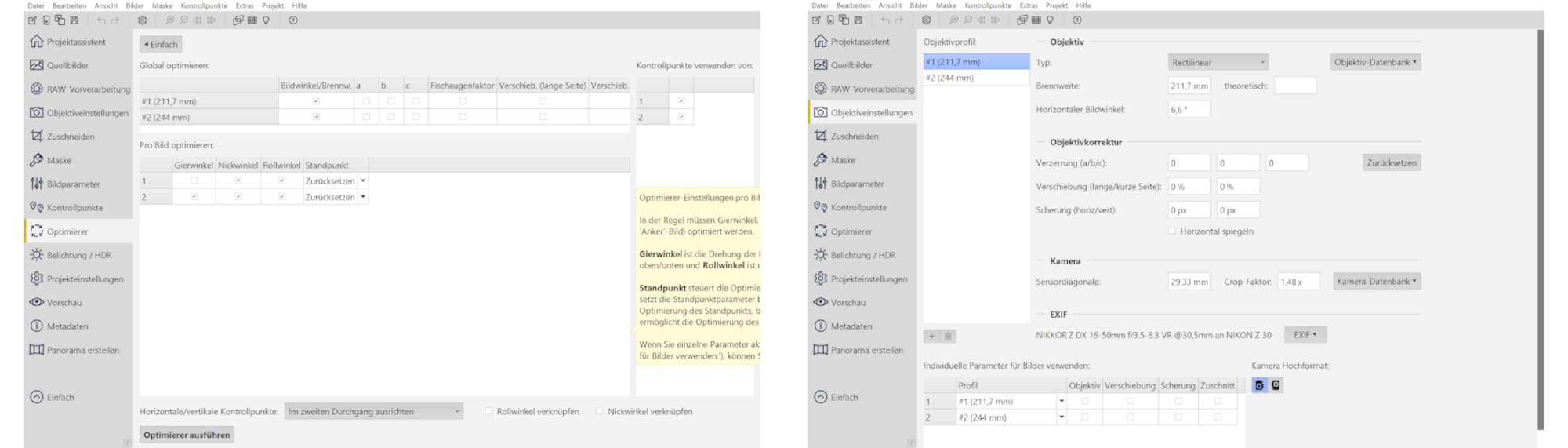
Die Schritte mit PTGui sind einfach:
- automatisch Kontrollpunkte erstellen lassen, und alle Kontrollpunkte außerhalb des interessanten Bereiches (Tellers) entfernen
- ohne parameter a, b und c optimieren, also nur Blickwinkel und Gier-, Nick- und Rollwinkel, damit werden die verschiedenen Brennweiten automatisch erkannt und korrekt zusammengefügt
Die Bereiche in Fokus zur Verwendung grün malen (rote Bereiche dagegen werden ausgeschlossen):
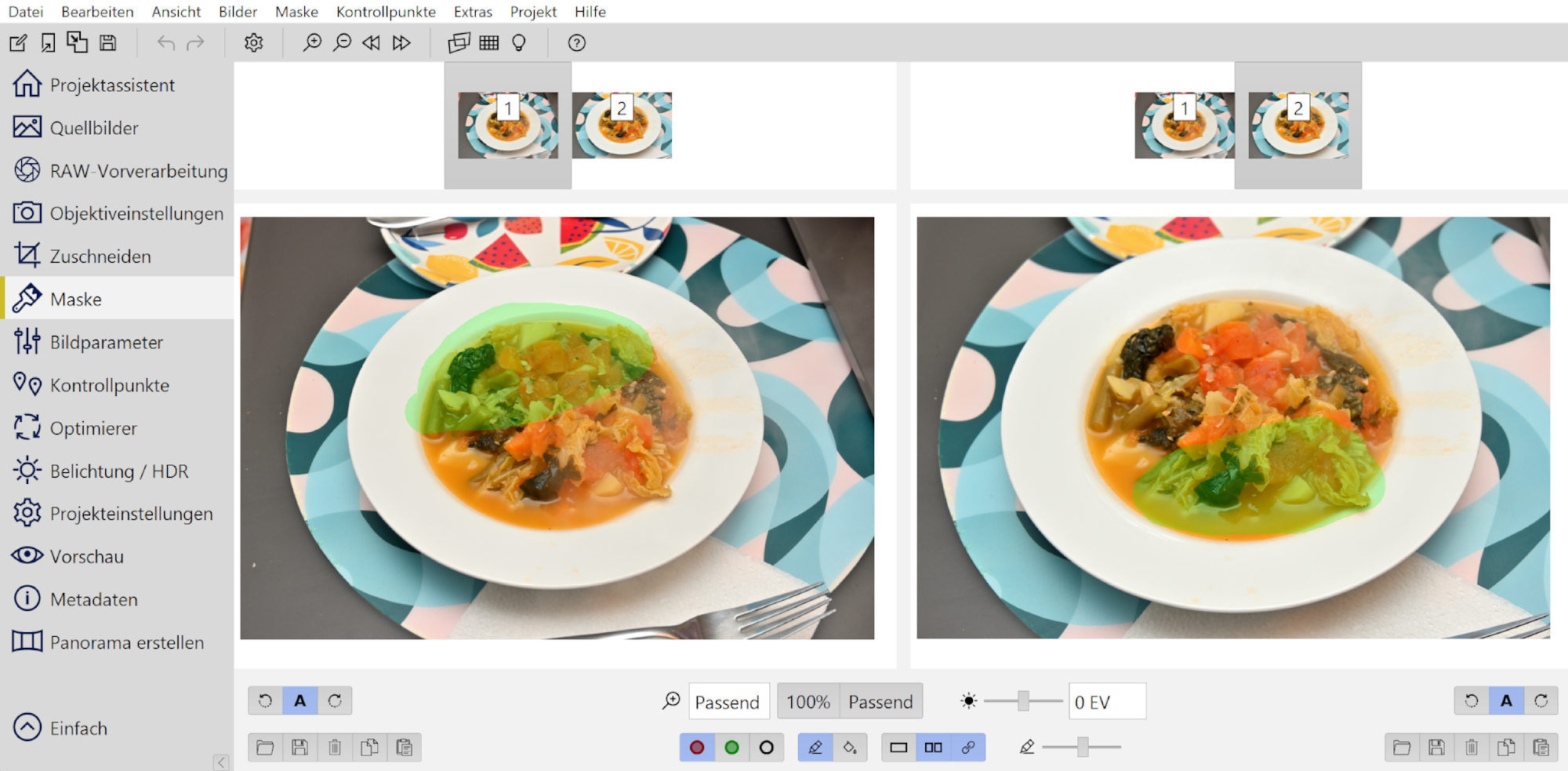
Dadurch werden nur die jeweils scharf abgebildeten Bereiche verwendet:
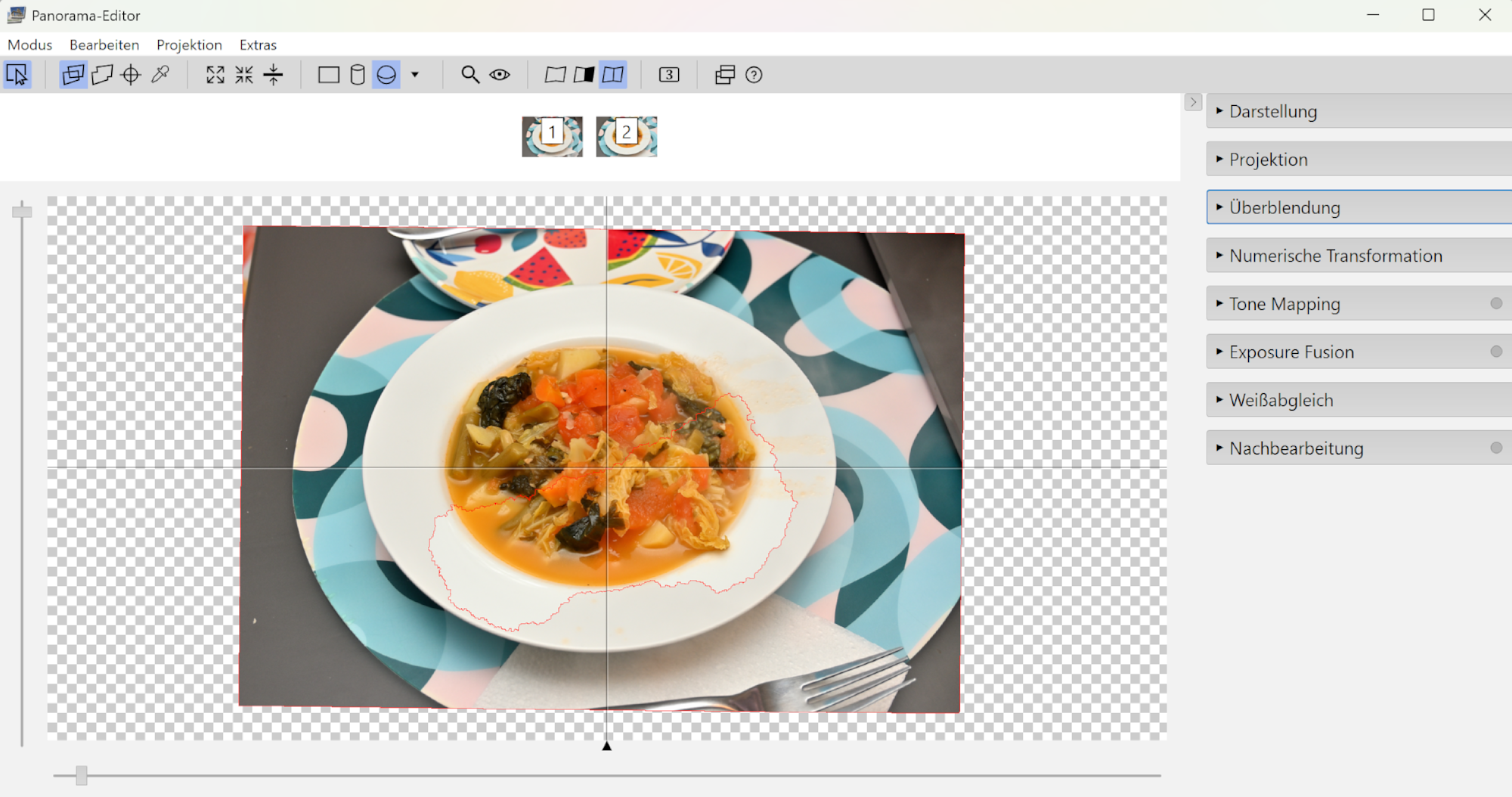
Siehe Combine pictures with PTGui, Focus stacking
[1/60s f/4,8 ISO 100/21° 16-50mm f/3,5-6,3 VR f=30mm/45mm] [1/60s f/5 ISO 100/21° 16-50mm f/3,5-6,3 VR f=31mm/47mm]
#FF6347 RGB(255,99,71)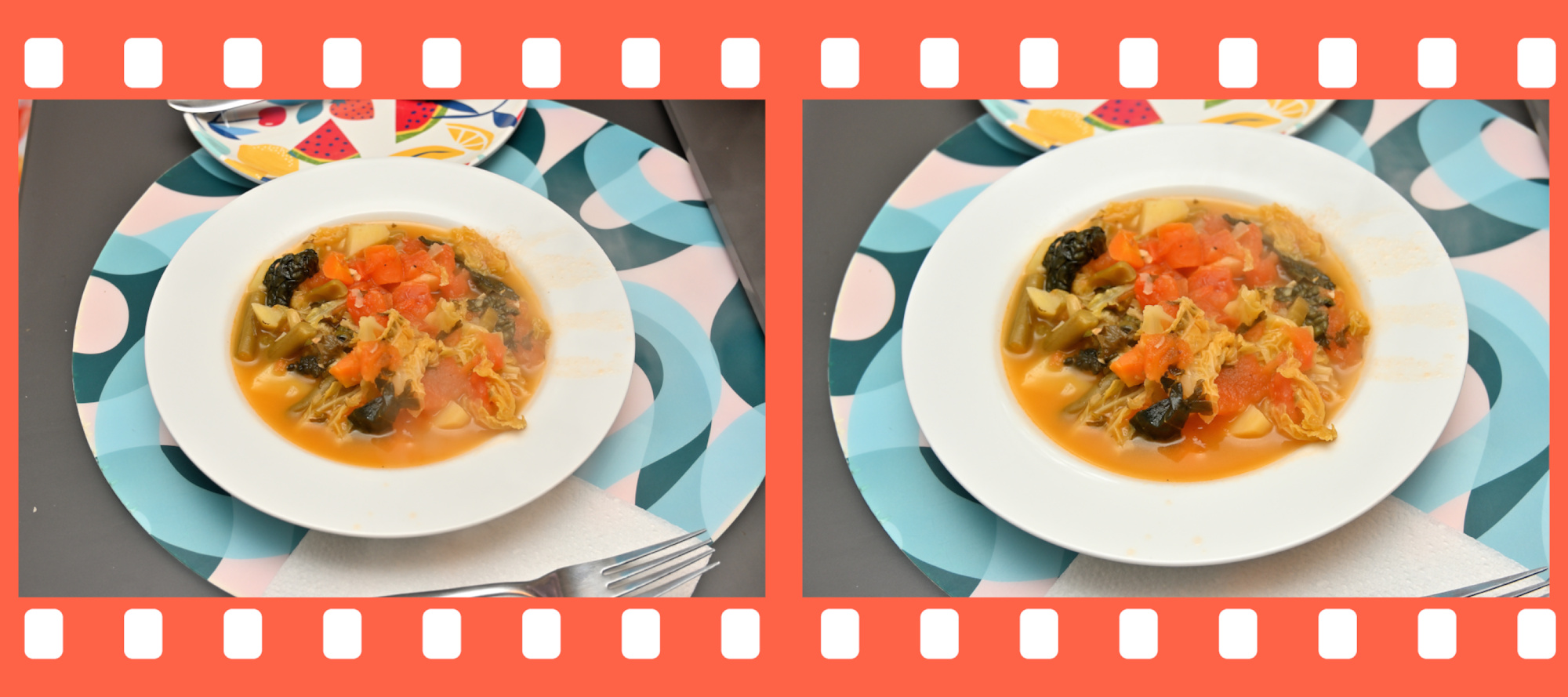
[1/60s f/5,3 ISO 250 16-50mm f/3,5-6,3 VR f=36mm/54mm] [1/60s f/5,6 ISO 250 16-50mm f/3,5-6,3 VR f=38mm/57mm]
-
C++ std::map using the __m128i type
In a recent project, I encountered a performance bottleneck while using std::map with CString as the key. The keys represented file extensions, each not exceeding seven Unicode characters. Given the performance-critical nature of the loop, the overhead of hashing CString for such short sequences was suboptimal.
To address this, I used the __m128i data type, which is part of the Streaming SIMD Extensions 2 (SSE2) in C++. This data type allows for handling 128-bit wide integer vectors, making it ideal for the file extensions mapping within the 128-bit limit.
To use the __m128i data type, custom hash and equality functions need to be defined for the map.
Using this data type significantly reduced the overhead and improved the performance of the map operations within the critical loop.
Custom hash and equality functions
// Custom hash function for __m128i.
struct Hash128i
{
    std::size_t operator()(const __m128i& key) const
    {
        const uint64_t* data = reinterpret_cast<const uint64_t*>(&key);
        return hash<uint64_t>{}(data[0]) ^ hash<uint64_t>{}(data[1]);
    }
};

// Custom equality function for __m128i.
struct Equal128i
{
    bool operator()(const __m128i& lhs, const __m128i& rhs) const
    {
        // Compare the __m128i values using integer comparison.
        const __m128i result = _mm_cmpeq_epi32(lhs, rhs);

        // Check if all elements are equal.
        return _mm_movemask_epi8(result) == 0xFFFF;
    }
};
Declaration
unordered_map<__m128i, lpfnFormatGetInstanceProc, Hash128i, Equal128i> registered_format_plugins_map_m128;The project is using a function pointer as a data type, but it can be really anything.
typedef CPictureFormat* (__stdcall* lpfnFormatGetInstanceProc)();Map string to the __m128i data type
__m128i CRegisterFormat::str_to_m128i(const WCHAR* obj)
{
    // Converts the first 8 characters of Unicode string obj into a __m128i.
    // Extension includes only a..z and 0..9, and 0..9 is case-insensitive,
    // and is at most 8 characters long.
    const size_t len = wcslen(obj);

    char pointy[16] = { 0 };
    memcpy(pointy, obj, min(16, 2 * len));

    // Initialize __m128i with the char array.
    const __m128i ext = _mm_loadu_si128(reinterpret_cast<const __m128i*>(pointy));

    // Case insensitve mapping.
    // The extension data is strictly A-Z0-9, so converting them to lowercase can be done by a vectorized operation bitwise OR with 0x20 (obj | 0x20). This moves A-Z to a-z while keeping 0-9, as this range already has this bit set.
    // Create a __m128i variable with all bytes set to 0x20.
    const static __m128i mask = _mm_set1_epi8(0x20);

    // Perform bitwise OR operation on all bytes.
    return _mm_or_si128(ext, mask);
}
Example usage
// Adding a new file extension with the associated function pointer for the file type.
const __m128i key(str_to_m128i(ext));
if(registered_format_plugins_map_m128.find(key) == registered_format_plugins_map_m128.end())
{
    registered_format_plugins_map_m128[key] = fp;
}

// Implement the format factory.
CPictureFormat* CRegisterFormat::GetInstance(const WCHAR* obj)
{
    const WCHAR* ext(wcsrchr(obj, L'.'));
    auto fp = registered_format_plugins_map_m128[str_to_m128i(ext)];

    if (fp)
        return fp();

    return NULL;
}

// Compare two extensions to check if they share the same group defined by matching function pointer.
bool CRegisterFormat::IsDifferentFormat(const WCHAR* obj1, const WCHAR* obj2)
{
    // Get the file extensions.
    const WCHAR* ext1(wcsrchr(obj1, L'.'));
    const WCHAR* ext2(wcsrchr(obj2, L'.'));

    if ((ext1 == NULL) != (ext2 == NULL))
        return true;

    return registered_format_plugins_map_m128[str_to_m128i(ext1)] != registered_format_plugins_map_m128[str_to_m128i(ext2)];
}