-
Nikon Z50 II
To expand my Nikon setup, I added the Z50 II to complement my Z30, which I primarily use for panoramic photography with a fisheye lens.
Both cameras are light weight and have a small form factor that makes it a perfect set that can fit in a small travel bag.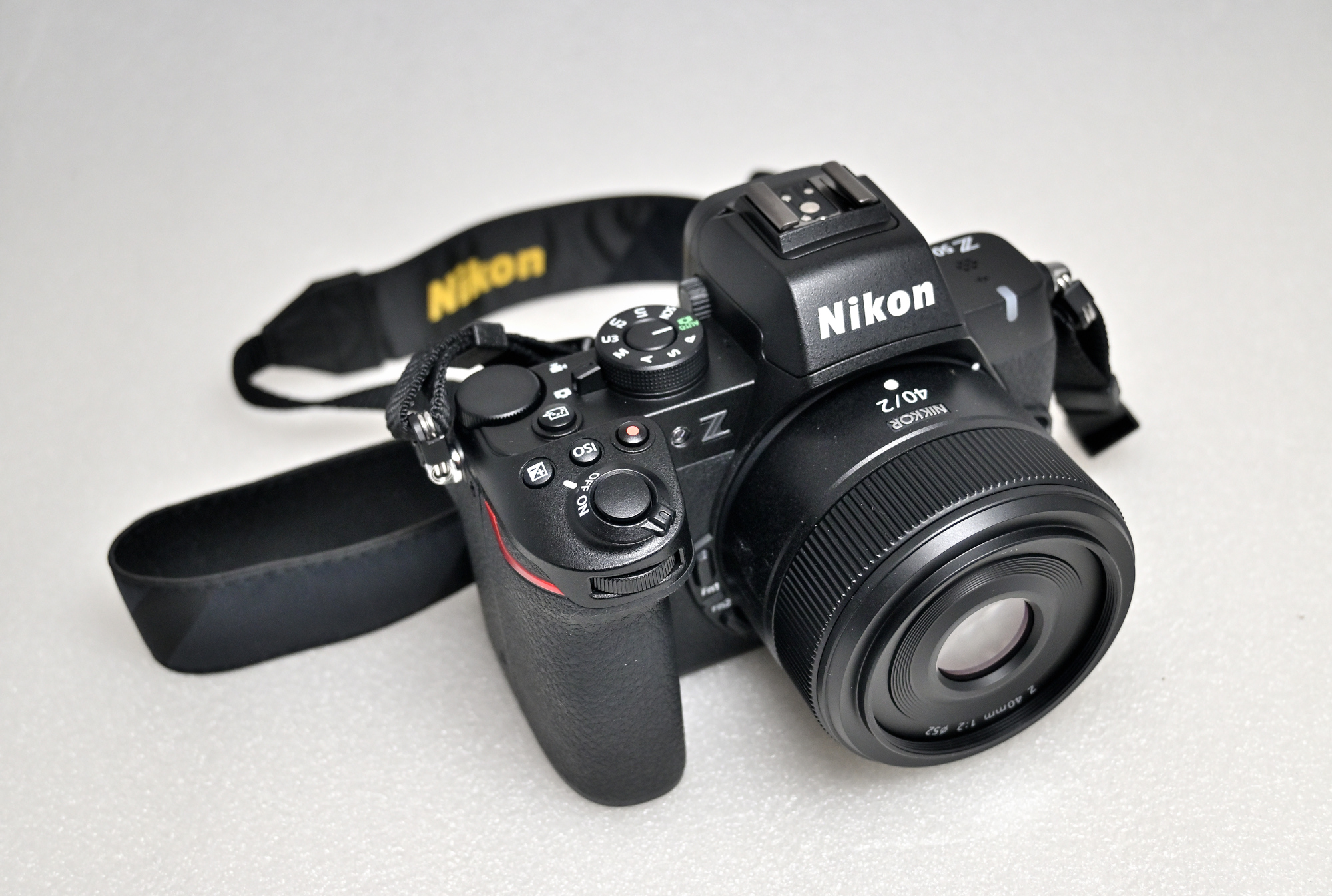
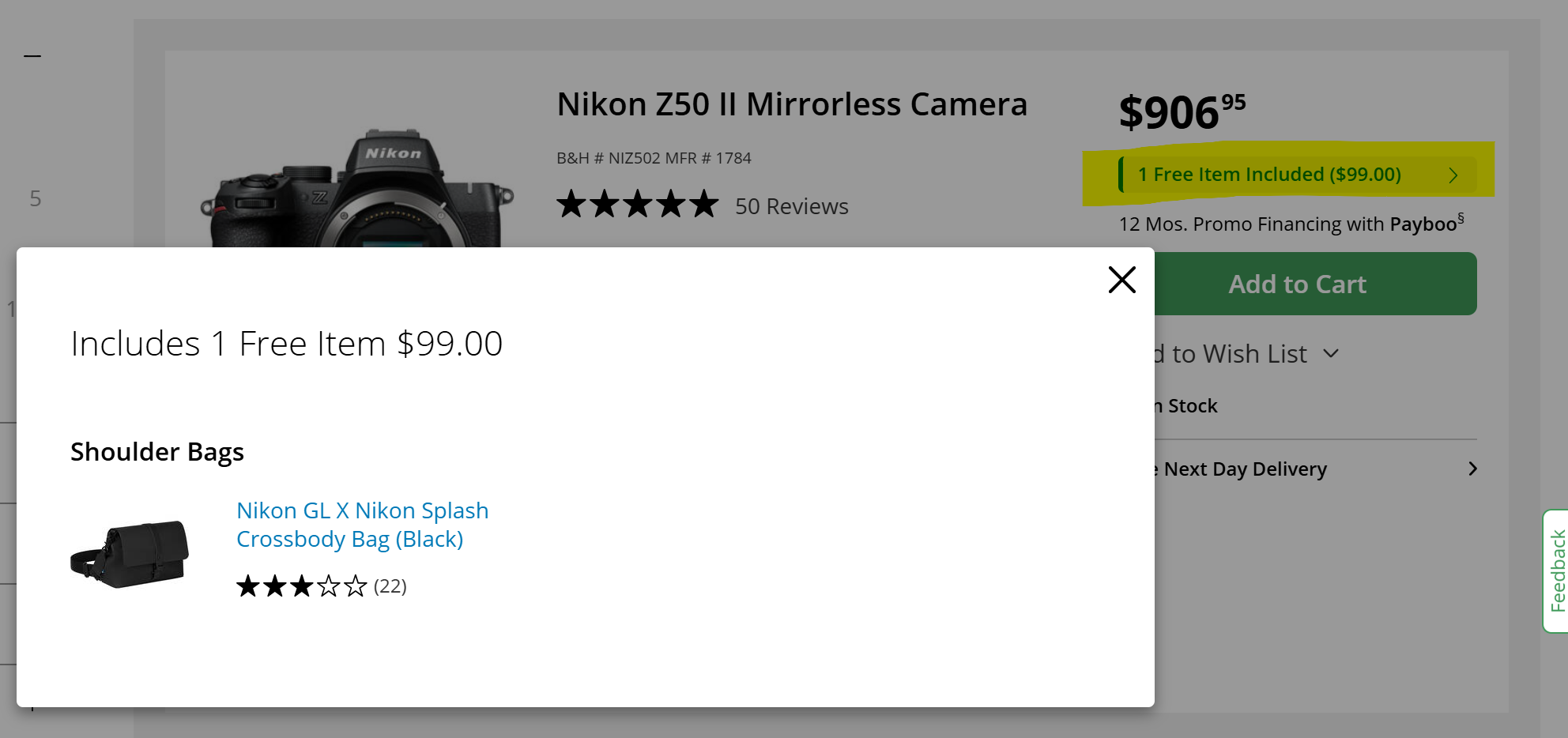
Regarding the travel bag, I was curious how the complimentary Nikon GL X Nikon Splash Crossbody Bag (Black) fits into the overall setup and how I might make use of it.
It quickly became clear what it was: a bag. Technically. Ideal for transporting your hopes, dreams, and maybe a lens cap.
When the Accessory Is More Fiction Than Function
The Nikon GL X Nikon Splash Crossbody Bag (Black) is normally sold separately for $99.
Imagine paying full price for it. For this price, you get a stylish crossbody bag that claims to carry your mirrorless camera gear. It also claims to offer comfort, space, and practicality. What it actually offers is a tight squeeze, a stubborn flap, and a valuable lesson in product descriptions.For reference, here is the actual product description from the website:
Carry your mirrorless camera gear in this black GL X Nikon Splash Crossbody Bag from Nikon. This bag can comfortably house a small Nikon mirrorless camera with the lens attached and an extra lens. A hook-and-loop divider can be used to separate your gear in the bag's main section. This bag has two zipped pockets with large zipper pulls and a rear slip-in pocket for small items you want quick access to.
Focus on 'comfortably house a small Nikon mirrorless camera with the lens attached and an extra lens'
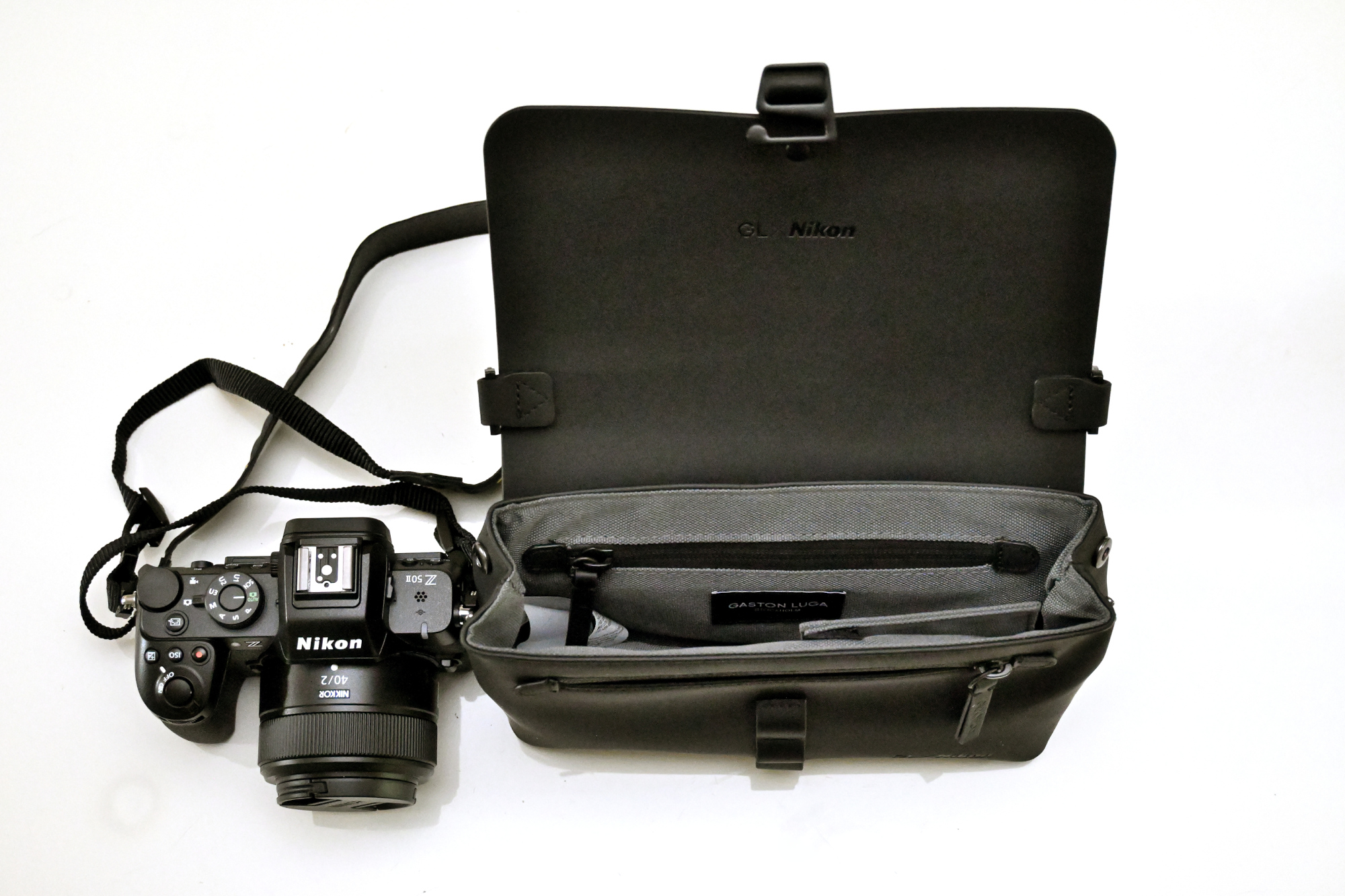
The Introduction
Camera and bag shown side by side. The bag appears designed for a camera that exists only in marketing illustrations. Internal volume suggests compatibility with a compact point-and-shoot, not a mirrorless system.
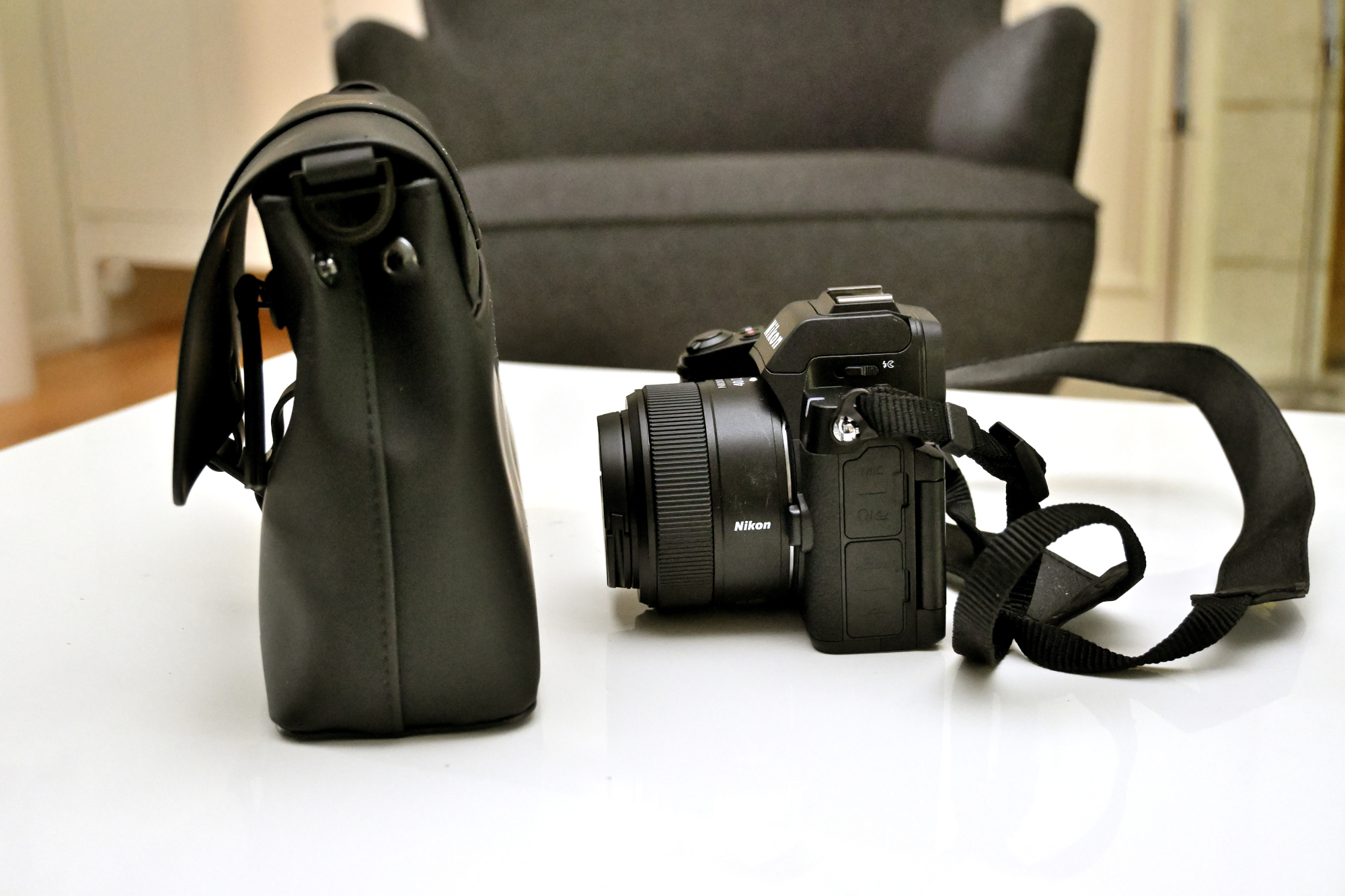
The Reality Check
Camera and bag shown separately. Bag looks stylish and minimal. Camera looks like it is wondering where its actual bag went.
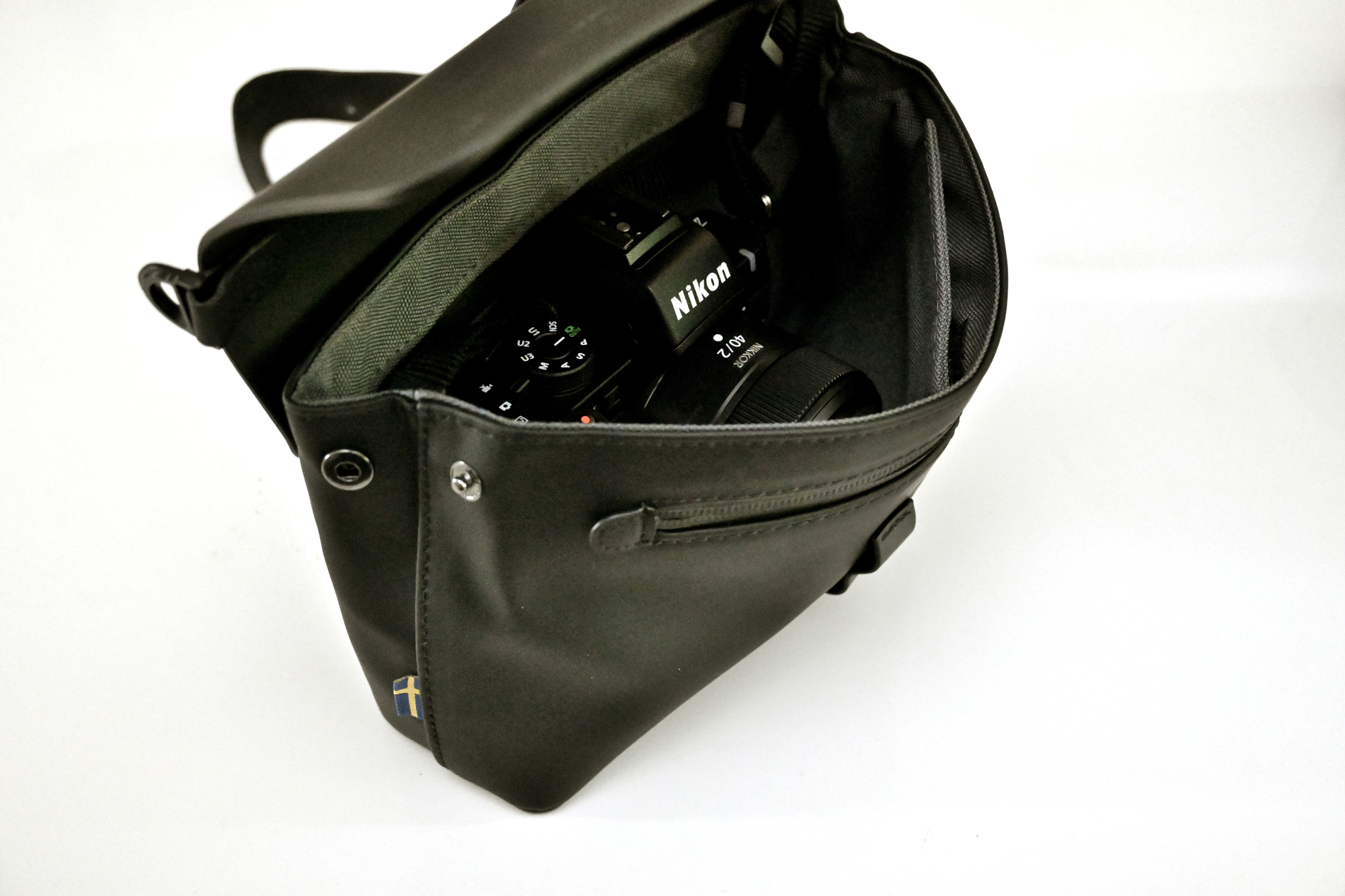
The Attempt
Camera inserted. Fit is tight enough to qualify as compression therapy. Remaining space for a second lens is theoretical. Bag closure now requires optimism and duct tape.
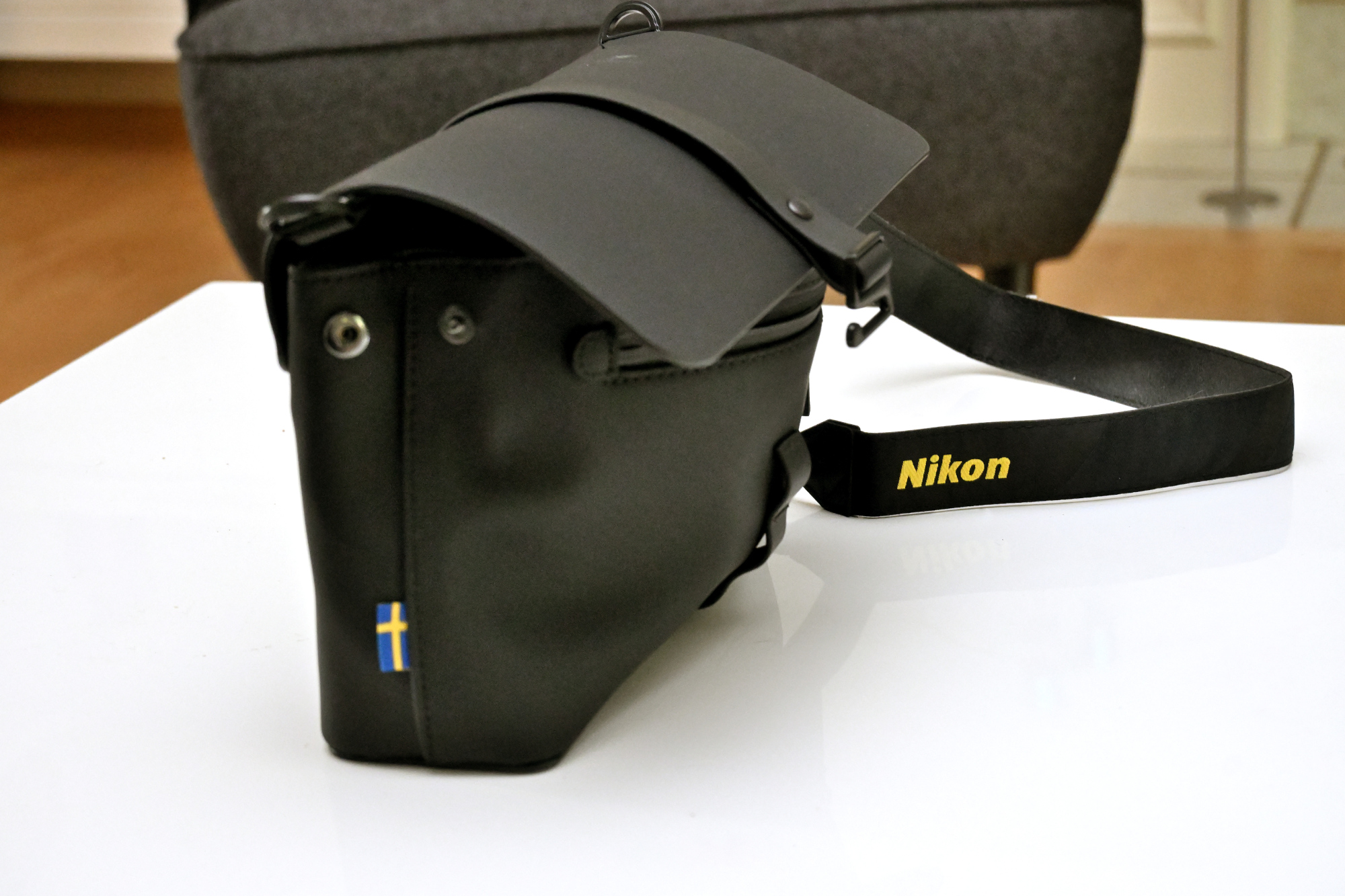
The Closure Crisis
Flap refuses to close. Camera exceeds internal volume. Bag now functions as a loosely draped accessory with aspirations of utility.
First Set of Photos Taken While the Bag Watched Helplessly
1/125s f/2,8 ISO 1000 40mm f/2,0
1/250s f/3,2 ISO 400/27° 40mm f/2,0
1/125s f/2,8 ISO 500 40mm f/2,0
1/125s f/2,8 ISO 720 40mm f/2,0
1/125s f/2,8 ISO 800/30° 40mm f/2,0
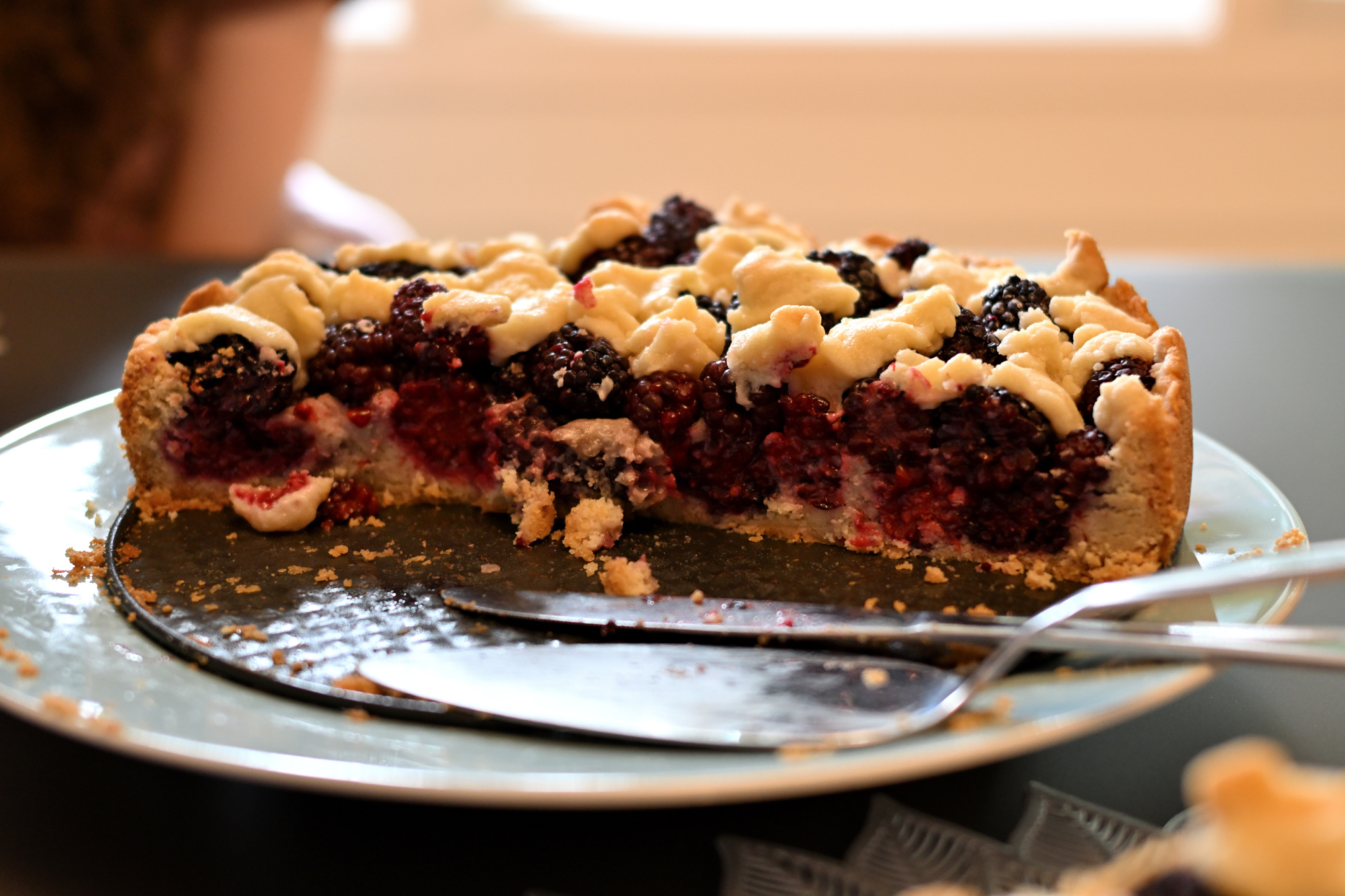
1/250s f/3,2 ISO 1600/33° 40mm f/2,0
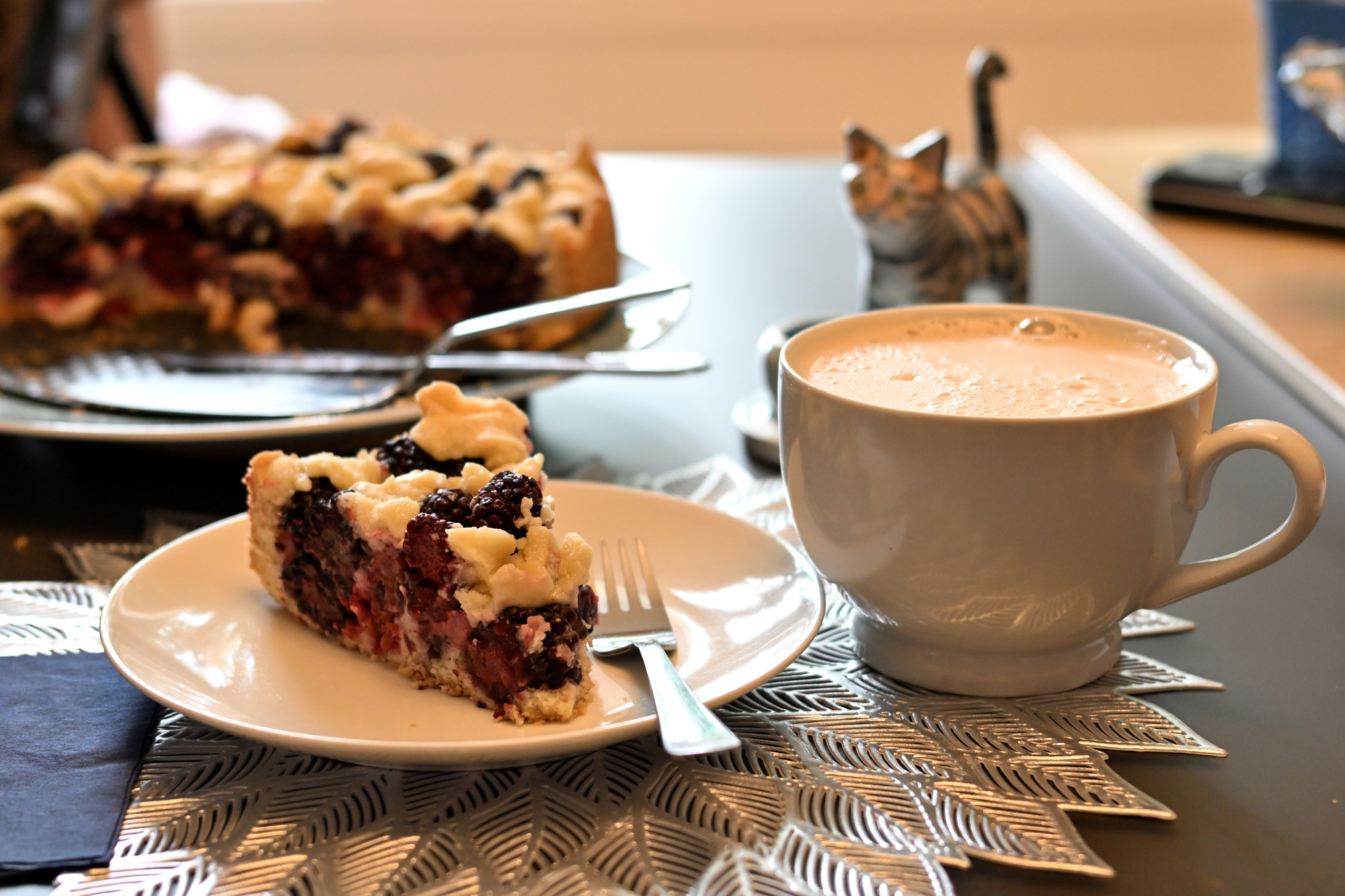
Second Set of Photos Taken While the Bag Stayed Indoors, Quietly Accepting Its Fate
1/500s f/8 ISO 100/21°
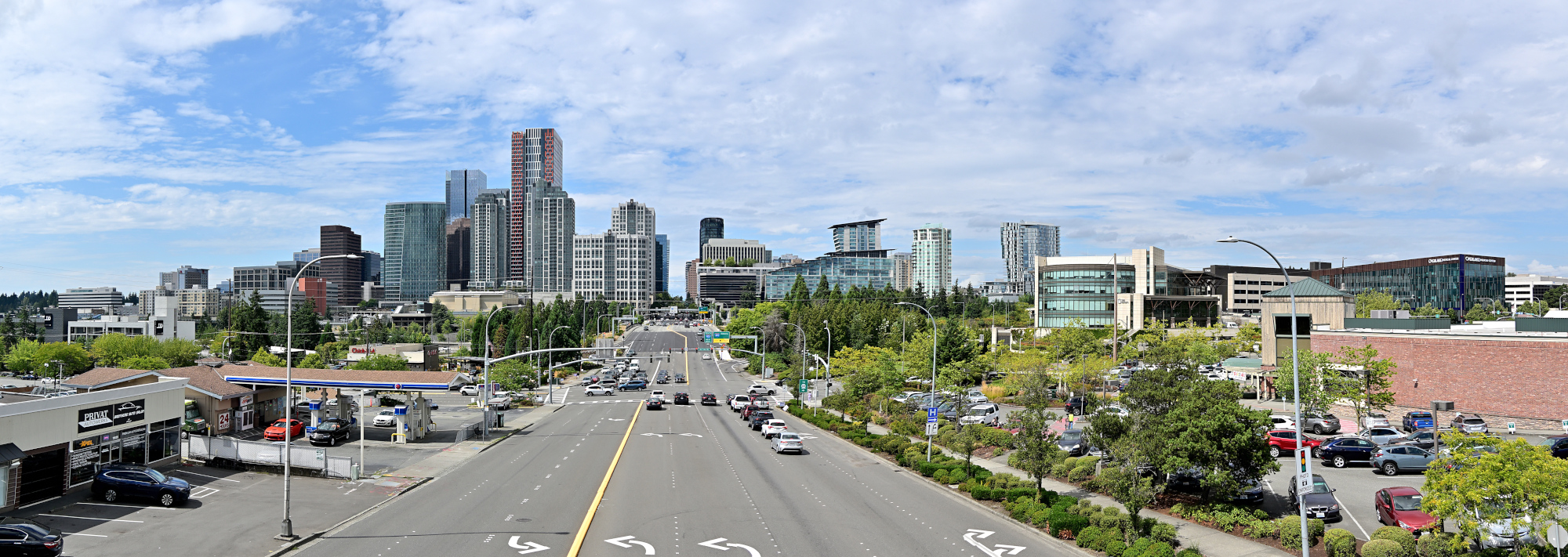
1/500s f/8 ISO 100/21° 18-140mm f/3,5-6,3 VR f=92mm/138mm
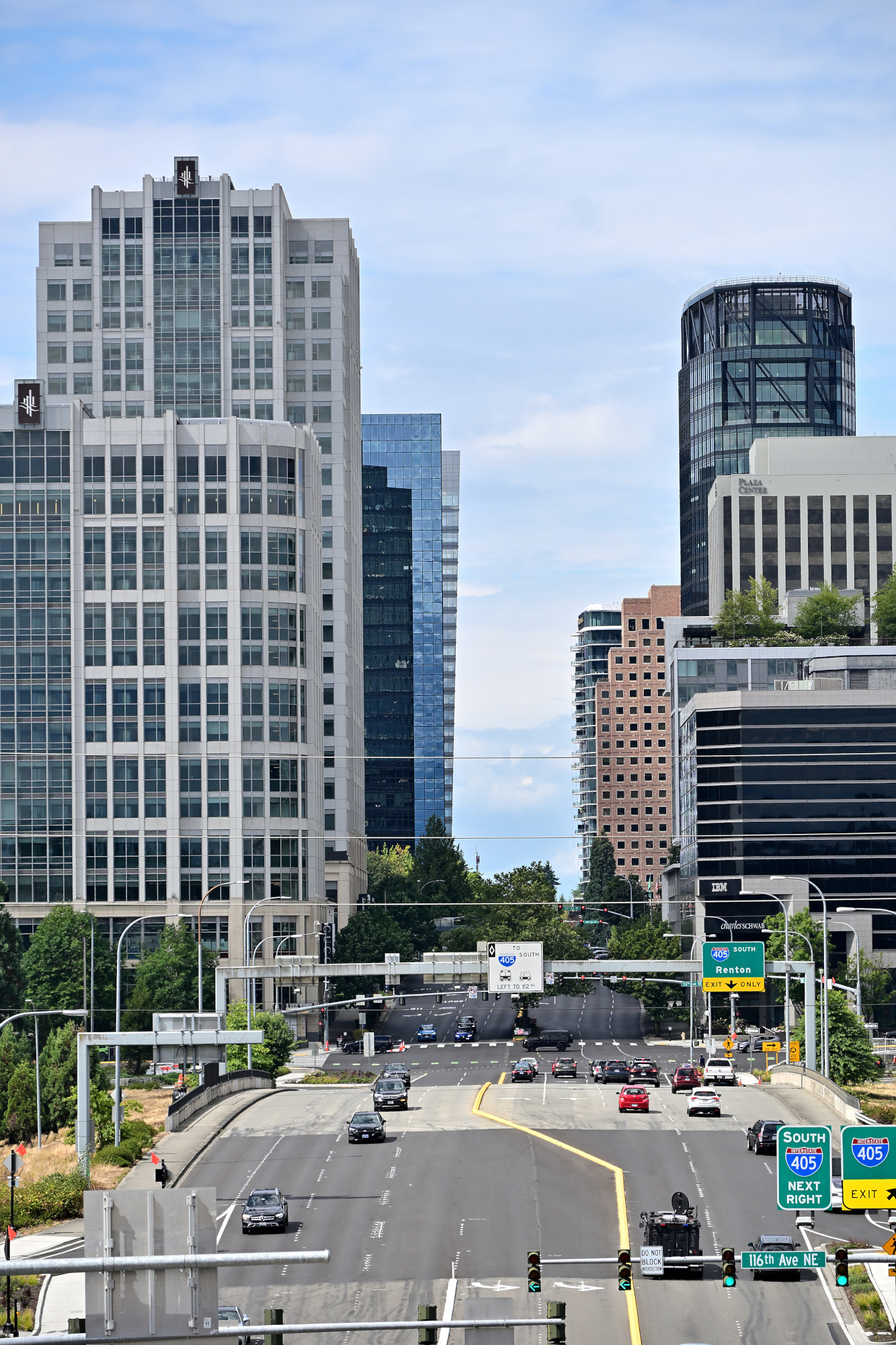
1/500s f/8 ISO 100/21° 18-140mm f/3,5-6,3 VR f=47mm/70mm
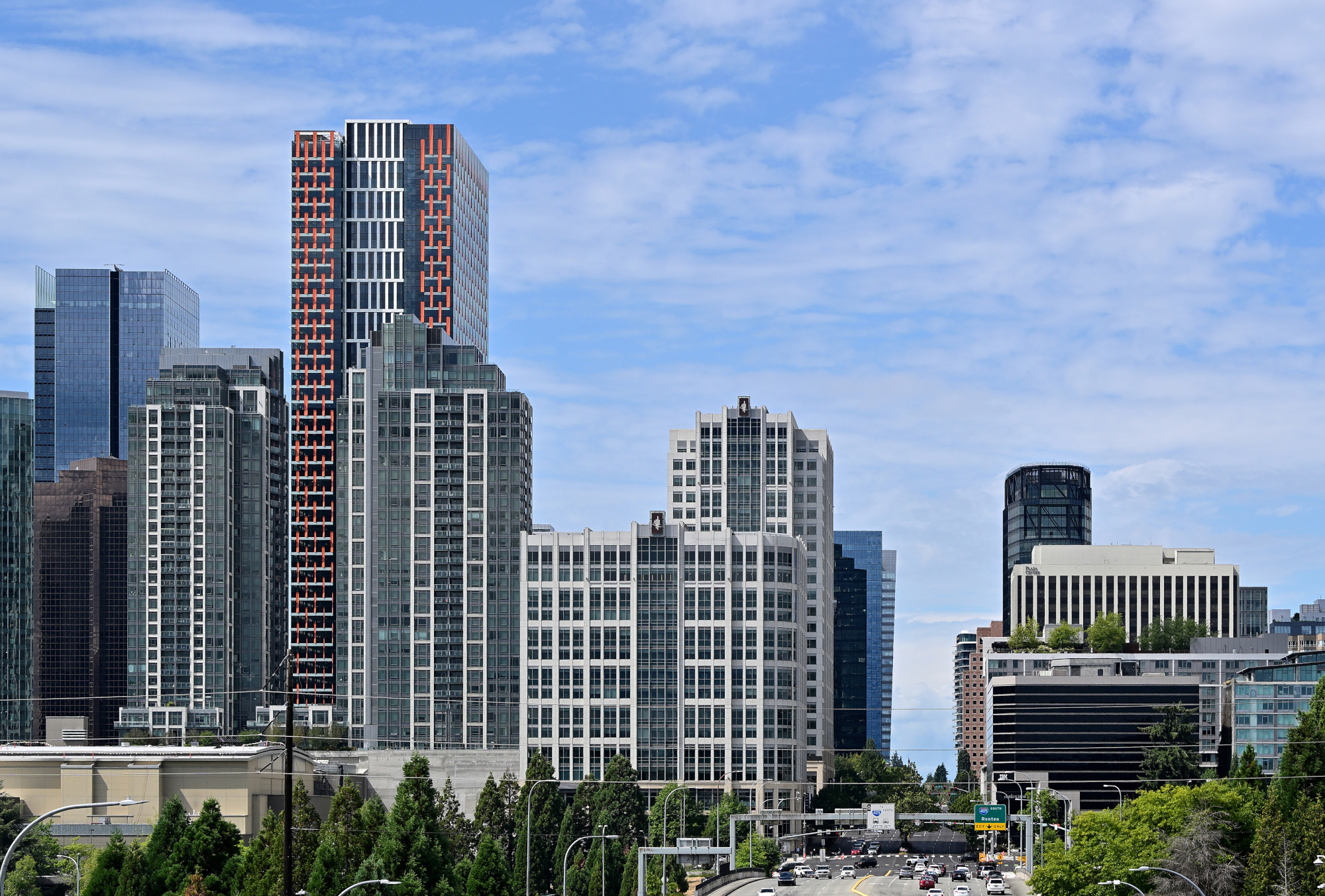
1/500s f/8 ISO 100/21° 18-140mm f/3,5-6,3 VR f=40mm/60mm
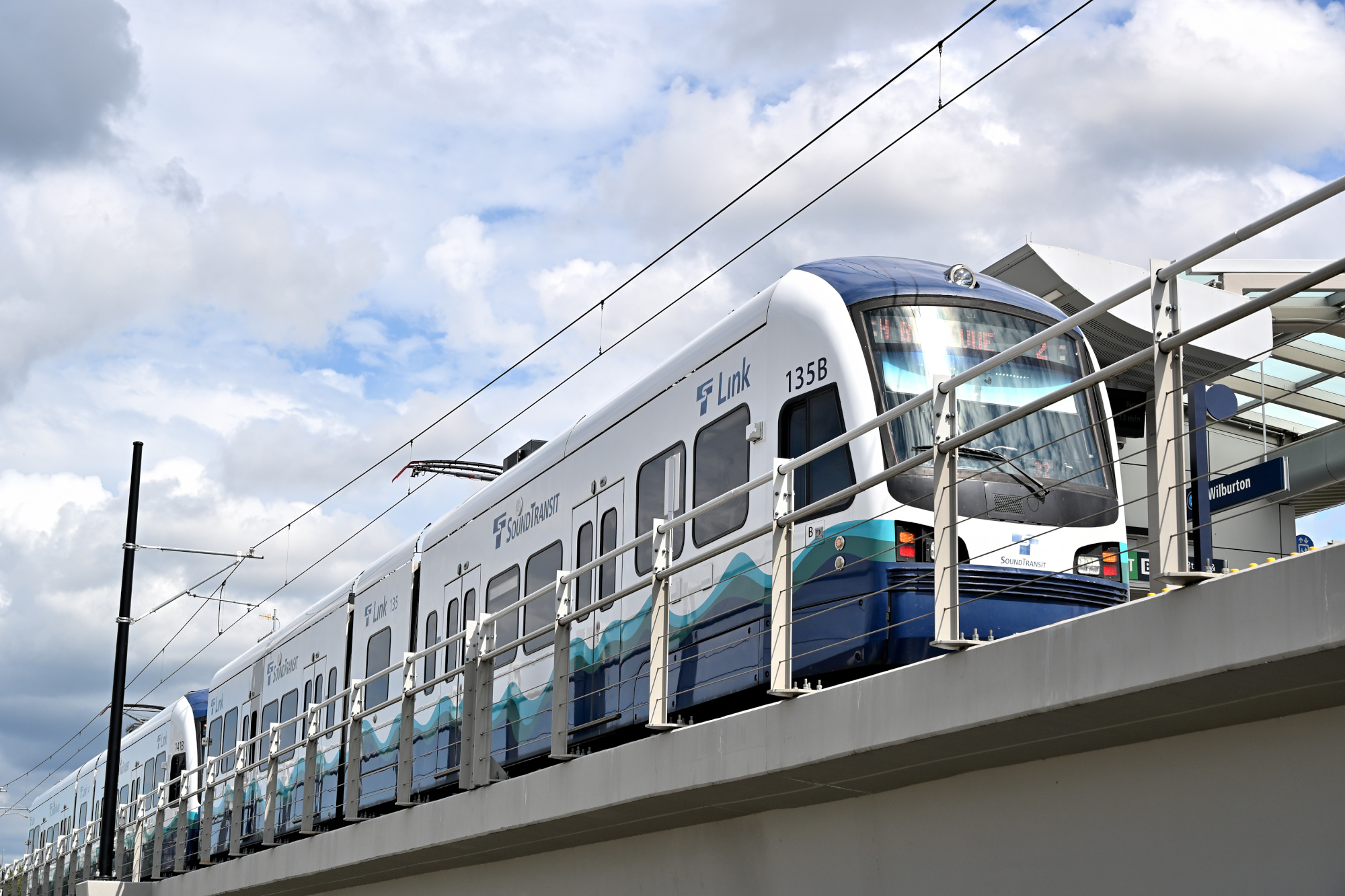
1/320s f/6,3 ISO 100/21° 18-140mm f/3,5-6,3 VR f=23mm/35mm
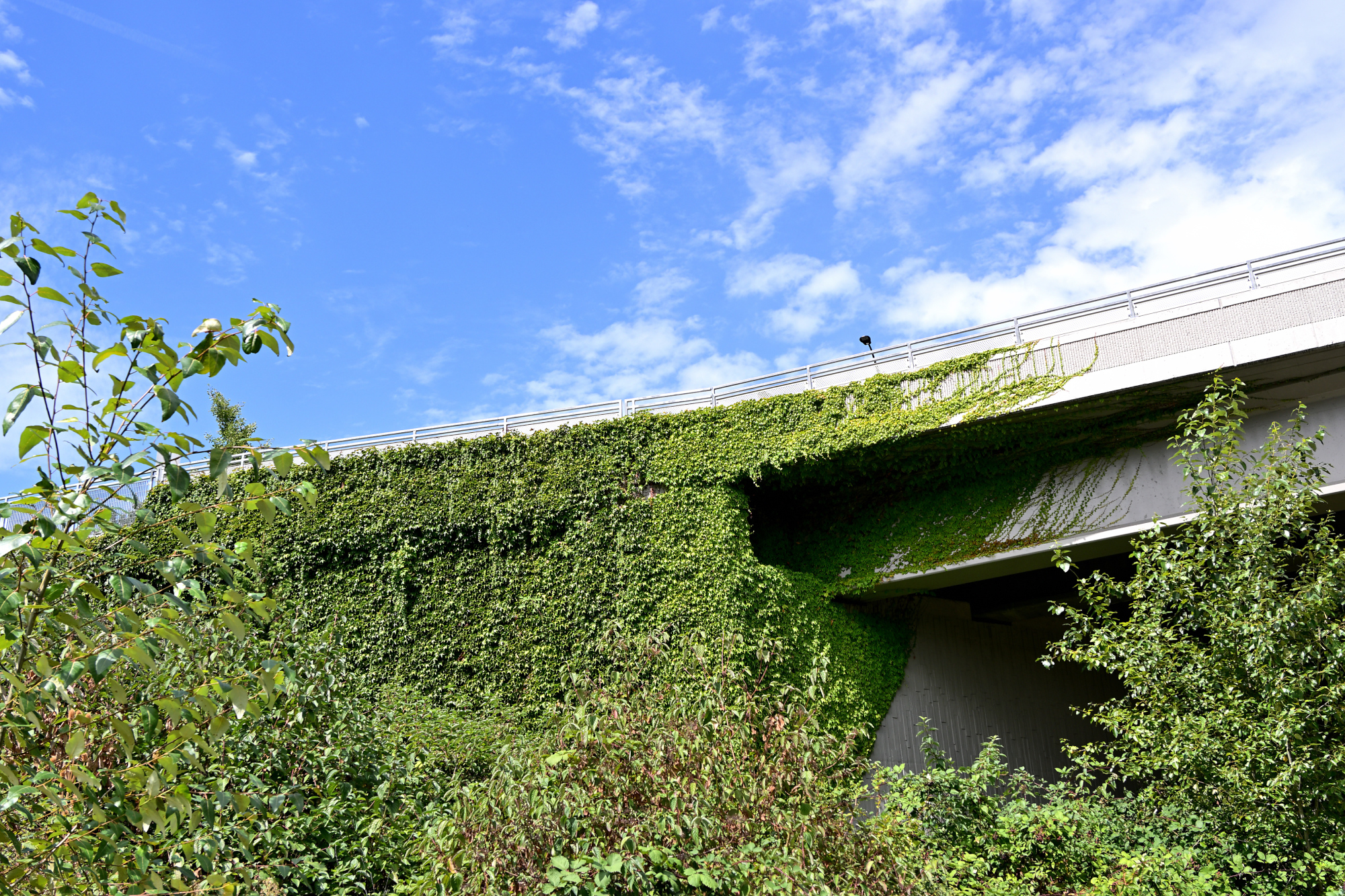
1/400s f/7,1 ISO 100/21° 18-140mm f/3,5-6,3 VR f=29mm/44mm
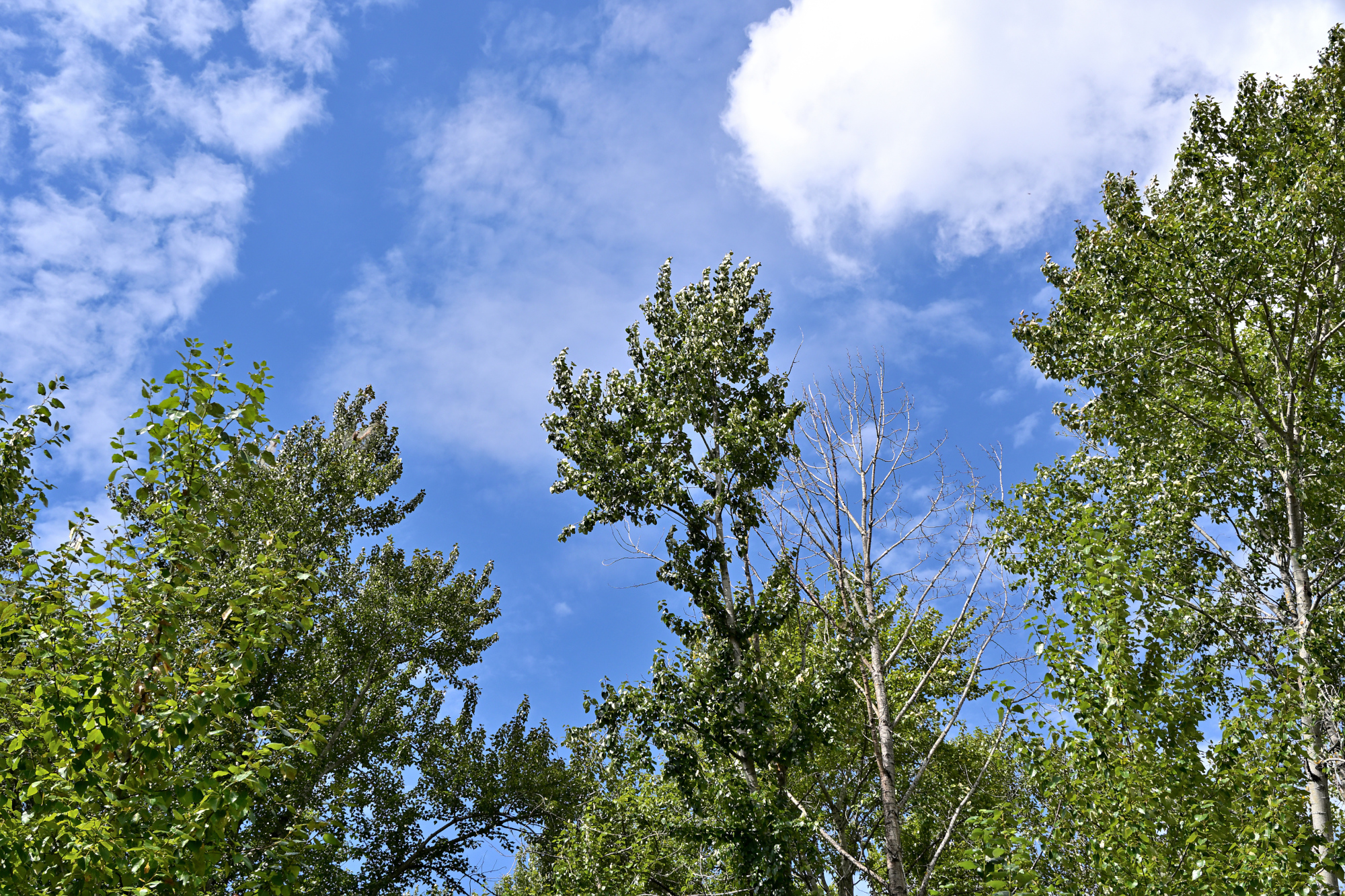
1/320s f/7,1 ISO 100/21° 18-140mm f/3,5-6,3 VR f=44mm/66mm
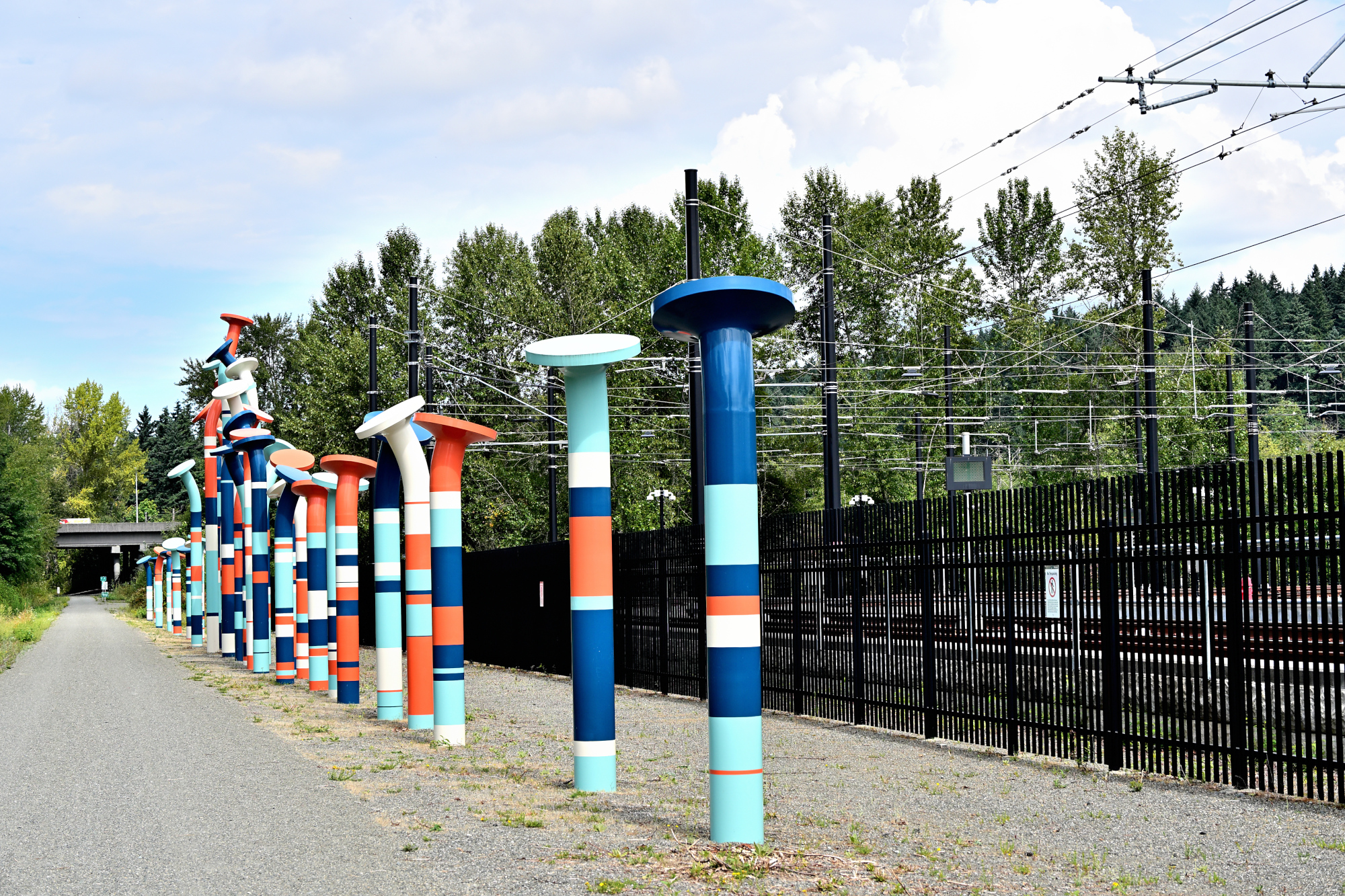
1/500s f/8 ISO 100/21° 18-140mm f/3,5-6,3 VR f=26mm/39mm
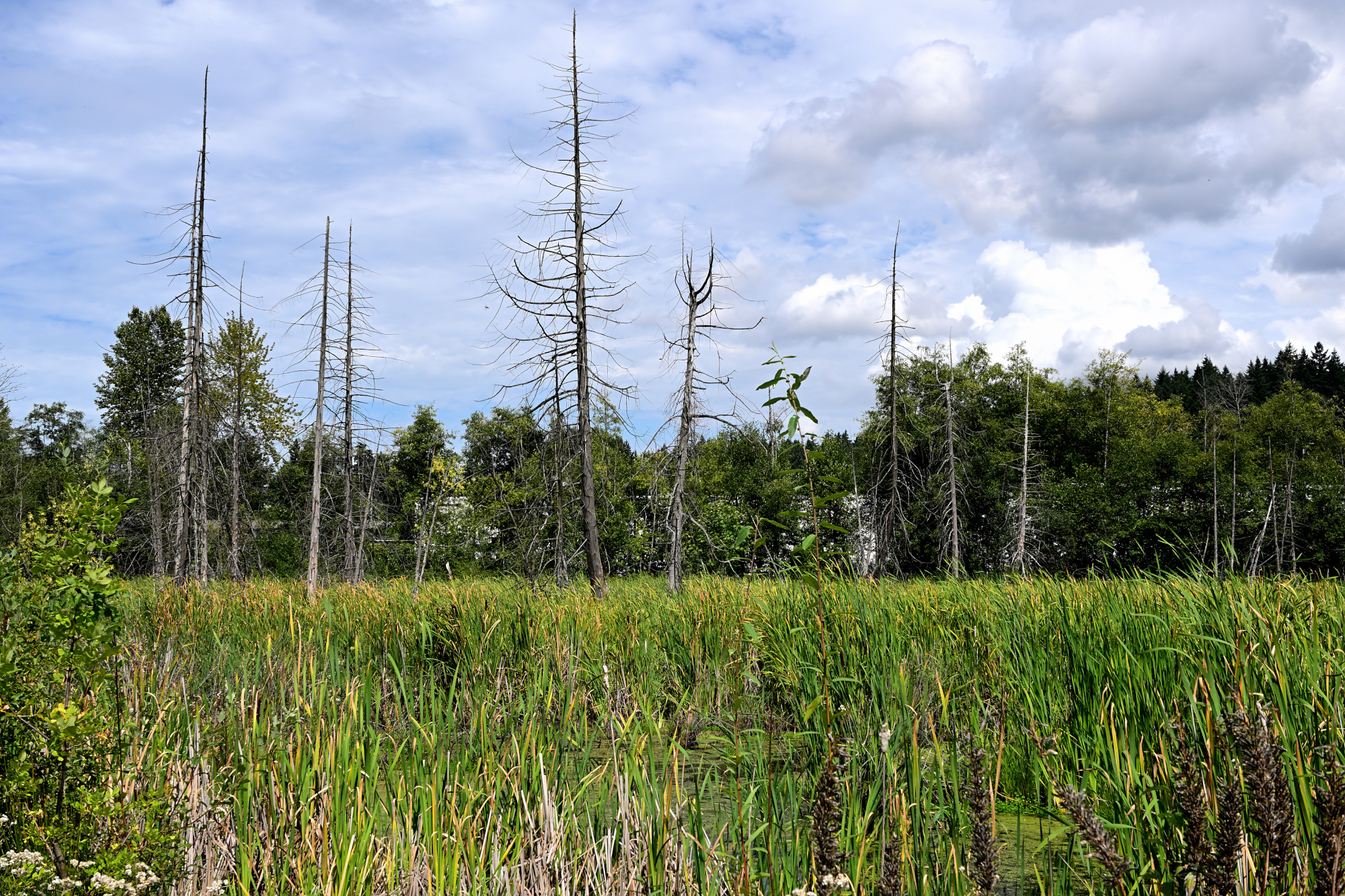
1/400s f/7,1 ISO 100/21° 18-140mm f/3,5-6,3 VR f=82mm/123mm
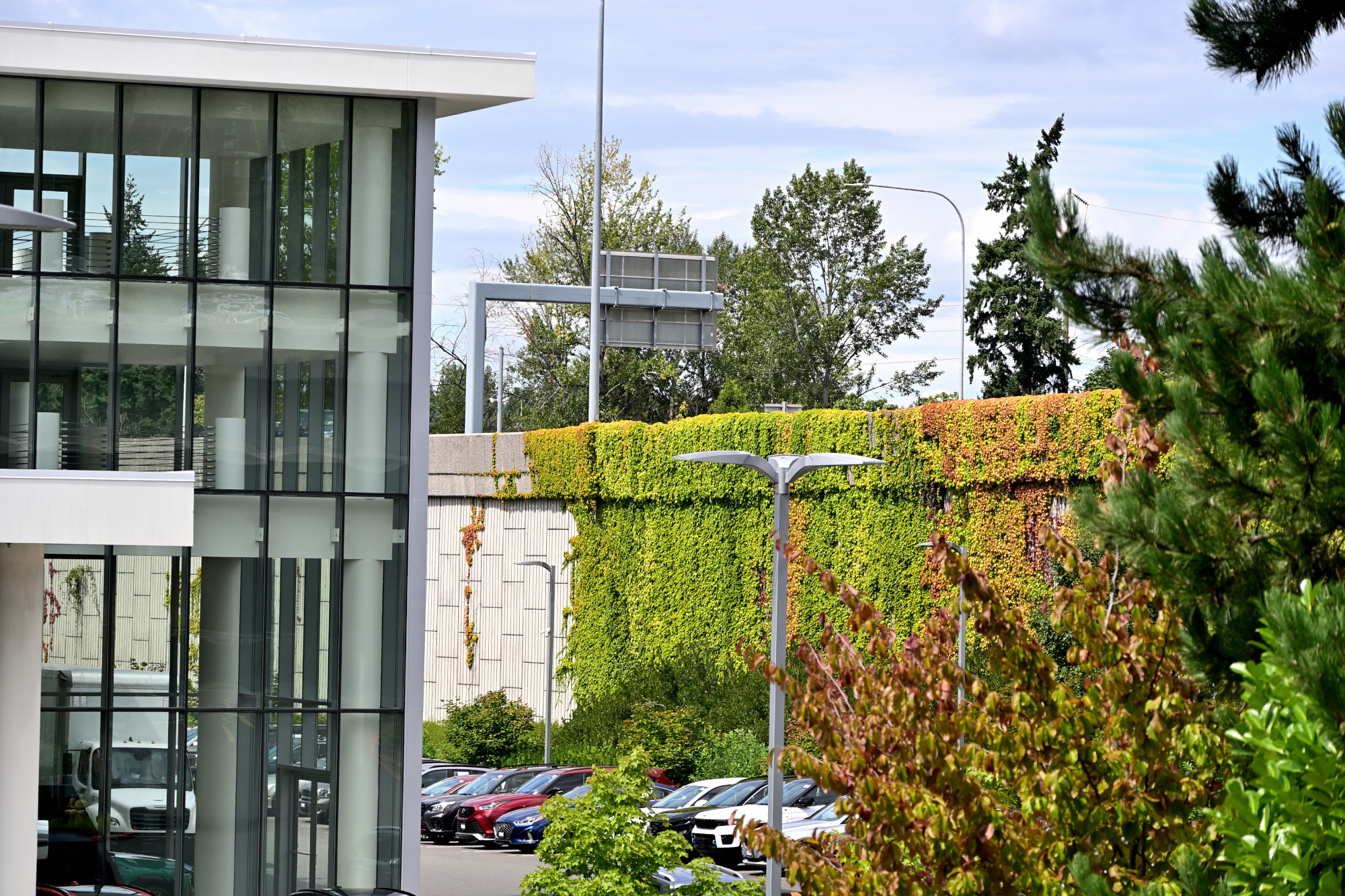
1/500s f/6,3 ISO 180 50-250mm f/4,5-6,3 VR f=250mm/375mm
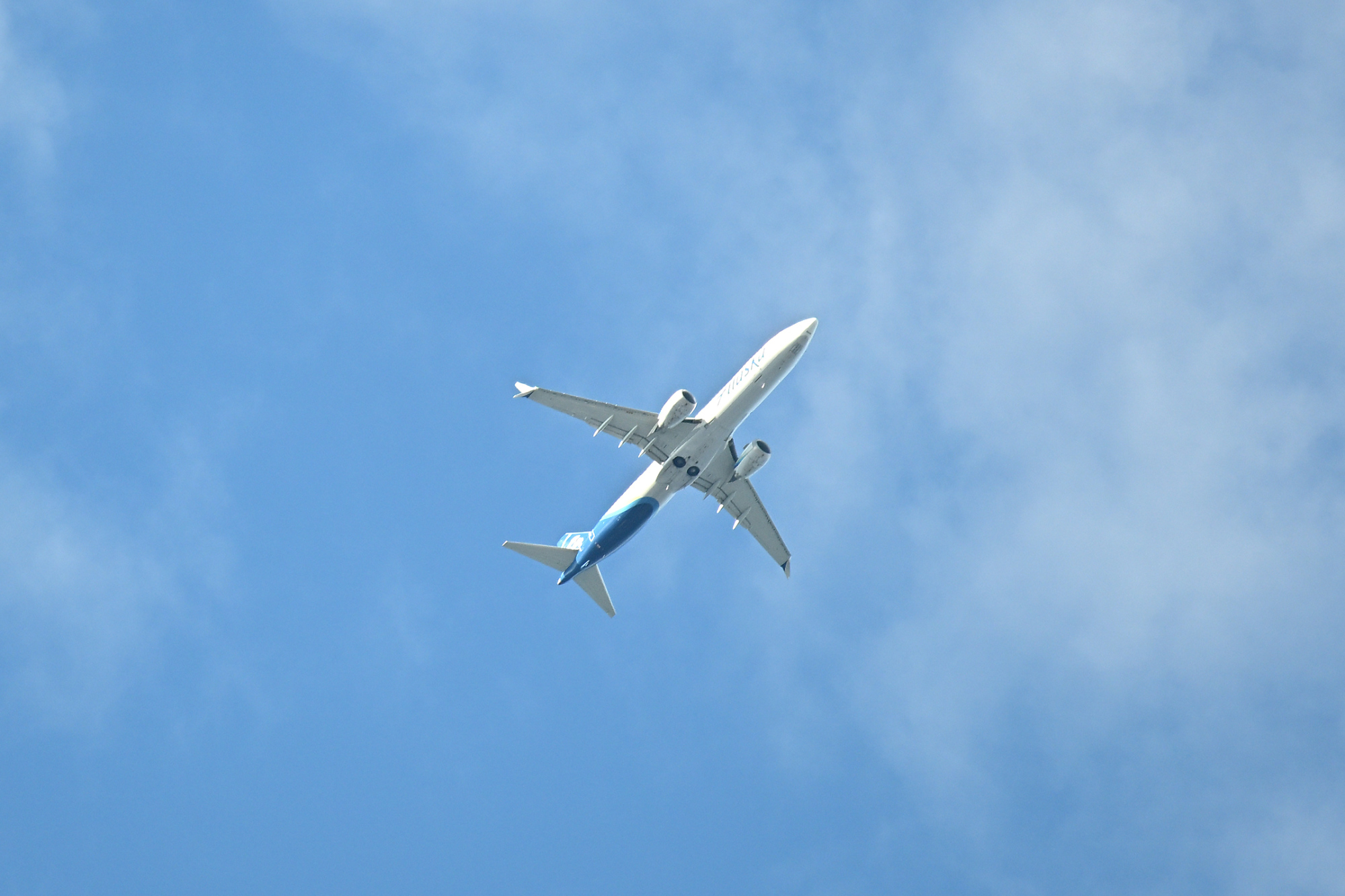
1/500s f/5,6 ISO 6400/39° 50-250mm f/4,5-6,3 VR f=175mm/262mm
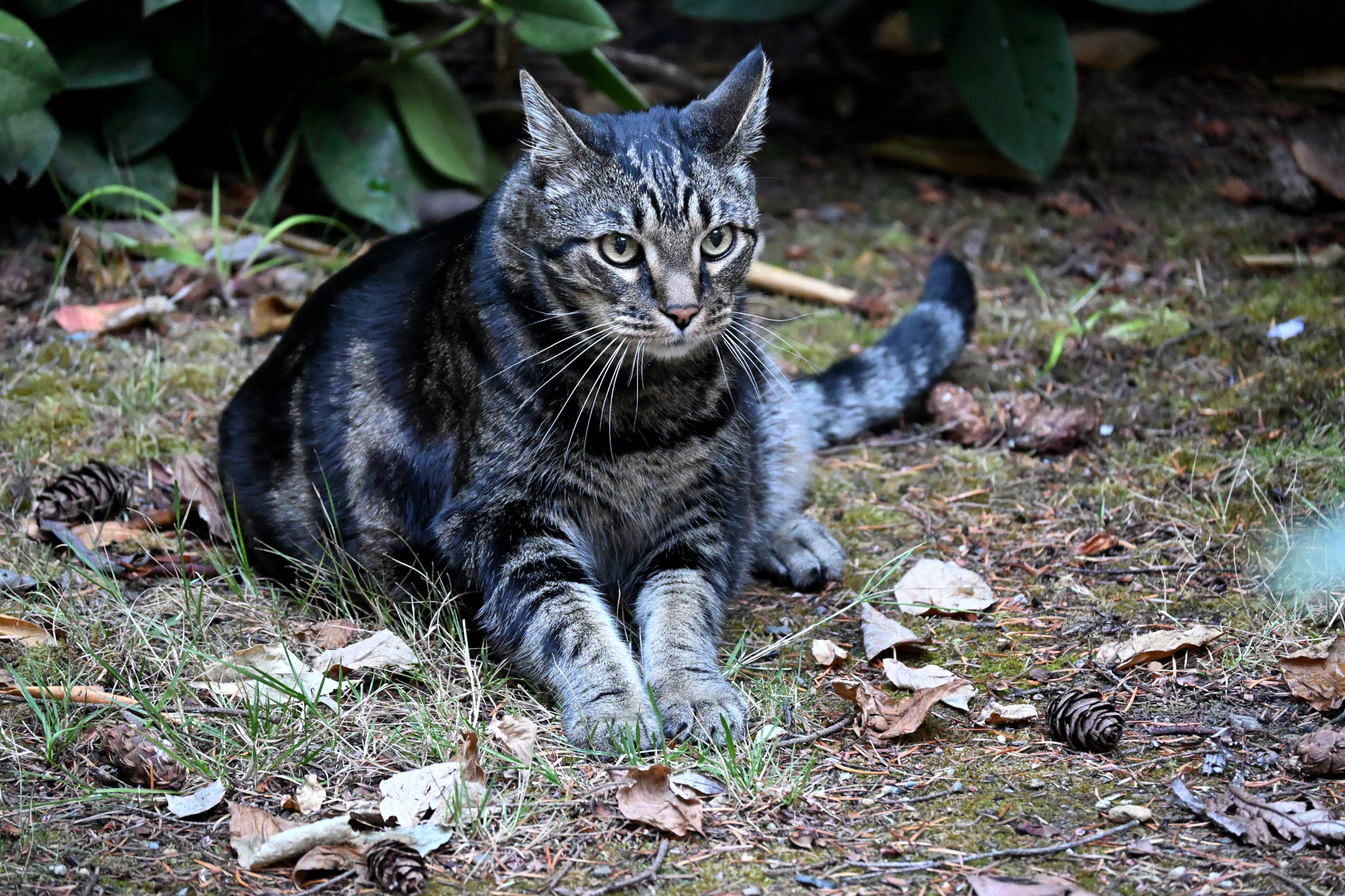
The Nikon Z50 II should have been available decades earlier, or I should have been available decades later. It brings modern photography into focus without complicating the experience. With improved autofocus, streamlined connectivity that includes Cloud and FTP upload, and solid image quality, it is simply fun to use. I was taking a picture of my cat running, and it instantly focused on the eyes. Quite impressive.
Full-frame models offer more features, including in-body image stabilization (IBIS), but they are heavier and larger.
Sometimes, things are just good enough for what you do. -
Spokane, WA
Spokane, Washington, nestled along the Spokane River in the eastern part of the state, is known for its rich history, vibrant arts scene, and stunning natural surroundings. Named after the Spokane Tribe, 'Children of the Sun' in the Salish language, the city reflects deep indigenous roots and natural beauty.
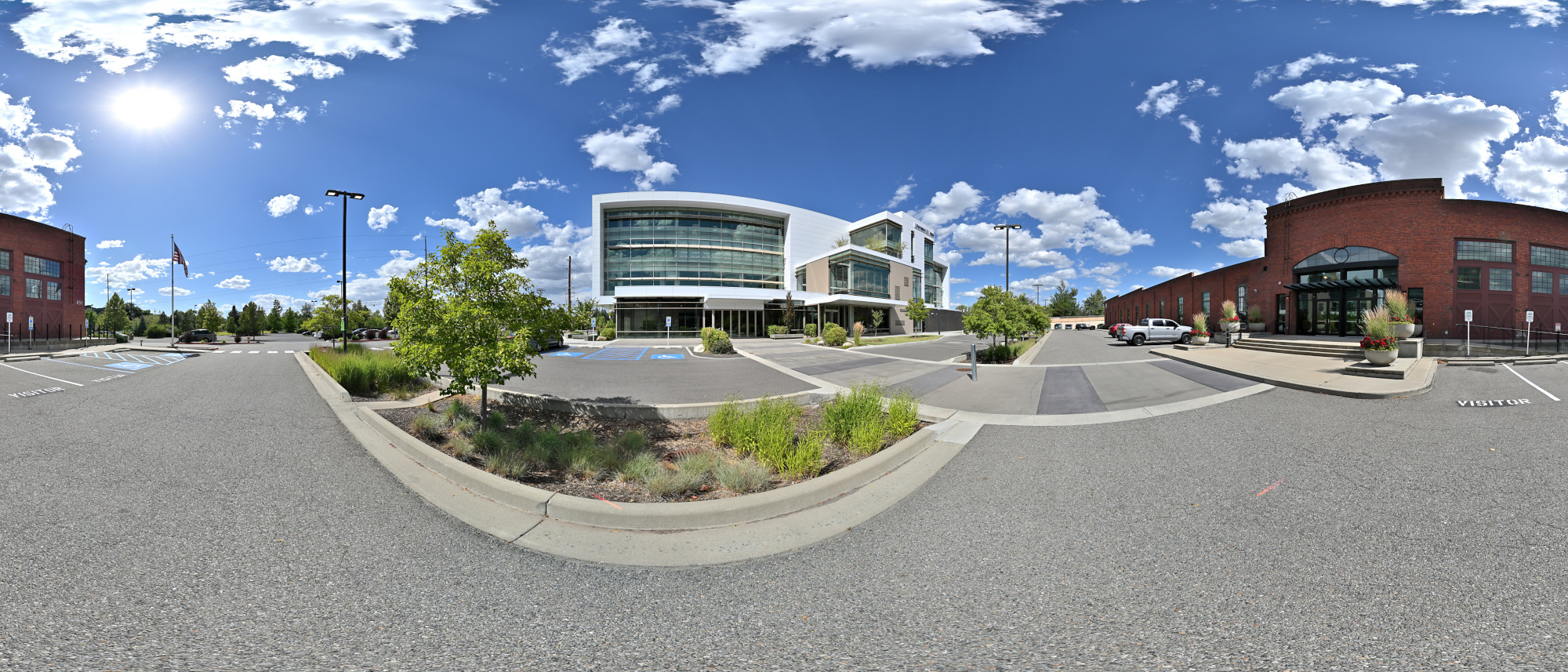
All pictures and panoramic images are taken with 1/1000s f/5,6 ISO 100/21° f=7,5mm, unless noted otherwise.
🏥 UW
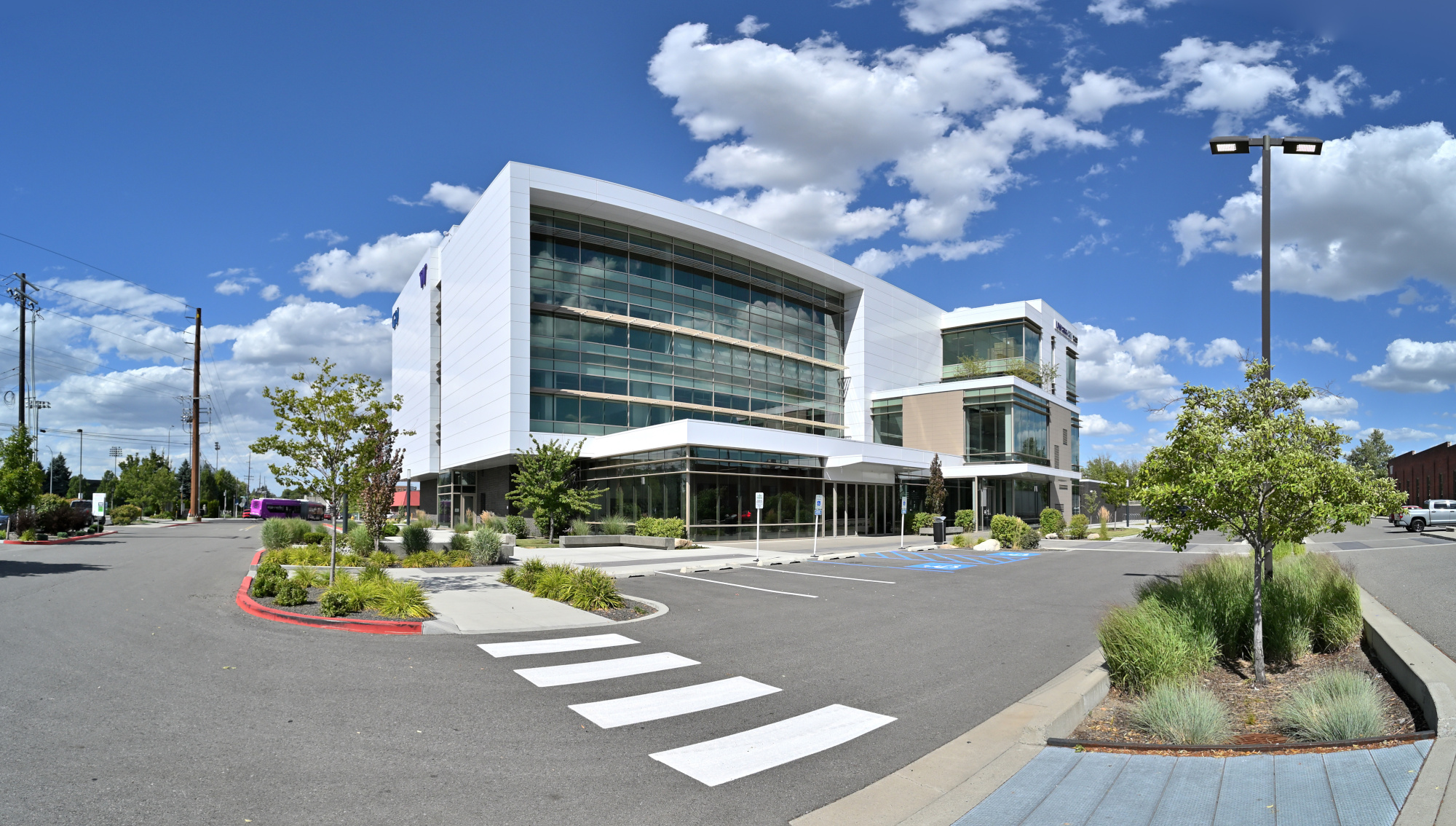
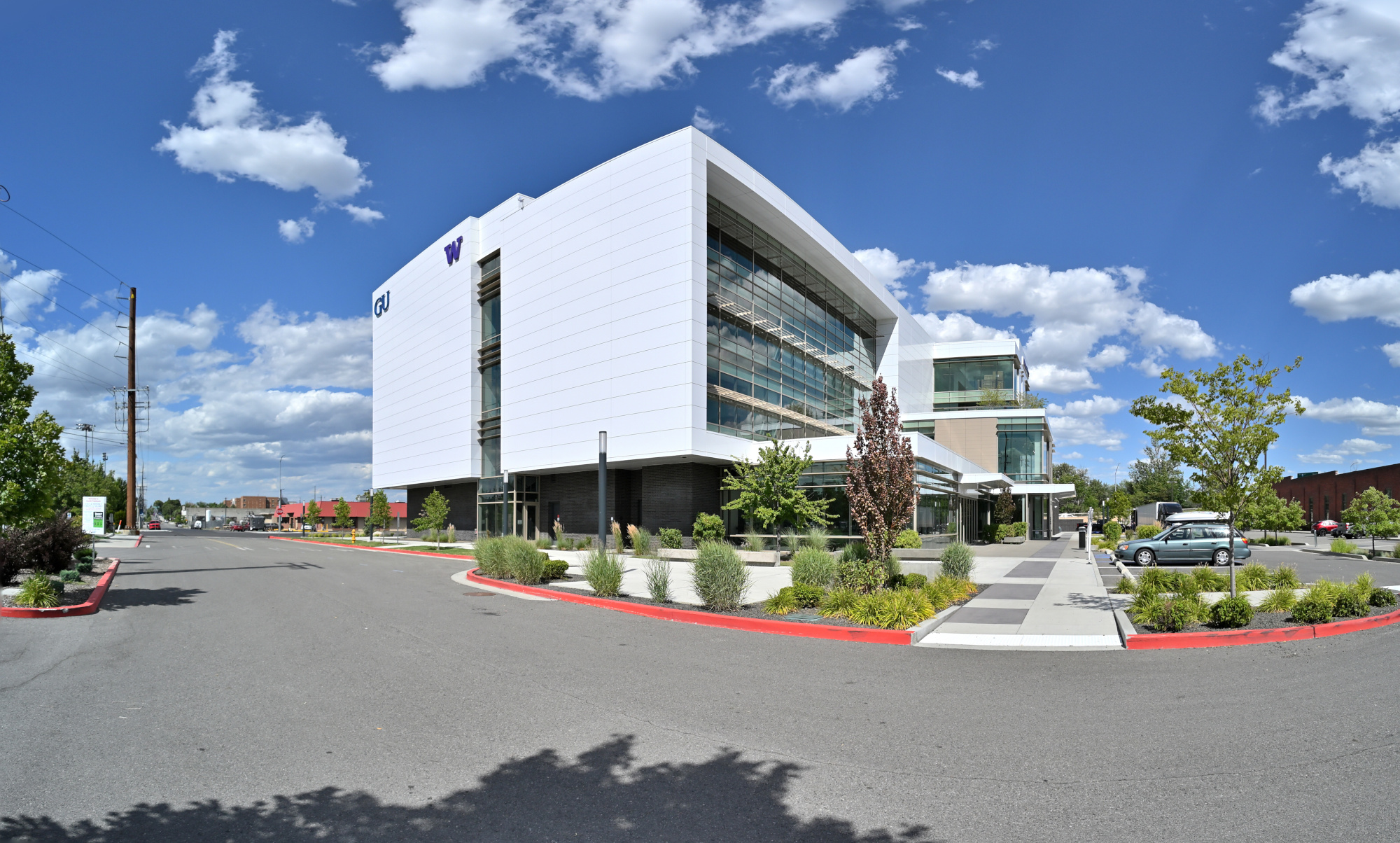
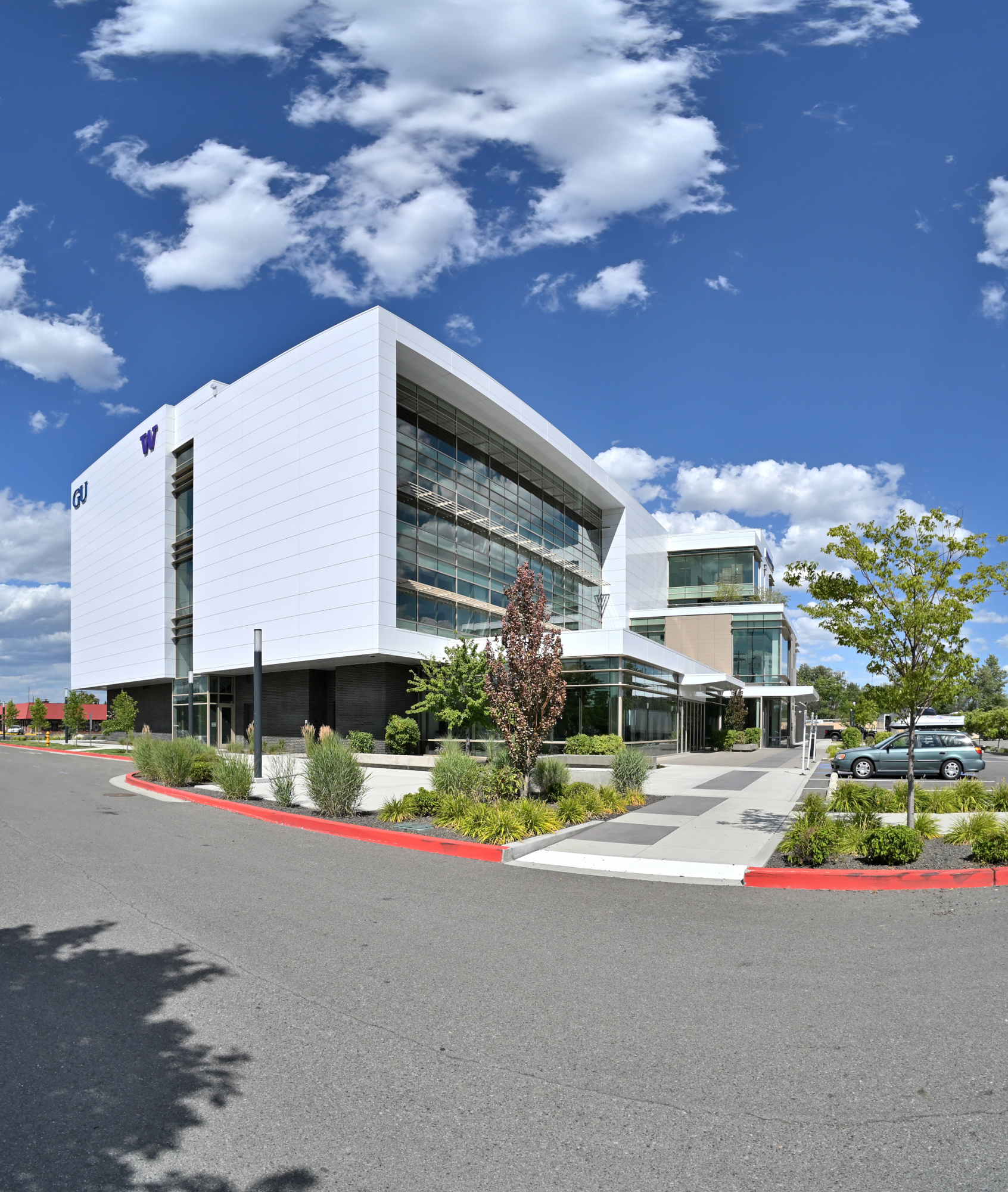
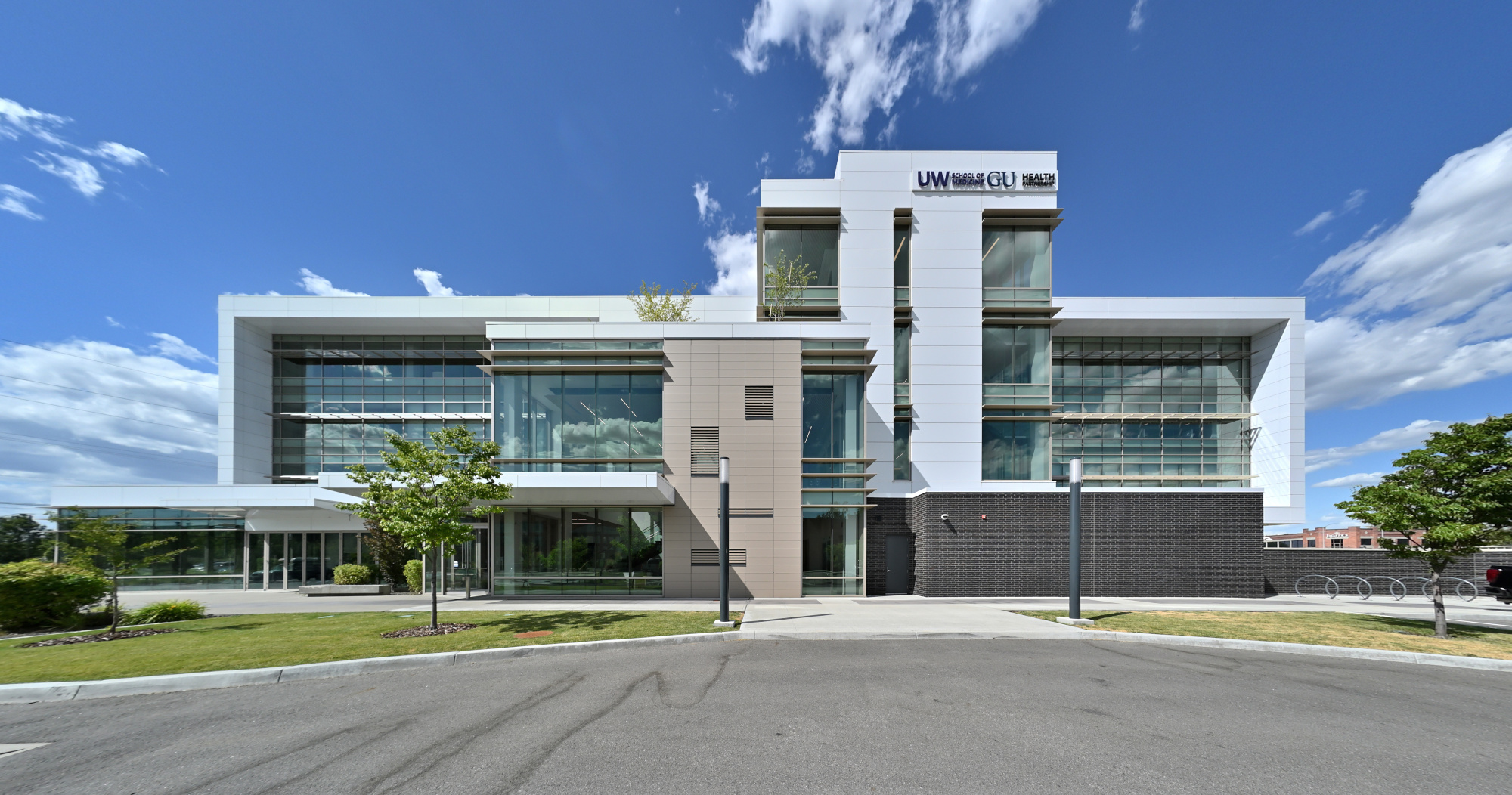
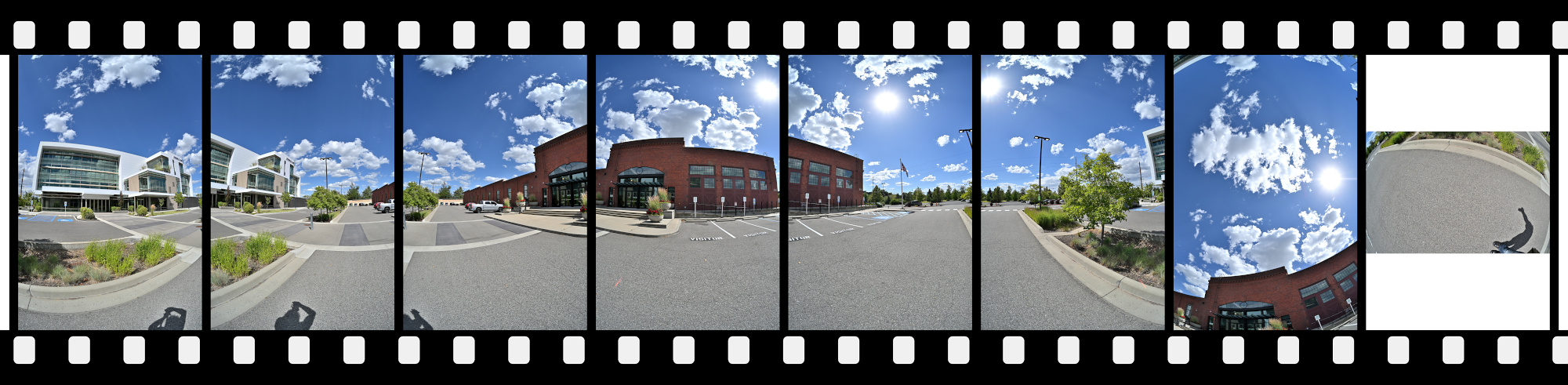
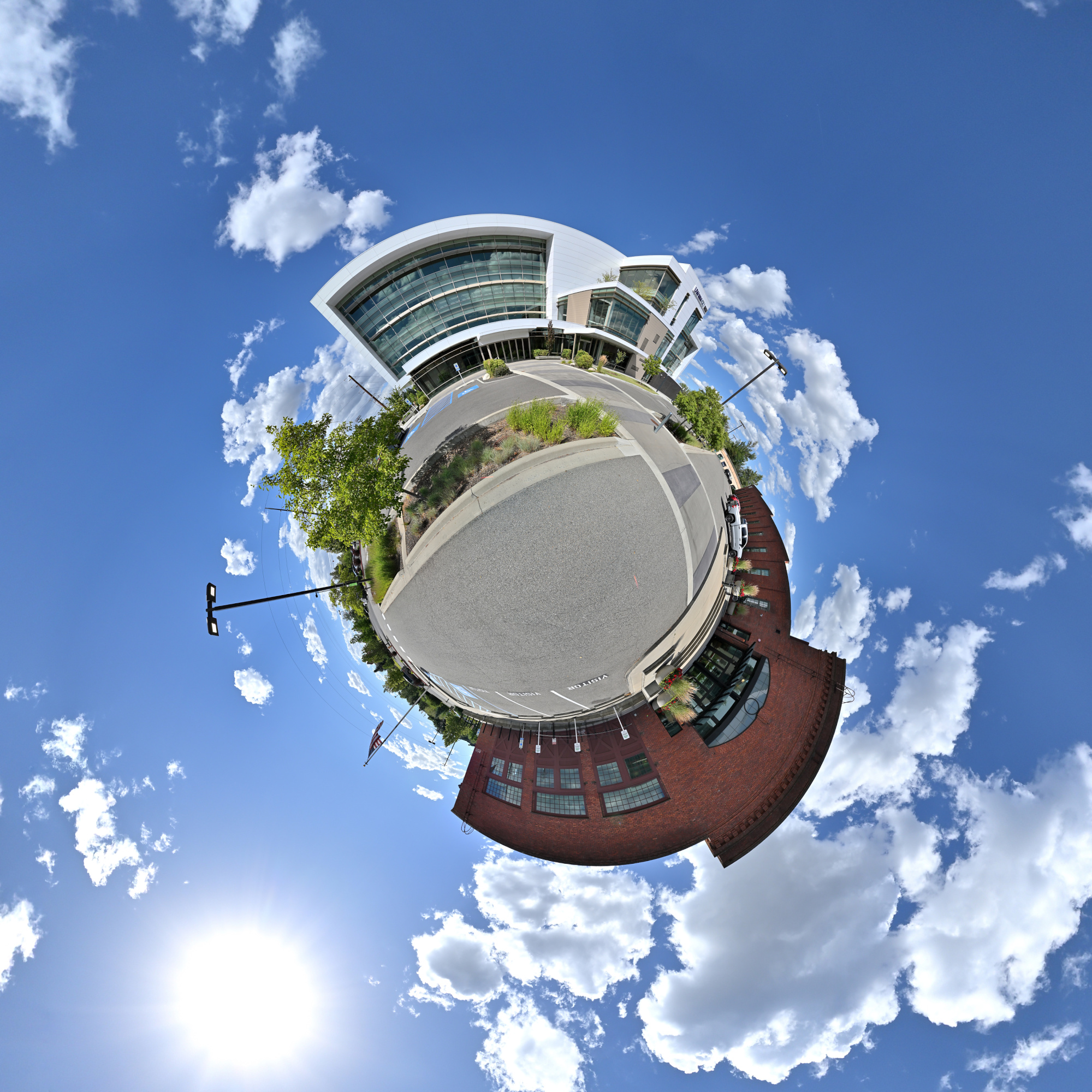
Our journey begins at the University of Washington School of Medicine's Spokane campus, where the first panorama captures the academic heart of the city.
🌳 Riverfront Park
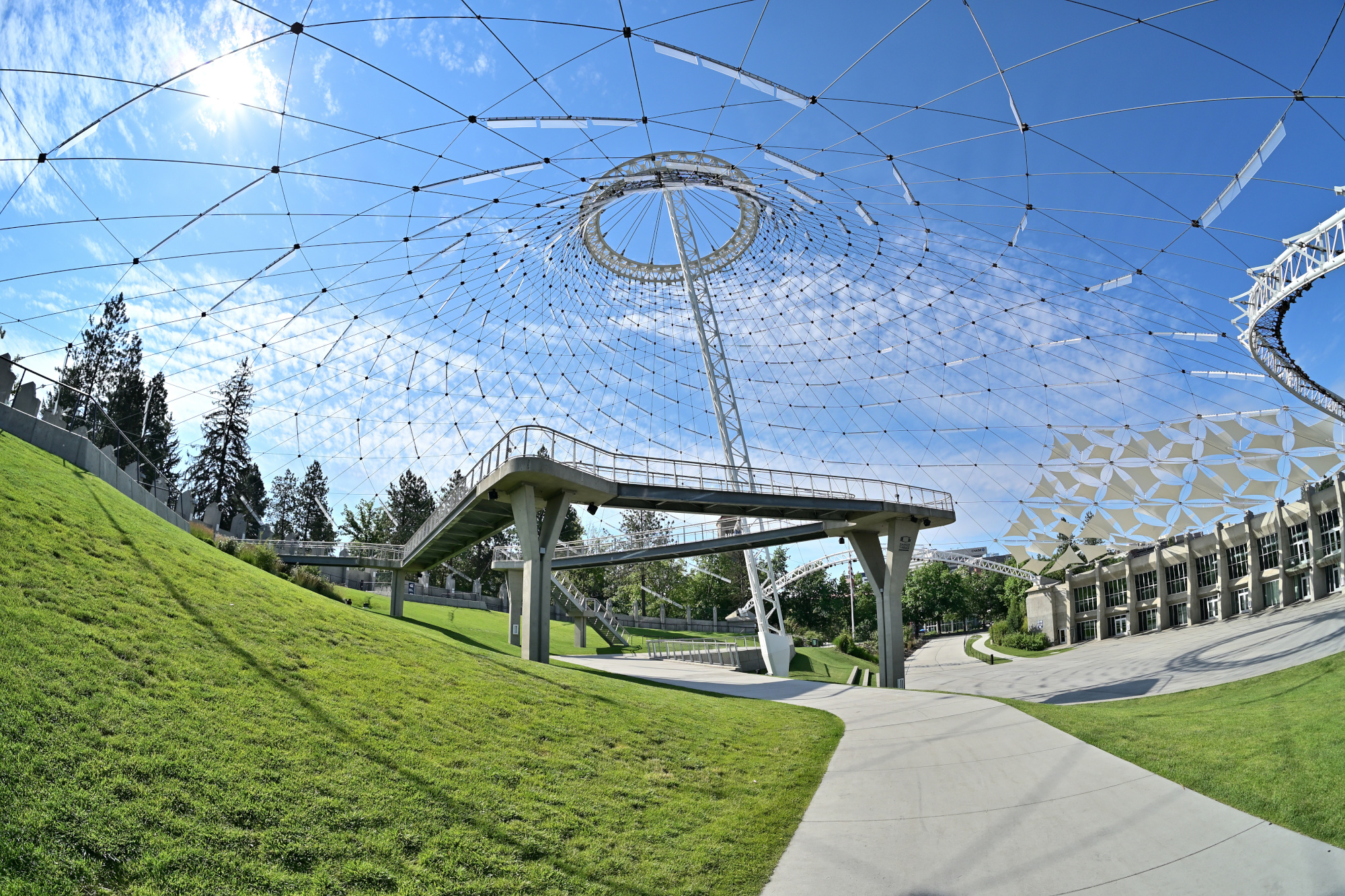
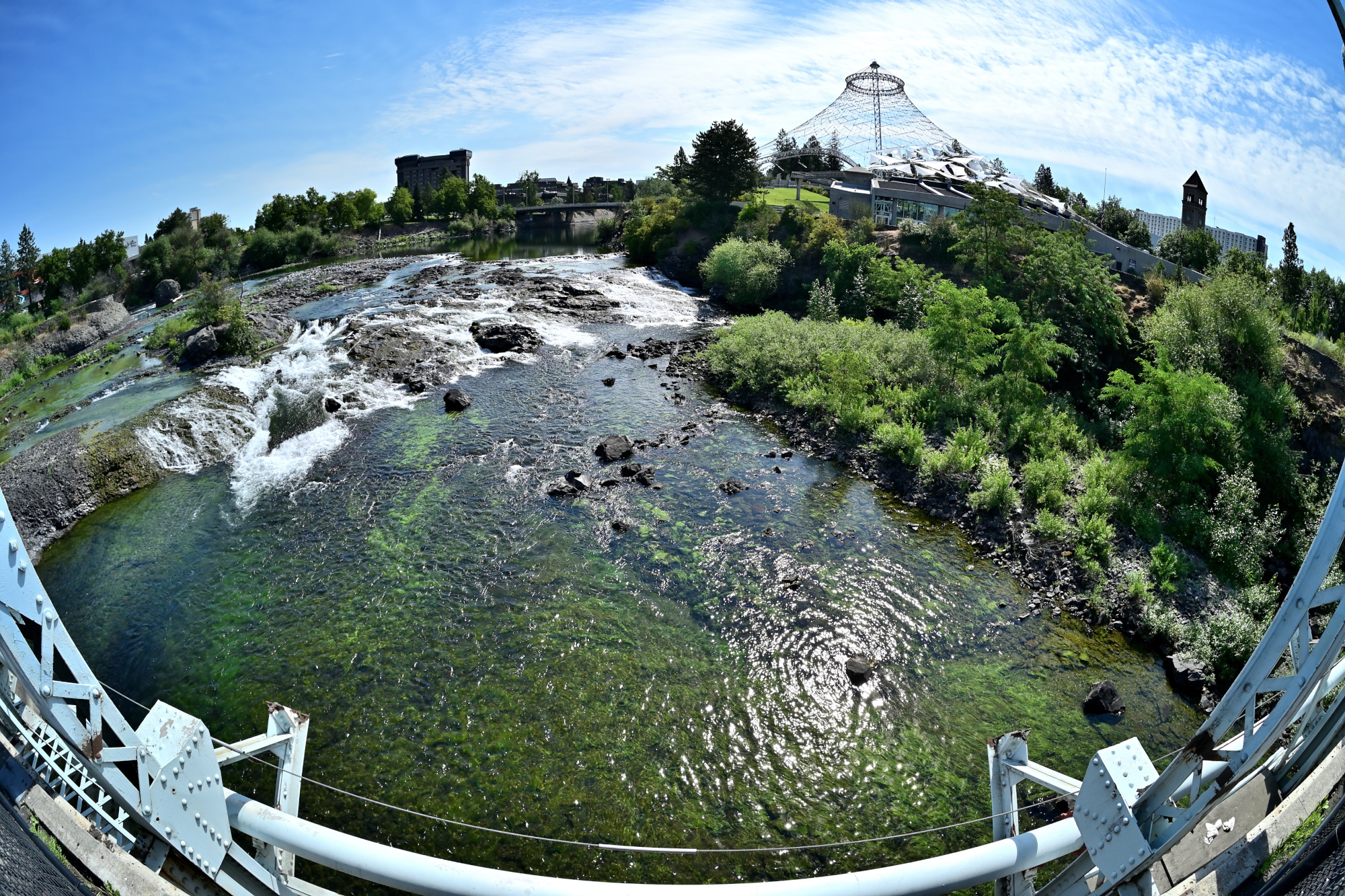
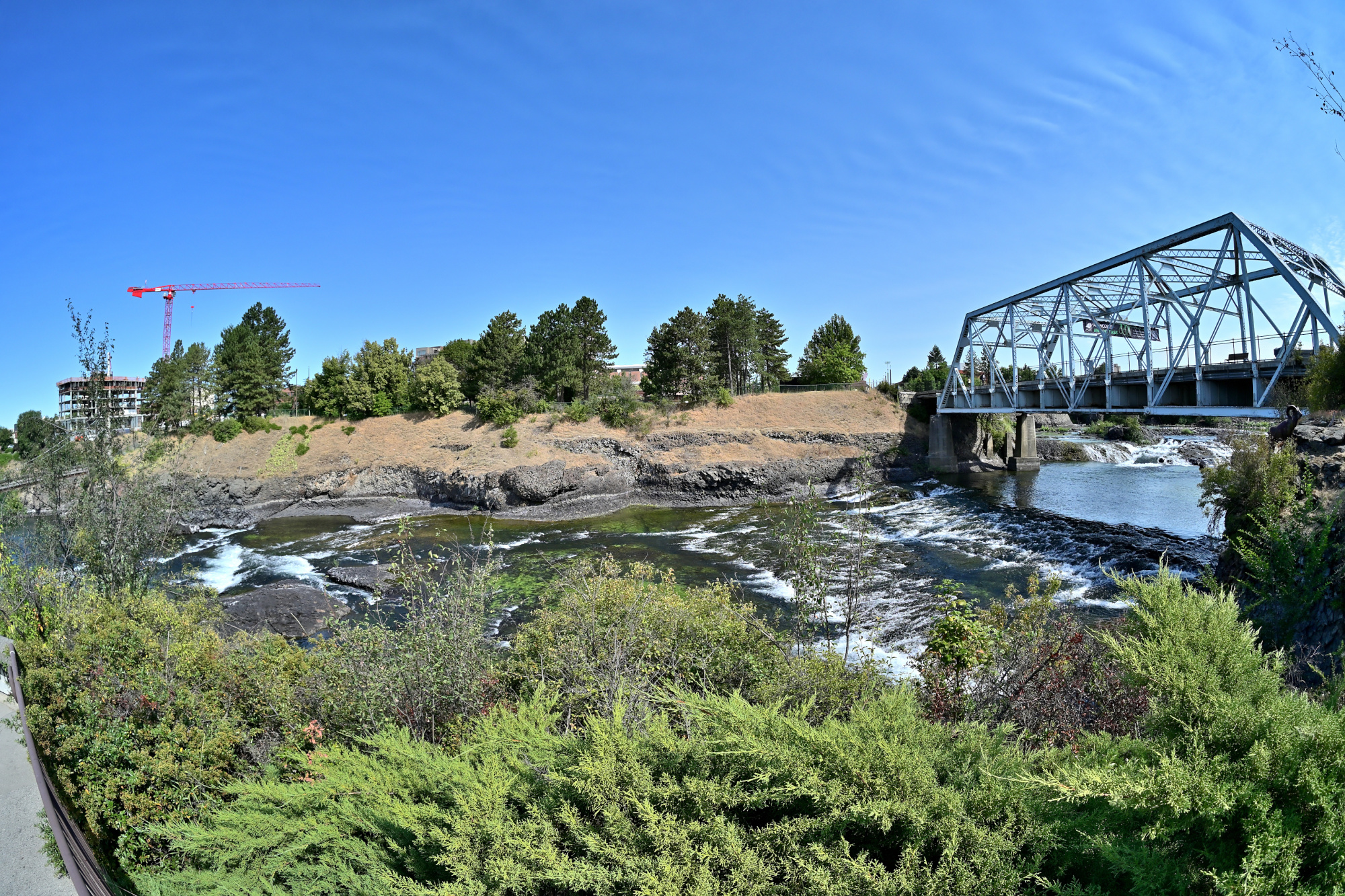
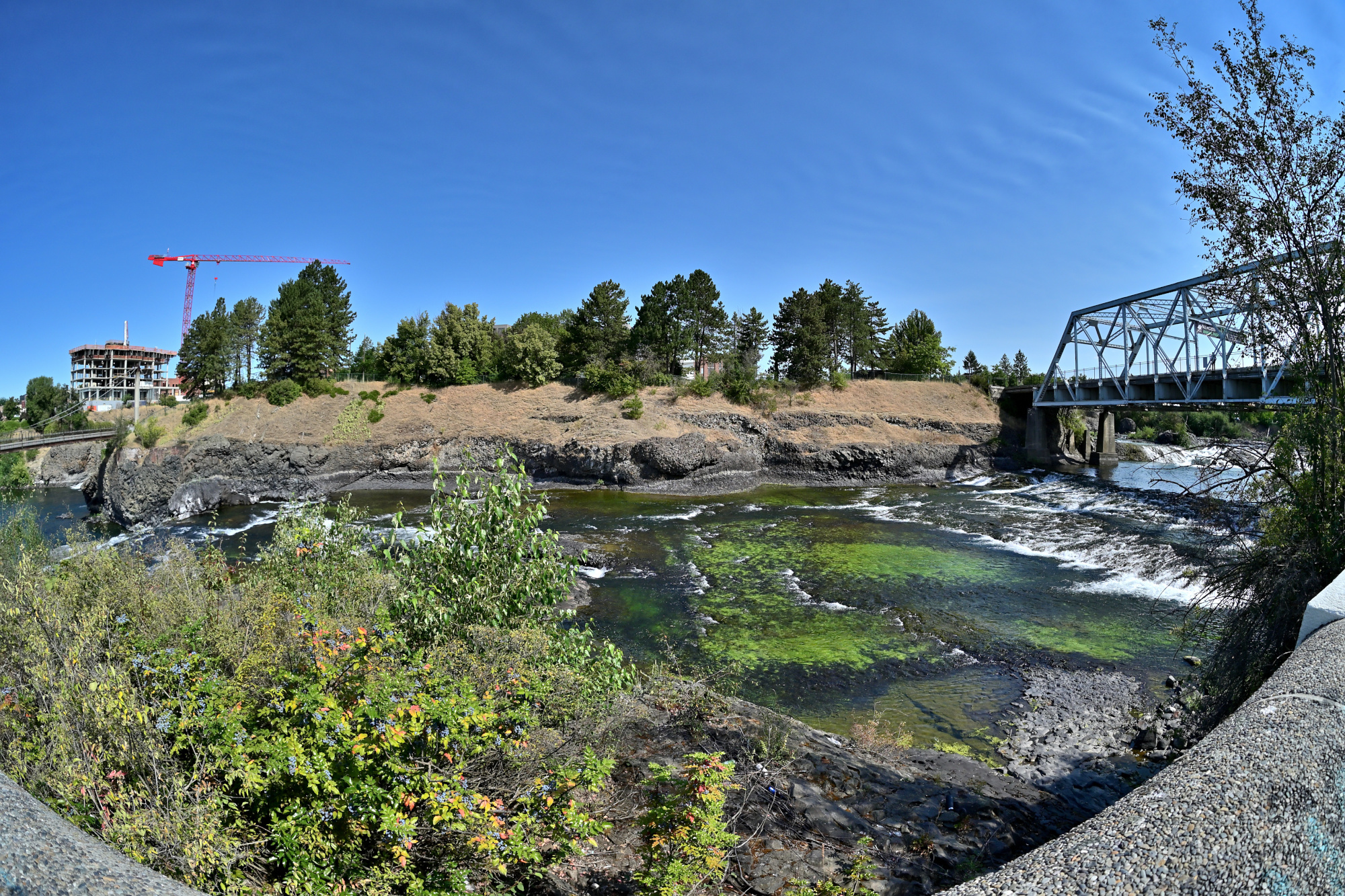
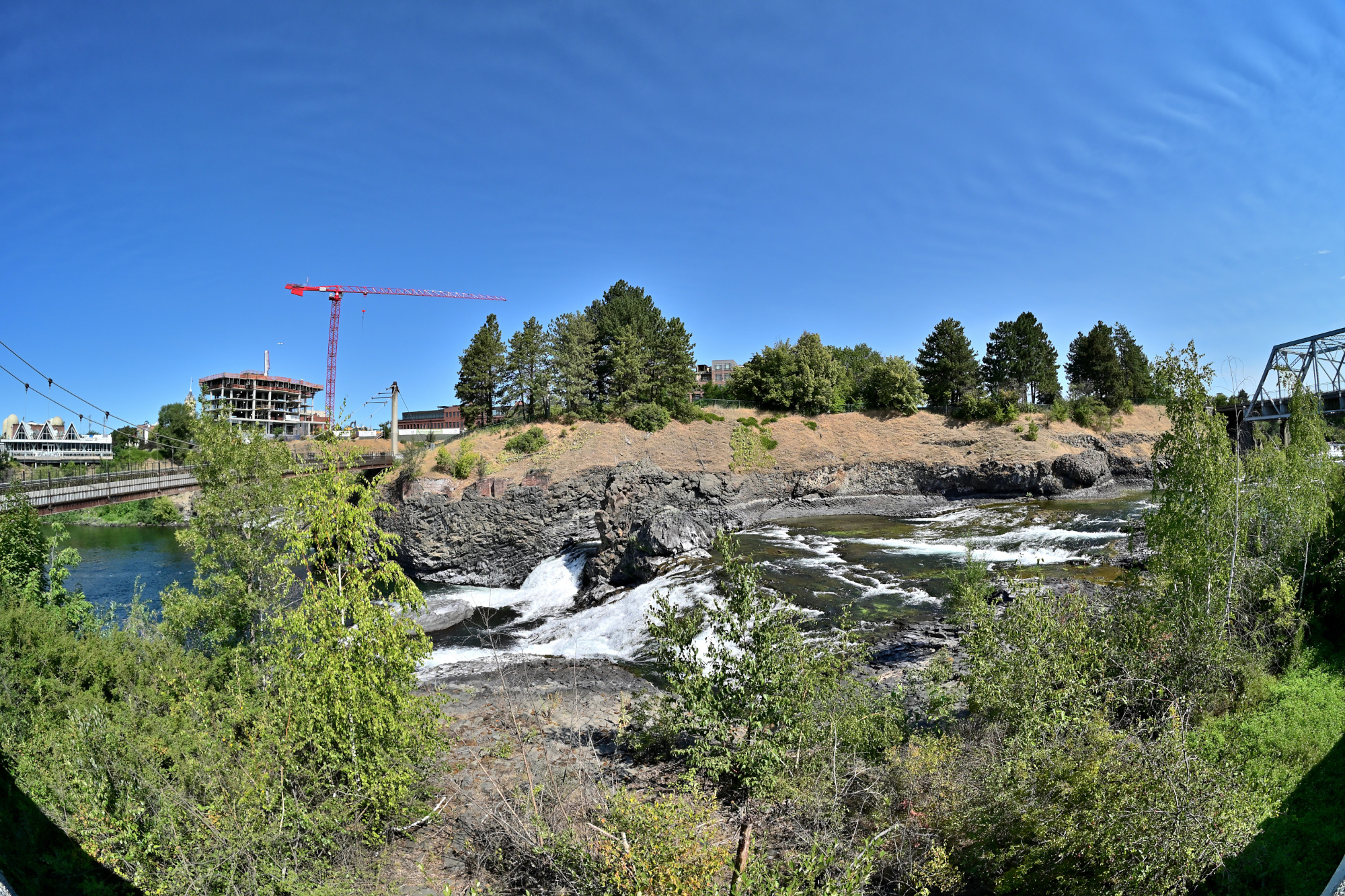
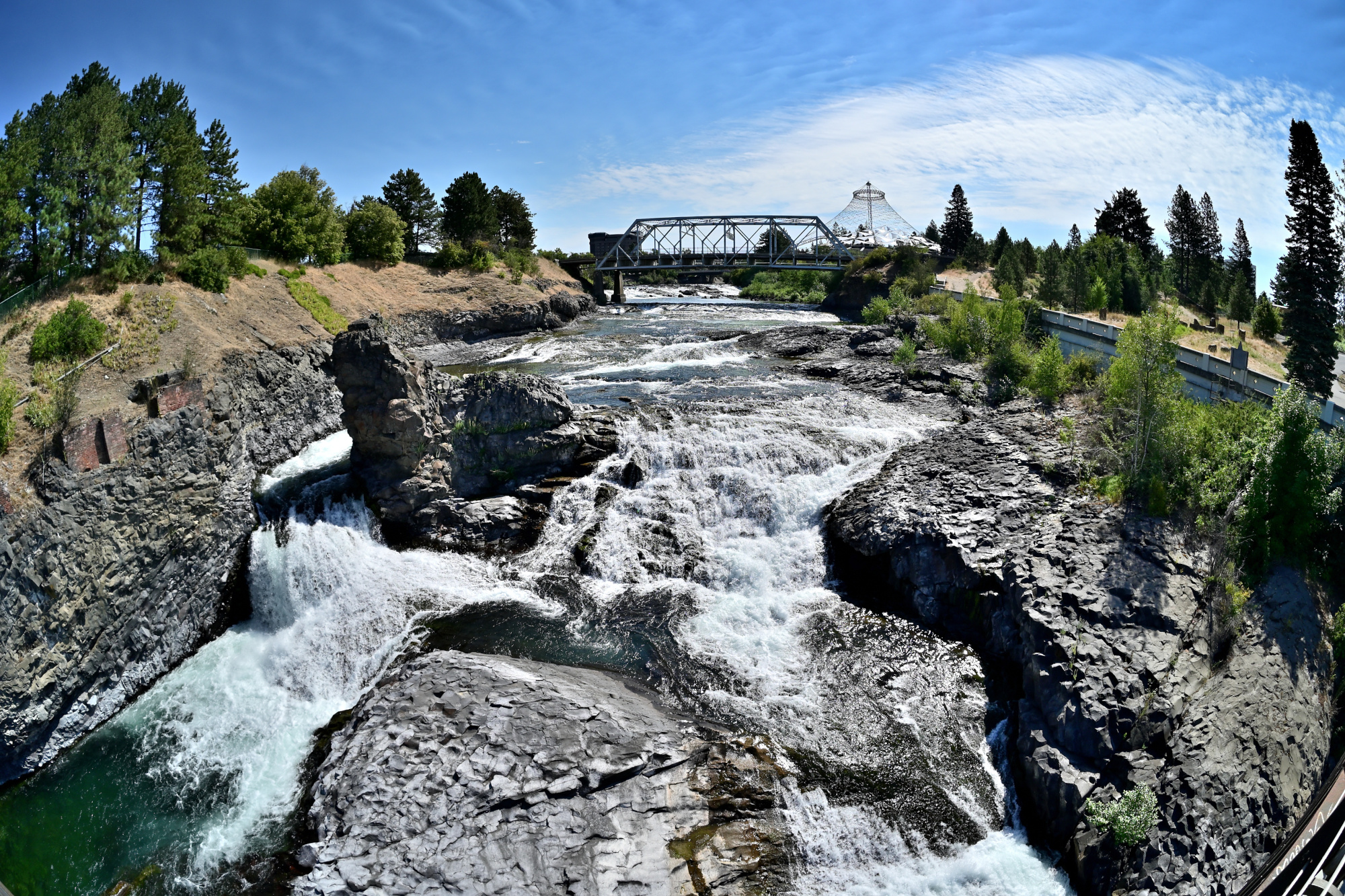
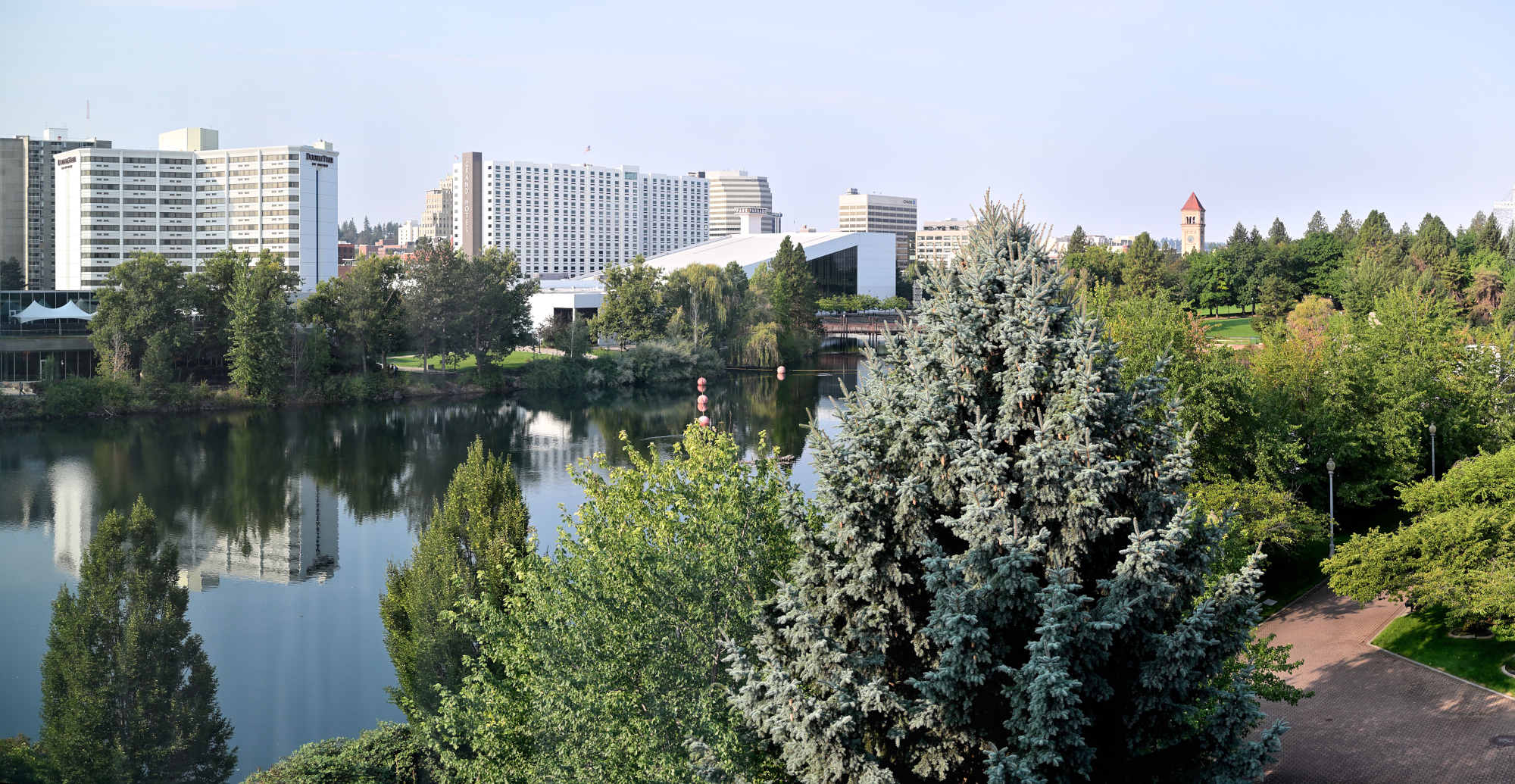
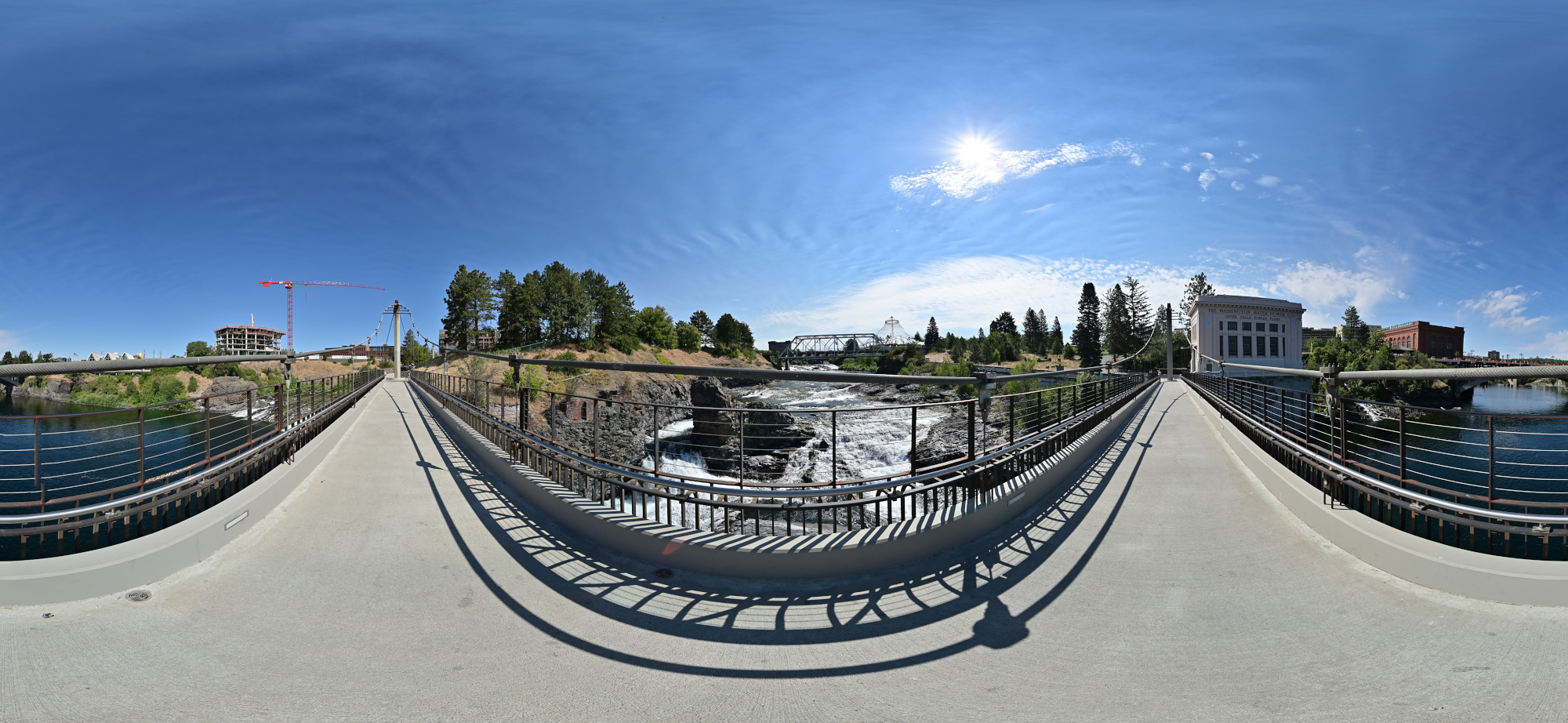
Spokane's green centerpiece, once the site of Expo '74, is now a vibrant public space full of history and movement. Bridges connect the city to Havermale Island, where some panoramas were taken. The view here spans from the upper Spokane Falls to the Pavilion, capturing the park's dynamic blend of nature, architecture, and community life.
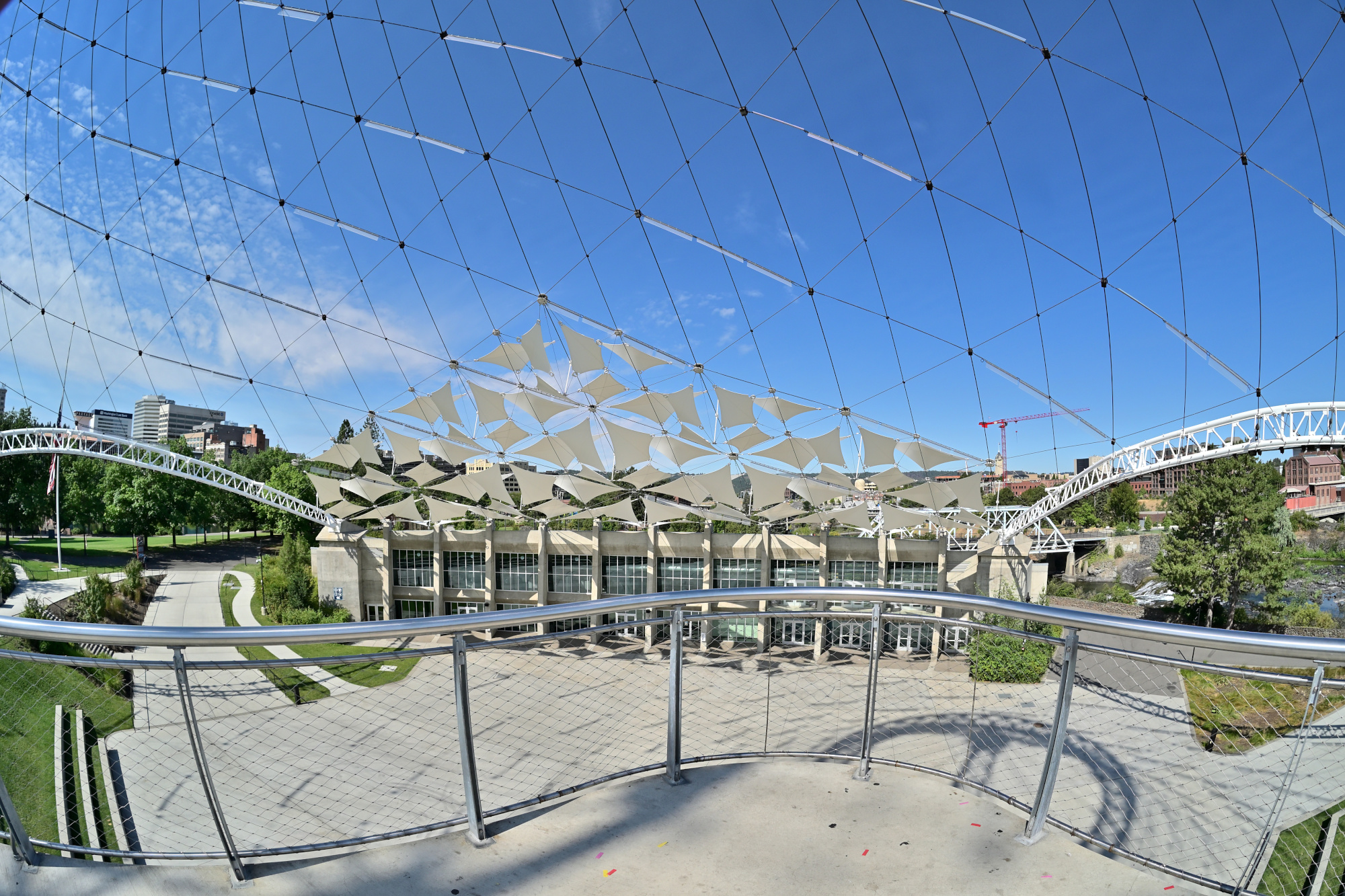
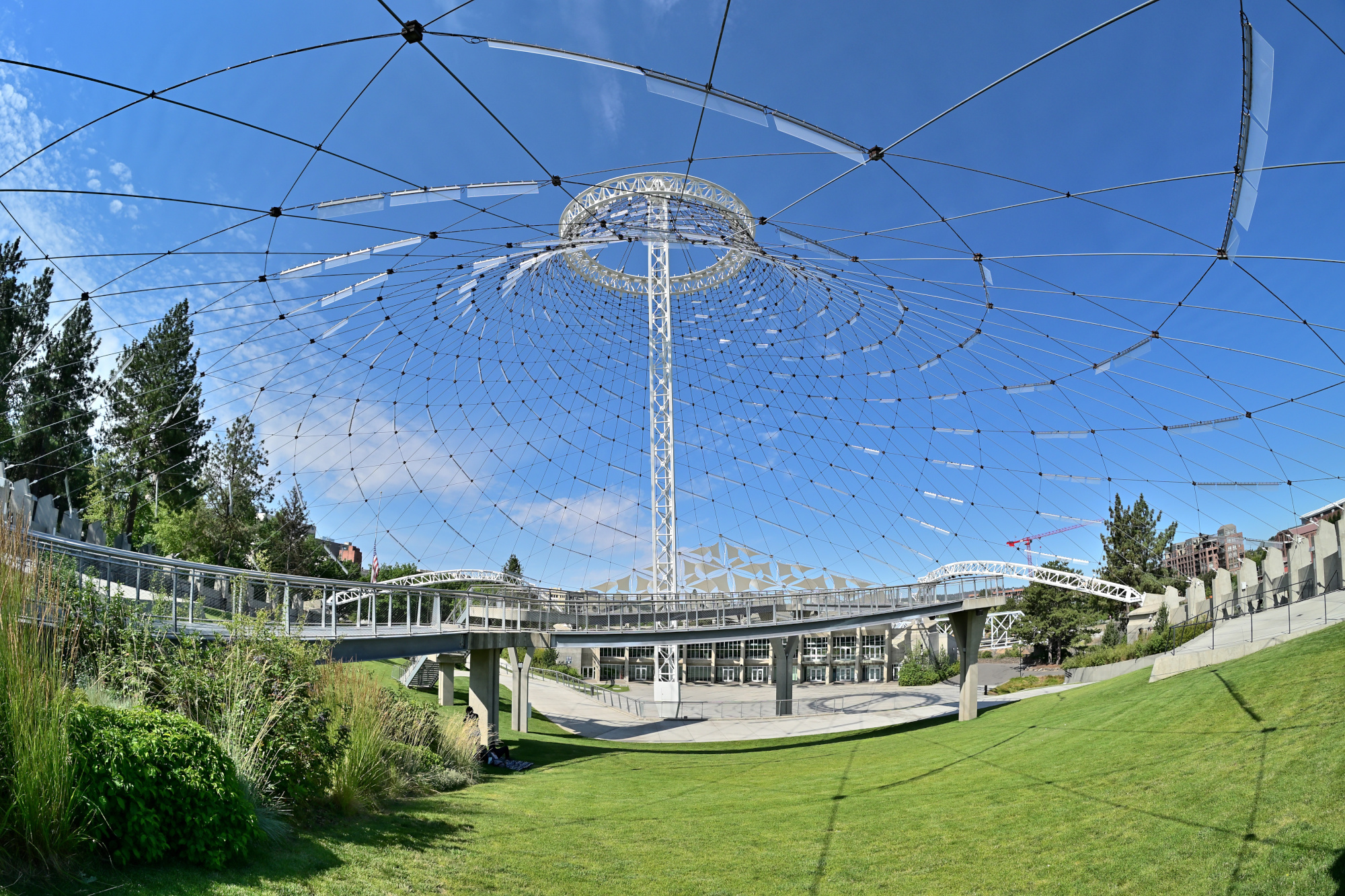
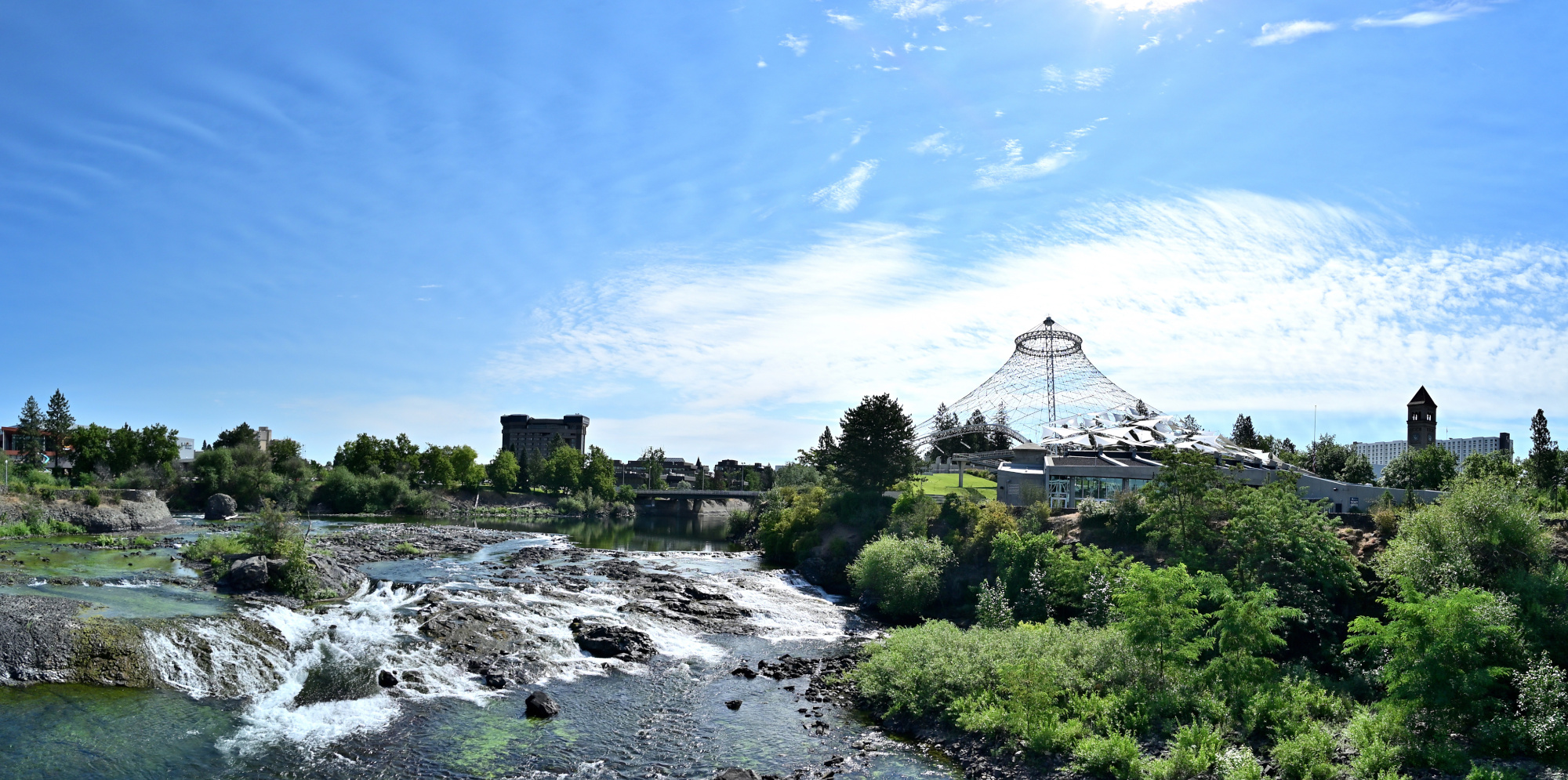
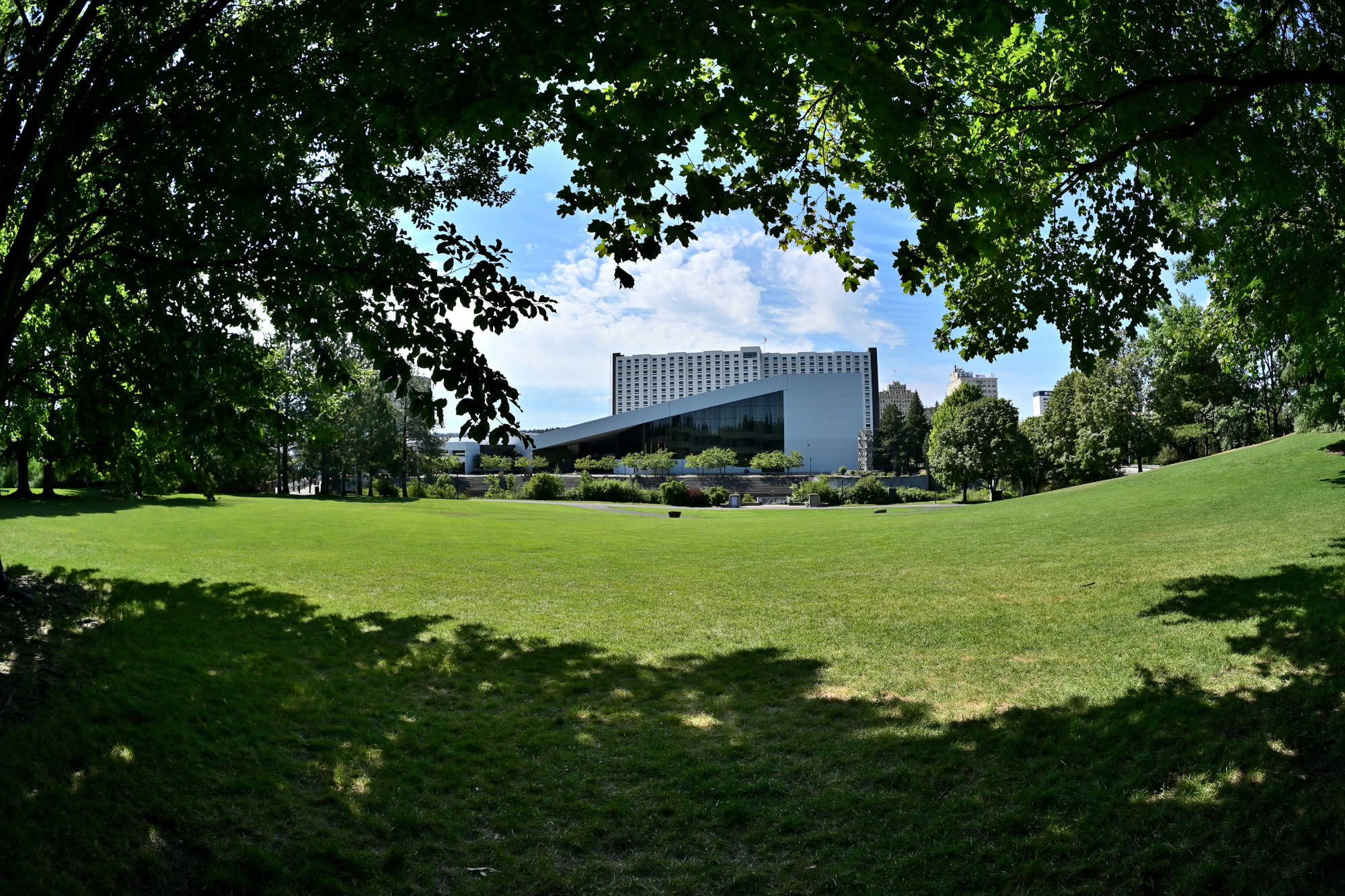
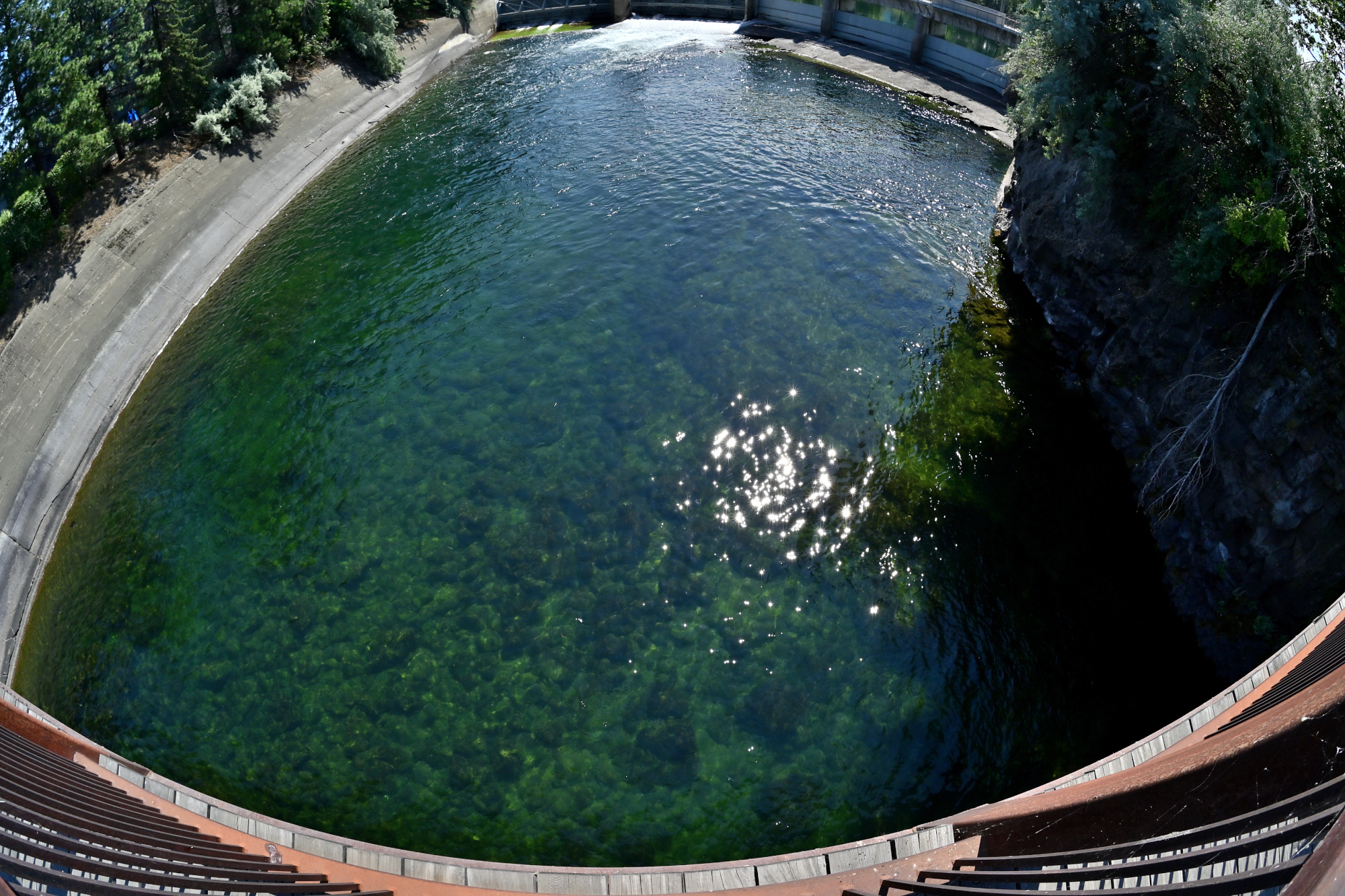
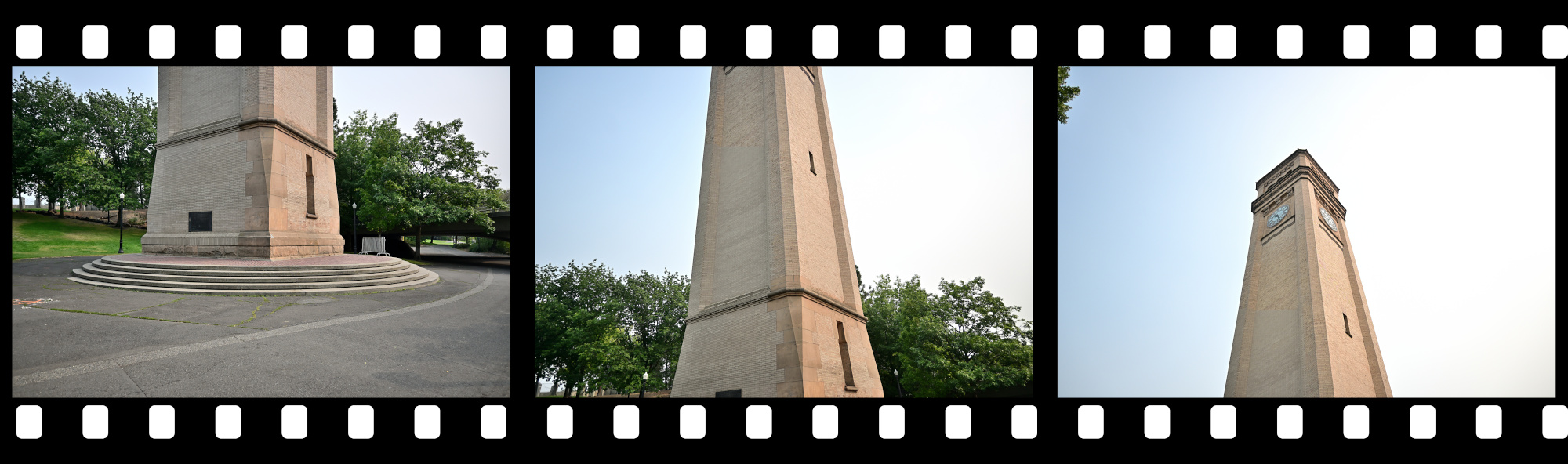
The Centennial Sculpture on a cloudy day
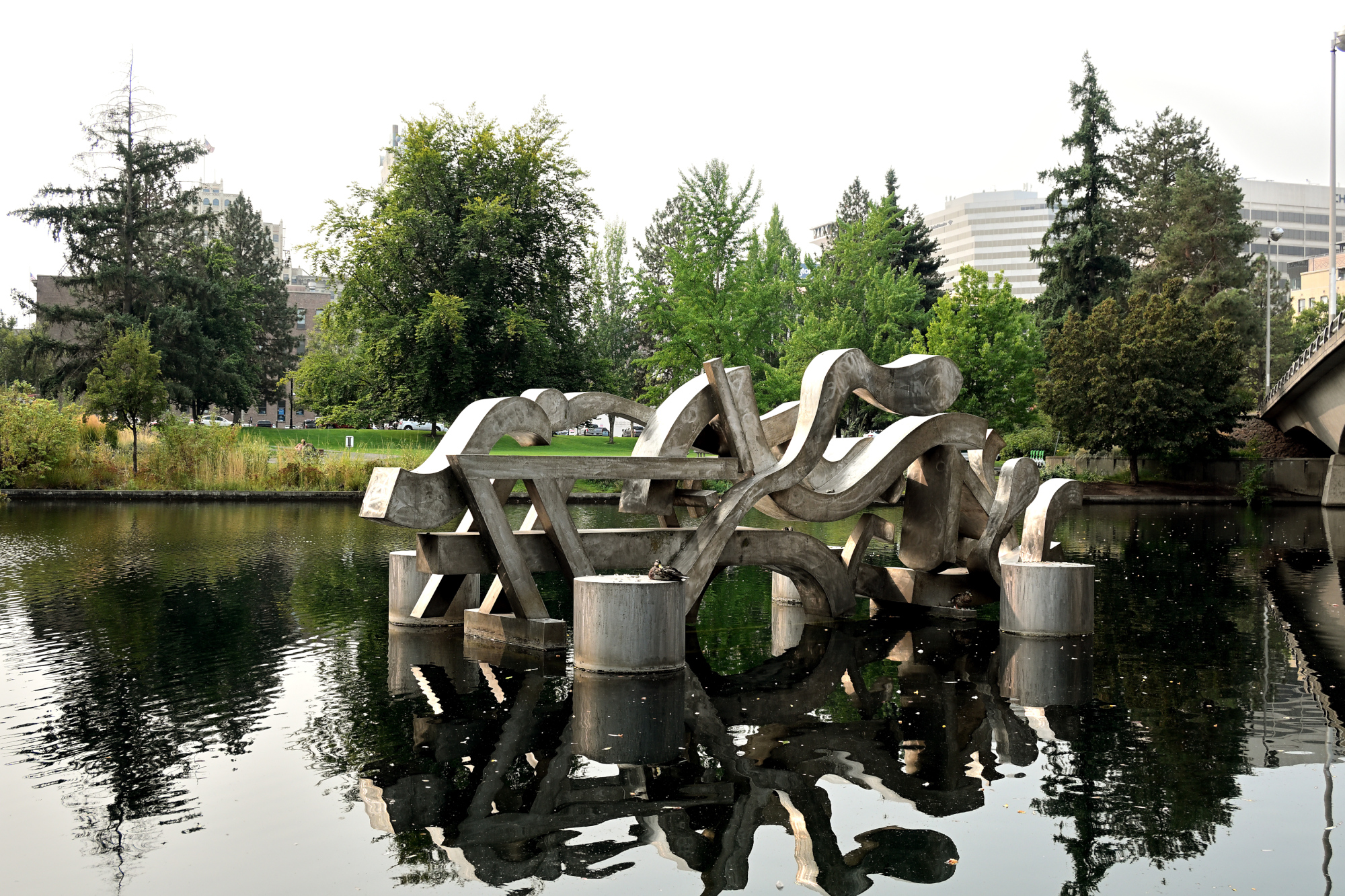
And next to it, The Great Northern Clocktower
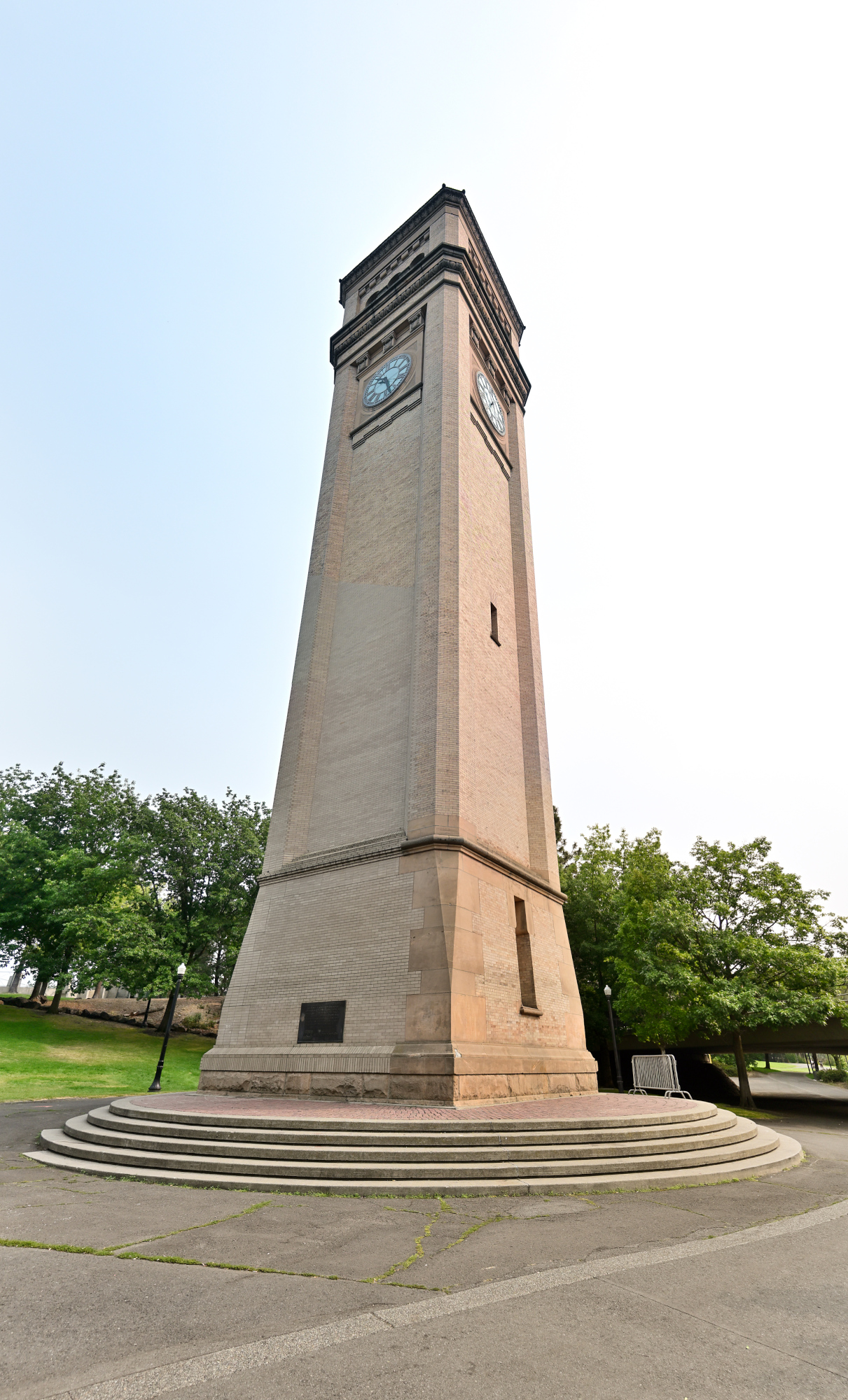
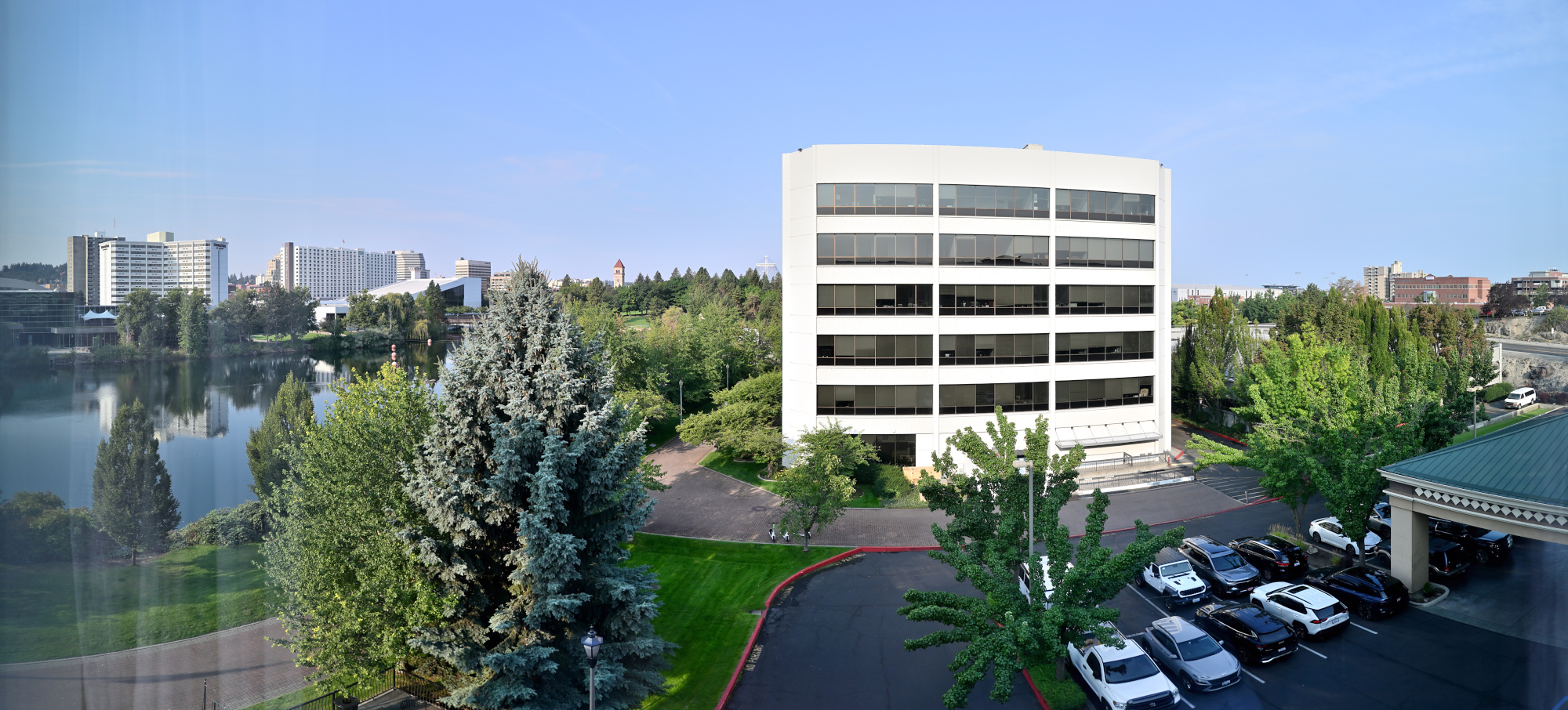
View from a nearby Hotel to the Riverfront Park
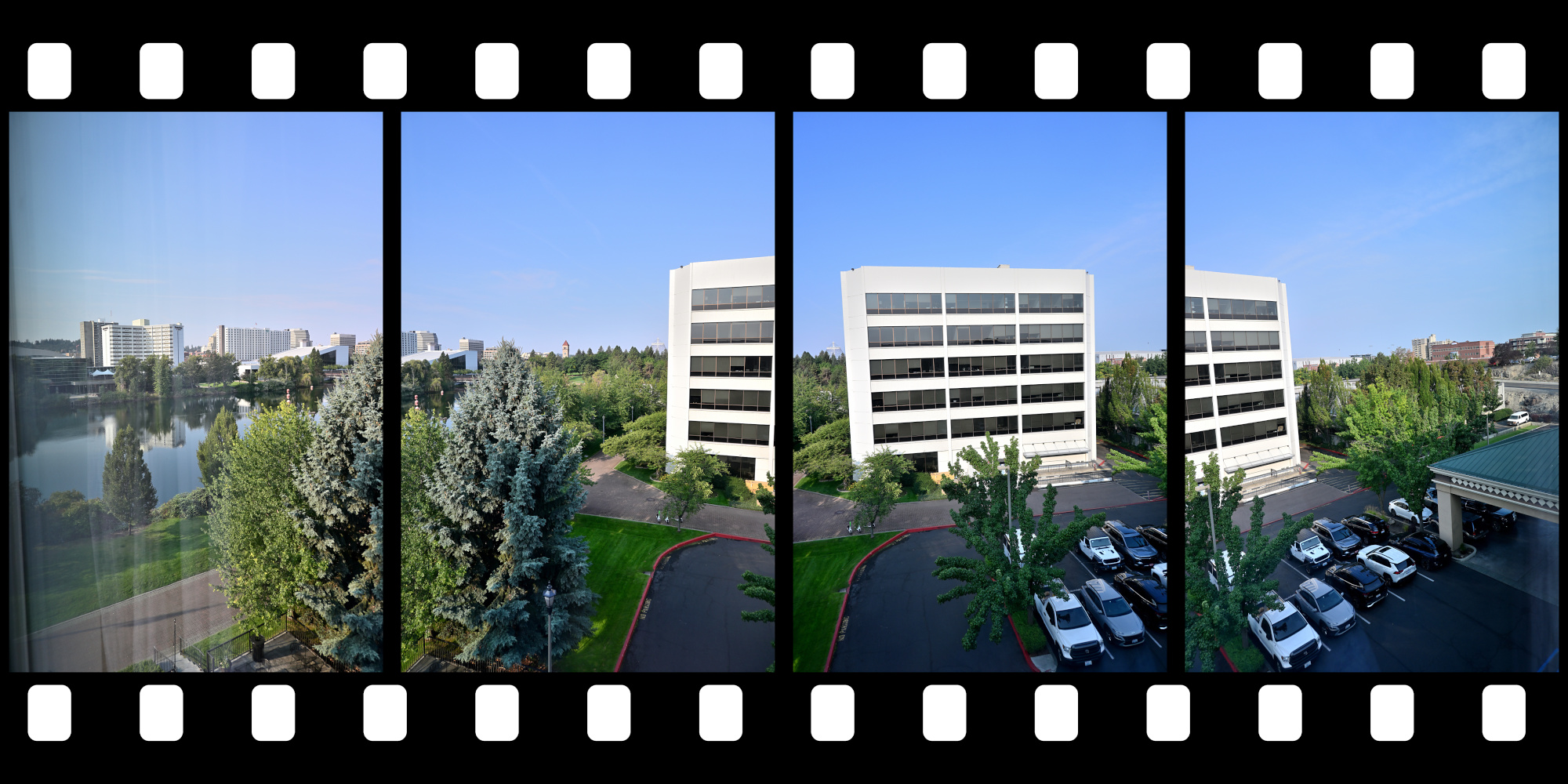
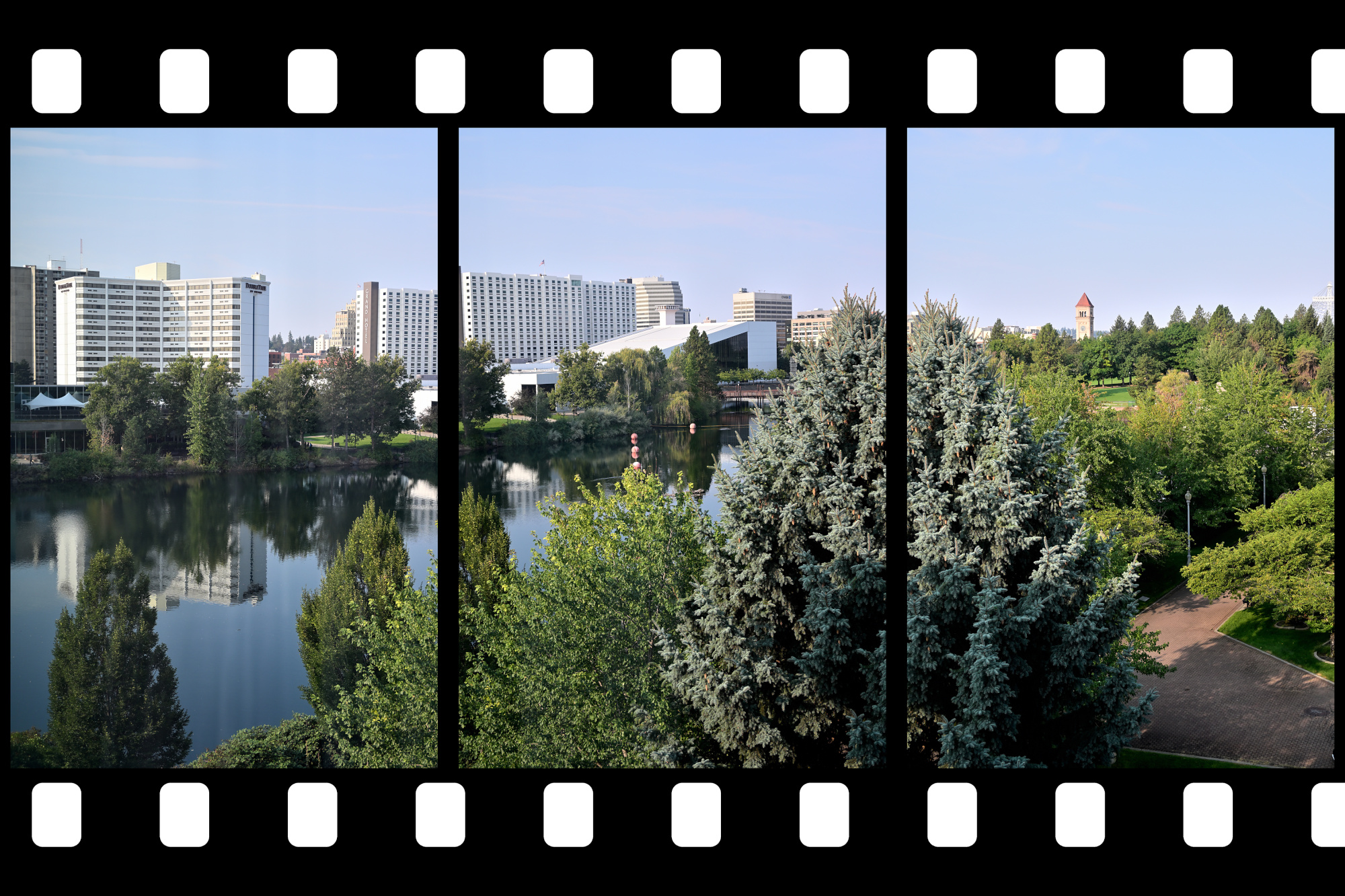
This particular panorama proved trickier than expected. Without a tripod, aligning the frames by hand made it difficult to maintain precise rotation around the nodal point, which is essential for perfect stitching. I even added an extra frame to help with stitching, but small imperfections remain. Still, the result captures the essence of the scene, even if a few pixels had a mind of their own. Sometimes, the story behind the image is part of the image itself.
Interactive Panorama Spokane Pavilion
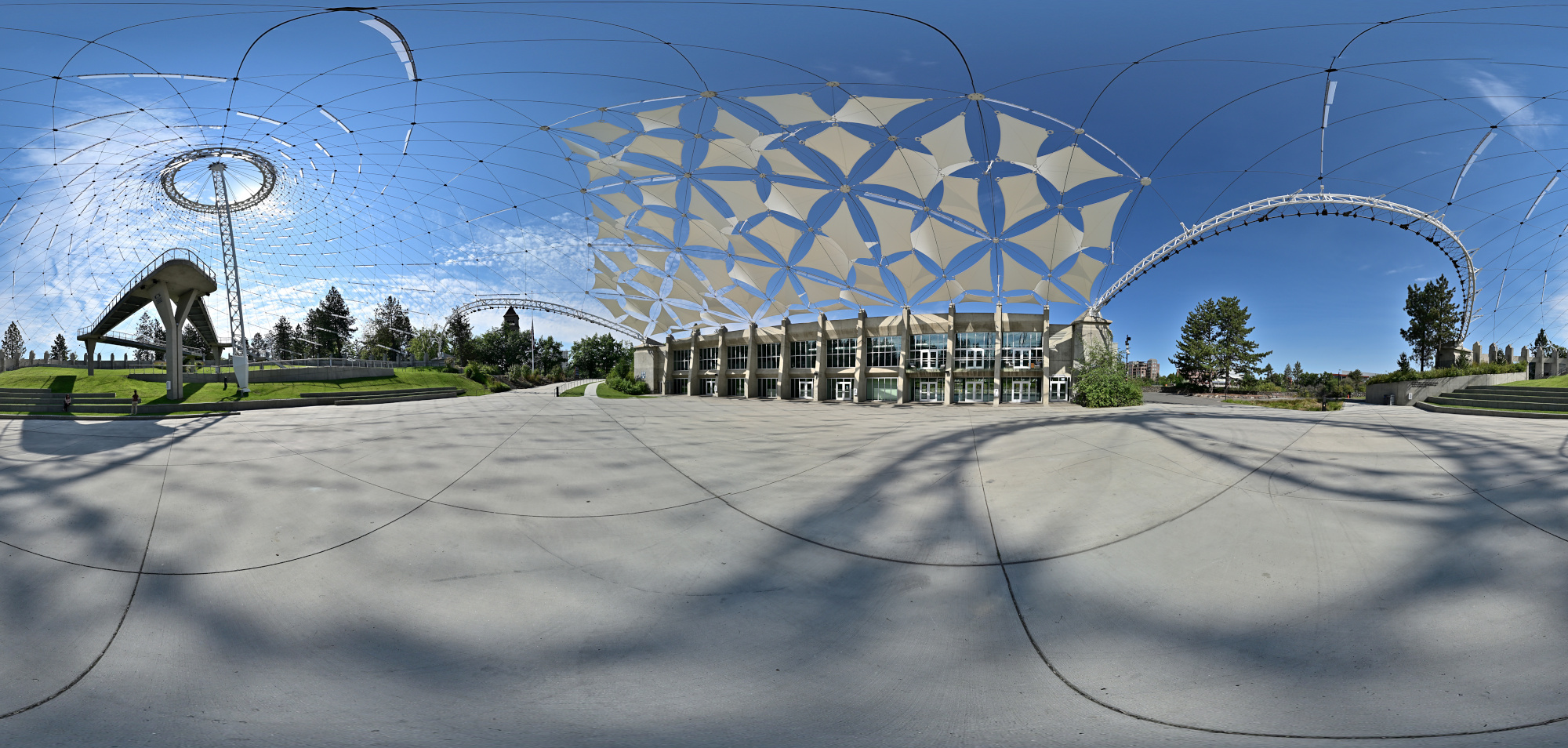
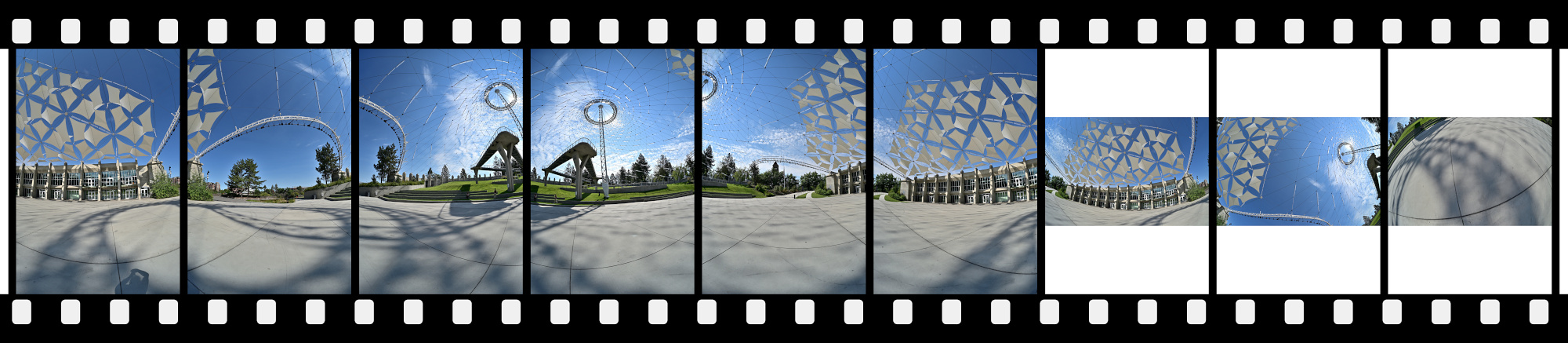
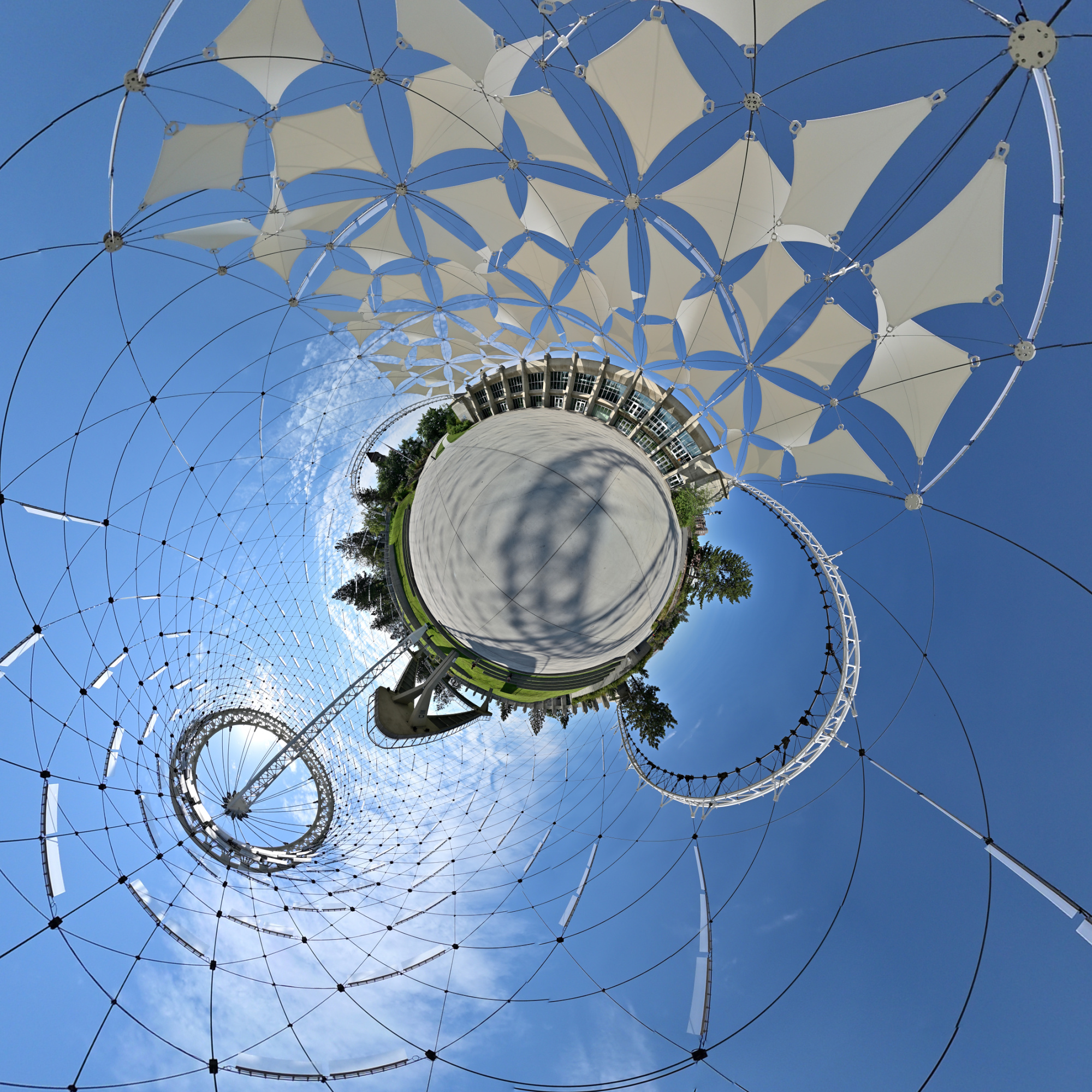
Interactive Panorama King Cole Woodbridge
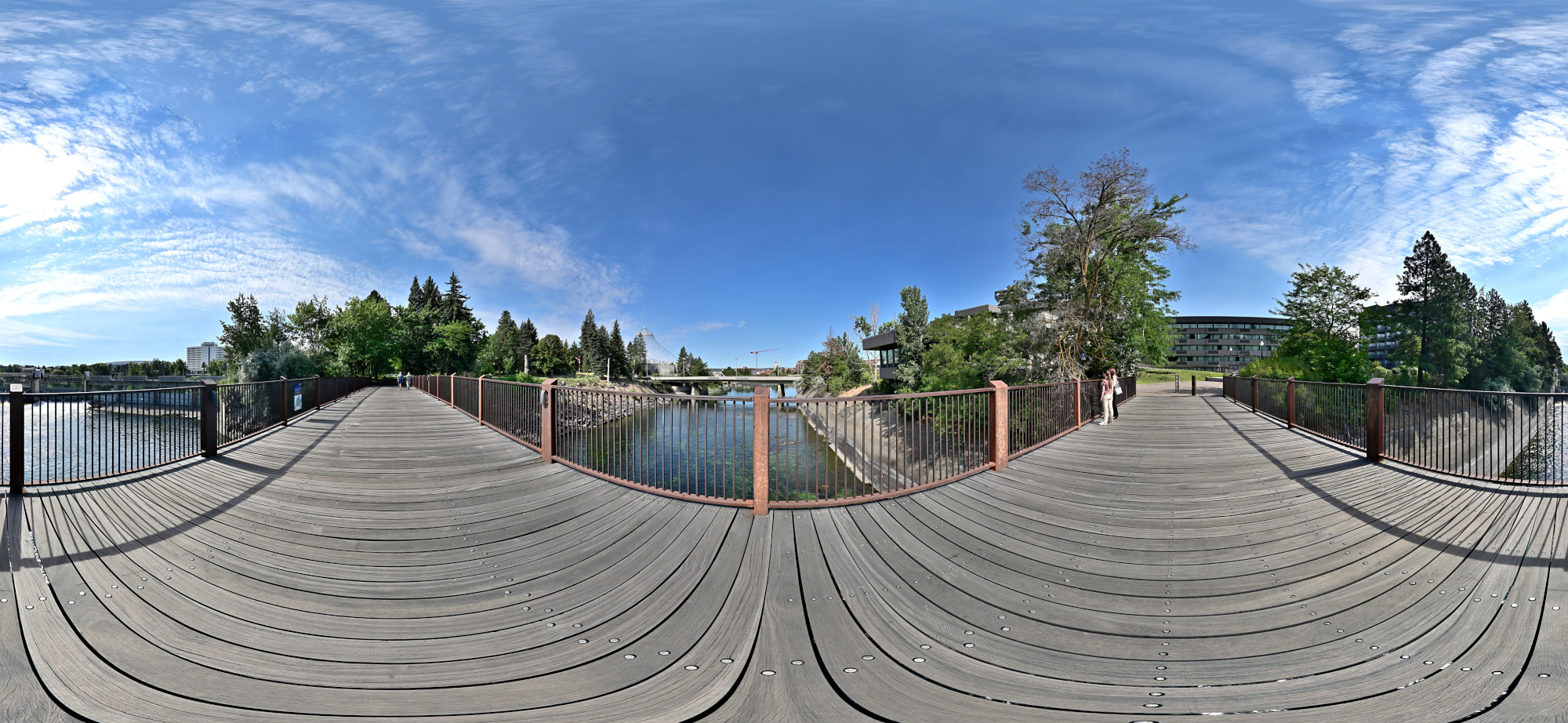
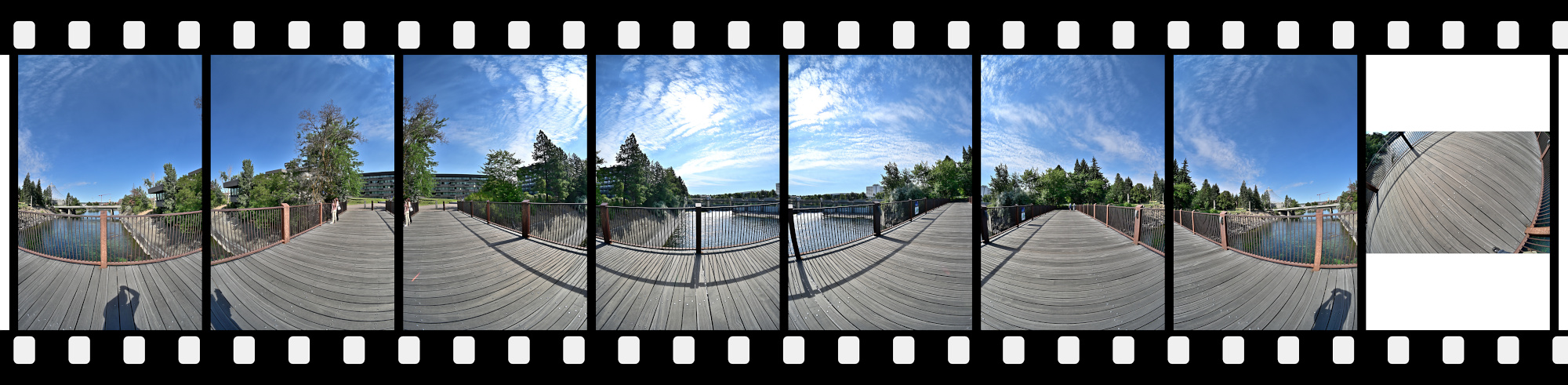
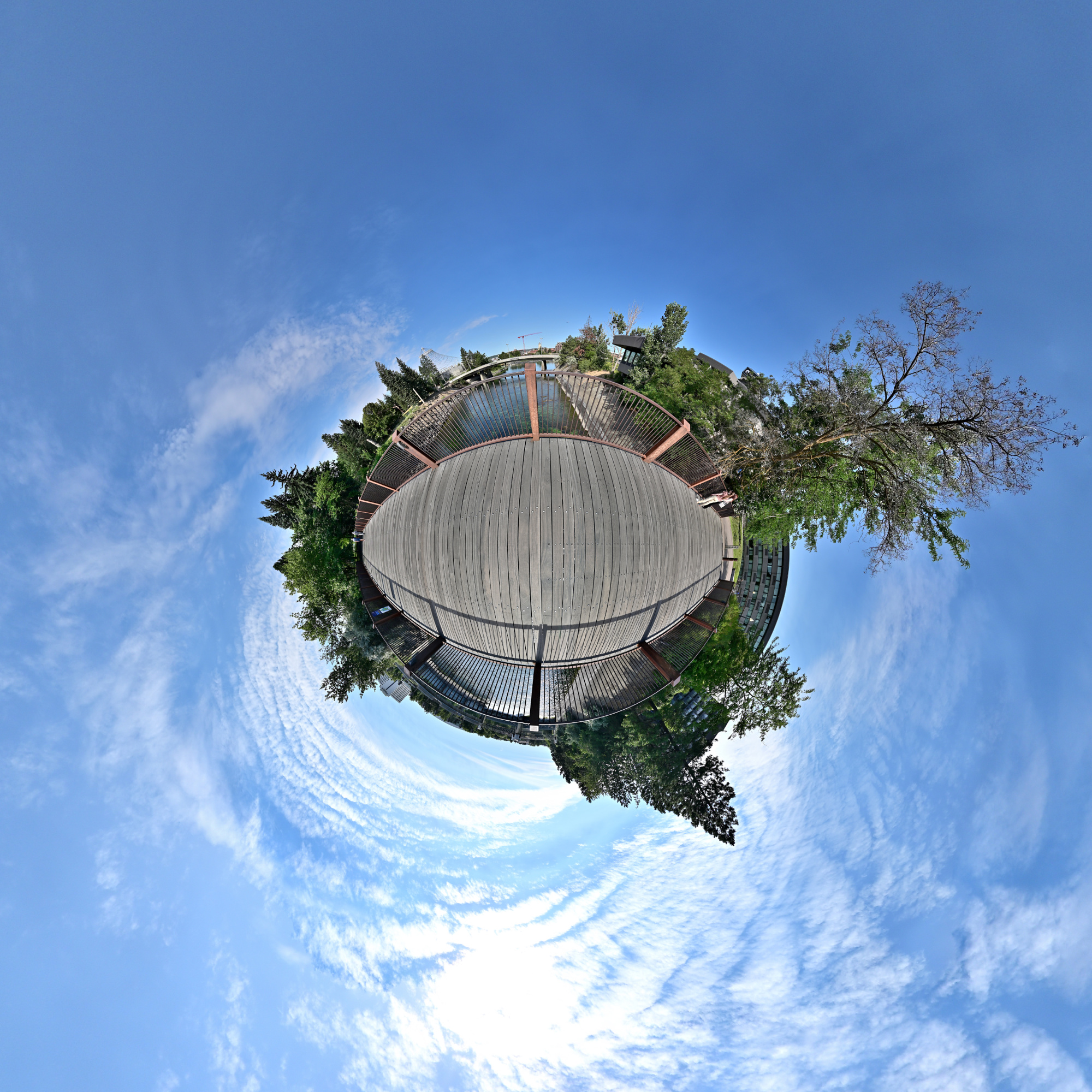
Interactive Panorama Spokane Falls Brücke

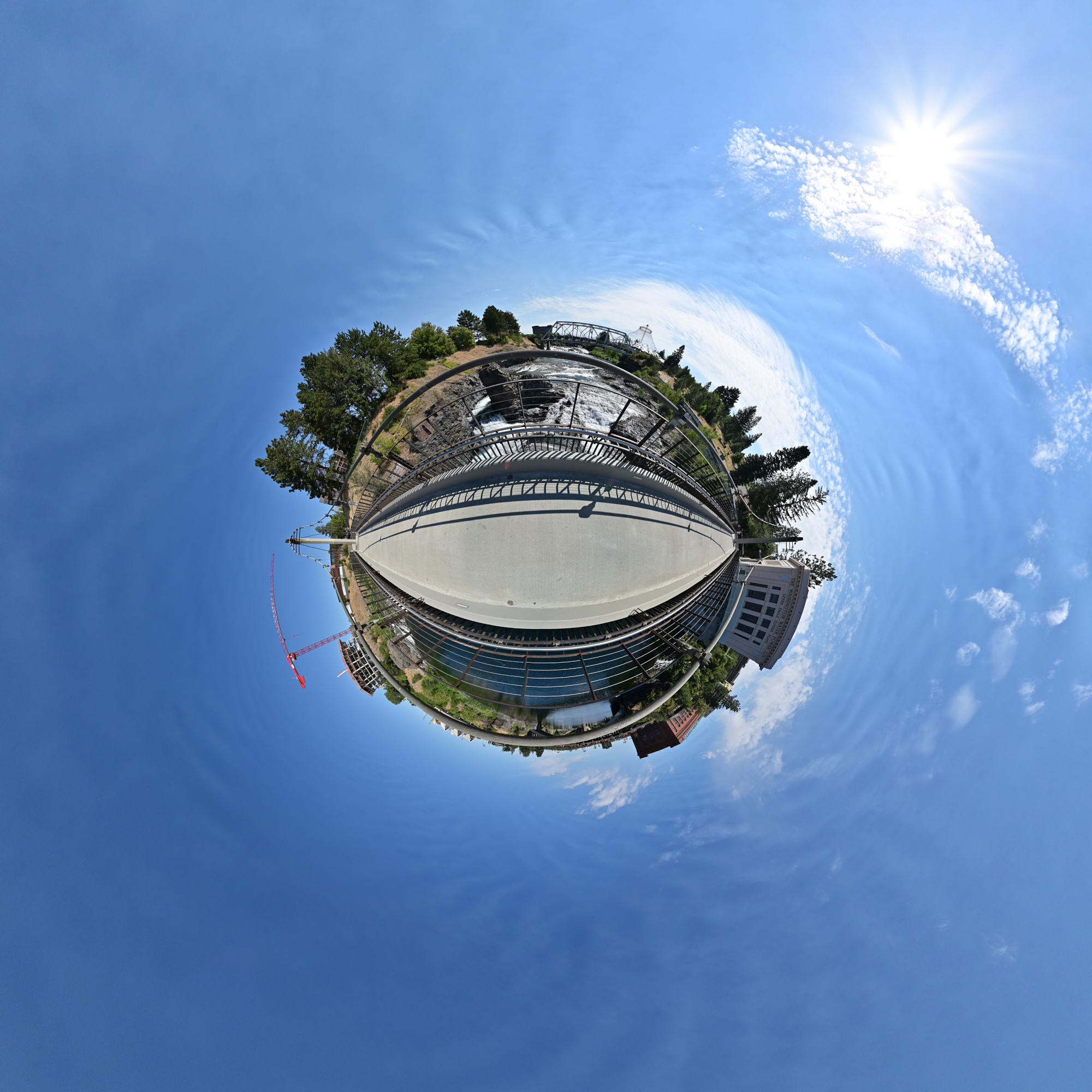
🌊 Spokane River
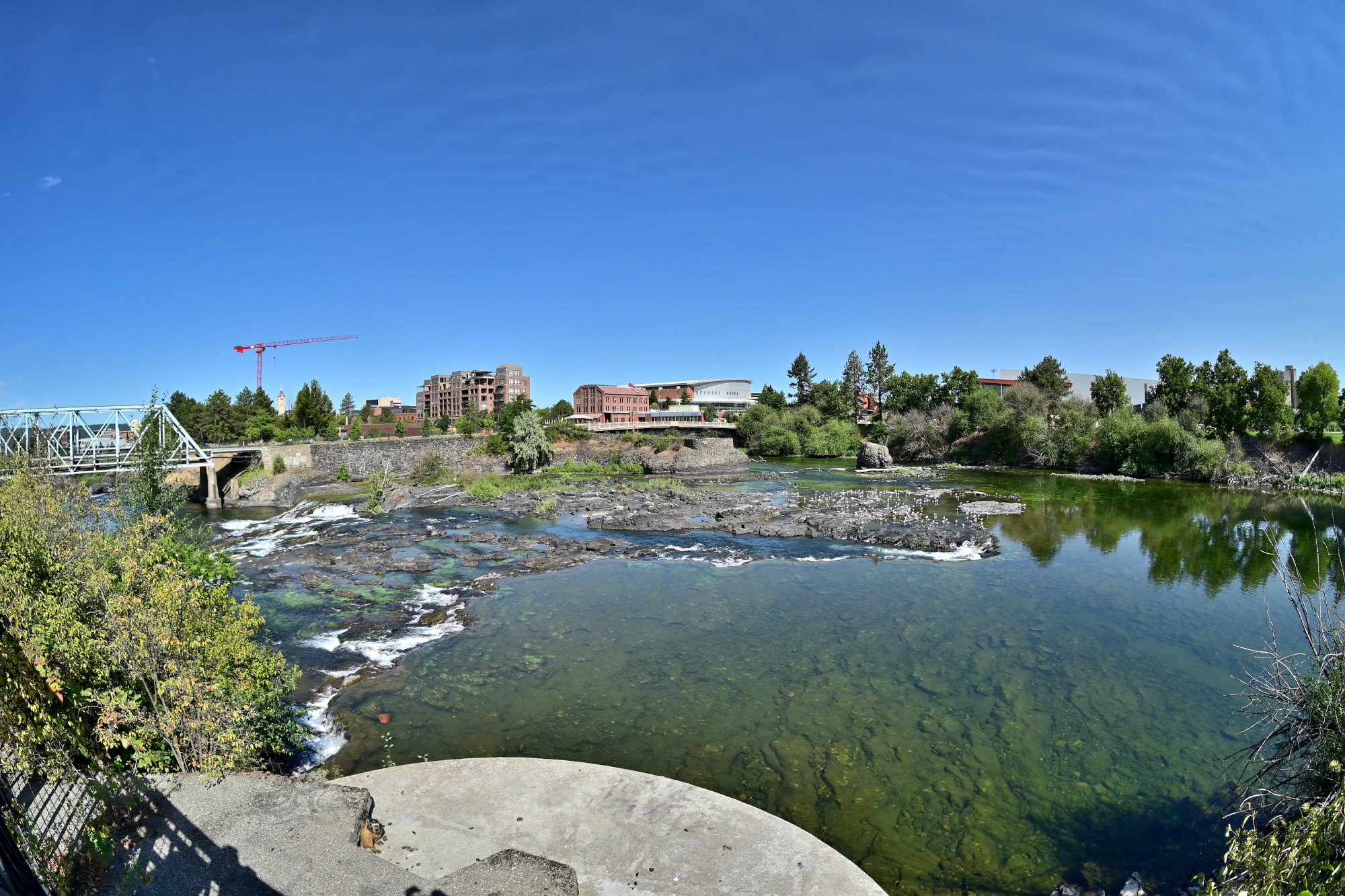
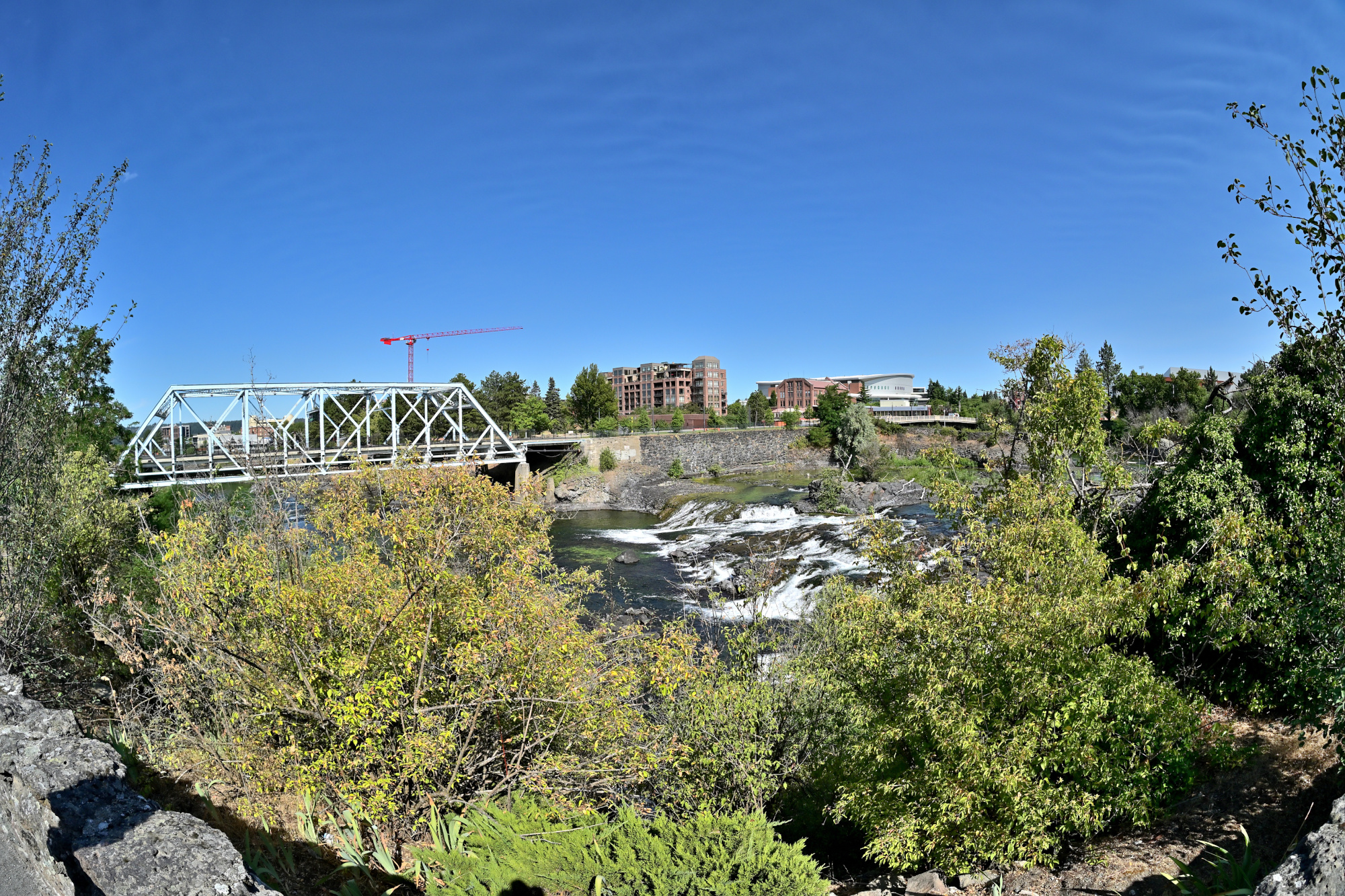
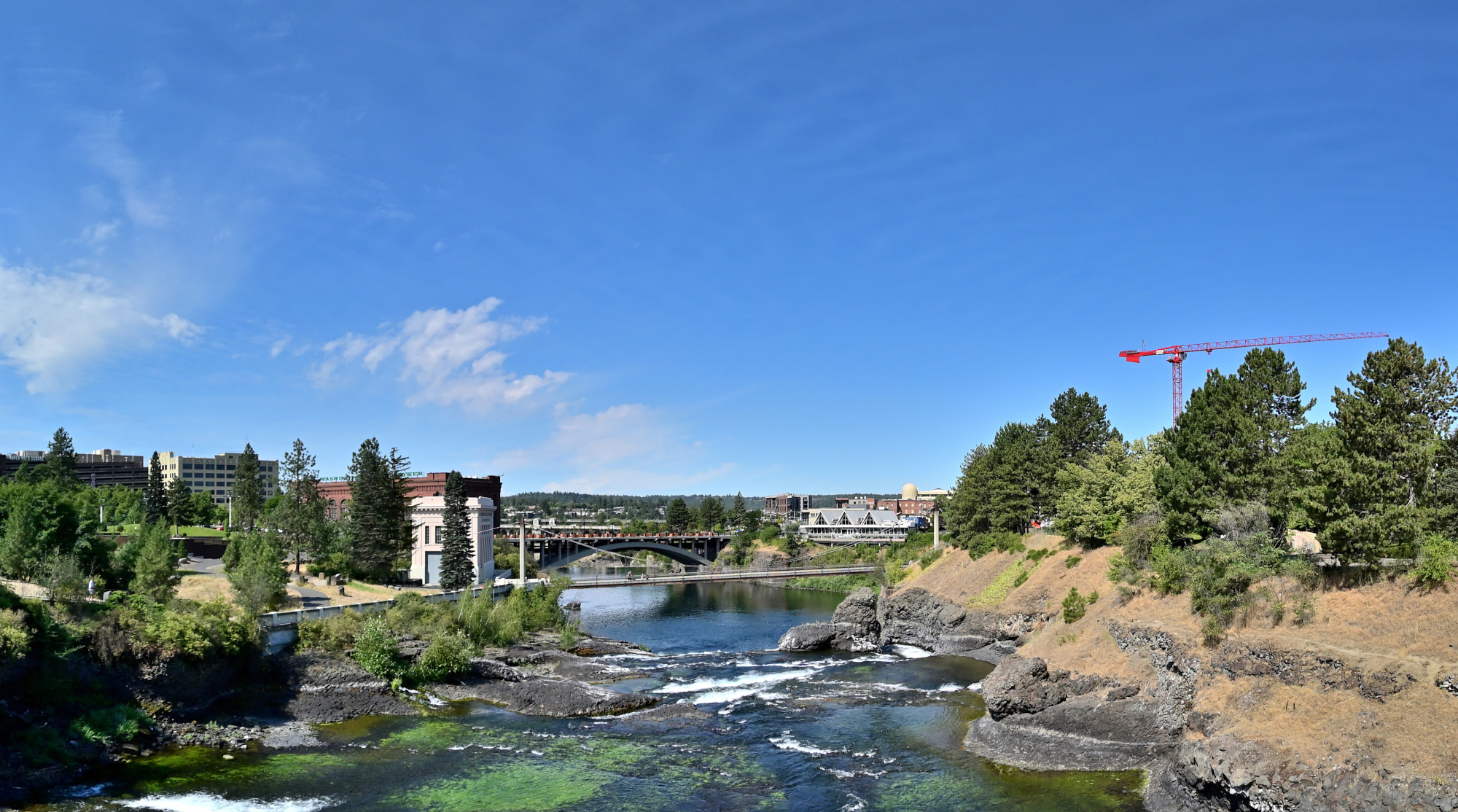
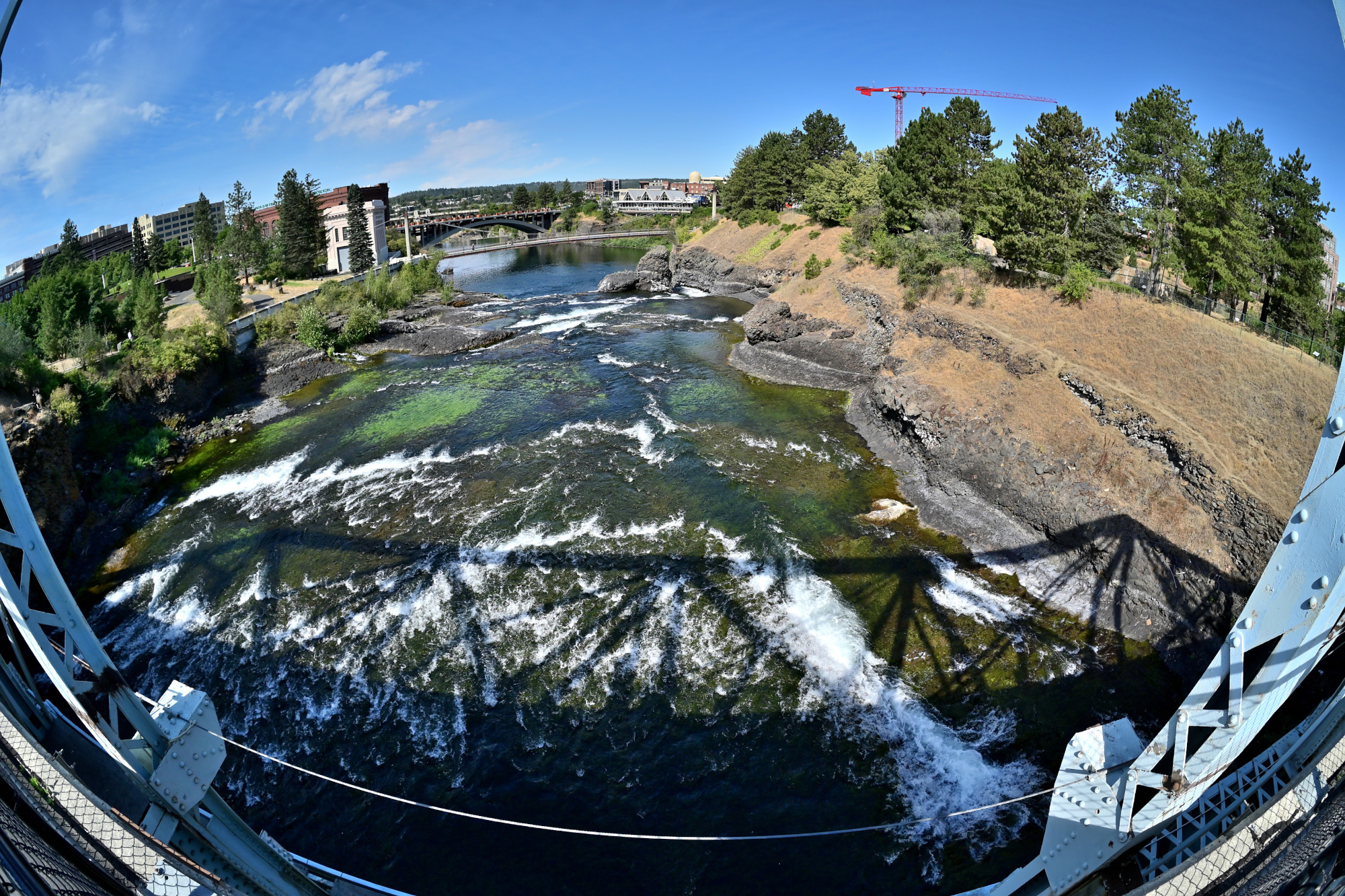
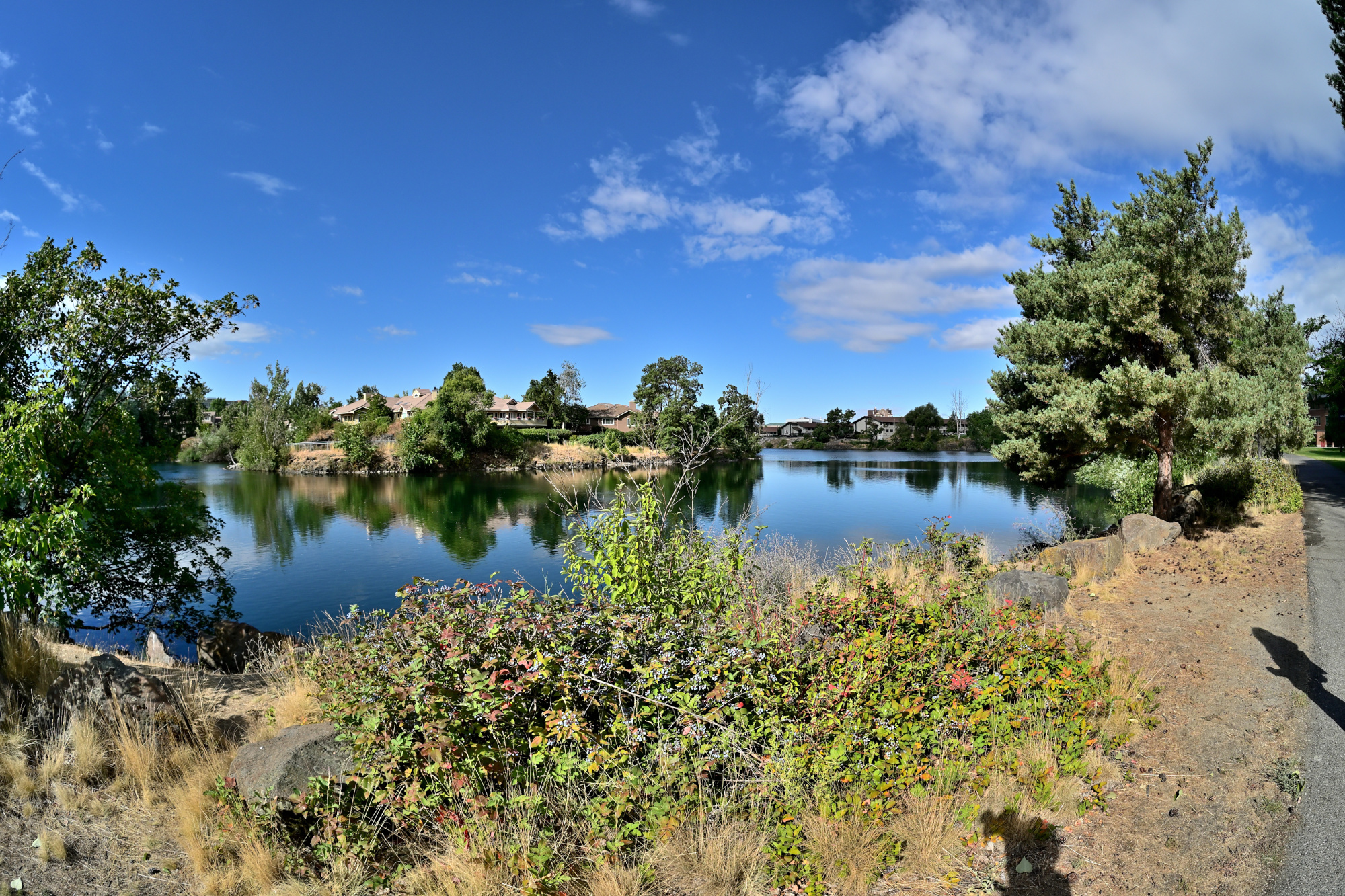
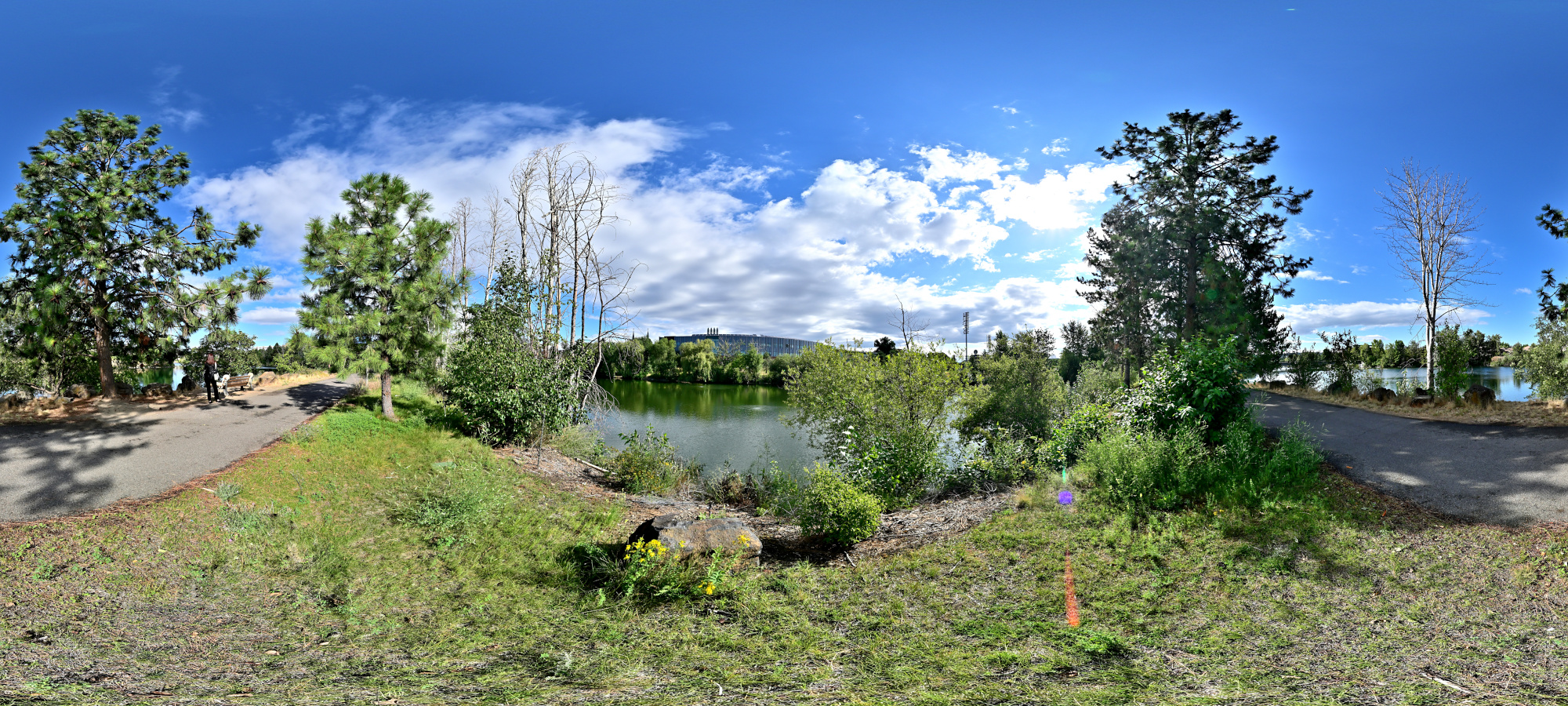
The Spokane River winds through the city, carving its path through stone and story alike. Along its banks, trails, bridges and parks invite exploration. The panoramic images captures the river's flow near one of its quieter bends, where reflections of sky and trees ripple across the surface.
Framed by Steel: A View Through the Bridge
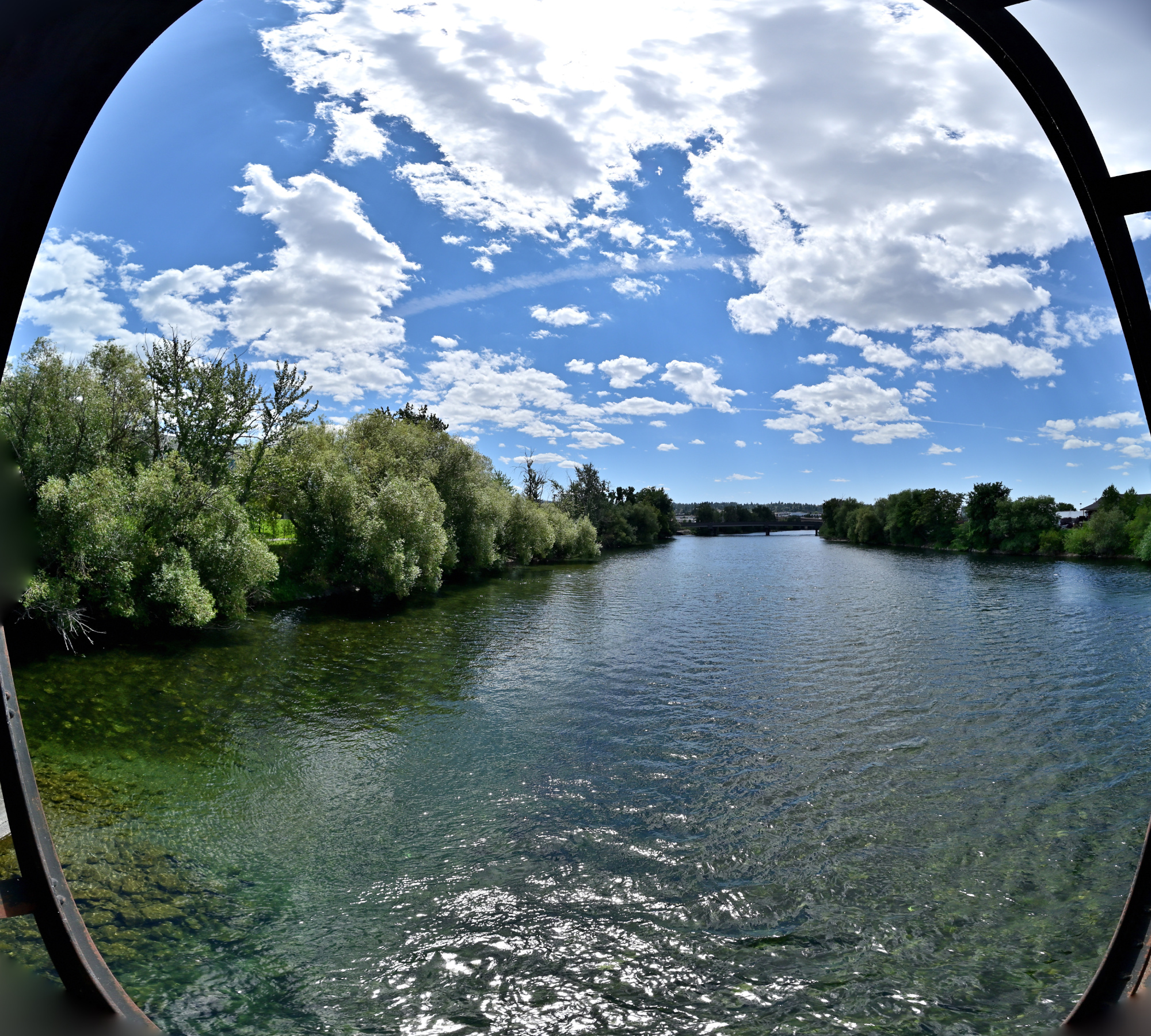
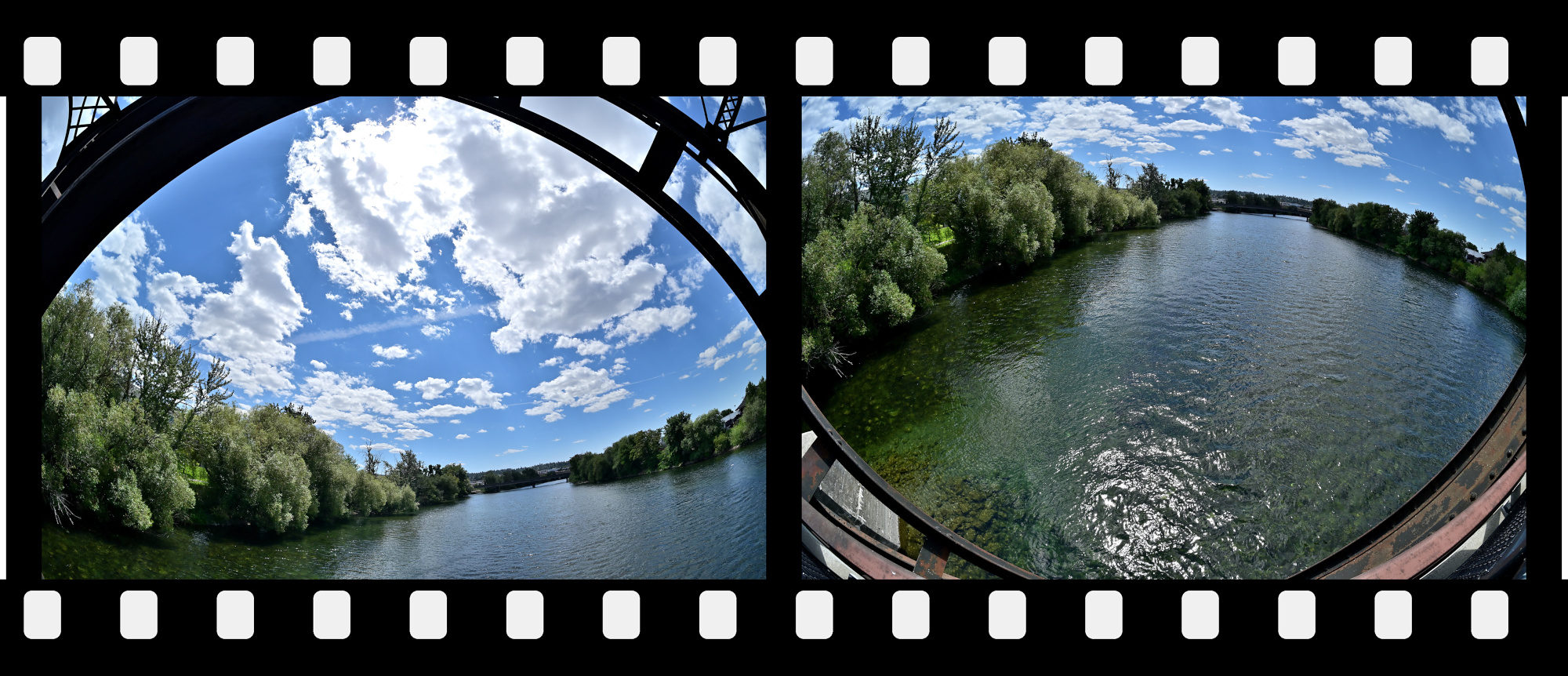
River bend
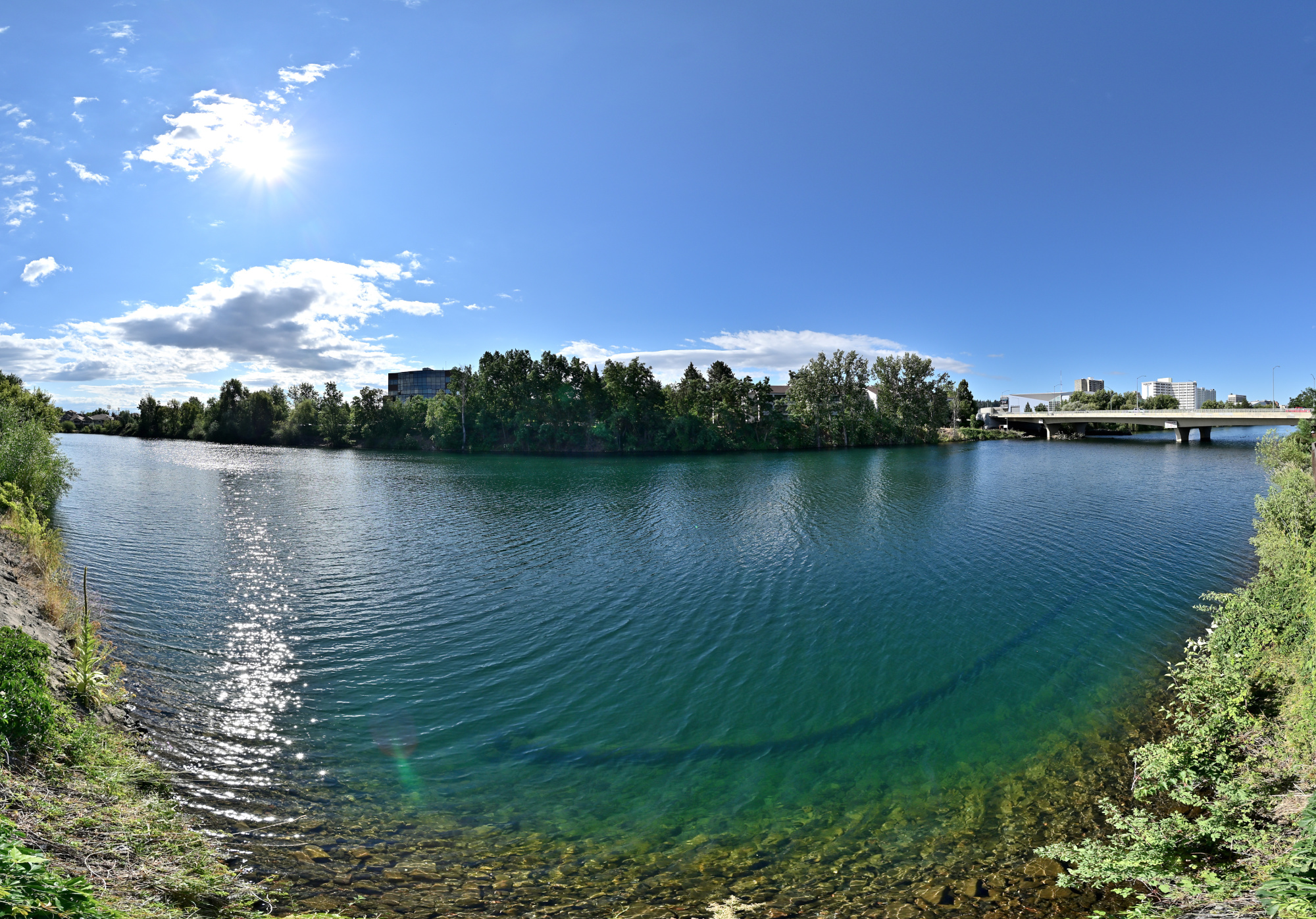
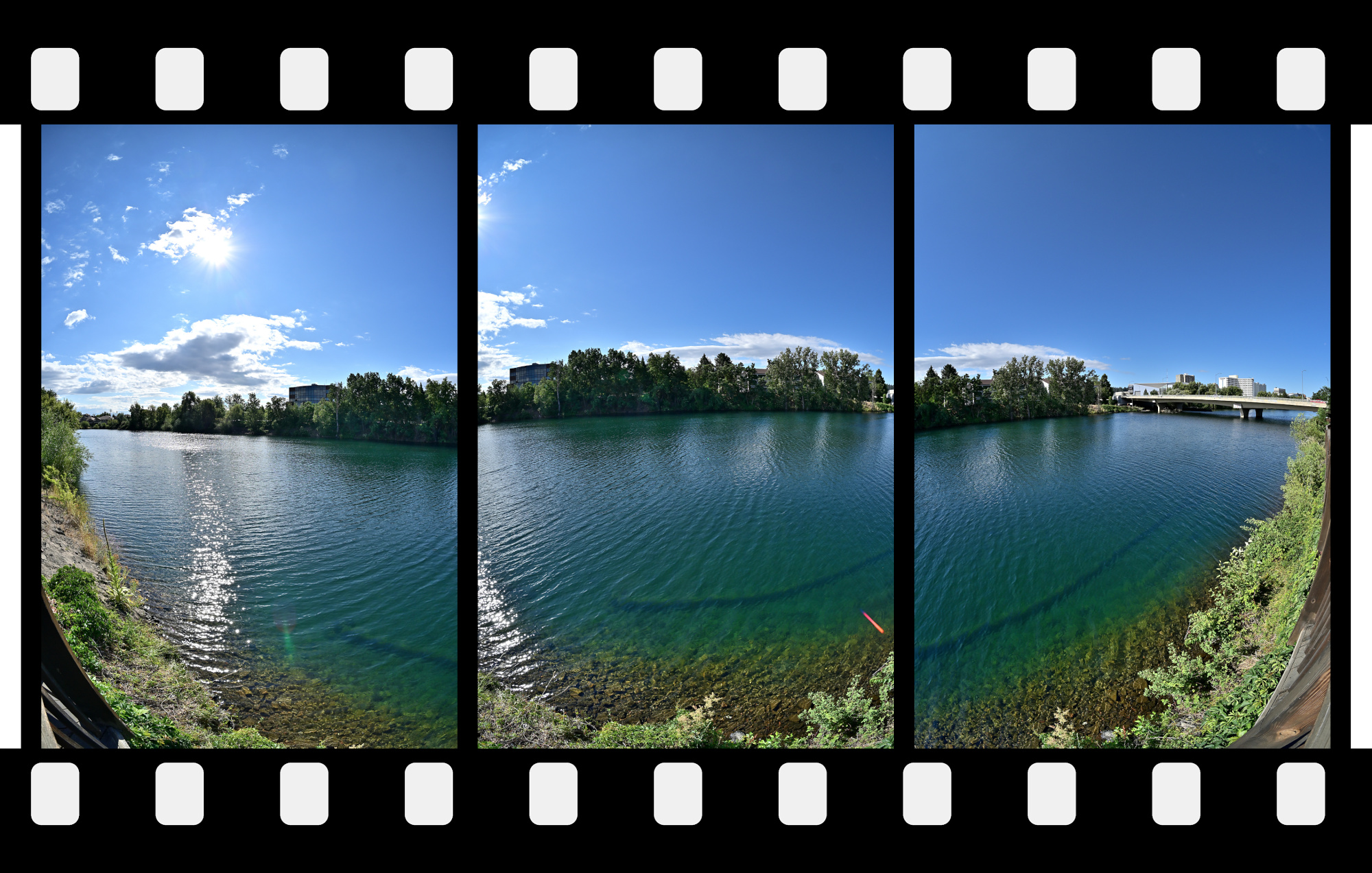
Sunlit Walk Along the Water
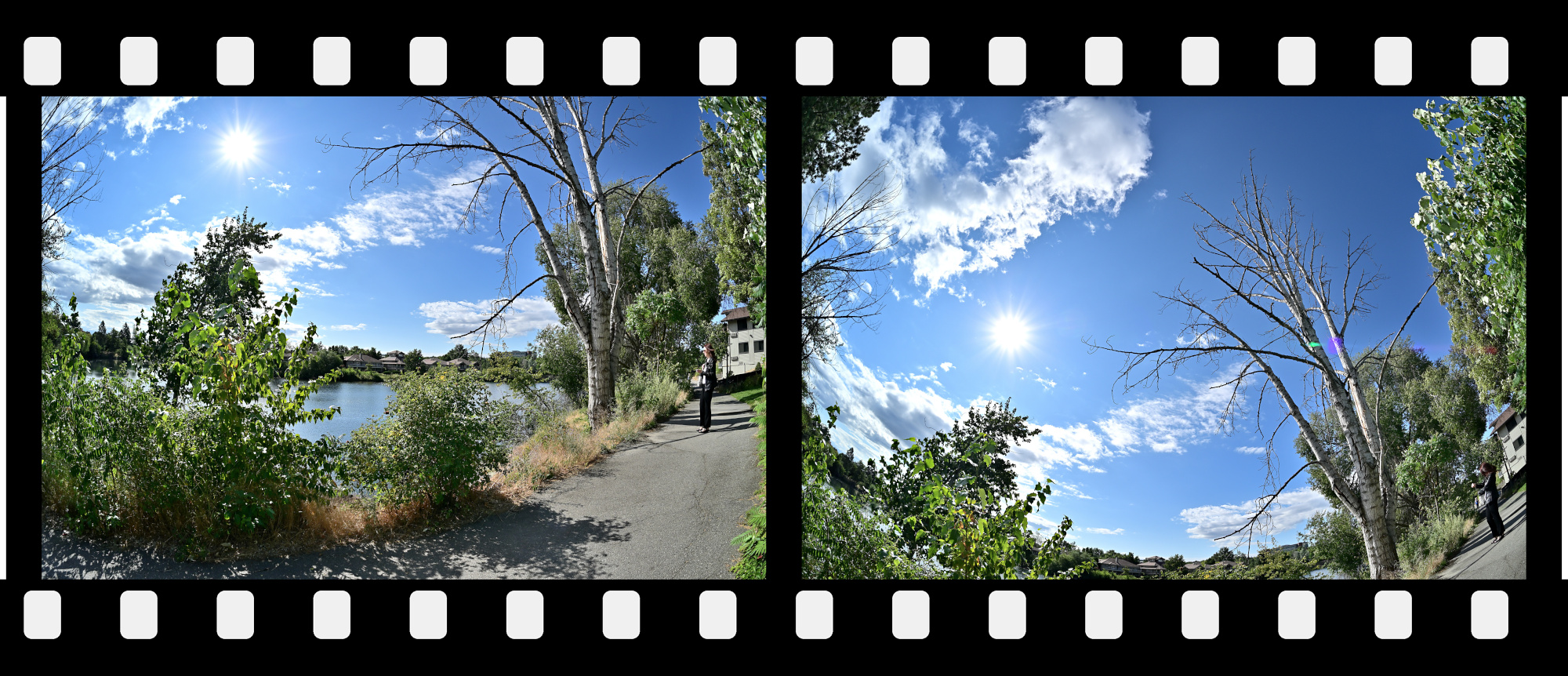
More Pictures Along the Riverside
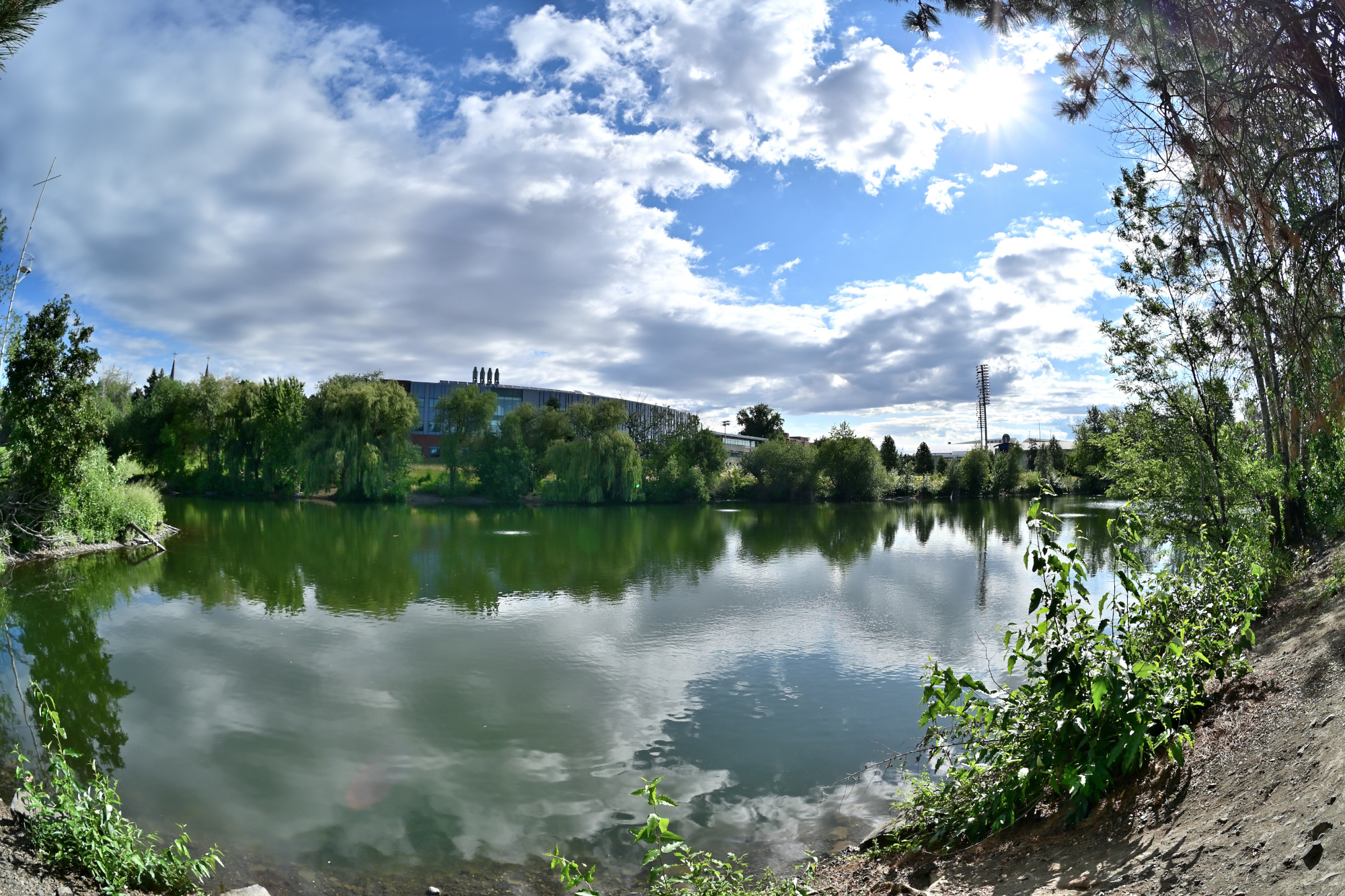
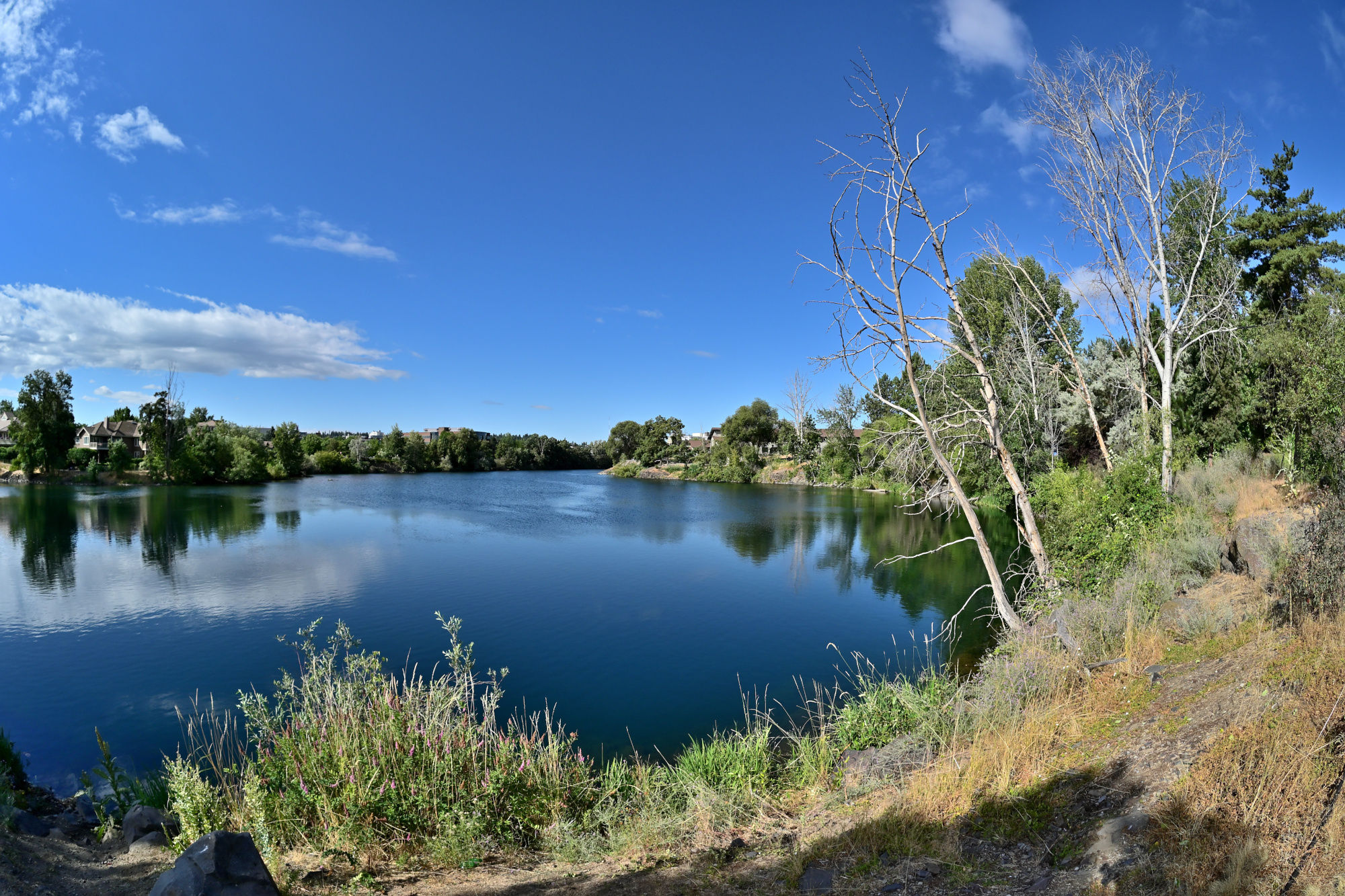
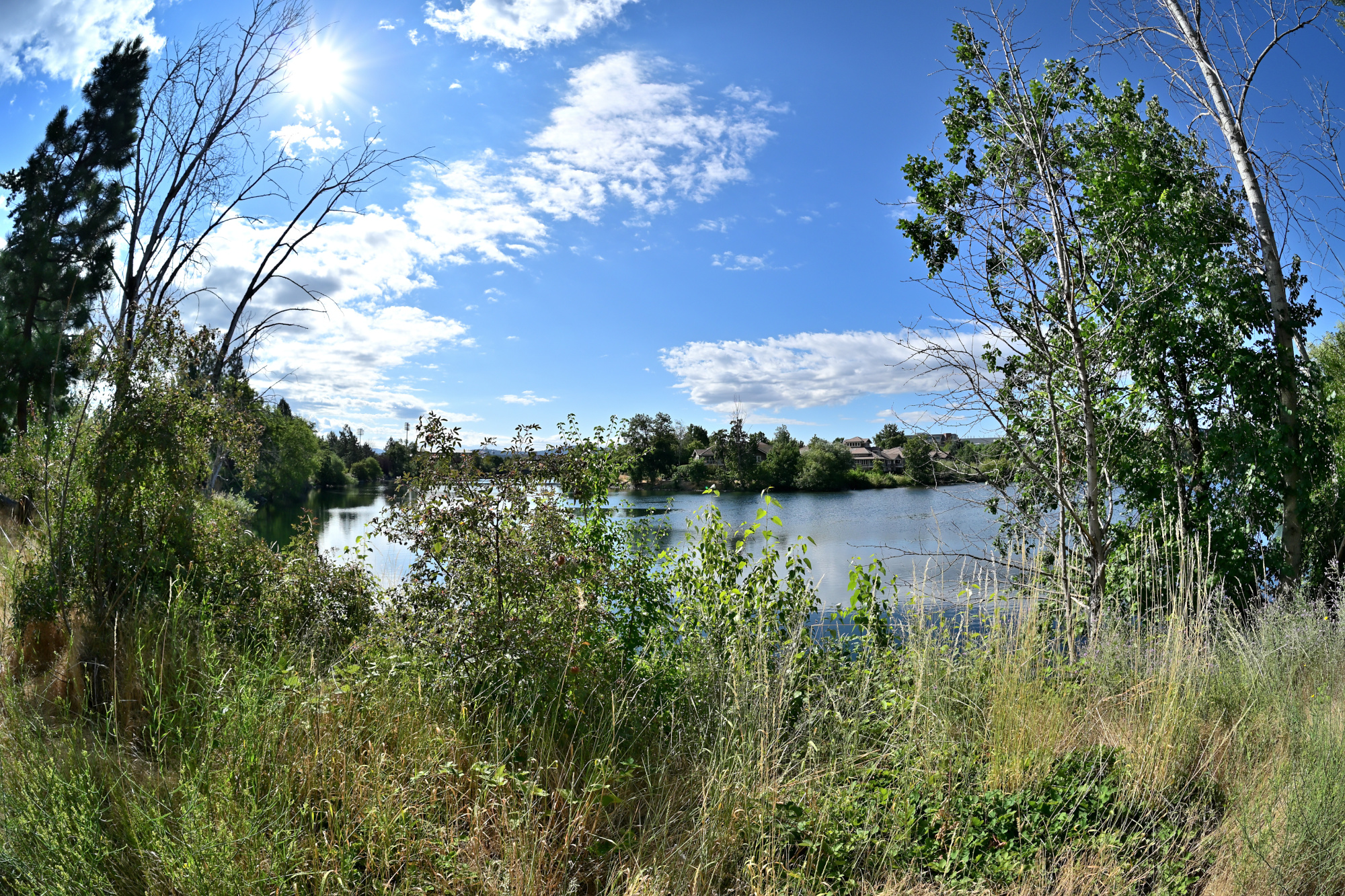
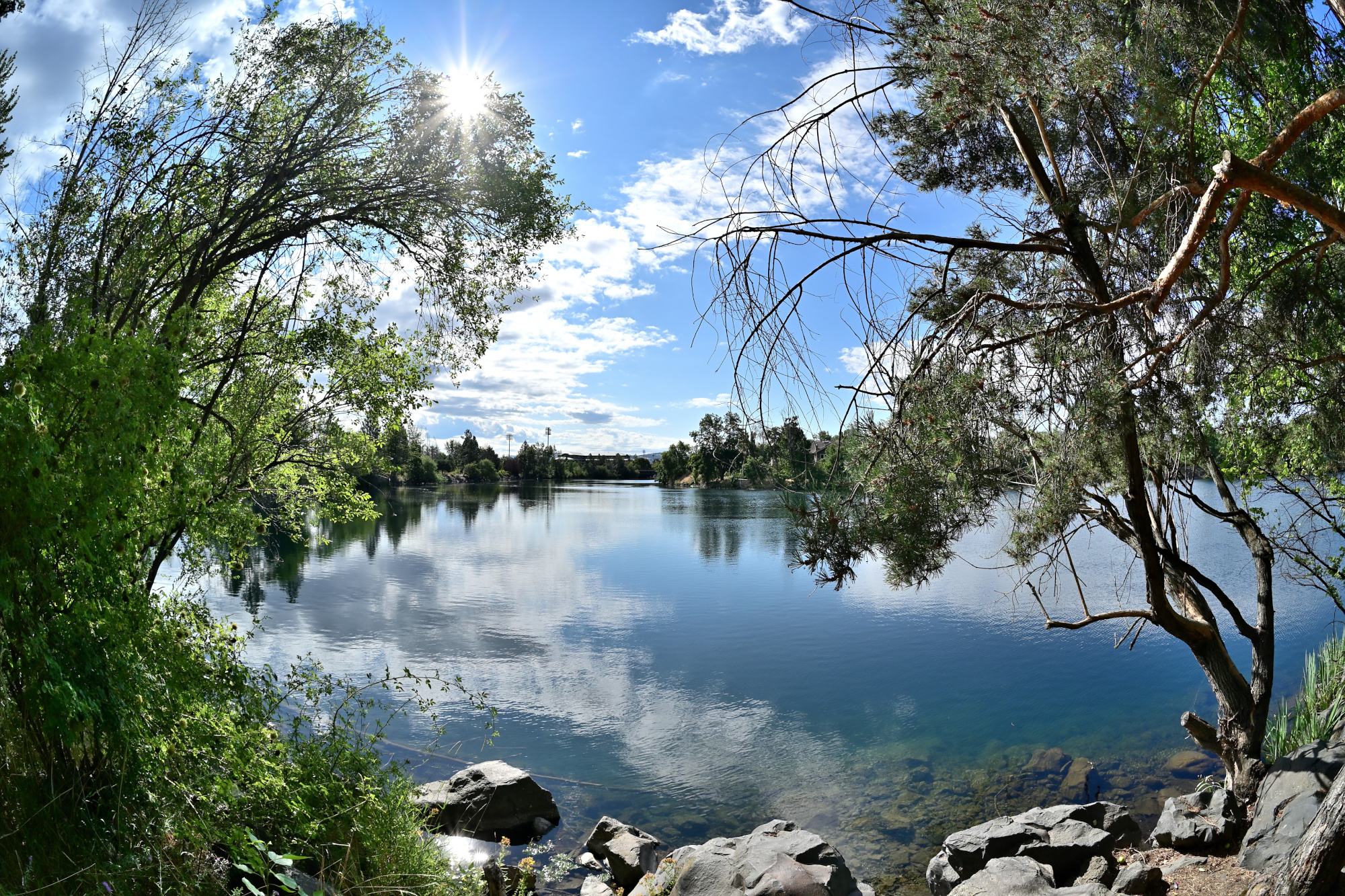
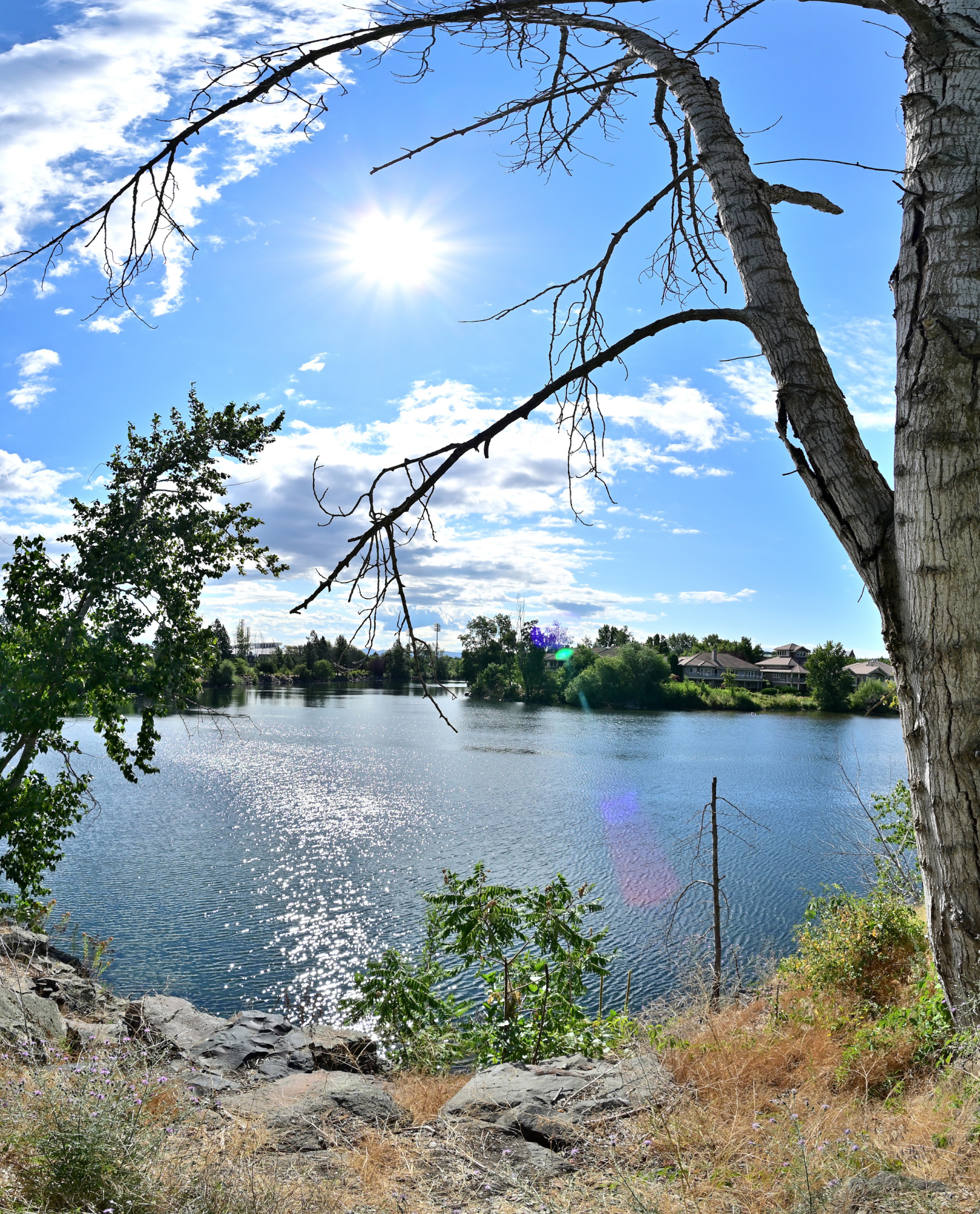
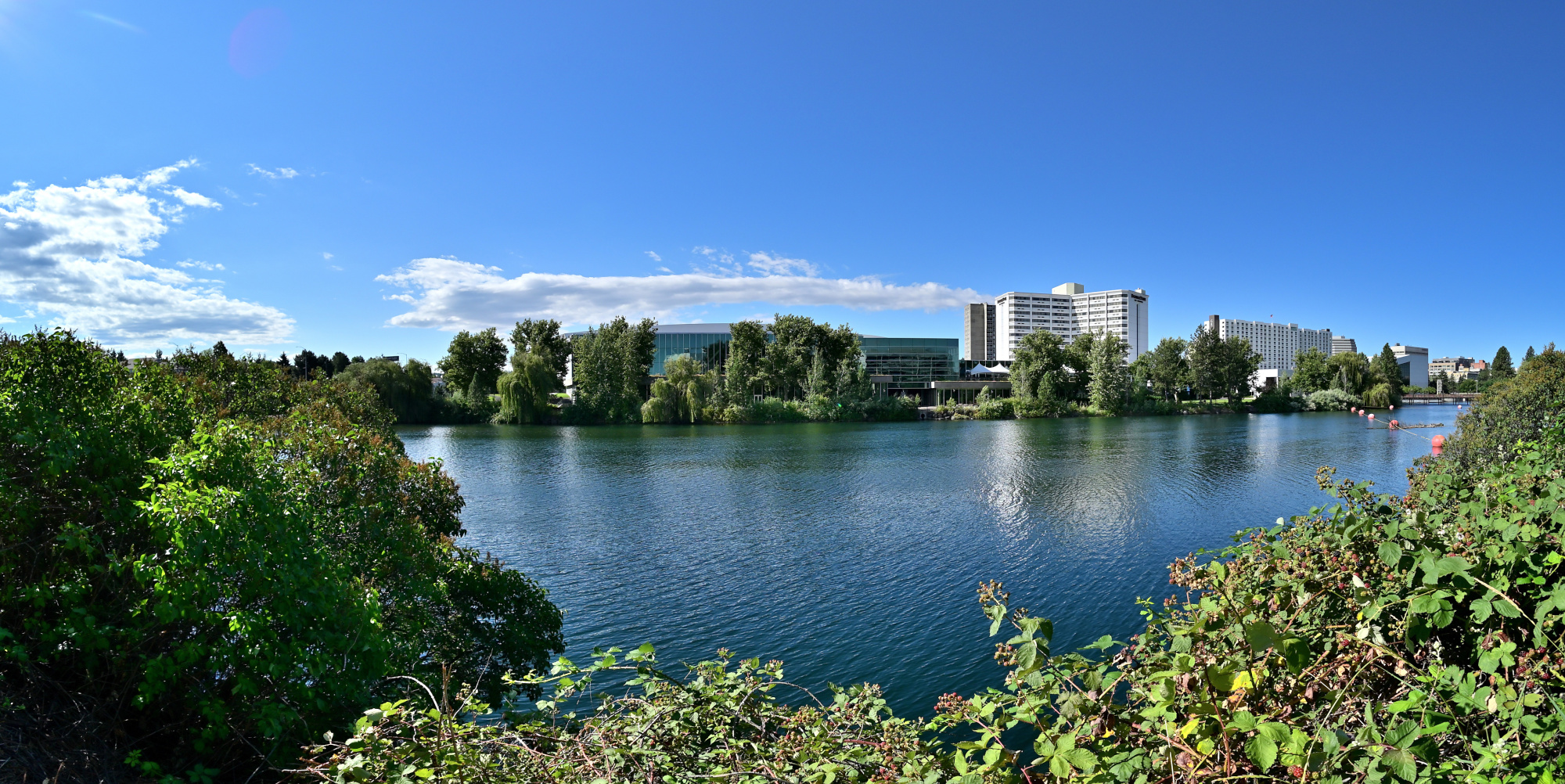
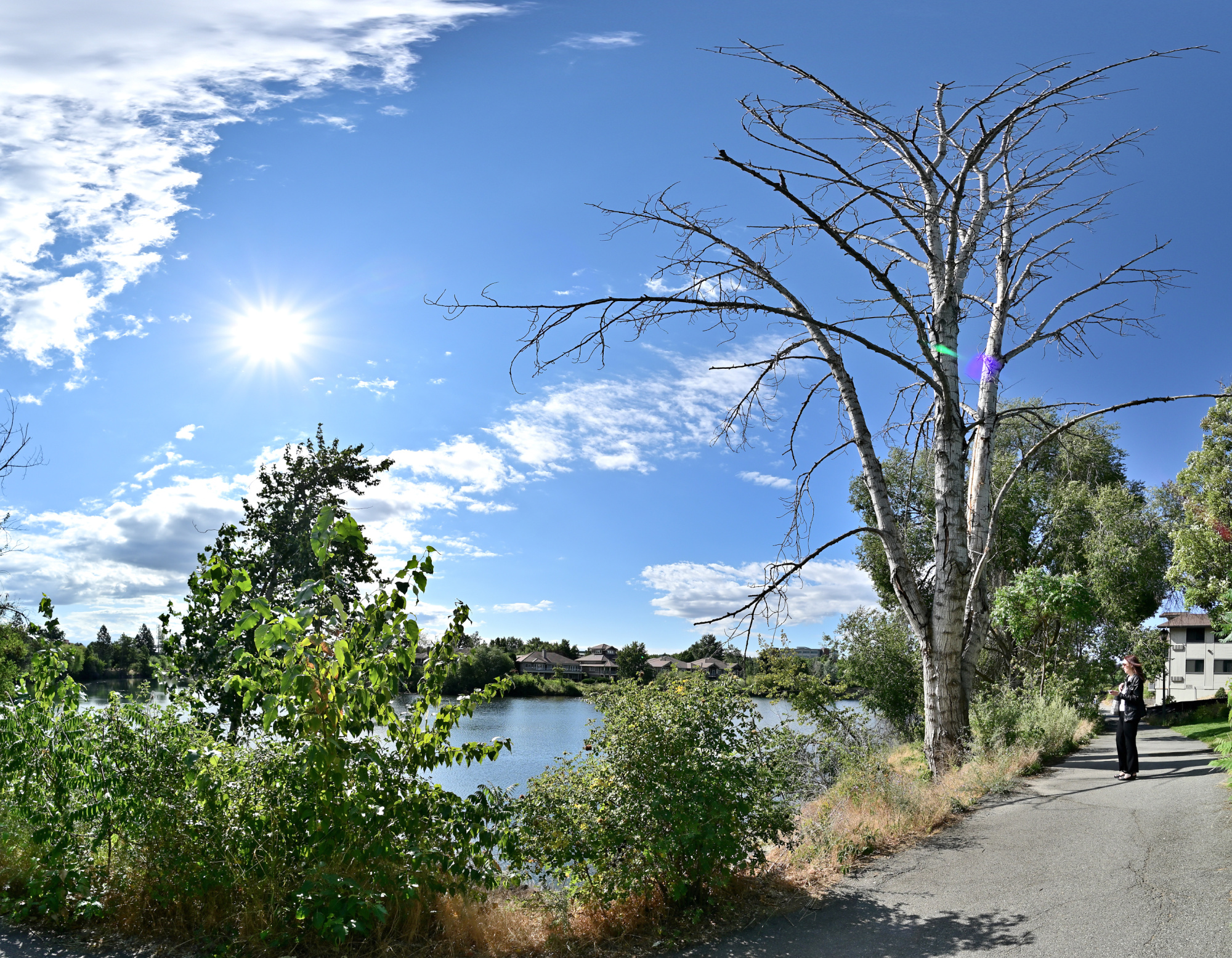
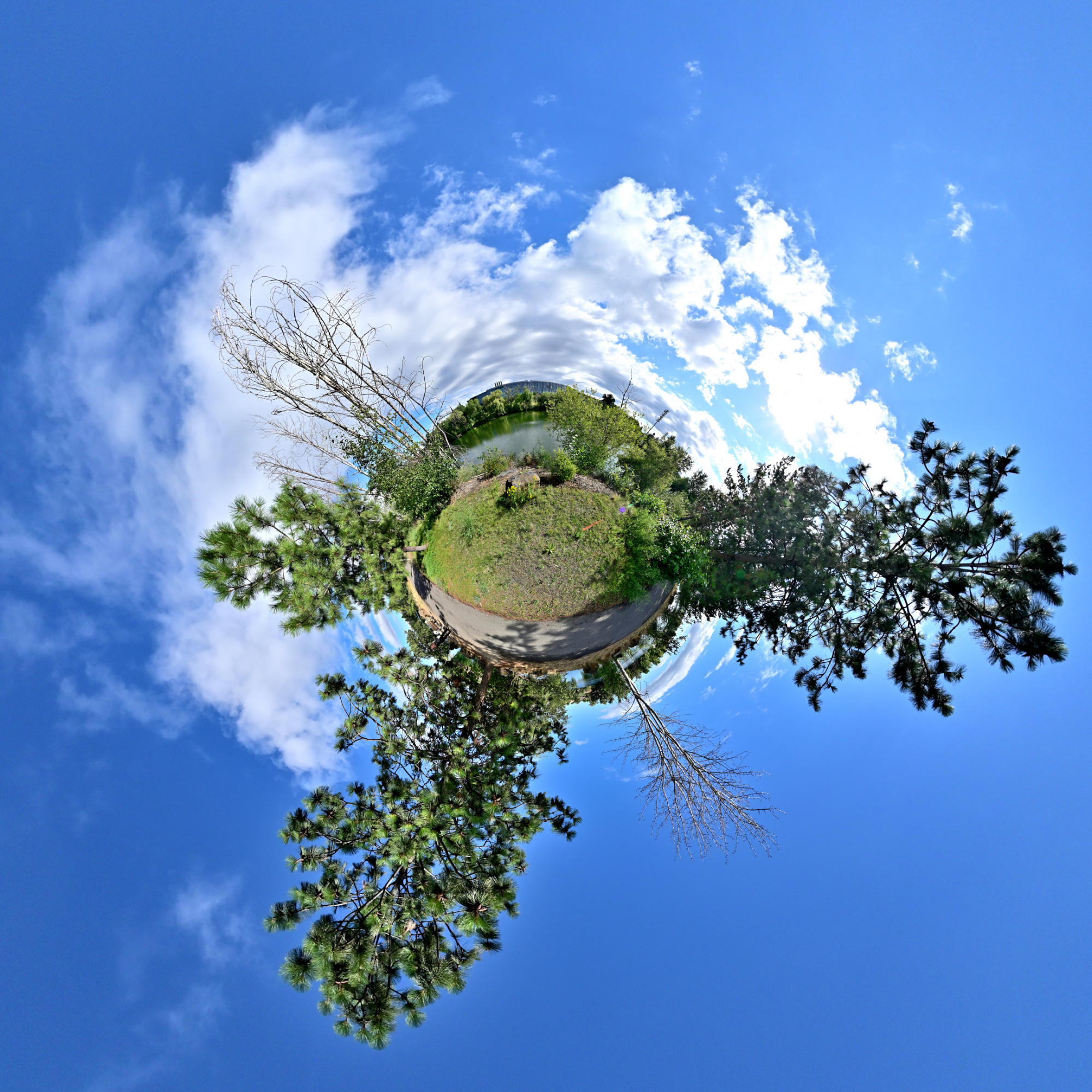
The World Wide Panorama contribution for the event 'Why'
A single dead tree stands between the walkway and the riverbank. Its bare branches reaching skyward in contrast to the lush greenery around it.
Why did it die? Was it disease, drought, or simply age?
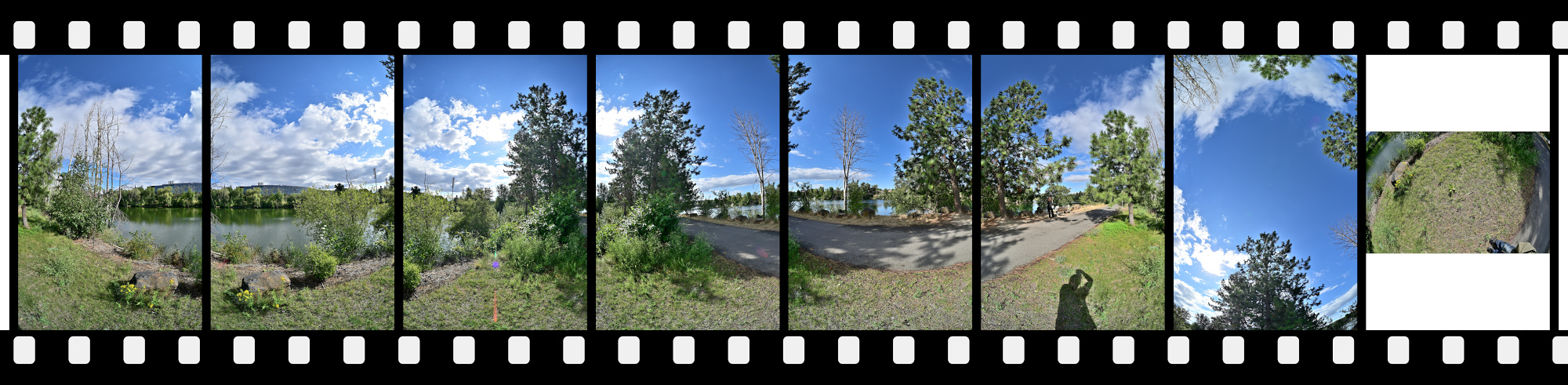
Its presence adds a quiet tension to the scene, a reminder that even in places full of life and movement, stillness and decay have their place too.Interactive Panorama Spokane River
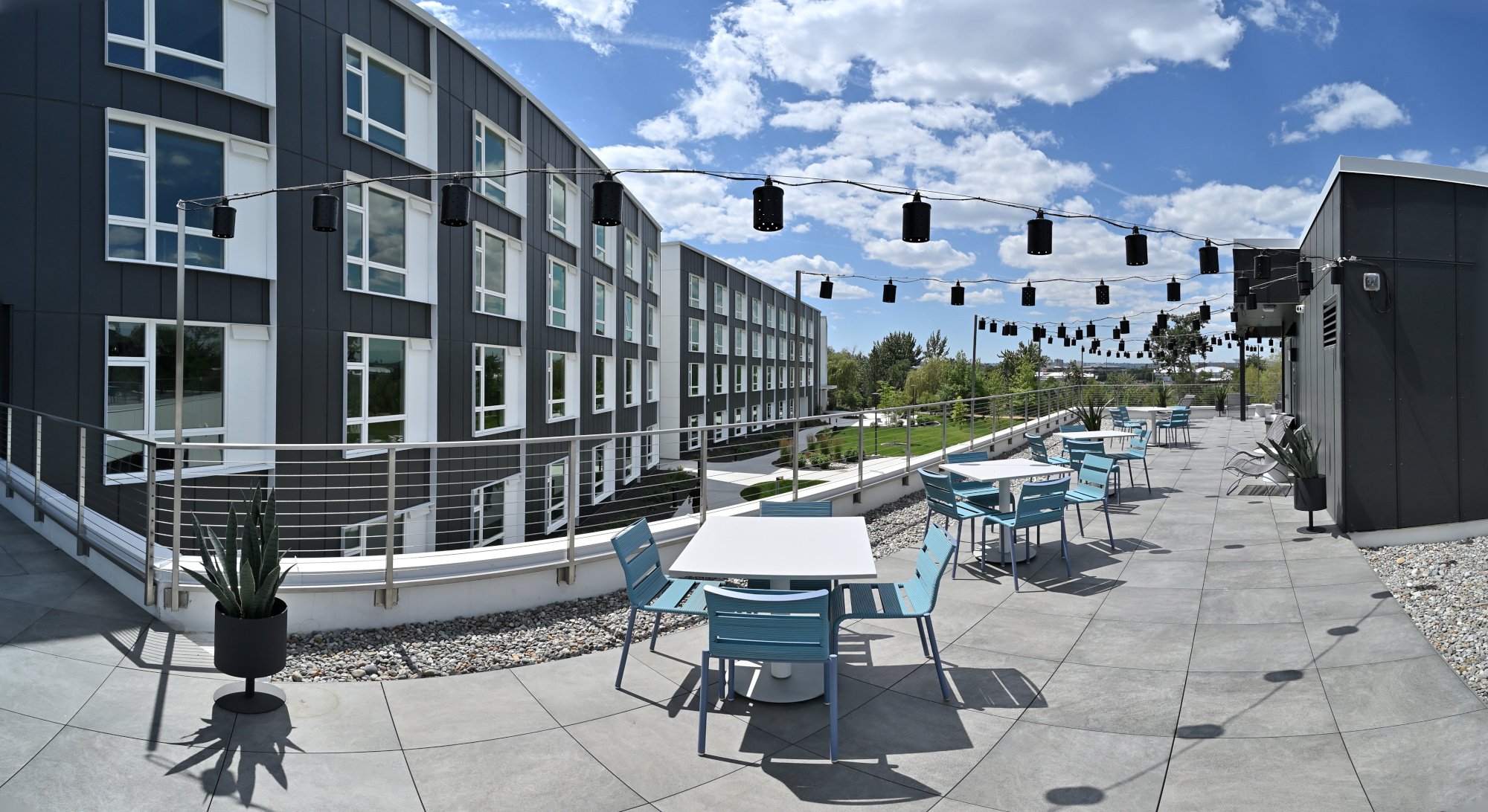
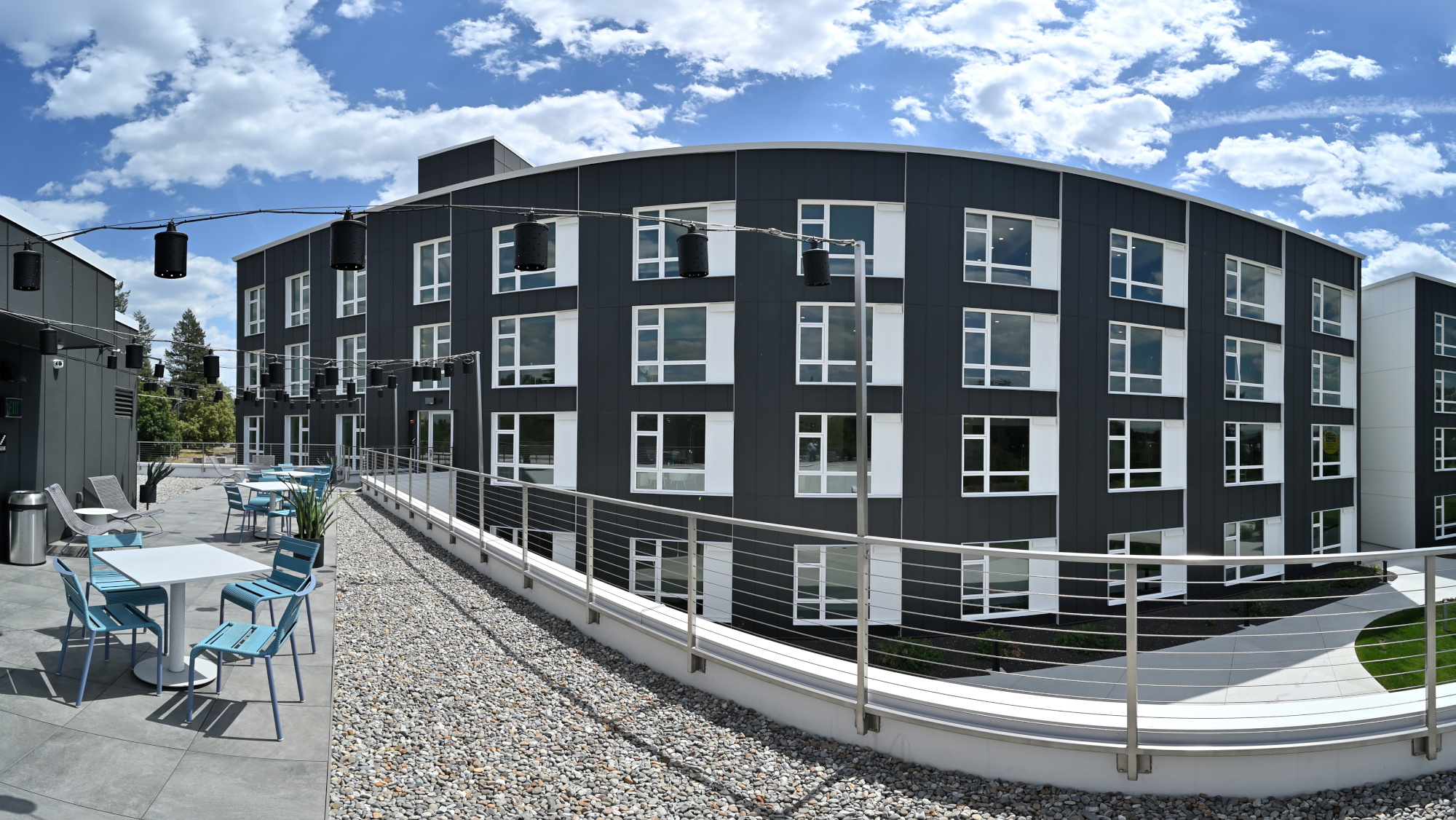
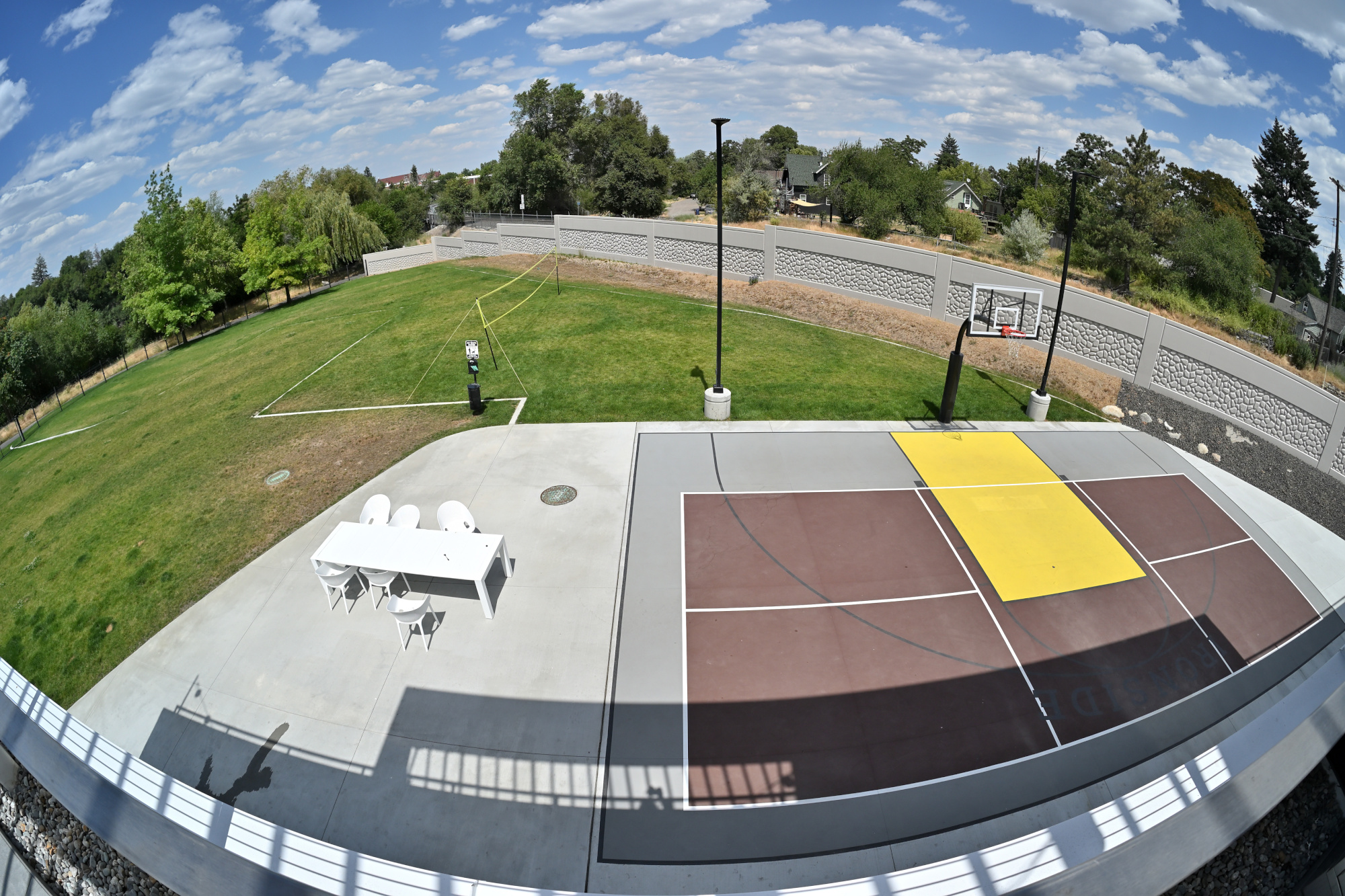
🏢 Apartment Where We Stayed
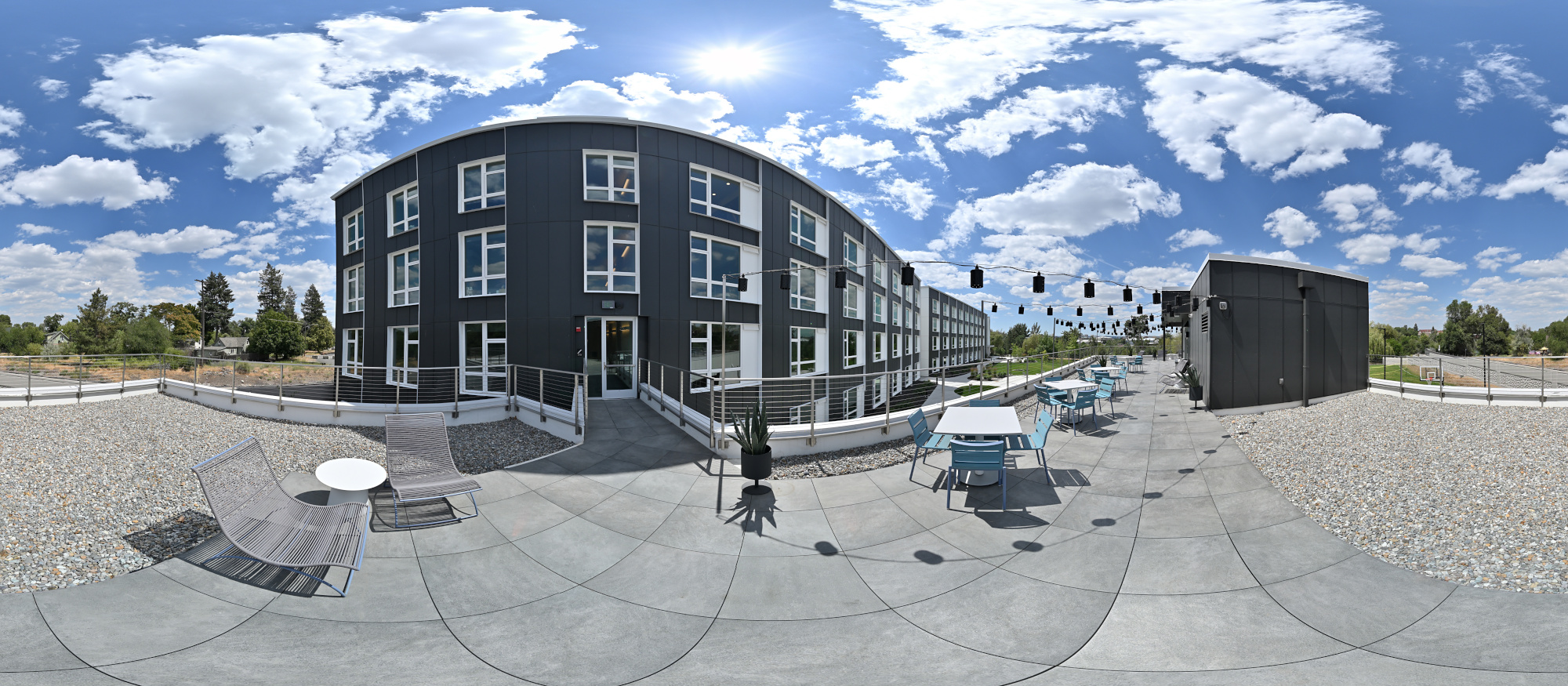
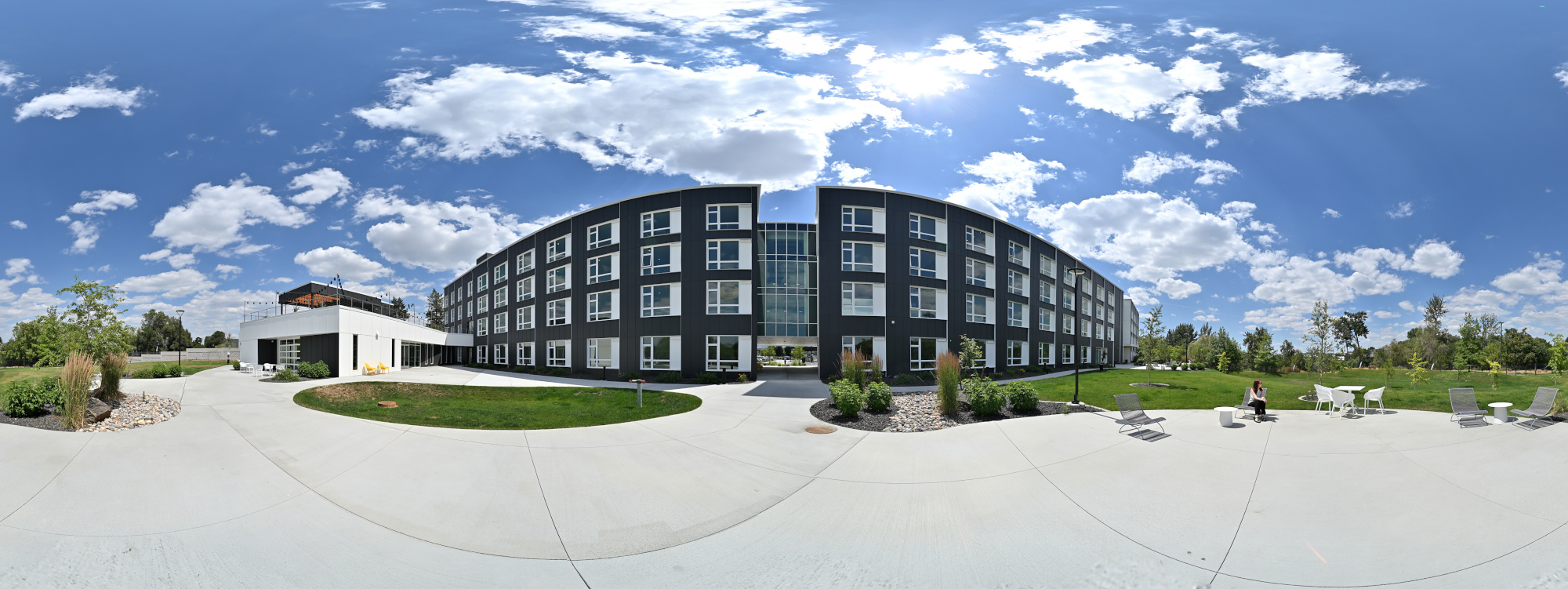
Spokane offers a wide spectrum of hotel experiences, like a roulette wheel of hospitality. On one end, you've got places like the Ramada by Wyndham, where the décor is "early abandonment", the guests are... let's say colorful, and the rooms come with a complimentary layer of grime. On the other end, there are sleek 4-star hotels that promise luxury but sometimes deliver lukewarm service and Yelp reviews that read like cautionary tales. And in the middle? The classic 3-star American hotel, where breakfast includes a waffle machine, questionable eggs, and the lingering scent of disappointment. Choose wisely, or at least pack your sense of humor.
We were lucky. Tucked into a quiet neighborhood close to the campus, our apartment served as a perfect base for exploring the city. With morning light filtering through the windows and the scent of pine in the air, it offered a peaceful retreat.
Interactive Panorama Apartment 1
Interactive Panorama Apartment 2
✈️ Airport
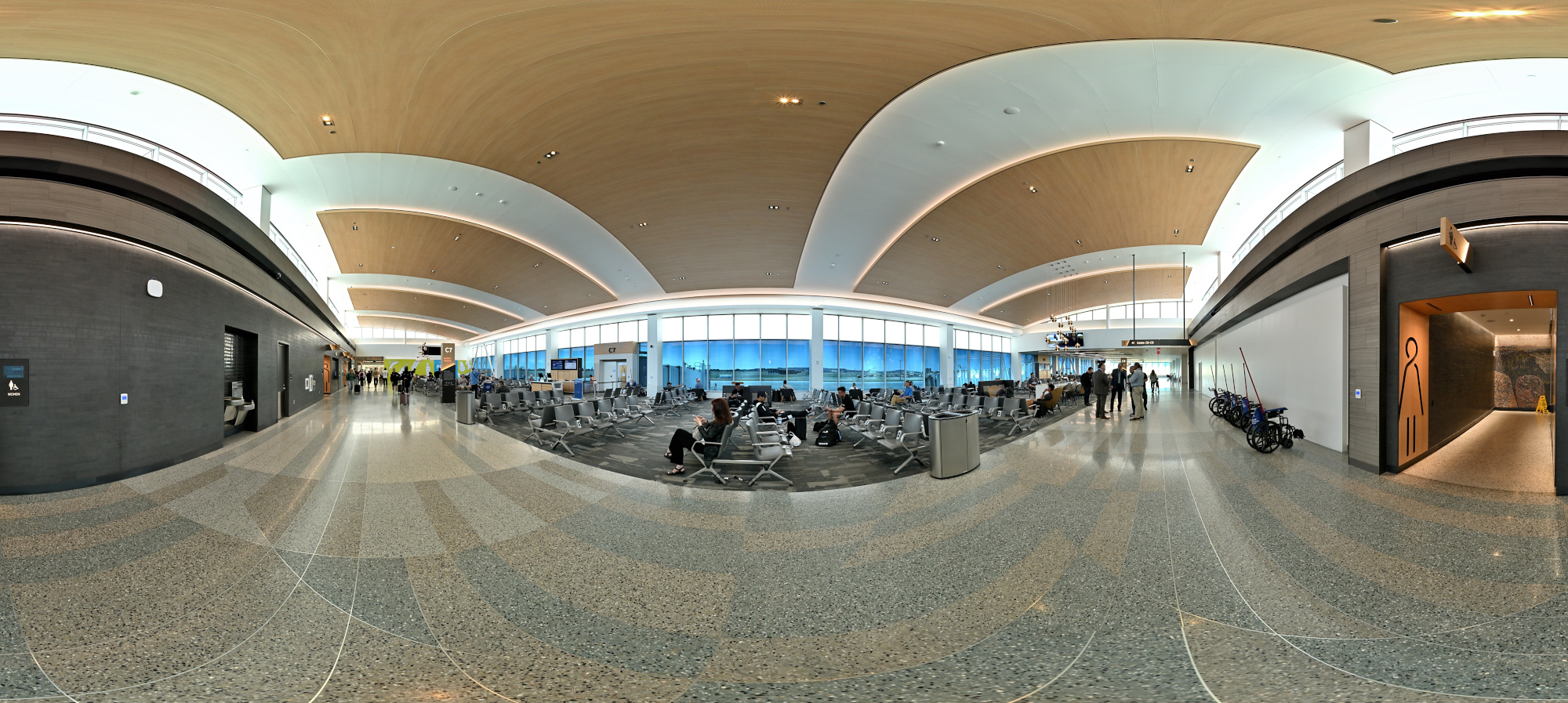
Our journey ends where we first arrived, and we leave Spokane behind with memories captured in light and lines. Spokane International Airport welcomes visitors with a mix of regional charm and modern convenience. The terminal's open design and surrounding pine-dotted landscape offer a first glimpse of the Inland Northwest's character.
1/80s f/5,6 ISO 200/24° f=7,5mm
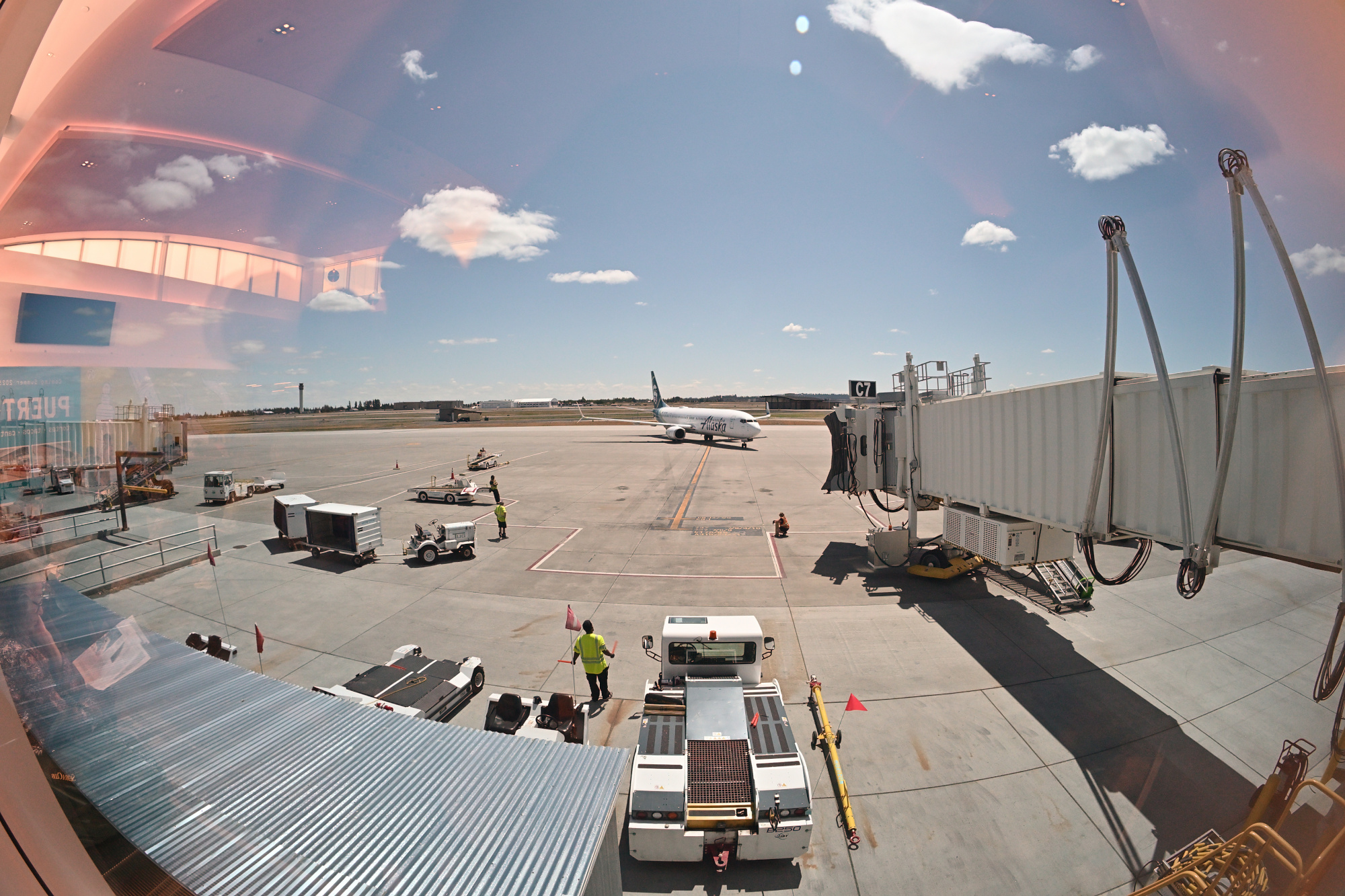
1/80s f/5,6 ISO 160/23° f=7,5mm
The 737 arrives
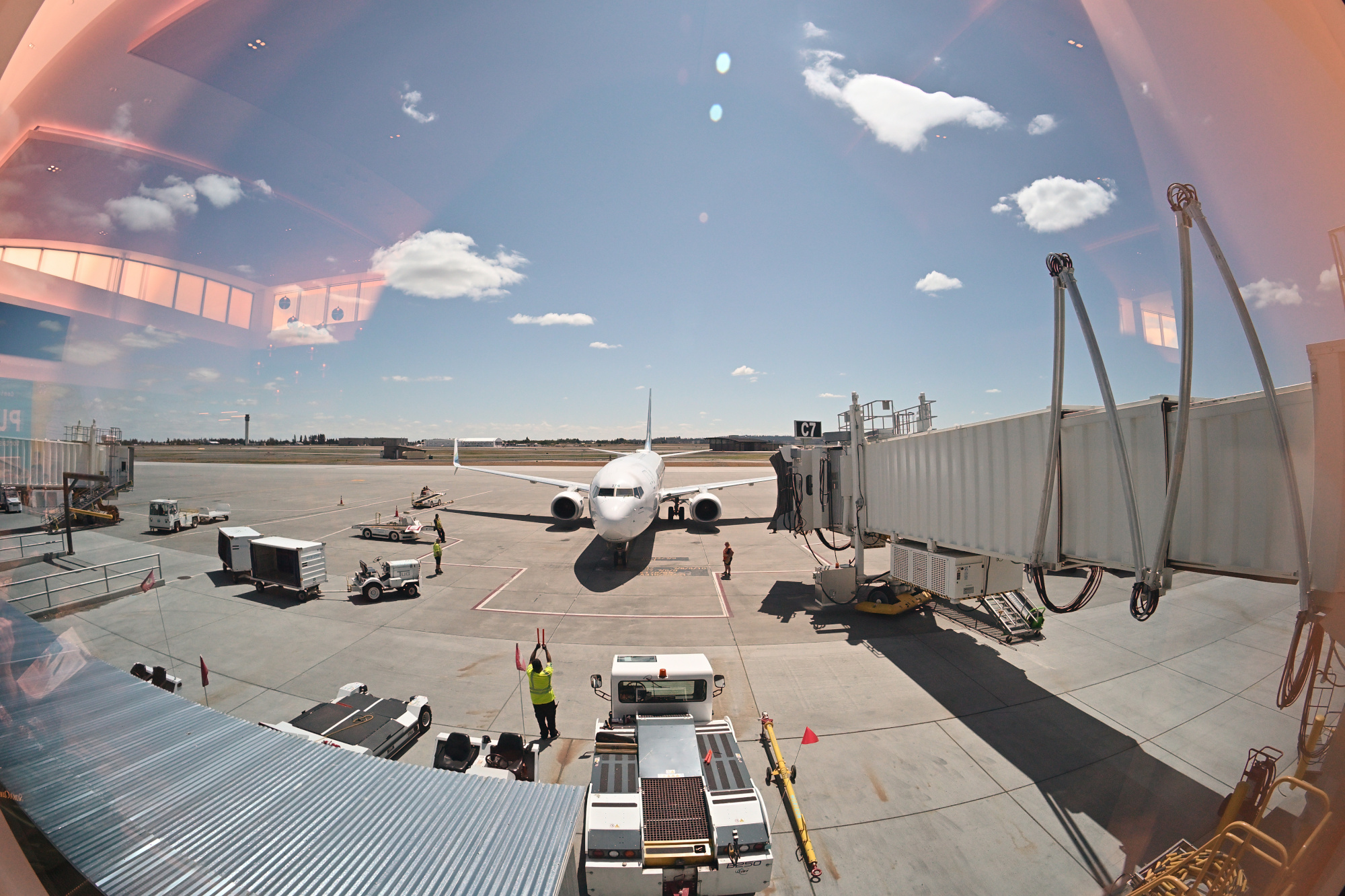
Taxi-in
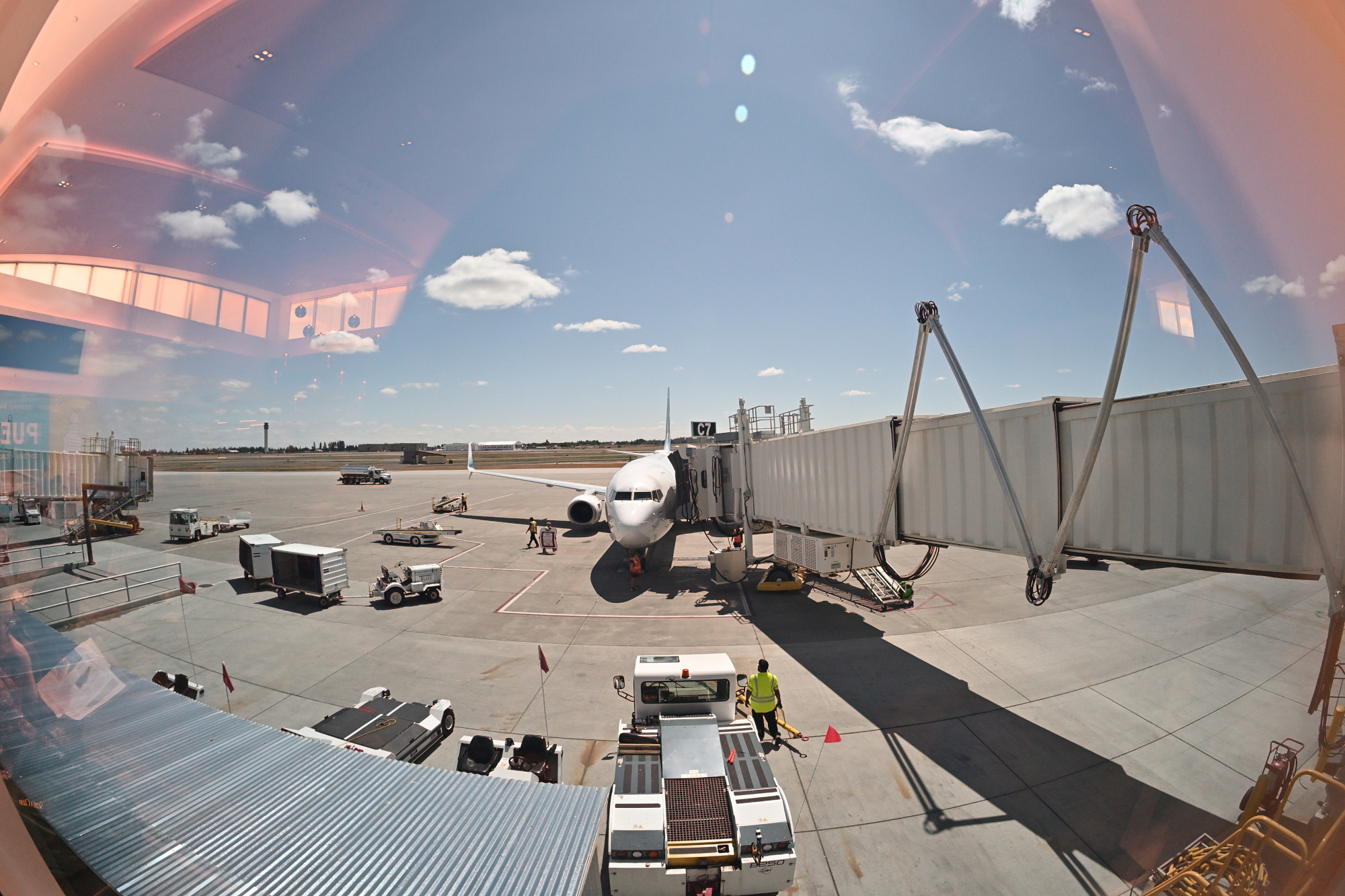
Passenger boarding bridge attaches
Start refueling and unloading
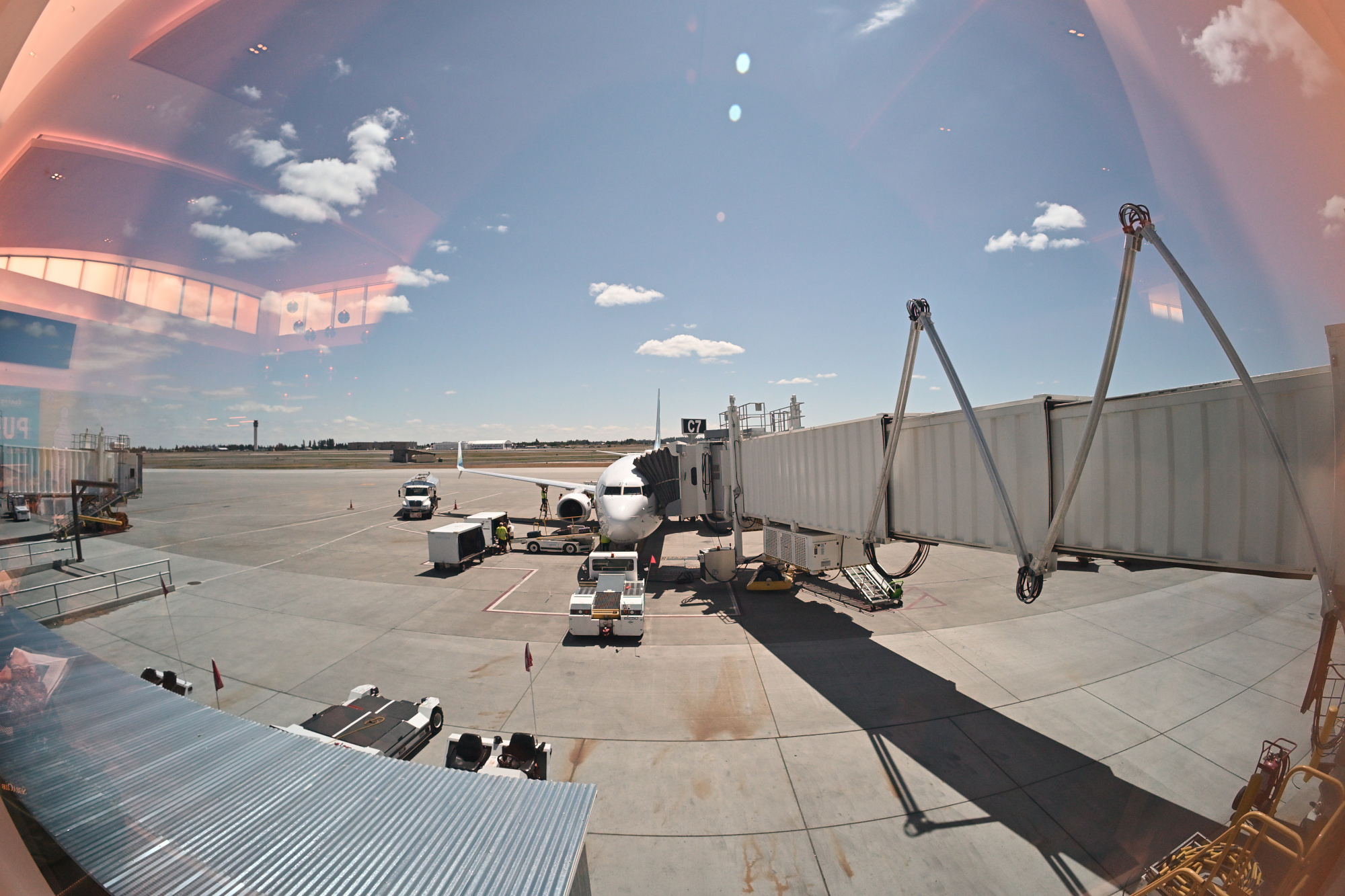
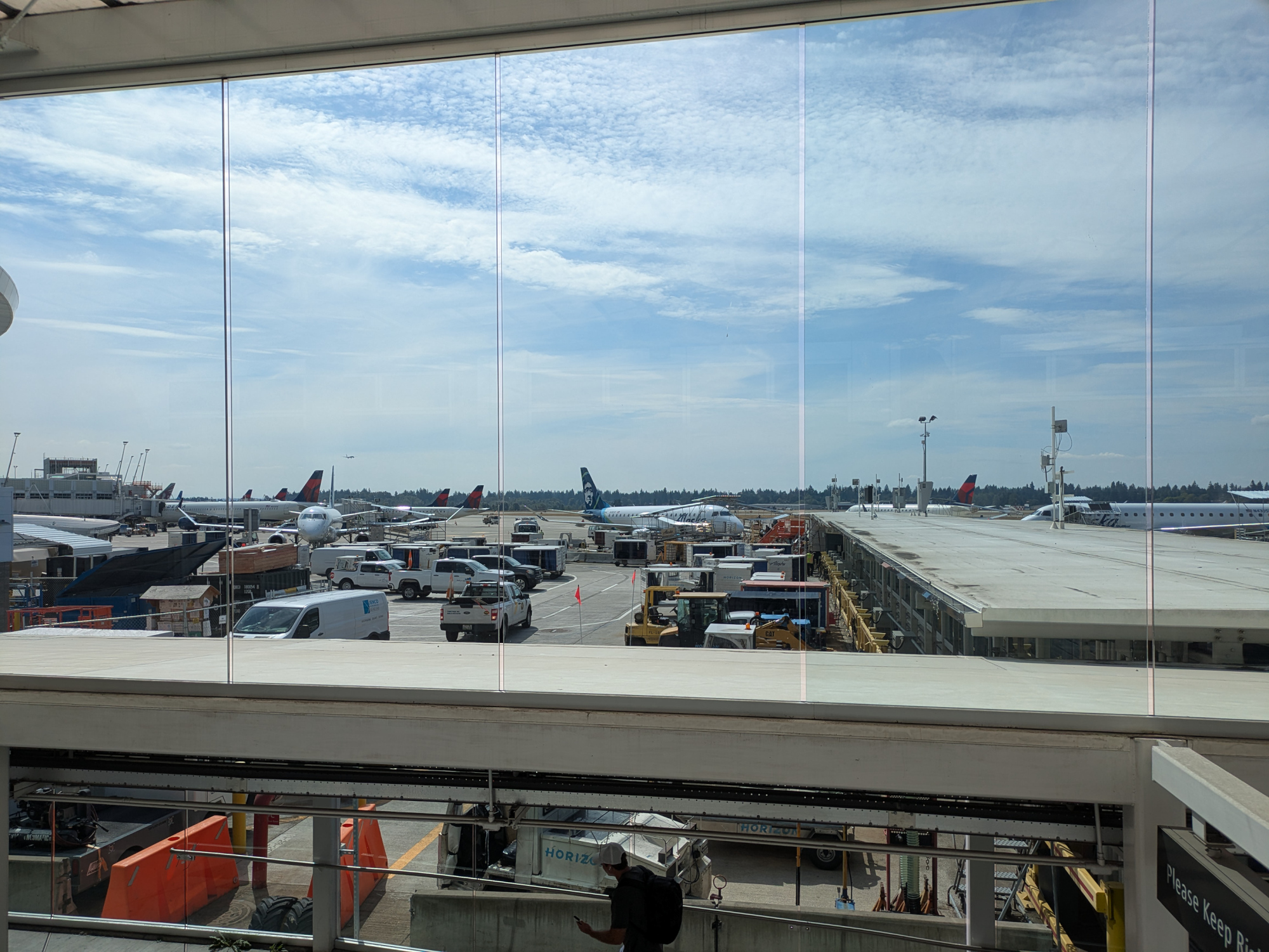
The windows facing the airfield are tinted with a subtle blue hue, and be corrected by adjusting the white balance (photos were taken using the sunlight white balance setting).
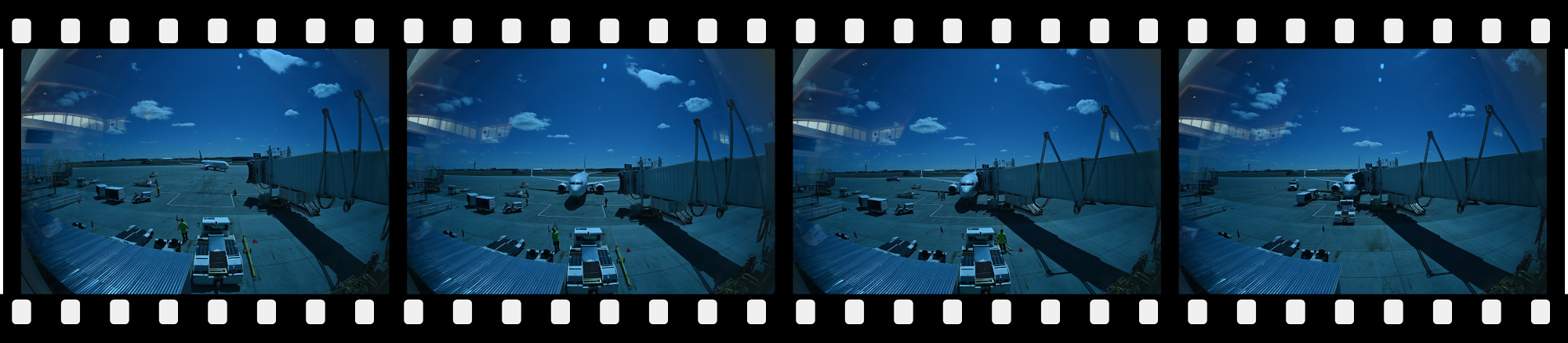
Forty minutes later, we rolled into Seattle and the Spokane chapter came to a close, pixels packed, panoramas pending, and the last bit of sunlight archived in RAW.
🌥️ Above the Clouds – To Spokane and Back
Every journey begins with a takeoff and ends with a landing, but what happens in between is often the most quietly beautiful. This segment captures both the outbound flight into Spokane and the return above the rugged silhouettes of the Cascade Mountains. From the first lift-off into layered skies to the final descent through fading light, the airborne chapters of this trip offer shifting perspectives: pine forests from above, rivers winding like thoughts, and clouds that blur the boundary between memory and motion.
All images and clips were captured using my Android phone.
SEA - GEG1
Boarding
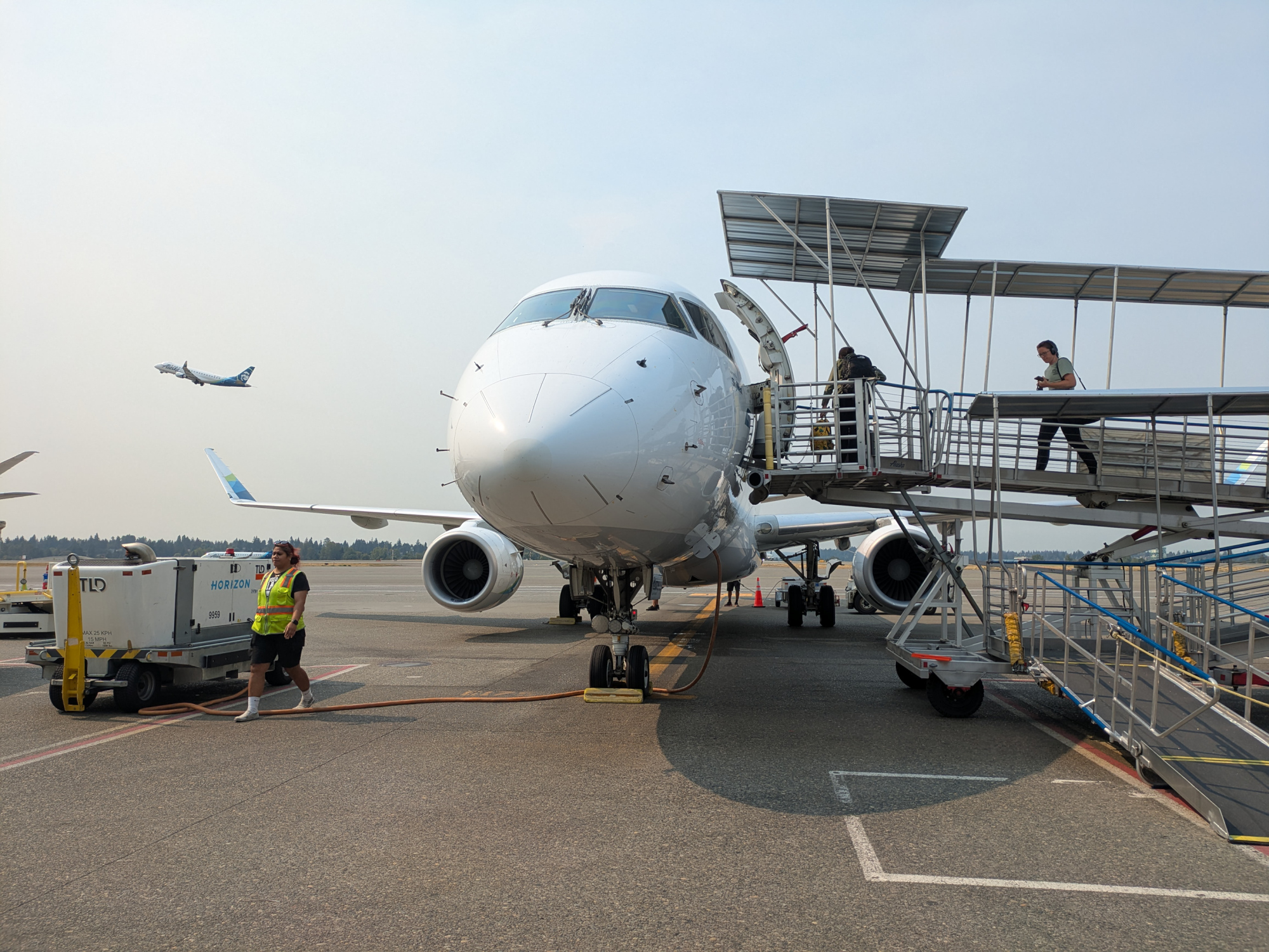
Taxi out from Seattle
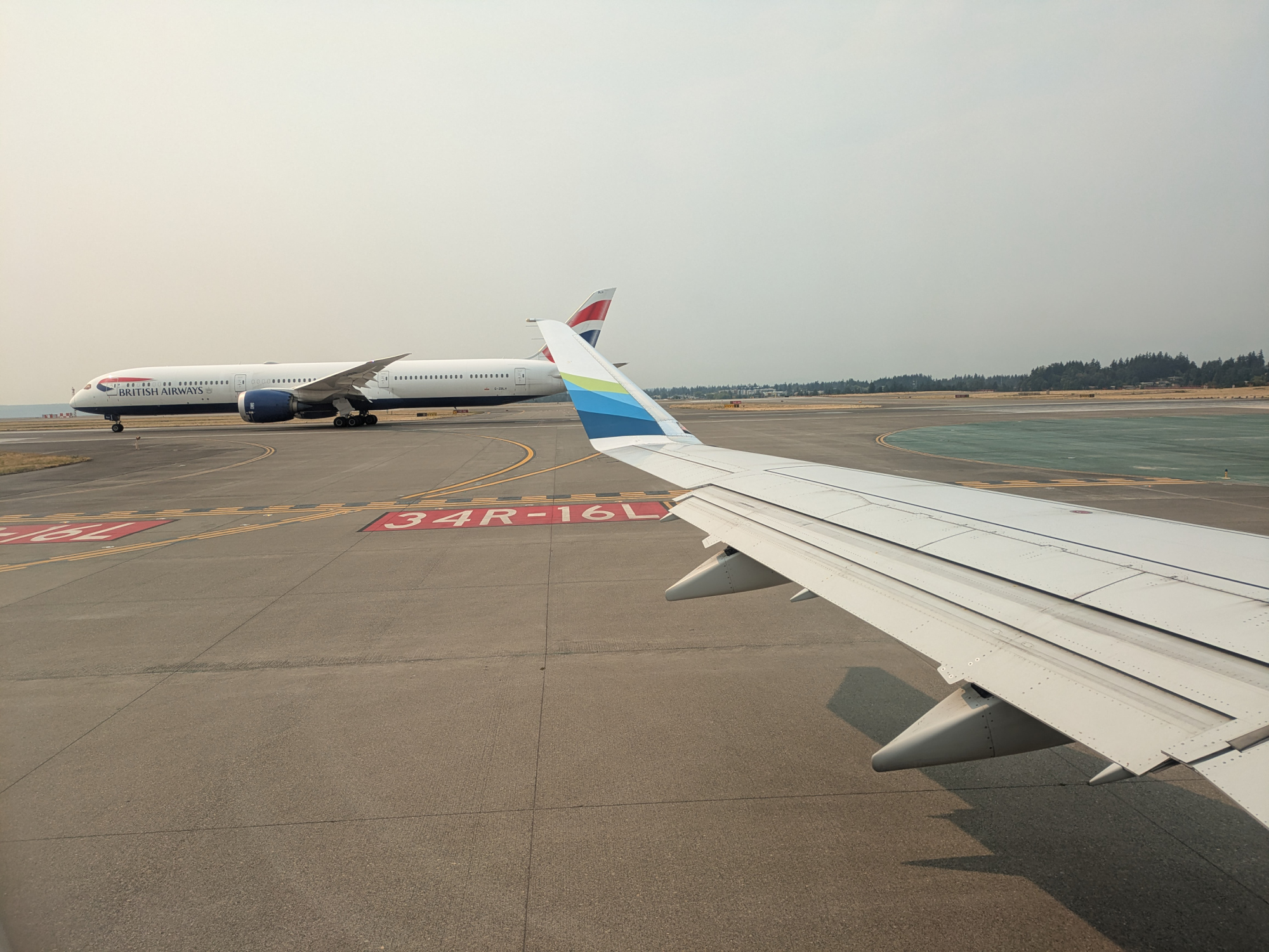
Our turn now, with all the other Bombers lined up for their turn
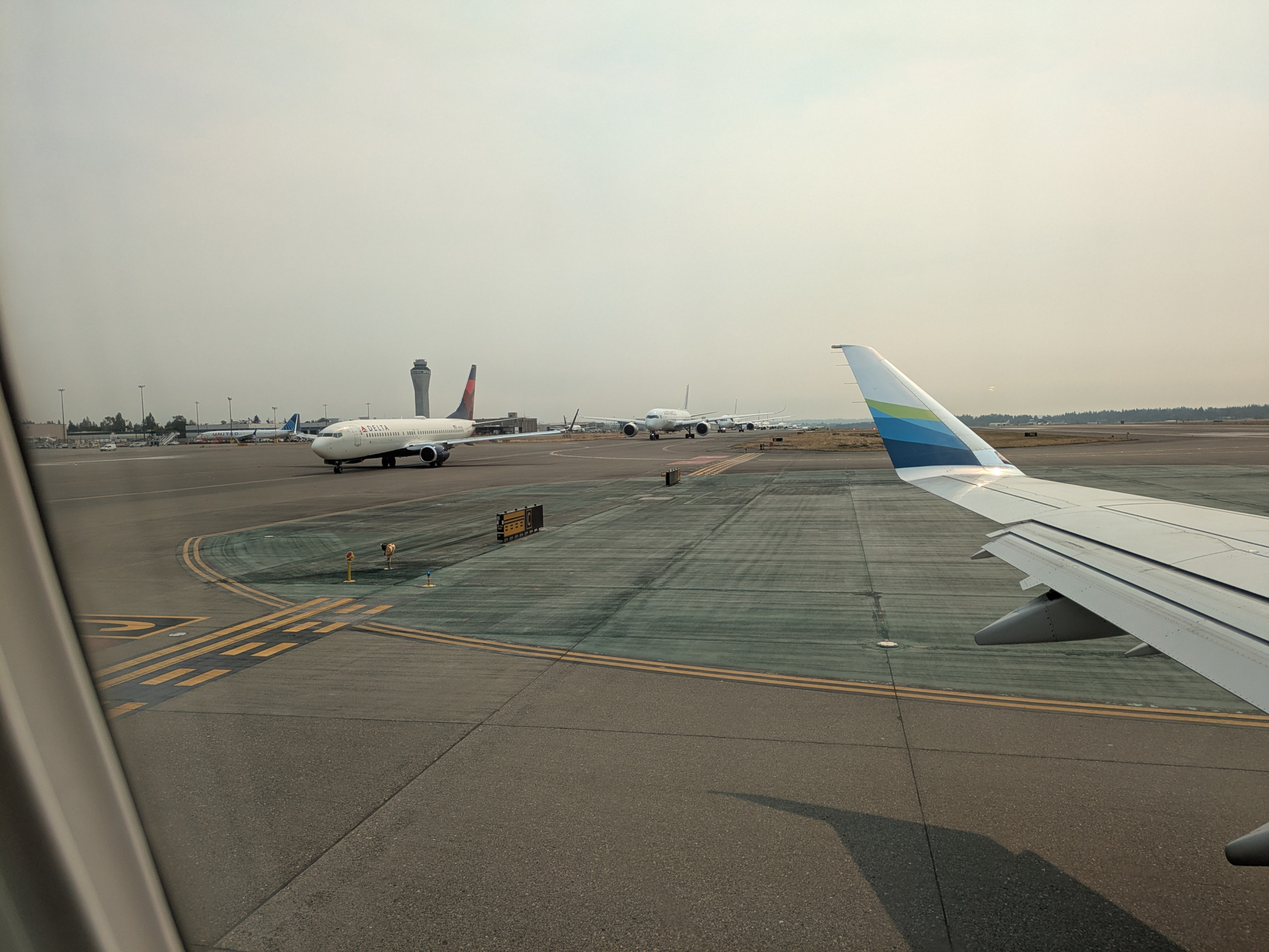
Takeoff
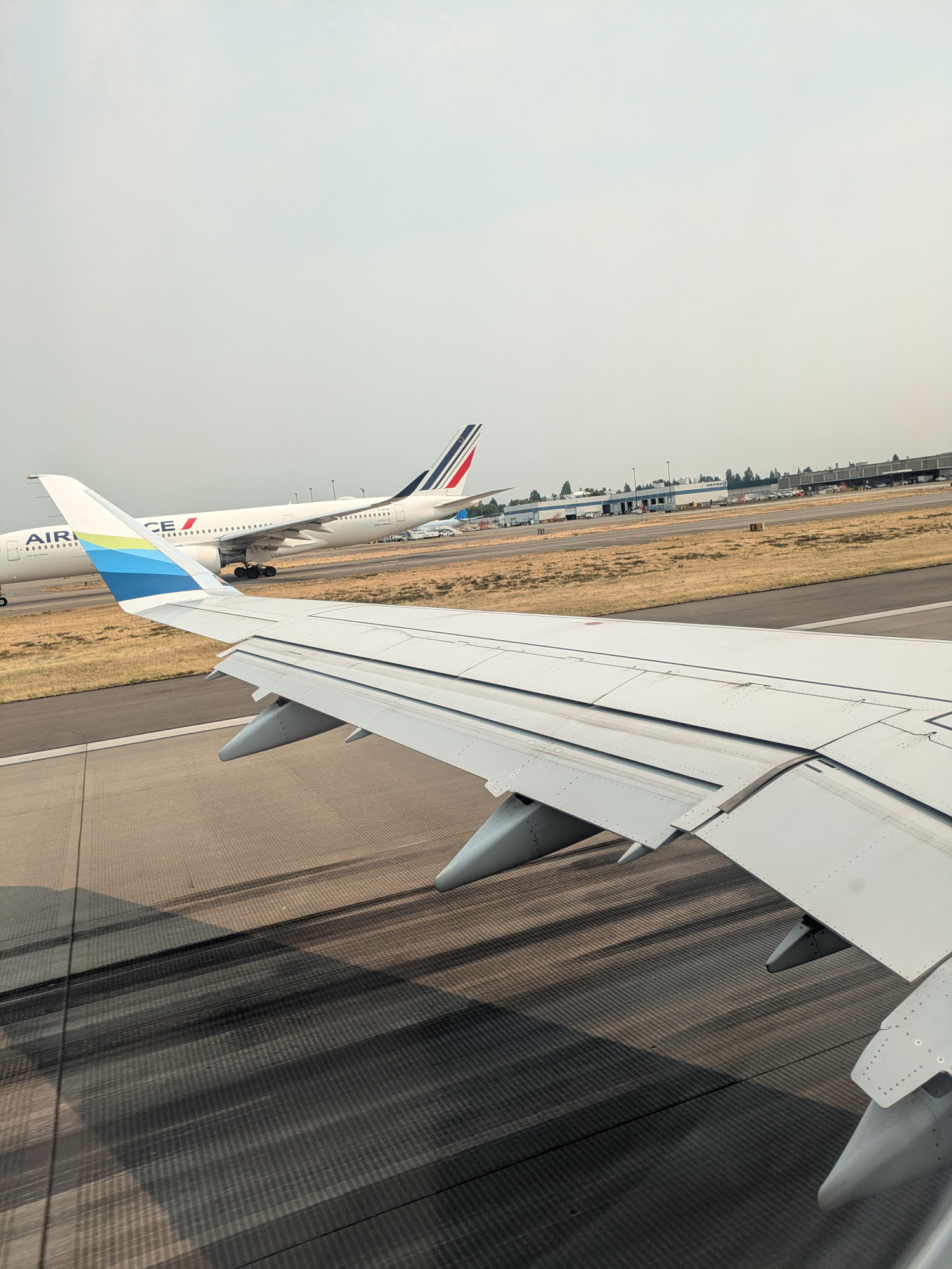
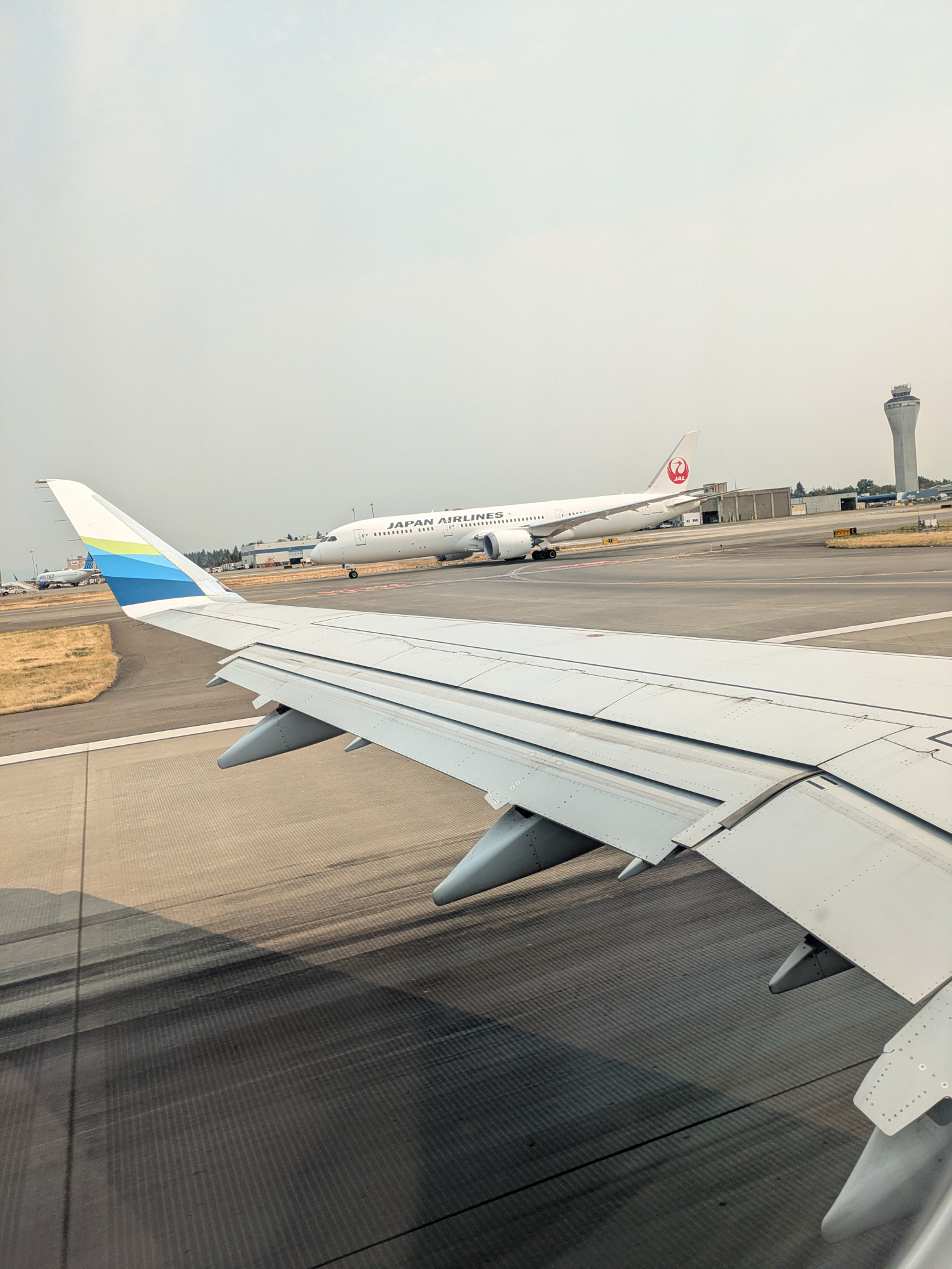
Imagine being stuck in that one for 10 hours. It is just you, sushi, and the slow unraveling of time.
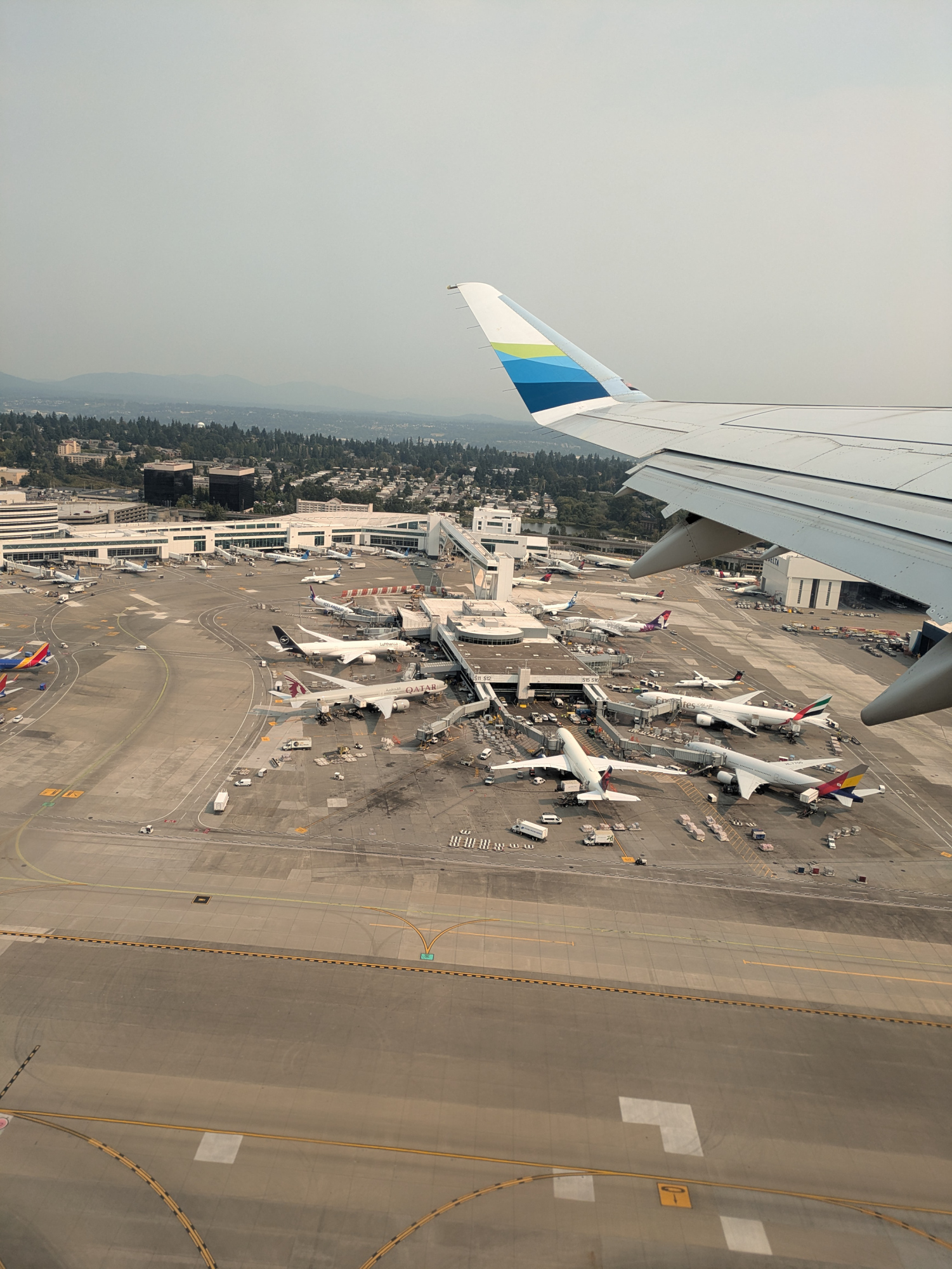
View on the Main Terminal
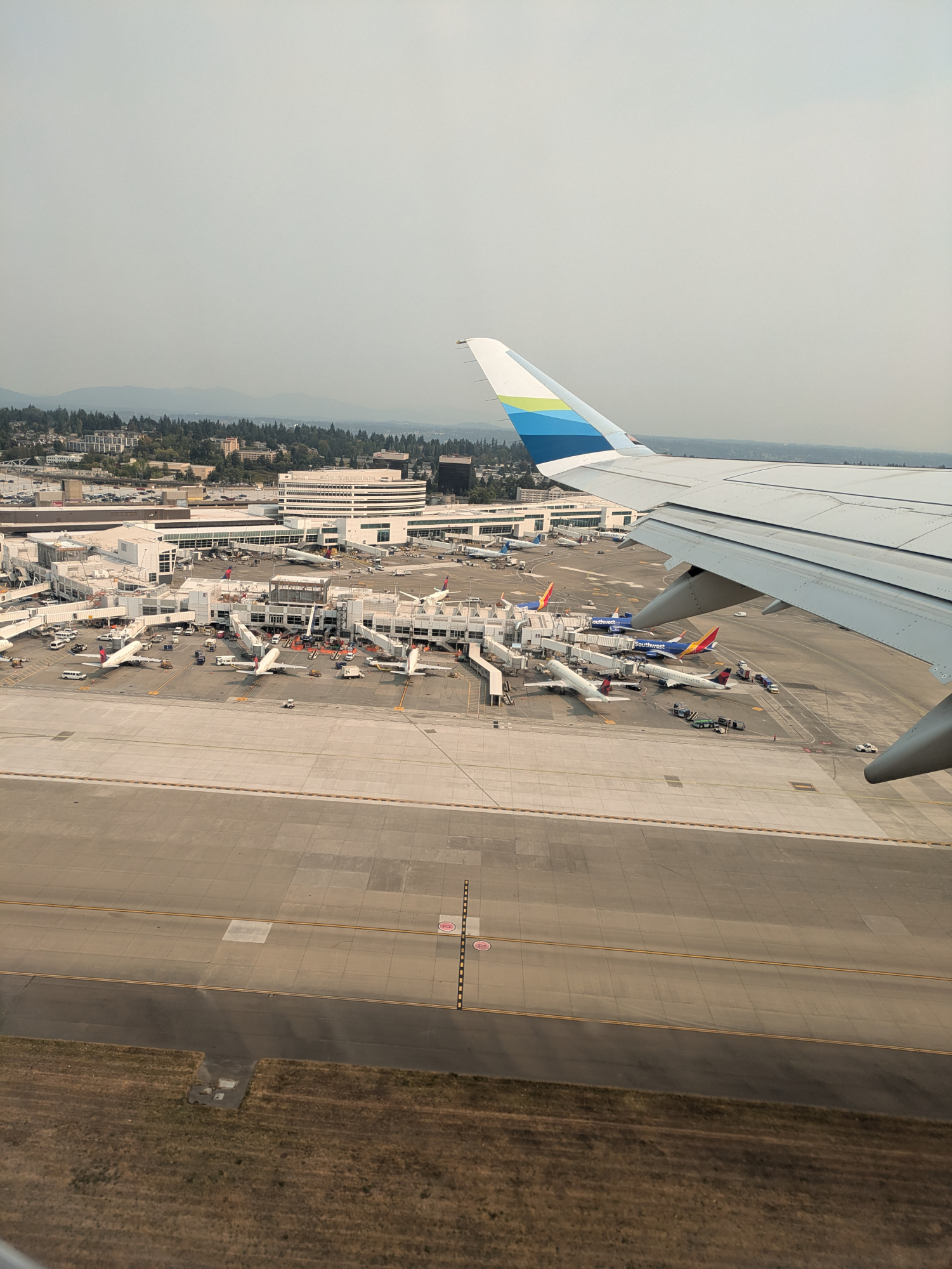
The South Terminal. The empty spot is S11, where the Frankfurt flight LH491 departs.
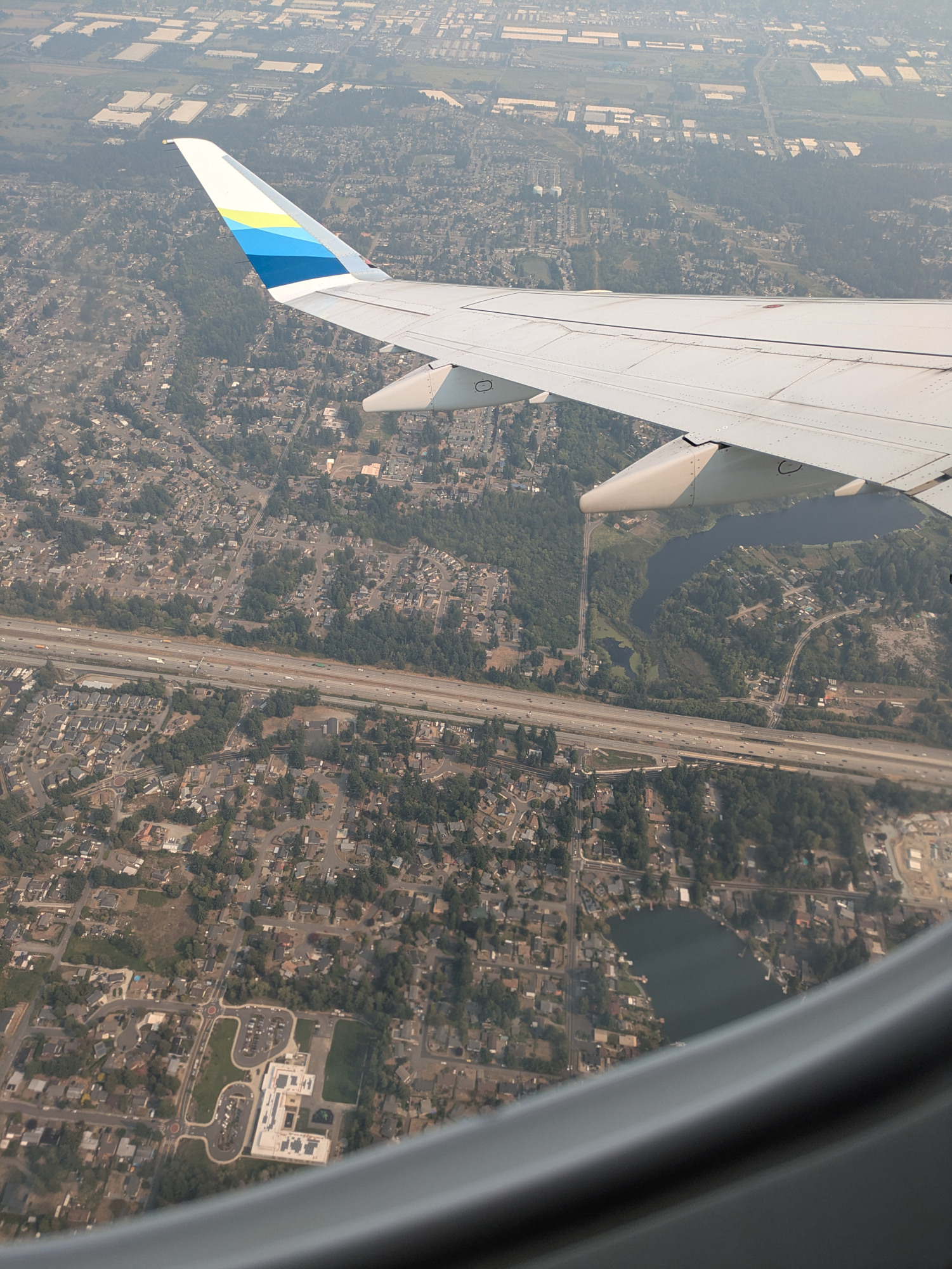
This view shows Steel Lake at the bottom and Lake Dolloff at the top, separated by Interstate 5
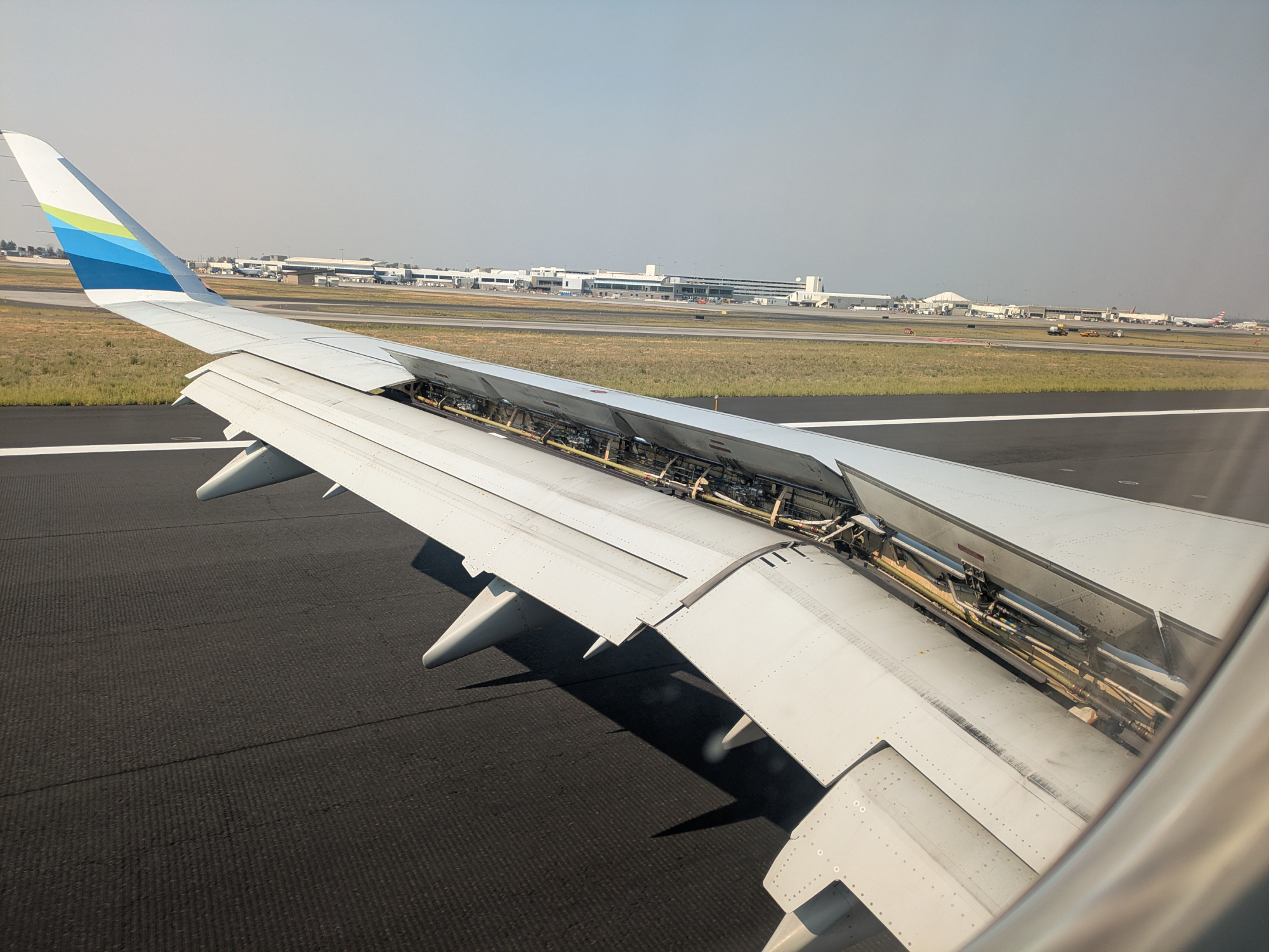
Landing in Spokane
GEG - SEA
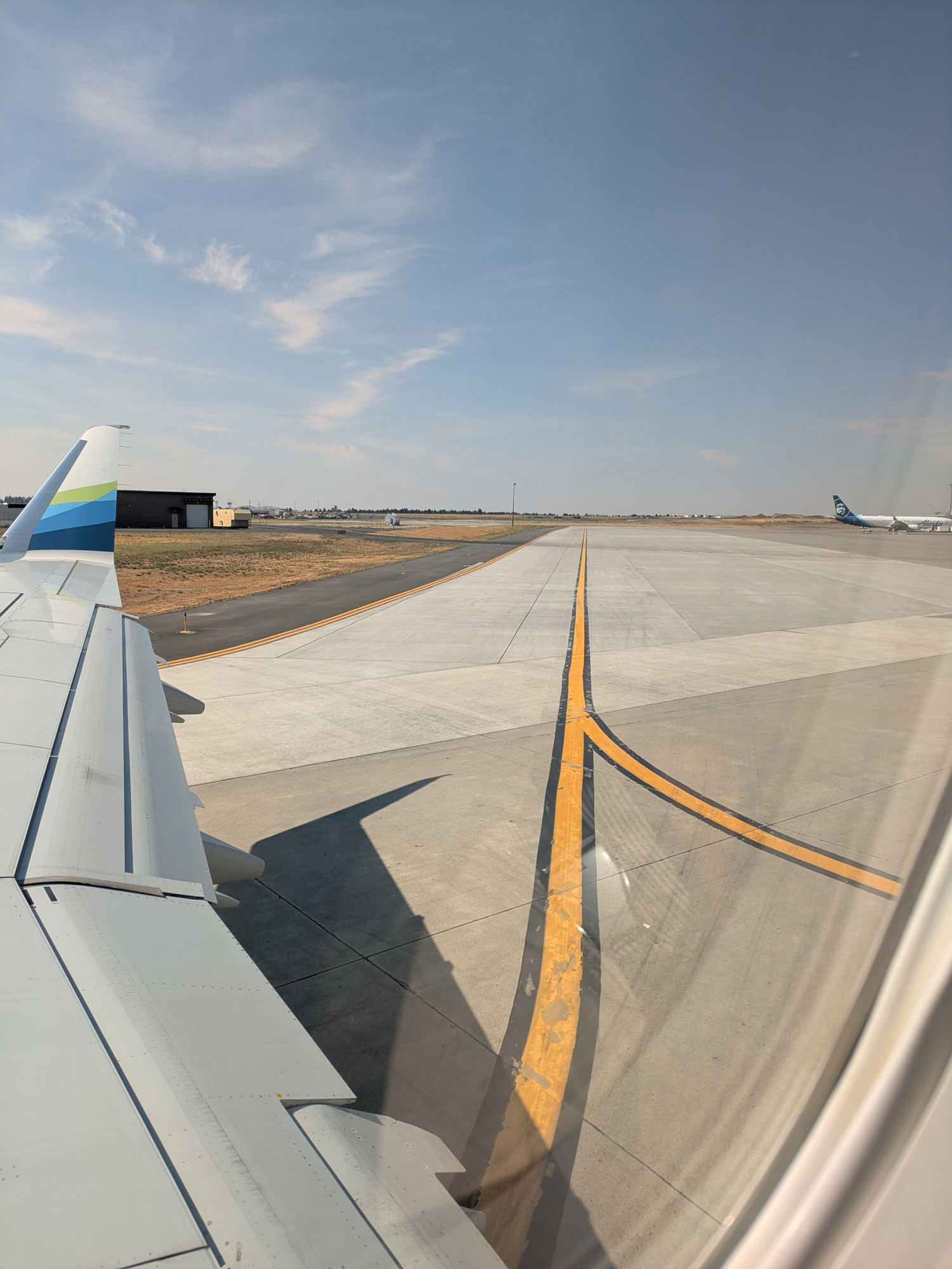
Taxi out from Spokane
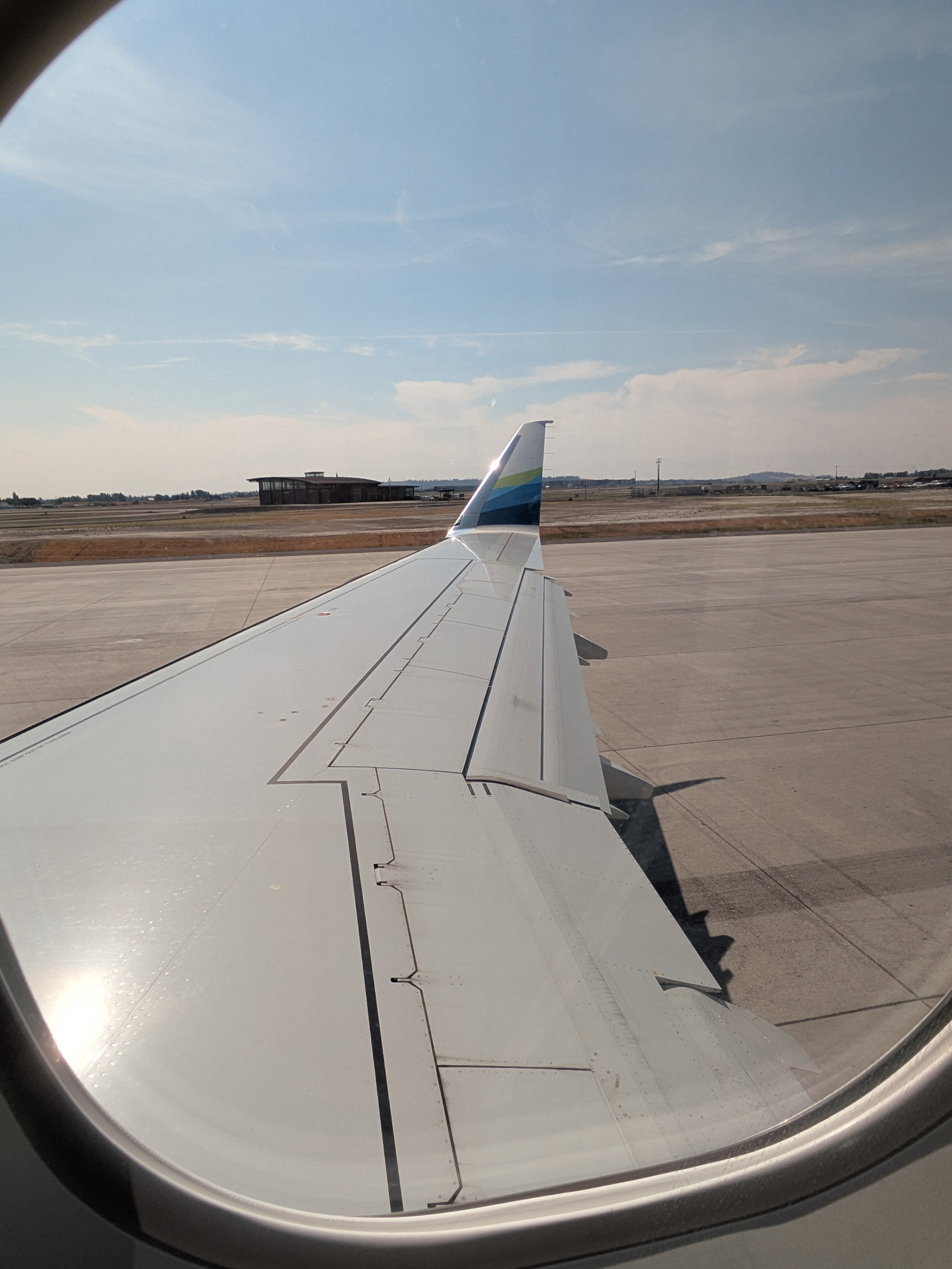
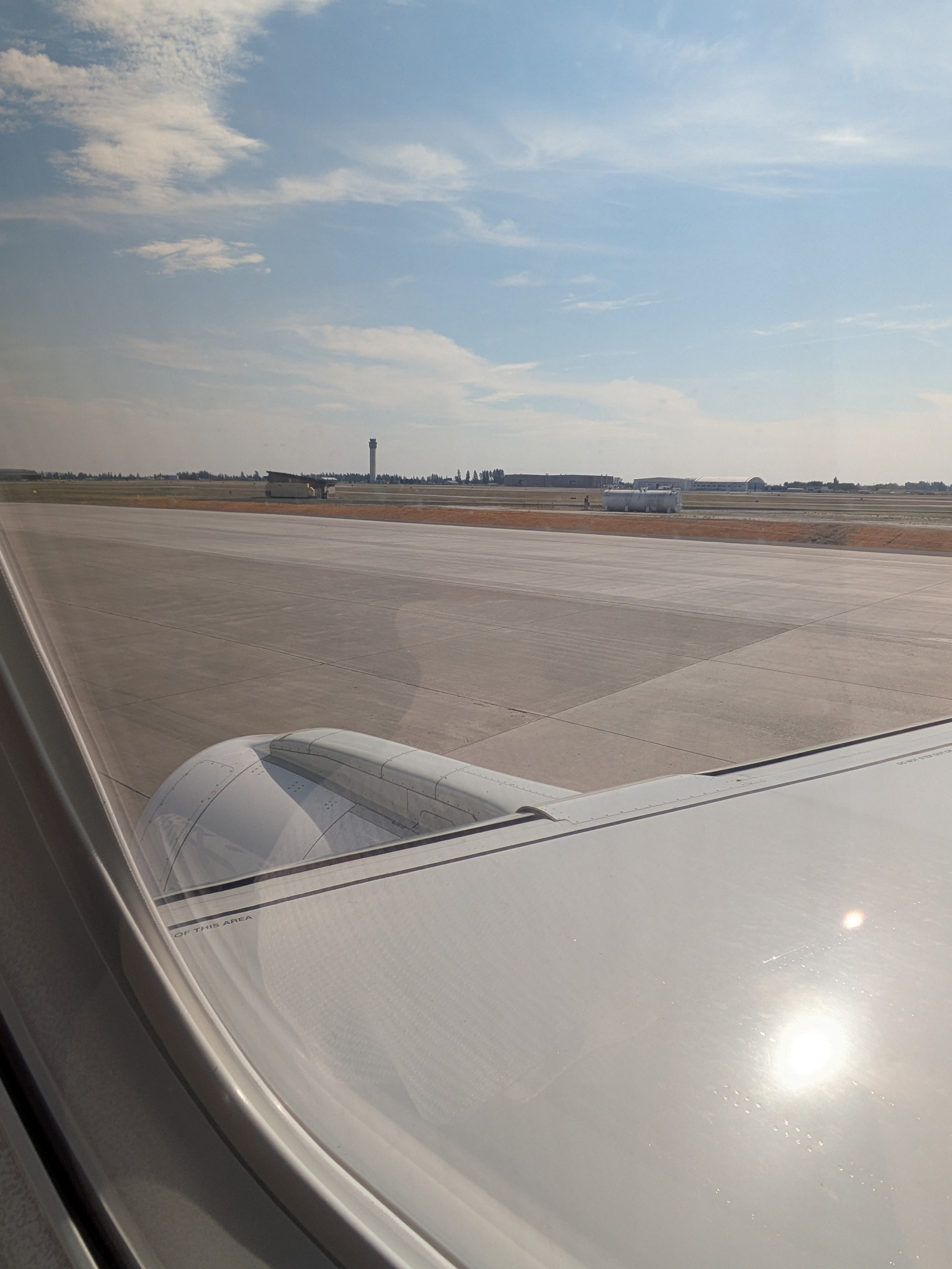
That view is half of Spokane Airport
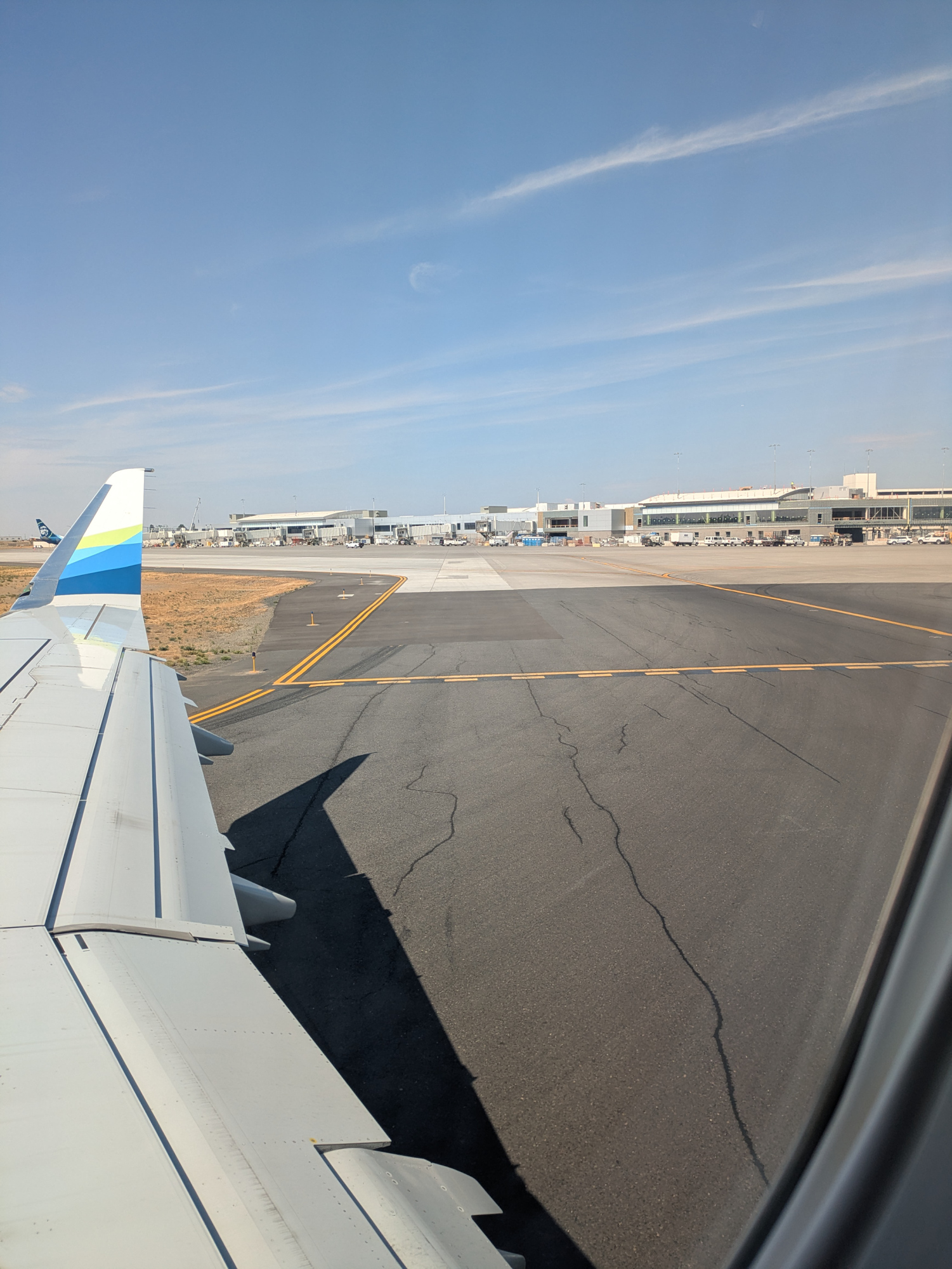
Spokane Taxi Out – In Motion
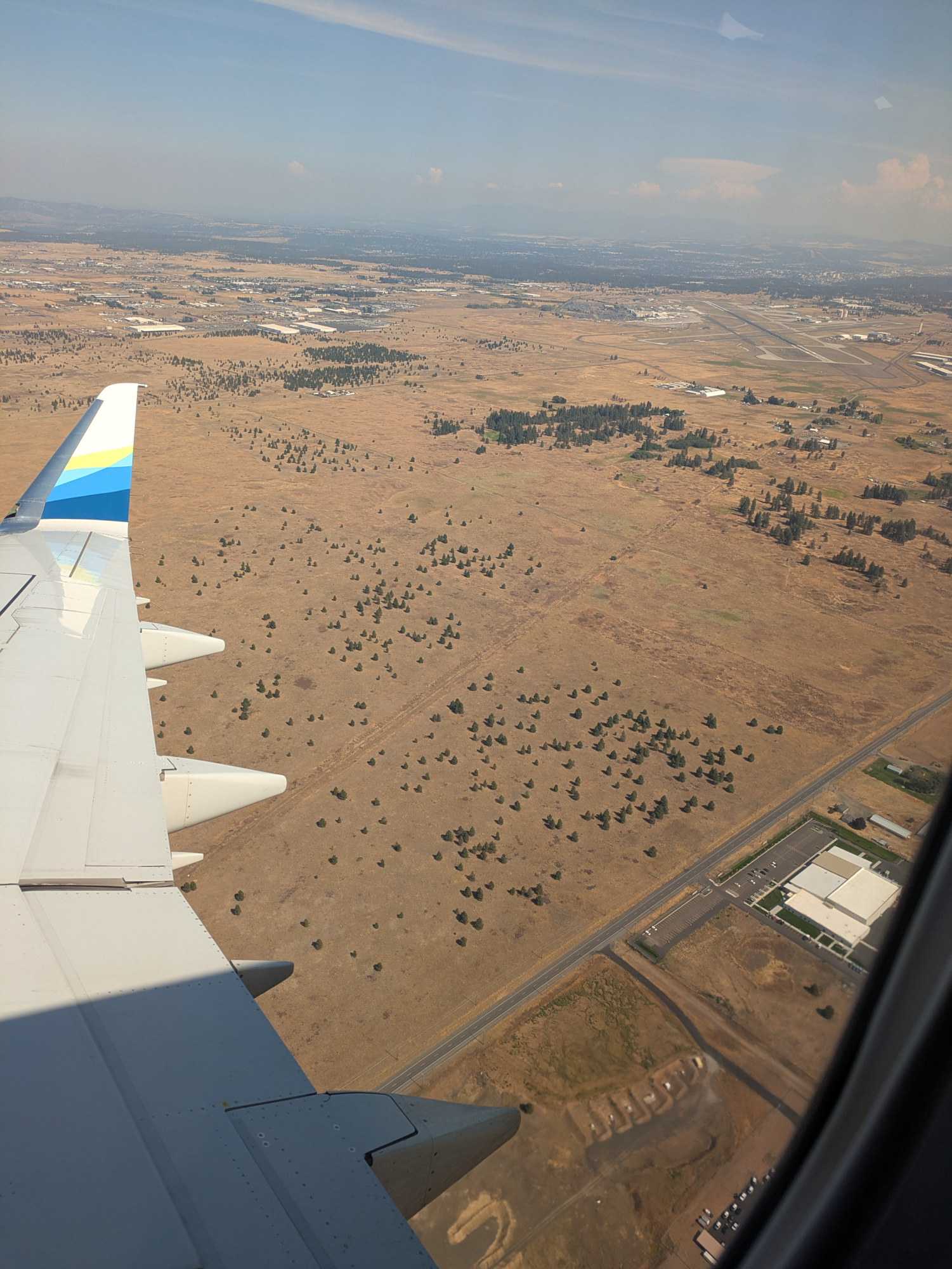
Takeoff
GEG National Forest (Unofficial)
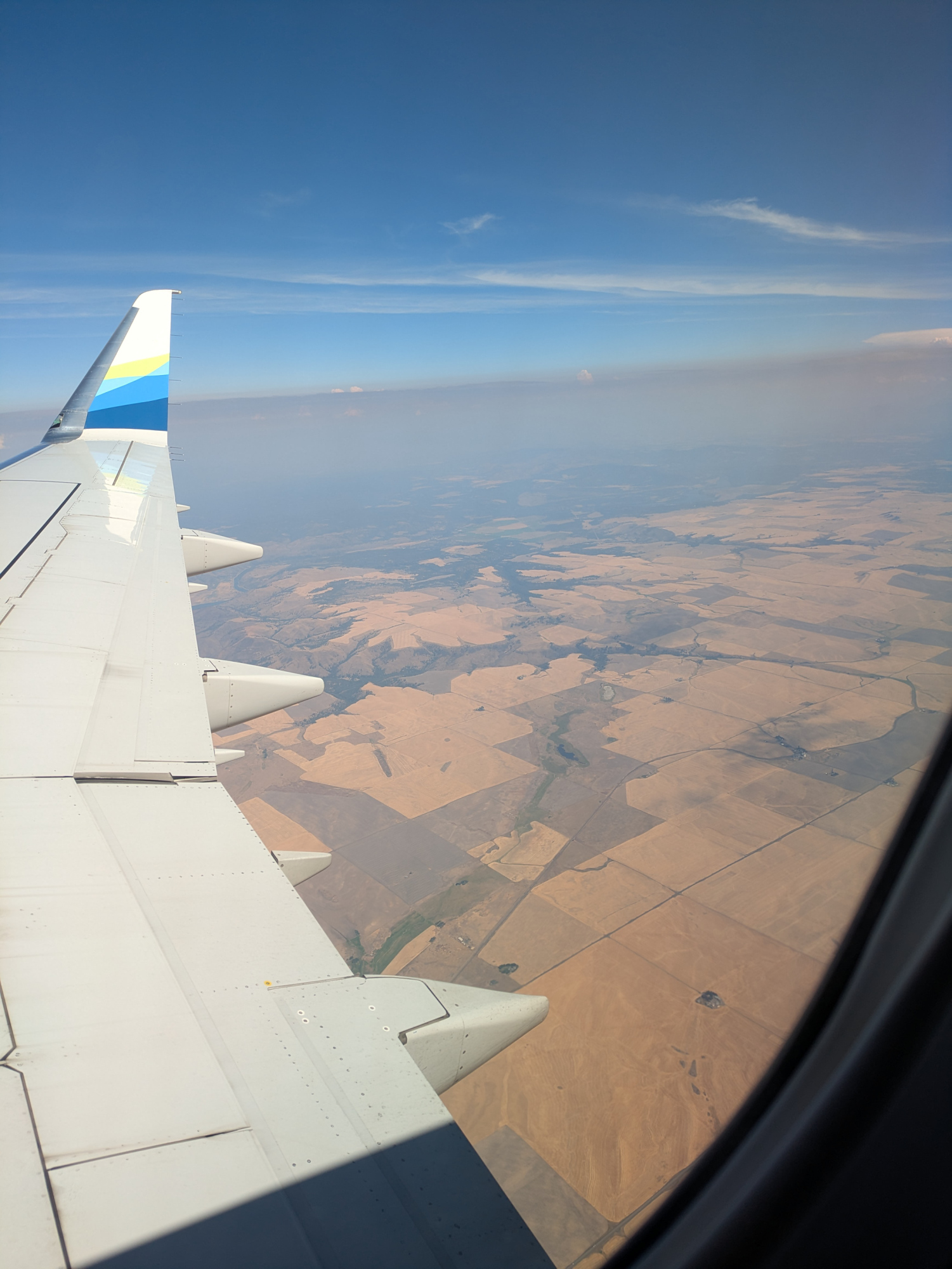
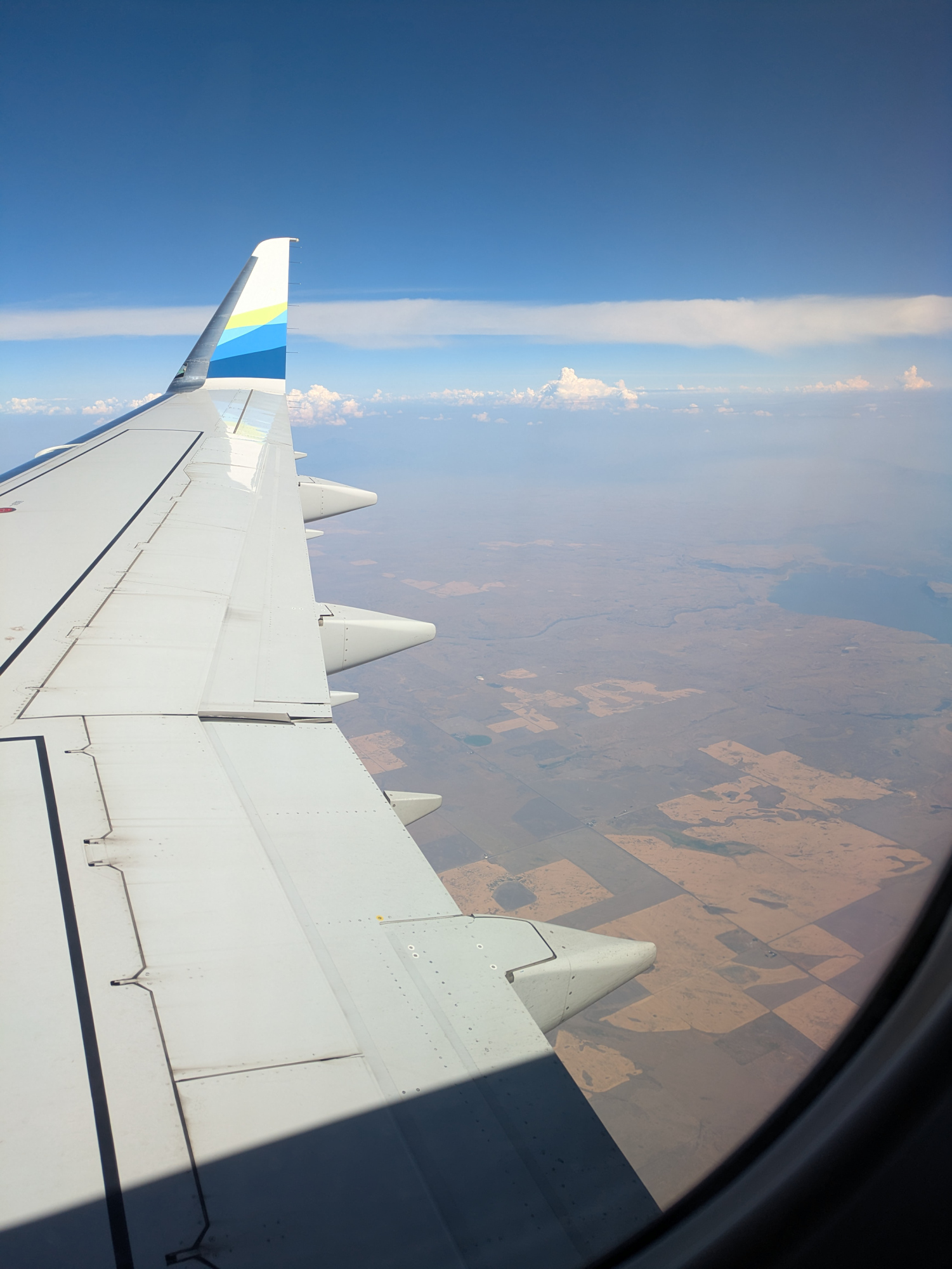
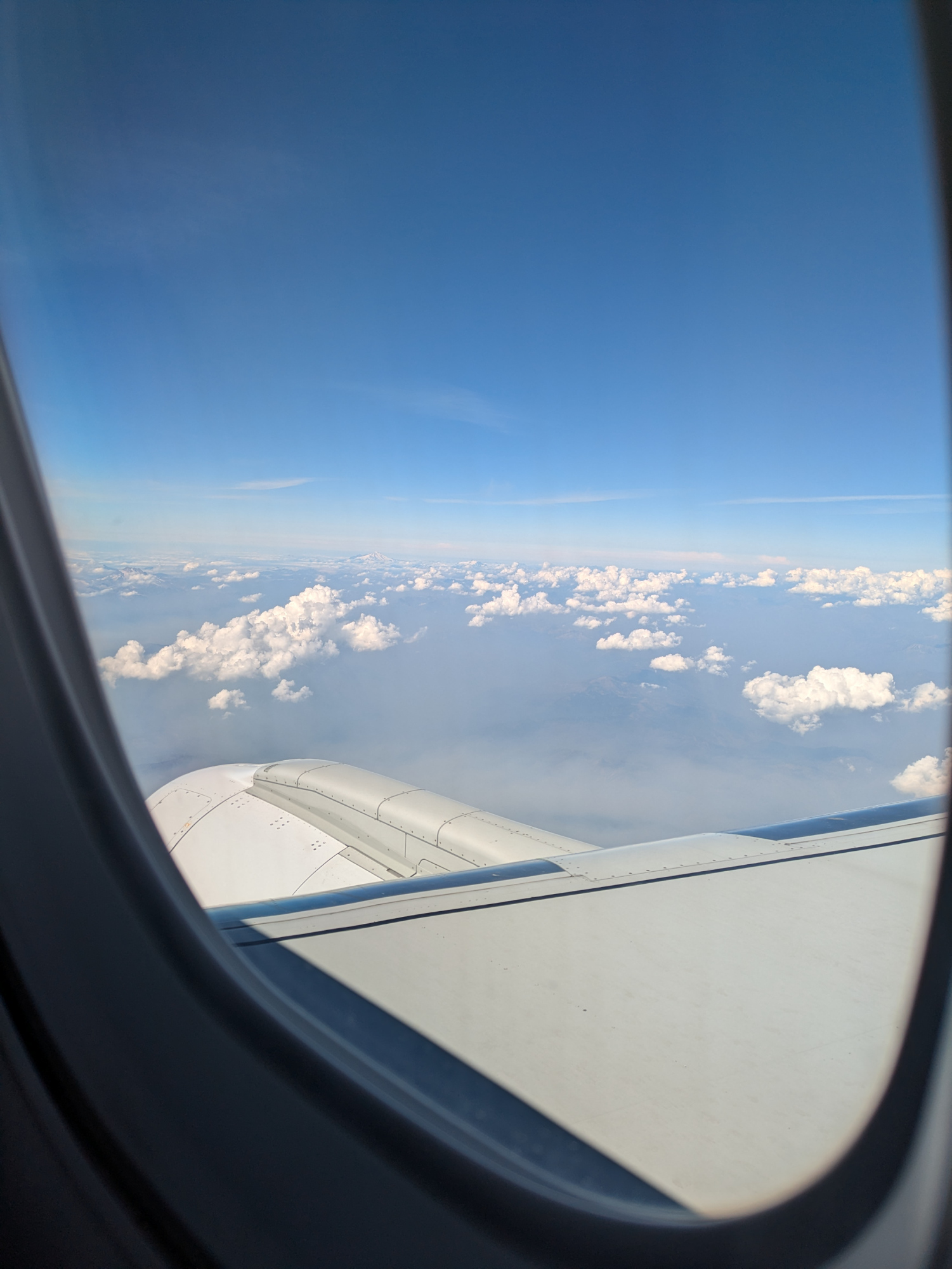
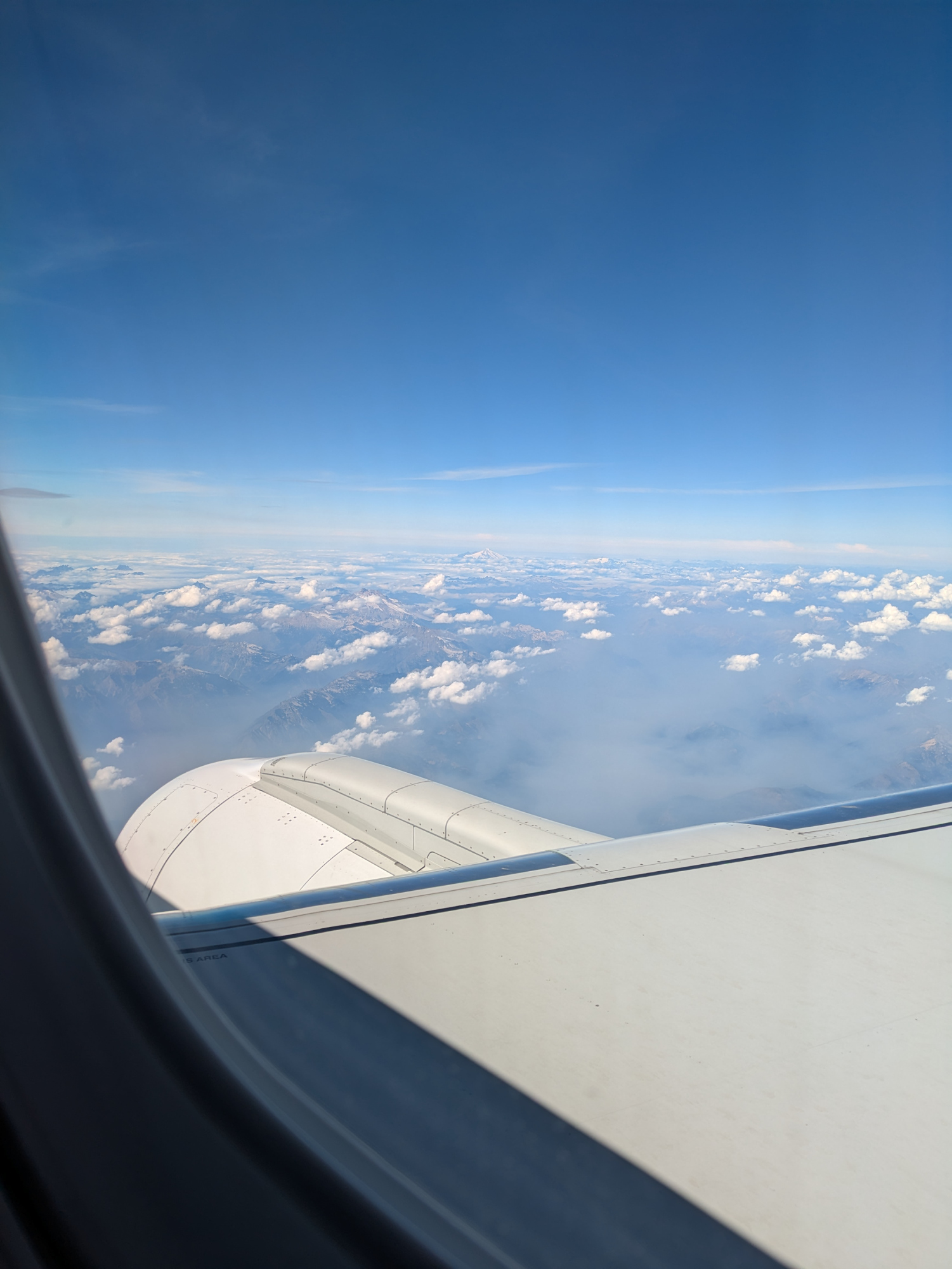
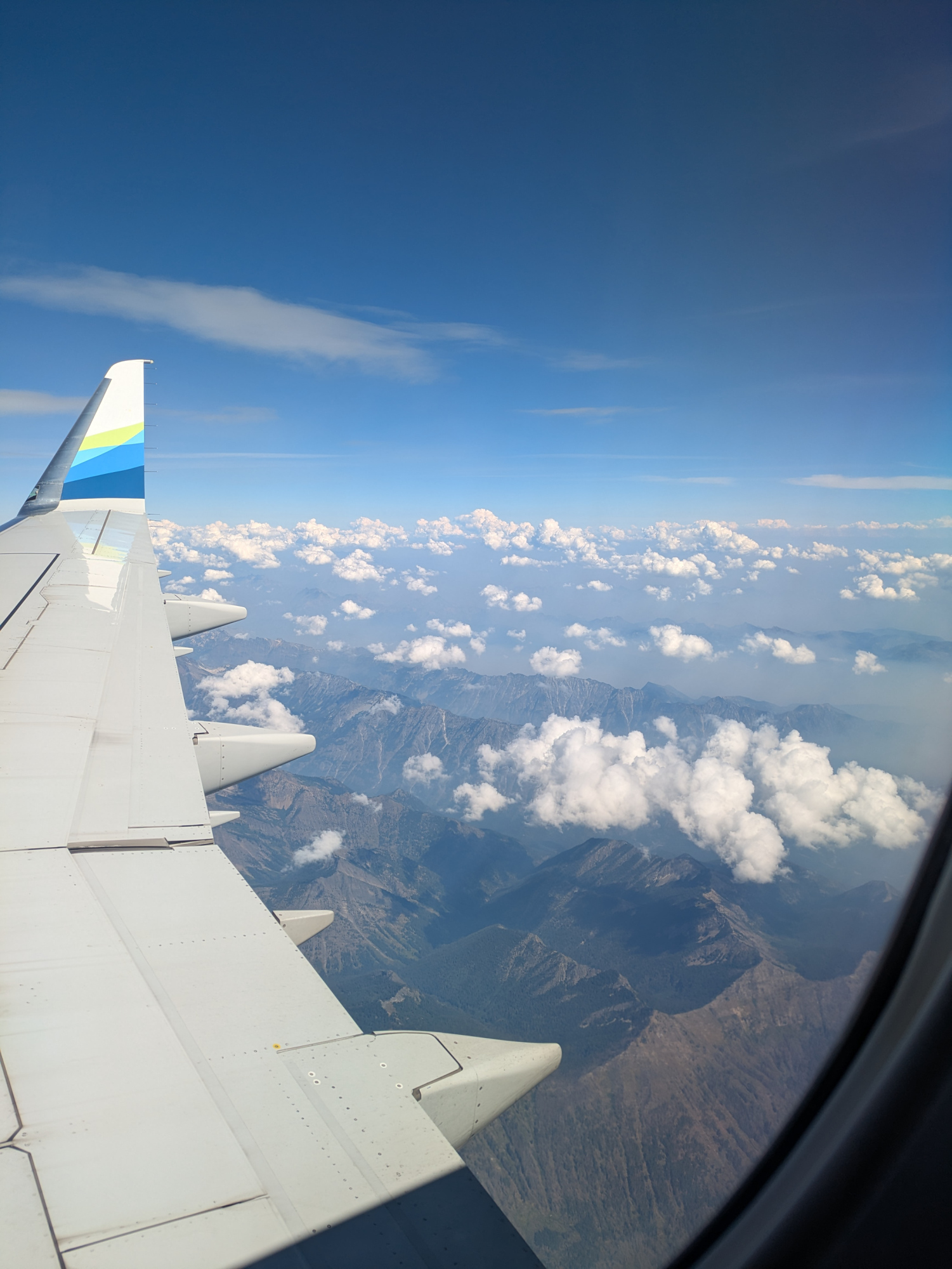
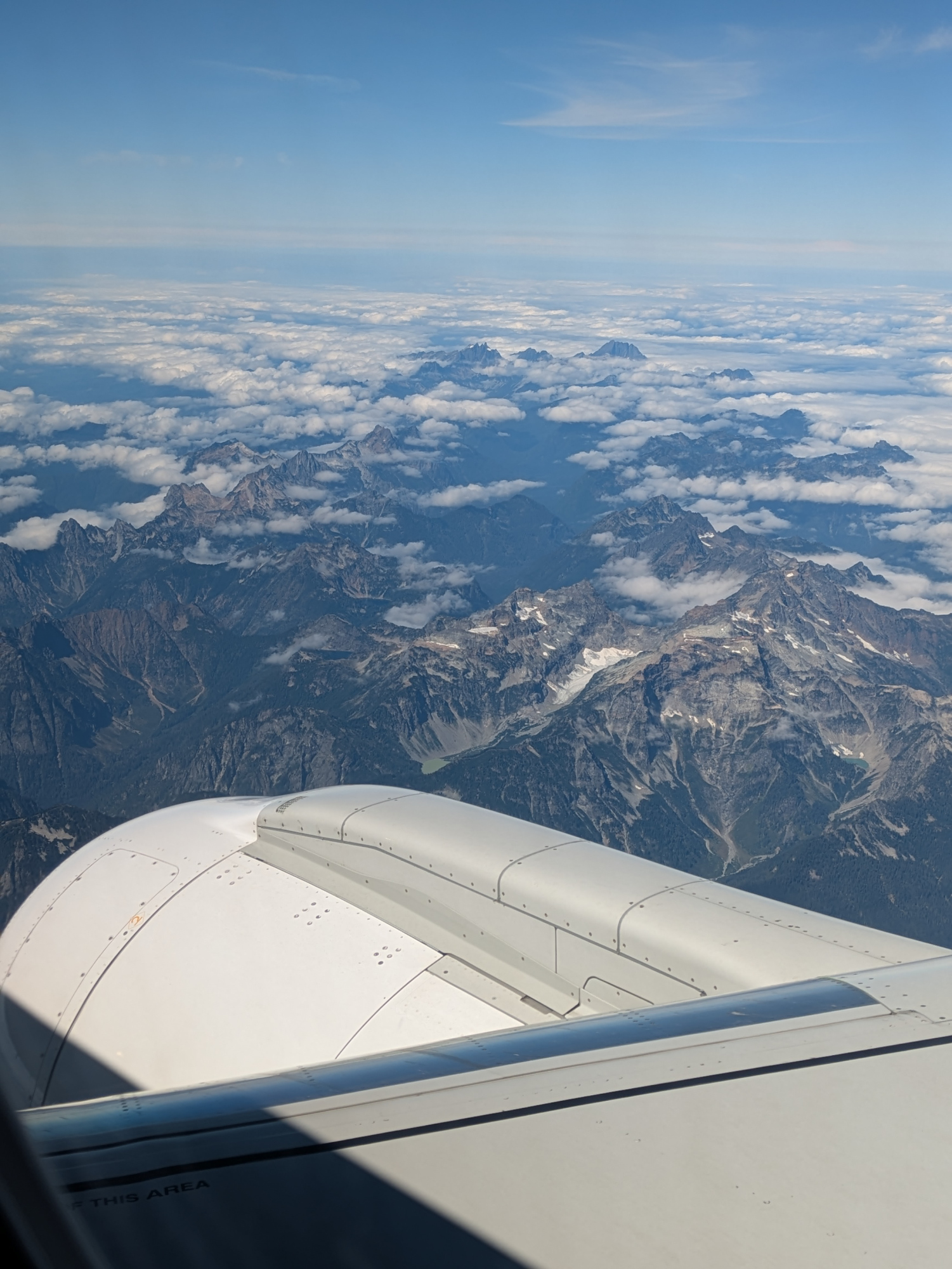
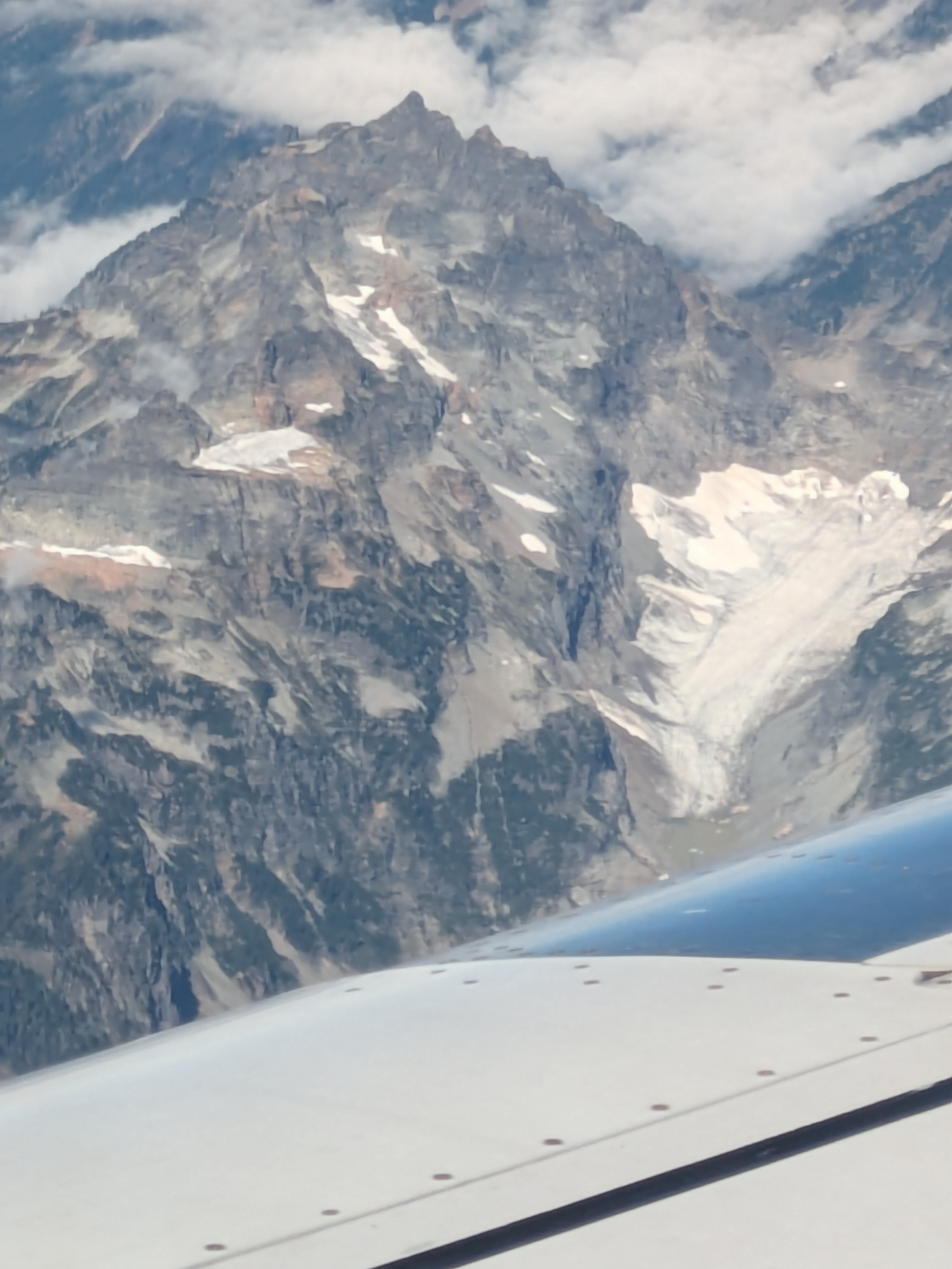
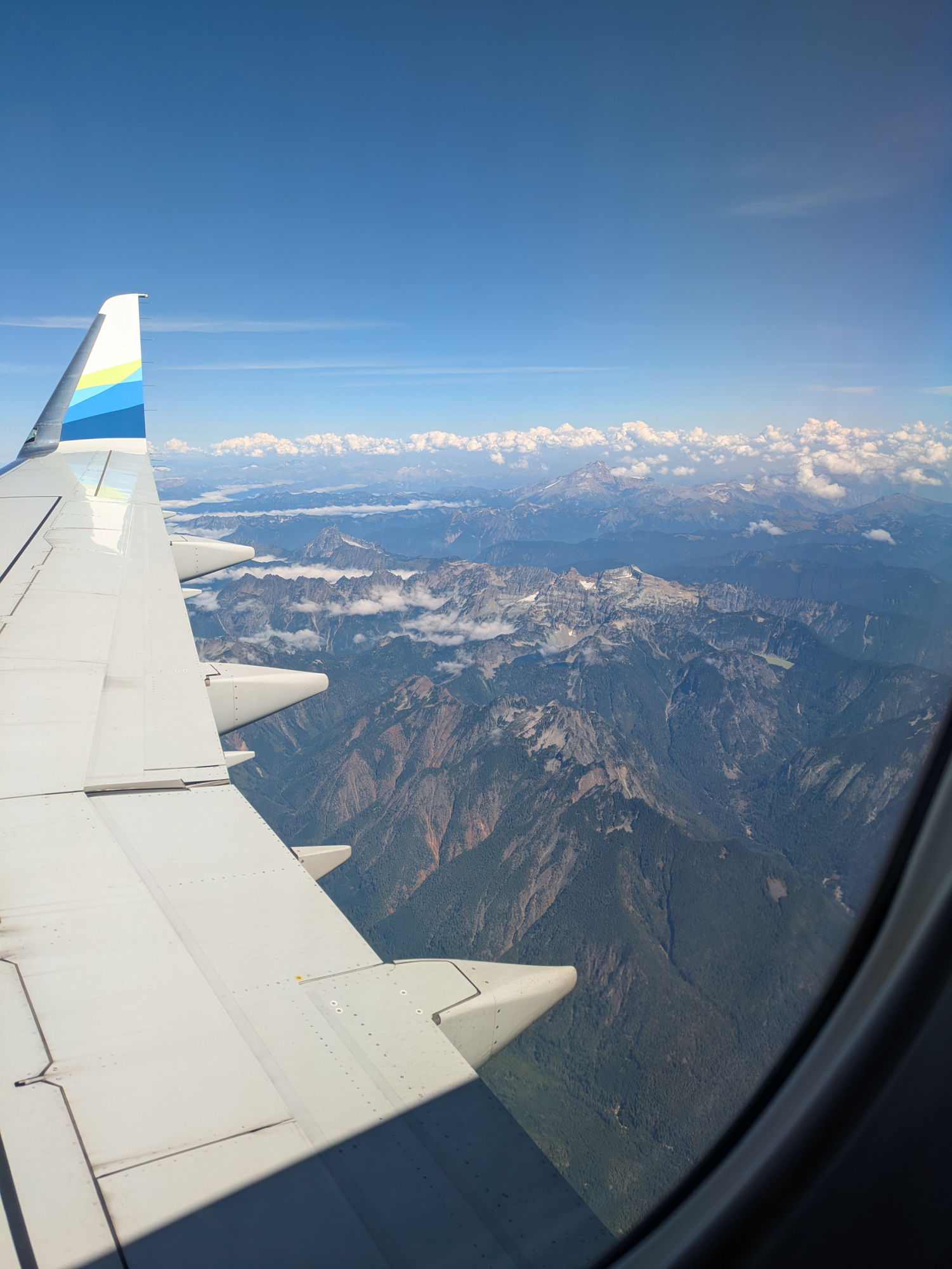
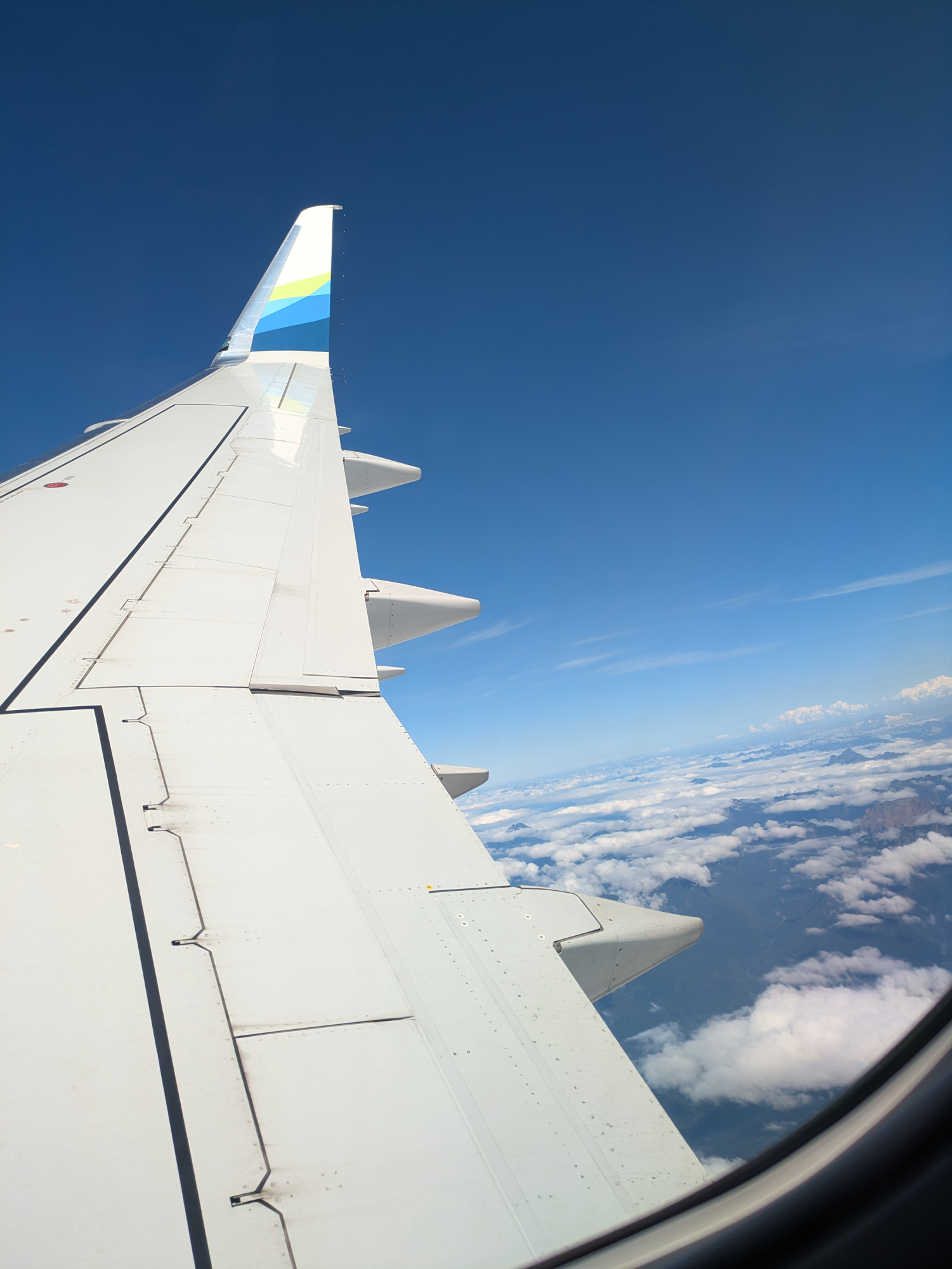
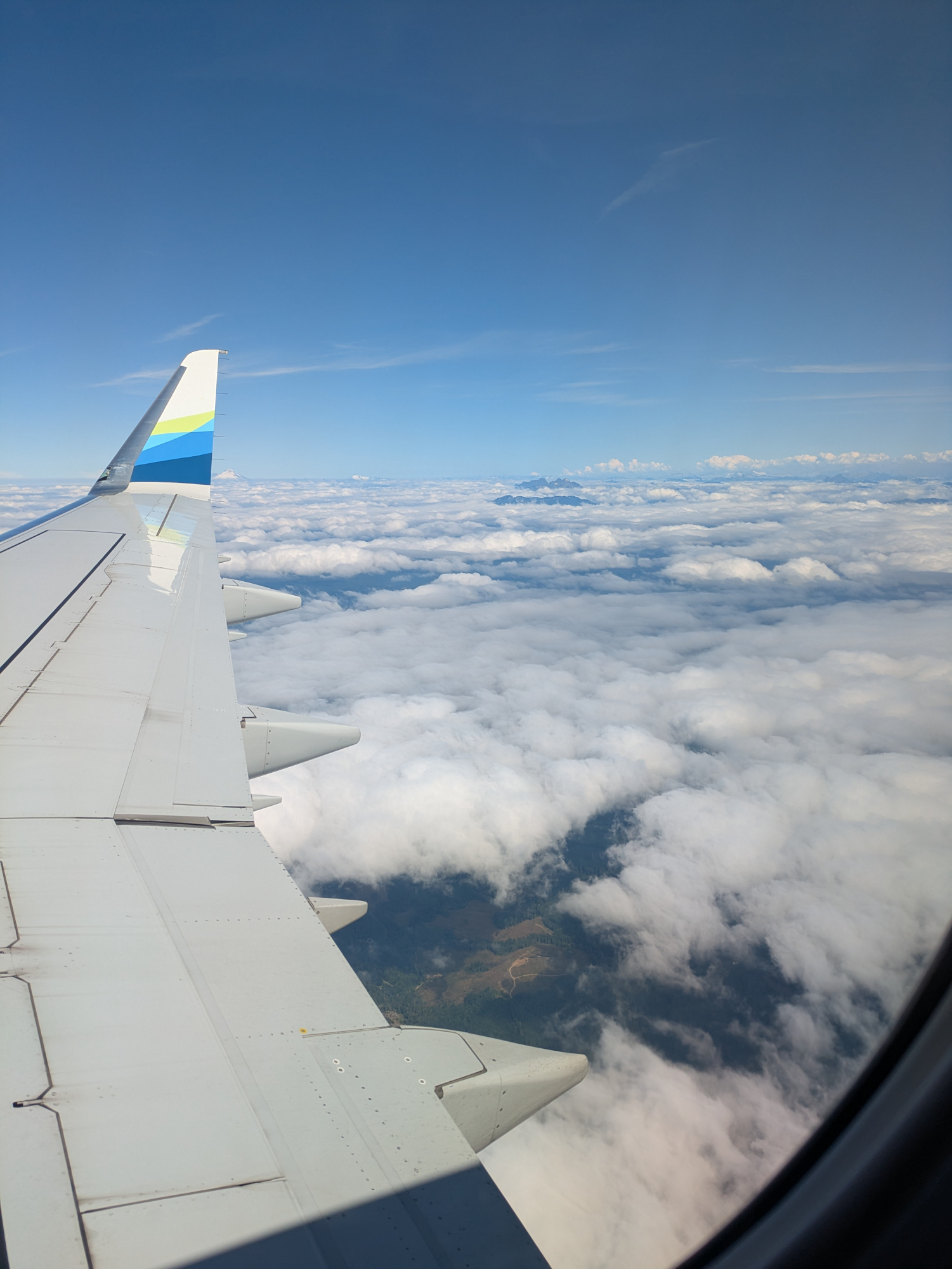
The Space Needle
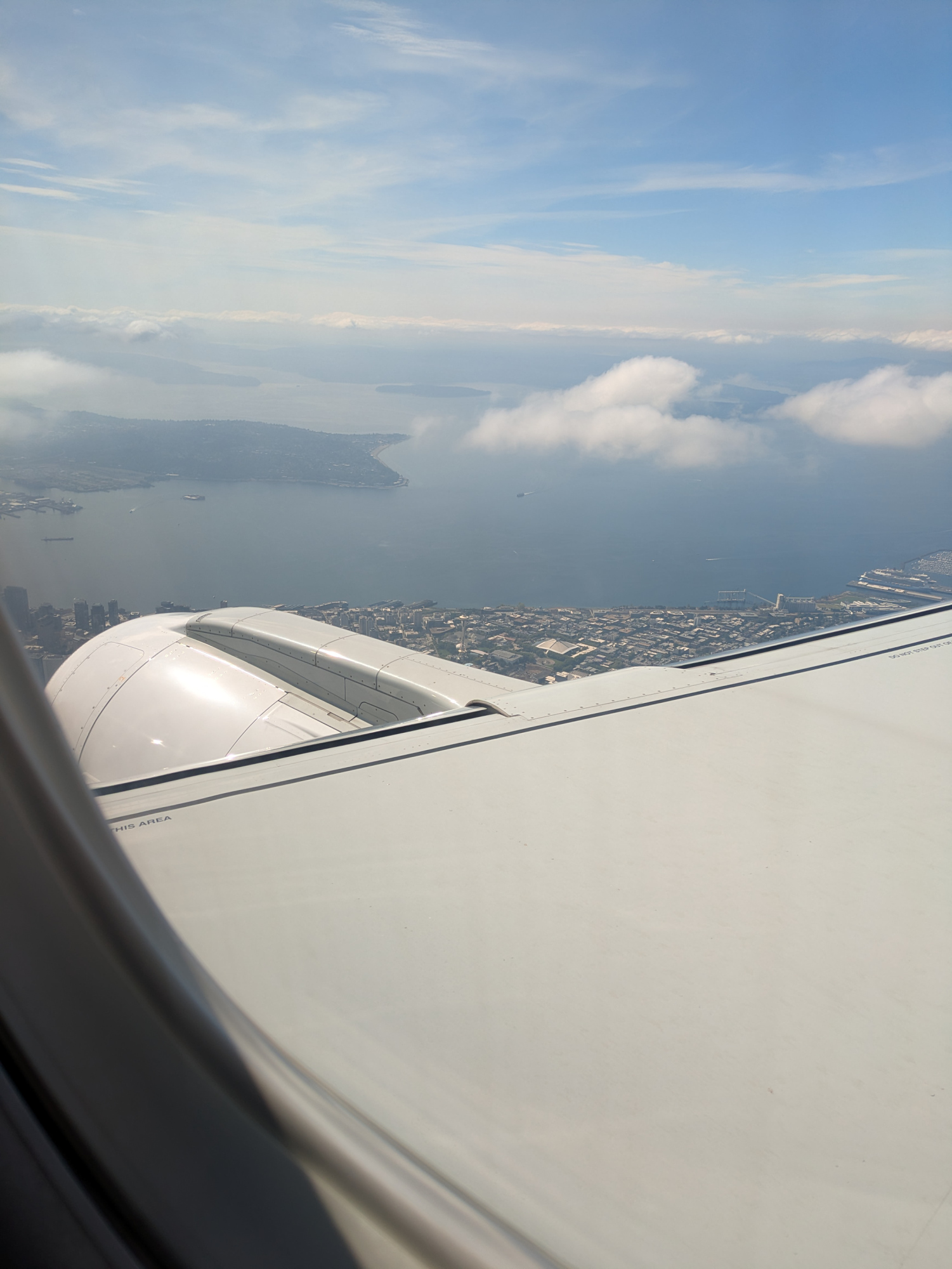
Landing in Seattle
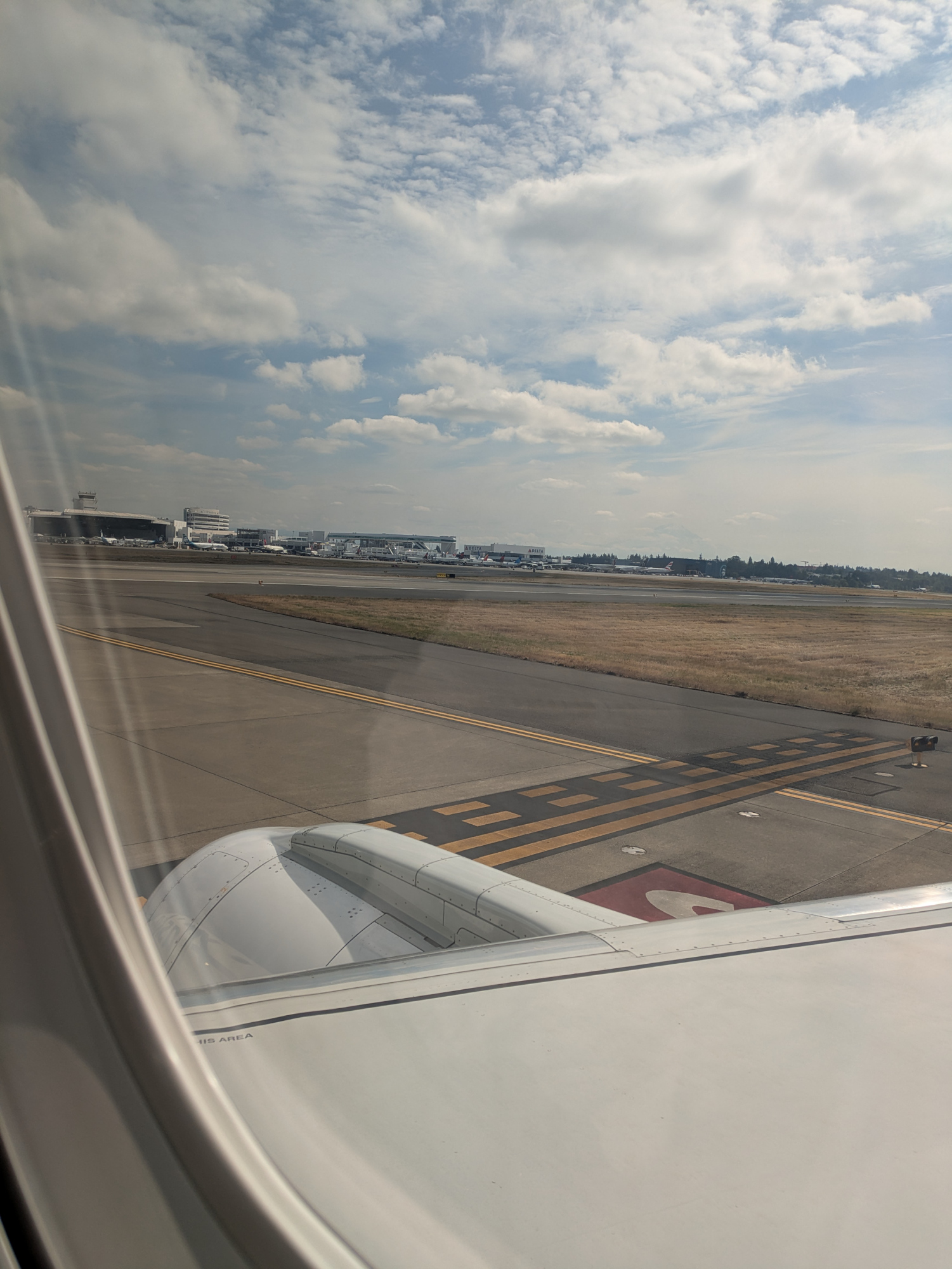
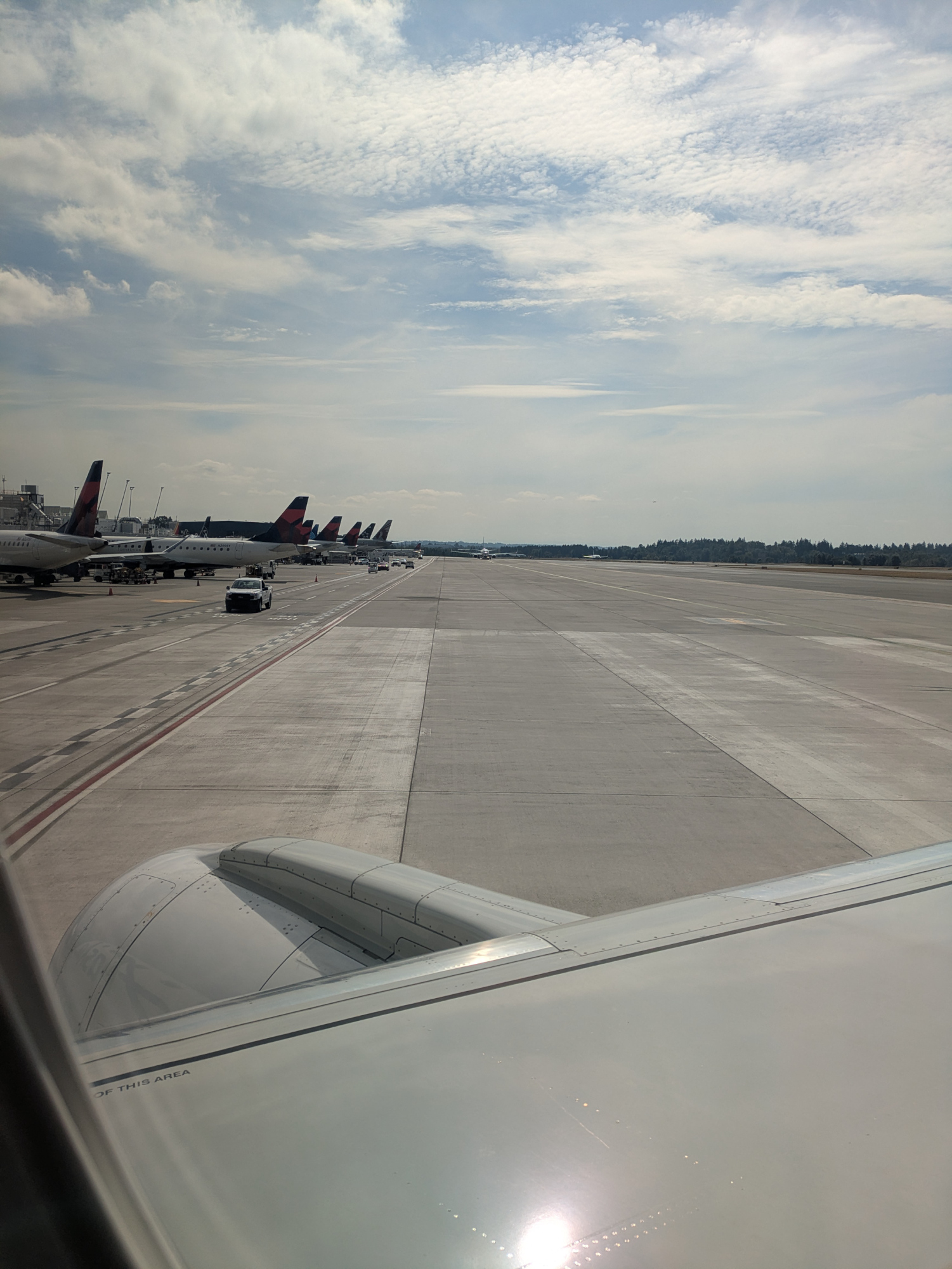
Arrived at Gate Q2
-
Spokane International Airport's code GEG comes from its former name, Geiger Field, named after Major Harold Geiger. The code was retained when the site transitioned from a WWII military base to a commercial airport.
Wikipedia – Spokane International Airport ↩
-
-
Photographing Fireworks at a Distance 🎆
Fireworks Photos with a Long Zoom Lens: A Better Approach
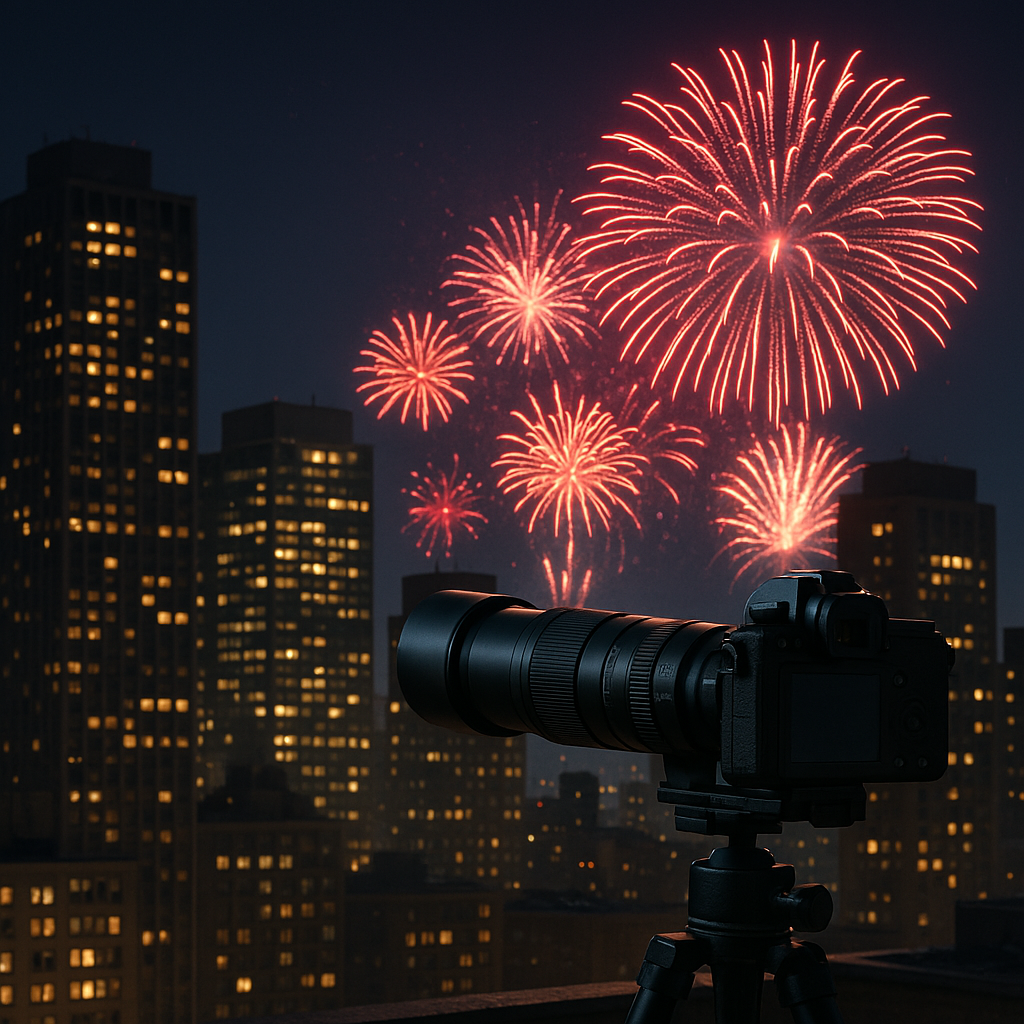
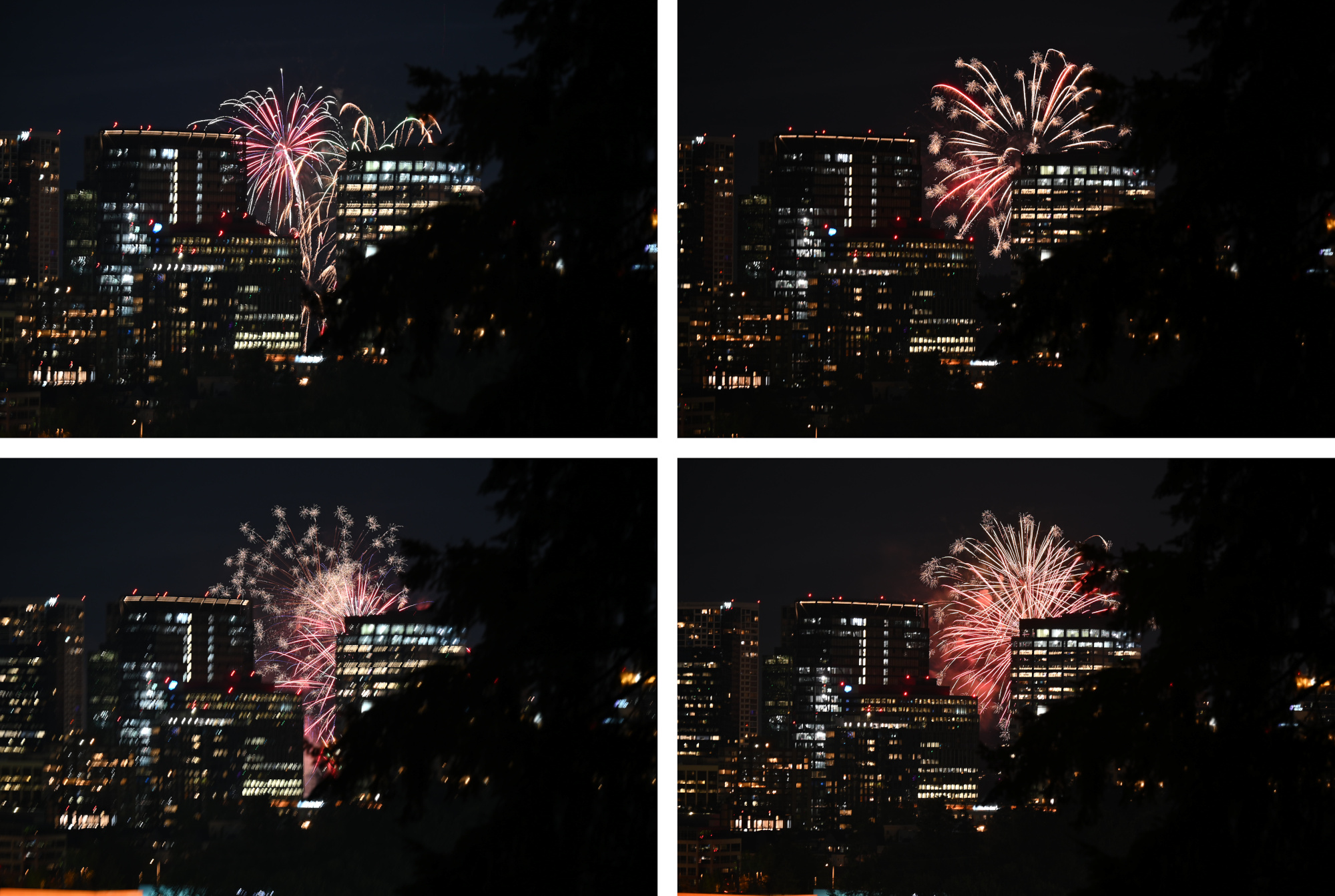
Photographing fireworks from a distance of several kilometers can be tricky if your tripod setup is not absolutely stable, especially when using long exposures. I used a Nikon Z30 with the 50–250mm lens on a tripod, aiming to capture sharp bursts with surrounding buildings in the frame:
📸 Fireworks Photography: The Classic Recipe
Here is the standard setup for capturing fireworks:
- ISO: 100 (or as low as your camera allows)
- Aperture: f/8 to f/11 for sharpness and depth
- Shutter Speed: 2 to 10 seconds (use BULB mode and adjust based on burst duration)
- Focus: Manual, set to infinity or pre-focus on a distant object
- White Balance: Daylight or Auto
- Stabilization: Use a tripod and disable VR
- Remote Trigger: Optional, but helps avoid camera shake
This setup works great when you are close to the action and using a standard or wide-angle lens. But what if the fireworks are several kilometers away, you are shooting with a long zoom, and your tripod setup is not exactly rock-solid? That's where things get interesting.
The Problem
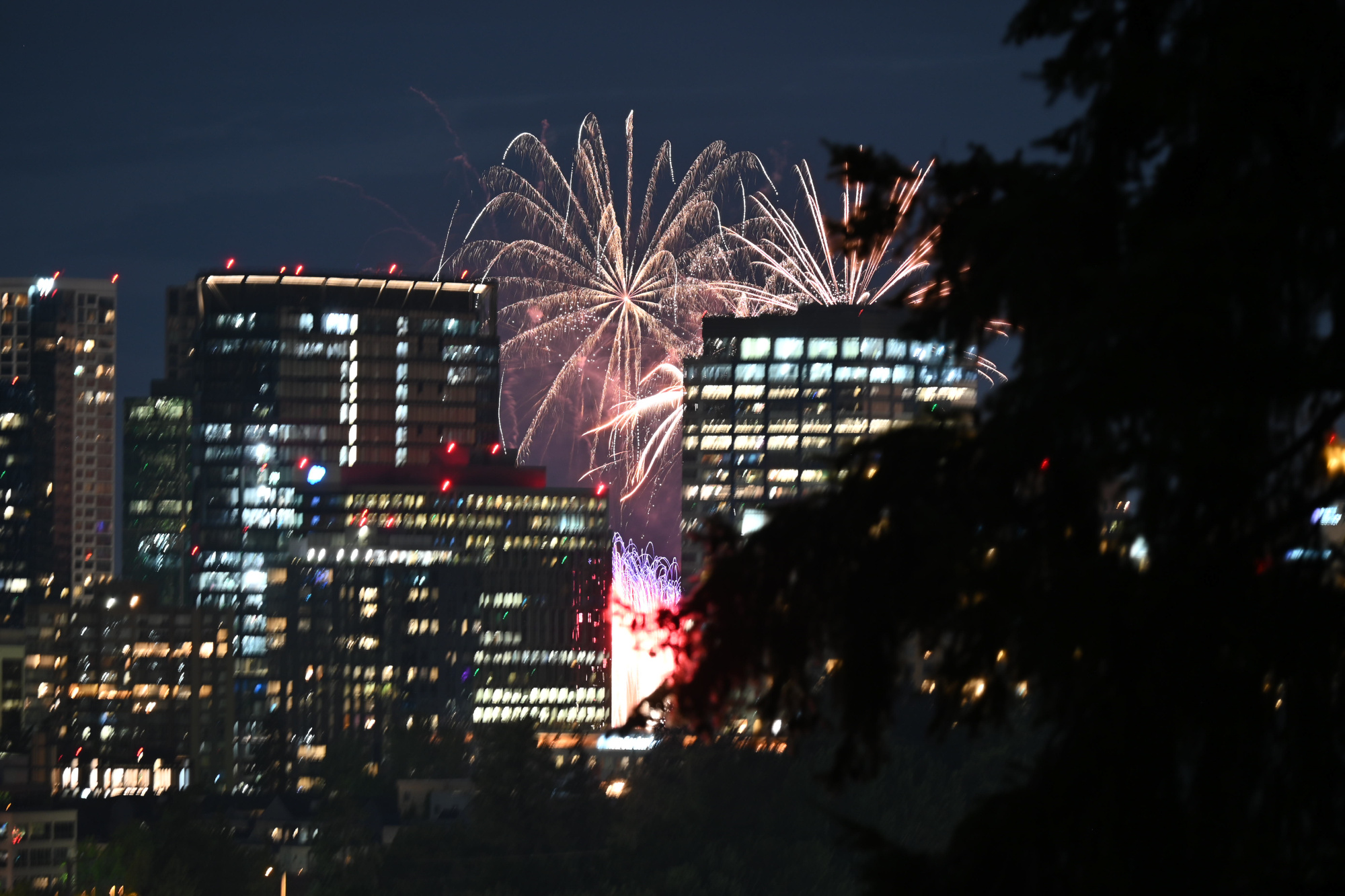
While the fireworks were crisp, the buildings appeared blurry. The cause is vibrations from people walking nearby and the long shutter time (several seconds). Even if you take pictures without a tripod and have VR enabled, the system could not stabilize the image over such long exposures.
And tripods, especially on unstable surfaces, do not eliminate this issue. Using shorter shutter speeds helps reduce motion blur, but it introduces a new challenge: you often miss the perfect moment. Sometimes, all it takes is a fraction of a second to turn a potential masterpiece into a chaotic blur of light.13,0s f/8 ISO 100/21° f=200mm/300mm
The Solution: Slow-Shutter Video
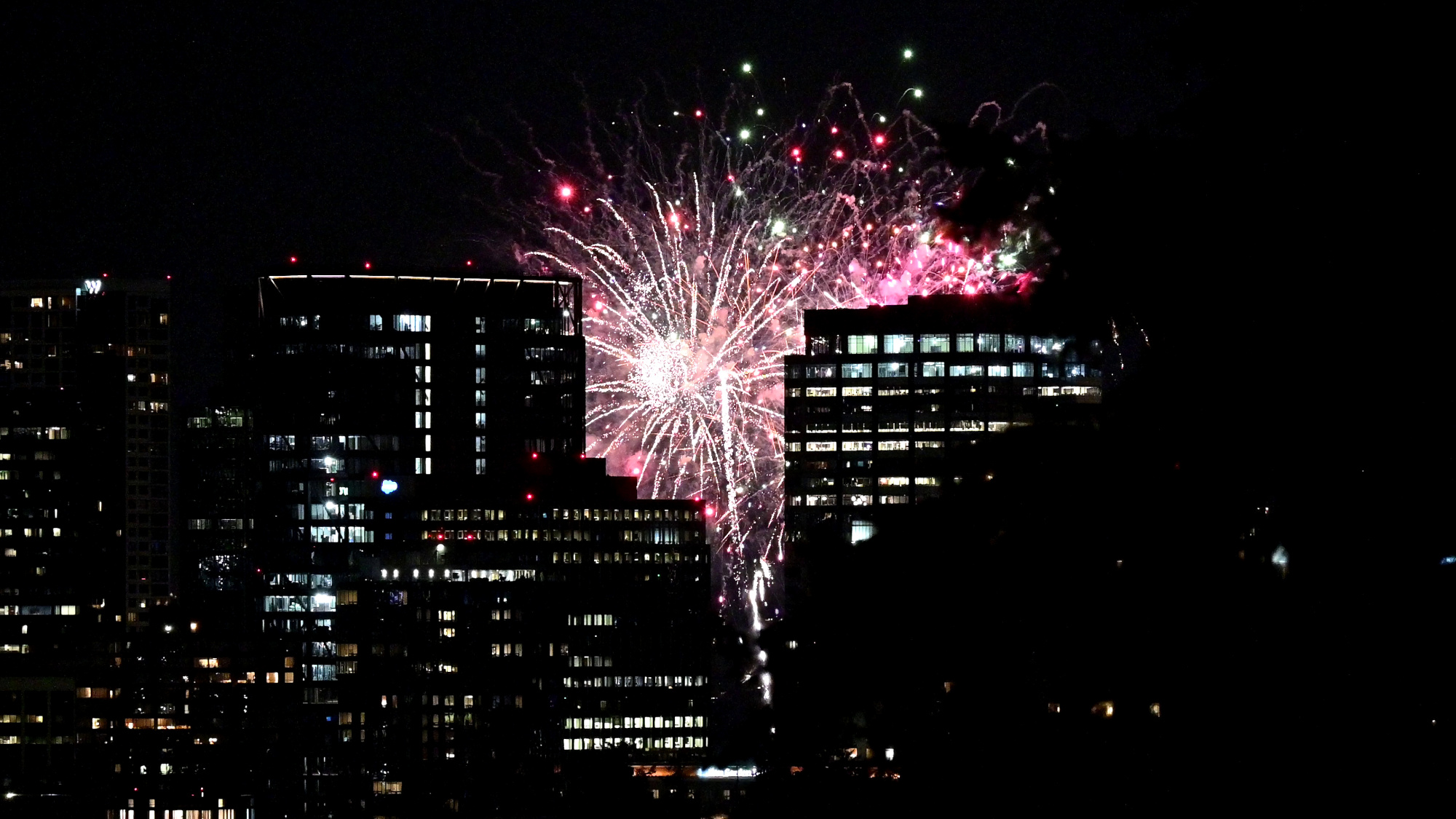
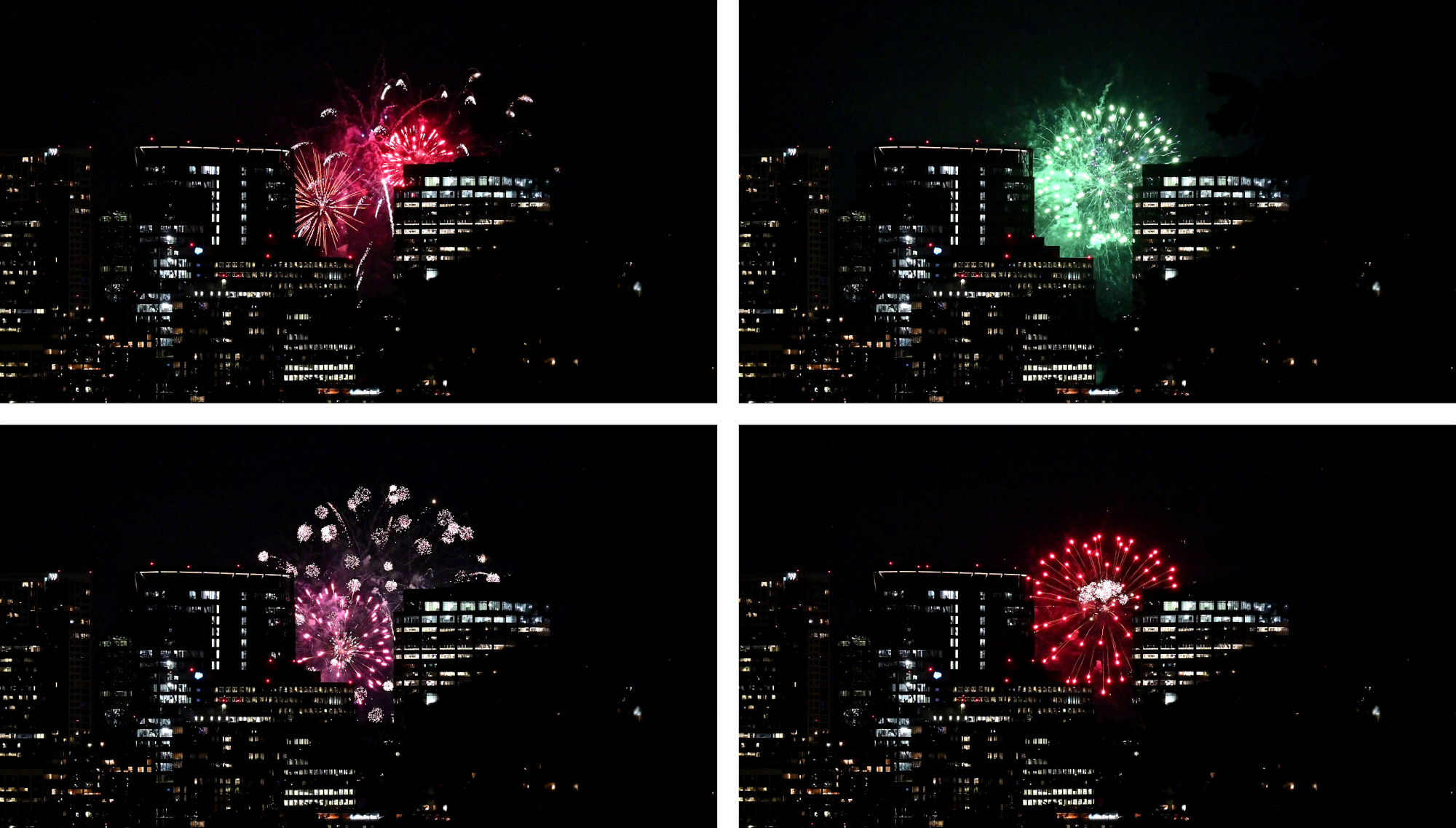
Switching to video mode at 1/25s shutter speed solved the problem:
- Sliding through the video to capture the perfect frame as a new level of content creation
- No motion blur in buildings or other static elements
- Fireworks still looked vibrant and dynamic
- Overall stabilization was noticeably better
You lose the long light trails typical of multi-second exposures, but the bursts remain visually striking.
Instead of hoping to hit the perfect moment with a single shot, just extract stills from the exact frame you want. For example, using VLC (Shift+S or Menu → Video → Take Snapshot) makes it easy to grab high-quality frames directly from your footage.Video resolution these days is 3840×2160. Not far off from stills at 5568×3712 with my camera. That's more than enough to crop, zoom, and relive every spark in crisp detail: gone are the days of grainy VGA 640×480 clips from early digital cameras. The kind that looked halfway decent on a VHS-era TV. This is not VHS anymore. This is IMAX, and you are in the front row.
-
University of Washington
It is finals week for spring quarter at the University of Washington (UW), and graduation celebrations are just beginning. The weather is good, and with the UW campus full of open spaces and interesting buildings, it is the right time for panoramas and for capturing every pixel from zenit to nadir.
Overview
Campus Landmarks
Academic Buildings
- Suzzallo Library
- School of Art and School of Music
- School of Art
- Denny Hall
- Smith Hall and Miller Hall
- Communications Building
Bridges & Pathways
Panoramas
All panoramas photographed that day were taken without a tripod using a Nikon Z30 with a 7.5mm Fisheye Lens. In the library, this was necessary anyway, since photography is allowed but tripods are not permitted in the UW Libraries.
Red Square
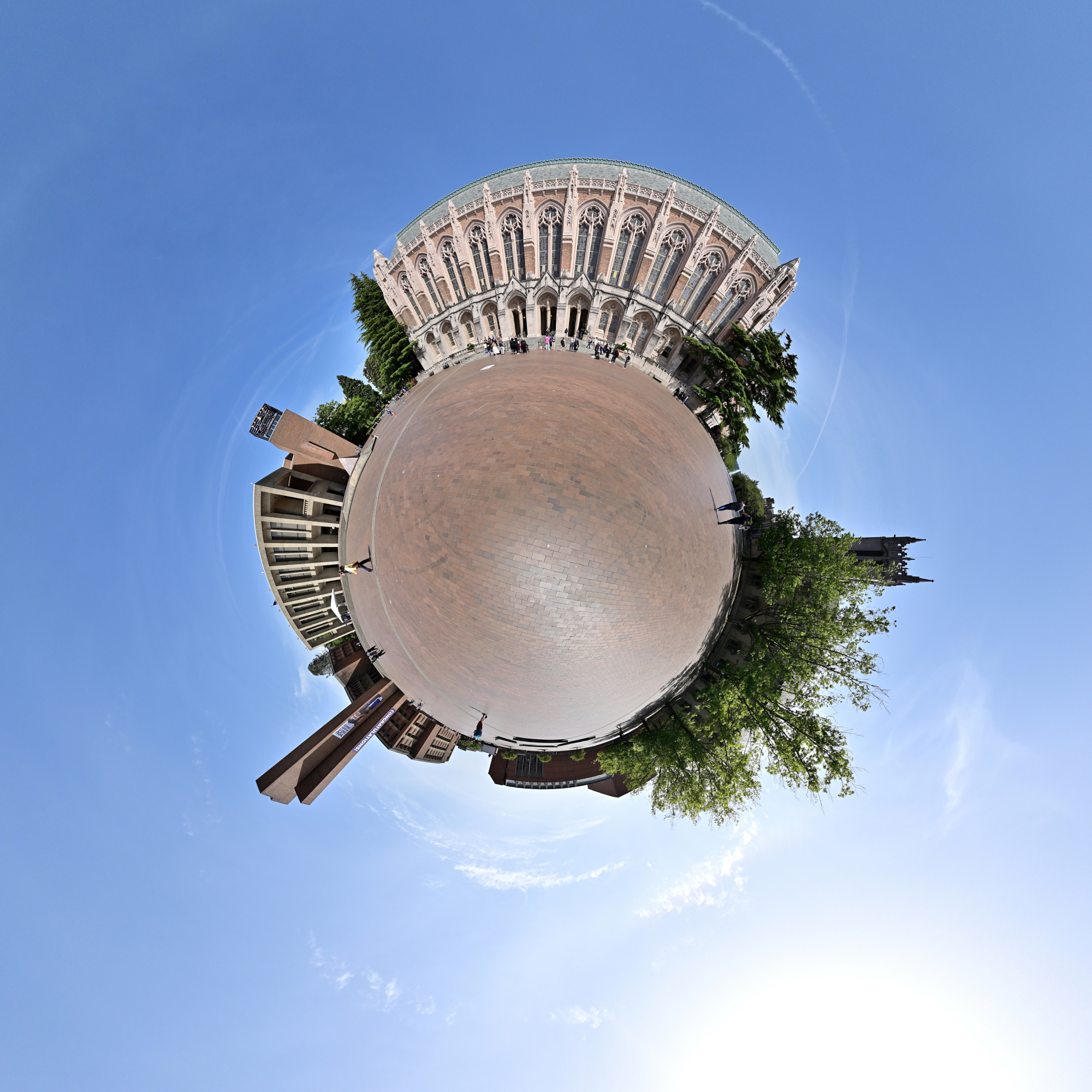
This panorama captures Red Square, a central open space on the University of Washington campus known for its iconic views and architectural surroundings.
Interactive Panorama Red Square
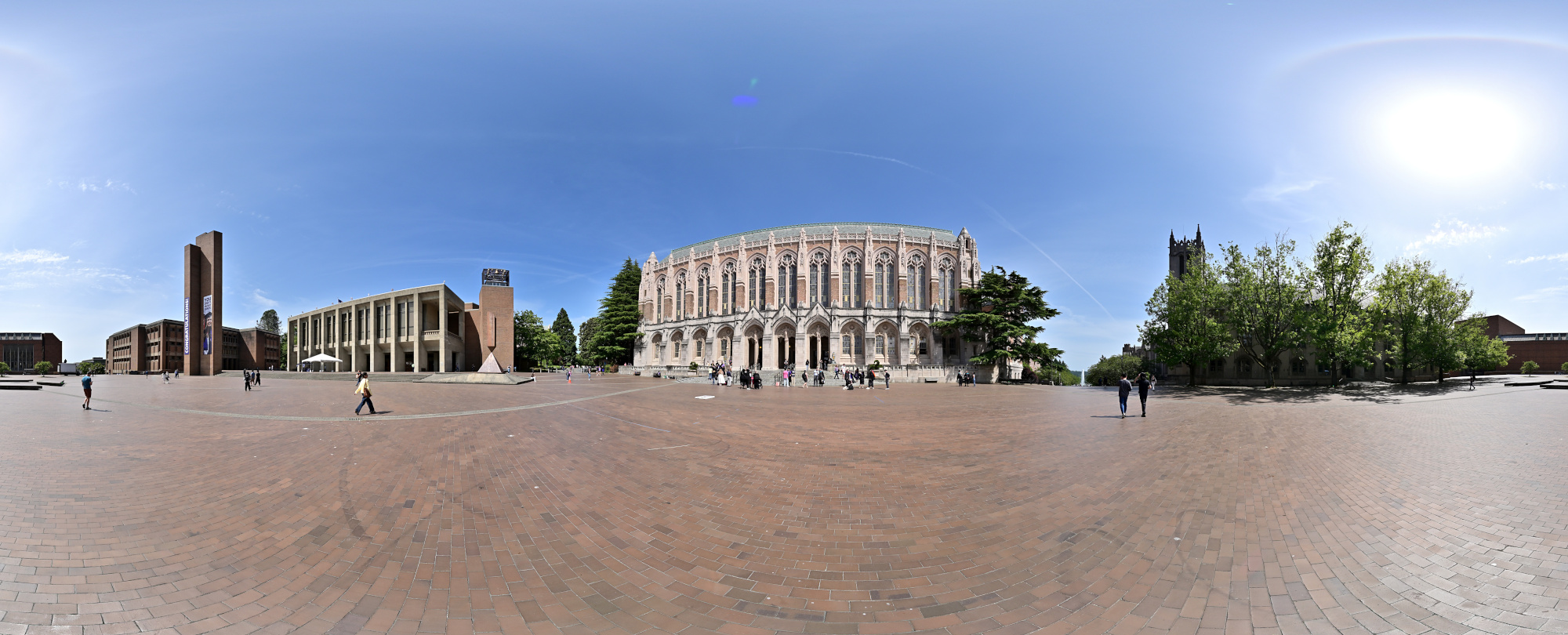
1/1000s f/5,6 ISO 100/21° f=7,5mm
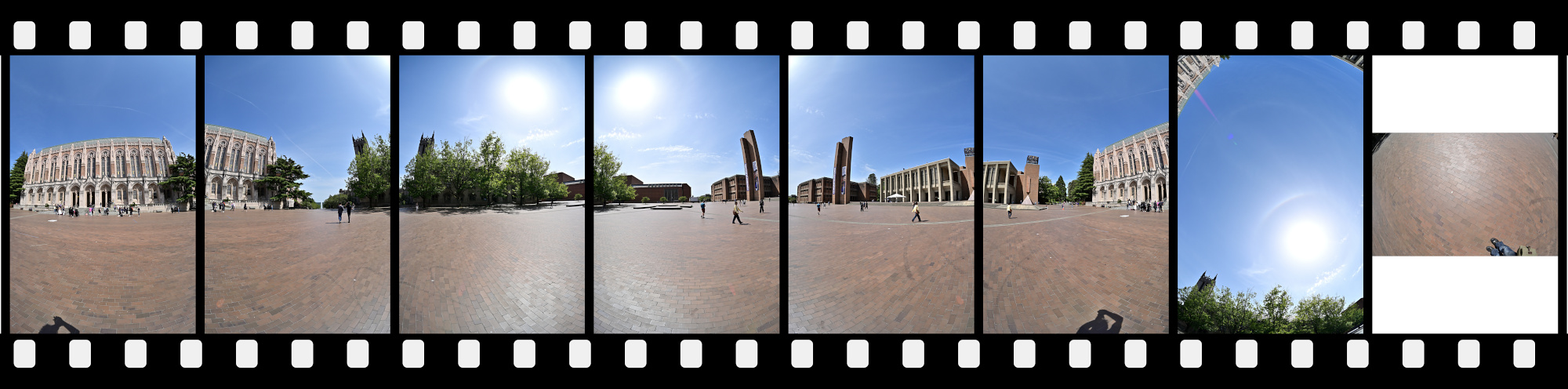
Suzzallo Library
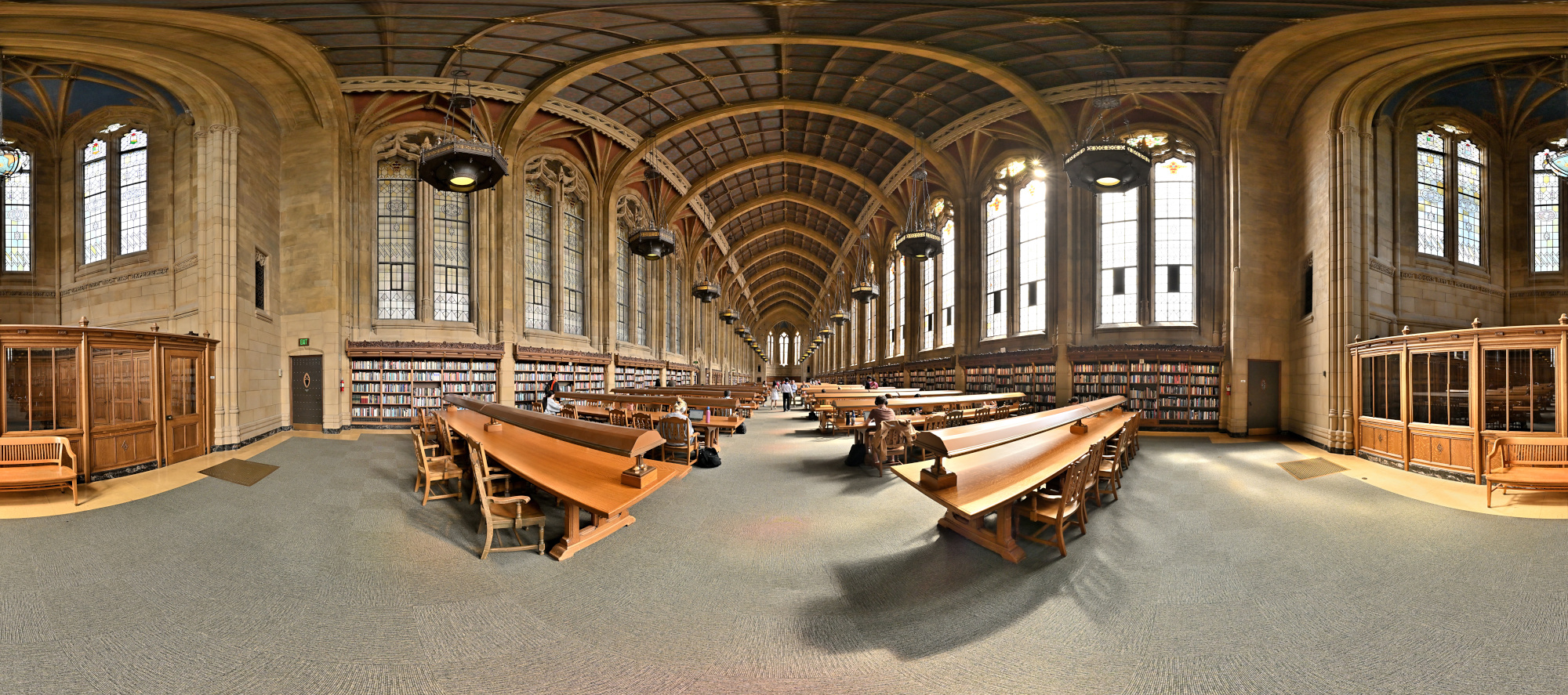
Suzzallo Library stands as one of the University of Washington's most iconic buildings, with its grand Gothic architecture lending a timeless presence to the campus landscape.
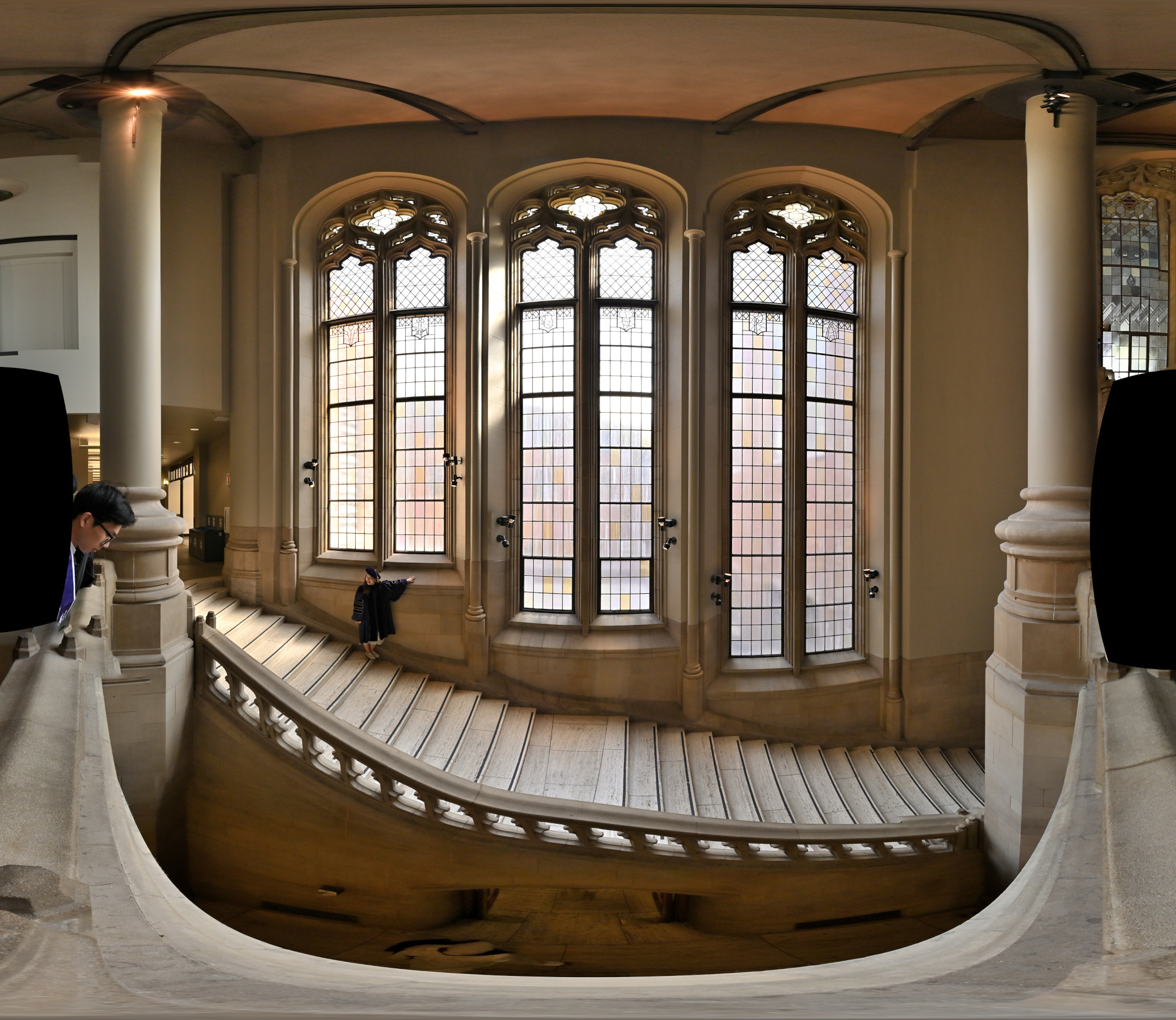
Suzzallo Library Reading Room
Interactive Panorama Suzzallo Library 1
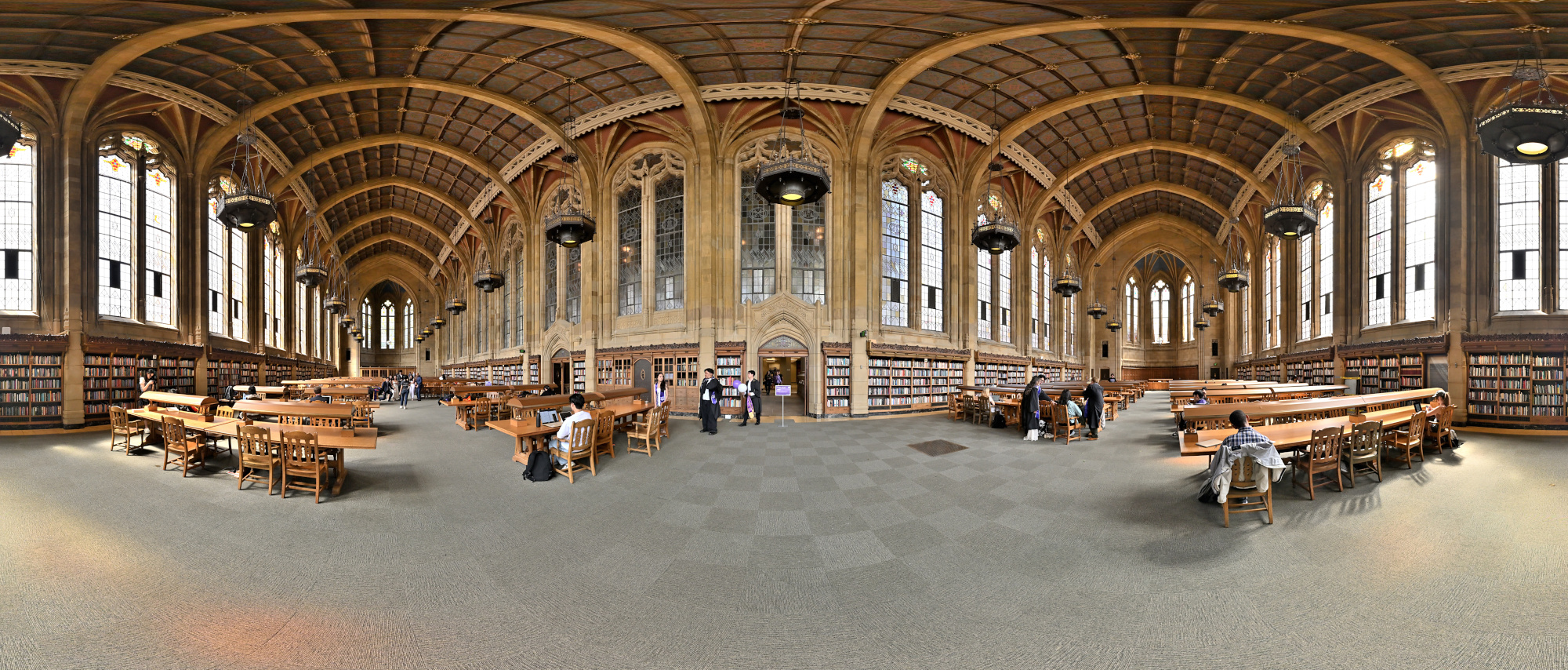
1/125 f/5,6 ISO 320/26° f=7,5mm
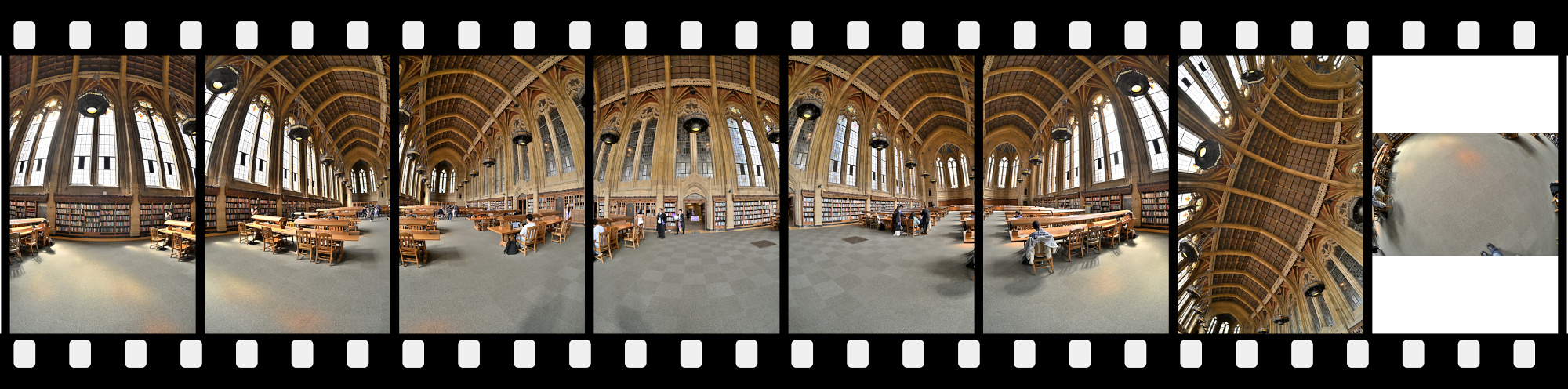
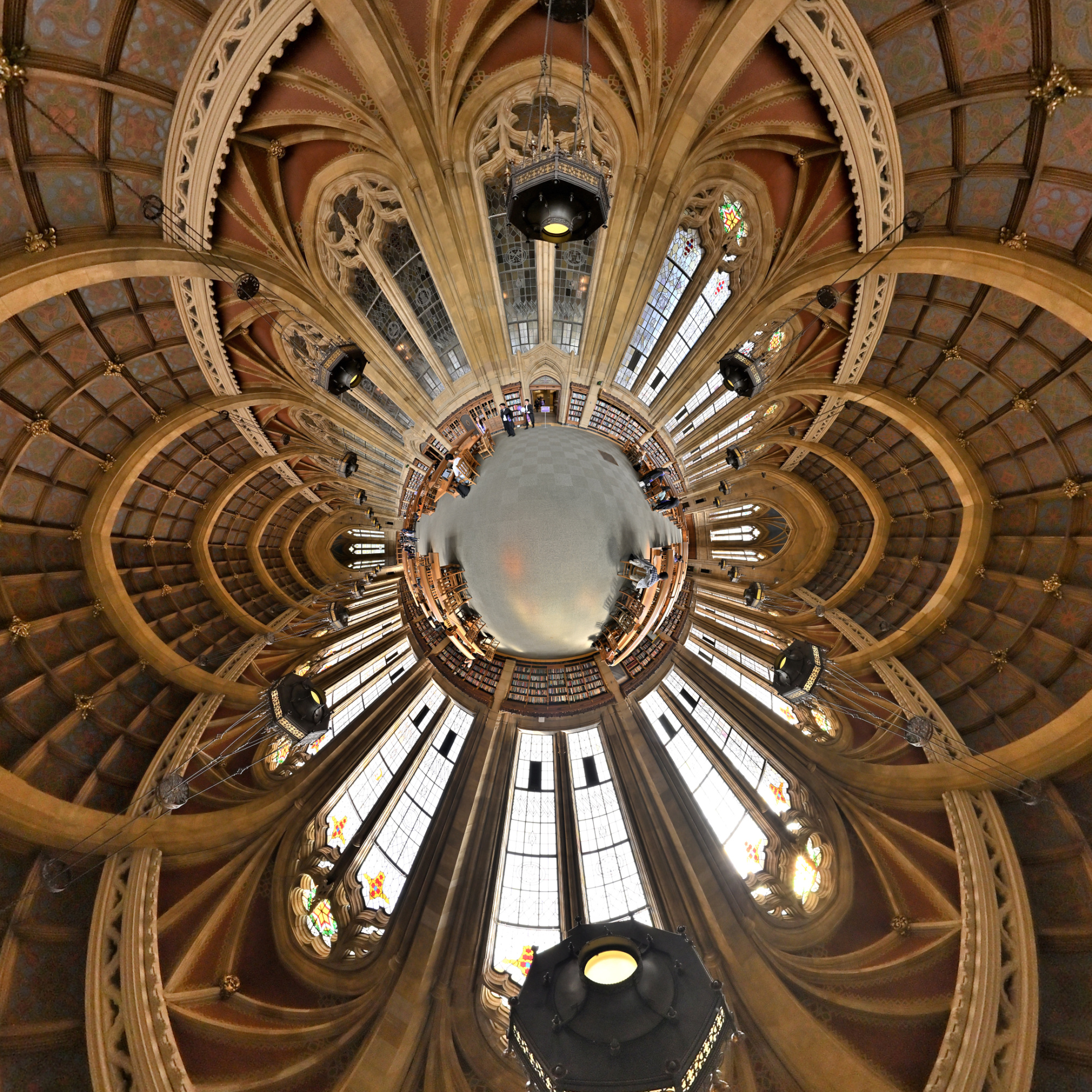
Interactive Panorama Suzzallo Library 2
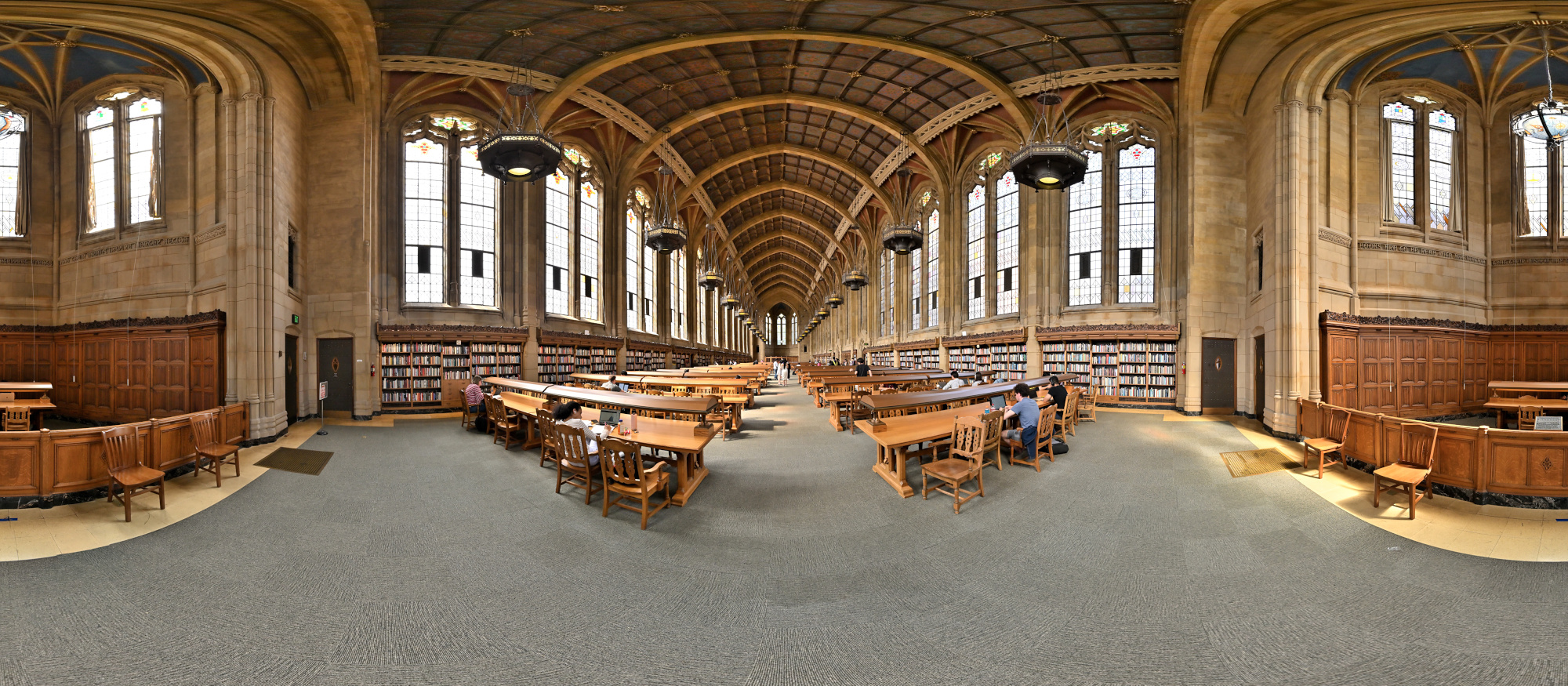
1/125 f/5,6 ISO 320/26° f=7,5mm
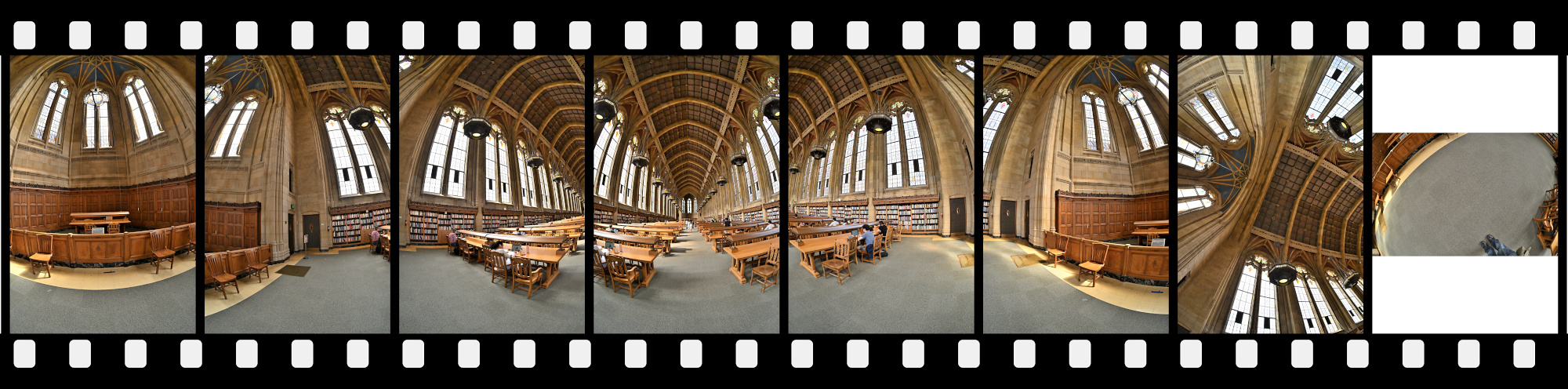
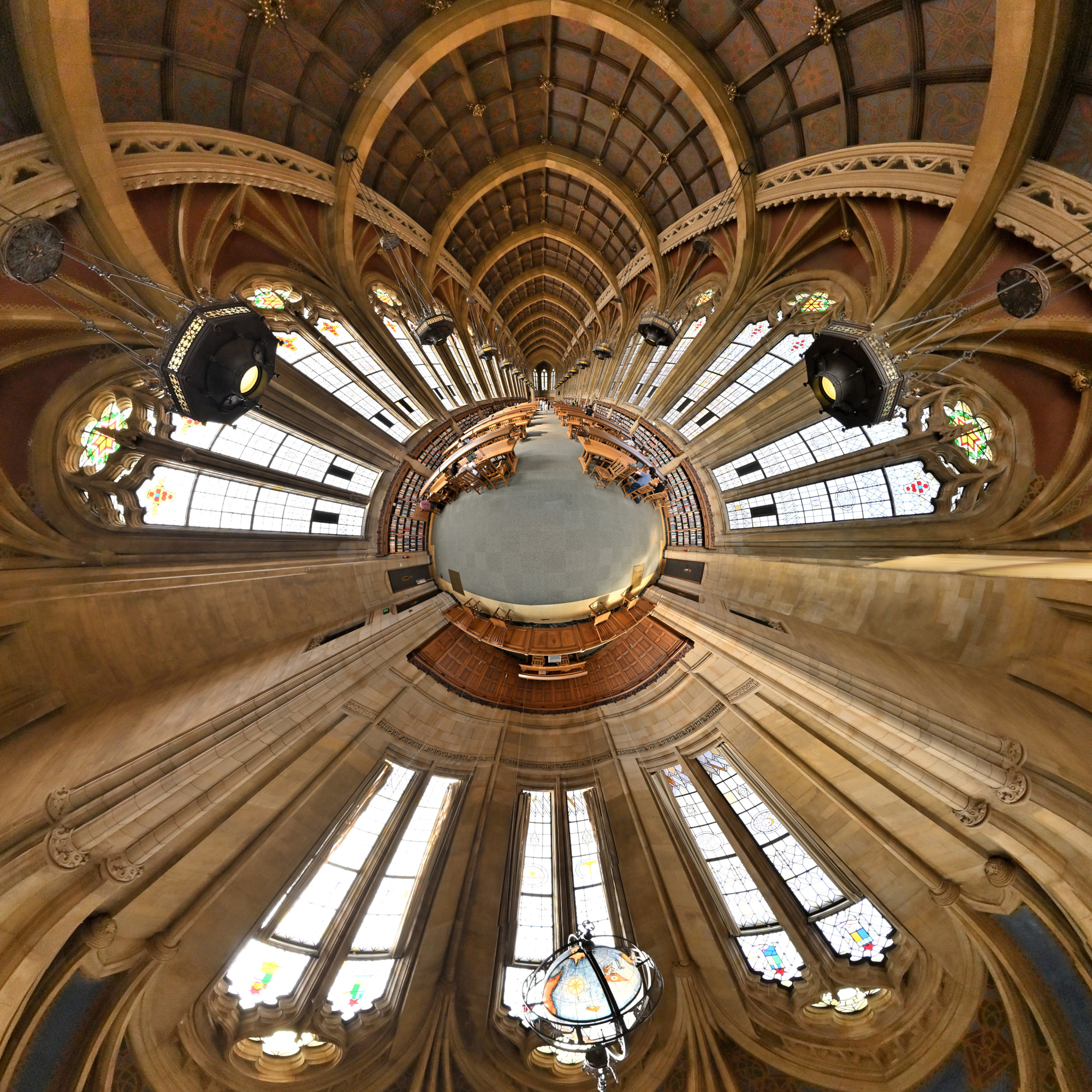
Interactive Panorama Suzzallo Library 3
1/125 f/5,6 ISO 320/26° f=7,5mm
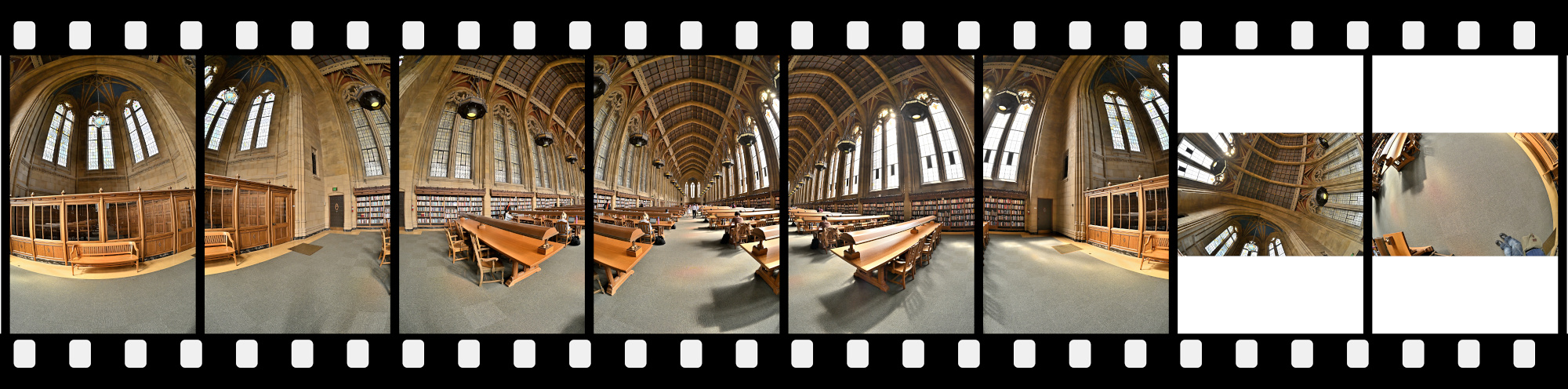
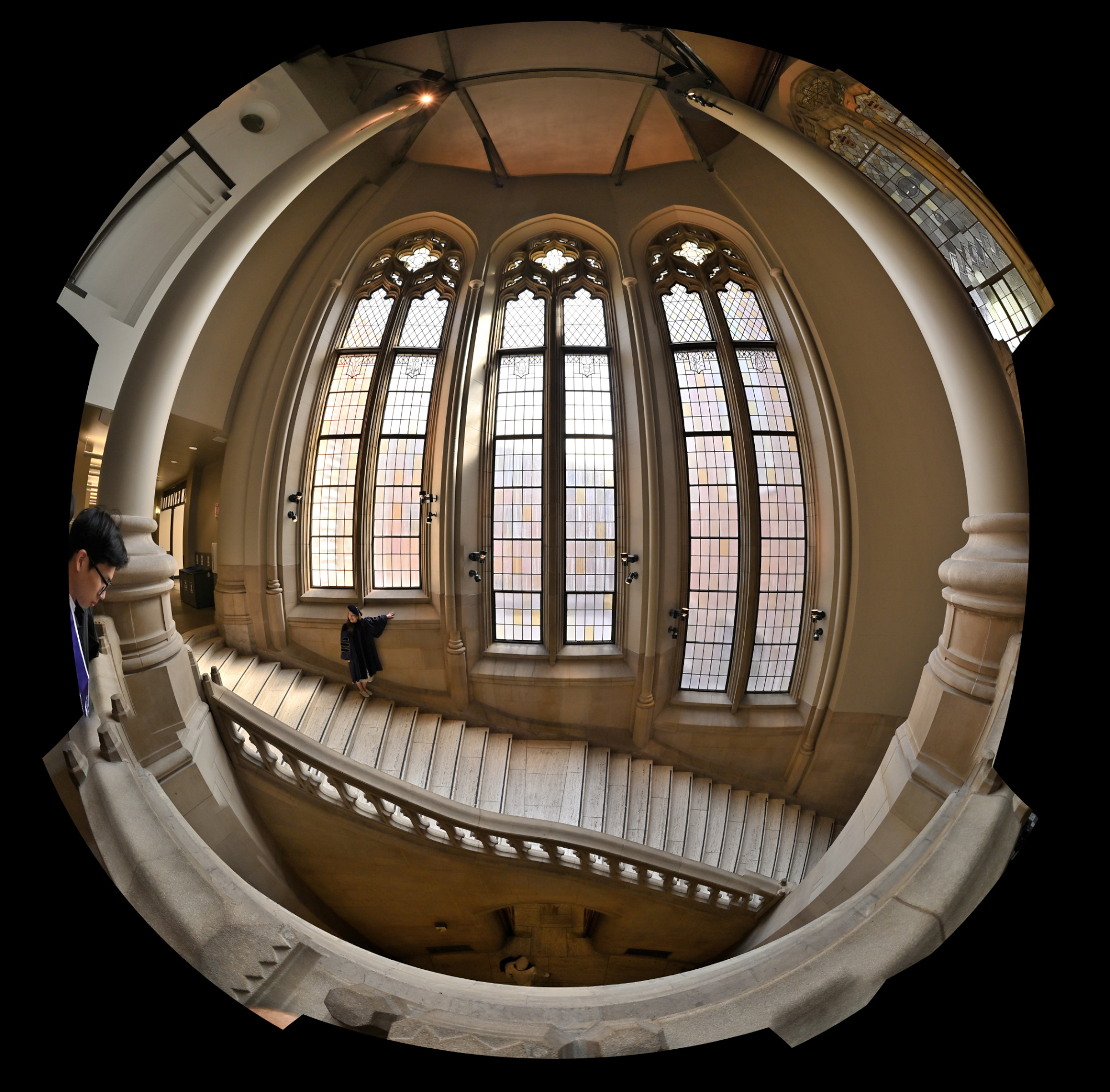
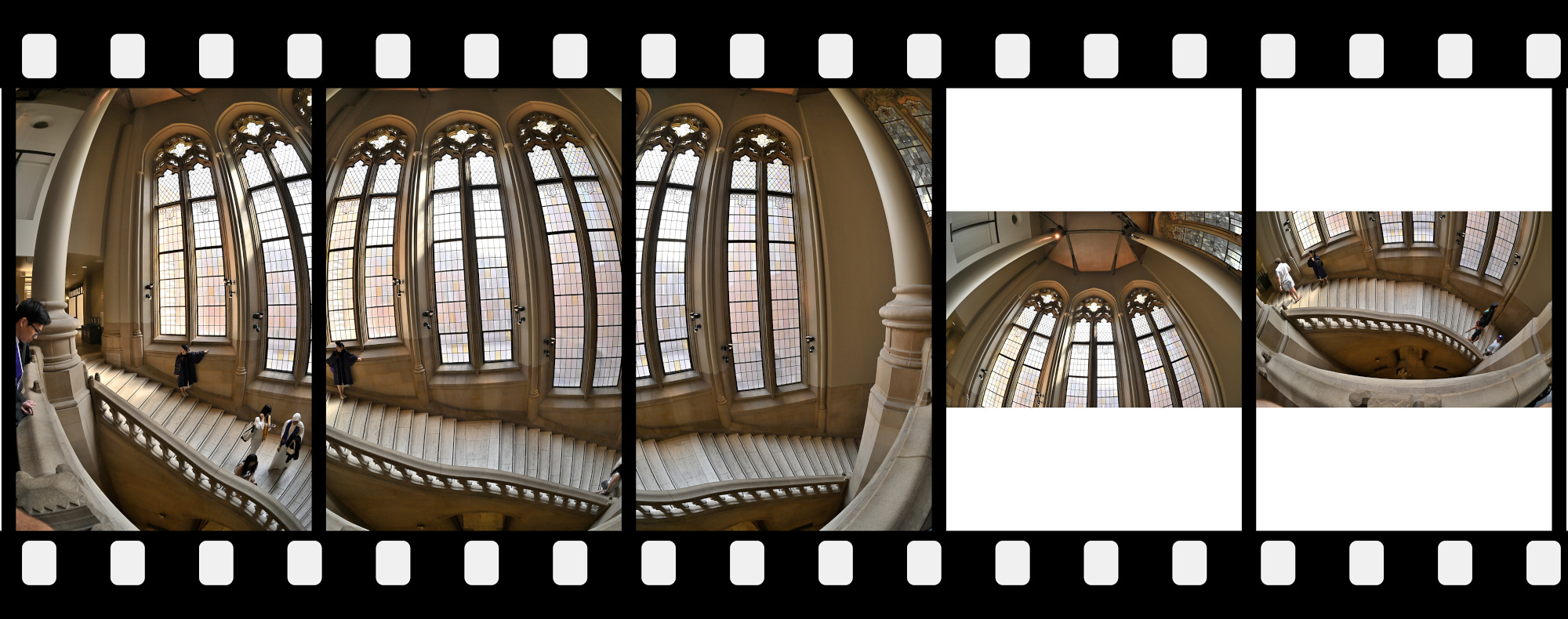
Suzzallo Library Treppenaufgang 1x3
1/125s f/5,6 ISO 1320/26° f=7,5mm
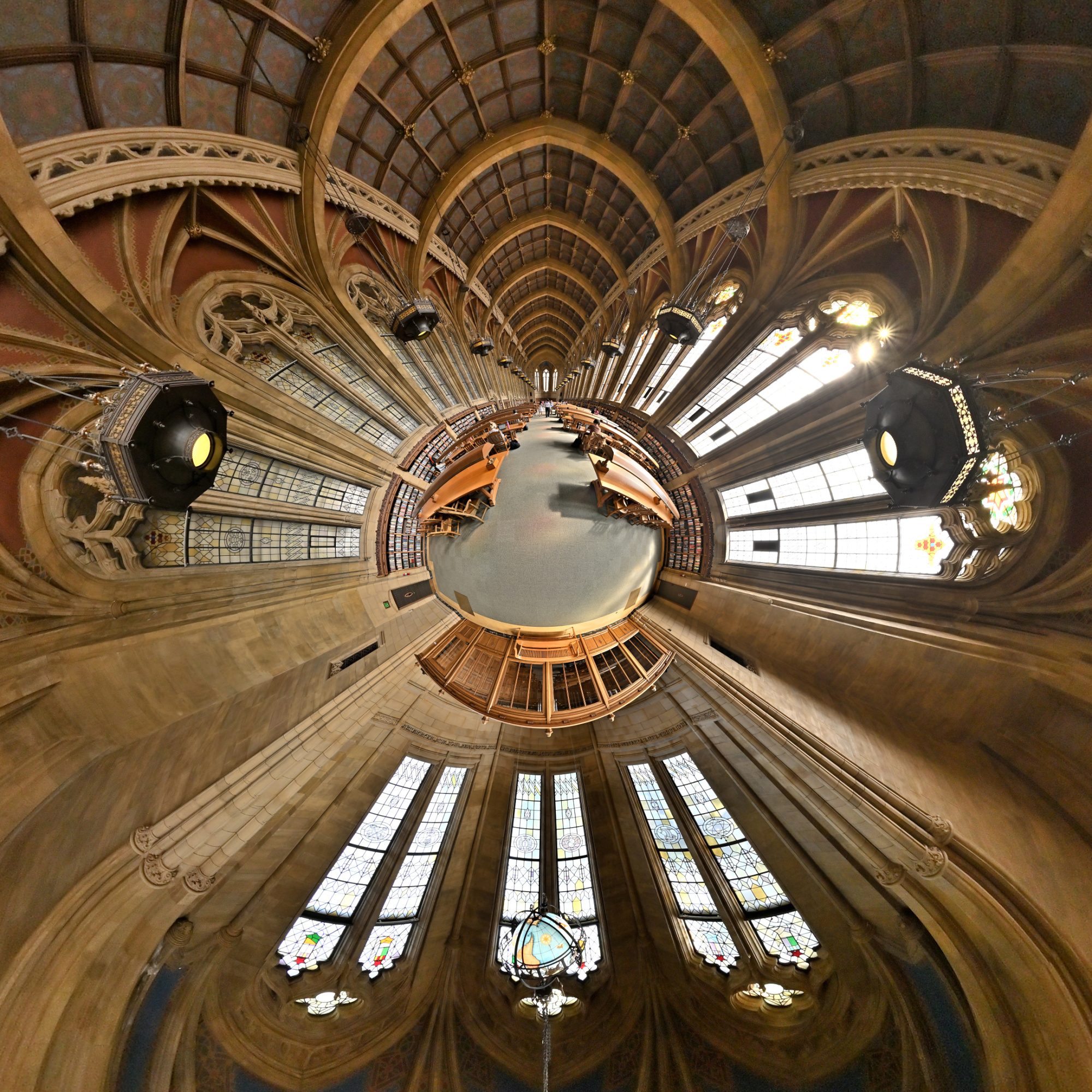
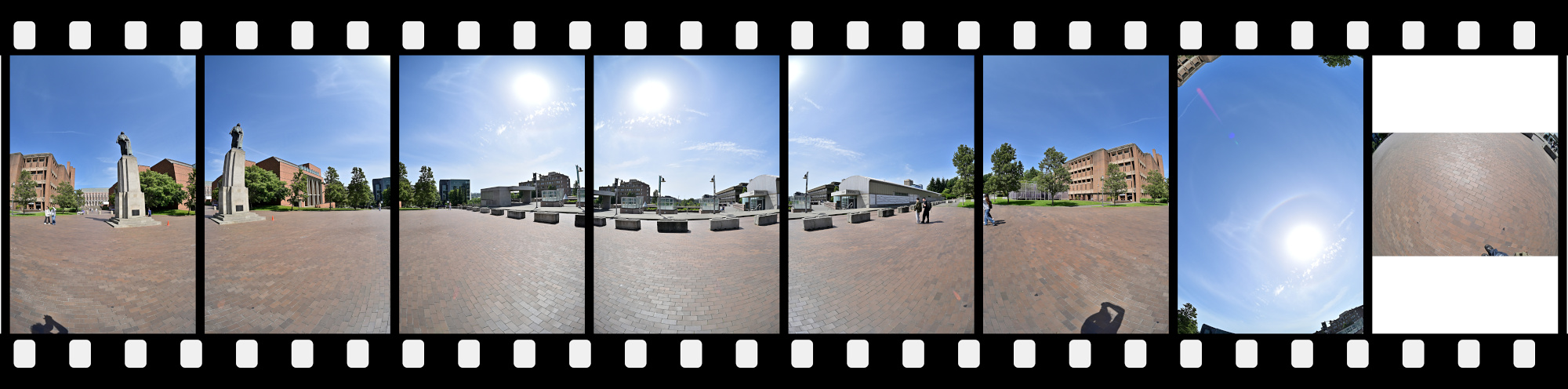
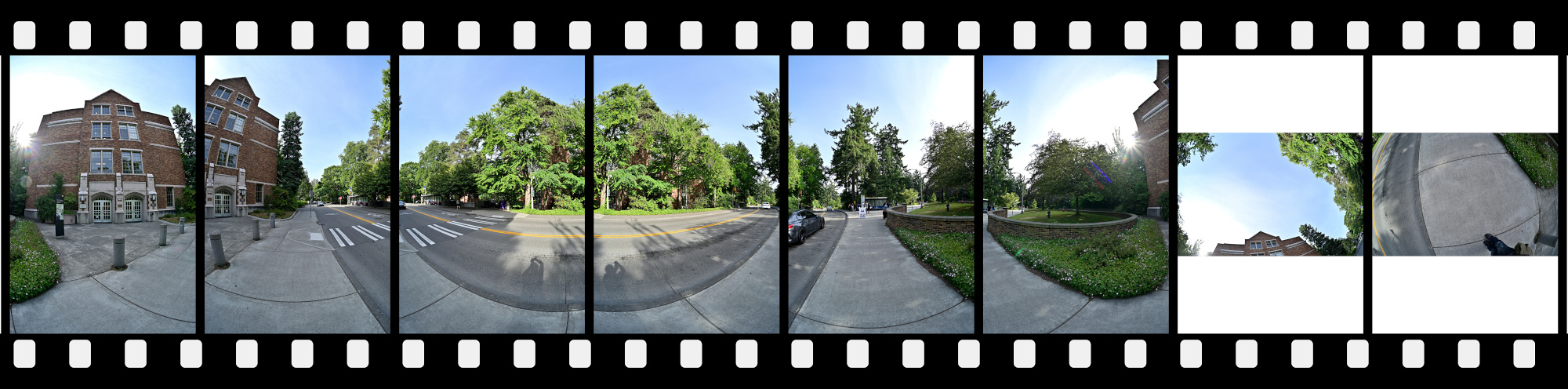
Circular Fisheye projection
Equirectangular projection
3 + up + down
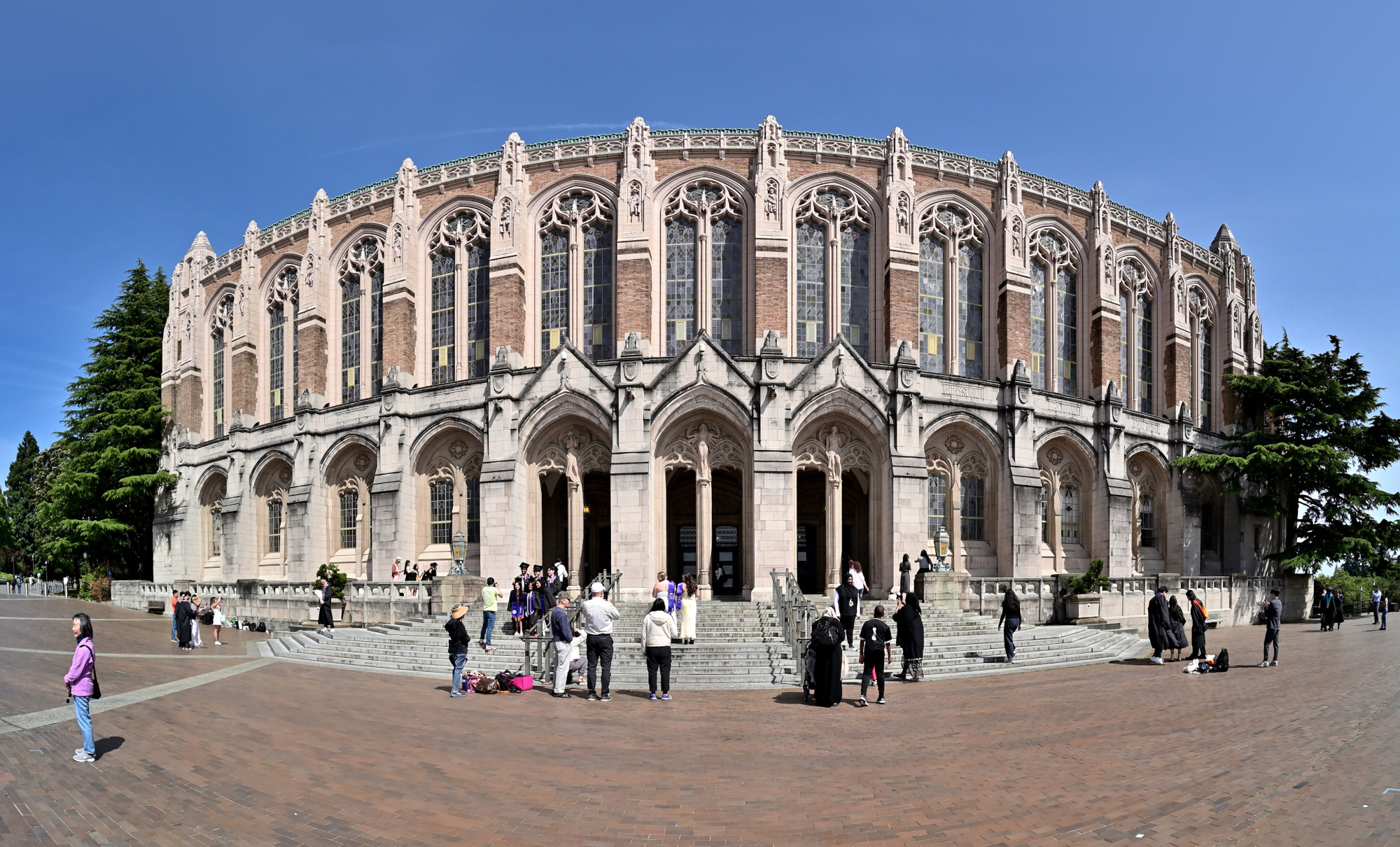
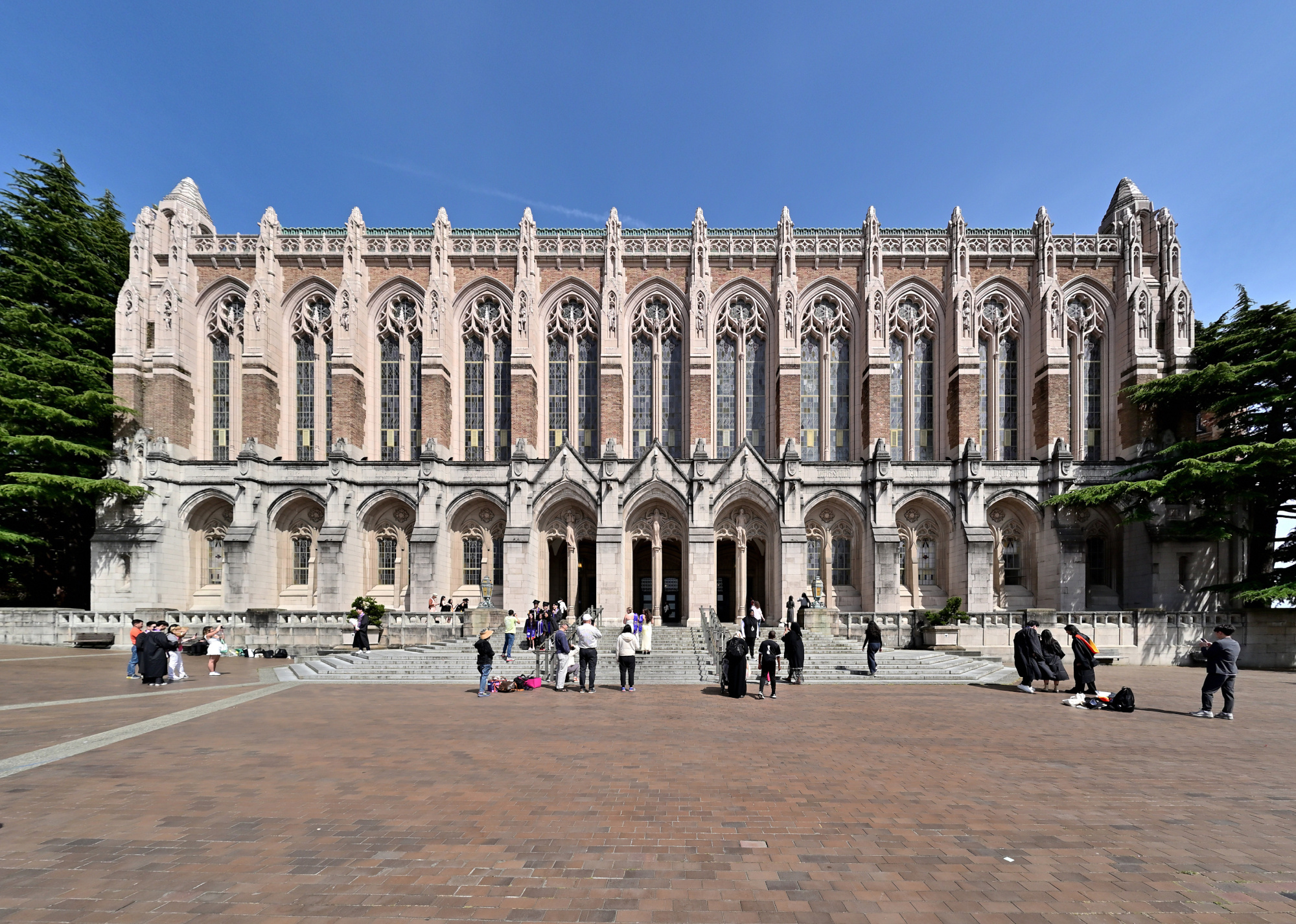
View from Red Square
1/1000s f/5,6 ISO 100/21° f=7,5mm
Equirectangular projection
Rectilinear projection
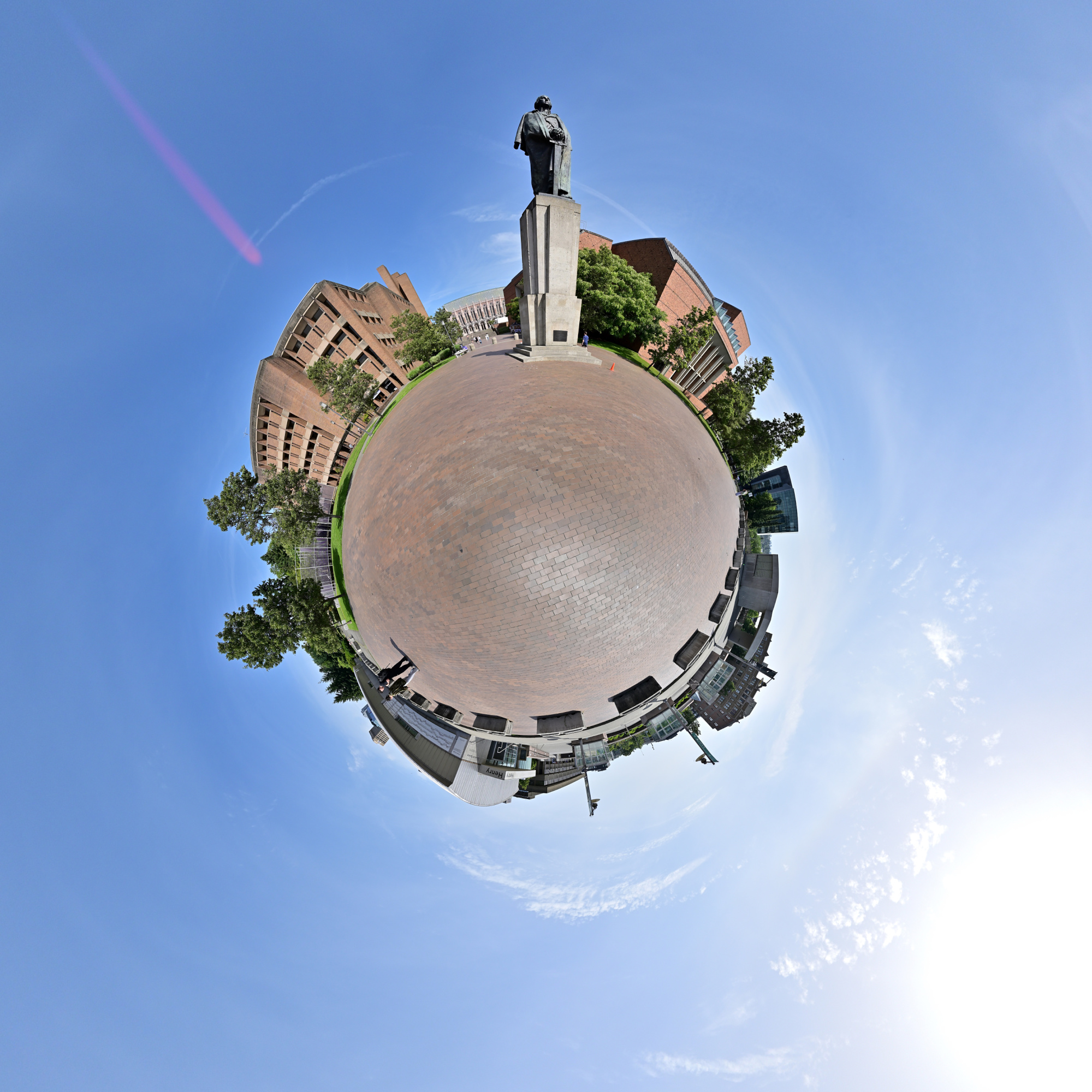
Statue of George Washington
The Statue of George Washington stands at the west end of Red Square, a longstanding symbol of the university's heritage and a familiar landmark for students and visitors alike.
Interactive Panorama Statue of George Washington
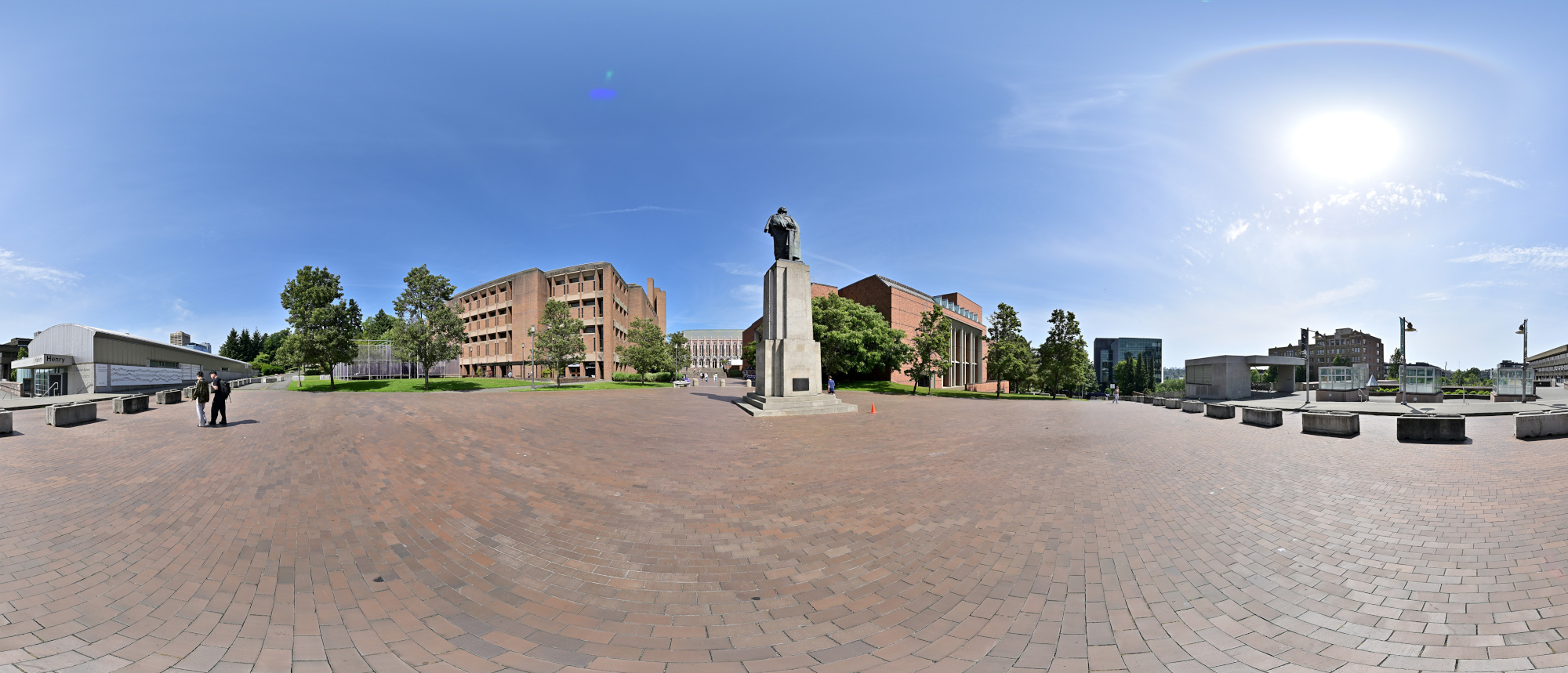
1/1000s f/5,6 ISO 100/21° f=7,5mm
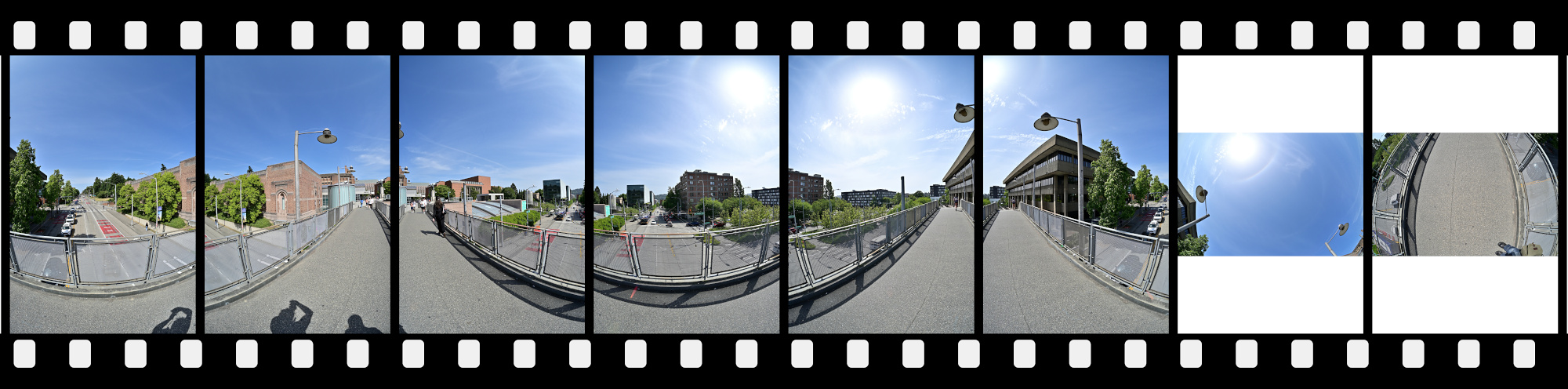
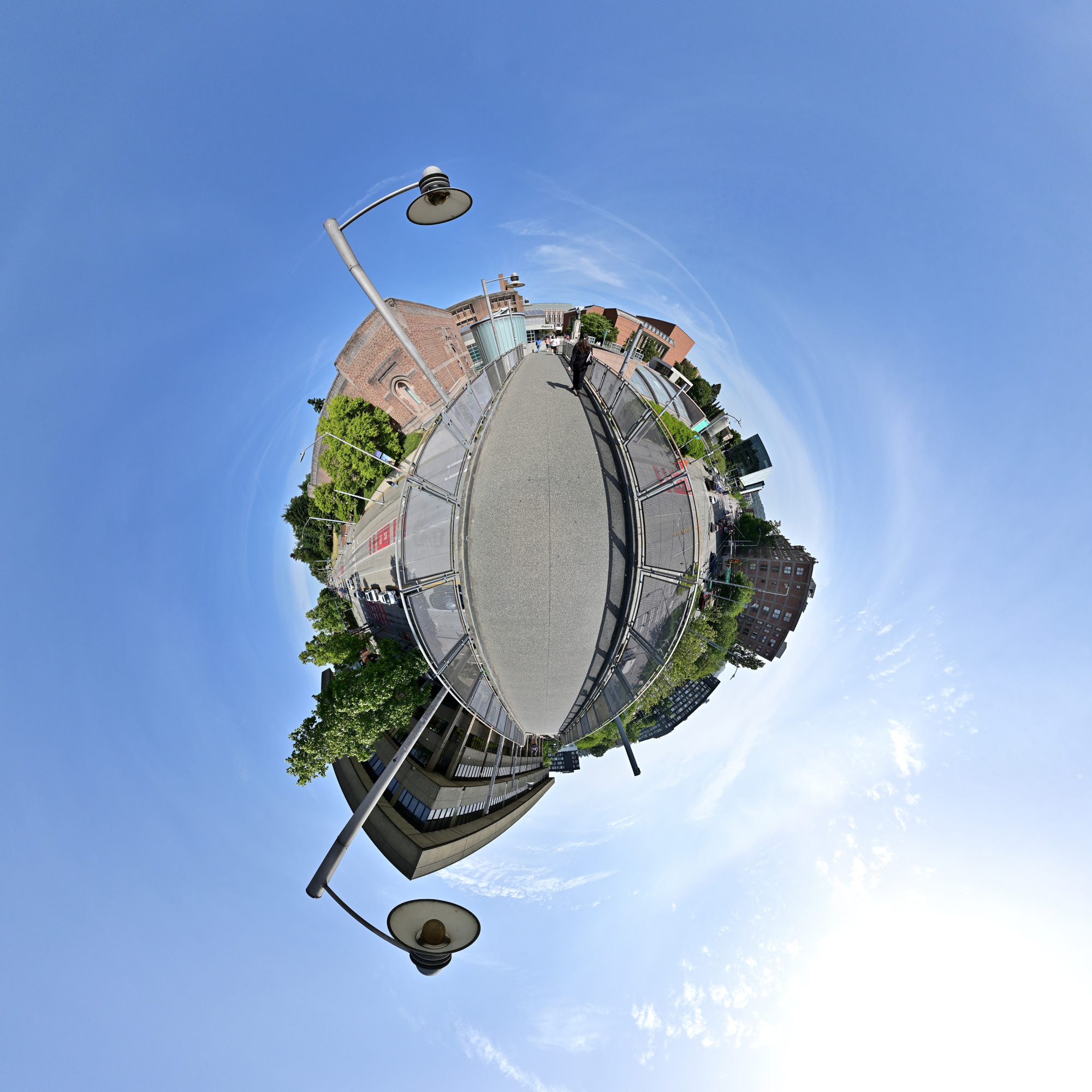
Bridge to Henry Art Gallery
The Suzzallo Library and the Statue of George Washington are partially visible in the background, adding a subtle sense of place and history to the scene.
Interactive Panorama Bridge to Henry Art Gallery
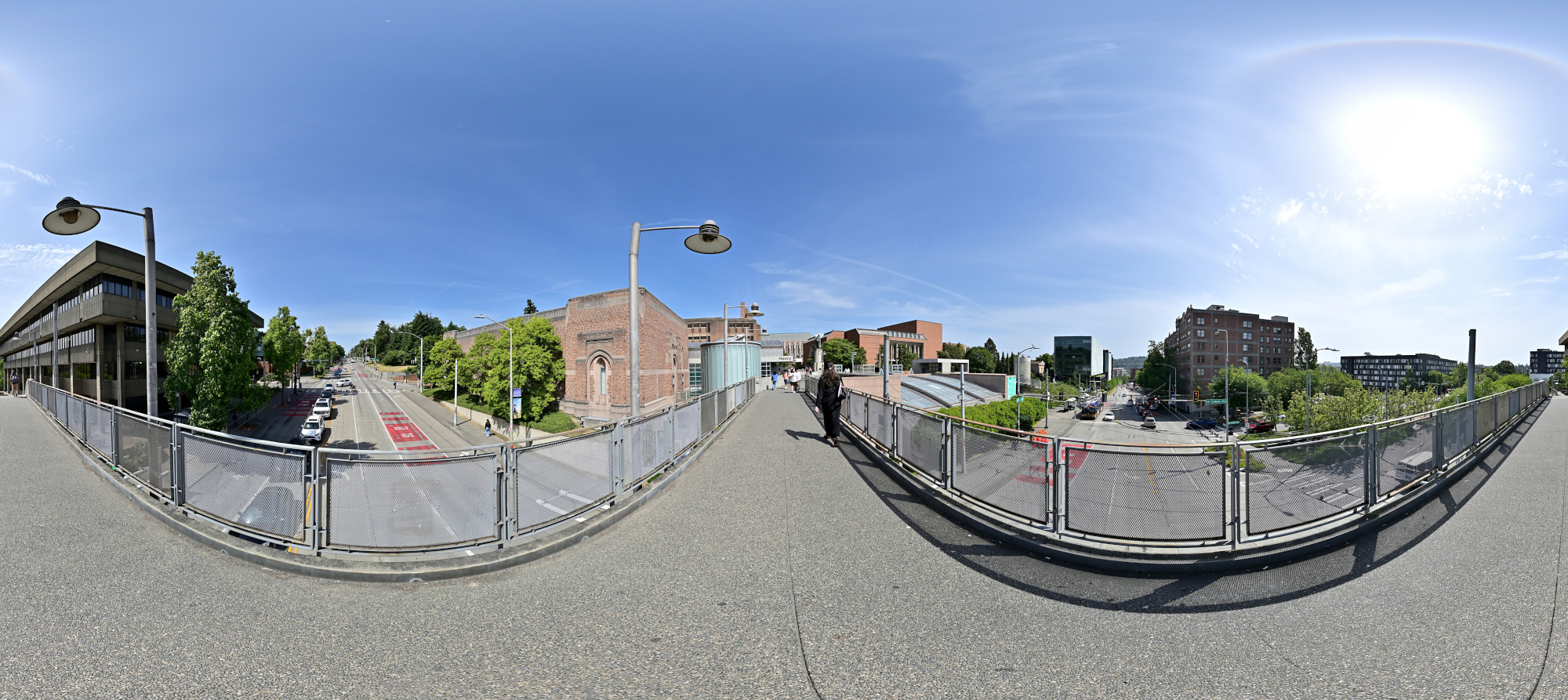
1/1000s f/5,6 ISO 100/21° f=7,5mm
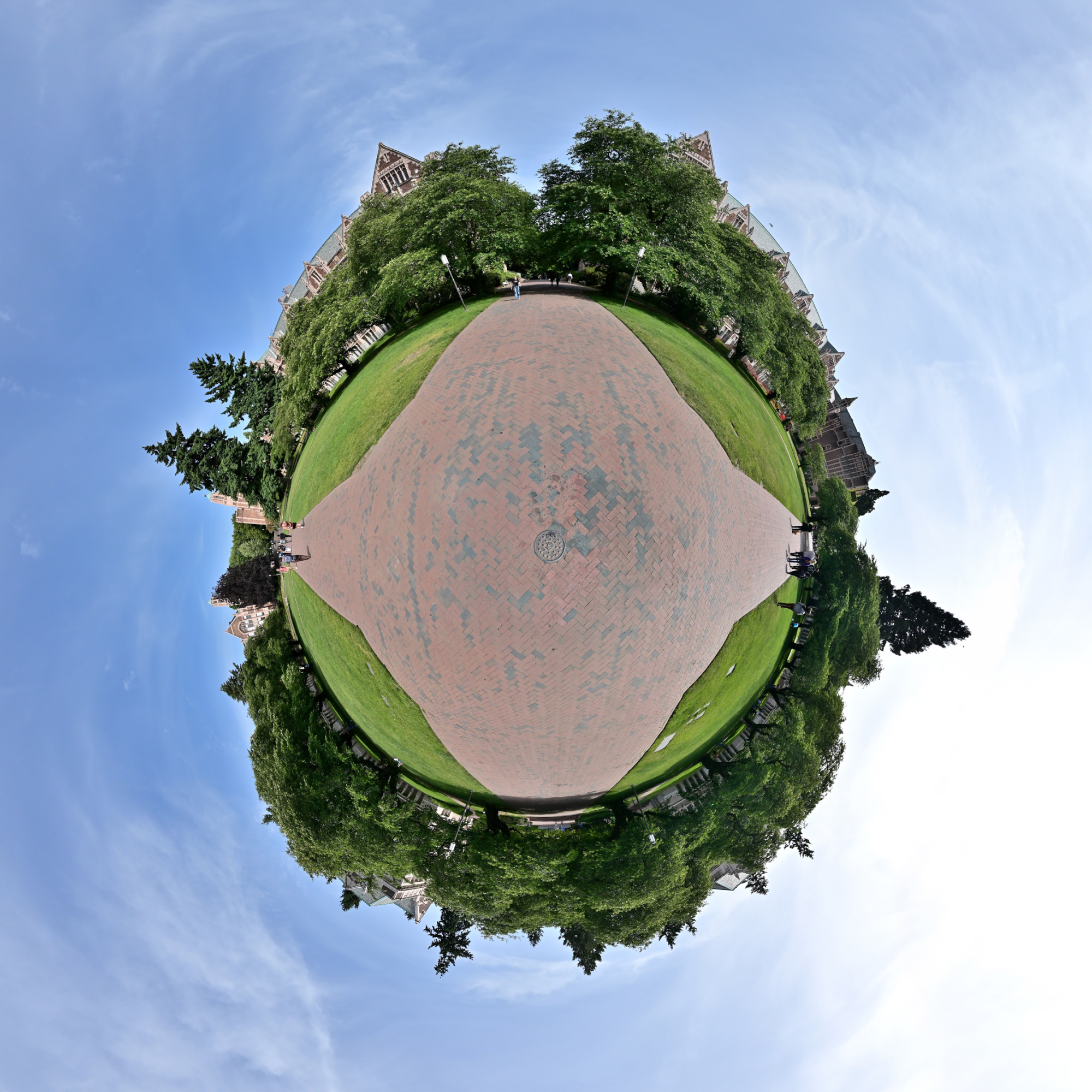
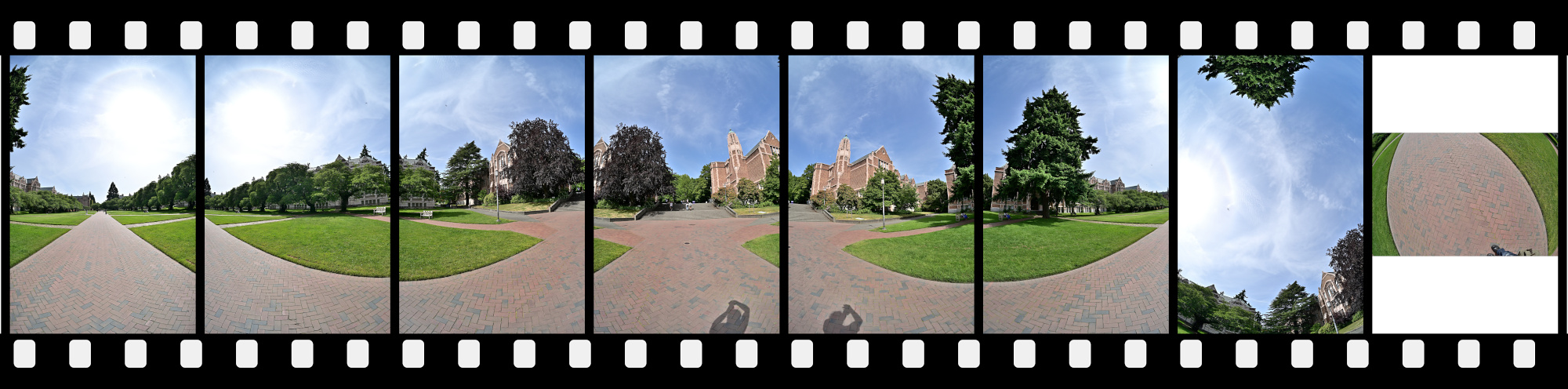
The Quad
The Quad is a beloved green space on campus, especially known for its breathtaking cherry blossoms each spring and its peaceful, tree-lined walkways year-round.
Interactive Panorama The Quad 1
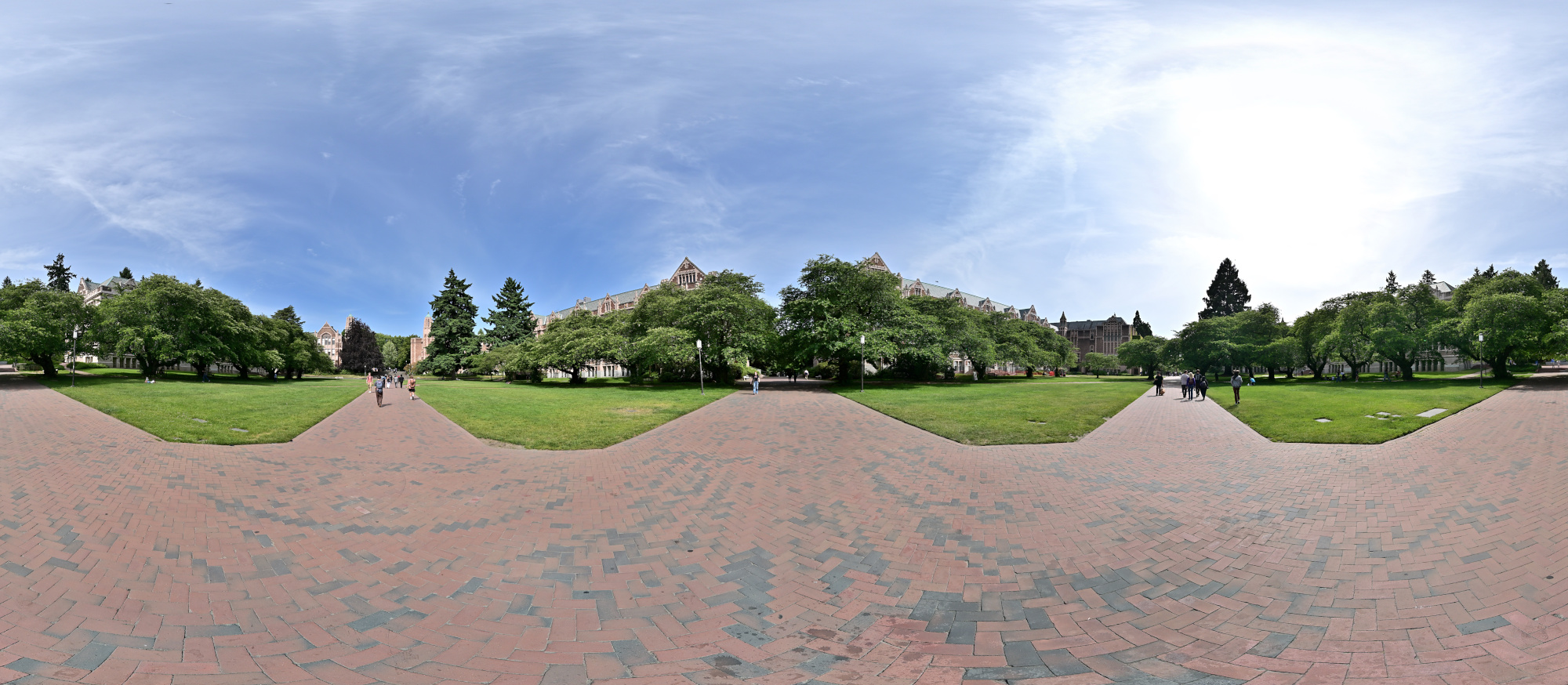
1/1000s f/5,6 ISO 100/21° f=7,5mm
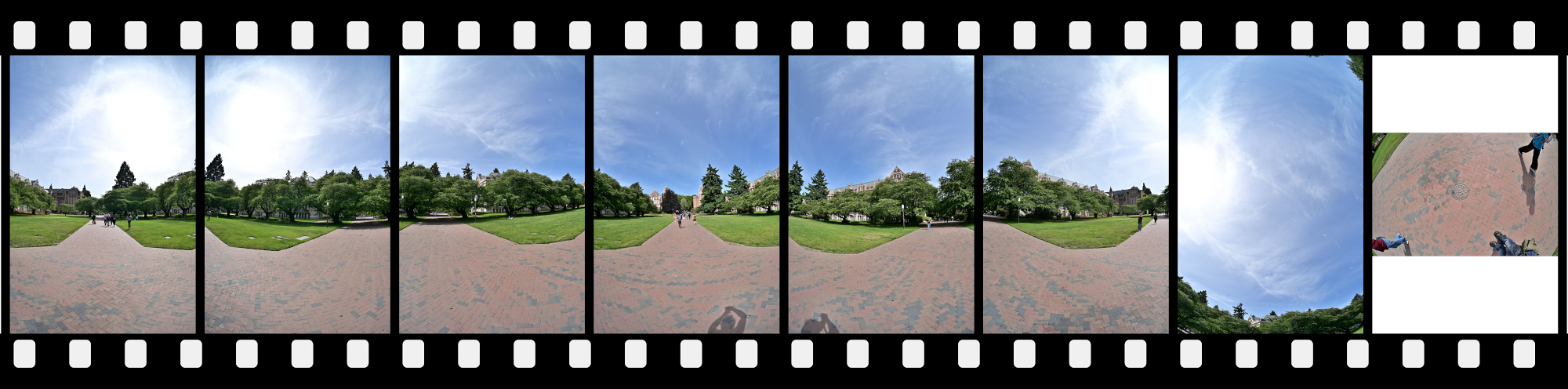
It is probably called The Quad because it was easier than explaining That Big Square Where Everyone Takes Cherry Blossom Pics. Besides, calling it The Quadrangle sounds like a spell Hermione would cast right before finals.
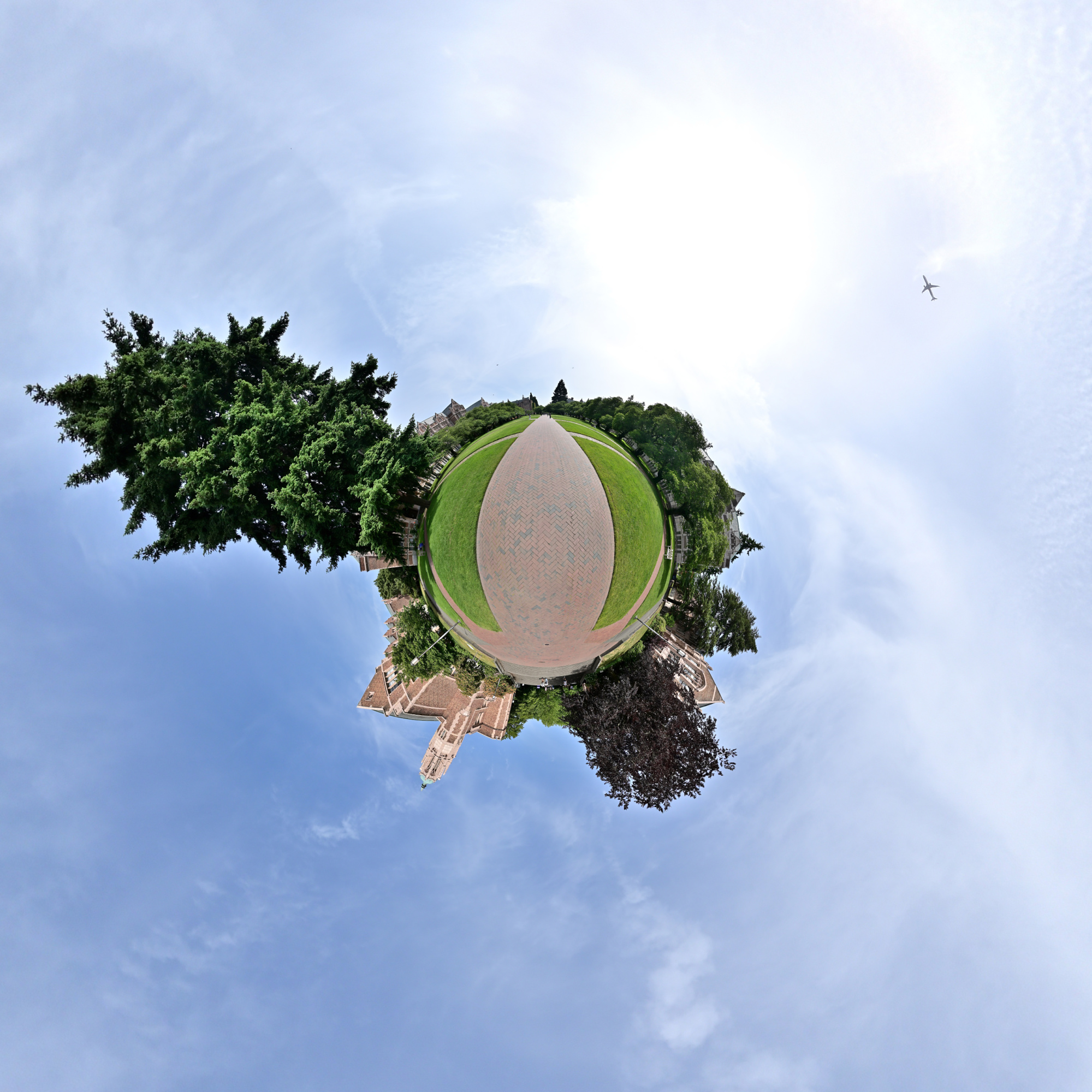
Interactive Panorama The Quad 2
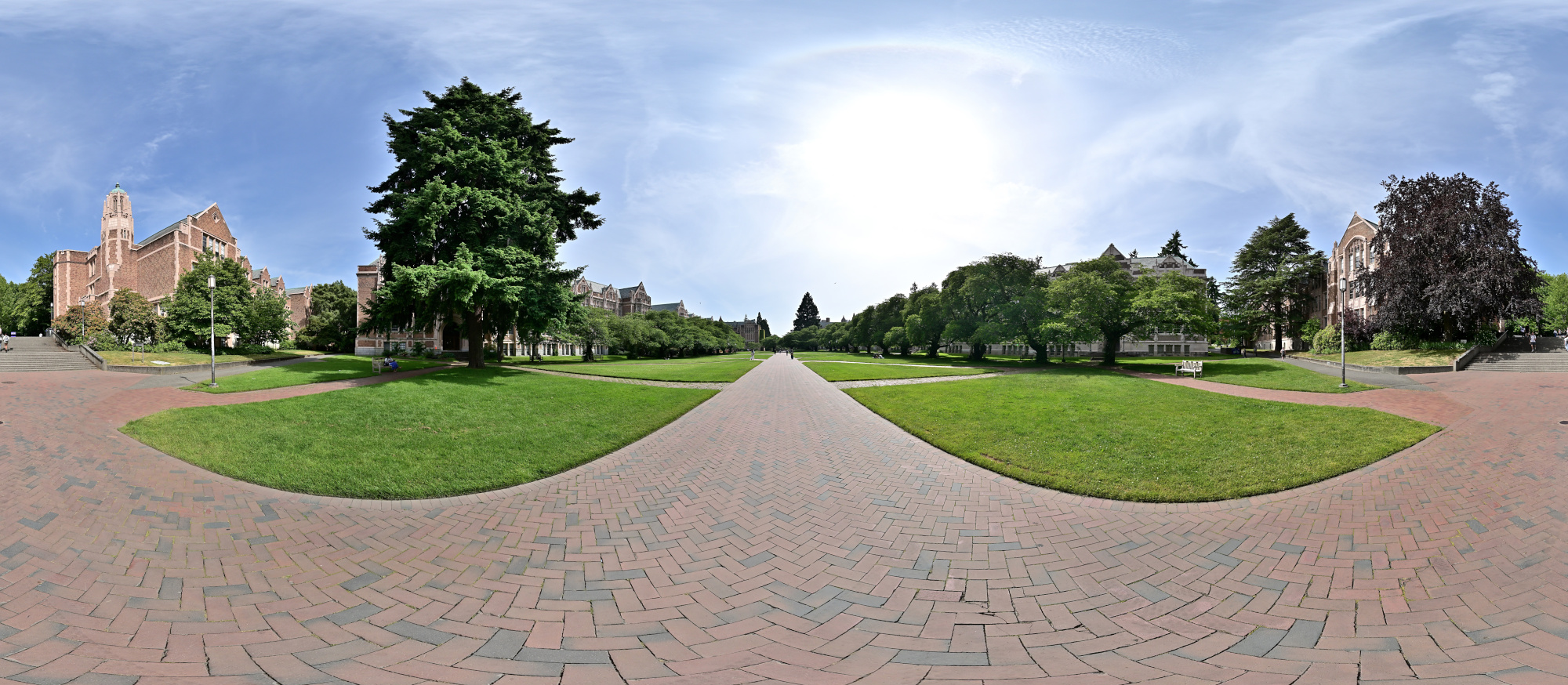
1/1000s f/5,6 ISO 100/21° f=7,5mm
Airplane spotted cruising at tree level. Must be a scenic route.
Smith Hall and Miller Hall
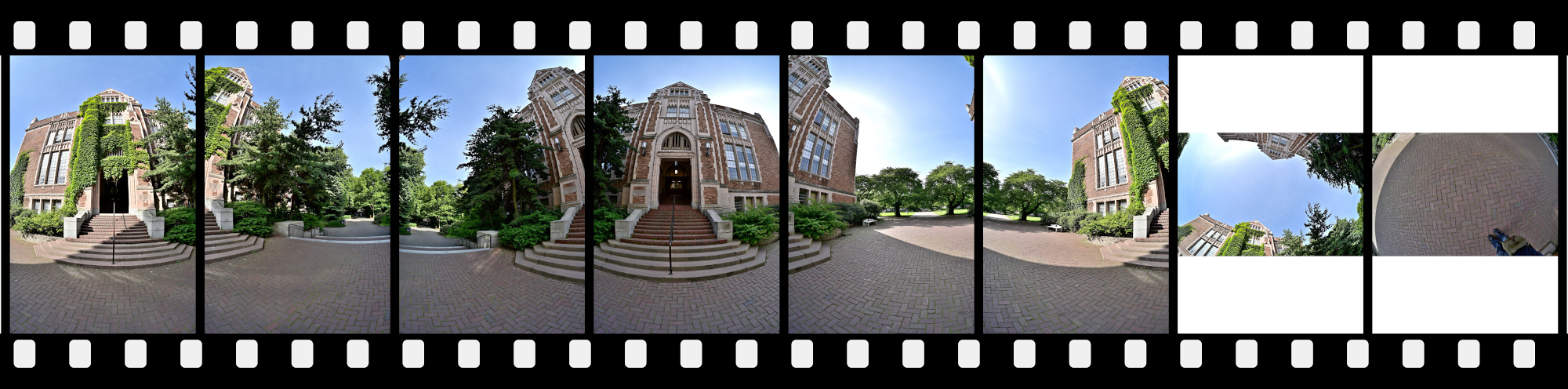
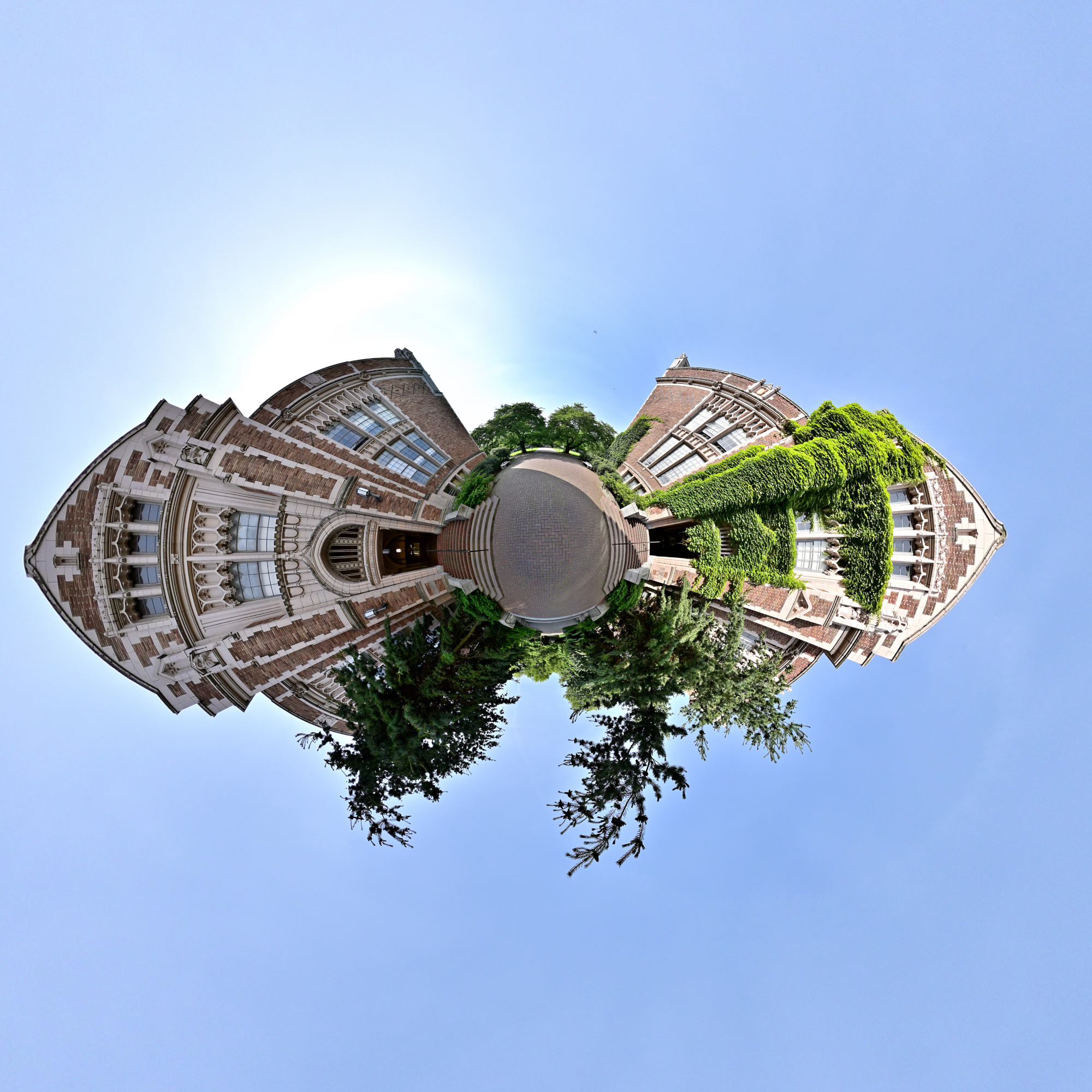
Smith Hall and Miller Hall stand side by side along the edge of the Quad, their classic collegiate architecture framing the space with a sense of tradition and academic purpose.
Interactive Panorama Smith Hall and Miller Hall
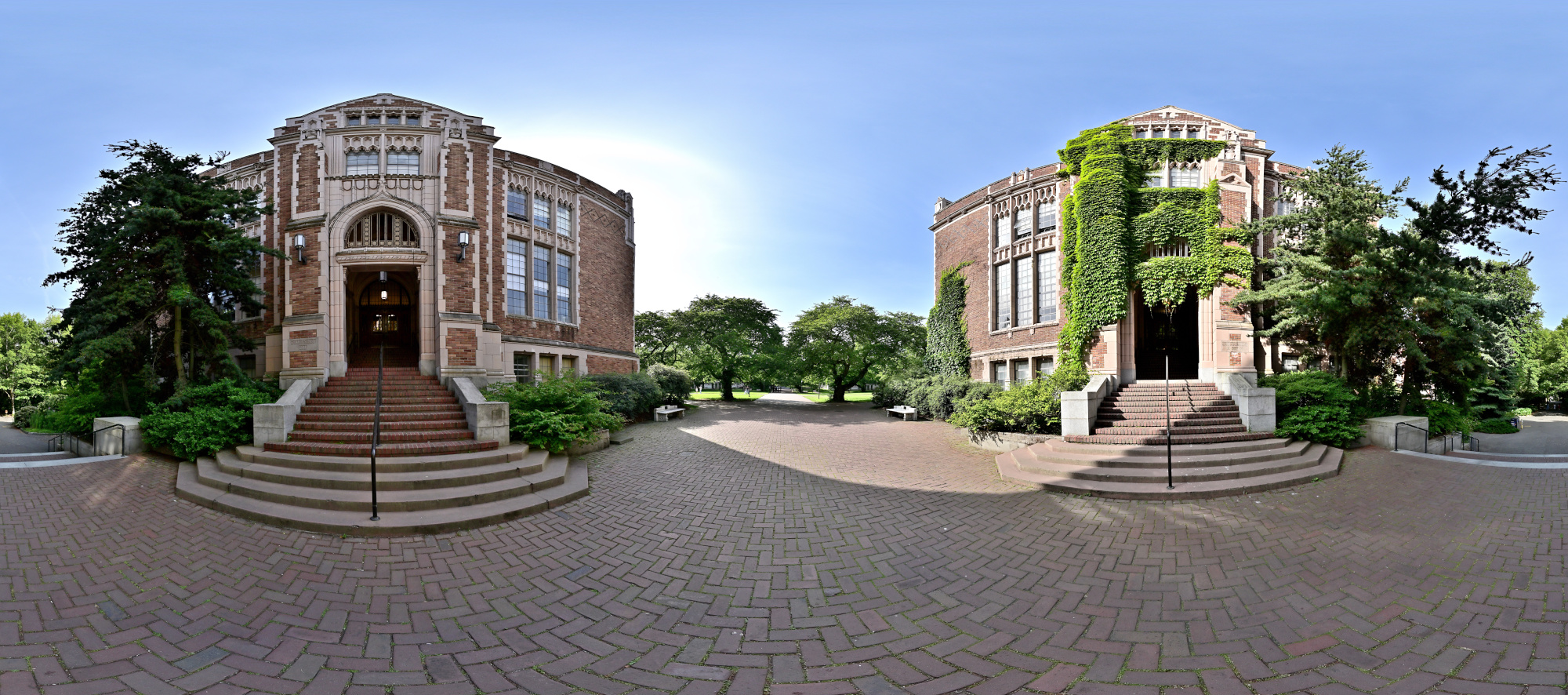
1/1000s f/5,6 ISO 100/21° f=7,5mm
Denny Hall
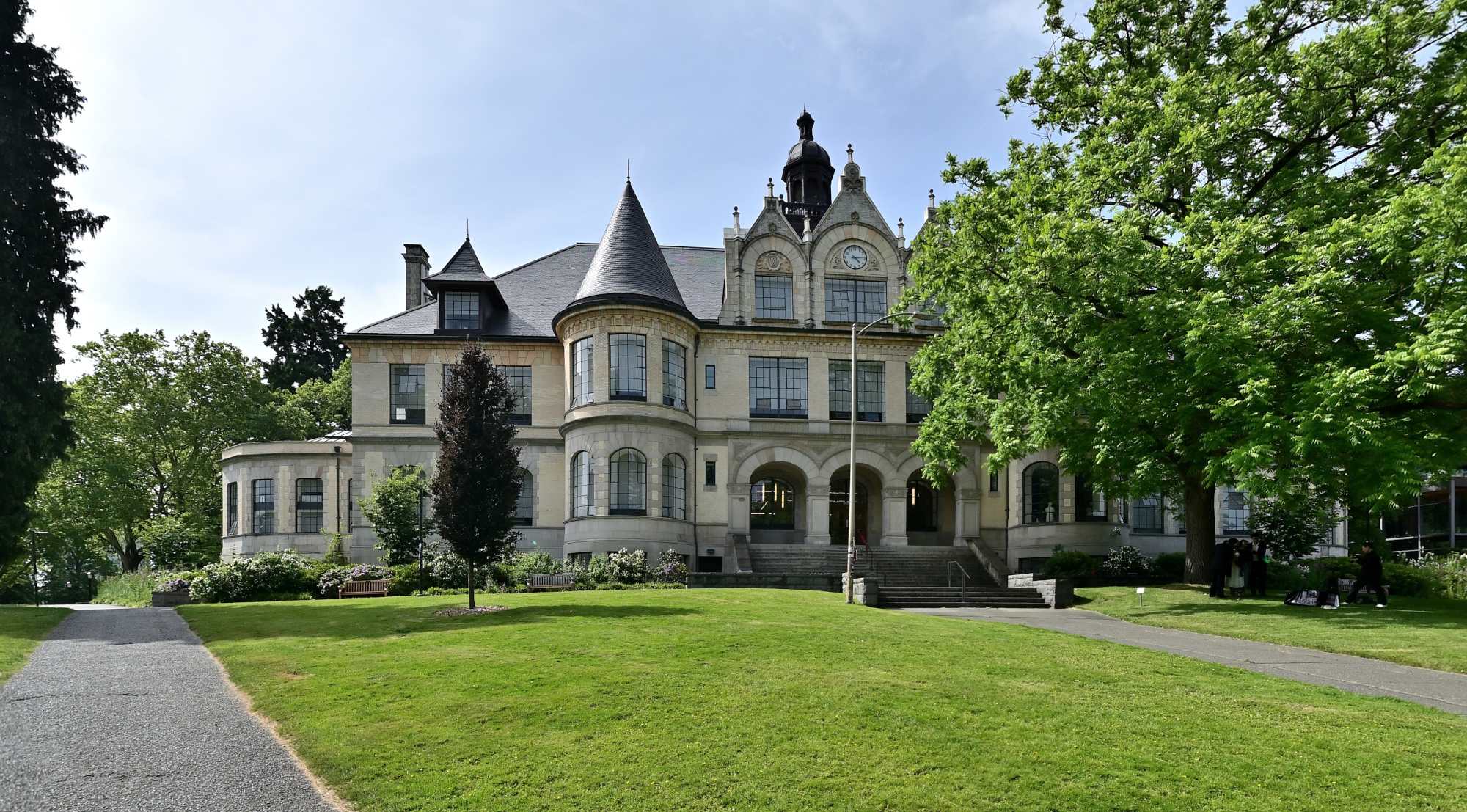
Denny Hall, the oldest building on campus, stands with timeless elegance, its Romanesque architecture marking the historic beginnings of the University of Washington.
Interactive Panorama Denny Hall
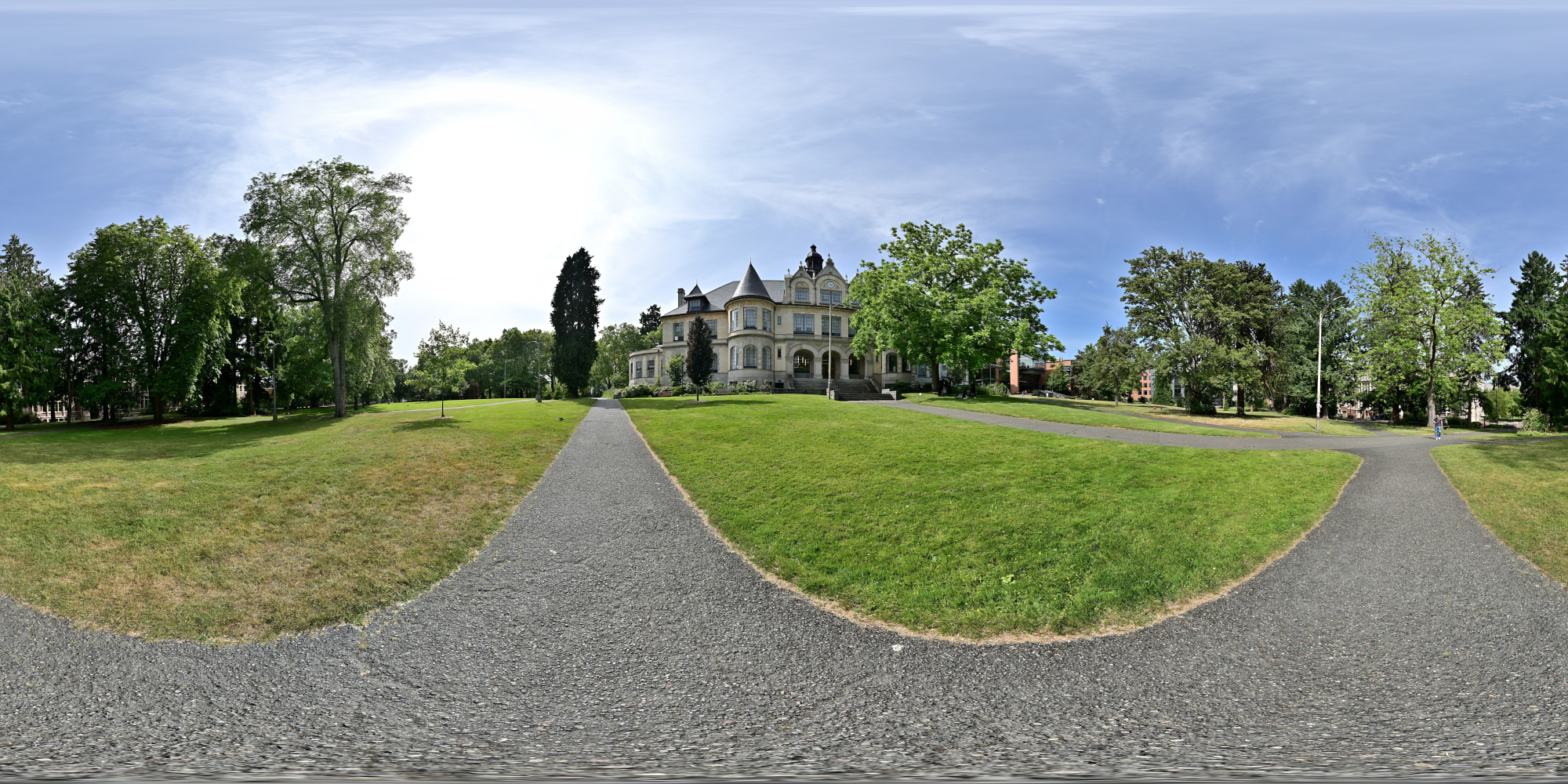
1/1000s f/5,6 ISO 100/21° f=7,5mm
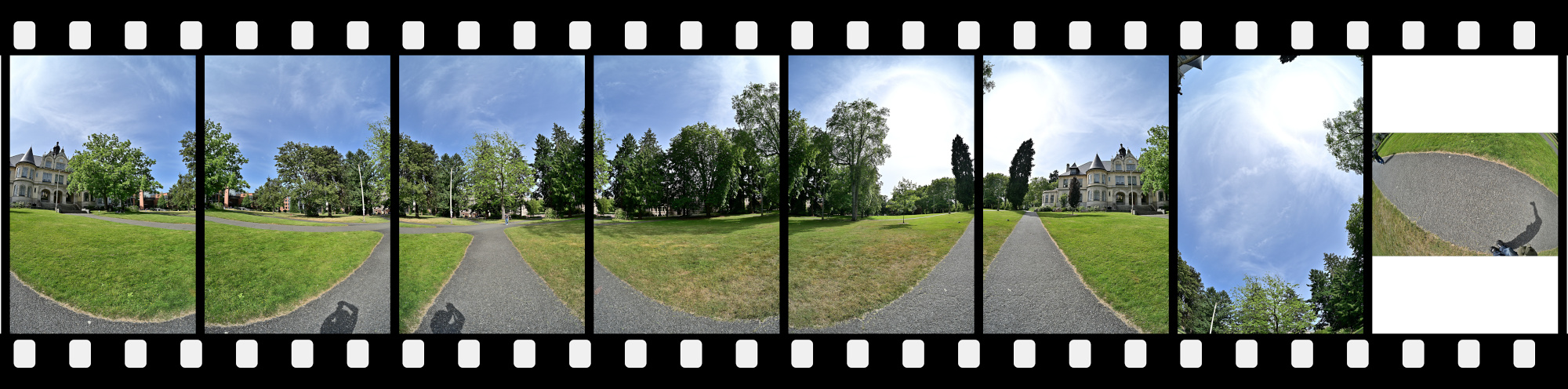
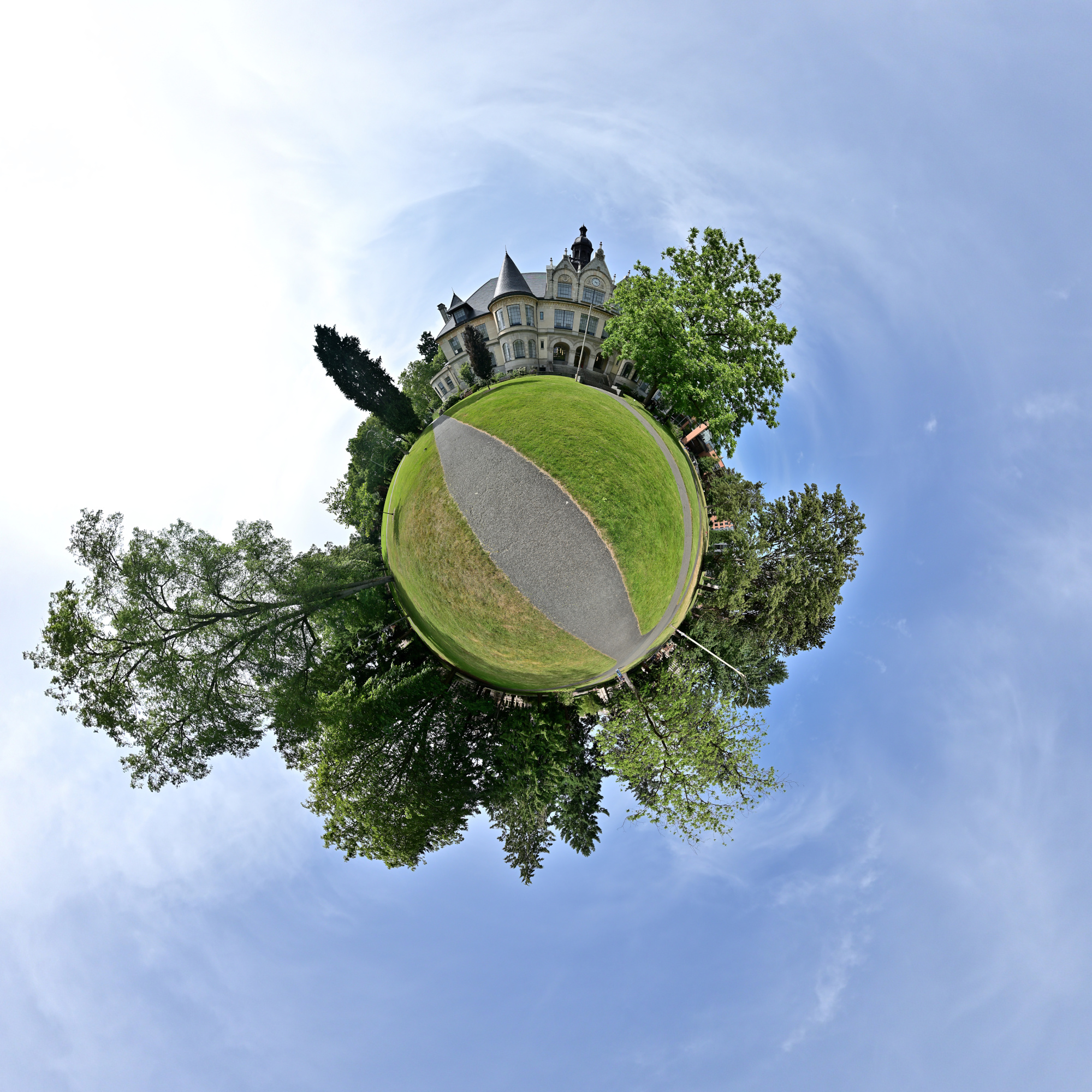
Rectilinear projection from the panorama
School of Art and School of Music
The School of Art and the School of Music sit near the edge of campus, where creativity and performance shape a vibrant cultural presence within the university's academic landscape.
Interactive Panorama School of Art and School of Music
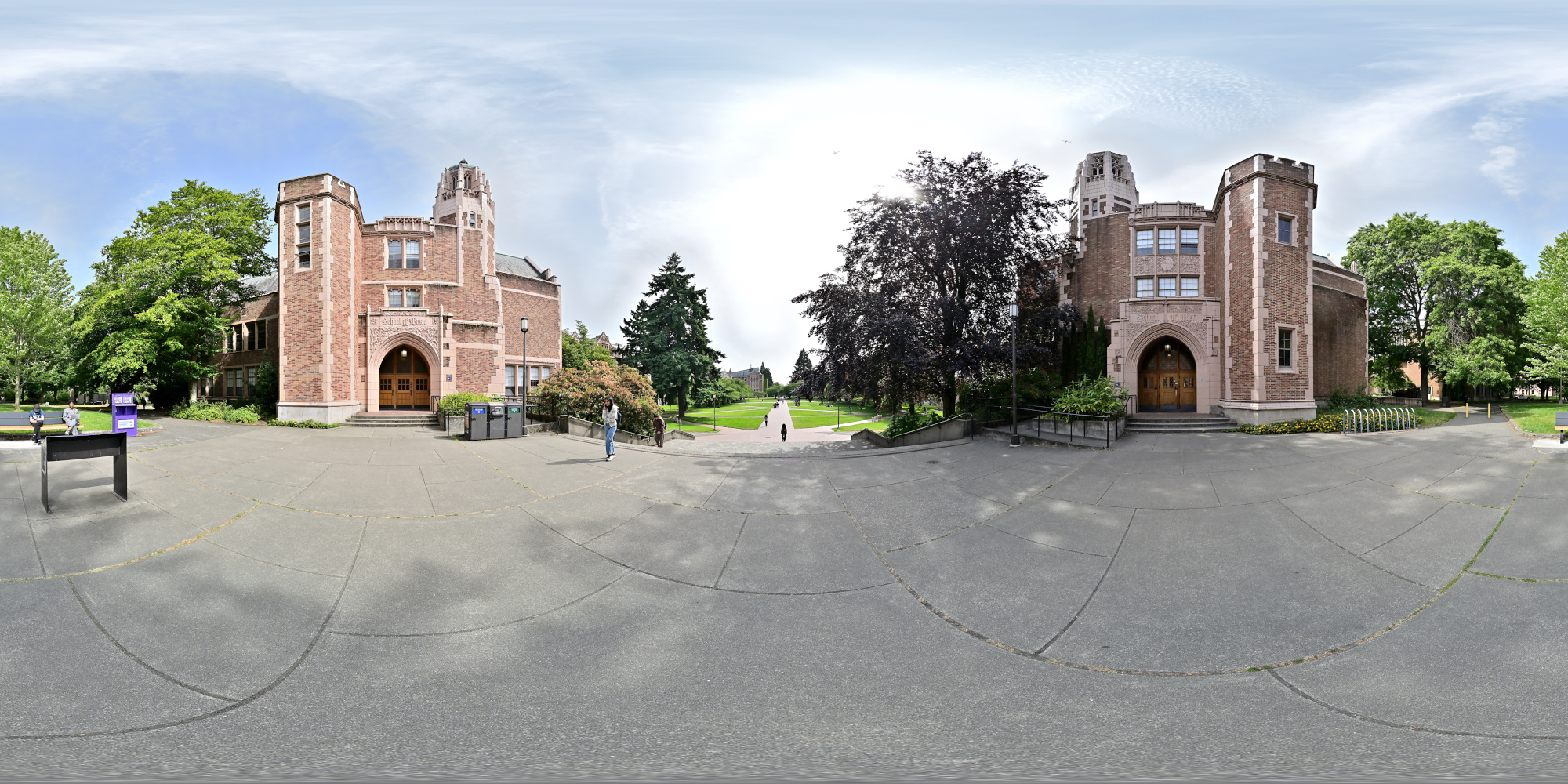
1/800s f/5,6 ISO 100/21° f=7,5mm
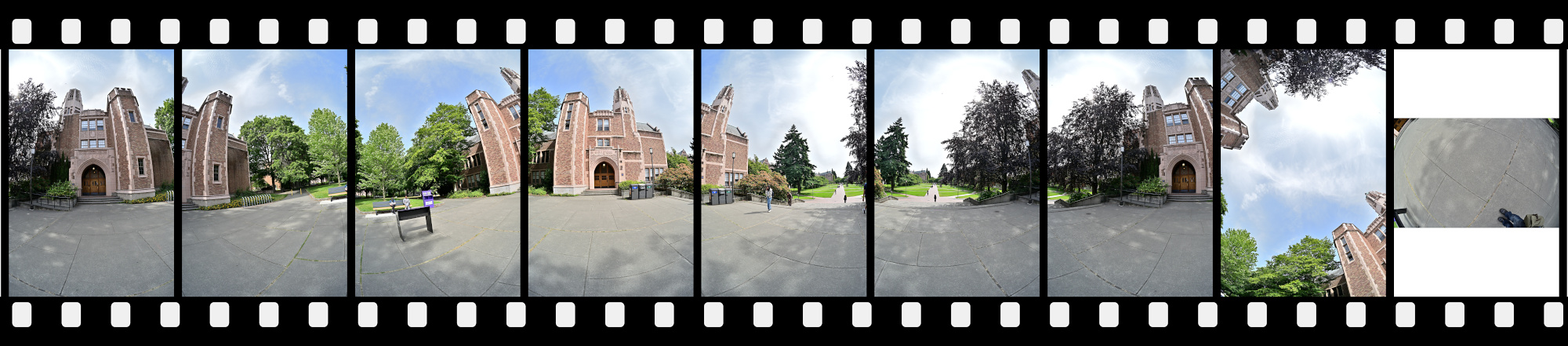
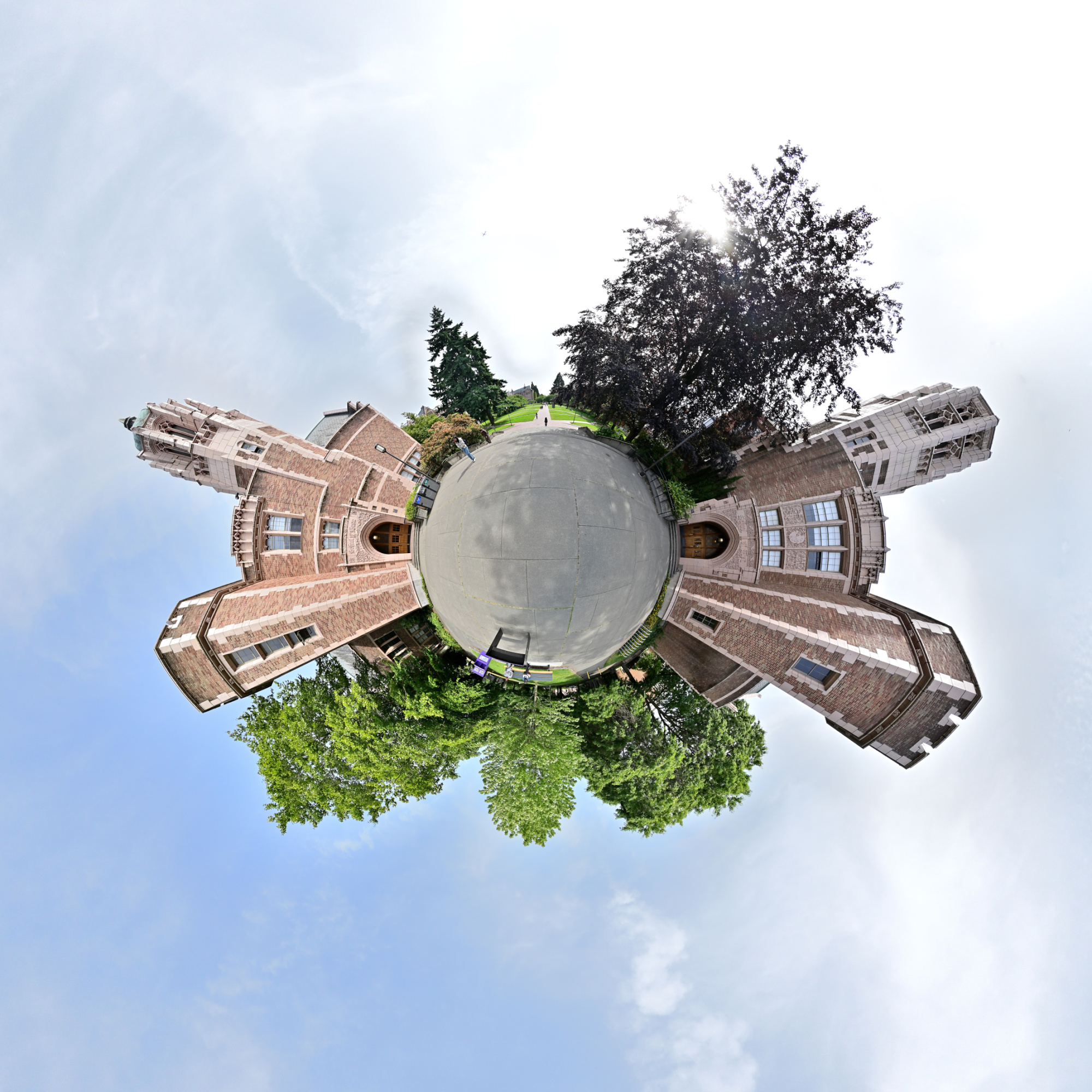
Avoiding Stitching Artifacts with Masking
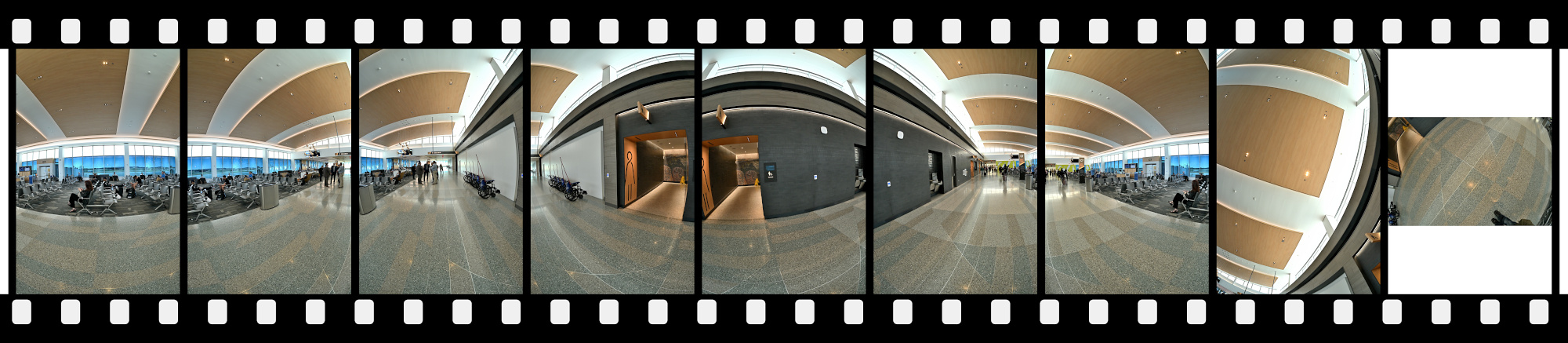
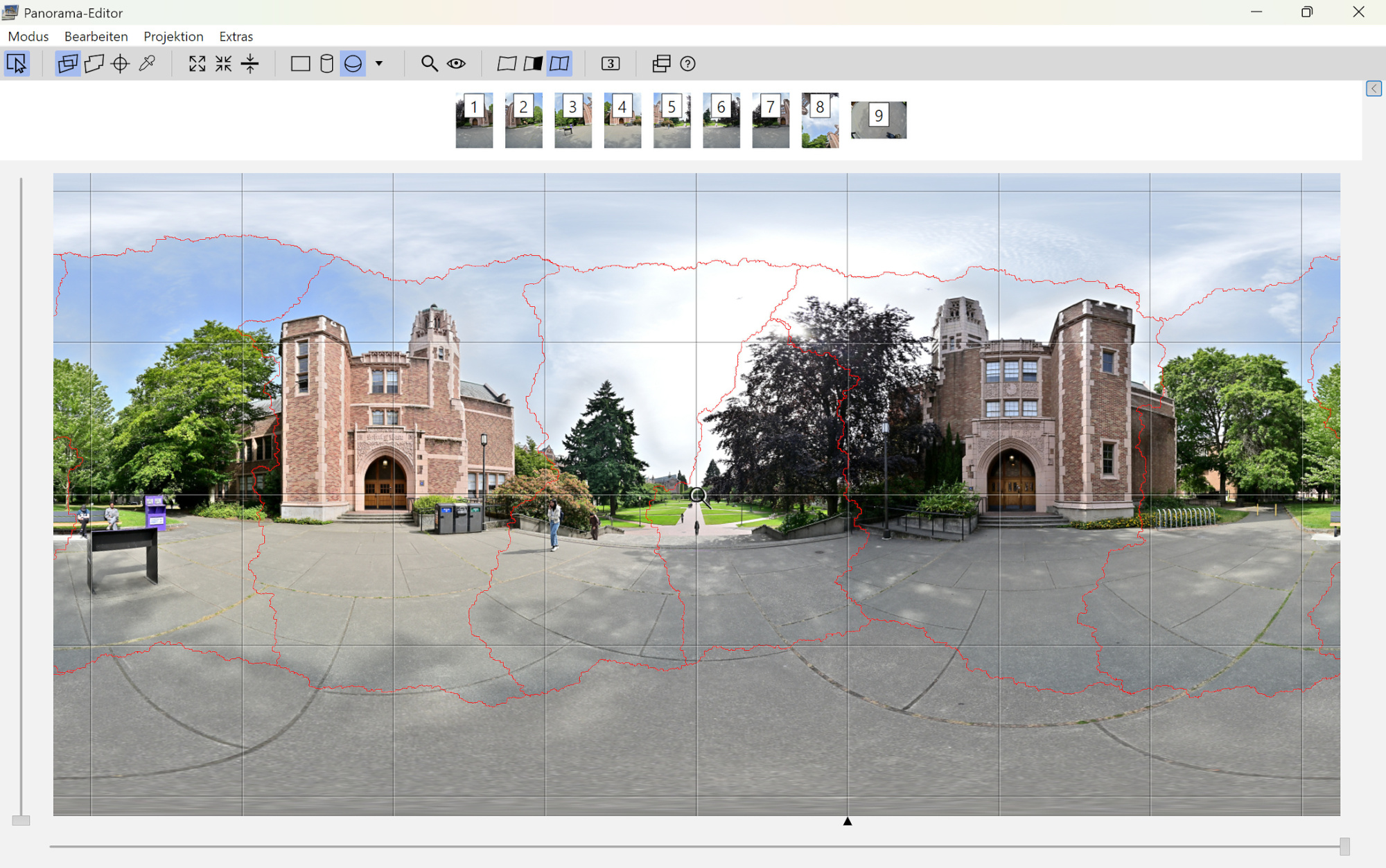
In panoramic imaging, particularly in architectural or urban settings, a common source of stitching artifacts occurs when prominent structures such as building façades are captured in separate frames rather than as a whole within a single exposure. This segmented capture approach increases the risk of misalignment during the stitching process, often resulting in visible seam lines that disrupt the continuity and geometry of key architectural features.
In this panorama, the two building façades are each captured in separate frames but have been (green) masked to ensure that no seam line intersects the primary architectural elements, preserving structural integrity in the final composite.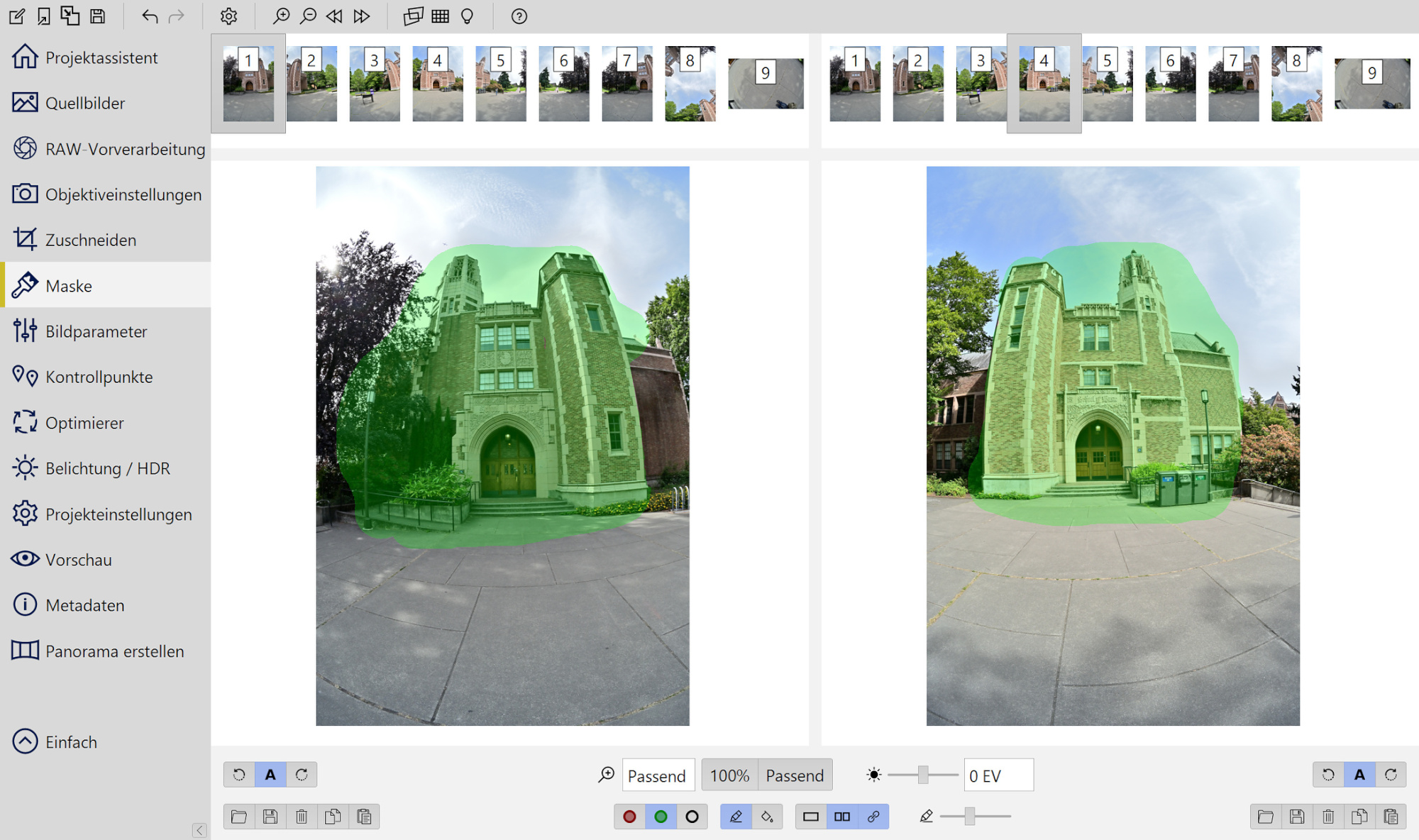
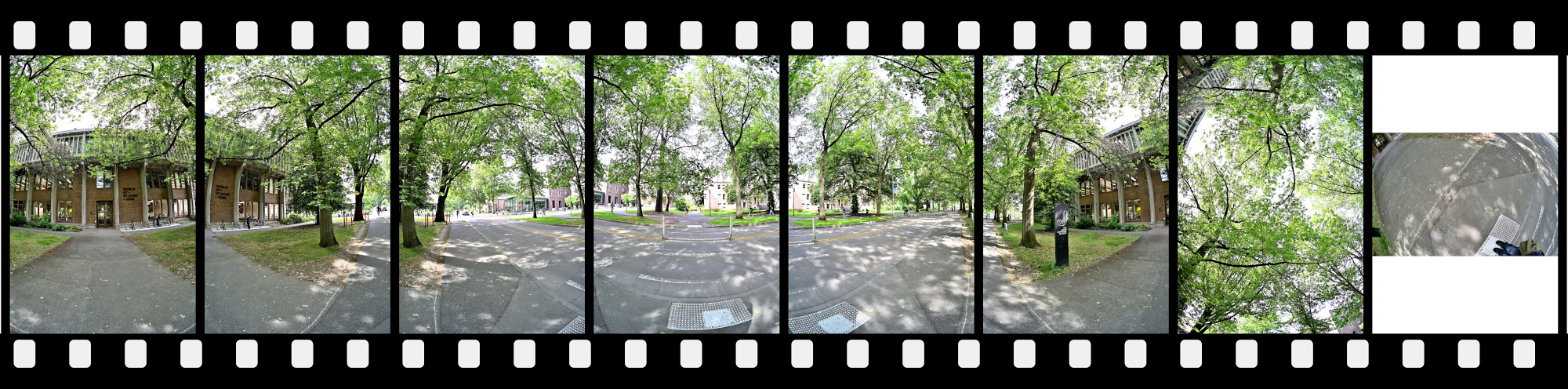
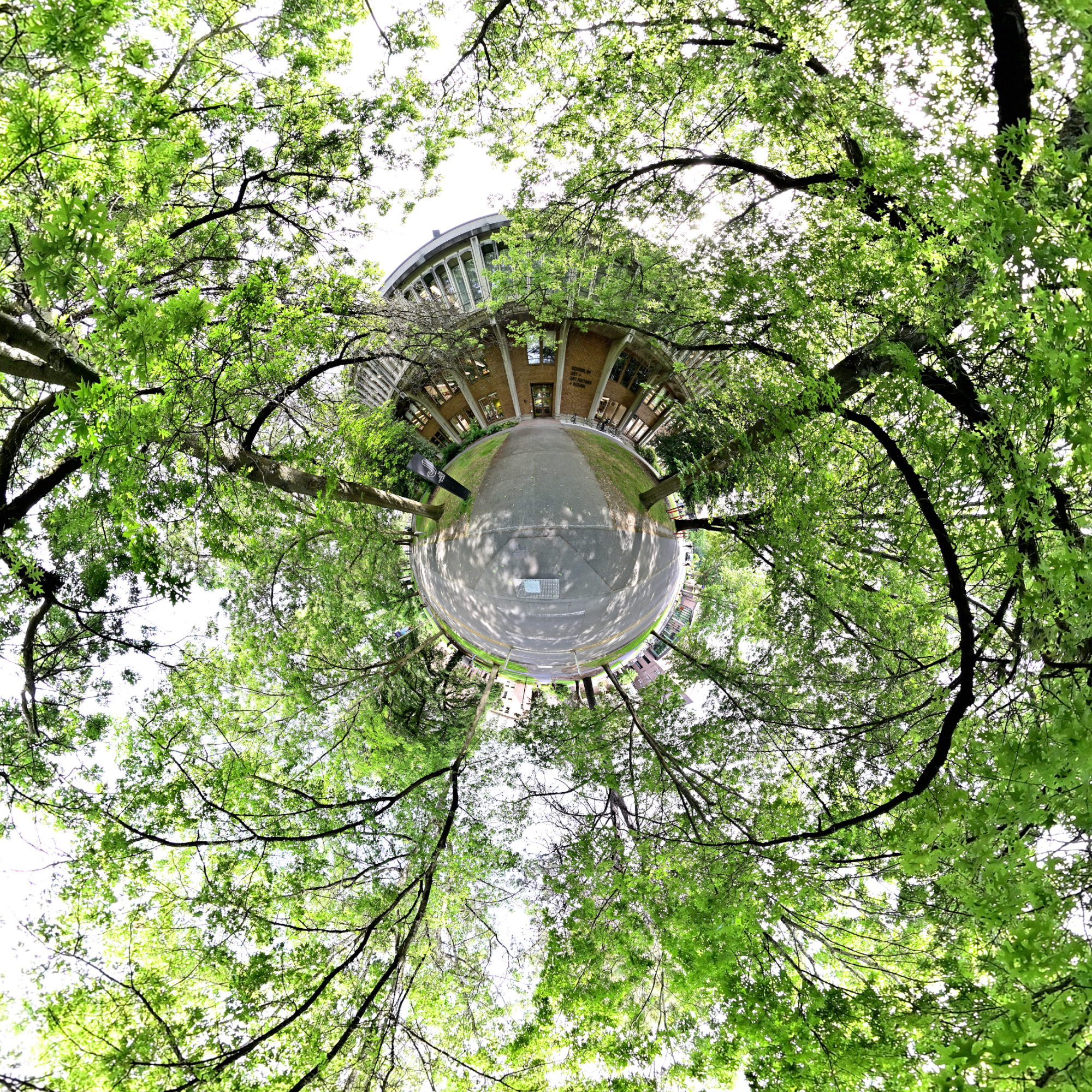
School of Art
The School of Art combines creativity and academic depth, giving students a place to study classic forms like drawing, painting, and sculpture.
Interactive Panorama School of Art
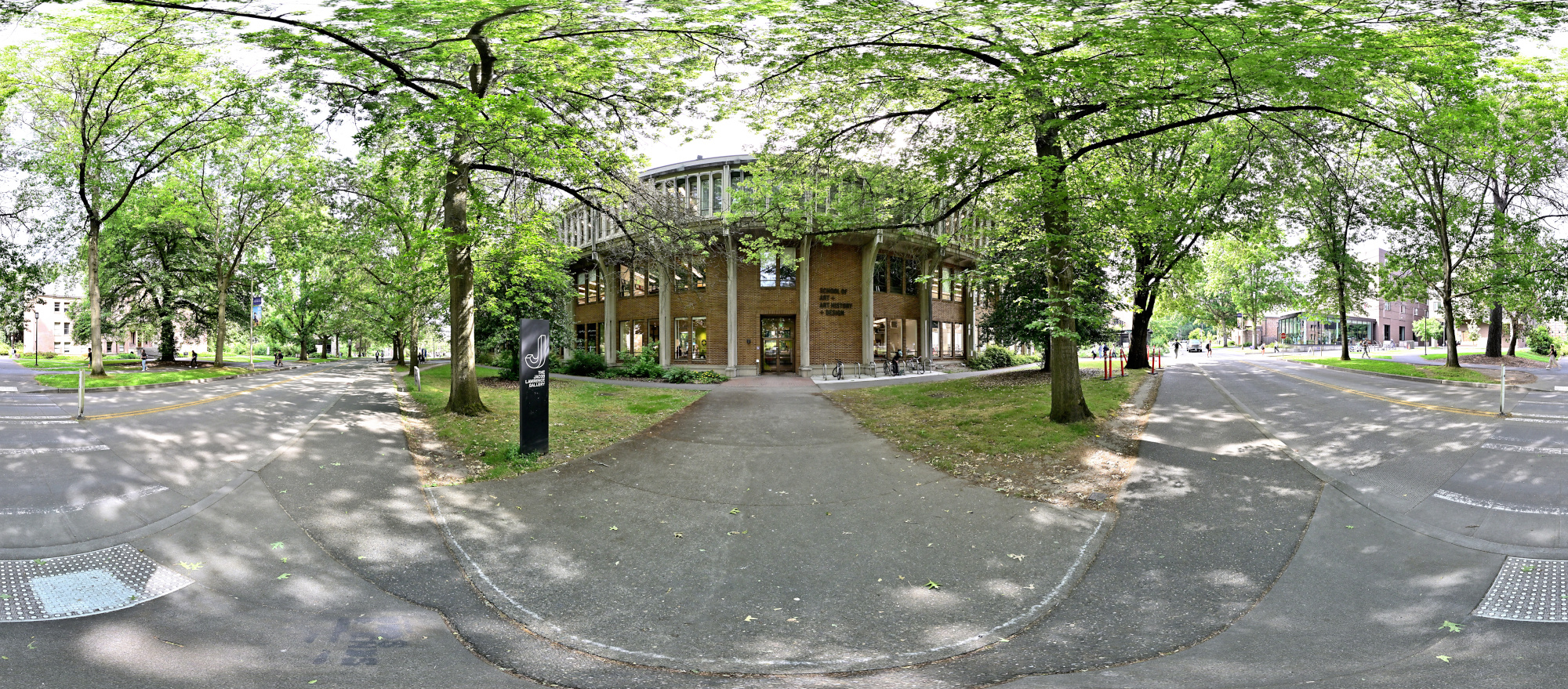
1/200s f/5,6 ISO 250/25° f=7,5mm
Communications Building
The Communications Building houses the university's journalism and communication programs, offering students a dynamic space to explore media, storytelling, and public discourse.
Interactive Panorama Communications Building
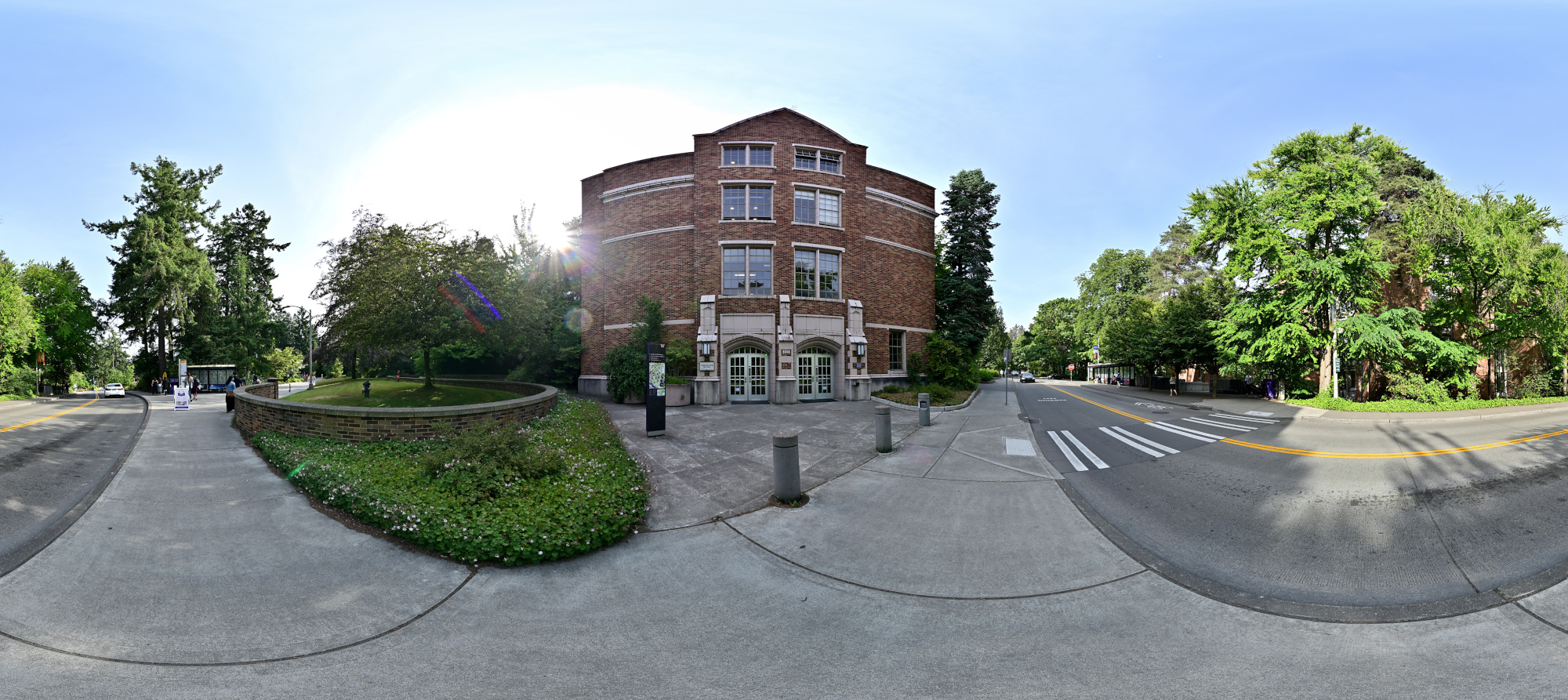
1/160s f/5,6 ISO 100/21° f=7,5mm
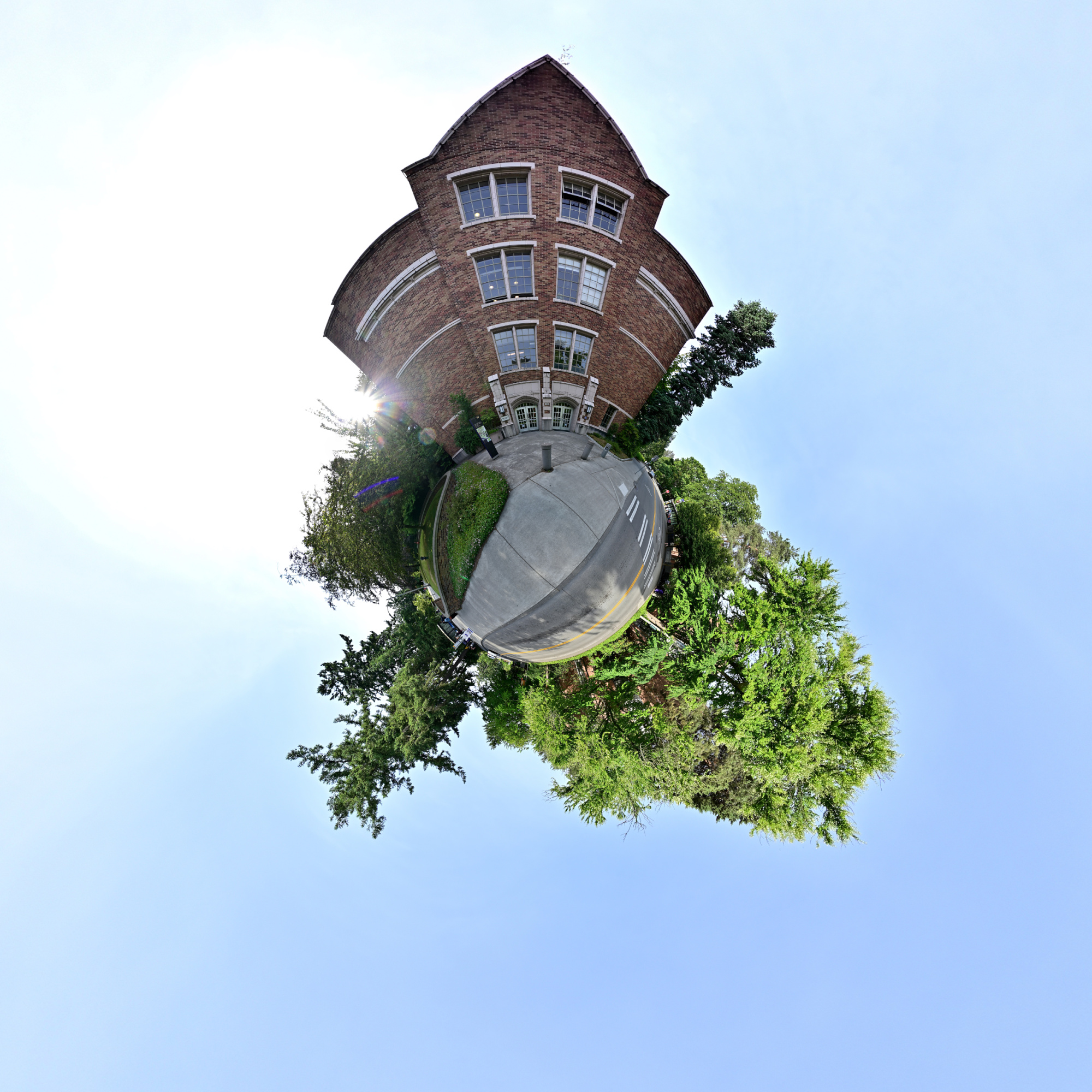
Drumheller Fountain
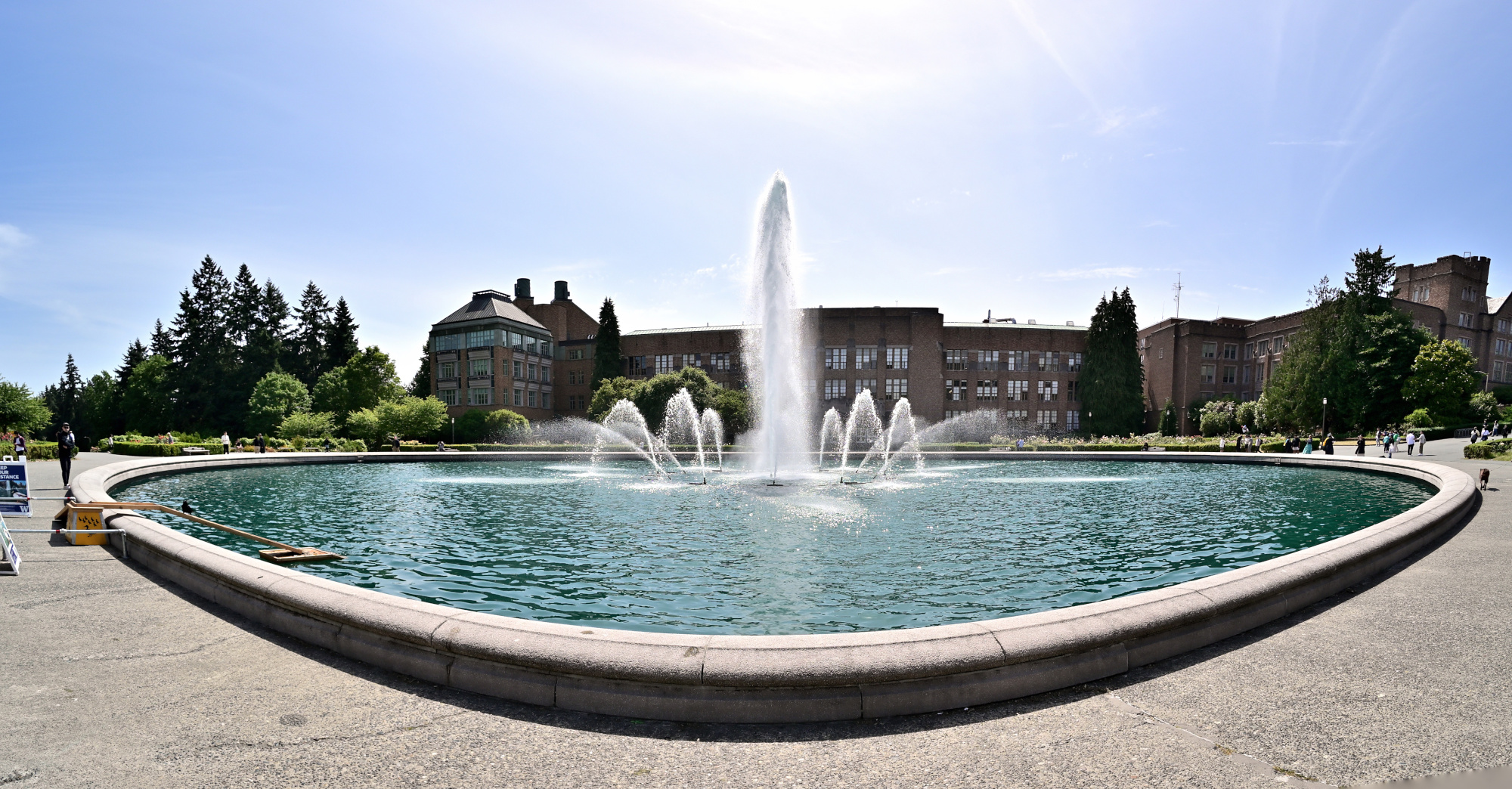
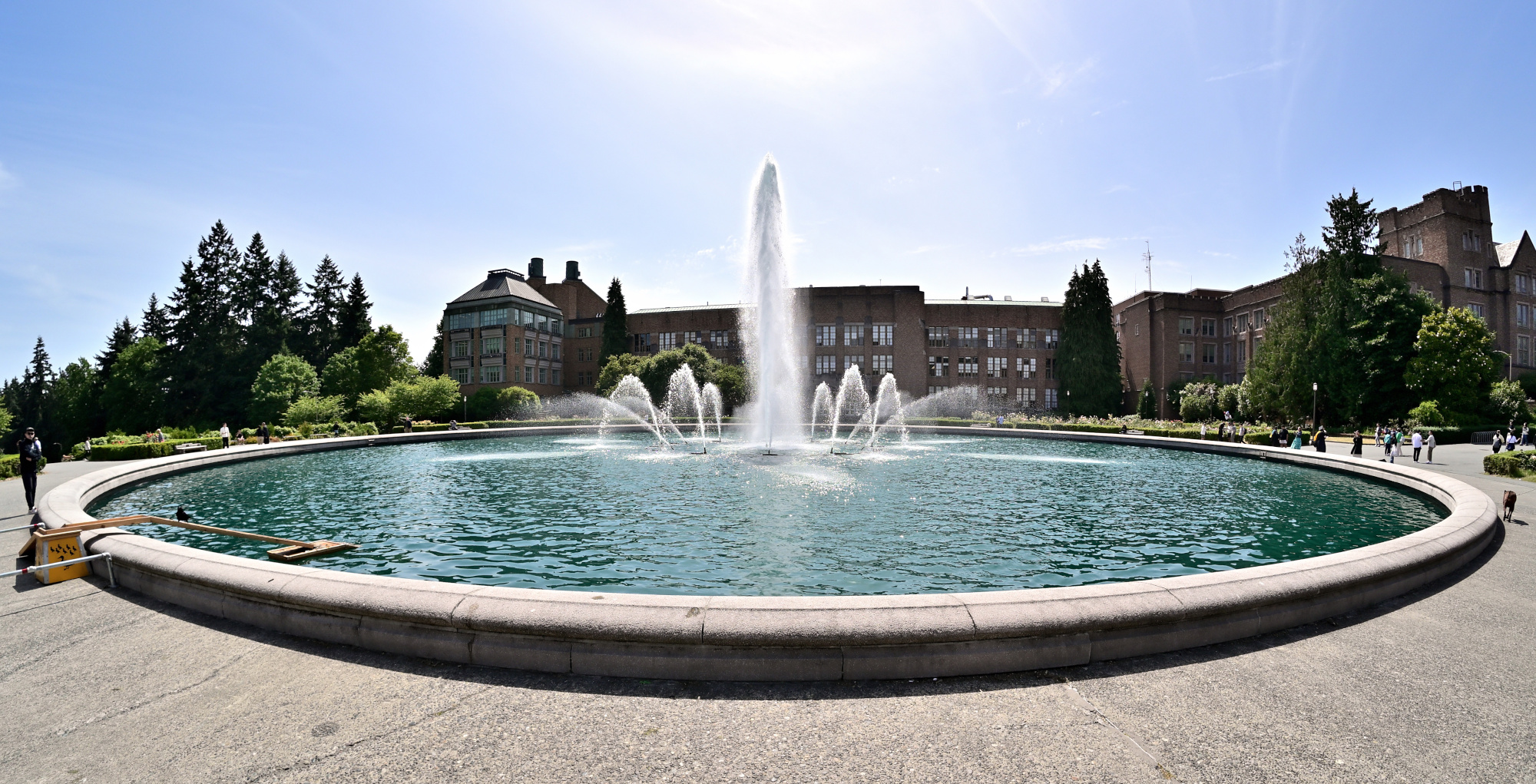
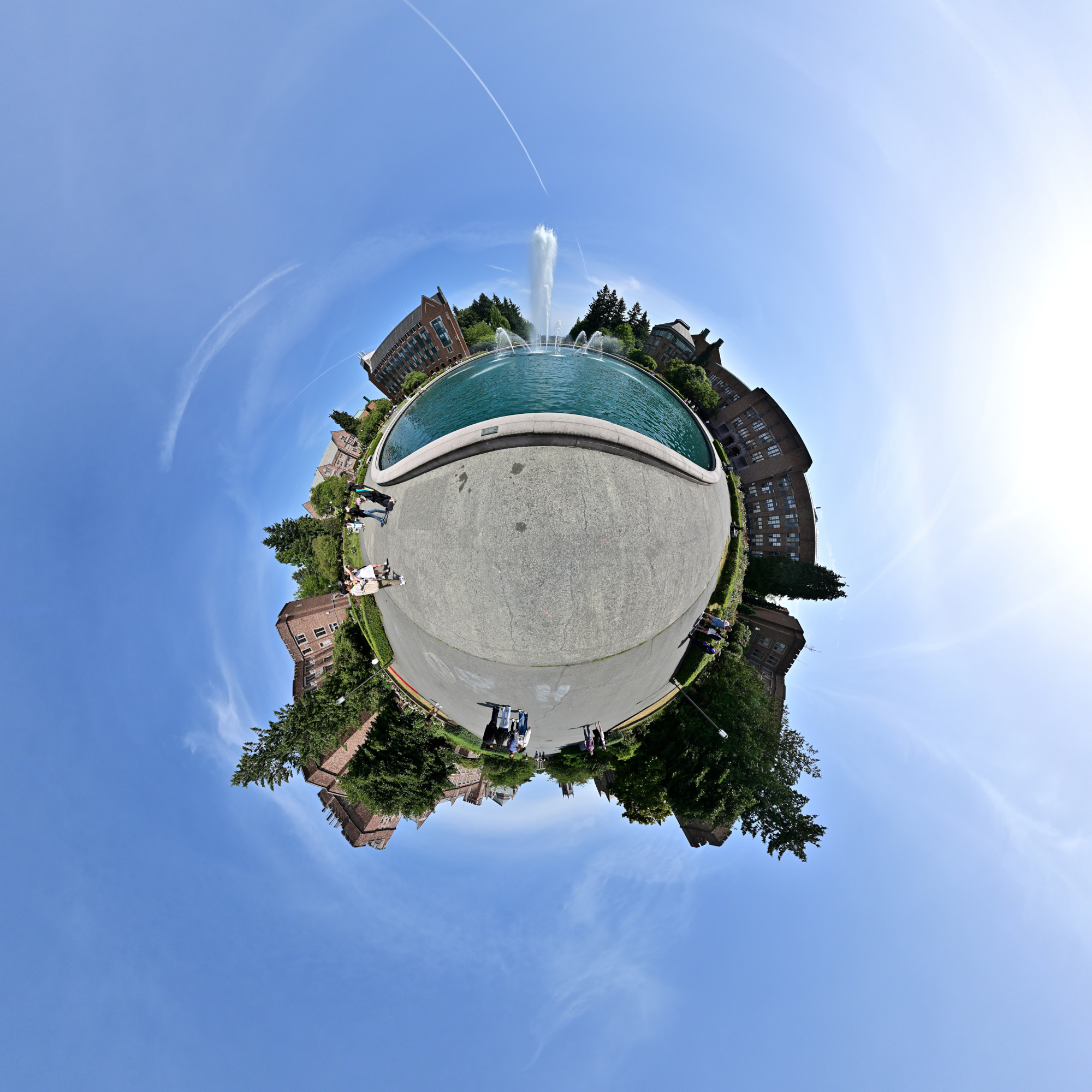
Drumheller Fountain sits at the center of Rainier Vista, offering a stunning reflection of Mount Rainier on clear days and serving as a scenic focal point surrounded by some of the campus's most iconic buildings.
1/1000s f/5,6 ISO 100/21° f=7,5mm
Equirectangular projection
Stereographic projection
Interactive Panorama Drumheller Fountain 1
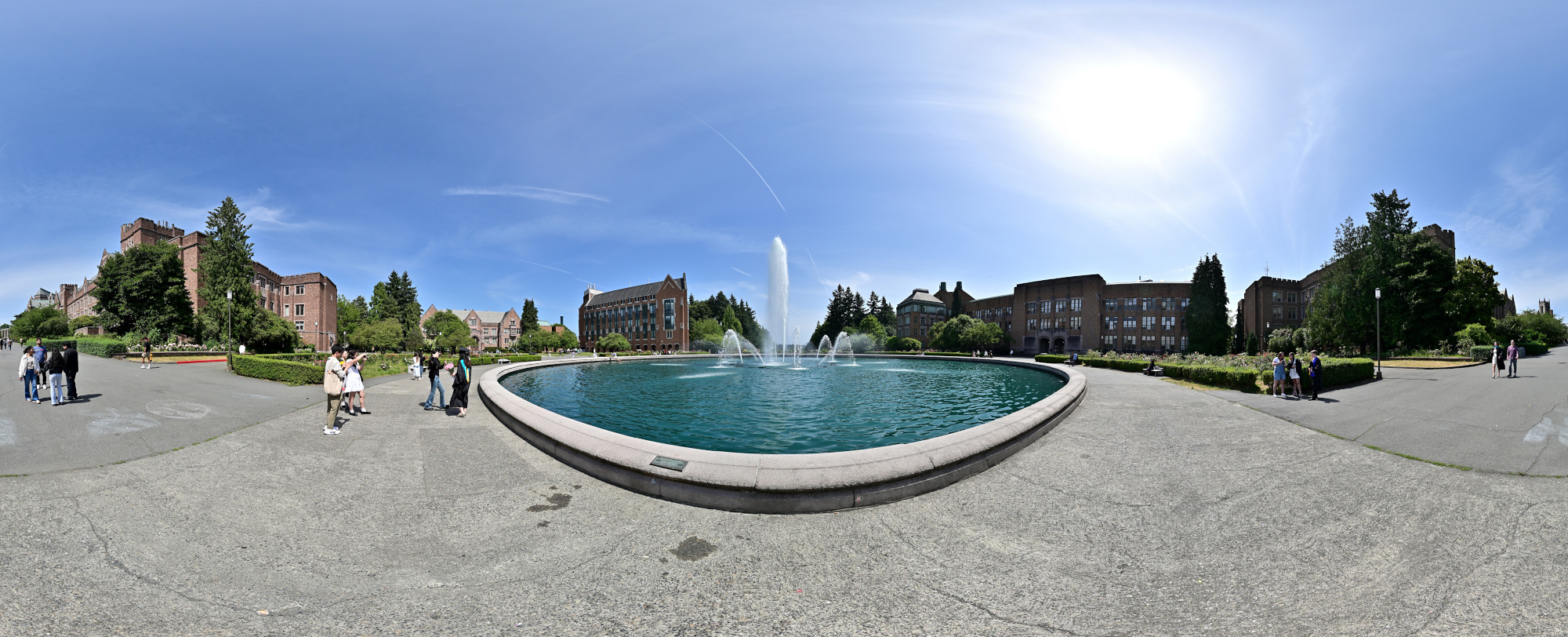
1/1000s f/5,6 ISO 100/21° f=7,5mm
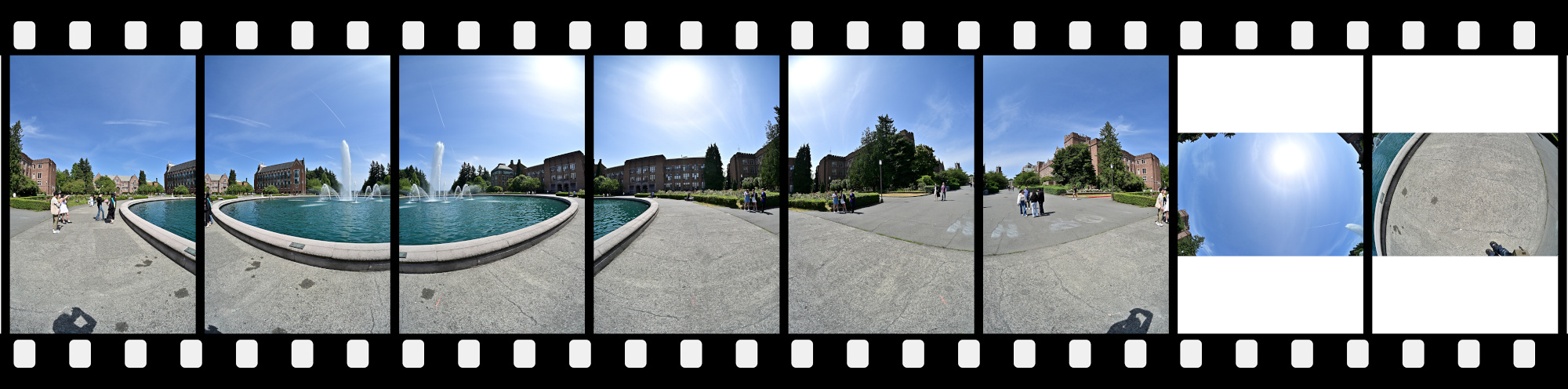
Interactive Panorama Drumheller Fountain 2
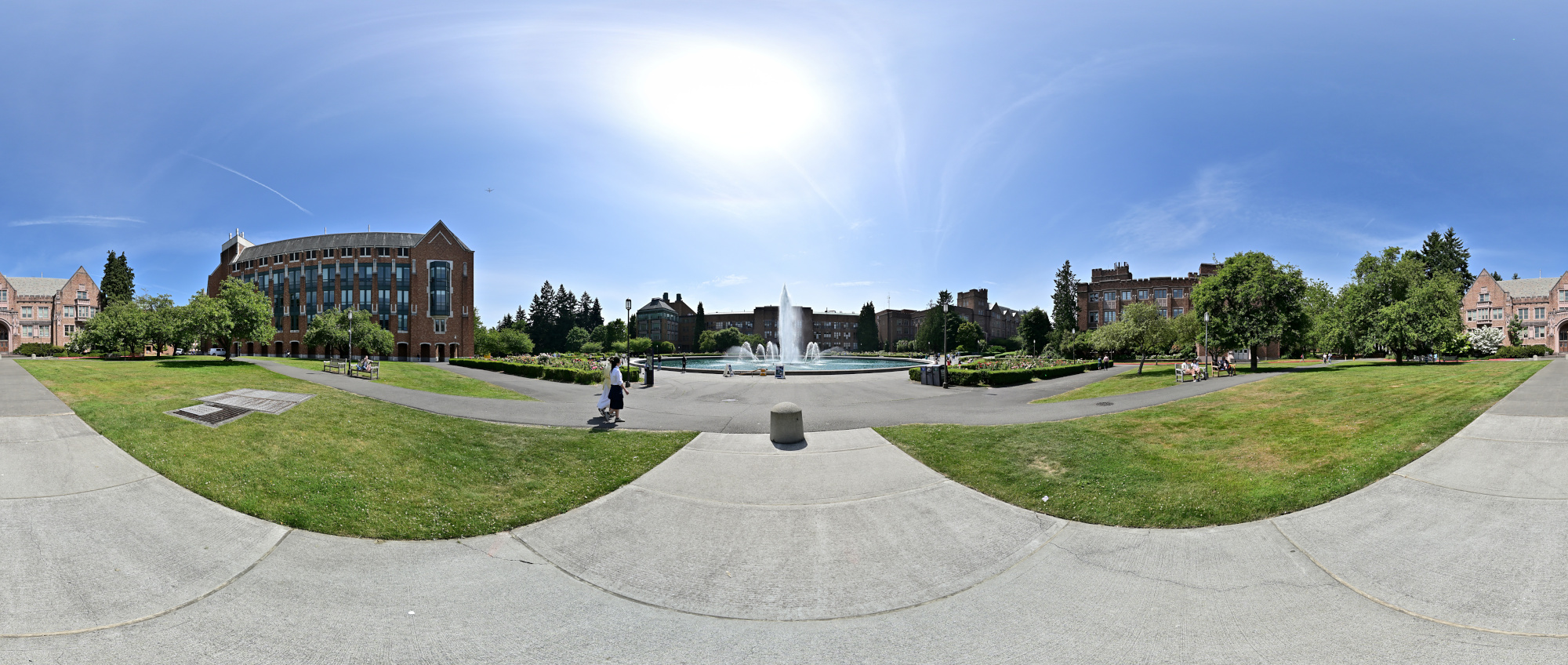
1/1000s f/5,6 ISO 100/21° f=7,5mm
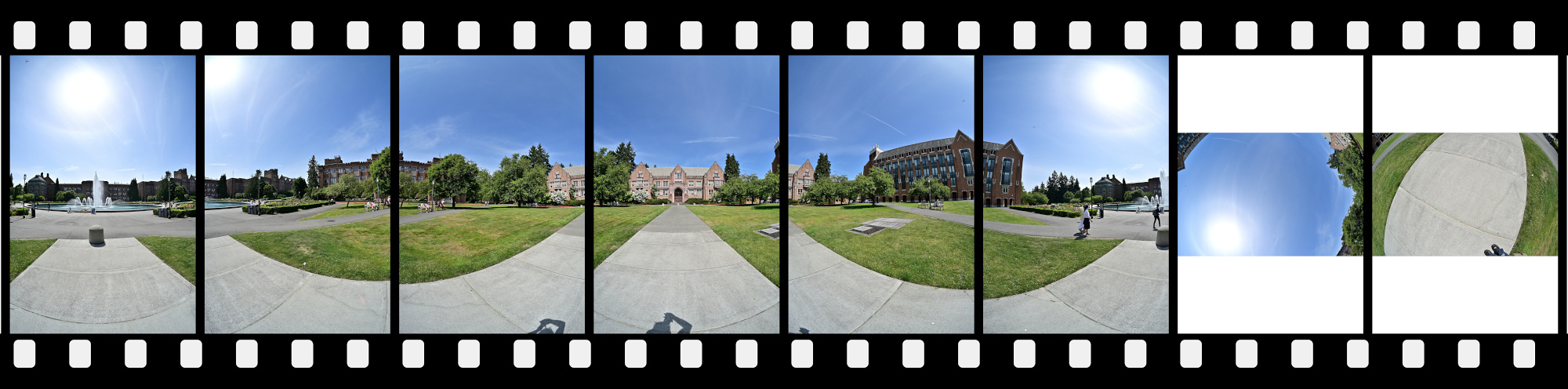
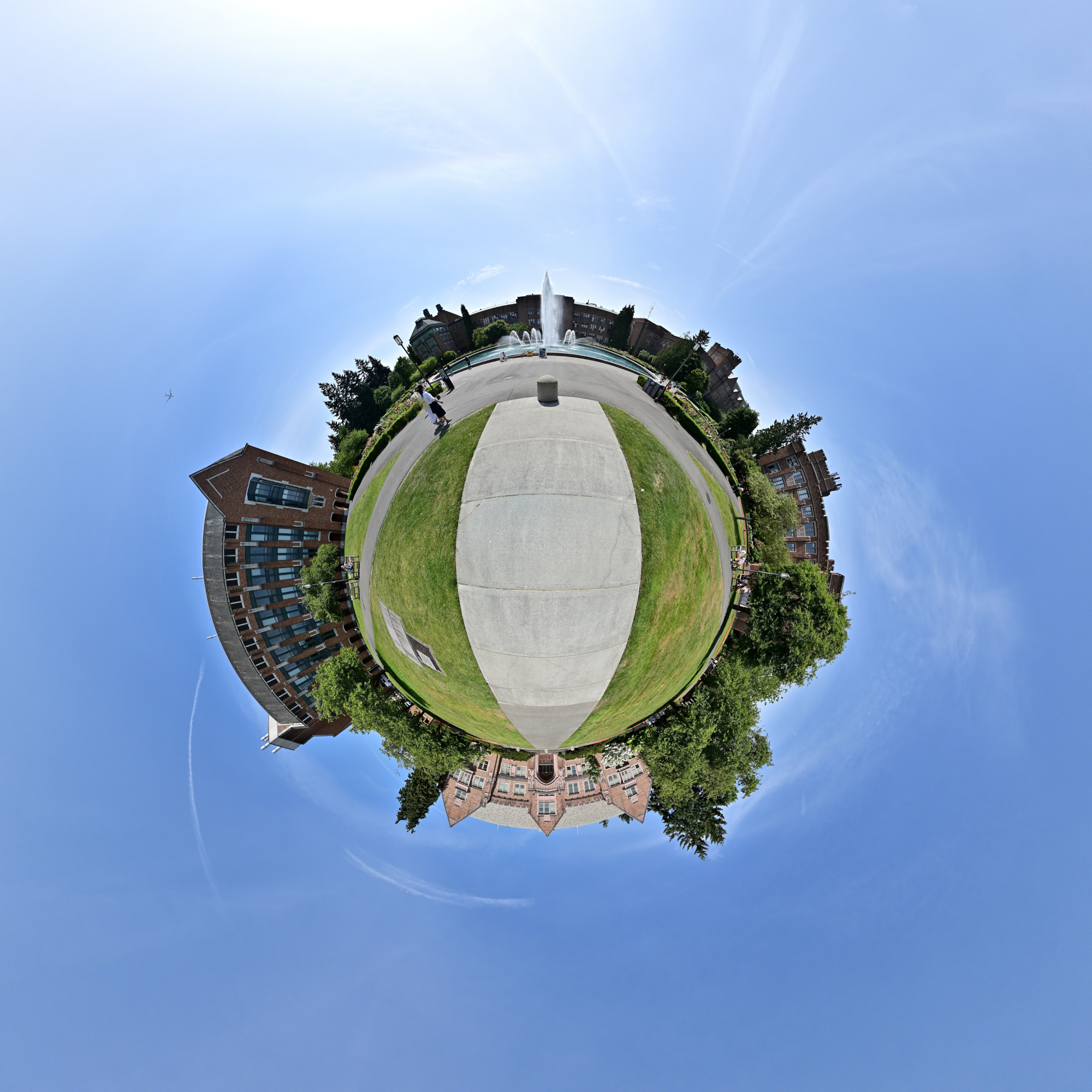
Rainier Vista
Rainier Vista is a grand, tree-lined axis that stretches from Red Square to Drumheller Fountain, offering a sightline to Mount Rainier on clear days and serving as one of the campus's most iconic visual corridors.
Interactive Panorama Rainier Vista
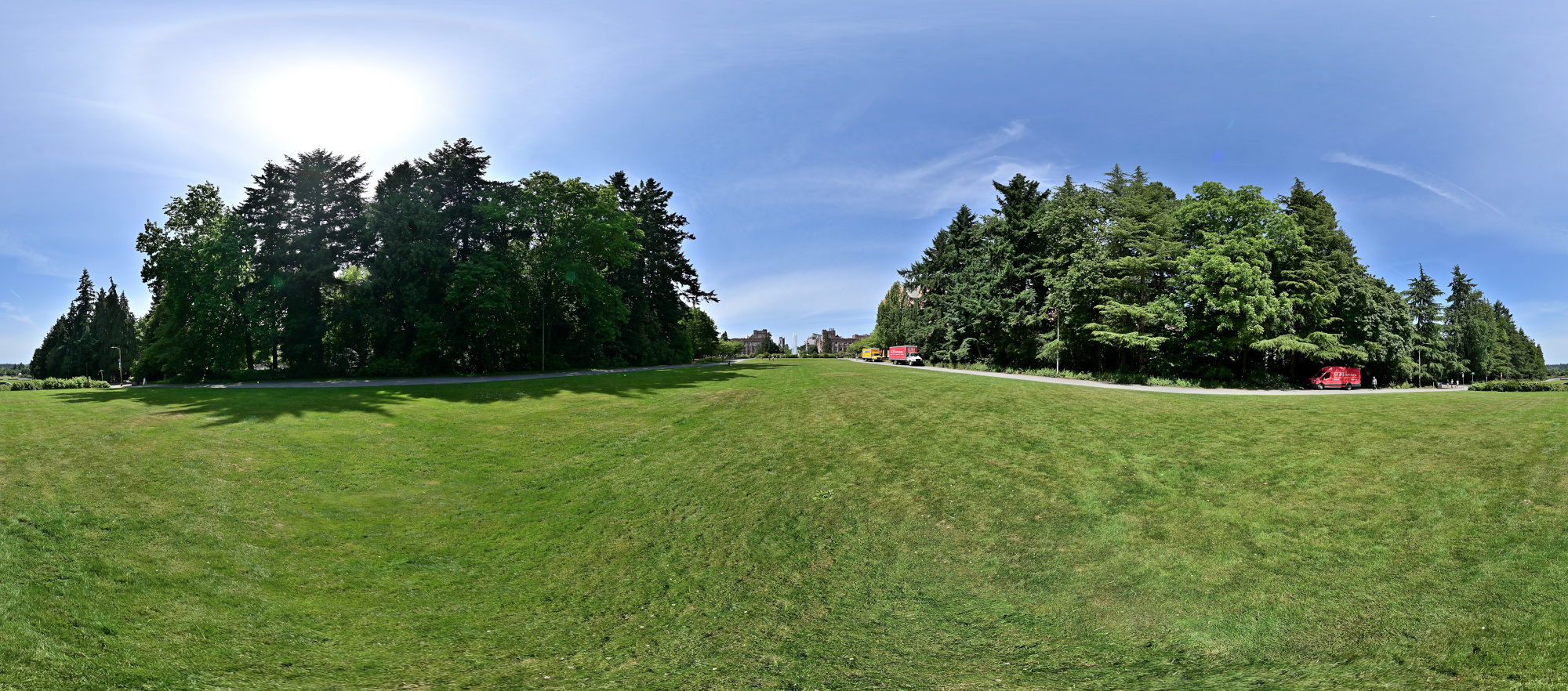
1/1000s f/5,6 ISO 100/21° f=7,5mm
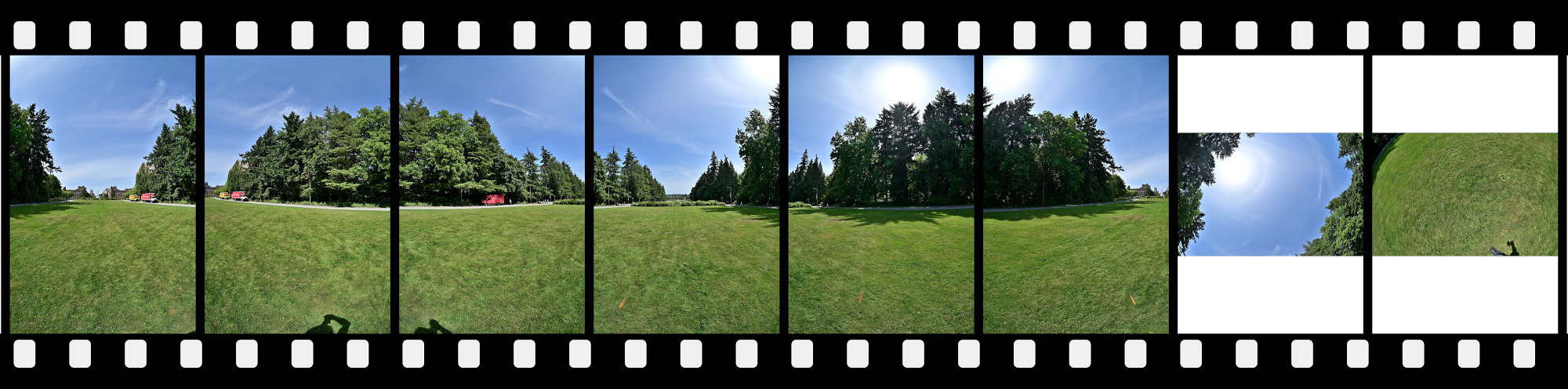
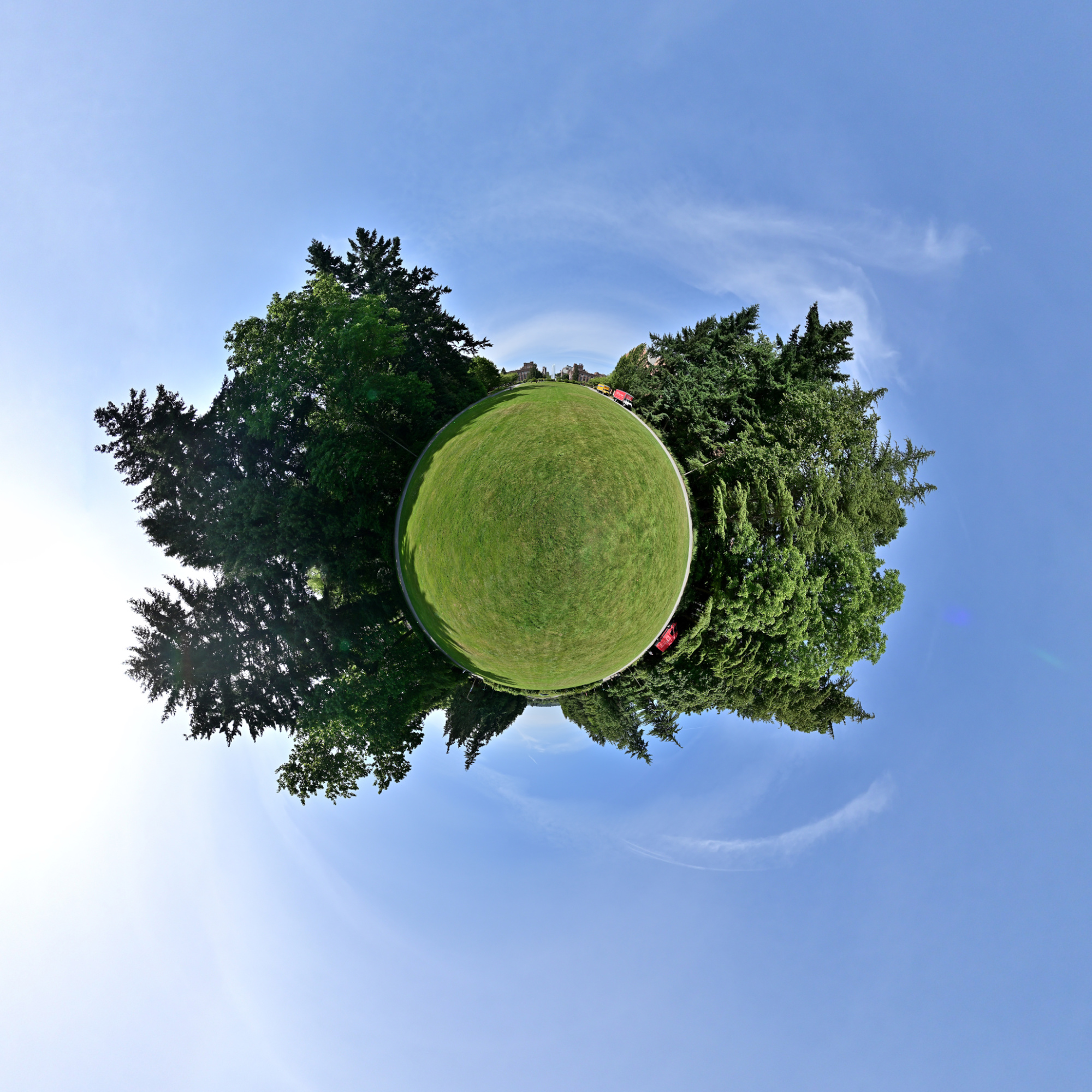
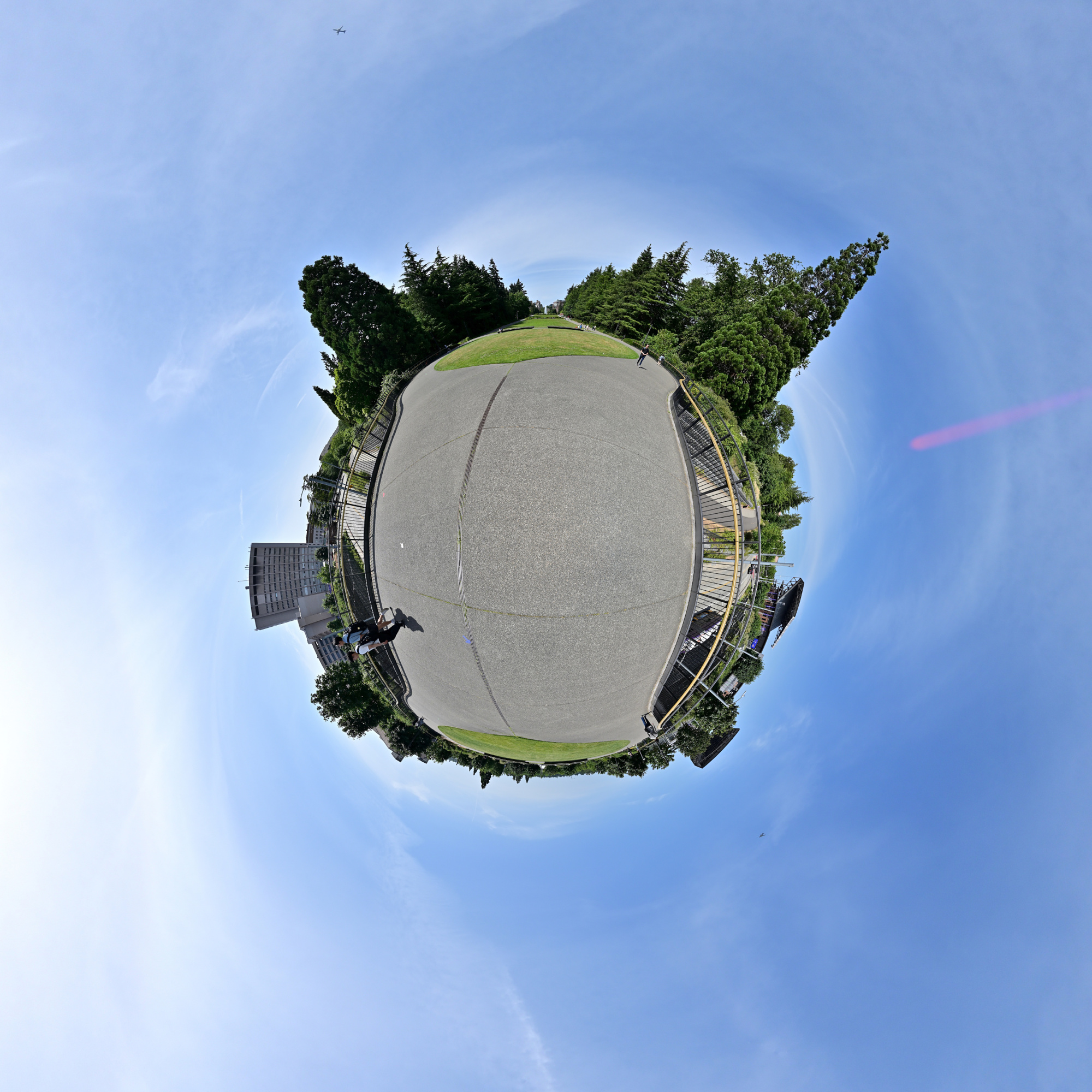
Rainier Vista Northeast Bridge
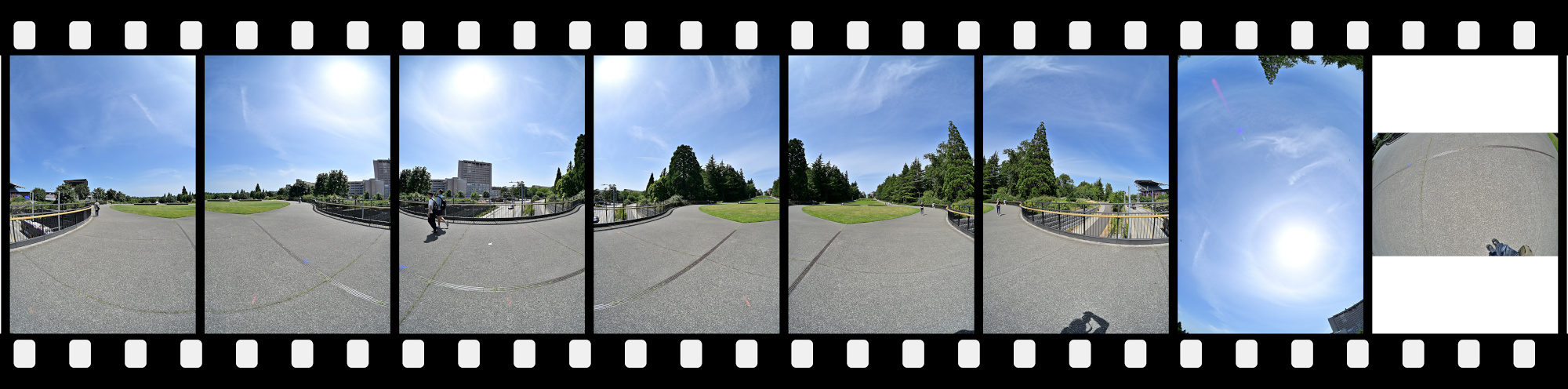
The Rainier Vista Northeast Bridge spans a key pedestrian route near the end of the vista, offering elevated views of Drumheller Fountain and the surrounding landscape while connecting key parts of the campus with ease and elegance.
Interactive Panorama Rainier Vista Northeast Bridge
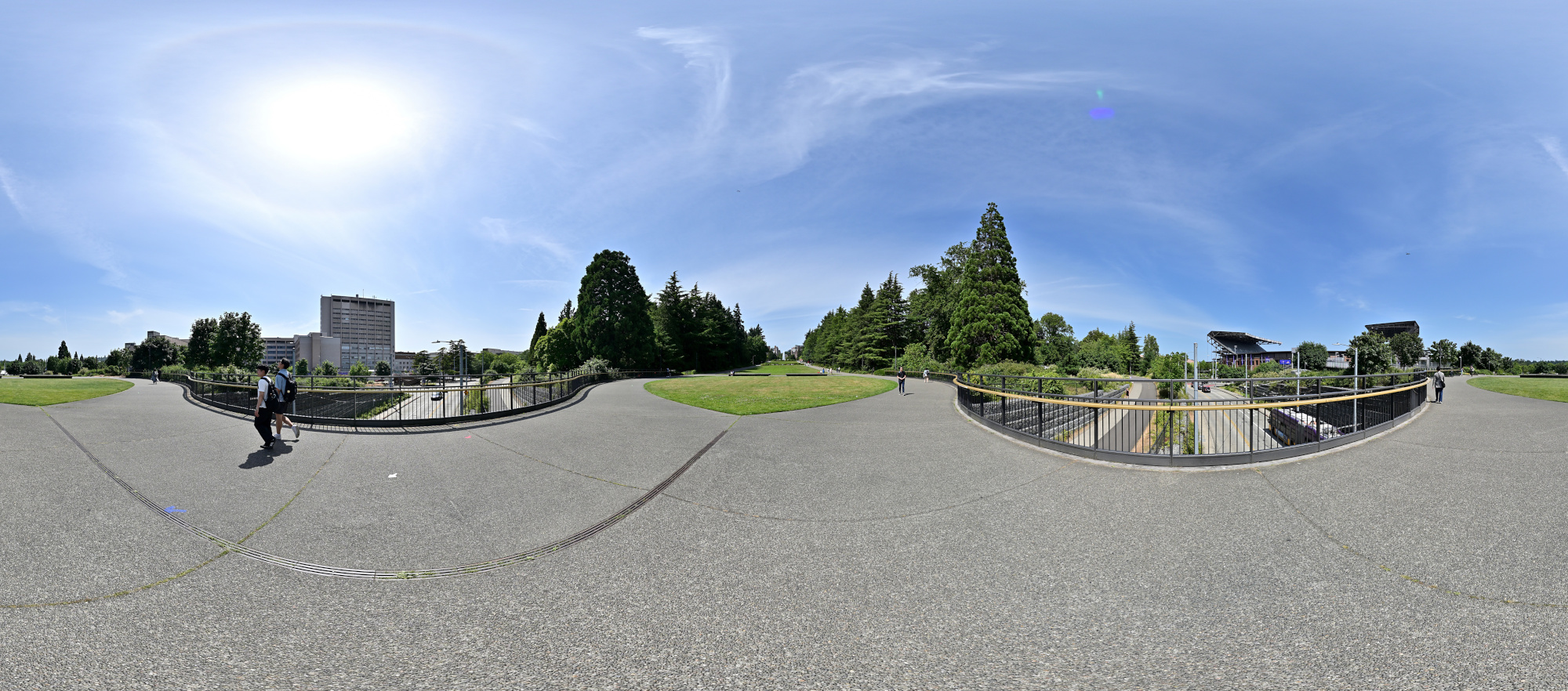
1/1000s f/5,6 ISO 100/21° f=7,5mm
Bridge to Husky Stadium
The bridge to Husky Stadium provides a vital pedestrian link between the main campus and the athletic complex, guiding fans and students alike across Montlake Boulevard with sweeping views of Union Bay and the stadium's iconic silhouette.
Interactive Panorama Bridge to Husky Stadium
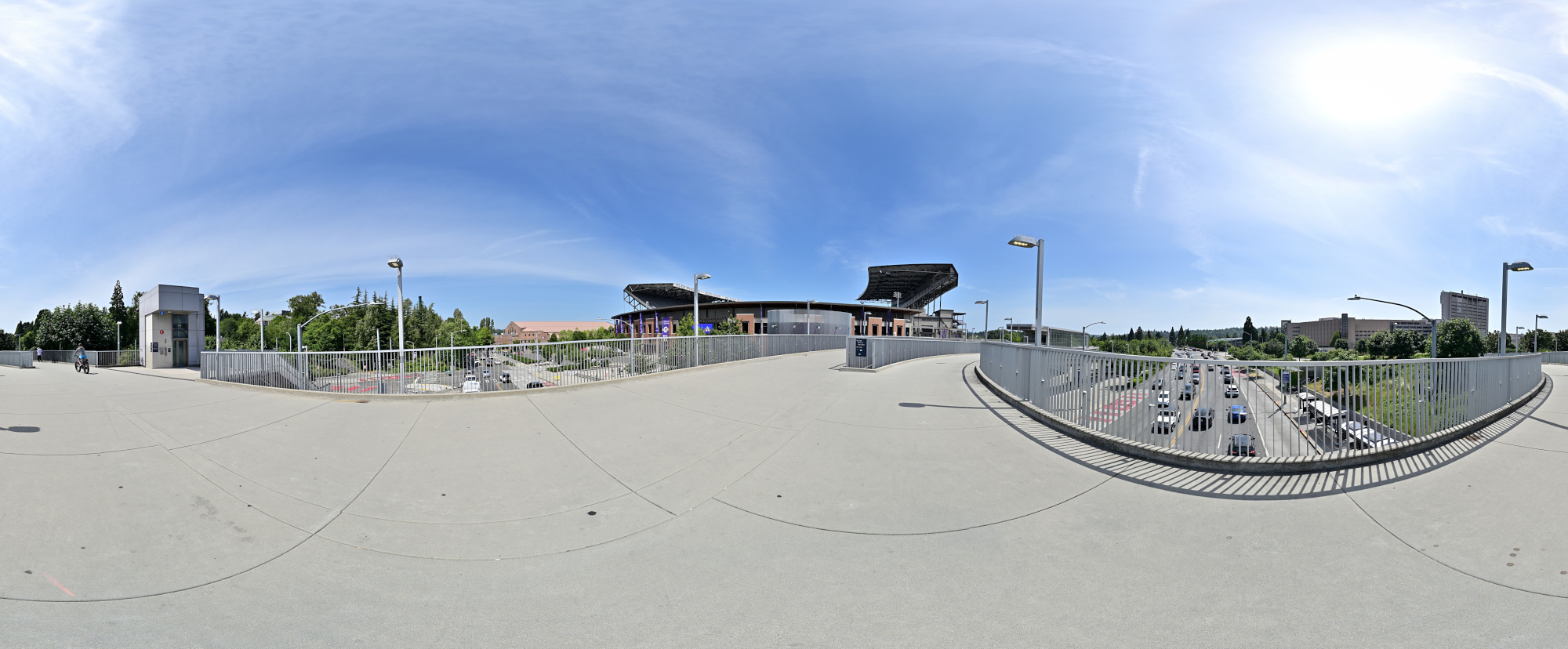
1/1000s f/5,6 ISO 100/21° f=7,5mm
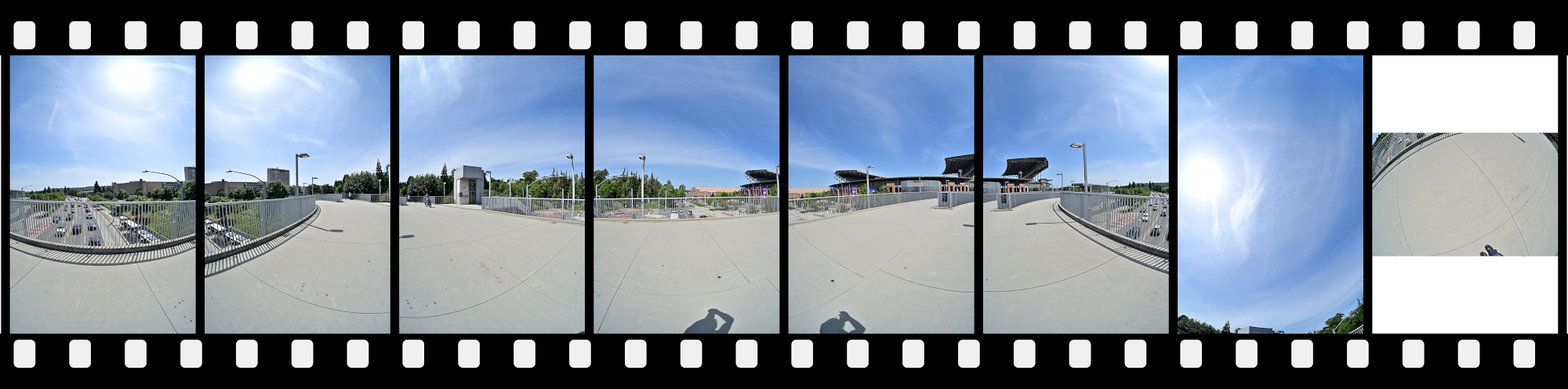
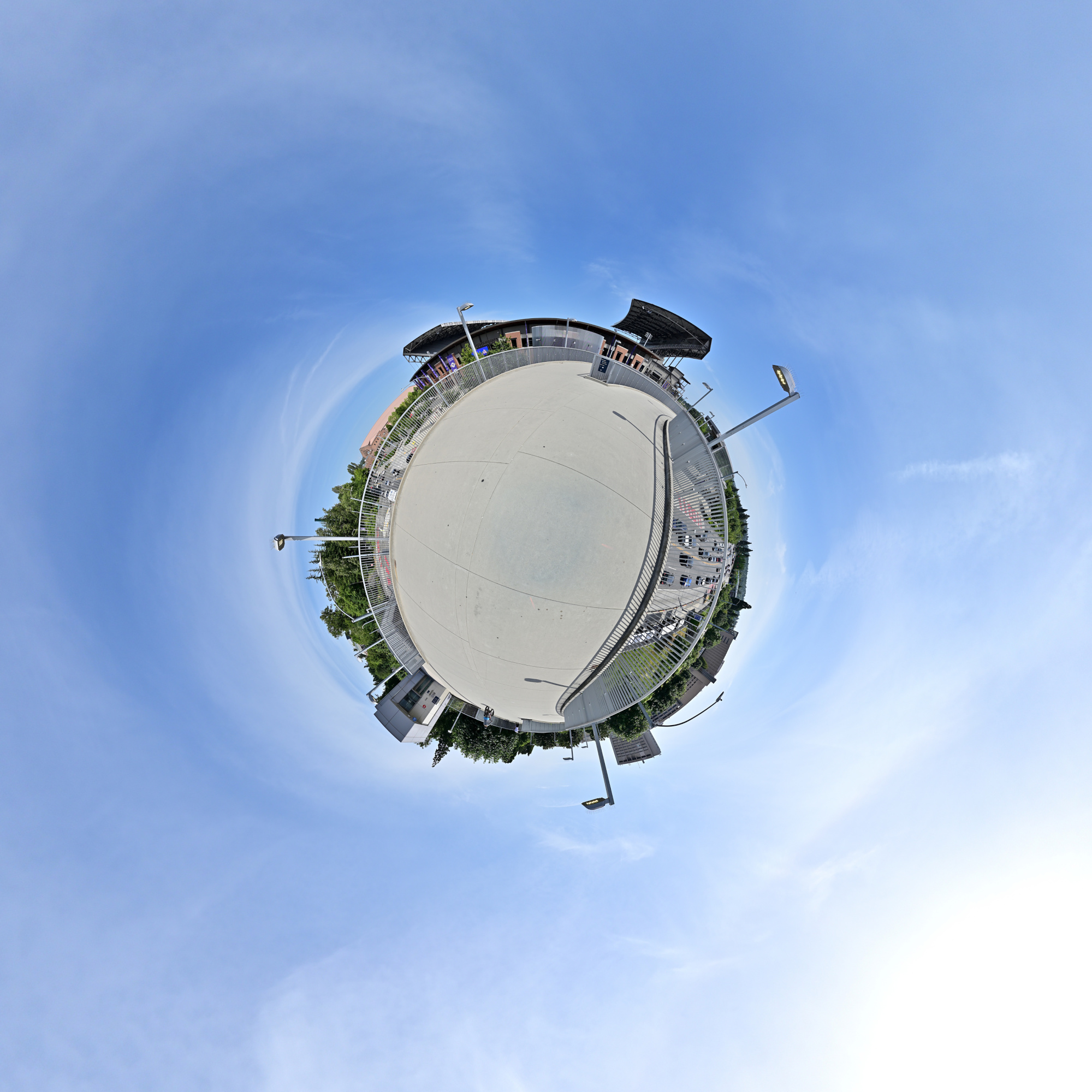
UW Panorama Map2
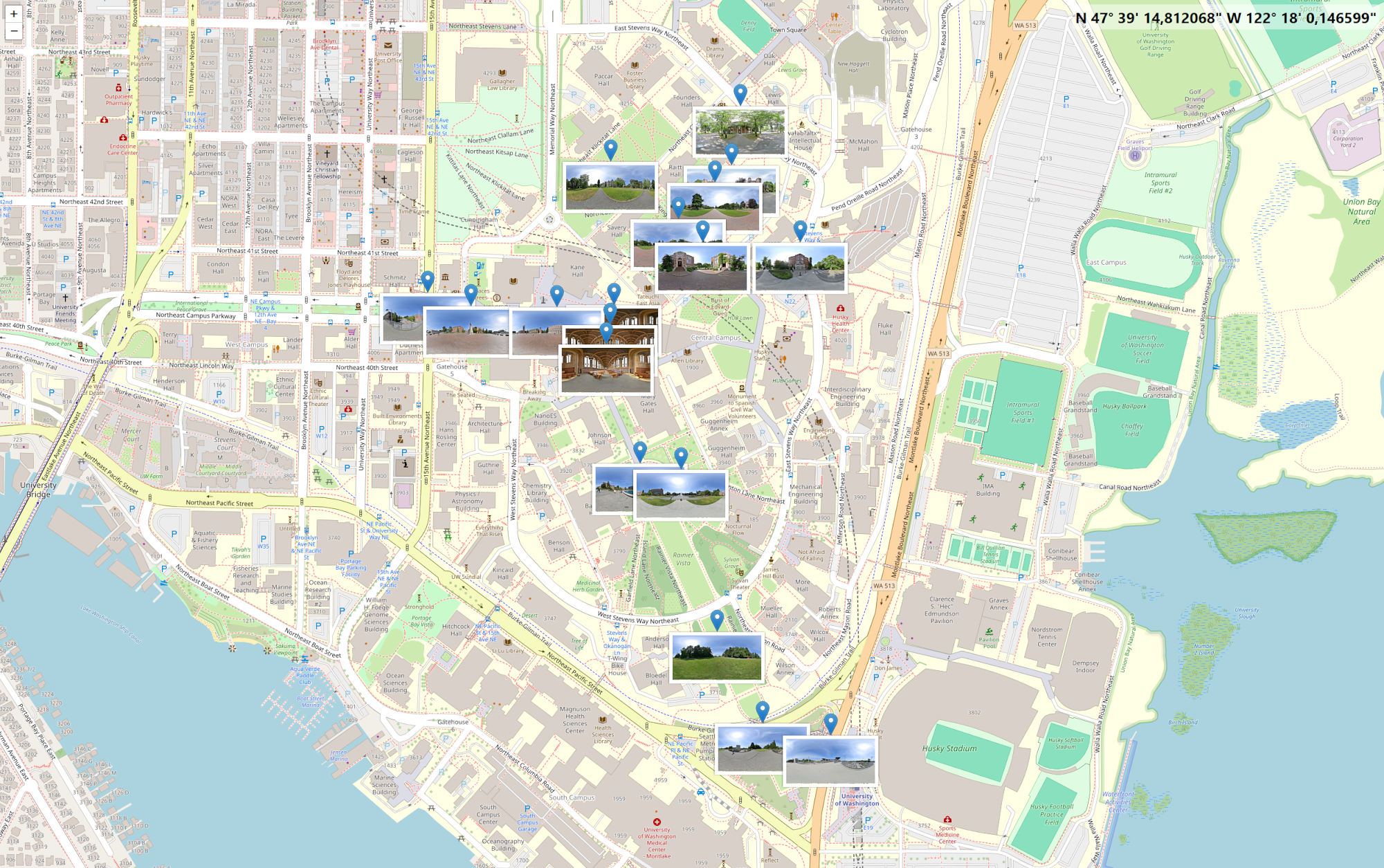
And here, the panoramic journey ends for today
1/200s f/5,6 ISO 100/21° f=7,5mm
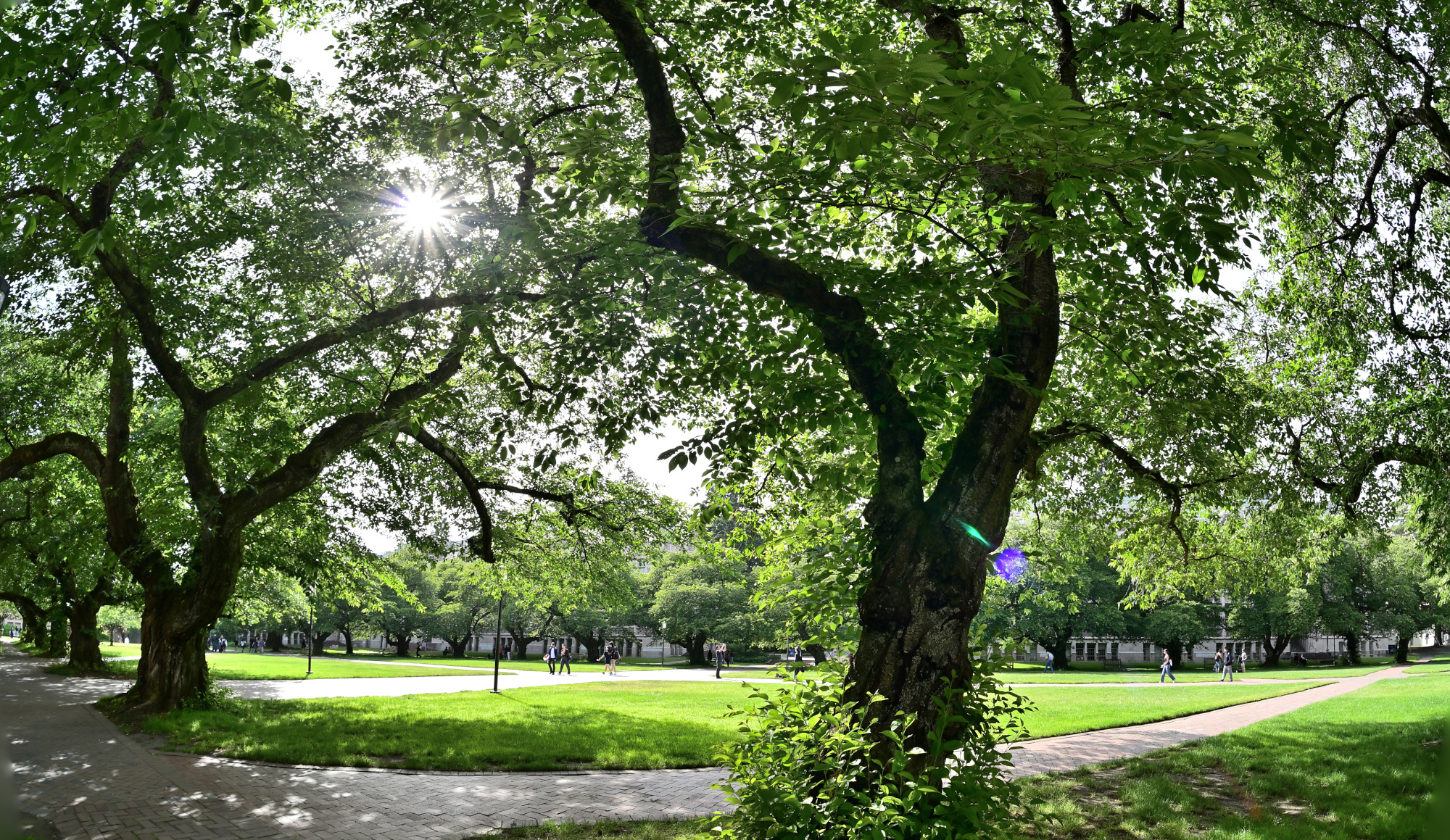
-
Frühlingsblumen 💐🪻
[ ] 🌧
[✓] 🌞1/320s f/6,3 ISO 100/21° 105mm f/2,8 VR
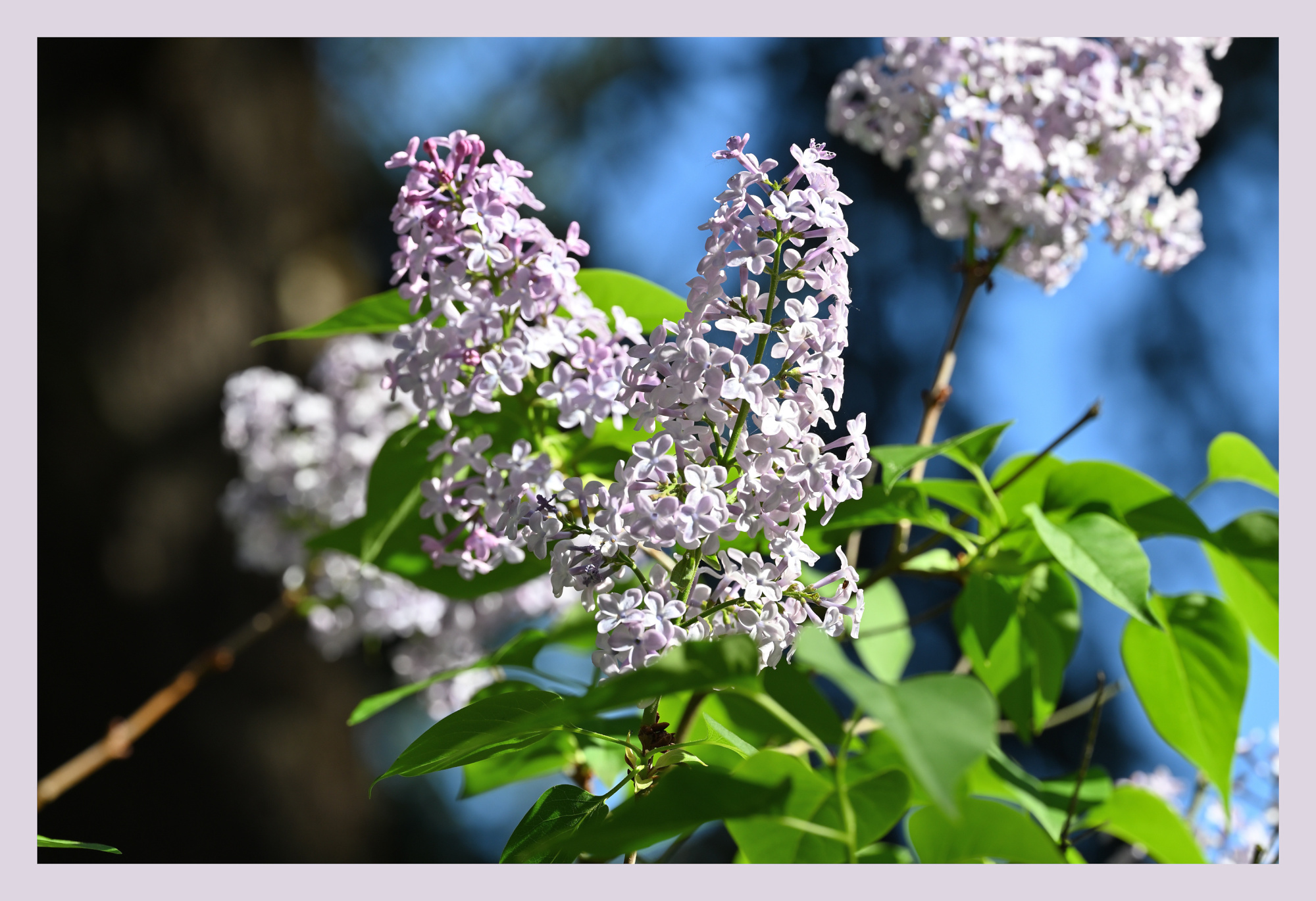
1/250s f/6,3 ISO 180 16-50mm f/3,5-6,3 VR f=50mm/75mm
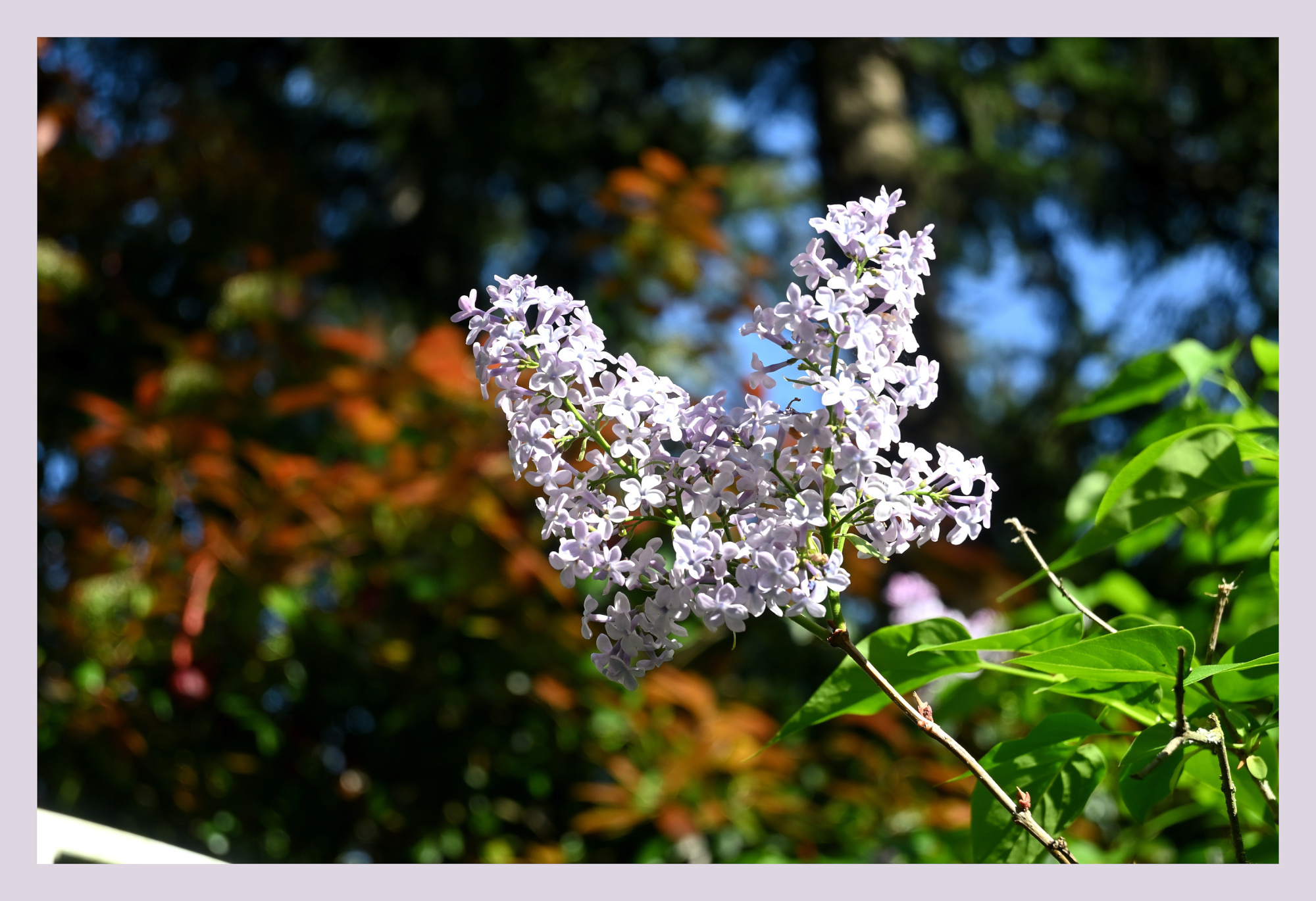
1/1000s f/6,3 ISO 200/24° 24-70mm f/2,8 f=70mm
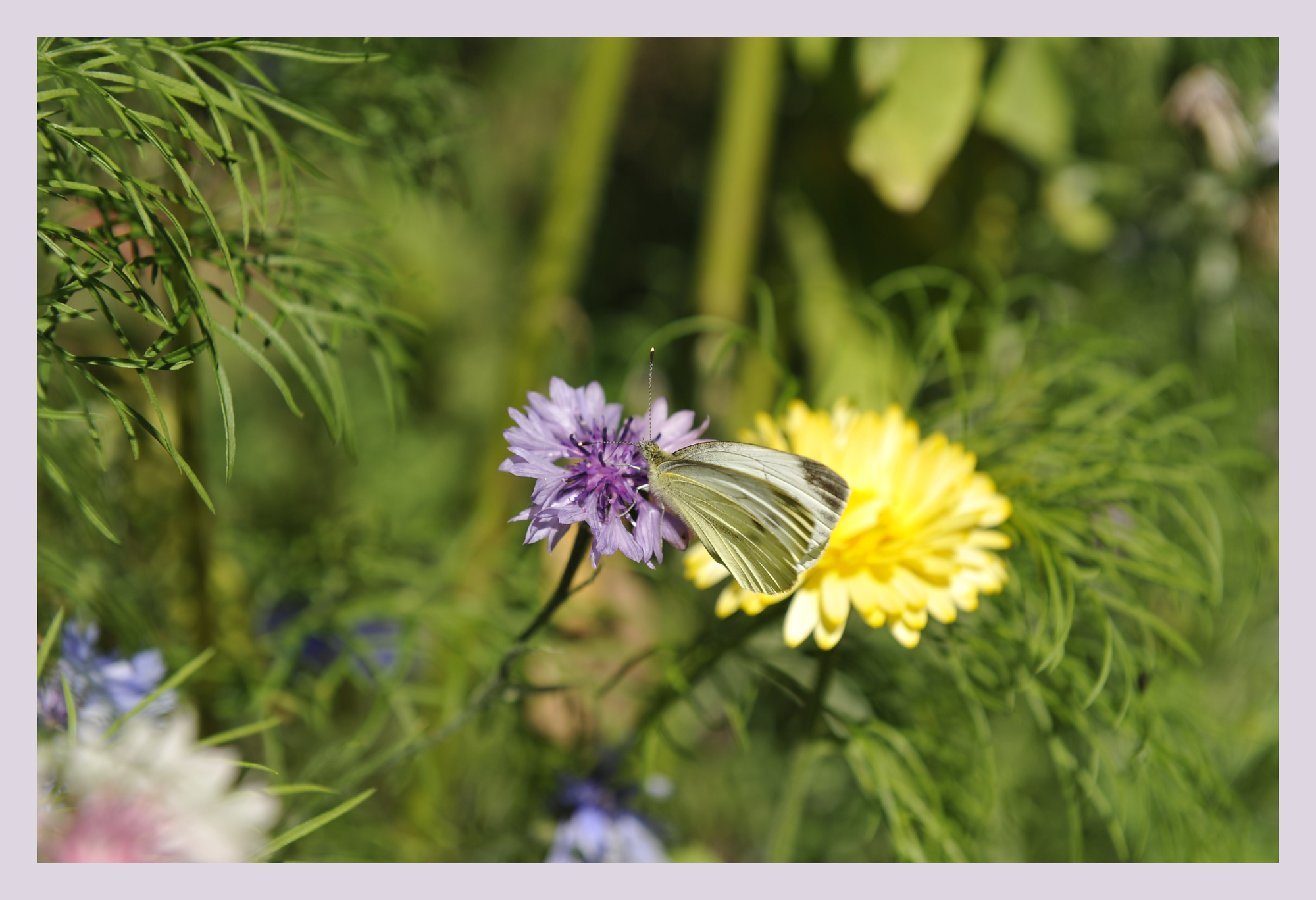
1/2000s f/4,5 ISO 200/24° 24-70mm f/2,8 f=44mm
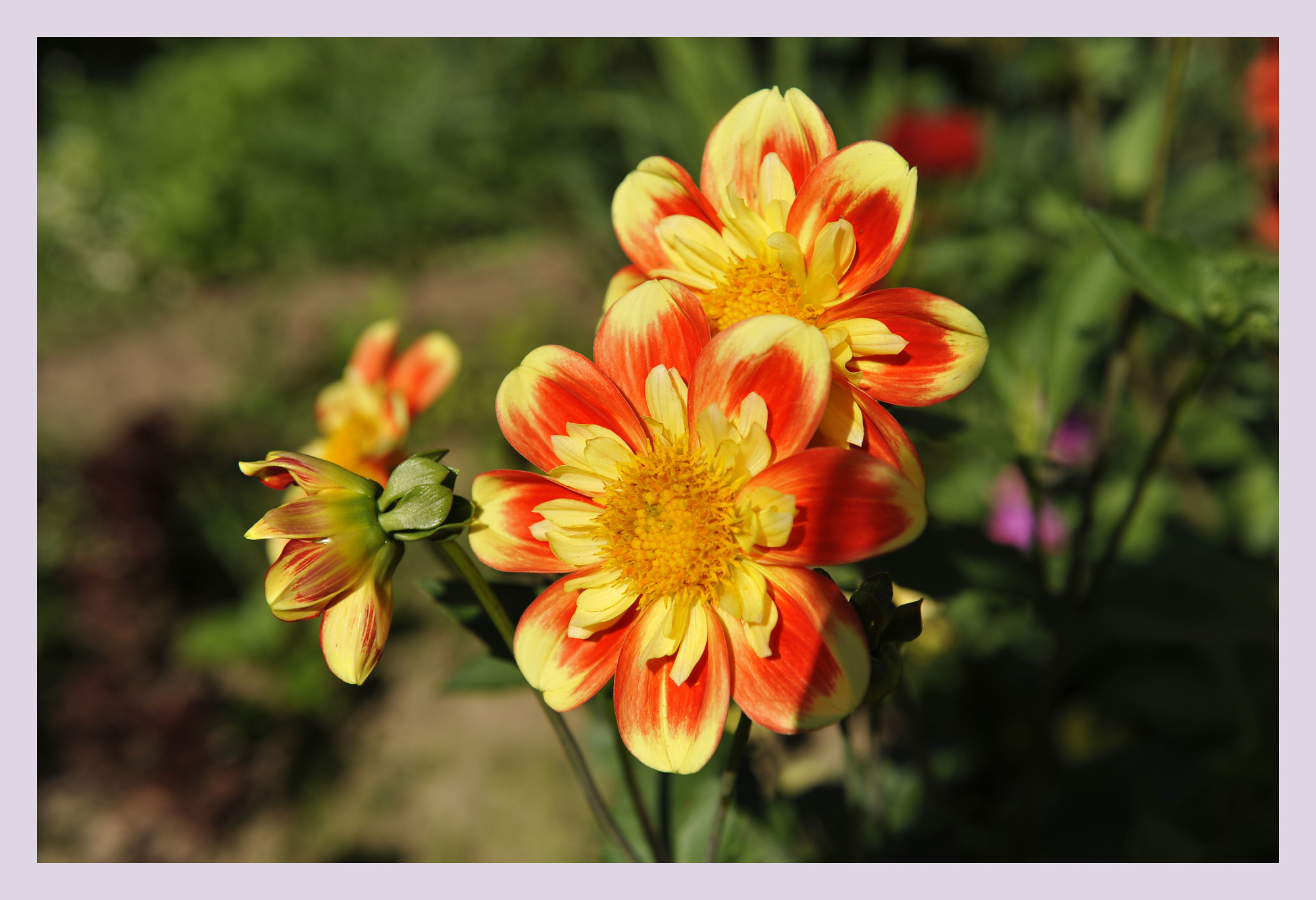
1/2500s f/4,5 ISO 200/24° 24-70mm f/2,8 f=70mm
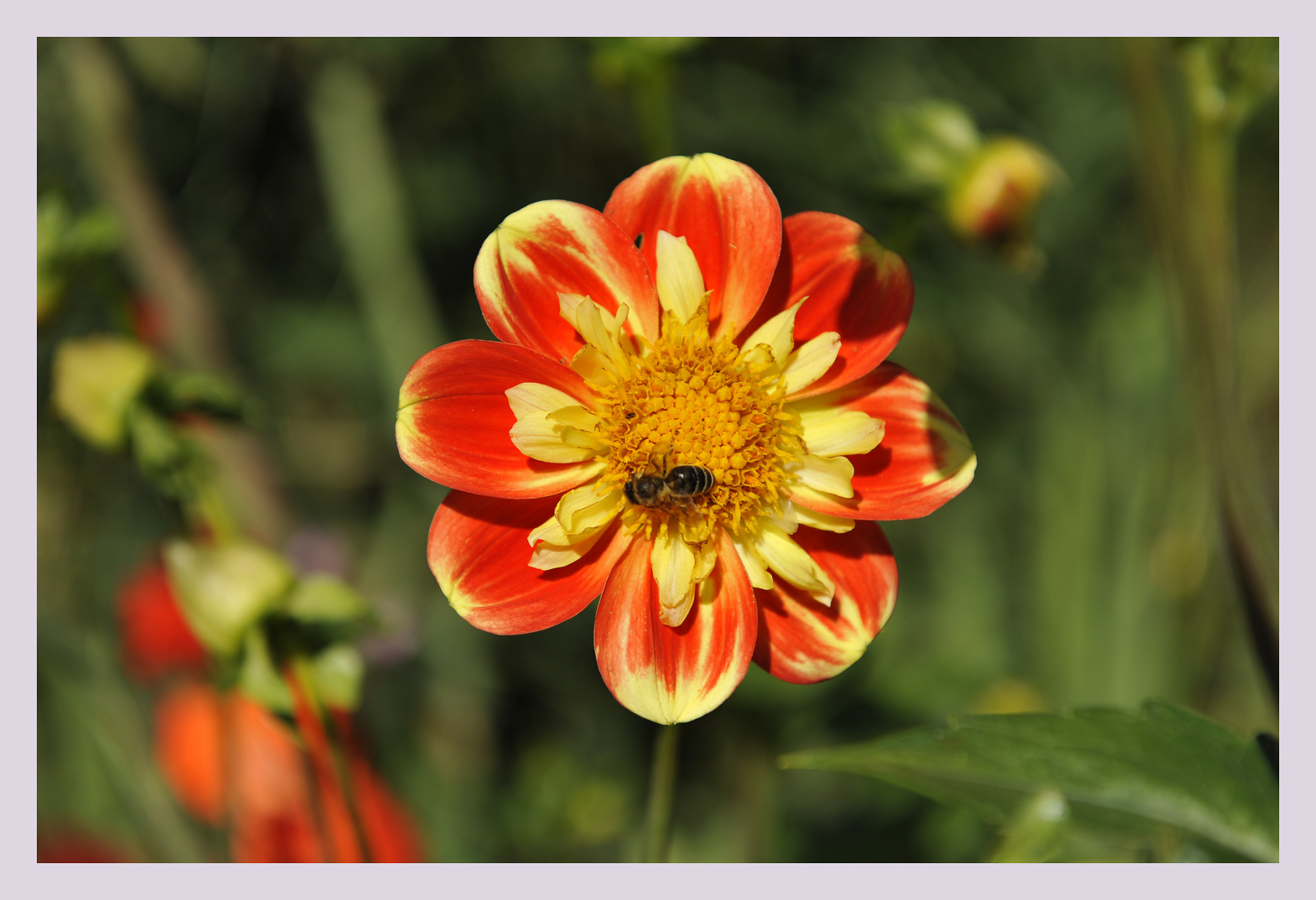
1/250s f/8 ISO 200/24° 8mm f/3,5
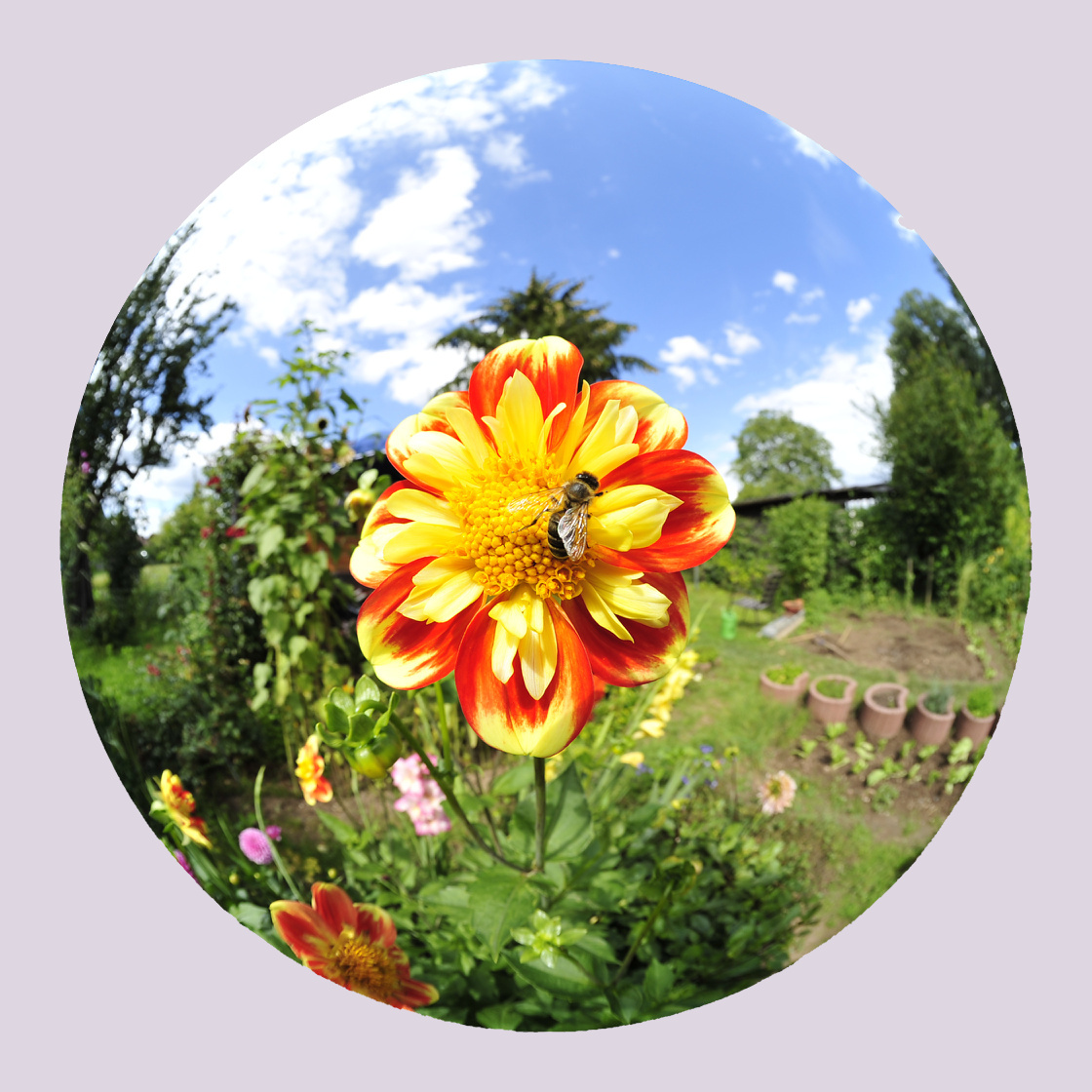
1/320s f/9 ISO 200/24° 8mm f/3,5
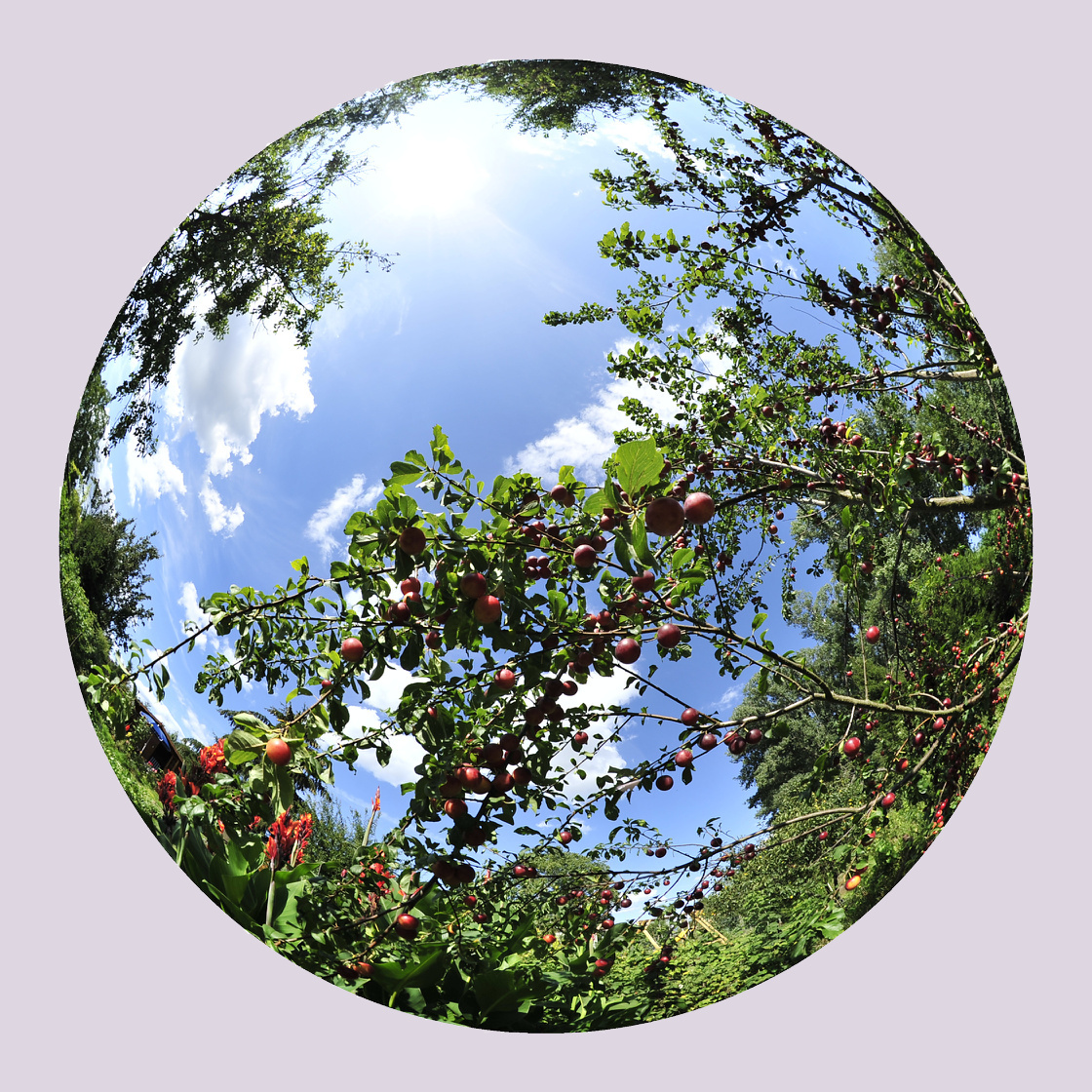
1/125s f/5,6 ISO 200/24° 8mm f/3,5
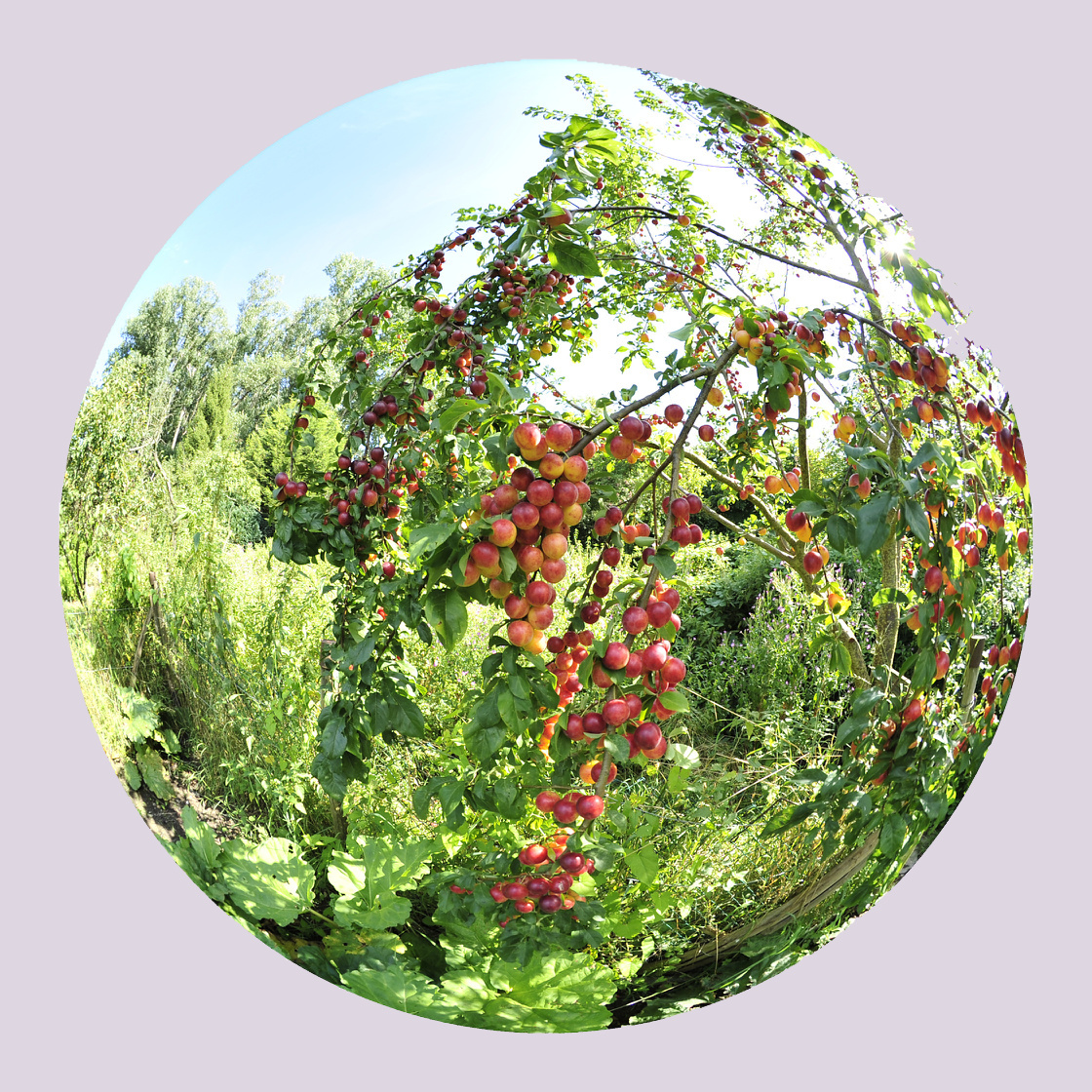
1/500s f/4,5 ISO 80/20° f=25mm
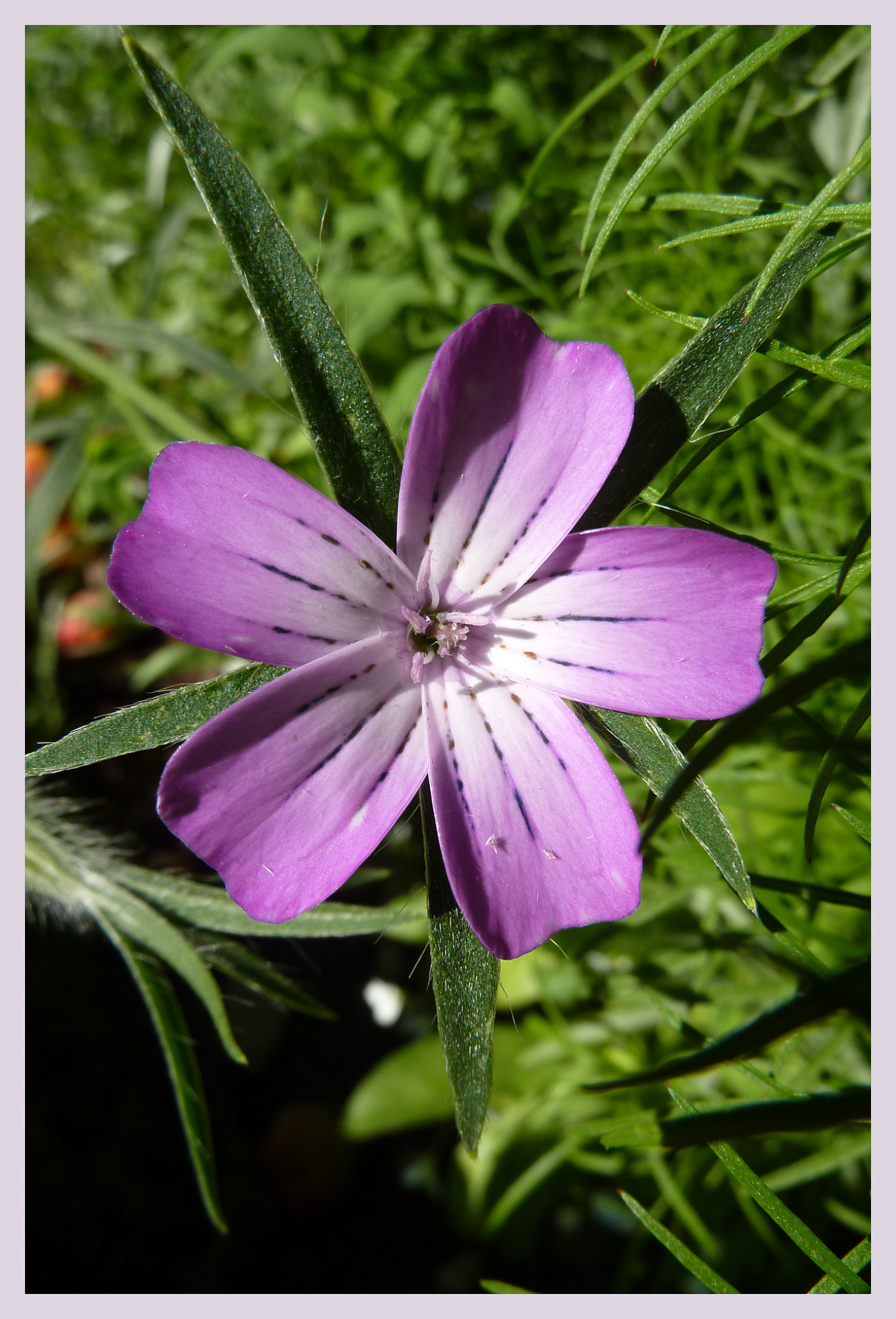
1/400s f/4 ISO 80/20° f=25mm
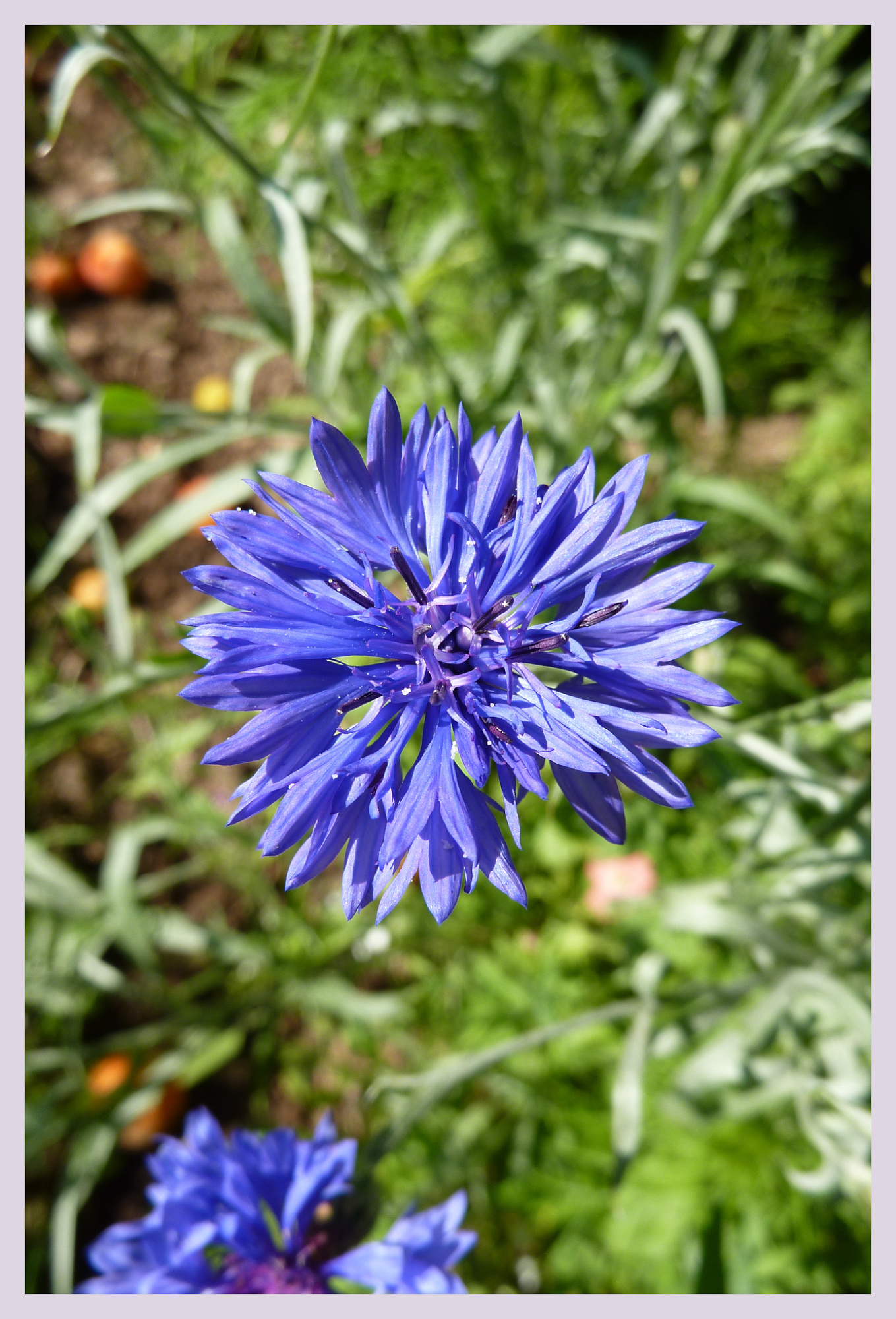
1/500s f/4,5 ISO 80/20° f=25mm
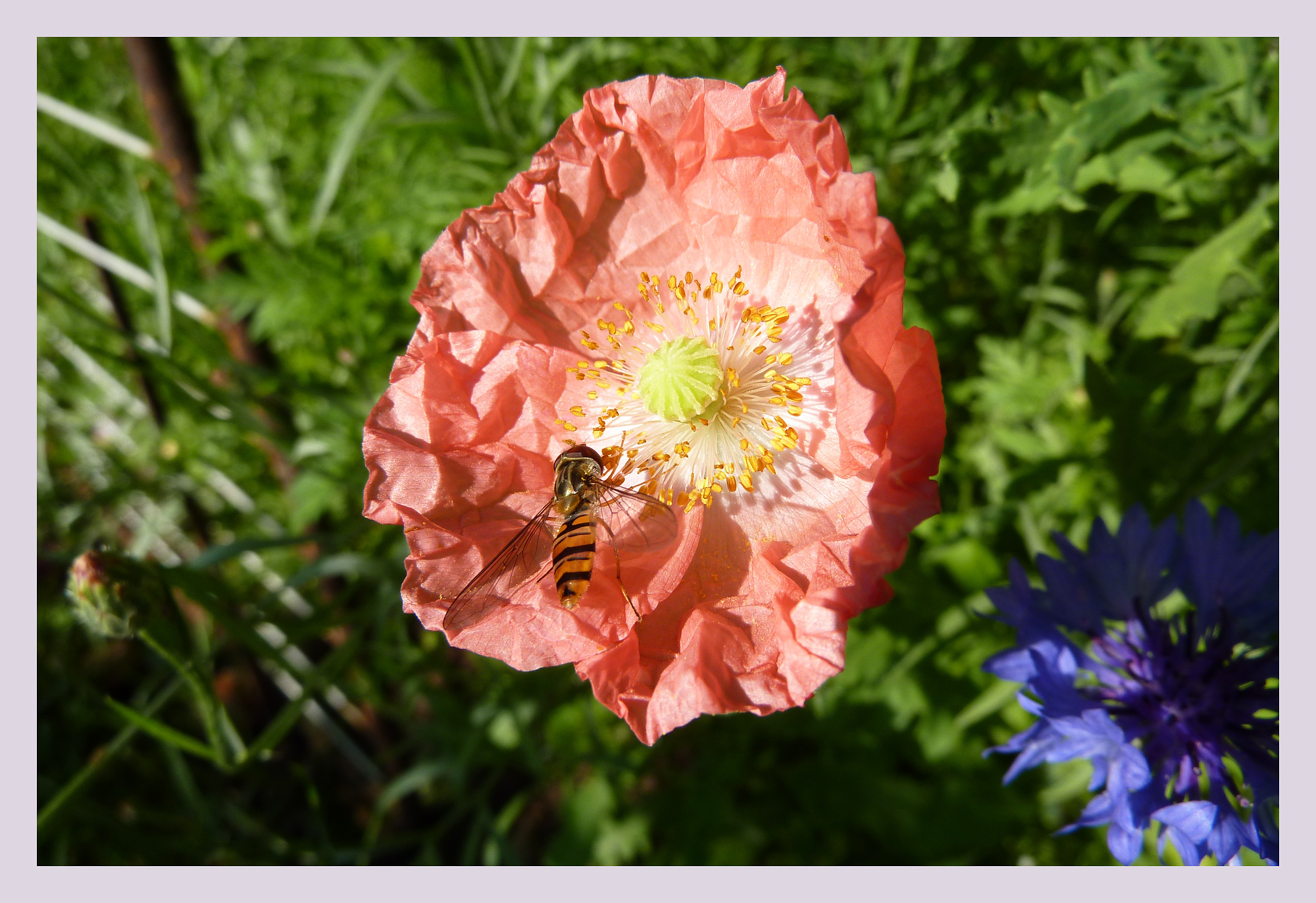
1/250s f/4 ISO 80/20° f=25mm
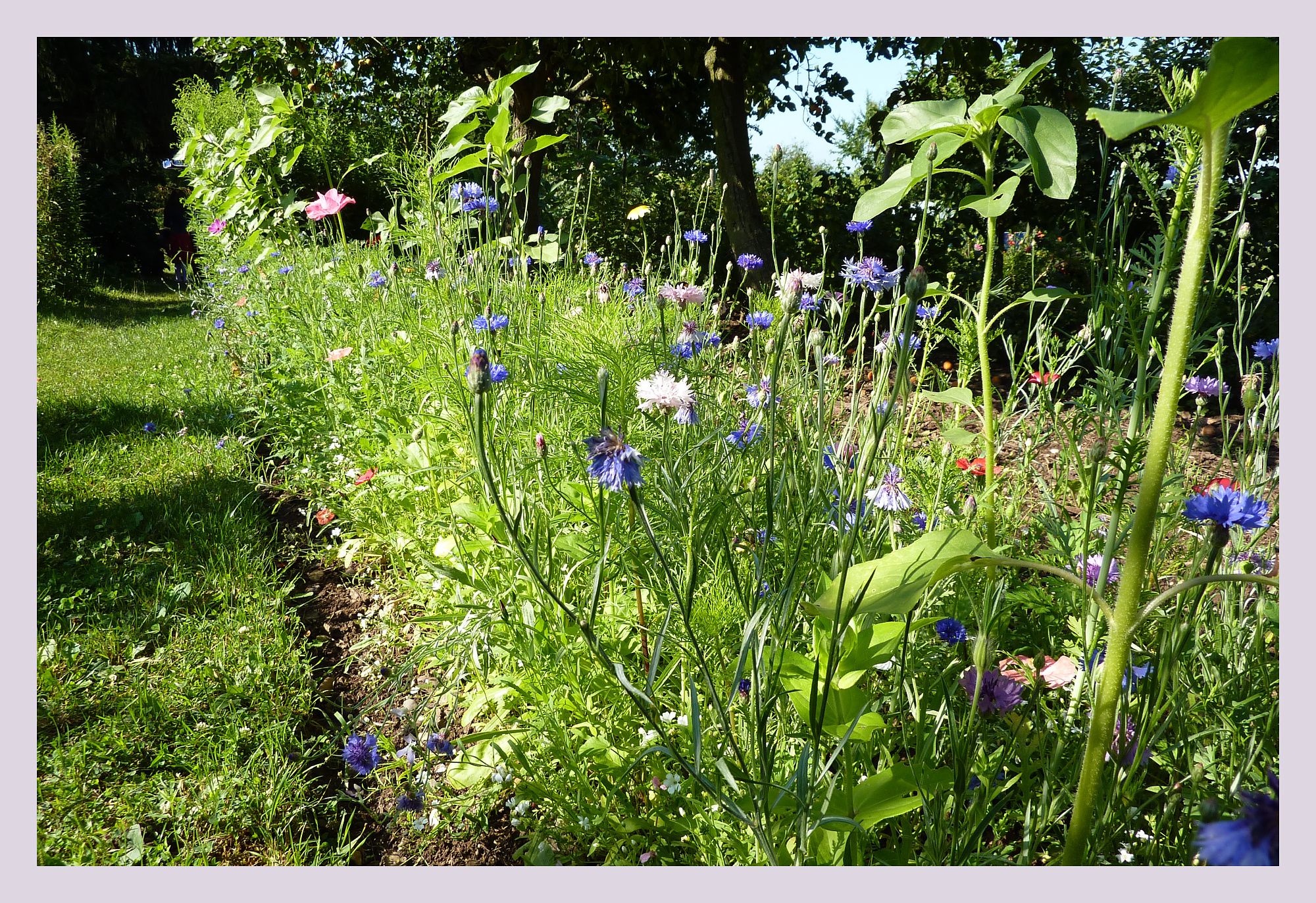
1/500s f/5,6 ISO 80/20° f=25mm
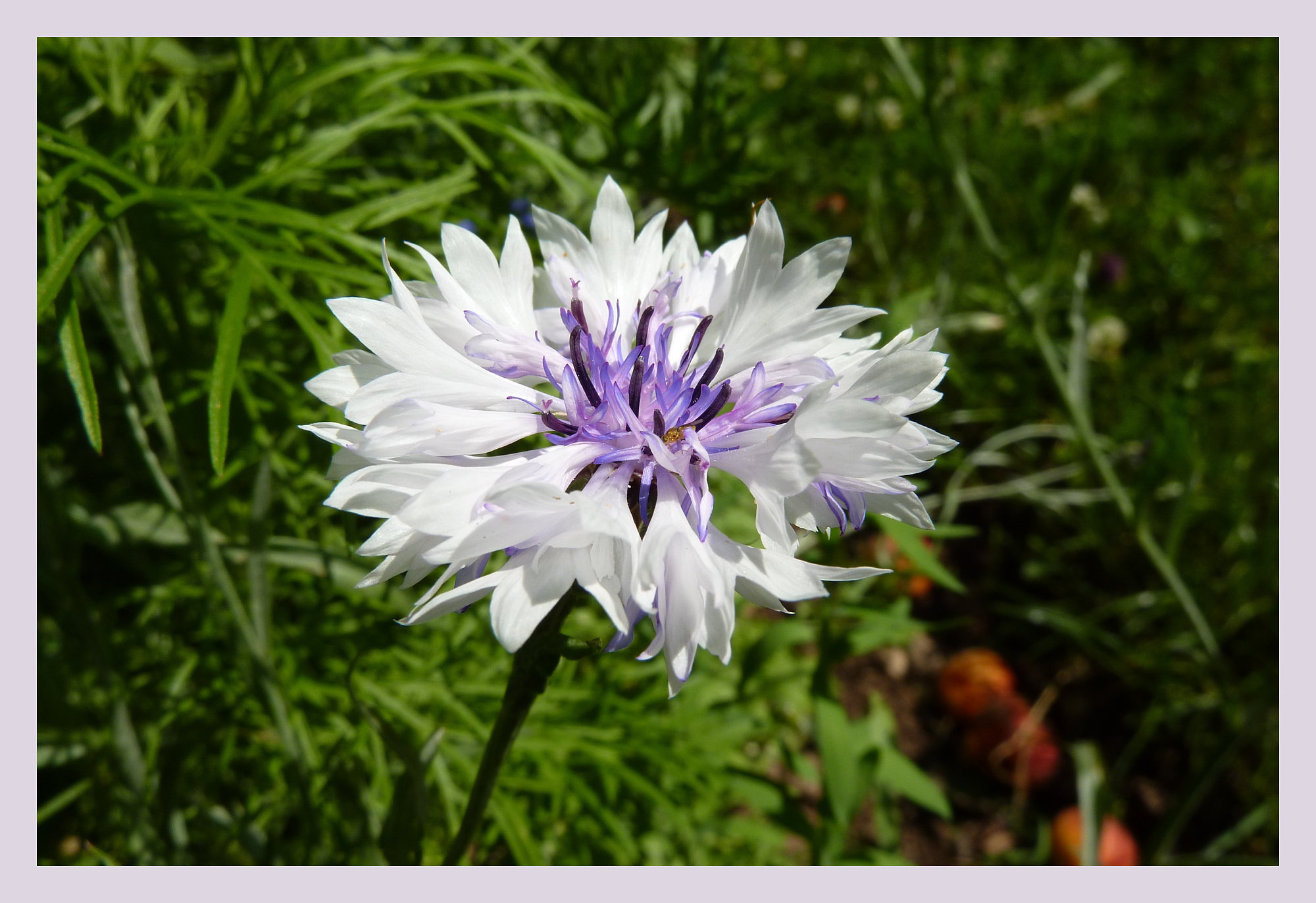
1/250s f/5,6 ISO 110 105mm f/2,8 VR
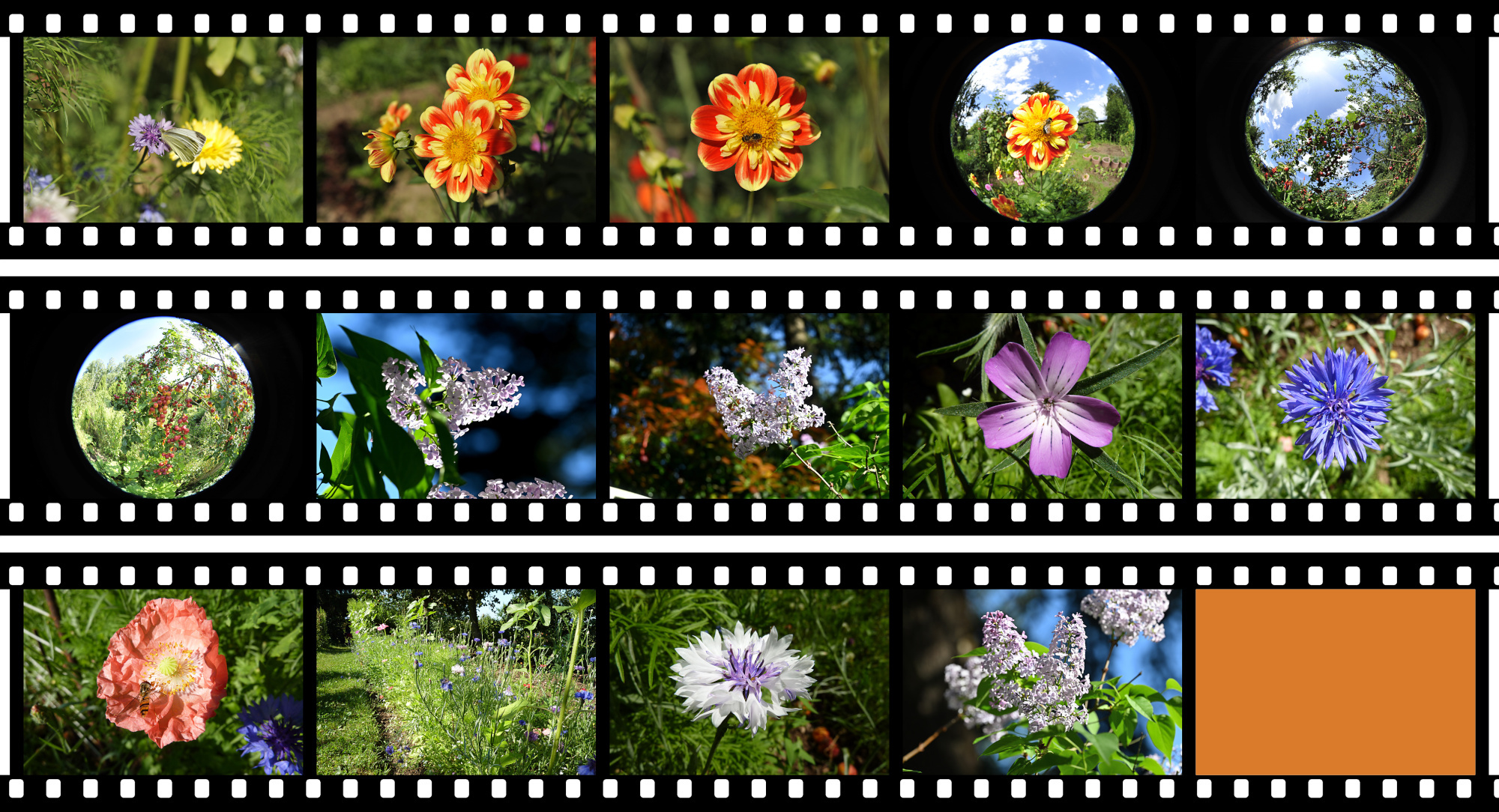
orange mask #D97B2B, RGB(217,123,43)